The Mouths (口に関するアンケート, Takashi Shimizu, 2026) [Fantasia 2026]

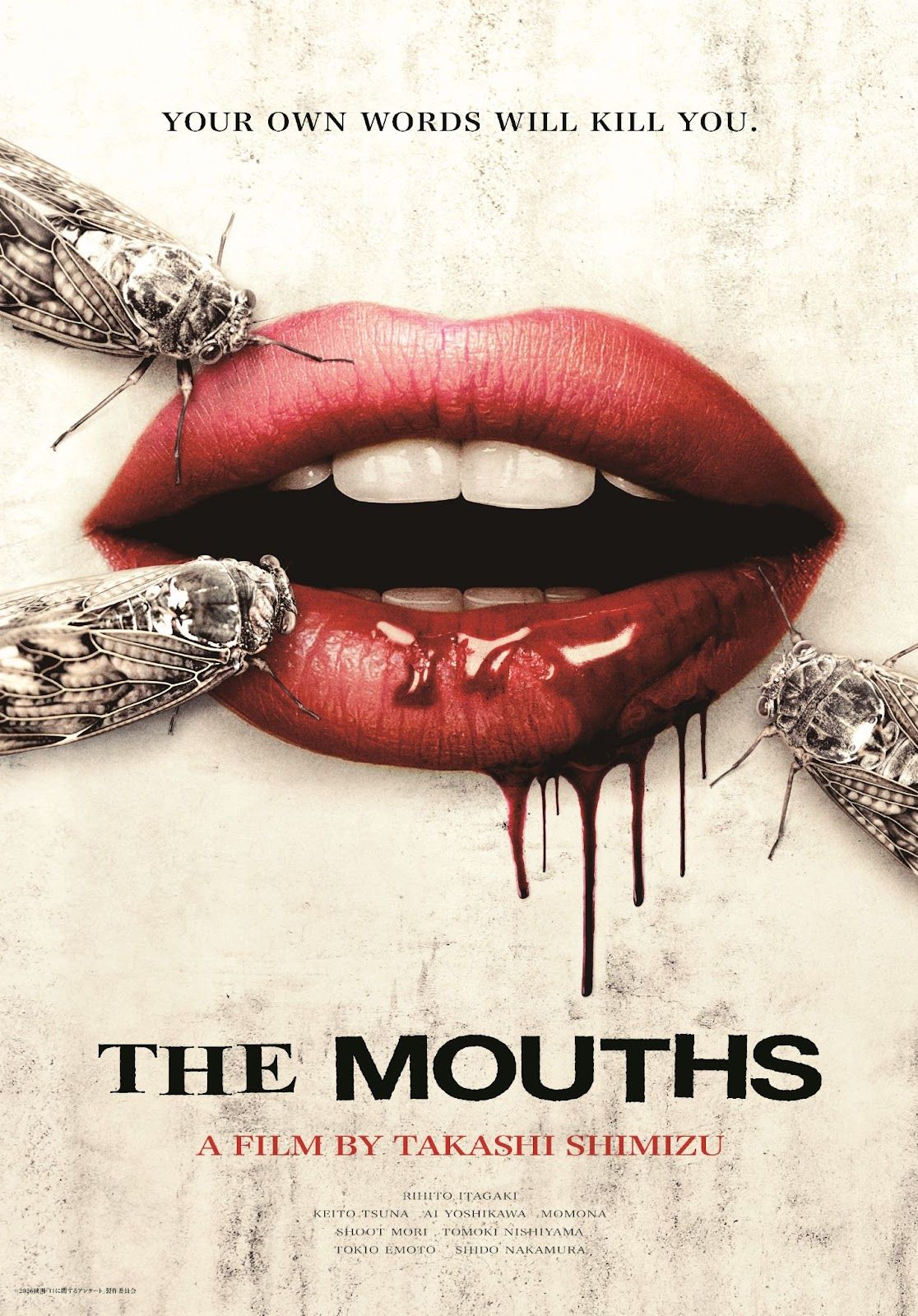
“Do you think the mouth is the source of the trouble?”  A survey asks at the end of Takashi Shimizu’s haunting horror, The Mouths (口に関するアンケート, Kuchi ni Kansuru Anketo). Assuming for the moment that we’re talking about the human mouth, they can indeed get you into a lot of trouble, but at the same time that trouble starts somewhere much deeper down, so perhaps it isn’t really the mouth that’s to blame either, rather its owner who unwisely chose to make their unspoken thoughts spoken. 

According to the editor of a mystery magazine (Tokio Emoto), that really might be the curse. We project our negative emotions onto an object and grant it a kind of supernatural power that might in other ways be entirely manmade. People have decided a creepy old tree in a cemetery is “cursed”, but it’s become fashionable among young people to challenge themselves by walking up to it. Though the tree once signalled good fortune, people soon started using it to curse others by voicing their petty resentments, but perhaps it’s putting all these dark thoughts into the tree that’s made it a kind of repository for human fear and loathing. All those we meet who went to see the tree took someone with them that they wanted to suffer, though they also of course ended up suffering themselves.

A group of students sets out to see it full of bravado expecting a spooky night where nothing will actually happen, or at least nothing that they don’t make happen for themselves. But beneath the camaraderie, there are cracks in their relationship with what amounts to a complicated love square in which Tatsuya (Keito Tsuna) has started dating Shota’s (Rihito Itagaki) ex An (Ai Yoshikawa), but Shota wants her back. Mirei (MOMONA), meanwhile, whose name contains a sound that is associated with the supernatural, resents An mostly for disrupting the dynamics of the group and her relationships with both men though without really declaring any kind of romantic allegiance. An is not altogether a sympathetic presence and brands Mirei’s potentially psychic abilities as “lame”, but nevertheless falls victim to the tree, loses her mind, and then eventually disappears. 

The left-behind trio do their best to find her, but are really searching themselves questioning their relationships, desires, and what they really wanted out of visiting in the tree. Shota first heard about it from his colleague, Kawase (Tomoki Nishiyama). Who visited with a “friend” (Shoot Mori) who appears to be bullying him in the hope that he would get his comeuppance only for both of them to be left haunted, constantly fearing the reappearance of the tree’s animalistic woman who threatens to devour them. In some ways, the monstrous woman stands in for the dark heart of nature, seemingly in tune with cicadas and their strange humming, not different from An’s, which characterises a Japanese summer. The summer is also, of course, when this world and the other are at their closest.

Another question the survey asks is if you would share this story with a friend. Kawase, after all, shared it with Shota almost as if tempting him toward the tree, prodding him to act on his basest emotions. As the magazine editor says, perhaps the real villains are people like him who irresponsibly spread this kind of information and help to create urban legends that unwittingly draw people towards the darkness in their own hearts. He and a police detective (Shido Nakamura) nominally looking into An’s disappearance search for more concrete answers, but in the end come to no real conclusions wondering what it was these people saw in the tree that eventually took them to such a dark place.

Shimizu maintains the episodic structure of the source novel with several different chapters recounting the events from one person’s point of view in a theatrical monologue that at first seems as if it must be testimony for the detective, but later turns out not to be even if the detective listens to the stories they’ve recorded on his dictaphone. The survey also asks us why we think they recorded them themselves on their phones, which is a question often left unasked in genre films in which we gloss over these kinds of practical questions knowing that they do so as a storytelling device. Sooner or later they all declare that they have said all that they had to say, if as they were a kind of ghost in the machine about to dissipate as soon as the tale is told. But really, it’s the same question as why they talked to the tree. They needed some means of releasing all these dark thoughts, but releasing them didn’t really help. In fact, it seems to have made things quite a lot worse. Perhaps if they’d been able to talk to each other in a healthier way, there’d no be no need for cursed trees or the supernatural dread that comes with having transgressed on something no human is supposed to see. But then again, this darkness is a part of human nature as much as its part of a strange and arcane world. Perhaps it is your own mouth that will damn you in the end.


The Mouths screened as part of this year’s Fantasia International Film Festival.
Alivehoon (アライブフーン, Ten Shimoyama, 2022)

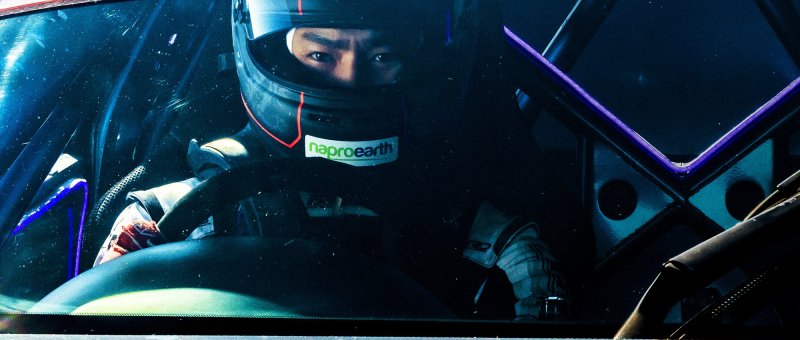
How far can skills learned in simulation be transferred to the “real” world? Ten Shimoyama’s Alivehoon (アライブフーン) sees a top gamer take to the track for real to compete for drift racing glory while battling both his own lack of confidence and that of those around him. What he discovers is that there may not be so much difference as might be assumed, but offline racing is not a solo sport and succeeding means learning to trust in others as well as oneself. 

Koichi’s (Shuhei Nomura) immediate problem is that he doesn’t fit in at his job as a mechanic and is resented by the other employees for failing to pull his weight. All he wants to do is play games and after a lifetime of practice he’s become a champion in the world of e-sports drift racing but secretly harbours the desire to become a “real” race driver. He finally gets the chance to prove himself when his exasperated boss gets him an opportunity to try out for a real team in need of a rookie driver to ensure its survival. Diffident as he is, Koichi agrees and after brief moment of confusion on the track, proves he has what it takes to take his virtual skills to the real world as an aspiring drift racer. 

The main opposition Koichi faces is from those who dismiss him on the grounds that in-game experience is useless in the real world, which in some cases it may be but luckily Koichi does at least know how to drive and after a moment to play things through knows how to translate his skills from the online world to a real life track which of course has much more proximity to mortal danger than he has ever experienced before. That might be one reason that veteran driver Muto (Takanori Jinnai) who retired after a catastrophic crash in the opening sequence does not take him very seriously on witnessing him being physically sick after being driven round the course by a champion racer while his daughter Natsumi (Ai Yoshikawa) is very invested in the idea that it might be possible to turn an e-sports champ into a top rank driver and save the team in the process. 

Team Alive is positioned as the nice guy underdog, trying to win through hard work and fairness in contrast to arrogant hotshot Shibasaki (Shodai Fukuyama) who turns down the chance to join Alive to go with a more lucrative offer from a haughty middle-aged woman (Anna Tsuchiya) who plays only to win. Shibasaki drives dirty with the racing equivalent of kicking dust in Koichi’s eyes but eventually pays a heavy price for his lack of sportsmanship only to be humbled and come to see the merit in the honest and down to earth approach of team Alive. Koichi meanwhile fights an internal battle trying to rediscover a sense of confidence while beginning to find it in the mutual support of his teammates acknowledging that he may be in the driving seat but he’s not alone and the victory does not belong entirely to him. 

The film’s race scenes are supervised by “drift king” Keiichi Tsuchiya and feature real life drivers such as Naoki Nakamura, Daigo Saito and Masato Kawabata driving real courses for added authenticity all shot in camera without the use of CGI or special effects. The neon blue/red lighting and synth score contribute to the retro aesthetic but it has to be said that Koichi seems to take to real life drift racing a little too easily and experiences surprisingly few setbacks before making a fairly perplexing decision in the film’s final moments despite having discovered the value of teamwork along with a new family in team Alive who each value him for who he is as he brings the best in virtual racing to the real world game. Natsumi too earns the respect of her father as he comes to trust and believe in Koichi but is never quite given the chance to prove herself in her own right. In any case there is something heartwarming in the film’s conviction that there are no pointless skills and that working hard to become good at something is its own reward whether you become a champion or not.


Alivehoon screens in Chicago on Sept. 17 as part of the 15th season of Asian Pop-Up Cinema.

Original trailer (English subtitles)

12 Suicidal Teens (十二人の死にたい子どもたち, Yukihiko Tsutsumi, 2019)

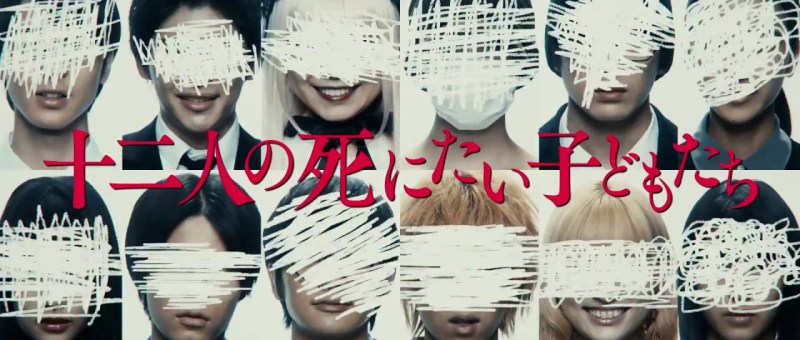
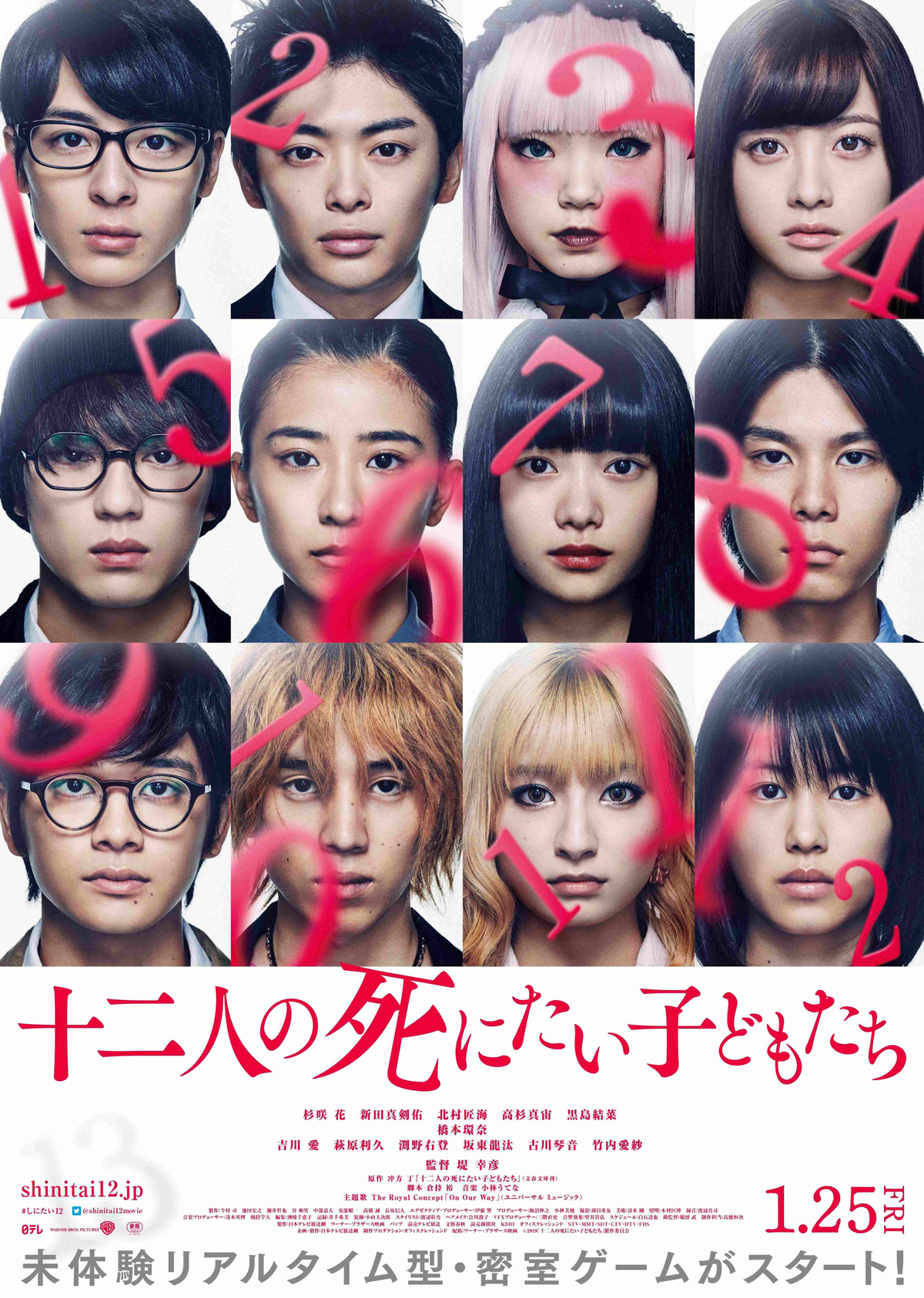
12 Suicidal Teens posterJapan has a relatively high suicide rate, but even so the number of people taking their own lives had been steadily decreasing, hitting a 22-year low in 2016. Conversely, youth suicide rates peaked, hitting a 30-year high. Inspired by Tow Ubukata’s novel, 12 Suicidal Teens (十二人の死にたい子どもたち, Juni-nin no Shinitai Kodomo-tachi), as the title implies, sees a dozen high school students forming a kind of club in which they will take the decision to live or die as a group, ironically undercutting the sense of powerlessness which has led them to the conclusion that they have no other choice other than death.

Ringleader Satoshi (Mahiro Takasugi) has recruited 11 likeminded souls and furnished them with complicated instructions involving a series of secret codes granting them access to a basement meeting room in an abandoned hospital. The 12 dutifully make their way into the building, but a surprise is waiting for them. When the first guest arrives, a young man is already lying in one of the 12 beds arranged around the edges of the room, apparently having jumped the gun, dead or dying after taking a large amount of sleeping pills. Everyone concludes he must be the event’s organiser, only for Satoshi to suddenly arrive and attempt to “open” the meeting at which they’re supposed to discuss the issues thoroughly so they can be sure they’re making the right decision. Because of the unexpected 13th guest, a decision is taken to postpone the discussion until after they figure out what’s going on.

Part of the reason for that is less curiosity than a kind of resentment. The teens are worried that their own deaths maybe misunderstood or misused if they’re discovered with this randomer in their midst. What if he’s the victim of a serial killer and everyone thinks they are too, never getting the message that each of them was desperate to send with their deaths? One young man who is dying to get back at a neglectful mother by denying her a life insurance pay out is worried it might backfire and she’d end up quids in if the police decide he’s a murder victim and not a suicide. He decides to live (for the moment at least) almost all out of spite.

Spite is, it seems, a powerful motivator in one sense or another. What most of our teens want isn’t really death but freedom, an end to pain or suffering. Suicide rates spike in September because bullied students can’t bear the thought of returning to school. Bullying is indeed the reason one of our teens wants to die, only the instigator was a teacher who led his class to victimise an innocent student solely for the crime of being an “annoying” person. Another teen, meanwhile, was bullied until he finally snapped, pushing his aggressor down a flight of stairs. Unable to live with the guilt, he too feels he can’t go on.

For the girls, the lack of control is all the more obvious. One young woman walks around with a surgical mask covering her face, not because she’s hideously burned but because she’s fantastically beautiful. One of Japan’s many celebrity idols, she’s on the cover of a thousand teen magazines but doesn’t recognise herself in the images that she sees and resents the way in which her existence is micromanaged by others. She wants to die as a means of seizing her own agency, to prove that her life and her individuality were valid and mattered as distinct from the fake persona created by her managers. Her fame endangers the mission of the group’s most emo member who declares that the mass suicide should be bomb detonated under an indifferent society, that she’s dying to reject her existence and rebelling against having been born.

Like some of the others, she’s a survivor of abusive parenting and resents having been given a “meaningless” life. A few of the other teens feel the same but for different reasons, they are suffering longterm or terminal health conditions and resent both their fates and being forced to live on without hope. They choose death now to prove they have a choice and are leaving on their own terms, not those of the universe.

Eventually the conclusion that they come to is that to live is also a choice. Working together to solve the mystery of the unexpected guest, they begin to understand a little of each other’s lives and their own, bonding in a shared sense of futility that slowly drifts into a rejection of the nihilism that had convinced them that their only choice was death. A strangely uplifting experience, 12 Suicidal Teens is a dark celebration of life that makes a virtue of endurance and finally finds meaning in commonality and the simple joy of empathic connection.


Original trailer (no subtitles)