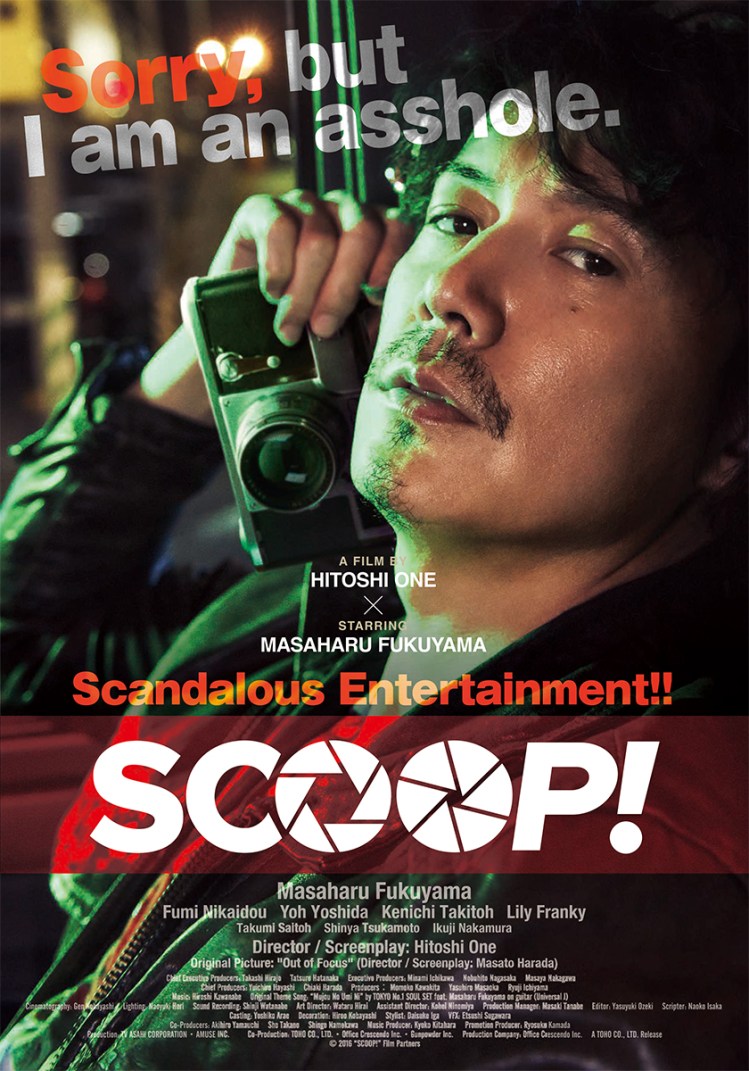
 Hitoshi One has a history of trying to find the humour in an old fashioned sleazy guy but the hero of his latest film, Scoop!, is an appropriately ‘80s throwback complete with loud shirt, leather jacket, and a mop of curly hair. Inspired by a 1985 TV movie written and directed by Masato Harada, Scoop! is equal parts satire, exposé and tragic character study as it attempts to capture the image of a photographer desperately trying to pretend he cares about nothing whilst caring too much about everything.
Shizuka (Masaharu Fukuyama) is a man out of time. Once the best photojournalist on his paper, he’s ridden the waves of a changing industry and become a high earning freelance paparazzo. Shizuka’s nights are spent in all of the fashionable if occasionally squalid drinking holes of the city in which the elites of the entertainment world attempt to disappear. Sadako (Yo Yoshida), the editor of Scoop! – a once proud publication now a seedy scandal rag, worries about her old friend, his debts, and his legacy. Offering to pay him well above the going rate for anything useable, she saddles him with the latest new recruit – Nobi (Fumi Nikaido), a naive young woman dressing in the bold childhood nostalgia inspired fashion trends of Harajuku. As might be assumed the pair do not hit it off but gradually a kind of closeness develops as Nobi gets into the thrill of the paparazzo chase.
In keeping with his inspiration, One shoots with a very ‘80s aesthetic of a city bathed in neon and moving to the beat of electropop and synth strings. Grainy and grungy, the images are seedy as is the world they capture though this is the Tokyo of the present day, not the bubble era underground. Shizuka claims his major inspiration came from the famous war photographer Robert Capa though now he can’t even remember if he really meant to become a photographer at all. Chasing cheating celebrities and exposing the odd politician for the kind of scandal that sells newspapers is all Shizuka thinks he’s good for, any pretence of journalistic integrity or the “people have a right to know” justification was dropped long ago.
Sadako, however, has more of a business head than her colleagues and is starting to think that Scoop! could be both a serious news outlet and nasty tabloid full of gravure shots and shocking tales of the rich and famous. Getting Shizuka to mentor Nobi is an attempt at killing to two birds with one stone – unite the plucky rookie with the down on his luck veteran for a new kind of reporting, and help Shizuka return to his better days by paying off those massive debts and getting his self esteem back.
Unfortunately Shizuka is his own worst enemy, hanging around with his strange friend Chara-Gen (Lily Franky) who is intermittently helpful but a definite liability. The world of the newspaper is certainly a sexist one – Sadako and Nobi seem to be the only two women around and the banter is distinctly laddish. An ongoing newsroom war leaves Sadako lamenting that the men only think about their careers and promotions rather than the bigger picture while the suggestion that she may win the position of editor has other colleagues bemusedly asking if a woman has ever helmed such a high office. The men ask each other for brothel recommendations and pass sexist comments back and fore amongst themselves with Shizuka trying to out do them all even going so far as to put down the new girl by describing her as “probably a virgin”.
Sadako’s plan begins to work as Shizuka and Nobi become closer, she becoming the kind of reporter who files the story no matter what and he finally agreeing to work on a more serious case. Having spent so long believing everything’s pointless, Shizuka’s reawakening maybe his undoing as a noble desire to help a friend who is so obviously beyond help leads to unexpected tragedy. Nevertheless, the presses keep rolling. A throwback in more ways than one, One’s 80s inspired tale of disillusioned reporters and mass media’s circulation numbers obsessed race to the bottom is all too modern. Unexpectedly melancholy yet often raucously funny, Scoop! is an old fashioned media satire but one with genuine affection for the embattled newsroom as it tries to clean up its act.
Scoop! was screened as part of the Udine Far East Film Festival 2017
Original trailer (no subtitles)
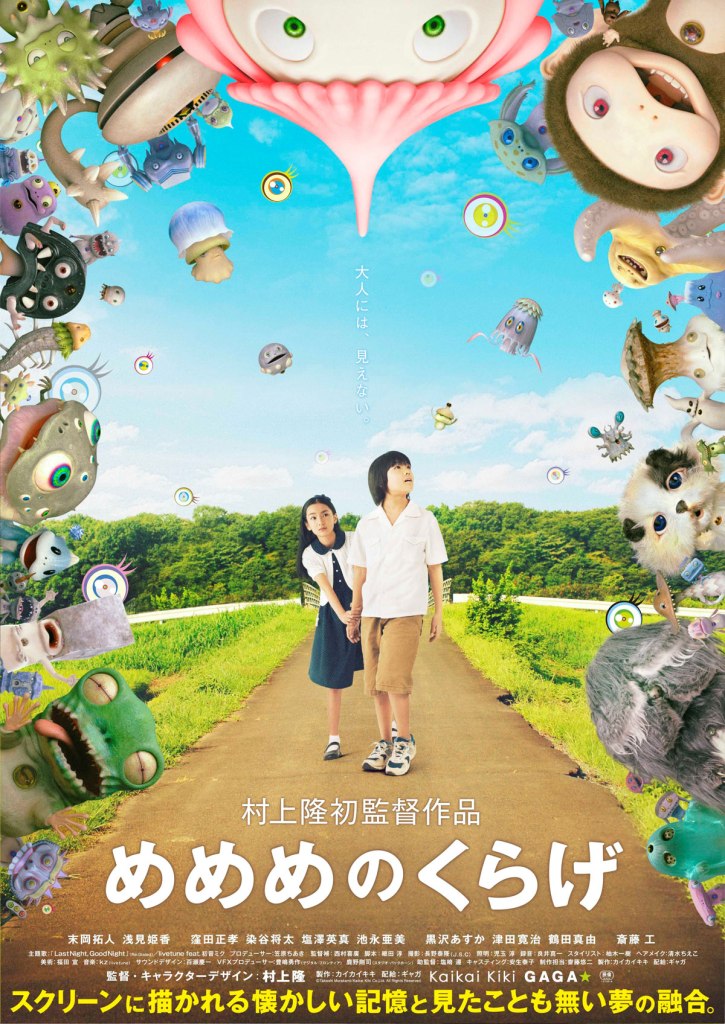 Jellyfish Eyes (めめめのくらげ, Mememe no Kurage) is the feature film debut of the internationally popular Japanese artist, Takashi Murakami. Well known for his cutesy character designs which are as likely to turn up in the world’s best regarded art galleries as they are on a kid’s backpack, Murakami is one of Japan’s most highly regarded art exports. Having unsuccessfully tried to raise interest in the more obvious totally CG animation, Murakami has enlisted the help of gore master Yoshihiro Nishimura for some director’s chair tips in creating a live action/CGI hybrid. Jellyfish Eyes is very definitely a kids’ movie, calling it a “family film” seems unfair when the age cut off is most likely around seven or eight years old but those who meet the (lack of) height requirement are sure to lap it up.
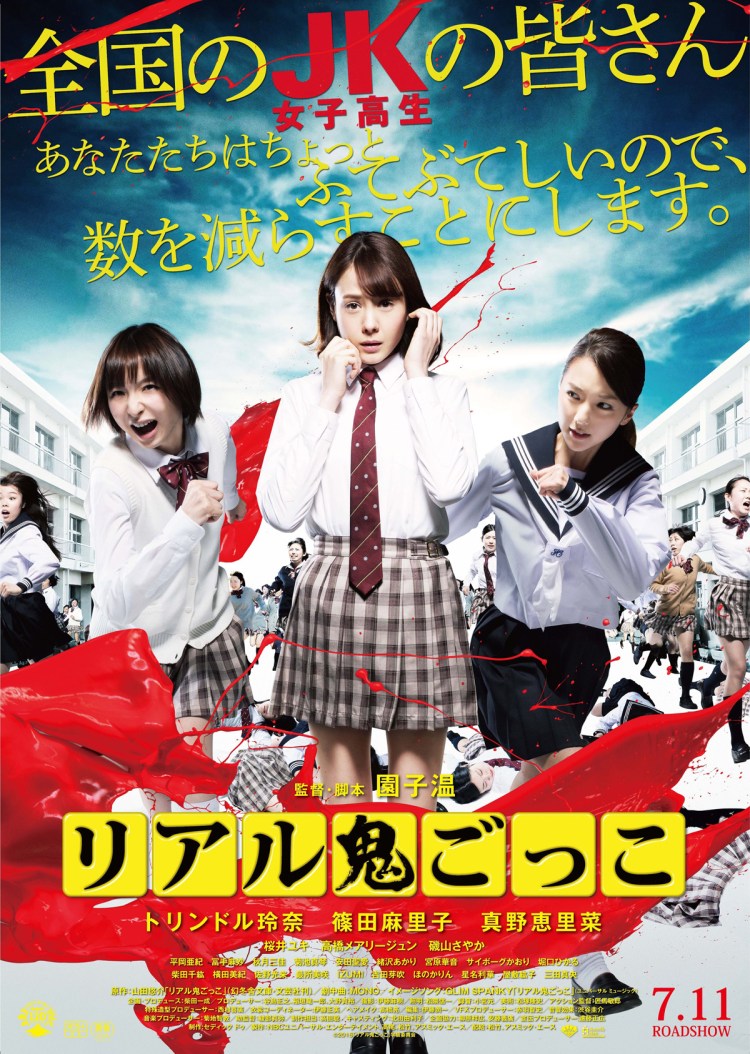 You could say Sion Sono is back, though with six films released within a year it’s almost as if he just nipped out to make a cup of tea. At first look Tag (リアル鬼ごっこ, Riaru Onigokko) seems as if it might be towards the bottom of the pile – school girls running away from things for 90 minutes whilst contending with awkward gusts of wind, but this is Sion Sono after all and so there’s a whole world of craziness going on below the surface.
 Windows on Worlds