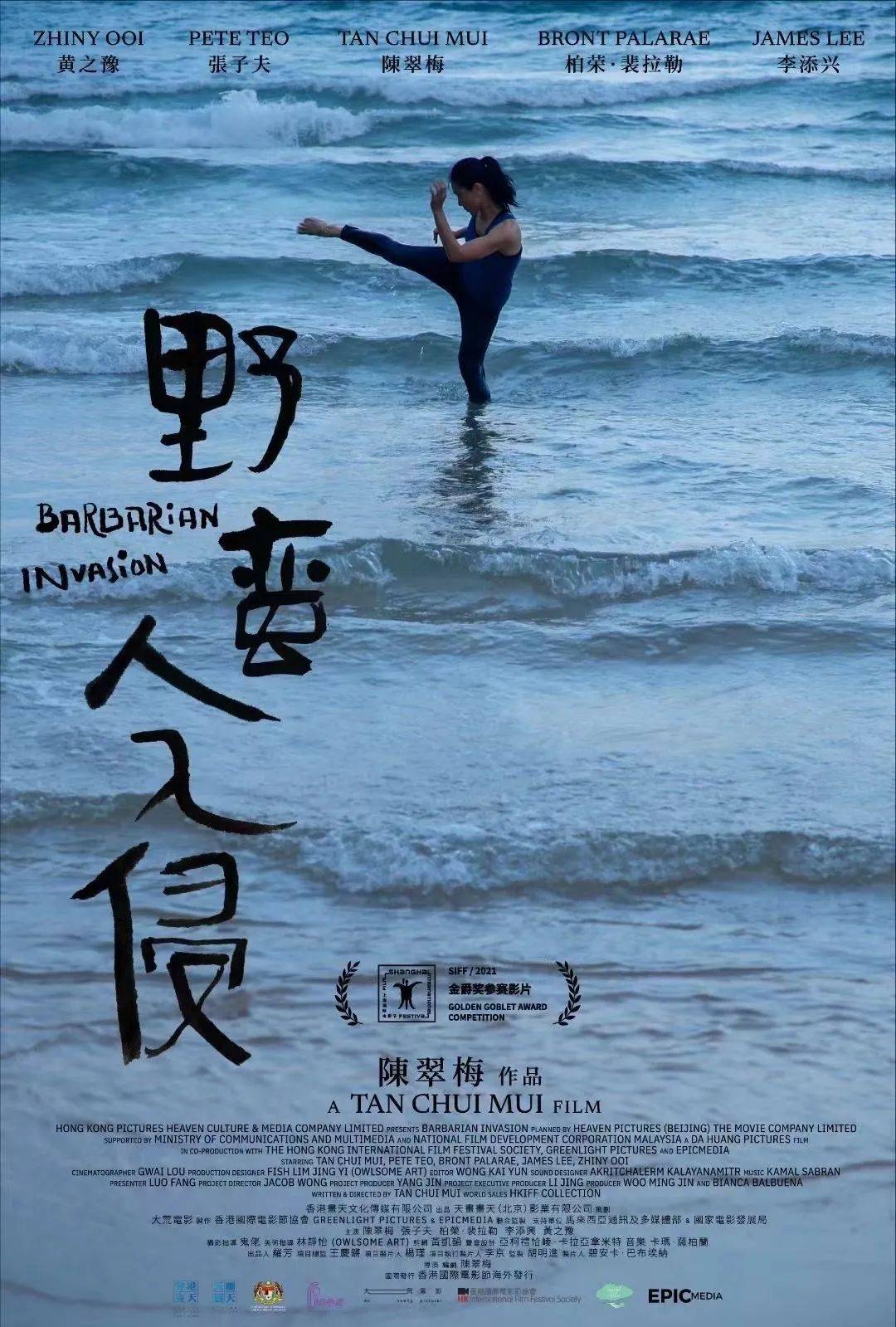
Barbarian Invasion (野蛮人入侵, Tan Chui Mui, 2021)

“Who are you?” the lead actress asks herself, at one point in several languages, as she tries to reclaim her identity from the library of roles which she must play key among them mother to six-year-old son and recent divorcee plagued by scandal. Tan Chui Mui’s meta drama Barbarian Invasion (野蛮人入侵), in which she also stars, is in part a search for the self along with the desire to assert ownership over a physicality that is otherwise uncomfortably shared but also an exploration of local indie filmmaking and the unique challenges faced by a female filmmaker in the South East Asian industry. 

Moon Lee (named for the Hong Kong star and played by Tan Chui Mui herself) was formerly a successful actress who married a high profile actor but has now divorced and is raising her six-year-old son Yu Zhou alone. Responding to a request from an old friend, she’s agreed to travel to the coast to revive her film career and has brought Yu Zhou with her as his father is filming in Japan and her mother has just had a knee operation. What Moon hadn’t realised is that she’ll be starring in a low budget action movie inspired by The Bourne Identity and that the director, Roger (Pete Teo), wants her to look convincing as a top assassin. Moon isn’t really convinced but begins to see it as an opportunity for personal growth training with the mysterious Master Loh (James Lee) who, like the wise old monk sitting outside, is fond of cryptic aphorisms.

Nevertheless, Moon’s attention is constantly diverted by Yu Zhou’s restlessness. He darts in to defend her while she’s trying to practice martial arts and runs away when left with a baby sitter, making friends with the daughter of a local cafe owner. She tells the assistant Cathy that when she was pregnant people would come up and touch her belly as if her body no longer belonged to her but had become public property. Moon resented being told that her baby was her greatest work, as if all of her other achievements paled in comparison to her motherhood and she herself had become nothing more than a conduit for her child’s existence. A mere 3D printer for the next generation, as she puts it. Yet what’s she’s doing is in effect an attempt to reintegrate body and soul. As the wise old monk tells her the body is not the prison of the mind but the mind a prison of the body. She achieves mastery over herself through embracing unconscious action. “What is “myself?” she asks Loh and finds the answer in the her that automatically raises its fist to her head in self-protection. 

But that doesn’t perhaps help her differentiate Moon Lee the woman from Moon Lee the actress and the various roles she’s played on and off screen. It seems there was a degree of scandal in her recent divorce that’s prompted her into a reconsideration of herself, while she is left feeling betrayed when Roger explains that the producers want to cast her ex Julliard (Bront Palarae) as her love interest and may even pick him over her if she refuses because he is still a big box office draw. Roger then gets a major offer of investment, but it’s from a Chinese actress who wants Moon’s part. Chinese producers want a Chinese star he tries to explain to an increasingly exasperated Moon who wonders what all this is for if she is so easily replaceable. 

In any case, an event which seems to transgress the borders between the real and the fictive throws her into the role of her amnesiac heroine who has only muscle memory along with the ability to speak several languages chiefly those spoken by roles she previously played such as a Burmese refugee and Vietnamese bride. Still, as her character begins to recover her identity she too comes into herself, brings some ironic closure to her relationship with her ex, and embarks on a somewhat mystic journey into the self all while ironically riffing on classic kung fu movie themes injected with a little contemporary pop culture. To the challenger the sword was everything, to Musashi everything was the sword Roger explains of a tale in which the elderly Miyamoto Musashi defeated a young rival through turning the world around him into a weapon, adding that to him while film was once everything everything is now film. And so it is for Moon in her ongoing psychodrama rediscovering herself among many others as she fights her way towards bodily autonomy and the reclamation of her authentic identity.


Barbarian Invasion screened as part of this year’s Five Flavours Film Festival and is available to stream in Poland until 4th December.

Original trailer (Simplified Chinese / English subtitles)
Love Conquers All (爱情征服一切, Tan Chui Mui, 2006)

“Girls are mostly stupid” extols the dubious romantic lead of Tan Chui Mui’s debut feature, “they think their love can conquer all”. Ironically titled Love Conquers All (爱情征服一切, àiqíngzhēngfúyīqiè), Tan’s ‘90s drama wonders how true that might be or if in a sense love can at least triumph over reality as we watch the naive heroine falling wilfully or otherwise into a dangerous web of abuse and exploitation while torn between the innocent romance of a hometown boyfriend and the confusing compromises of seedy urbanity. 

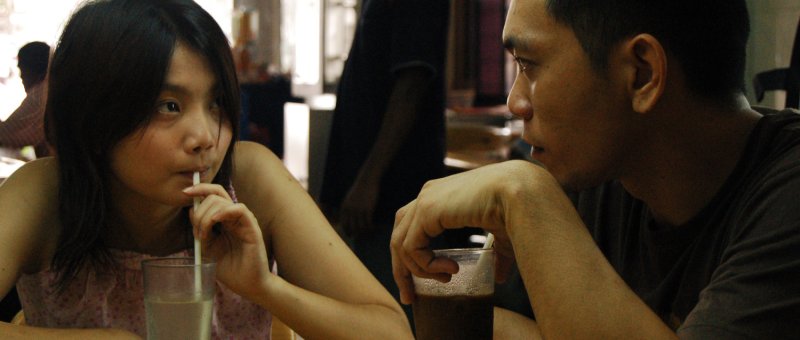
Innocent country girl Ping (Coral Ong Li Whei) travels from her home in Penang to work in a relative’s restaurant in Kuala Lumpur. While using a pay phone to keep in touch with her family, she comes to the attention of John (Stephen Chua), a somewhat rough local man who quickly begins stalking her bizarrely enough with the offer of a bunch of bananas to which Ping claims to be allergic. Nevertheless, lonely in her new life in the city rooming with her employer’s young daughter Mei, she eventually gives in and begins a relationship with him. While they’re at a hawker stand one evening, he introducers her to his friend, Gary, whom he claims is a pimp. Gary’s modus operandi is to pick up a new girl every three months, make her his girlfriend and then disappear sending a friend to say he’s in trouble with some shady types and needs money fast. Unable to pay, the young woman is drawn into sex work which Gary forces her to continue on his return before selling her off to people traffickers and starting the process over again. 

Ping seems fairly horrified by John’s story, but inevitably experiences something similar herself as John expresses fear for his future given the precarity of his underworld life, turns up with bruises, and then disappears sending Gary to tell her he needs money fast. She knows what’s happening but goes along with it anyway, perhaps out of a sense of fatalism or as John has suggested because she gives in to the romantic fallacy that her love can save him though he only means to use and discard her. Or perhaps, who knows, it is just a coincidence and he really does love her after all. A minor moment of potential exploitation mirroring their earliest date in which she suggests buying him a jacket but he prefers a different, possibly more expensive one, may imply something different. 

In any case, Ping’s view of romance may be overly idealised informed by the brand of TV drama so cheesy that little Mei and her mum can’t help giggling as they watch. Mei too is in the middle of an innocent romance with a penpal who calls himself only the “Mysterious Man” which is on one level worrying even if her explanation that he usually talks about stuff at school implies they may be of a similar age and she may even know him. At different stages, both Ping and Mei are seen drinking at the cafe staring into space thinking of their respective romantic interests though Ping’s situation is obviously not quite so innocent. On a fairly coercive date in which he idly raises the idea of marriage and children, John drags her to the beach and posits an ideal family life in small house like that of his aunt to whom he introduces her as his wife but may or may not actually mean to provide her. 

“You have no choice unless you jump” John uncomfortably repeats as he completes his romantic conquest even as Ping continues to call her hometown boyfriend on the phone telling him she loves him even in front of a mildly jealous John. Perhaps their romance is to her a kind of fantasy of romantic sacrifice set in contrast with the more prosaic sacrifice she has made to leave her family and travel to the city. While working in the cafe she’s approached by another creepy guy only a little older than John but just as persistent and taking much the same approach insistently asking for her name though she eventually manages to brush him off. Yet the question remains, is Ping merely a romantic fool, “stupid” as John had said, or a young woman attempting to take control of her romantic destiny as perhaps Mei is doing when she asks her mother to drive her to her pen pal’s address so she can figure out what he looks like? Shot digitally in a retro 4:3, Tan’s debut feature is replete with zeitgeisty detail of Kuala Lumpur in the ‘90s and filled with the lacuna of nostalgia, but offers no real answers for the duplicitous nature of love. 


Love Conquers All streamed as part of Odyssey: a Chinese Cinema Season.

Original trailer (English subtitles)

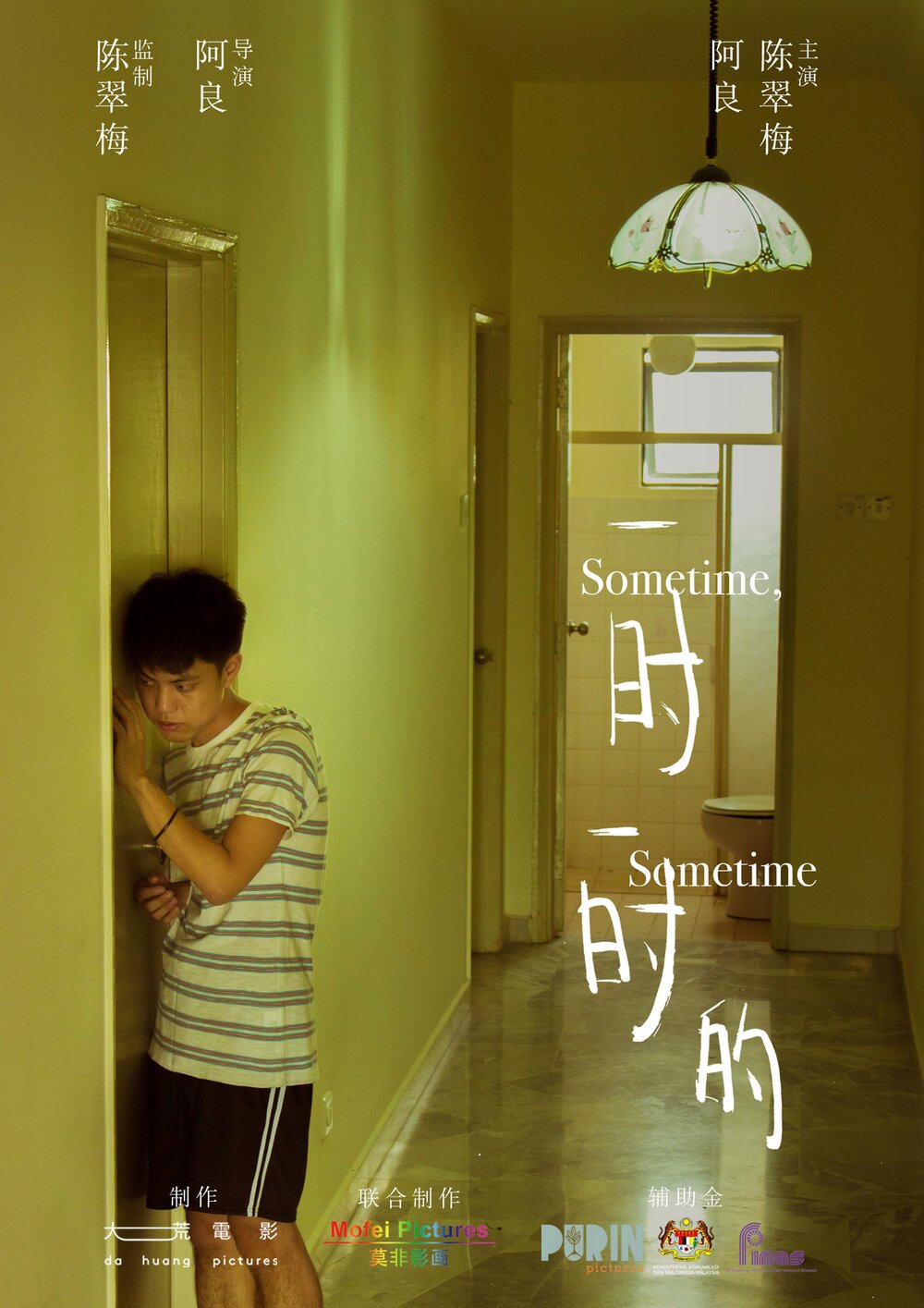
Sometime, Sometime (一时一时的, Jacky Yeap Swee Leong, 2020)

The relationship between mother and son necessarily changes over time, though both find themselves caught in a moment of flux in Jacky Yeap Swee Long’s Sometime, Sometime (一时一时的, Yīshí Yīshí de) in which educational crossroads, employment woes, and unexpected romantic pathways seem set to divide parent and child as they awkwardly swap roles but eventually discover a new equilibrium that will allow them to move forward into individual if perhaps co-dependent futures. 

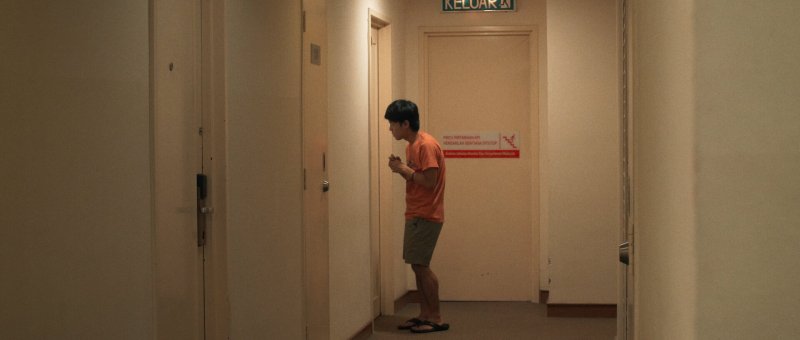
At 16, Zi Kien (Jacky Yeap Swee Leong) is trapped in an educational limbo while he waits for exam results which will help him decide on the further course of his life. Meanwhile, he resents the helicopter parenting of his devoted single mother Elaine (Tan Chui Mui), arousing her suspicion locking his bedroom door when all he was doing was trying on a shirt he bought himself that she later complains is a little on the big side. When he figures out, however, that his mum has got a new boyfriend, Mr. Lee (Loh Kok Man), the situation is reversed. He doesn’t like it that she’s not quite so overly invested anymore and resents for the moment not being the centre of her attention. Insisting on coming along on a dinner date, he is deliberately difficult, suddenly claiming that he’s gone vegetarian despite having been seen eating pork ribs for breakfast solely to mess with Mr. Lee’s proposed order. For his part, Mr. Lee seems not to be particularly bothered, simply adding an egg dish while getting some sweet and sour pork for himself should Zi Kien abruptly change his mind. 

This flip flopping seems to be typical of Zi Kien’s character at least according to his mother who complains he’s sometimes one thing and sometimes another. Today he’s “vegetarian” but then again he might have forgotten all about it by dinnertime tomorrow. A young man at a crossroads, he flounders for direction, perhaps looking for guidance from the older generation but mildly mocked by some of his peers who regard him as a mother’s boy too afraid of upsetting Elaine to think about applying for the lucrative residential jobs at a casino resort as some of his friends are doing. Zi Kien lies that he bought the shirt for potential interviews, only to be railroaded into taking a short term placement at the supermarket where the worryingly domineering Mr. Lee works. “No need to think about it” he insists on hearing Zi Kien’s lukewarm response, acting as if it’s all arranged and leaving the boy with virtually no chance to refuse.

Yet there’s perhaps a part of Zi Kien that responds to the kind of authority that relieves him of the burden of choice. He finds himself parroting back words from Mr. Lee as if they were profound nuggets of wisdom rather than the banal logic of a slightly conservative middle-aged man. His friend Xue-Ting (Yap Jia Ern) even tells him that he sounds like one of her irritating uncles, once again remarking that his shirt looks too big for him and recommending he might be better to try the women’s section (adding that she herself often finds the kids’ selection a better fit). Only later does he start to wonder if there’s not something slightly arrogant in all Mr. Lee’s “guidance”, immediately making suggestions on how the video he showed him might be “improved” if he added some mournful music and interviewed a few more of his friends from the “lost and confused” generation. His birth father later viewing the same video advances something similar only seeing not anxiety but comedy, advising him that adding music might make it “funnier”. Only Xue-Ting thinks the video’s fine as it is, though Zi Kien later tries the same mansplaining logic on her in railroading the longterm vegetarian into trying “real” meat seemingly unaware that it has the potential to make her quite ill.  

Elaine at least seems better placed to resist Mr. Lee when he also tries to railroad her into taking a job at his company on hearing that the mall where she was working in a department store will soon be closing. Curiously, their relationship seems to breakdown afterwards, though he keeps hanging around hoping to catch the “psychopath” who damages cars parked in a particular space without authorisation. Elaine’s decision to get a haircut (one perhaps so disappointing that she ends up wearing an ugly wig) might be as much a reaction to her son’s possibly inappropriate clinginess as to her boyfriend’s domineering nature, but also speaks of her new desire to take control of herself and her life, buying a used car from a friend so they can be truly independent but then teaching Zi Kien how to drive it, not to mention even teaching him how to smoke a cigarette. Zi Kien is anxious enough to spend some of his part-time money on a long wig (an equally awful, retro 80s contraption) to put her back the way she was before, Elaine agreeing to wear it from time to time to show she appreciates the sentiment but later getting herself tidied up with a slightly more fashionable bob. 

Through their respective parallel dramas, mother and son eventually learn to reconfigure themselves for a new future, more comfortable in their roles and perhaps each with new direction. Elliptical and rich with doublings, symmetry, and repetition, Yeap’s gentle summer story is quietly humorous while undoubtedly well observed and filled with a loving empathy for this most essential, if sometimes frustrating, of connections.  


Sometime, Sometime streams in Poland until 6th December as part of the 14th Five Flavours Film Festival.

Festival trailer (English subtitles)