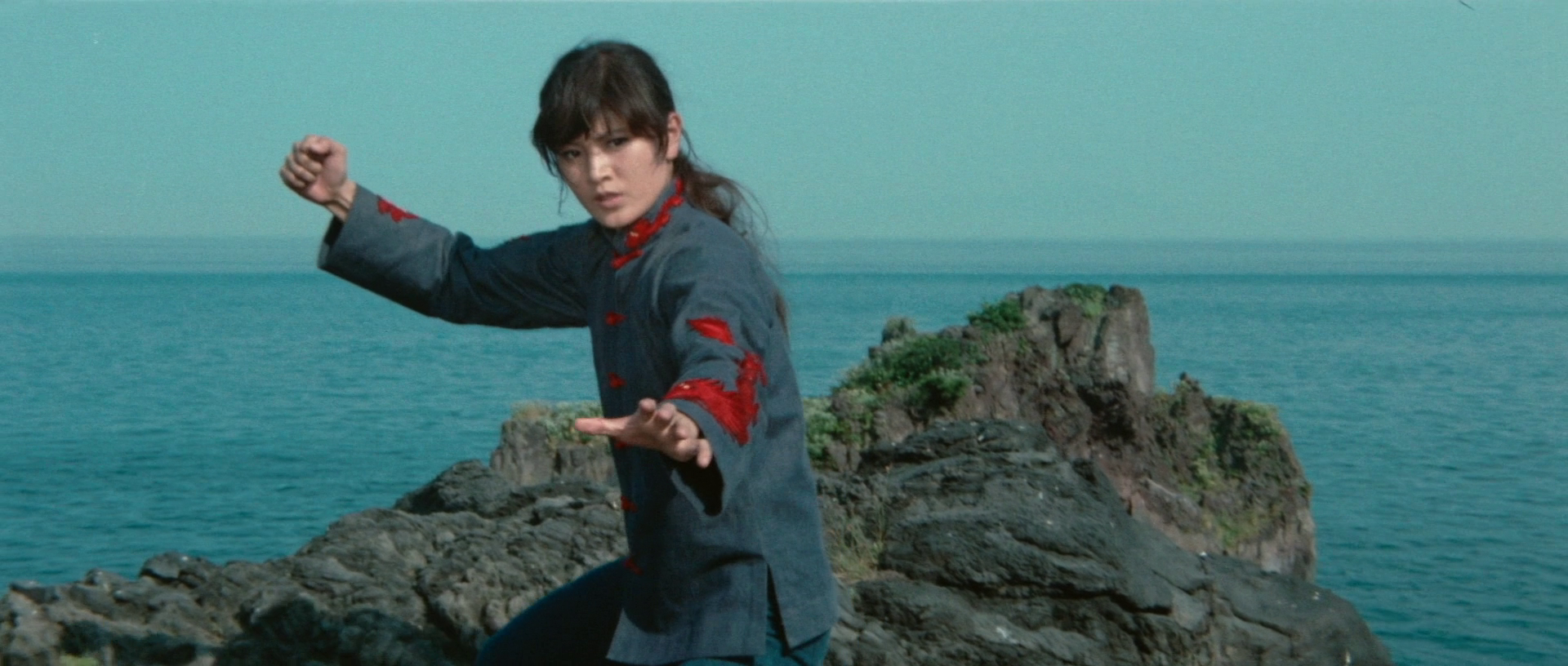
Sister Street Fighter (女必殺拳, Kazuhiko Yamaguchi, 1974)

As the Japanese cinema industry continued to decline in the face of competition from television, there was perhaps paradoxically more space available for small-scale genre films. Shinichi Chiba had ushered in a new age of unarmed combat with his Bodyguard Kiba karate movies. The Street Fighter series followed hot on its heels and was enough of a hit for the studio to take notice. They suggested a new spin-off line that would feature a female action star with Chiba appearing in a supporting role and so Sister Street Fighter (女必殺拳, Onna hissatsu ken) was born.

Producers apparently first wanted Taiwanese-born Hong Kong actress Angela Mao who had starred with Bruce Lee in Enter the Dragon by which the film is clearly influenced. Angela Mao was, however, unavailable, which is what led them to take a chance on Chiba’s then 18-year-old protégé Etsuko Shihomi. Shihomi had joined his Japan Action Club out of high school to study stunts, martial arts, and gymnastics and had only limited acting experience but soon proved up to the challenge of carrying a movie as a female action lead. 

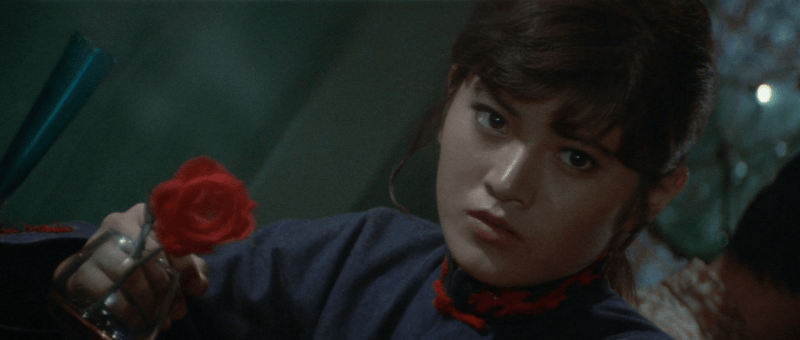
Koryu is the sister of a martial arts champion who has gone missing in Japan. She then finds out from his boss that he was actually an undercover narcotics agent trying to break a Japanese drug ring. As Koryu’s mother was Japanese and she still has family in Yokohama, the police inspector thinks she’d be a perfect fit to head out there, find out what’s happened to her brother Mansei (Hiroshi Miyauchi), and maybe take out the drug dealers too. 

In some ways, it’s an interesting subversion of the Sinophobia often found in Japanese films of this era that this time it’s a half-Chinese woman squaring off against Japanese drug dealers. Her brother was apparently so upset about not being able to stop the drugs flooding Japan that he decided to do something reckless that directly led to his disappearance. The Hong Kong police also have a second operative, a woman, working inside the gang but have lost contact with her. In contrast to Koryu, Fang Shing (Xie Xiu-rong) has been sent in as a classic honey trap to use her femininity as a weapon by becoming the boss’ mistress to get the lowdown on the gang. But as a consequence, Fang Shing has also become addicted to drugs which the boss uses as a means to control her. 

Koryu, by contrast, immediately stands up against male patriarchal control by beating up a bunch of guys that were trying to hassle her in a bar. Nevertheless, Mansei’s martial arts master says that her brother was hoping she’d get married and have a “normal life”, which does seem like quite a chauvinistic thing to say and especially to the martial arts-obsessed Koryu. Even so, he introduces her to another young woman, Emi, who got into Shorinji Kempo when Mansei saved her from being raped. These skills do after all give them the means to defend themselves against an often hostile and violent society along with granting them a greater independence than they might otherwise have.

Still, there are a selection of strange villains on show with death by blowgun and ex-priests along with the Amazon Seven team of Thai kickboxers and “Eva Parrish”, apparently the karate champion of the Southern Hemisphere. The action is quite obviously influenced by Hong Kong kung fu films and most particularly Enter the Dragon, though to a lesser extent Shaw Brothers in the warring schools subplot that sees the Shorinji Kempo love is power philosophy challenged by the gang’s very own martial artist, who feels he must wipe them out to overcome his humiliation in being defeated. Nevertheless, Koryu effortlessly takes out the bad guys as she battles her way towards saving her brother, whom the gang have started experimenting on in an effort to acquire more complex data about tolerance and safe levels for consumption of drugs. The bad guys have a full on lab in their basement where they’ve come up with an innovative solution to the smuggling issue by using wigs! It’s all quite surreal and cartoonish even when it starts getting grim, but rest assured Koryu is here to sort it all out, and sort it out she will.


Original trailer (English subtitles)
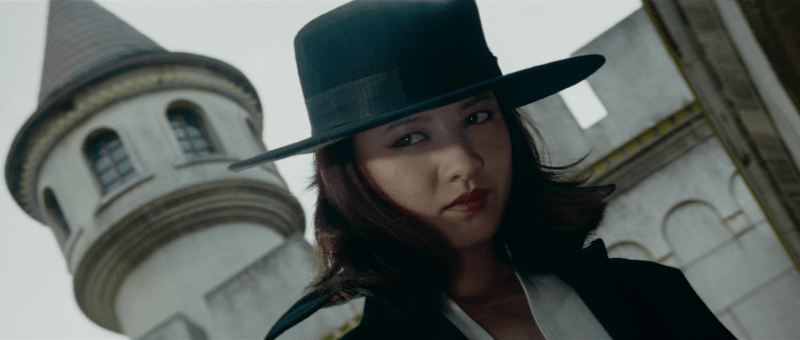
New Female Prisoner Scorpion: Special Cellblock X (新・女囚さそり 特殊房X, Yutaka Kohira, 1977)

After Meiko Kaji declined to appear in further Female Prisoner Scorpion movies, Toei attempted to reboot the franchise under the “New Female Prisoner Scorpion” banner much as they did with some of their other franchises such as New Battles without Honour and Humanity. This second, and in fact final, instalment Special Cellblock X (新・女囚さそり 特殊房X, Shin Joshu Sasori: Tokushu-bo X) is not a sequel to New Female Prisoner Scorpion but itself another reboot that like its predecessor takes place amid a backdrop of paranoia and political corruption. 

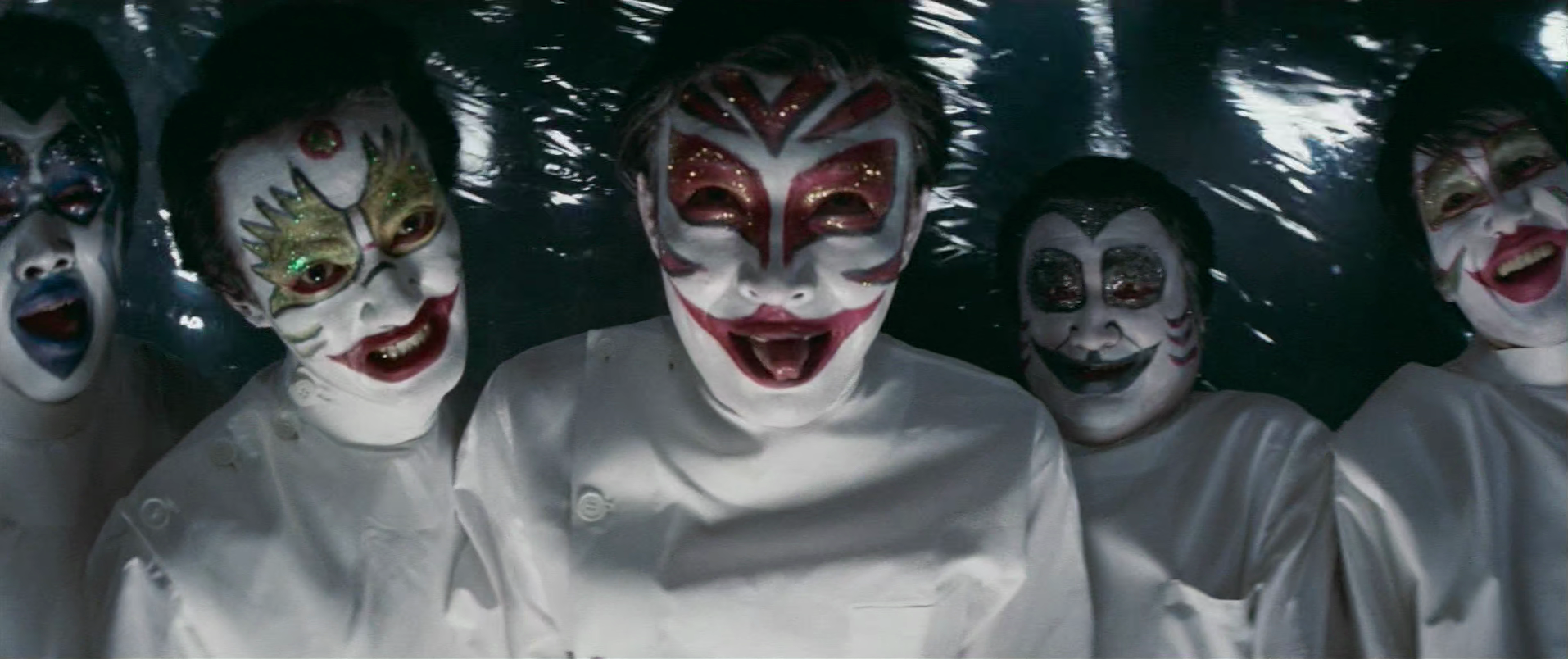
Arriving back at the prison after a failed escape attempt, this Nami (Yoko Natsuki) has an all new backstory as an idealistic nurse whose doctor boyfriend was given shock therapy that destroyed his mind and left him in a vegetative state after threatening to blow the whistle on his hospital’s decision to let the man at the centre of a growing political scandal quietly pass away. These facts are first communicated to us through a surreal fever dream Nami has presumably caused by an infected wound on her leg. She first dreams herself frolicking cheerfully with the doctor before frightening figures of darkness pull him back into an abyss while terrifying clowns leer over and then rape her. She’s only saved from her life-threatening medical condition by the intervention of Kiyomi (Kaori Ono), a fellow prisoner who feels indebted to her because of a blood transfusion she received three years earlier before everything in Nami’s life went wrong. 

But otherwise Nami enjoys little respite in the prison as the other inmates take out their frustrations on her in regards to the reprisals enacted on them following her escape attempt. Like most other prisons in the franchise, this one employs a tactic of divide and rule encouraging the prisons to turn on Nami rather than the guards for their treatment of them. But things are changing in the prison. Chief guard Kajiki (Takeo Chii) had ruled supreme, but the warden has different ideas and objects to Kajiki’s tactic of appeasement by allowing things like cigarettes and chocolate to circulate in the prison to keep the inmates happy. He brings in a super tough security enforcer from the face male Abashiri prison which means Kajiki’s career is definitely on the decline and leaving him increasingly siding with the prisoners over the cruel treatment they’re exposed to by the warden who is too busy courting the justice minister in the hope of a government position to consider things like prison regulations or the welfare of the prisoners. 

Of course, it’s also the justice minister against whom Nami wants revenge. This Sasori is even more silent than most, glaring angrily at those around her but saying little other than stopping to advise Kiyomi not to get involved with her because it won’t end well in a prediction that turns to be accurate. When she eventually assumes her Sasori persona, it’s a little different from that of her predecessors as she dresses all in white (perhaps apt for a former nurse) with a long black over coat. Her black hat has a wide, stiff brim and a feather tucked in the side. She kills with a scalpel, as if she were literally excising the corruption in society and is prepared to play a little bit dirty. The justice minister had asked the warden to kill her and pass it off as an illness. She threatens to blackmail him though it’s obvious she’s not after money and executes the warden when he delivers the pay off on a cheerful fairground ride. 

Though it may lack the striking cinematography found in Ito’s trilogy, the film nevertheless skews surreal with its strange fever dream that turns out not to be so far from the reality as you’d assume along with weird gags like Nami and Kojiki stealing the clothes of a young couple after escaping together who happened to be dressed in identical outfits. Nami teaming up with a former guard is also something of a surprise and though she fights with him and rejects his romantic advances, she seems to have genuine pity when he gives up his life to save her. In any case, they each have something in common as those who now resist the system as Kajiki became a victim of a more authoritarian regime that doesn’t like his lax approach to rule keeping and Nami pursues her desire for justice in an unjust society at all costs. Dropping a bloody scalpel behind her, she disappears into the night, justice done, but presumably onto some other kind of vengeance against a corrupt authority that equally will stop at nothing to hang on to its power.


The Last Kamikaze (最後の特攻隊, Junya Sato, 1970)

Junya Sato’s The Last Kamikaze (最後の特攻隊, Saigo no Tokkotai) opens with a title card explaining that it has nothing to do with the life of Matome Ugaki, which seems disingenuous at best given that the narrative has tremendous similarities with his life. In any case, 25 years after the war in a very different Japan which is perhaps becoming more willing to reexamine its wartime history, Sato’s film nevertheless walks an ambivalent line clearly rejecting the idea of the kamikaze special attack squadrons as absurd and inhuman yet simultaneously glorifying the deaths of the men who willingly took part in them. 

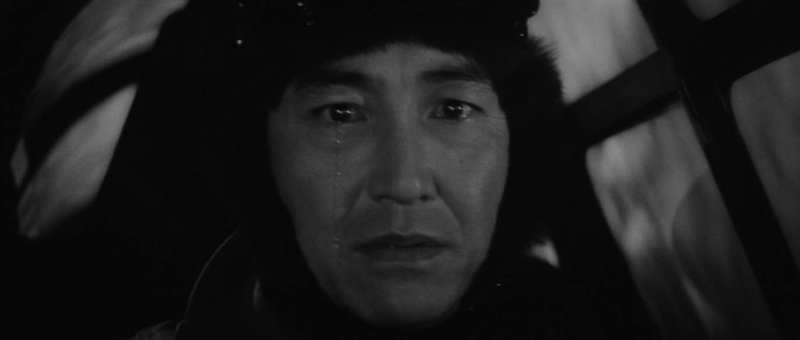
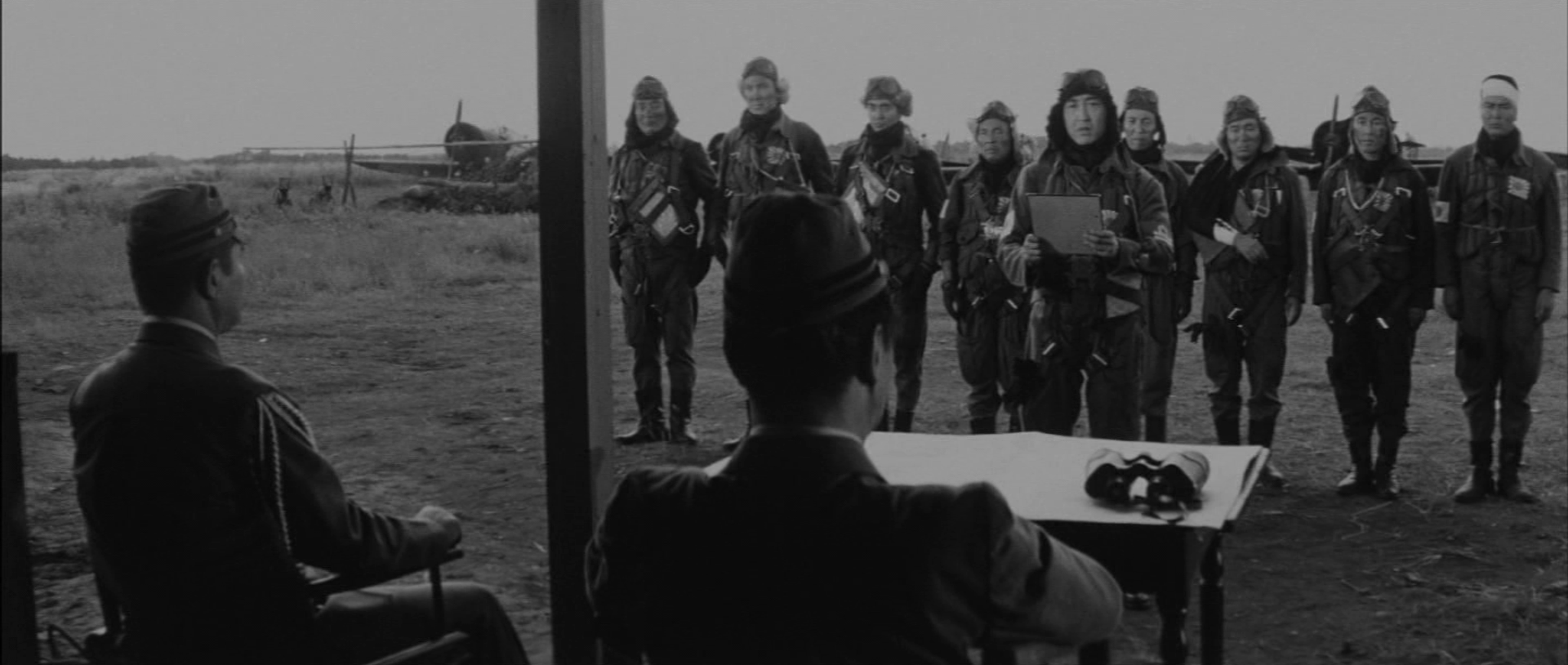
For sympathetic Captain Munakata (Koji Tsuruta) the issue is one of consent and willingness more than it is of essential immorality. Placed in charge of the very first suicide attack, he elects to go himself rather than ask someone else but is first overruled before deciding to go anyway after appealing for volunteers and coming up one short. His general, Yashiro (Bontaro Miake), who had voiced his opposition to the policy in the opening sequence reminding his own commander than even when men were given impossible missions in previous wars they were always ordered to return home if possible, takes the unprecedented step of climbing into an aircraft himself in an act of protest insisting that this be the last and final time that men were ordered to their deaths. The mission, however, does not succeed. All of the pilots bar Yashiro are shot down before reaching their targets while Munakata, injured and having lost sight of the general, aborts his mission and returns to base only to face censure from his superior officers. 

Sent back to Japan, he wrestles with himself over whether his decision was one of cowardice and he turned back because he was afraid to die rather than, as he justifies, because he did not want to die in vain and did what he thought was right. Far from cowardice, it may have taken more courage for him to ignore his orders and choose to live yet there must also be a part of him that believes dying to be heroic if not to do so is to be a coward. As the situation continues to decline and suicide attacks become the only real strategy, Munakata is recalled for an ironic mission of heading the escort squad designed to protect the pilots from enemy attack so they can reach their targets. He first turns this down too not wanting to be an angel of death but is finally convinced to accept on the grounds that the men will die anyway and at least this way their deaths will have meaning. 

Munakata was greeted on his return to Japan by the sight of his father (Chishu Ryu) being carted off by the military police for expressing anti-war views, stopping only to tell him that people should be true to their own beliefs. Nevertheless, even if Munataka objects to the tokkotai strategy he does not oppose it only emphasise that the men should should be willing and resolved rather than forced or bullied. There is indeed a shade of toxic masculinity in the constant cries of cowardice along with a shaming culture that insists a man who refuses to give his life for his country is not a real man. Munakata comes to the rescue of a young recruit, Yoshikawa (Atsushi Watanabe), who twice returns from a tokkotai mission claiming engine trouble but does not try to save him only to petition his superiors that he be given ground duty until such time as he gets used to the idea of dying. Because of Munakata’s kindness in saving him from a suicide attempt after being rejected by the mother he worried for if he were to die, Yoshikawa is pushed towards a “hero’s death” that does at least help to change the mind of Yashiro’s zealot son (Ken Takakura) who knew nothing of the reasons behind his father’s suicide and believed wholeheartedly in the necessity of the special attack squadrons. 

The younger Yashiro’s rationale had been that to show compassion to a man like Yoshikawa was to shame the memories of the men who had already died, yet even in realising the futility of the gesture he still resolves to proceed towards his own death as do others like him such as a student who had been against the war and ironically consents to the suicide mission in order to end it more quickly. “There’s nowhere to run to” Yoshikawa’s mother (Shizuko Kasagi) had said on his attempted desertion, echoing the words of another that there was no escape from this war, while poignantly crying over her son’s ashes that she wishes she had raised him to be a coward. The human cost is brought fully home as the families storm the airfield fence in an attempt to wave goodbye to their loved ones as they prepare for their glorious deaths, another pilot reflecting on the fact that each of these men is someone’s precious son rendered little more than cannon fodder in an unwinnable war. Even with the escort squads, only 30% of the special attacks succeed. Most of the pilots are so young and inexperienced that even assuming they survive the anti-aircraft fire they are incapable of hitting their targets. 

To add insult to injury, Munakata returns from his final mission to an empty airfield where a drunken engineer (Tomisaburo Wakayama) explains to him that the war is over and the generals knew it 10 days earlier but still sent these men to their deaths anyway. Overcome with remorse, Munakata posits his own suicide mission but is instructed to live on behalf of all those who died only to take off and fly into a technicolor sunset as Sato switches from the period appropriate black and white to vibrant colour elegising Munakata’s death while lending it an otherwise uncomfortable heroism. Casting ninkyo eiga icons Koji Tsuruta and Ken Takakura as the infinitely noble yet conflicted pilots and employing jitsuroku-esque narratorial voice to offer historical context the majority of the audience probably does not strictly need, Sato rams home the righteousness of these men while casting them as victims of their times trying their best to be true to what they believe but finding little prospect of escape from the absurdity of war.