Godspeed (人生路不熟, Yi Xiaoxing, 2023)

An earnest young man does everything he can to try and impress his traditionalist father-in-law-to-be but just can’t seem to catch break in Yi Xiaoxing’s charming road trip comedy, Godspeed (人生路不熟, rénshēnglùbùshú). Seemingly a representative of contemporary youth who find themselves facing pressure from above with not only disapproving parents but exploitative bosses breathing down their necks, Yifan (Fan Chengcheng) is a classic mild mannered guy who’s been beaten down and bullied all his life but finally finds the courage to stand up for himself while battling to prove his worth to his girlfriend’s dad. 

The reason Donghai (Qiao Shan) objects to Yifan is at heart the obvious one that he can’t really accept the idea of his daughter getting married and in the end no man will ever be good enough to change his mind. But it’s also true that truck driver Donghai is an old fashioned man’s man with very strong ideas of traditional masculinity that Yifan is never going to live up to. Tall, skinny, and a glasses wearer, Yifan is a programmer at a games studio where he’s exploited by their smarmy boss who instantly turns down the game he’s made himself and tells him to pirate the latest successful games from other companies and rip them off instead. His problem is that Donghai thinks games are “immature” so his girlfriend Weiyu (Zhang Jinyi) has advised him to be economical with the truth when her father inevitably asks about his career prospects. 

It has to be said that it’s not practical to lie about something as fundamental as a job when you’re intending on forging a longterm relationship with someone, but Yifan is very focussed on the present moment and at least making a good impression on Donghai so that he’ll accept him as a son-in-law. In fact, Yifan hasn’t actually proposed yet and was planning on doing it after meeting the parents and attending the 80th birthday celebrations of Weiyu’s grandfather but things get off to a bad start when he accidentally locks Donghai in a butcher’s freezer after minor misunderstanding causing him to become fused with some giant slabs of pork. Donghai doesn’t like his “childish” fashion sense, so Yifai switches to smart shirts and trousers to try to please him but is never really sure if Donghai appreciates the way he’s changing to live up to his idea of “maturity” or in fact thinks less of him for it in his infinite desire to please. 

“You’re going the wrong way,” Weiyu’s mother Meimei (Ma Li) tries to tell Donghai in a more literal sense as she and Weiyu end up taking their car with Yifan and Donghai in the truck because Donghai insisted there wasn’t enough room for Yifan and the family dog. Donghai is afraid that Weiyu will “go the wrong way” with a man like Yifan, but is also going down a dangerous road himself in refusing to accept that his daughter has grown up and can make her own decisions as regards her romantic future. He wanted her to marry childhood friend Guang (Chan Yuen) who has since become incredibly wealthy, but even he is later exposed as a poser who has also “lied” about his financial circumstances in what seems to be an ongoing rebuke of the obnoxious superrich also exemplified by Donghai’s arrogant frenemy and his high tech caravan not to mention spoilt grandson with a Western name. 

Yet what Yifan comes to realise is that there is no “right way” except his own and it’s time for him to stop simply accepting the injustices of the world around him as Donghai has also been doing in appeasing a gang of petrol thieves who’ve been terrorising trucker society for the last few years. Together, they each begin to break free of their decade’s long inertia, Yifan deciding to be his own man and a “company owner” after all and Donghai embracing the freedom of retirement and the open road on going on a second road trip honeymoon with Meimei. The older generation has to learn to let the other one go, stepping back and getting out of the way of their children’s happiness, while simultaneously regaining a kind of independence to start a new life of their own. Flat out hilarious in its improbable mishaps but also poignant and heartfelt in its central relationships, the film’s zany sense of optimism and possibility become a winning combination as Yifan discovers the courage to step into himself and be his own man no longer beholden to a bullying society.


International trailer (Simplified Chinese / English subtitles)

Under the Light (坚如磐石, Zhang Yimou, 2023)

The irony at the centre of Zhang Yimou’s Under the Light (坚如磐石, jiānrúpánshí) is that it takes place in a neon-lit city of eternal visibility, though of course where you have light you’ll also find shadows. Even so, it appears he’s trying to make a point in the plain sight nature of political corruption and it’s connections with organised crime. At heart it’s a tense cat and mouse game between two men who share some kind of sordid past, but also of how it’s the next generation that often pay in the infinitely corrupted paternity of the contemporary society.

Zhang opens with a hostage crisis as a man hijacks a bus and threatens to blow it up if he doesn’t receive a visit from deputy mayor Zheng Gang (Zhang Guoli). Zheng attends but his policeman son Jianming (Lei Jiayin), currently assigned to the tech division, notices that the bomb can be detonated remotely and it doesn’t appear the hostage taker knew that it was real. In any case, all is not as it seems and as Zheng is soon squaring off against shady businessman Li Zhitian (Yu Hewei) who invites Jianming to dinner and puts on a show by blackmailing another business owner with a sex photo before forcing him to put his hand in boiling oil. 

In contrast to his ruthless exterior, Zhitian dotes on his grown up daughter currently pregnant with her first child and about to be formally married to his business heir David (Sun Yizhou). Jianming meanwhile has a complicated relationship with his father by whom he feels rejected in part because he’s adopted. Zheng also appears to be meeting with a mysterious young woman for unclear reasons, later hinting that she’s a kind of daughter figure someone at some point asked him to protect. In a strange and probably unintended way, it’s this parental quality of protection that has been disrupted by ingrained corruption and is then re-channeled in a desire to protect society in general. When it’s all over, Jianming asks his bosses why they trusted him to make the right decision, and they tell him it’s because he told them he wanted to be a “true policeman” for the people.

Apparently stuck in limbo for four years because of censorship concerns, the propaganda thrust of the film centres on the crackdown against political and judicial corruption. Zheng is engaged in a political project to target corrupt officials but is heavily implied to be on the wrong side of the fence himself which would explain his connection with Zhitian, a supposedly self-made man who keeps a heavy pole in his living room to remind him of his roots as a lowly porter in a rural town before taking advantage of the ‘90s economic reforms to make himself wealthy beyond his wildest dreams. 

They each have hidden secrets which Jianming becomes determined to drag into the light while working with the anti-corruption officers in his precinct, as well as old flame Hui-lin (Zhou Dongyu). Zhang adds in some distinctly retro comedy vibes not least in the frustrated romance of Jianming and Huilin who at one point dangle dangerously off a building while she later bites back, “don’t deprive me of the chance to protect you. It’s what they call love” when firing a pistol at a bunch or marauding bad guys. Yet the comedy seems incongruous with infinite bleakness of the resolution in which once again the children are made to suffer as Jianming comes to a greater understanding of his origins. 

In an ironic touch, the villains are later revealed to have been dyeing their hair which is in reality already white though they are not really all that old. Playing into the themes of duplicity, it also hints at the central message that the older generation must recede and the young, like Jianming, learn to find an accommodation with their failures in order to reclaim a sense of justice. Then again, the film itself is quite duplicitous with a series of glaring plotholes including a giant one relating to the DNA identification of a missing woman whose body is finally dragged into the light. Huiling warns Jianming that there are some boxes it’s better not to open. At the film’s conclusion he may wish he’d listened, but his job is to drag truth into the light and not least his own. In any Zhang’s infinitely bright, ever illuminated city of neon and glass has a host of hidden darkness only temporarily exorcised by the unusually lengthy parade of the now standard title cards explaining that the wrongdoers were caught and punished while deprived of their ill-gotten gains no matter how much it might seem that crime really does pay.


International trailer (Simplified Chinese / English subtitles)

Summer of Changsha (六欲天, Zu Feng, 2019)

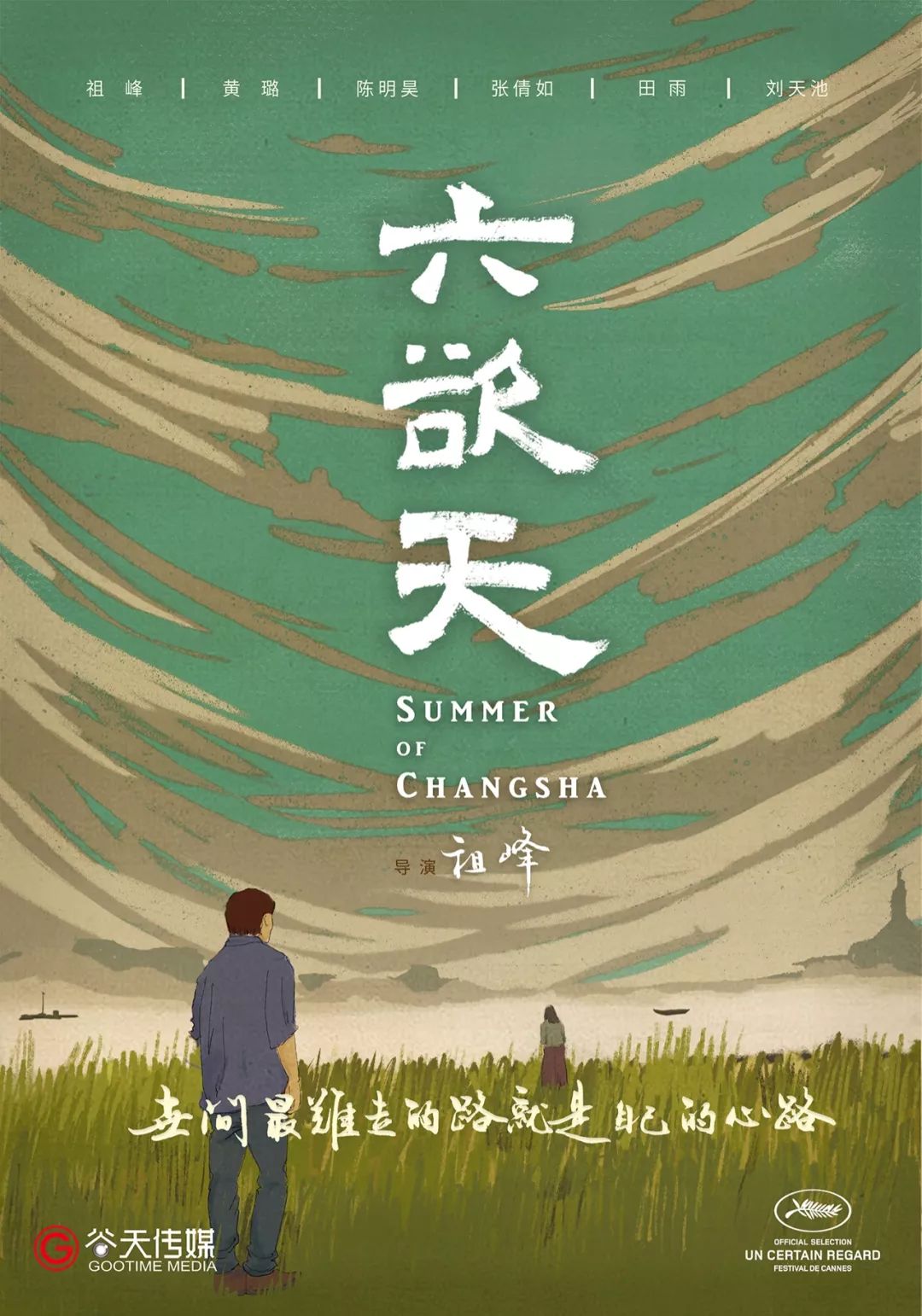
Summer of Changsha poster 1Escaping from the traumatic past is fast becoming a favourite theme of Chinese cinema, but Summer of Changsha (Liù Yù Tiān) swerves away from the neon-lit, rain-drenched streets of your average melancholy police procedural for the fetid air of sun-baked provincial China where death haunts the shadows. Each dealing (or failing to deal) with guilt and responsibility, a depressed detective and seemingly emotionless doctor bond through a shared sense of impossibility only to discover that there may be a way out after all only not of the kind they might have assumed.

Detective Bin (Zu Feng) has already handed in his resignation but has no real plans for his post-police life. Consumed by powerlessness and regret over failing to prevent the death by suicide of his girlfriend who had been living with longterm depression, he cannot seem to find a place for himself back in the world. When a severed arm is fished up from a local lake, he gets a new sense of purpose and eventually connects the lonely limb to a missing persons ad found after trawling the internet which mentions a prominent scar on the right hand.

The ad was placed by a doctor, Li Xue (Huang Lu), who emotionlessly confirms to Bin and his earthier partner Lei (Chen Minghao) that she believes the hand to be her brother’s, shocking them by correctly guessing where they might have found it. Xue tells them that her brother Yi appeared to her in a dream and showed her where the rest of his body parts are – something later confirmed to be true when the three drive out to a remote spot and dig up a suitcase buried under a tree.

Strangely, Bin takes the “dream” theory at face value with only Lei seemingly unconvinced. He never quite entertains the obvious conclusion that Xue knows where the body parts are because she put them there, even after discovering that the pair were seen to be arguing recently and that their relationship became strained after a tragic accident during which Xue’s daughter, who was suffering with a heart condition, sadly passed away.

What draws Bin to Xue is a shared sadness, a deepening gulf of introspection which, ironically, convinces them they exist outside of regular society and should not permit themselves genuine human connections. Xue’s animosity towards her brother, it seems, was less because of what happened to her daughter than because of his conversion to Buddhism which had, she felt, allowed him to move on and start to forget about their past. By contrast, Xue condemns herself to a life of suffering as atonement, wilfully carrying on an affair with a married surgeon (Tian Yu) she doesn’t seem to like very much solely because his research area was closely connected to her daughter’s condition and if she’d lived he might have saved her. Bin, meanwhile, criticises his partner Lei for trying to ghost a girlfriend, cute as a button Ting Ting (Zhang Qianru), because he thought she was annoying, but finds himself doing the same thing after he sleeps with her when she approaches him for comfort only for her to become emotionally attached.

Ting Ting wants to help him overcome his emotional pain, but Bin isn’t sure he can. Like Xue, his grief and guilt have made him selfish and self-involved. Reconnecting with his late girlfriend’s family, he has the urge to make some kind of confession in order to ease his burden only for her sister (Liu Tianchi) to rightly round him for the cruelty of what he’s about to do. She was just starting to move on with her life, and now Bin’s sudden chattiness seems primed to stir everything up again. His desire to ease his conscience is entirely for his own benefit whatever he might say about wanting the family to know the truth. Each conflicted by their awkward connection, neither Xue or Bin can see a way out of their suffering because they don’t believe they deserve one.

To stave off the inevitable, they continue investigating the mysteries behind Yi’s death but the answers they find turn out to be depressingly banal. While a mysterious collective of Buddhists release fish back into the rivers (perhaps not as responsible as it first sounds), the pair remain similarly trapped in a solipsistic world of suffering little realising the consequences of their (in)actions on those around them. Yet solving the case in its entirety does at least offer the opportunity of new beginnings, however far they choose to take them. A detached exploration of the entrenched effects of trauma, guilt, and regret, Summer of Changsha is not quite the film it first appears to be but an icy journey from the cold heat of summer into the unexpected warmth of winter snow as its dejected leads learn to look for new directions towards a less uncomfortable future.


Summer of Changsha was screened as part of the 2019 London East Asia Film Festival.

Original trailer (English subtitles)

Never Say Die (羞羞的铁拳, Song Yang & Zhang Chiyu, 2017)

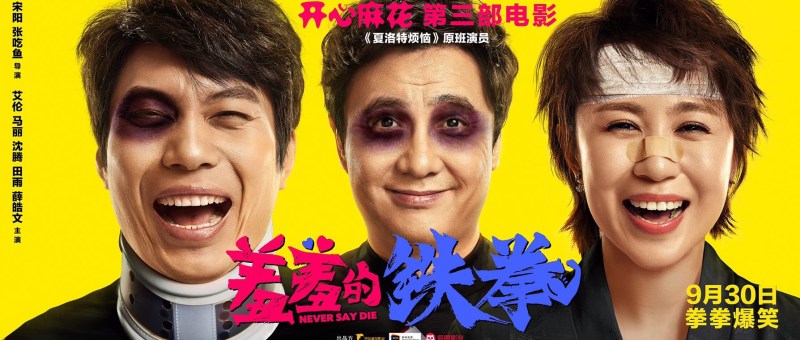
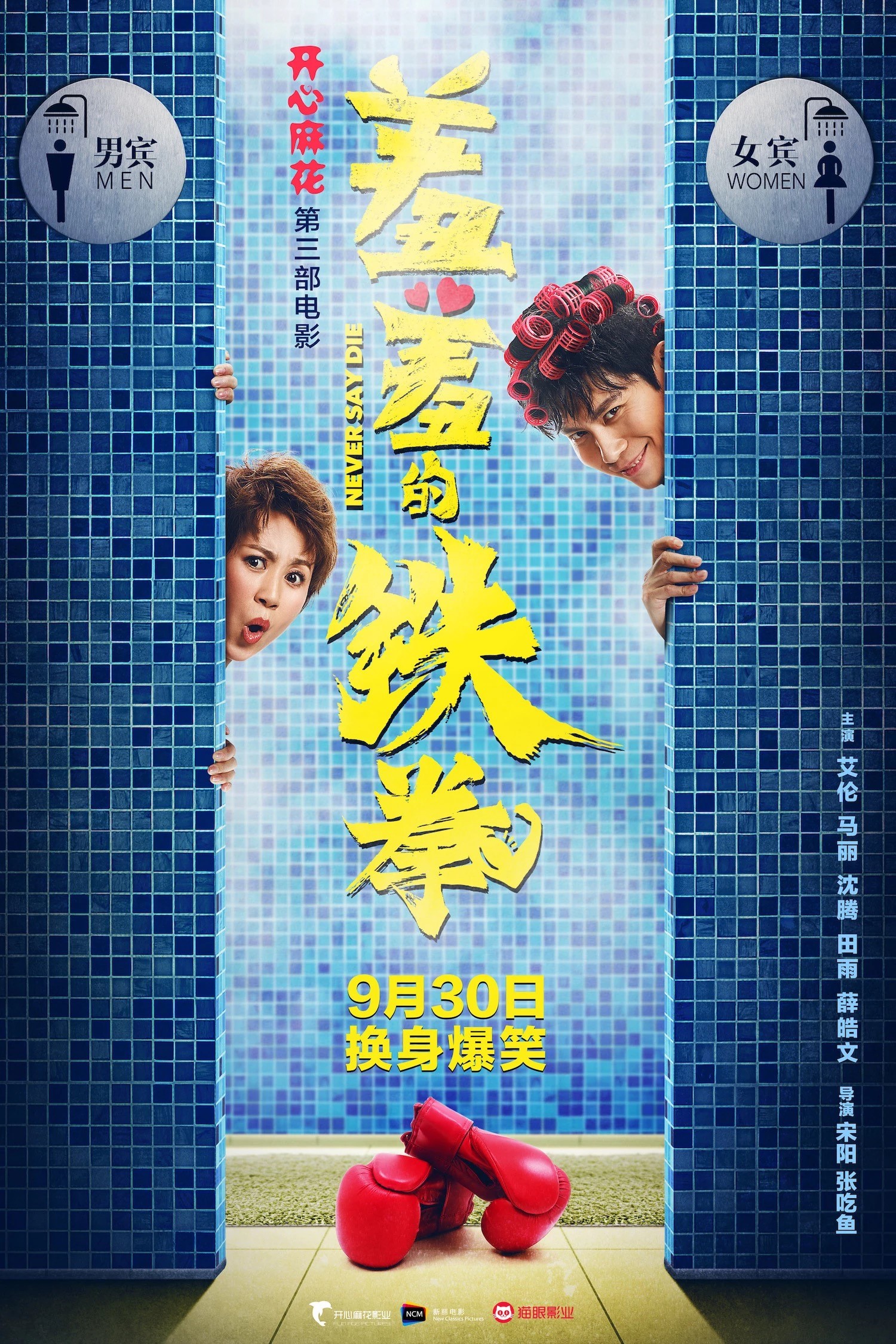
Never say die posterBody swapping drama seems to have come back in style of late, though they’ve rarely been as funny as the surprisingly laugh out loud Chinese comedy Never Say Die (羞羞的铁拳, Xiūxiū de Tiěquán). Based on a stage play by the Chinese theatre company Mahua whose last effort Goodbye Mr. Loser did something similar only with time travel, Never Say Die is a story of never giving up, always getting even, and learning to understand yourself through someone else’s eyes.

Edison (Ai Lun) was once an MMA champion, but a scandal three years previously has left him disgraced and reduced to taking dives for his shady boss, Dong (Tian Yu). Edison has a reputation for being good at taking dives because he can make them look so “realistic”, and believes his special talent ought to earn him a few more dollars. Seconds after dramatically hitting the mat, Edison gets a call reminding him he’s late for a weigh-in at a “real” fight. When he gets there he’s confronted by a bulldog reporter, Xiao (Ma Li), who questions him about his history of taking bribes. Reacting angrily, Edison soon realises Xiao’s boyfriend is none other than top MMA fighter and arch-rival Wu Liang (Haowen Xue).

Just to make things more complicated, Xiao is also the daughter of Edison’s manager, Dong, whom she hates and is determined to expose for his corrupt dealings. Edison chases after Xiao when he and Dong discover her recording a very compromising conversation but after ignoring a warning sign the pair end up on a rooftop during a thunderstorm. Edison bumps into Xiao, kissing her by mistake and pushing her into the pool in which they then both get struck by lightning. Waking up in hospital, each of them discovers they’ve come back a little different than they remembered.

This being China with its relatively stringent censorship laws, the body gags are kept to a minimum with Xiao suddenly dropping her reporter’s poise for “manly” roughness and Edison becoming subtly effeminate. Both are horrified by the sudden colonisation of their own bodies and resentful that in order to look after it properly someone they intensely dislike is going to have to be very aware of their most intimate features. This is especially true of Edison who reacts to his new found femininity in the predictable way by fondling his own breasts and then having a fantastic time in a ladies’ only bathhouse (an extended set piece ironically set to YMCA).

The gag is simple enough but actors Ai Lun and Ma Li commit so totally to their new roles that the increasingly absurd situations ring true right up until the trio end up learning Kung Fu from a possibly gay, resentful deputy chief monk (Teng Shen) at a mountain retreat. Veering off from the standard rom-com route, Never Say Die makes a brief sojourn in revenge genre after Xiao finds out some unpleasant facts about Wu Liang (through being Edison) and decides she needs to get her own back by humiliating him in the MMA ring. Edison may have been a champ, but despite his physical training, Xiao is still an elegant female reporter who’s not exactly used to being in the middle of a fight.

Never Say Die does not manage to escape the inherently sexist bias of the gender swap movie, but it does its best to mitigate it. It is problematic, in one sense, that Xiao needs to “man up” to get revenge on her dreadful boyfriend and then is sidelined when it comes time for Edison finish the job for her, but on the other hand she is the more capable and pragmatic of the pair who teaches Edison how to get himself together whilst playing a supporting rather than leading role. Perhaps betraying its comedy stage show routes, the script may appear episodic and meandering but it’s all brought together in grand fashion at the end with nary a gag wasted. The lesson is that eventually you have to get off your high horse and really look at yourself and others whilst resolutely refusing to back down to dishonest bullies if you really want to earn the right to be happy in yourself. Hilarious and emotionally satisfying in equal measure, Never Say Die is an unexpected comic delight which proves surprisingly subversive even in its superficial innocence.


Currently on limited release in UK cinemas courtesy of Chopflix.

Original trailer (Mandarin, no subtitles)