The Killing Machine (少林寺拳法, Norifumi Suzuki, 1975)

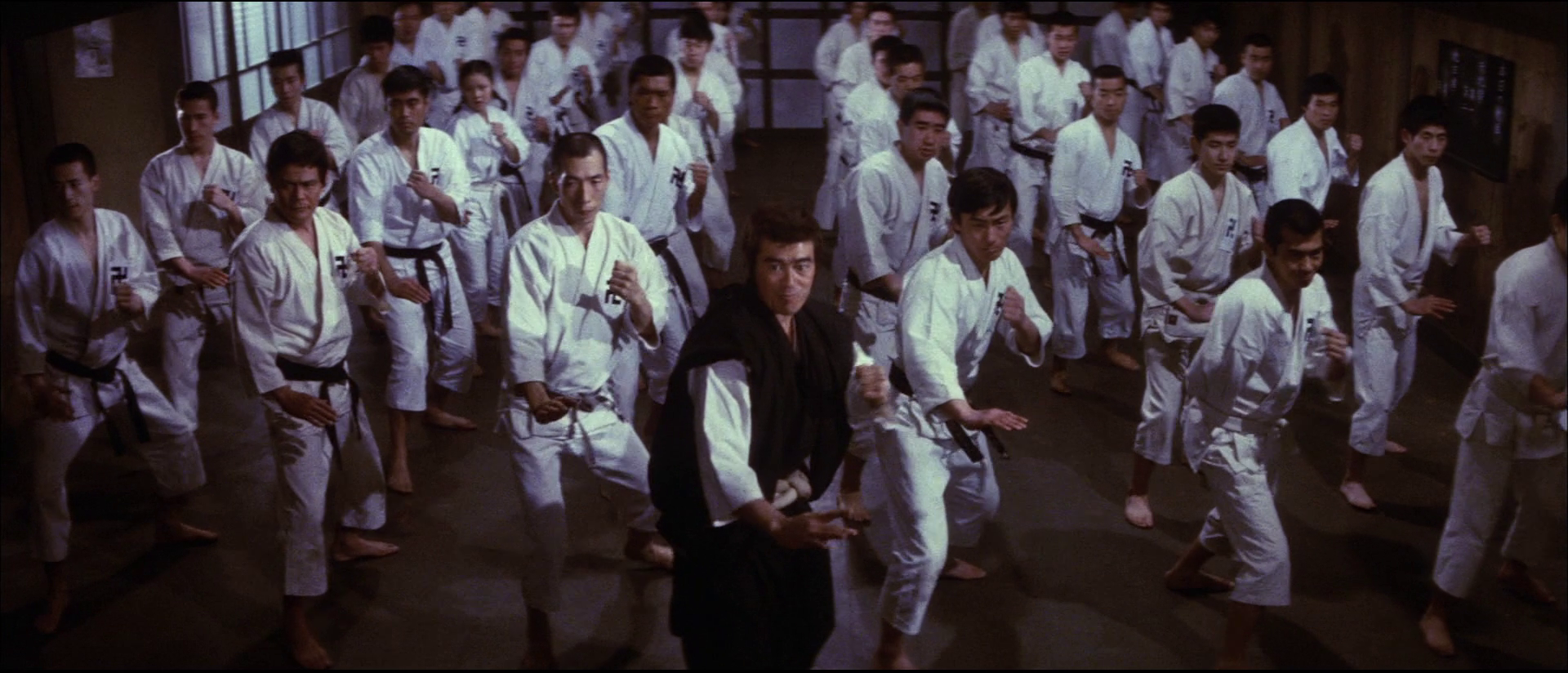
“As long as somebody like you is around, there’s hope for Japan,” an oddly sympathetic prison warden says to the last patriot standing in post-war Osaka. The title of Norifumi Suzuki’s Sonny Chiba vehicle The Killing Machine (少林寺拳法, Shorinji Kempo) maybe somewhat inappropriate or at least potentially misleading as the film is deliberately constructed as a martial arts parable emphasising the spiritual philosophy of self-improvement and compassion that is inextricable from its practice.

To that extent, the hero, Soh Doushin (Shinichi Chiba), is trying to fight his way out of the miasmas of the immediate post-war era. As may be apparent, Soh has taken a Chinese name, though Soh was apparently his along and belonged to a former samurai family whose nobility has been crushed by militarism. As the film opens, however, he’s a Japanese secret service operative in Manchuria blindsided by the news of Japan’s surrender. Soh is it seems a nationalist and a patriot, but a fairly revisionist one who stands up to the abuses of the Japanese army. He later says that he protested the way that the local Chinese population were often treated and he does indeed raise a fist toward an officer who wants to sell a young Japanese woman to a Chinese soldier in return for a guarantee of their safe passage to a boat heading out of the country. The young woman’s mother protests that she is an innocent virgin, a fact that has some later relevance. Soh refuses to let the officers take her, though evidently separated from her later.

When he meets the young woman again in the bomb-damaged backstreets of Occupation Osaka, she is dressed in Western clothing as opposed to the smart kimono she wore in Manchuria and is about to become a “pan pan” or streetwalking sex worker catering to American servicemen. Of course, Soh can’t let this happen either, but as she later tells him, she was raped by Russian soldiers during the retreat and now feels herself to be despoiled. She never wears kimono again and becomes a kind of symbol for a despoiled nation that Soh is reluctantly forced to accept he cannot save in part because his philosophy, which is still uncomfortably rooted in the philosophy of militarism, only valued strength when it should have valued love. The kind of love that Kiku (Yutaka Nakajima) had for her brother that made her willing to sacrifice herself for his wellbeing. 

Even so, Soh is doing his best to issue a course correction by caring for a small group of war orphans and helping them support themselves by running a rice soup stall so they won’t end up becoming dependent on the yakuza or the black market. It’s the yakuza and their increasingly corporatising nature that become Soh’s chief enemies, though standing right behind them are the Occupation Forces. They are, of course, just the biggest gang, as we can see when one of the kids steals a few tins from the gangster’s crate which is marked with text making it clear it came from the mess hall at the American base. The backstreets are full of sleazy soldiers and pan pans or otherwise the starving and dejected, sometimes violent demobbed soldiers filled with despair. It’s these men that Soh wants to buck up, telling them to rediscover their fighting spirit and giving them the opportunity to do so through learning Shaolin martial arts.

Of course there are those who don’t want to learn Chinese kung fu in the midst of their defeat, but what Soh is advocating is something that has a greater spiritual application even than karate can also have. It’s a kind of humanitarian riposte to the futility of the post-war society that might sometimes fail to recognise the depths of the impossibility faced by many in insisting they can be faced by discipline and moral fortitude but at the same time is not really judgemental except toward those who have deliberately abandoned their humanity, such as the trio of goons who rape a school for amusement (the girl is later seen among the students at Soh’s school along with the children from Osaka). The girl’s father reports it to the police, but the police and the gangsters are in cahoots, so nothing gets done. Soh cuts the guy’s bits off so he won’t be doing that again. Strength without justice is violence, he realises. But justice without strength is inability. Strength and love like body and mind should never be separated. The closing shots show an entire mountain covered in white-clad figures practising Shaolin kung fu and joining the humanitarian revolution rather than the cruel and selfish one represented by the gangsters with their red-light districts and black markets. It may be a simplistic solution, but it is in its way satisfying and at least a rejection both of the militarist past and the capitalistic future.


*Norifumi Suzuki’s name is actually “Noribumi” but he has become known as “Norifumi” to English-speaking audiences.
Roaring Fire (吼えろ鉄拳, Norifumi Suzuki, 1981)

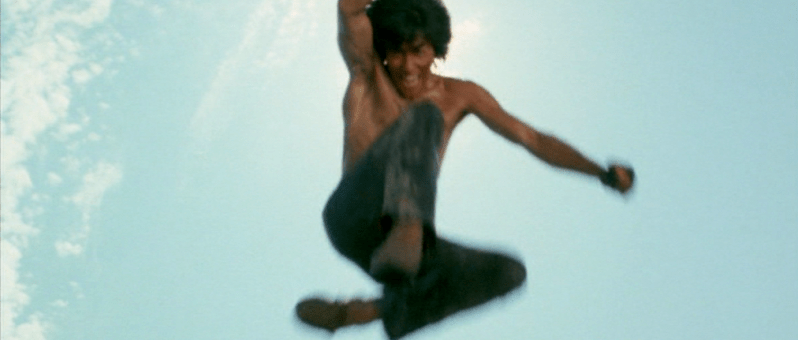
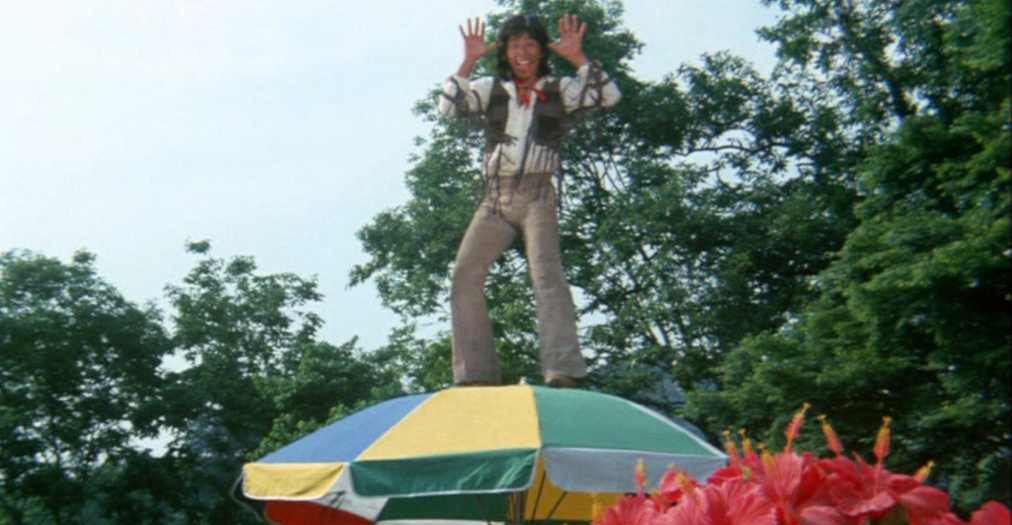
If Chiba’s karate films and the Sister Streetfighter series had been influenced by Shaw Brother’s kung fu films, Roaring Fire (吼えろ鉄拳, Hoero Tekken) is an homage to contemporary action and in some senses anticipates Jackie Chan and heroic bloodshed though in other ways harking back to the classic serial with its diamond-themed MacGuffin. A vehicle for rising action star Hiroyuki Sanada, the film reflects a new internationalist Japan but also confronts the toxic legacy of the feudal past in the fall of a once noble house.

Joji (Hiroyuki Sanada) has spent his entire life on a ranch in Texas only to discover from a deathbed confession by the man that he thought was his father that he had been kidnapped as an infant and is actually the son of the wealthy Hinohara family. But on travelling there, he immediately finds himself in the middle of a conspiracy. His twin brother Toru has gone missing after going to London to study ophthalmology in order to cure his sister Chihiro’s (Etsuko Shihomi) eye condition. Though his uncle, Ikki (Mikio Narita), welcomes him with open arms, a weird ventriloquist act by a man called Mr. Magic (Shinichi Chiba) that he’s taken to see suggests that the plane crash his parents died in may not have been an accident and his uncle killed them to take over the family business. 

Ikki is mixed up in the drugs trade with Hong Kong Triads and in keeping with Suzuki’s other films, we once again have a new solution to smuggling in hiding drugs in underripe banana skins. Lured to Ikki’s underground lair which has a large photo of Hitler on the wall and other Nazi memorabilia scattered around, Joji is given the “join us or die” speech, but ultimately manages to escape with some help from Abdullah the Butcher who is working as some kind of bodyguard but apparently takes a liking to Joji and declares they will be the best of friends forever after their initial fight. In any case, we soon realise that Ikki’s purpose in life is feudal revenge in that his mother was a geisha who died young because of her poverty and the nature of her work while staring at the Hinohiras’ giant mansion though his father apparently took no responsibility for him until after his mother died. His only goal in life is to take over the estate and otherwise destroy the rest of the family that never fully accepted him. 

Of course, Joji is in his way, but Joji doesn’t really want this legacy either and only wants to save his sister who turns out to be a kung fu ace despite her blindness but is otherwise unable to escape. In his final confrontation with Ikki, he reclaims the name of the man who raised him, Hibiki, and rejects that of Hinohara as if symbolically refusing his feudal inheritance. Mr Magic, really an Interpol agent, makes an executive decision to let him go which is also a representative authority figure setting him, and the younger generation, free from the feudal legacy to live a more international life. 

Nevertheless, Suzuki fills the film with a series of high-impact action sequences and extreme stunt work such as a crazy bus chase through Hong Kong which predates that in Police Story by a few years. The shuttles back and forth between Hong Kong and Japan, but it’s clear here that Ikki and his weird Nazi cohorts are the villains rather than the Hong Kong gangsters who really just exist and otherwise only factor into the story because of their desire for Queen of Sheba diamond that Joji’s birth father hid before he died so Ikki wouldn’t get his hands on it. A possibly poor taste allusion to the holocaust aside, Suzuki sticks to the plucky teen adventure format in which Joji gets into fights with the local guys and is quickly befriended by Chihiro’s teenage friends who all hang out at the mansion, rather than opt for a gloomy sense of paranoia and conspiracy even as Joji finds himself at the centre of a Hamlet-esque plot in which his uncle has usurped the throne and he must return to set it right. Yet rather than restoring the existing order, Joji effectively resets it by ending the family’s influence and then moving on into a freer existence shorn of filial responsibilities. 


Trailer (no subtitles)

Wolf Guy (ウルフガイ 燃えよ狼男, Kazuhiko Yamaguchi, 1975)

Wolf Guy posterUniversal’s Monster series might have a lot to answer for in creating a cinematic canon of ambiguous “heroes” who are by turns both worthy of pity and the embodiment of somehow unnatural evil. Despite the enduring popularity of Dracula, Frankenstein (dropping his “monster” monicker and acceding to his master’s name even if not quite his identity), and even The Mummy, the Wolf Man has, appropriately enough, remained a shadowy figure relegated to a substratum of second-rate classics. Kazuhiko Yamaguchi’s Wolf Guy (ウルフガイ 燃えよ狼男, Wolf Guy: Moero Okami Otoko, AKA Wolfguy: Enraged Lycanthrope) is no exception to this rule and in any case pays little more than lip service to werewolf lore. An adaptation of a popular manga, Wolf Guy is one among dozens of disposable B-movies starring action hero Sonny Chiba which have languished in obscurity save for the attentions of dedicated superfans, but sure as a full moon its time has come again.

Chiba plays Inugami (literally “dog god”, in Japanese folklore an Inugami is a vengeful dog spirit which can possess people in times of emotional extremity), a melancholy reporter with a reputation for getting himself into trouble who comes across a strange scene in the street in which a white suited man begins raving about a tiger before being gored to death by invisible forces. The police, dragging in Inugami for questioning, can’t come up with anything better than demons to explain such strange events but Inugami’s interest is piqued – more so when he runs into a shady paparazzo who tips him off to similar crimes all targeting a rock band run by a prominent talent agency.

Wolf Guy is not the most coherent of films, it explains itself piecemeal as it goes along and mostly through Inugami’s own world-weary voiceover. Despite this immediate access to Inugami’s psyche, he remains aloof, brooding, and distant. Literally a lone wolf, Inugami is the last of his kind – the little boy saved from a massacre in the black and white still frames of the opening sequence. Yamaguchi chooses not to engage with this theme on much more than a surface level though he maintains a low-level anger towards corrupt authority and those who attempt to wield power from the shadows, targeting the different or the weak.

Through this deeply held feeling of alienated otherness, Inugami comes to feel an intense kinship with the wronged woman at the centre of the curse. Miki (Etsuko Nami) is even more a victim of this intense authoritarianism than Inugami himself. A working class nightclub singer in love with a politician’s son, Miki becomes a problem for her potential father-in-law, one which he solves with gang rape and infection with syphilis. Dumped, alone, infected, and also hooked on drugs, Miki’s mental state is understandably volatile but her troubles are not yet over. The mysterious tiger and Inugami’s wolf man attributes bring the pair to the attentions of a shady group intent on harnessing these unique supernatural powers for themselves with no regard for the “human” cost involved.

Inugami sympathises with Miki out of a shared hatred for “humans” who can treat each other in such inhumane ways. Humans massacred his family and when he tries to go home, the sons of the men who did it seem to know who he is and want to finish the job. Lonely and afraid, Inugami starts to wonder if humans and his own kind will ever be able to live together in harmony. Though he does begin to form brief romantic relationships, none of them end well. It’s almost a running joke that he’s irresistible to every woman in the film, but as much as they run to him they run to death – his love is toxic and even the invulnerability conferred by the moon is unable to save the women in his life from the violence of mortal men. Yet for all his sadness and internalised rage, the Wolf Guy is a hippy hero, the kind who throws away his gun and chooses to retreat in peace rather than fight on in a pointless and internecine quest for vengeance.

Rather than a story of humanity overturned by overwhelming, irrational emotional forces, Wolf Guy presents a hero perfectly in tune with his emotional life even if imbued with Chiba’s iconic coolness. This is not a “werewolf” story, Chiba never transforms nor does he lose himself at the sight of a full moon – rather it strengthens, sustains, and protects him. This almost new age idea gels well with the generally psychedelic approach filled with groovy ‘70s guitar, whip pans, zooms and crazy action though the film certainly goes to some dark places including an extremely unsettling surgery scene followed by an equally disturbing one of healing body horror in which exposed intestines rearrange themselves neatly inside the stomach cavity which then begins to knit itself together again. An eccentric, essentially disposable offering, Wolf Guy makes no real attempt at coherence but is willing to embrace just about every kind of madcap idea which presents itself. Strange, absurd, and all the better for it Wolf Guy is one wild ride but also has its heart in the right place as its melancholy hero heads out into the mountains, a self-exile from a cruel and unforgiving world.


Wolf Guy is released on Dual Format DVD & Blu-ray in the US and UK on 22nd/23rd May 2017 courtesy of Arrow Video.

Arrow release EPK video