Dead to Rights (南京照相馆, Shen Ao, 2025)

“All you have to do is survive,” turncoat translator Guanghai (Wang Chuanjun) tells his conflicted mistress Yuxiu (Gao Ye) in trying to justify his decision to collaborate with the Japanese whom he assumes will end up winning this war and taking control of China’s future. Perhaps his strategy is understandable, even sensible in some ways, in allying himself with an invading force and using them for protection while trying to get his hands on exit visas for his wife, son ,and mistress too, but is this level of complicity really permissible given the unfolding atrocities all around him?

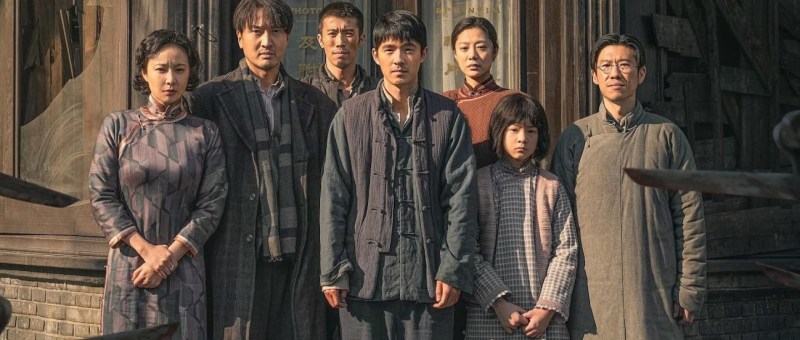
Released to mark the 80th anniversary of the end of the war, Shen Ao’s gritty drama is inspired by the efforts to expose the horror of the Nanjing Massacre, though it was not actually exposed in the way the film implies. This might explain the strangeness of the English language title which is perhaps intended to signify that they have the Japanese bang to rights for the atrocities they committed because of the photo evidence which they themselves took. A young Japanese officer, Hideo Ito (Daichi Harashima), whom the film seems to imply is a descendant of Hirobumi Ito who was assassinated by Korean Independence activists in Harbin in 1909, is employed as a war photographer having apparently been given this position to keep him safe while fulfilling his elite family’s military duty. Ito appears in some ways conflicted but in others indifferent to the chaos around him. He cheerfully takes photographs of Japanese soldiers holding the heads of Chinese citizens they’ve beheaded or bayoneting babies, and is genuinely confused when his pictures come back marked “no good” because he thought they’d be good for encouraging morale rather than evidence of inhuman depravity that would dishonour his fellow countrymen. 

Neverheless, he baulks at the idea of killing anyone himself which is one reason he looks for an excuse not shoot Ah Chang (Liu Haoran), a postman caught in the street trying to flee the city. Noticing a photo album that fell out of his postbag, Ito asks him if he knows how to develop photographs. Chang nods to everything he says to save his own life and Ito makes him his personal developer. Of course, Chang doesn’t know anything about photography, but is unexpectedly saved first by Guanghai who realises he’s not who he says he is but says nothing, and then by the owner of the photo studio, Jin (Wang Xiao), who is hiding in the basement with his wife and two children. Chang develops the photos with Jin’s help, but becomes conflicted on discovering those of the atrocities in feeling as if by developing them he has become complicit in the Japanese’s crimes. 

Ito insists that he and Chang are “friends”. When the Japanese marched into the city, they said they’d abide by the Geneva Convention and surrendering soldiers would be treated kindly. They repeatedly state that it’s the Chinese who have spurned their “friendship” by resisting them, but the Japanese soldiers refer to the Chinese as pigs and dogs, raping, killing, and pillaging without a second thought. One of the women at Yuxiu’s theatre tries to flee but is caught and made into a comfort woman later losing her mind. Yuxiu too is raped by Japanese soldiers after being forced to sing Peking Opera for them, which they do not really appreciate, just as the soldiers other than Ito fail to recognise the value of traditional Chinese art. 

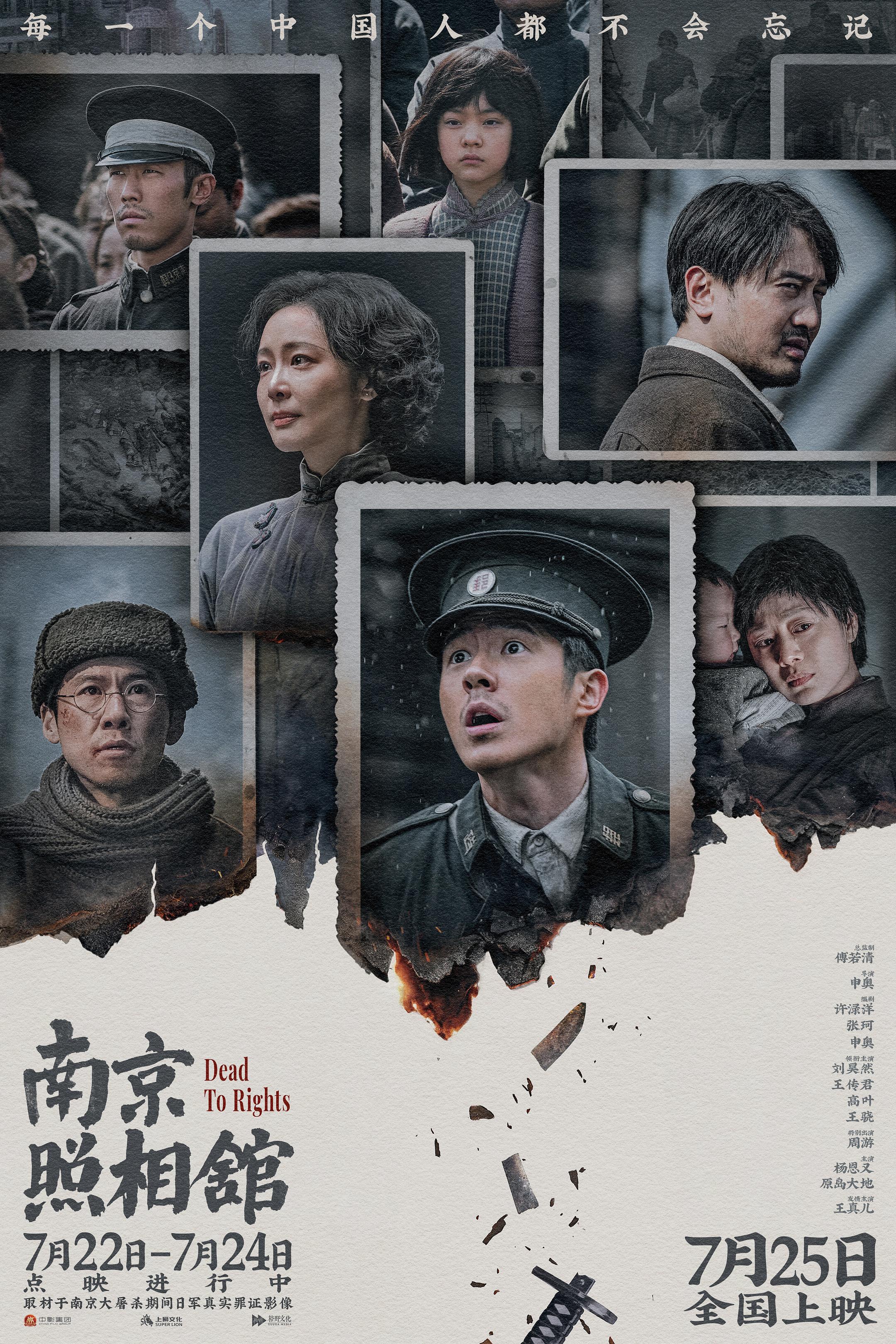
In what’s become a famous and potentially incendiary line, Chang eventually fires back that “we are not friends” and it’s true enough that the film is also, to some extent, indulging in a contemporary anti-Japanese sentiment which has already led to violence. The poster tagline reads “No Chinese person can ever forget”. Nevertheless, it largely avoids overt propaganda aside from some jabs at the KMT who fire on their own soldiers and featuring a large picture of Chiang Kai-shek who abandoned Nanjing which had been the capital, ceding it to the Japanese and retreating to Wuhan, until the second half of the film in which Jin flicks through the various backdrops he has of famous Chinese landmarks and Chang remarks “not one inch less” emphasising that in any era China will give no ground. The sentiment undoubtedly also applies to “lost” territories to which the Mainland thinks it has a claim such as Taiwan.

The act of photography thereby becomes a means of resistance in turning the images that Ito had intended to be pro-Japanese propaganda into those which will eventually damn them. Chang and Yuxiu are forced to pose with a dead baby murdered by a Japanese soldier as part of Ito’s staged photoshoot designed to disprove the earlier pictures in insisting that the Chinese population have welcomed the Japanese and are happy to be citizens of its empire, but discover their way of resisting in reversing the historical truth by keeping hold of the negatives. 

But Ito is perhaps, like Guanghai, caught out by his own naivety in failing to realise that allowing Chang to develop the photos has also made him a witness, so now he knows too much. Though he originally tries to protect him and insists they’re “friends”, Ito soon changes his tune on realising his mistake and that he could end up in trouble if his photos of the atrocities are leaked. Though the generals express distaste and instruct their officers to stop the soldiers rampaging, the local commander, Inoue, tells Ito that they must destroy China to take it which is why he lets the men do as they please in an attempt to break their spirit. But their spirit doesn’t break. Chang and the others continue to plot escape and the eventual exposure of the horrific acts committed by the Japanese in Nanjing. Technically accomplished and elegantly staged, Shen’s harrowing drama seems to say that the truth will out and that sooner or later there will be a reckoning in which all will have to answer for the choices they have made.


Trailer (simplified Chinese / English subtitles)
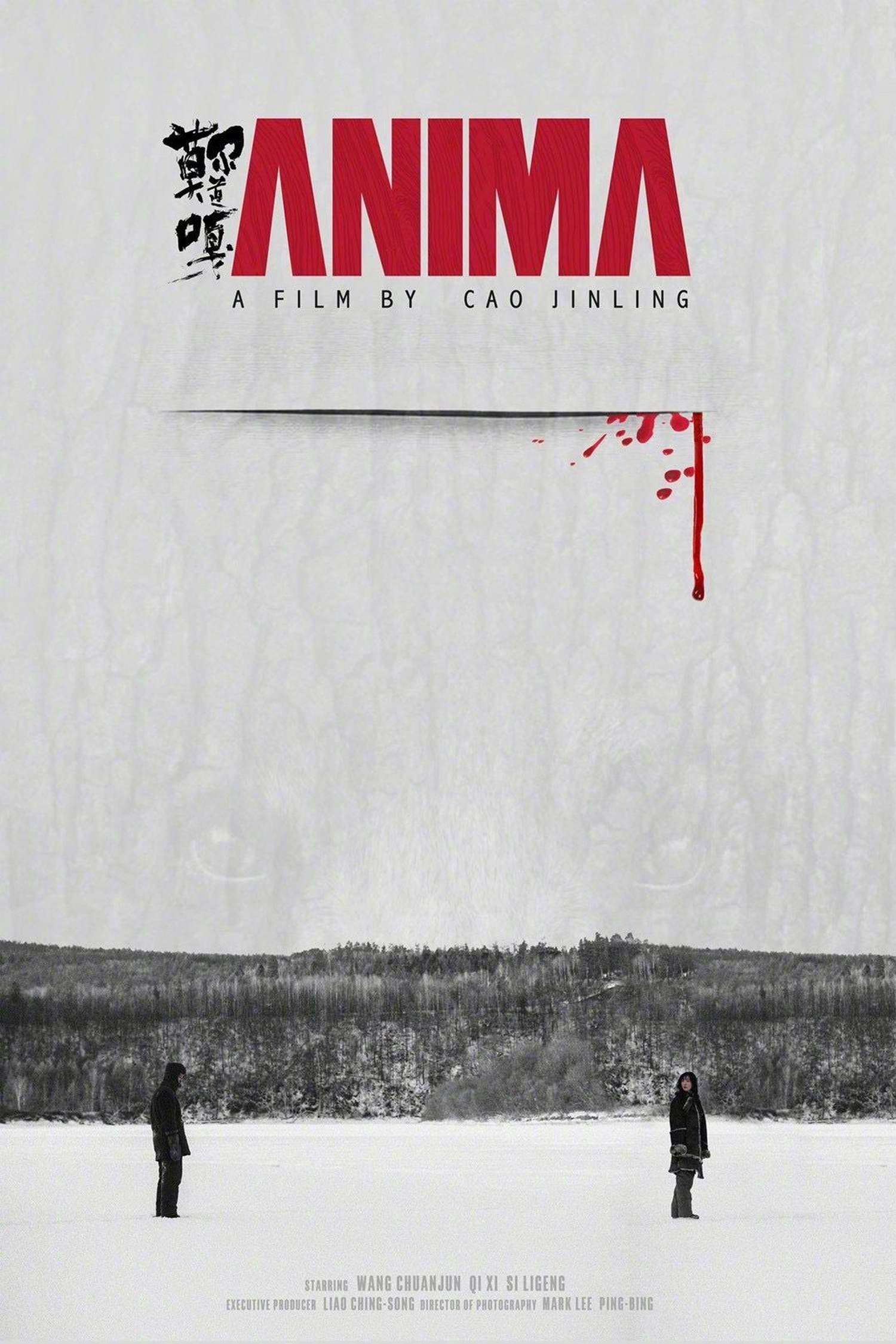
Anima (莫尔道嘎, Cao Jinling, 2020)

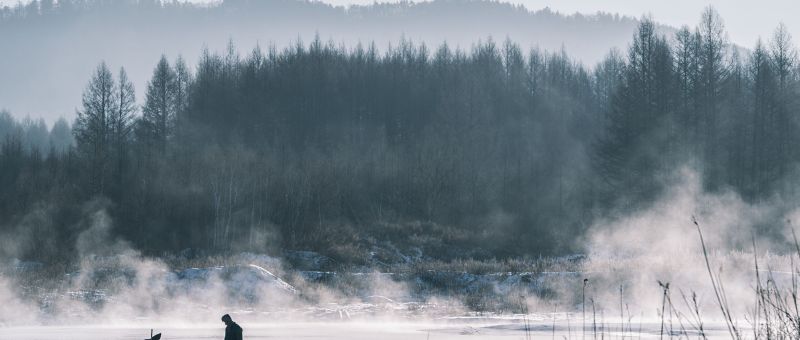
“The trees are not yours. You can’t protect them” an adopted son is repeatedly told, except they are his to the extent that they belong to everyone and the consequences of not protecting them, as he will sadly discover, may prove catastrophic. Set mainly in the 1980s in the remote Inner Mongolian mountain region of Moerdaoga National Forest Park, Cao Jinling’s timely eco drama Anima (莫尔道嘎, Mòěrdàogá) asks what happens when you pull the pegs out of the earth and then take them to market, linking the ‘80s economic reforms with the advent of environmental destruction, but eventually finds a kind of serenity in the beauty of the natural world and man’s innate connection with it. 

Linzi (Wang Chuanjun), so named because he was found abandoned in the forest as a baby, recounts his tale as a letter to the son he has never met beginning with the moment of childhood trauma which forever altered his destiny and set him at odds with adoptive brother Tutu (Si Ligeng). Out playing one winter while the grownups hunted, Linzi fell into an ice cave and found himself face to face with a bear. Though he felt sure the bear would not harm him, it panicked on hearing his mother’s cries. Hoping to save his brother, Tutu shot the bear but their mother was also killed and, as bears are sacred to the indigenous Ewenki tribe, finds himself an outcast for this act of spiritual transgression. The three remaining family members move to the edge of the forest in order to evade the bear’s curse, eventually joining the local logging industry though Linzi finds himself conflicted in his love of nature while all around him are content to ride roughshod over its majesty. 

While Linzi remains a guardian of the forest living a traditional rural life, Tutu is modernity personified falling in with a gang of shady gangsters running an illegal logging and smuggling operation. While the smugglers might be thought of as the bad guys, the logging company are little better. Linzi’s boss expresses exasperation with his reluctance insisting that if they don’t cut the trees down the smugglers will while constantly banging on about his quotas. Obsessed with making money and fearful of an oppressive social order, no one is thinking very much about the long term consequences of deforestation even as Linzi tries to explain to them that it takes a long time to grow a tree and they’re in danger of running out. When the literal flood comes, it will have devastating consequences for all involved. 

Aside from their differing views on the tradition/modernity divide, the relationship between the brothers further declines when Linzi encounters a feisty widow living alone in the forest (Qi Xi), herself transgressively killing bears for reasons of revenge seeing as her late husband was eaten by one. Linzi shyly falls in love with her, but so does Tutu who finds it difficult to accept the idea that his awkward younger brother has got himself a wife. “I am cursed forever” Tutu dramatically cries after having committed a double transgression of killing another bear and presenting its pelt as a wedding present, and then attempting to rape the bride. So traumatised is he by a sense of spiritual corruption that Tutu no longer feels connected to nature, an exile from the natural world, and self-destructively embraces the worst aspects of modernity believing that he deserves no better. 

Yet even Linzi finds himself betraying his ideals in order to feed his family, falling victim to the “tree breath spell” after participating in the removal of a great old tree. People keep telling him that he doesn’t own the trees and therefore has no right to decide what is done with them, but like everyone else he’s a man of the forest continually displaced while his world is dismantled all around him. He tries to warn the loggers they’re going too far, but they don’t listen to him until it’s already too late. The authorities attempt to fix the problem with a program of “reforestation” but if the price of untempered capitalism is the destruction of the natural world it is nothing more than an act of intense self harm. Linzi attempts to hold back the tide, but is himself exiled from modern society, a sprite bound by the forest unable to leave its boundaries and condemned to watch over it for all eternity as if in penance but also in deep love for the wonders of the Earth which few are now privileged to see. 


Anima screens on Aug. 8 at Film at Lincoln Center – Walter Reade Theater as part of this year’s New York Asian Film Festival.

Original trailer (English subtitles)

Dying to Survive (我不是药神, Wen Muye, 2018)

dying to survive poster 1Big box office Chinese comedy continues to run rings round the censors in Wen Muye’s Dying to Survive (我不是药神, Wǒ Bú Shì Yào Shén). Not only does the film display on screen protest movements and tacitly imply that sometimes it’s OK to break the law when you think the law is wrong, but it also dares to criticise the state both for its slowness to introduce socialised healthcare provisions and for its failure to moderate increasing wealth inequality in the rapidly expanding modern economy.

In Shanghai in 2003, our hero Cheng Yong (Xu Zheng) is the proprietor of a shop selling “Indian God Oil”. A divorced father, he is involved in a volatile custody dispute with his ex-wife who has remarried and wants to take their son abroad. Meanwhile, he’s behind on his rent and the god oil business is not exactly booming. That is, until he receives an unusual business proposition. Lv (Wang Chuanjun), a young man suffering from chronic myelogenous leukemia, asks him to begin importing a knock off Indian cancer drug which is a clone copy of the big brand variety at a fraction of the cost. The Indian drug is banned in China, but, Lv argues, not because it’s unsafe – only because Big Pharma is determined to protect its profits at the cost of people’s lives. Yong is not convinced. He knows there are heavy penalties for trafficking “fake” medications, but he needs money for his father’s medical care and to fight for custody of his son and so he decides to give it a go, if for mercenary rather than humanitarian reasons.

Yong’s transformation from schlubby snake oil peddler to (medical) drug dealer extraordinaire is a swift one and perhaps a satirical example of amoral capitalistic excess in his series of moral justifications which allow him to think he’s better than Big Pharma because the price he’s charging is lower even while knowing there are many people who still can’t afford it. Nevertheless, he quickly discovers he has competition. The even more dubious Professor Zhang (Wang Yanhui) claims to have a wonder drug that does the same thing, only it’s really paracetamol cut with flour. Zhang’s duplicity annoys Yong, not just from a competitive angle, but from a humanitarian one as he finds himself sympathising with the poor men and women who are unable to afford the extortionate fees imposed by the mainstream drug companies.

Afraid of the consequences, Yong gives up the drug trade and goes legit, becoming a successful textile merchant rich beyond his wildest dreams. Conveniently, it’s at this point his humanitarianism begins to reawaken as he’s brought back into contact with a sickly Lv who tells him that the smuggling ring has since dissolved. Zhang, irritated by Yong’s moralising, tells him that no real good will come of the “fake” drug trade because the “disease of poverty” can never be cured. Zhang does indeed have a point. These people are dying because they’re poor and have been deemed expendable. Yong’s change of heart may be all for the good, but it’s also fuelled largely by the fact he can now afford not to care very much about money which means he is free to care about other people’s welfare.

Then again, the police chief remonstrates with a conflicted underling that the law trumps sympathy. By this point, they have realised that the drug smuggling ring is close to a public service and people will die if they arrest the ringleaders, but their hands are also tied by the need to preserve order through enforcing the law. The law, however, is also corrupt as we see by the direct presence of Big Pharma sitting right in the incident room and asking the police to act on its behalf. Big Pharma would argue that it invested heavily in the research which led to the medical breakthrough and is entitled to reclaim its costs while those selling knockoffs are nothing more than pirates guilty of intellectual property theft, but the police has a duty to protect its people and a significant conflict when the “victim” is wilfully misusing its economic and political power to coerce it to do their dirty work.

This being a Mainland film, crime cannot pay but Yong manages to emerge from his straitened circumstances in heroic style as he stands both remorseful for having broken the law and angry that he even had to. A series of closing intertitles is quick to remind us that following the real life events which inspired Dying to Survive, the Chinese state began to reconsider its health polices, relaxed the law on “fake” drug trafficking, and took measures to make care more affordable to all. A subversive treat, Dying to Survive is the rare Chinese film which seems to suggest that civil disobedience is an effective weapon against an unfair society, making a hero of its lawbreaking humanitarian as he, ironically, learns to put the collective interest before the individual.


Dying to Survive was screened as part of the 2019 Udine Far East Film Festival.

International trailer (English subtitles)