A Writer’s Odyssey 2 (刺杀小说家2, Lu Yang, 2025)

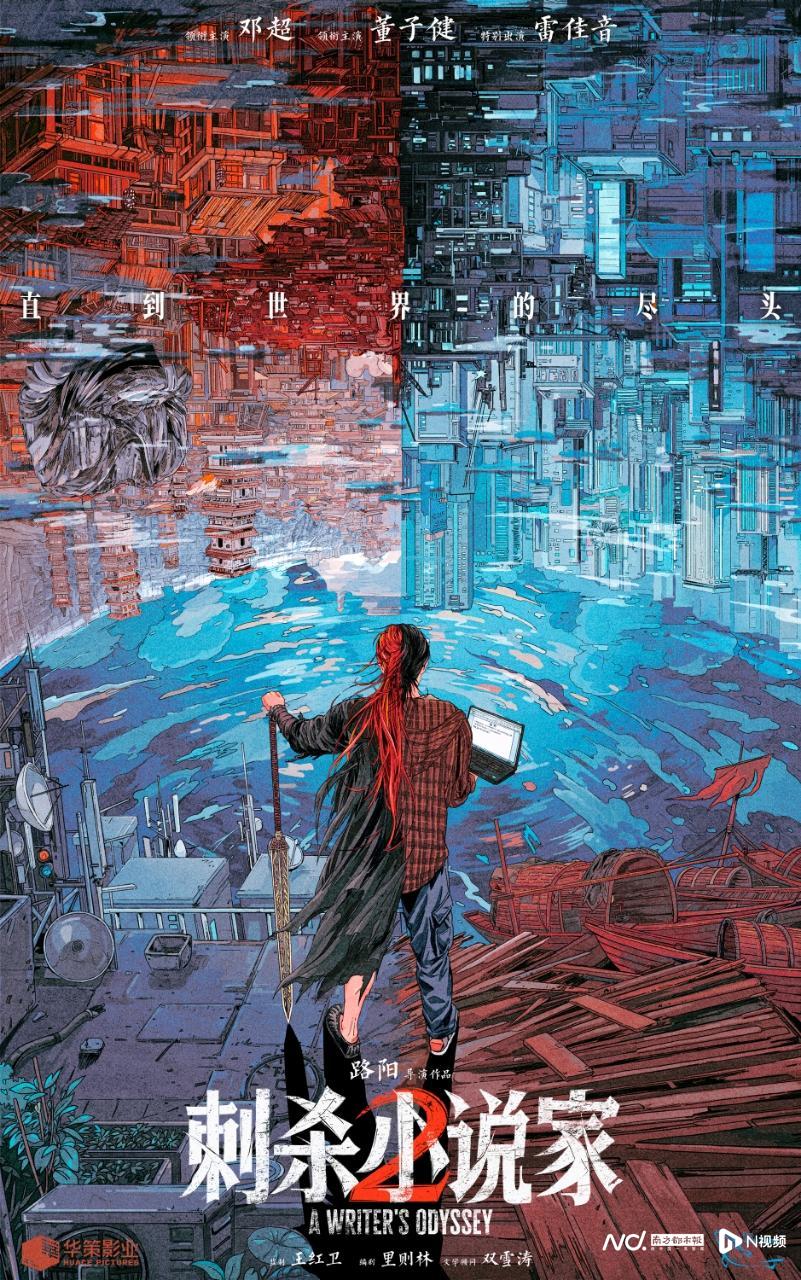
Arriving four whole years after the previous instalment, A Writer’s Odyssey 2 (刺杀小说家2, cìshā xiǎoshuōjiā 2) is in many ways a very different film. While its predecessor was a fairly serious affair tackling some of the issues of the modern China such as child trafficking, machinations of the oligarch class, and generalised capitalistic oppression, the sequel is a typically mainstream fantasy blockbuster complete with some fairly goofy humour and the ultimate message that despotism is bad and people should work for the good of others rather than just themselves.

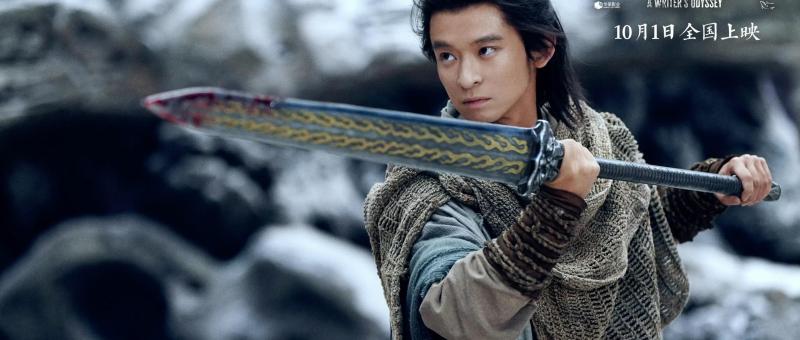
In that regard at least, it’s another pointed attack on authoritarians and corporate bullies like Aladdin’s Li Mu. The entire Aladdin plot is, however, jettisoned, which seems like a missed opportunity, especially as it means that Yang Mi does not reprise her role and we don’t get any answers about who the boy was with Tangerine at the end of the previous film nor whether the “death” of Redmane led to the death of Li Mu in the real world as he feared it would. In truth, even Guan Ning (Lei Jiayin) is somewhat sidelined. Six years later, he, Tangerine (Wang Shendi), and Kongwen (Dong Zijian) are living as a family running a restaurant. Though Kongwen finished his Godslayer novel, it was stolen by an influencer, Cicada (Deng Chao), who accused him of plagiarism which got Kongwen blacklisted in the publishing industry and unable to earn any money through writing. As he’d said in the previous film, it was writing that gave his life meaning so now he’s started to become hopeless and depressed. 

Meanwhile, he’s begun to dream of Ranliang and the return of Redmane who has survived but as a mortal rather than as a god and is determined to get back everything he’s lost. This means, in meta terms, that he wants to challenge “god”, or really Kongwen, whom he sees as the architect of his fate. On the one level, it seems as if he’s trying to insist on his own free will and is sick of being controlled by unseen forces, but in reality he just wants the powers of a god for himself so he can oppress people properly. Nevertheless, this means he has to come to our world in order to square off against Kongwen, the writer.

It has to be said the vision of the real world on offer this time is much glossier and devoid of the kind of darkness that haunted Guan Ning. Though they’re worried because the restaurant’s not doing so well, the trio seem to have pretty nice lives with relatively few other problems outside of Cicada who is now aligned with Redmane in place of Li Mu standing in for a venal class of confluencers. Kongwen is then fighting a war on two fronts as Redmane taunts him to come over to the dark side and turn his fantasy story of good defeating evil into one of nihilistic despair echoing the way that Kongwen feels in his life.

The meta drama of the writer pursued by his characters is resolved in a fairly unexpected way with Kongwen effectively giving up his godlike powers and allowing his characters to save themselves through “mortal courage” rather divine intervention. Though Renliang had been plunged into chaos as the power vacuum Redmane left behind saw his former allies effectively become warlords reenacting the warring states period, in the end it’s solidarity that saves them as they agree to band together to oppose Redmane while offering the possibility of forgiveness if only Redmane can give up his quest for domination and agree to work for the common good. 

Kongwen learns something similar, remembering his writing isn’t solely an economic activity, and not only about himself but giving something back to the world. Torn between the anarchic ambition of Redmane and the righteousness of Jutian (Chang Chen), modelled after his own absent father, he struggles to find meaning amid the injustices of the modern China having been unfairly cancelled by netizens after being falsely accused of plagiarism by the man who stole his story and asks himself if it’s worth sacrificing his friends in a last ditch attempt to save them through teaming up with the forces of darkness. Nevertheless, Lu frames his tale in a much more lighthearted fashion as symbolised by demonic armour Darkshade’s sudden merging with a lettuce to become unexpectedly adorable. As such, it feels like something of a missed opportunity in choosing not to build on the foundations of the first film but sidestep them completely. Even so in upping its production values and the quality of its visual effects, the sequel embraces a new sense of fun which is definitely different but possessed of its own charm.


Trailer (English subtitles)
The Rescue (紧急救援, Dante Lam, 2020)

The rescue poster 3

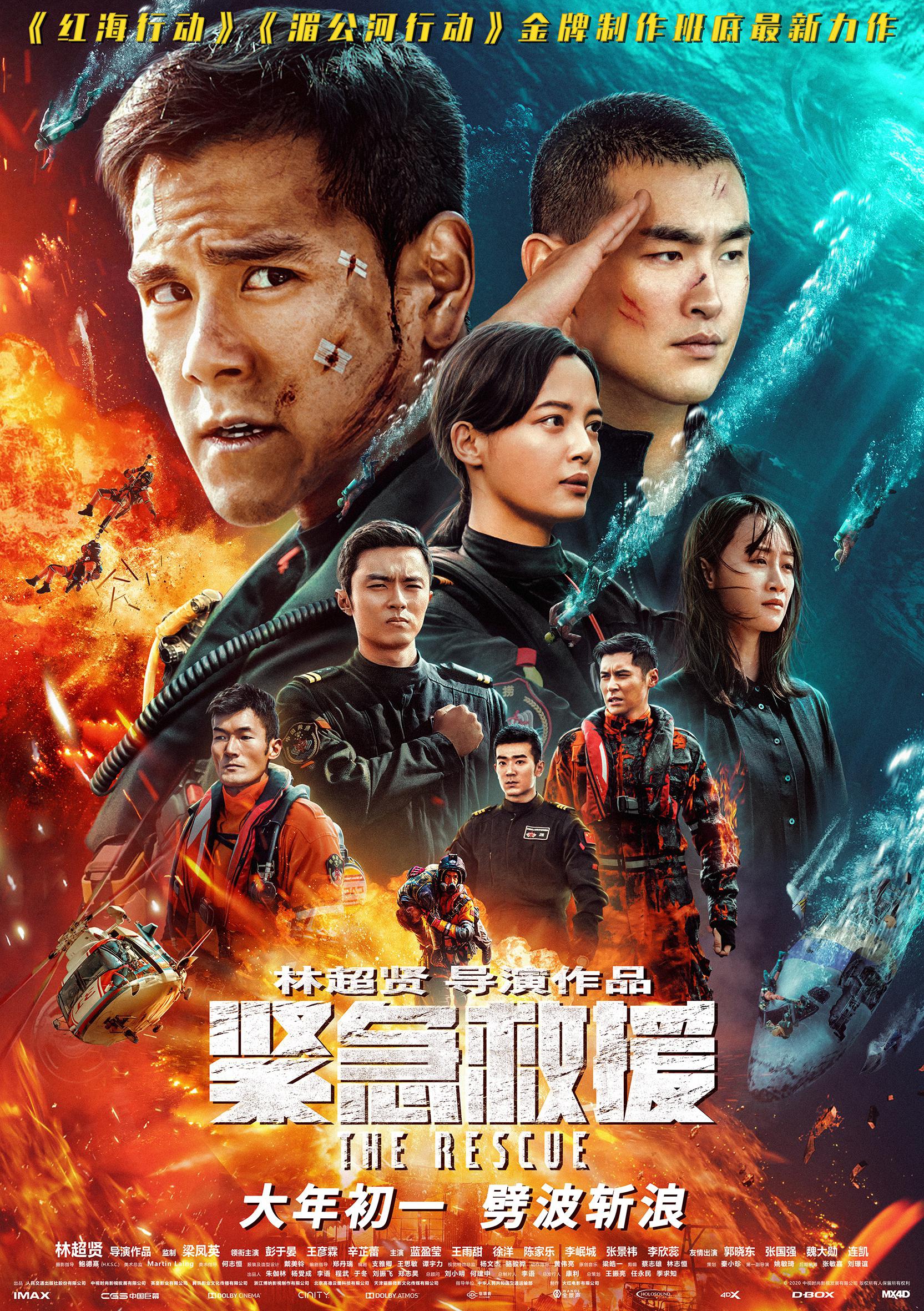
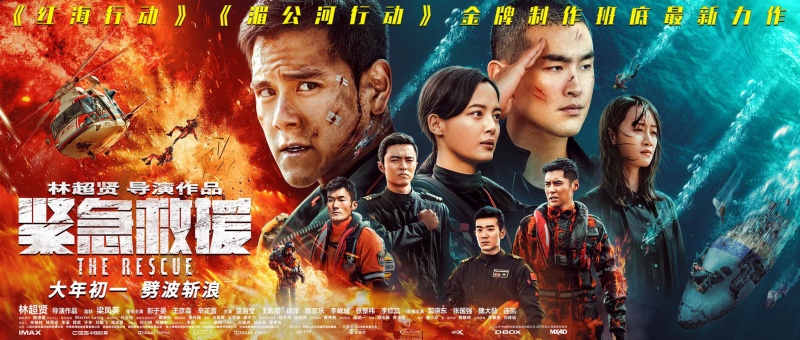
It’s tempting to see Dante Lam’s latest foray into big budget mainland action as a continuation of his previous hits Operation Mekong and Operation Red Sea which paid tribute to the police and navy respectively, but it is also the latest in a series of films featuring China’s finest bravely battling against the odds to save the day. Like Tony Chan’s The Bravest which celebrated the selfless heroism of China’s firemen as they risked their lives to stop a potentially catastrophic fire in an oil refinery, The Rescue (紧急救援, Jǐn Jyuán) pays tribute to another undersung arm of the emergency services – China’s Coast Guard.

Our hero, Captain Gao Qian (Eddie Peng Yu-yen) of China Rescue And Salvage, is a devil-may-care hero who throws himself into danger without a second thought where lives are at stake. The motto of China Rescue And Salvage is “we risk our lives to give others hope”, but some feel that Gao Qian is too reckless with his and fear that he’s forgotten that you can’t save anyone if you get yourself killed playing at heroics. That’s something that’s temporarily brought home to him when the pilot of his helicopter is badly injured during a rescue on an oil rig engulfed by flames, leaving the inexperienced co-pilot to fill-in on his behalf. Gao Qian works his magic in the nick of time, but both of the pilots quit the team immediately afterwards, the pilot struck by the proximity of death and the co-pilot by his sense of inadequacy in feeling as if he failed to live up to the job.

Luckily the team soon get a new pilot – a lady, Yuling (Xin Zhilei), who clashes with Gao Qian in true disaster movie fashion in her desire for rational action and the kind of heroics that are strictly by the book. Against the odds, however, they make a good team, eventually bonding in mutual admiration for their complementary skills. Meanwhile, Gao Qian is also dealing with some home drama in that he’s just brought his young son Congcong (Zhang Jingyi), who had been staying with his grandmother, to live with him. Congcong seems to be suffering with some kind of illness, but is otherwise cheerful enough and hoping that his dad will get him a new mum, like, for example, the beautiful Yuling.

The death of his wife, his son’s illness, and the loss of colleagues he was forced to leave behind, haunt Gao Qian like a cosmic joke, as if he’s being “punished” for snatching so many other lives from the jaws of death. No matter how hard he tries, there are lives which cannot be saved – no helicopter can rescue you from terminal illness or debilitating disease. Nevertheless, he continues to do his best no matter the personal costs. “Everyone has their own battleground, mine is rescue” he tells a superior with determination after his priorities are questioned. In training, the coach reminds the rescuers that their enemy is nature. They push their bodies as far as they can go, willingly risking all to let others know that someone is always looking out for them and will come in their time of need. Faced with certain death, Gao Qian enters an eerily beautiful existential space born of liminality in which he is perhaps able to feel everything that is to be alive while his son, fighting his own battle, does something much the same.

The strangely poetic quality of life in extremis is directly contrasted with the hokey comedy of Gao Qian’s home life and the brotherly comradeship of the base which are both much more of the typical “New Year Movie” mould. Lam fares much better than Chan in heading off the obvious melodrama, though he too resorts to the obvious foreshadowing of a young man daring to get wedding photos taken while planning to risk his life for the greater good, while the quirky production design and wholesome warmth of Gao Qian’s home life as he attempts to make the world safe for his son offer a much needed escape from the anxiety of his disaster-fuelled existence. Unlike that of Red Sea, the world of The Rescue is a more open and hopeful one in which Gao Qian does his best to save everyone who needs saving no matter their nationality, feted far and wide as a hero even if he awkwardly embodies a magnanimous China as a world protector as he does so. Nevertheless, Lam once again manages to elevate his material beyond its propagandist aims, edging towards a more ambivalent contemplation of selfless nobility and the costs of courageous endurance.


In UK cinemas from 25th January courtesy of CMC Pictures. Unfortunately, the release of The Rescue has been postponed because of the Coronavirus outbreak in China. We will update you as soon as we hear of new release date!

Original trailer (English subtitles)