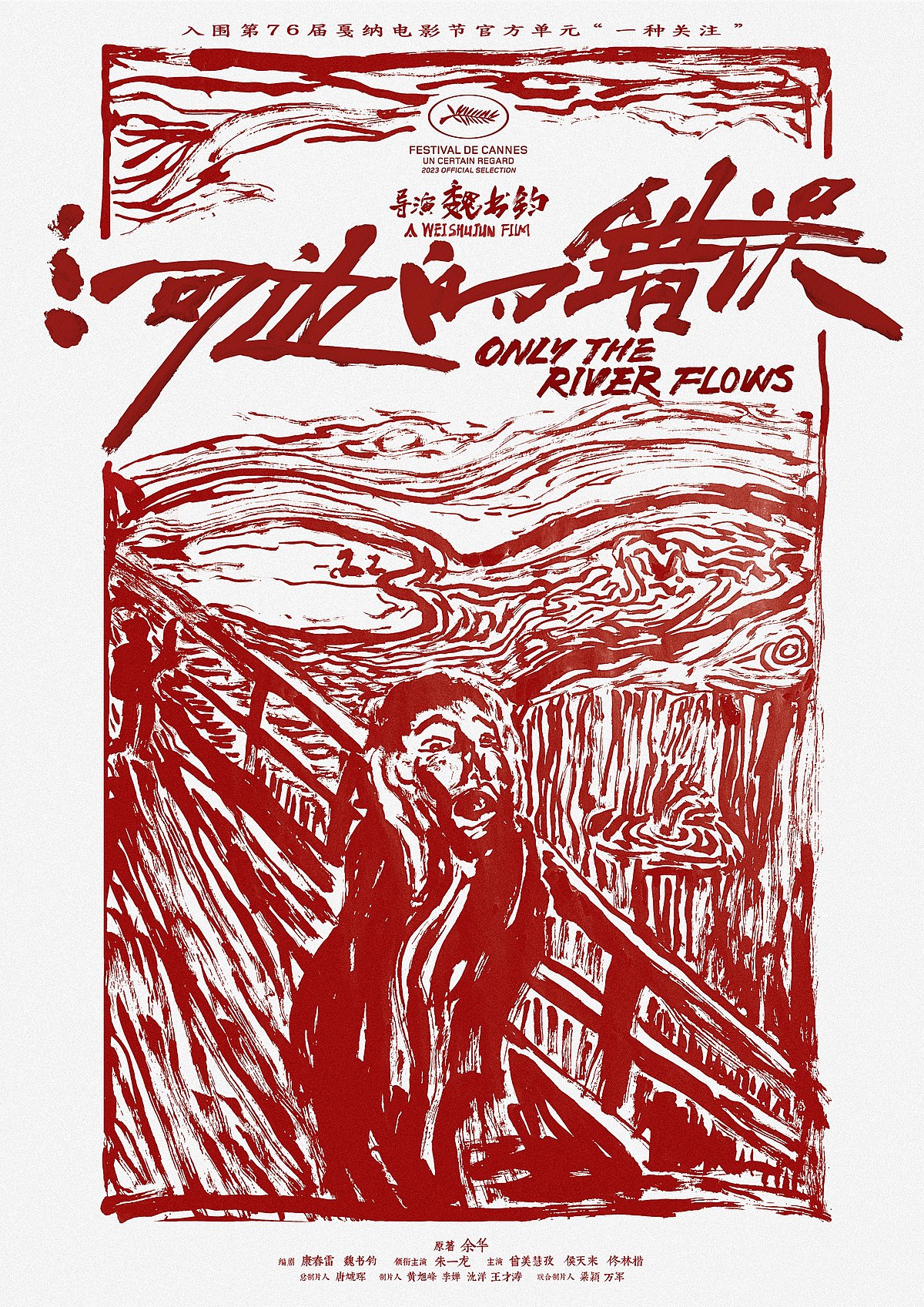
Only the River Flows (河边的错误, Wei Shujun, 2023)

Spoiler warning

In the opening moments of Wei Shujun’s Only the River Flows (河边的错误, Hébiān de Cuòwù) children run through an abandoned building playing cops and robbers amid the ruins of a changing China. One could argue that detective Ma Zhe (Zhu Yilong) is little different from the boy who chases after the other children with a plastic toy gun in his hand and an apparent love of justice in his heart only to enter a room and find himself on the edge of precipice looking down on a digger several floors below already sweeping up the rubble while Ma and his police partner look on obliviously. 

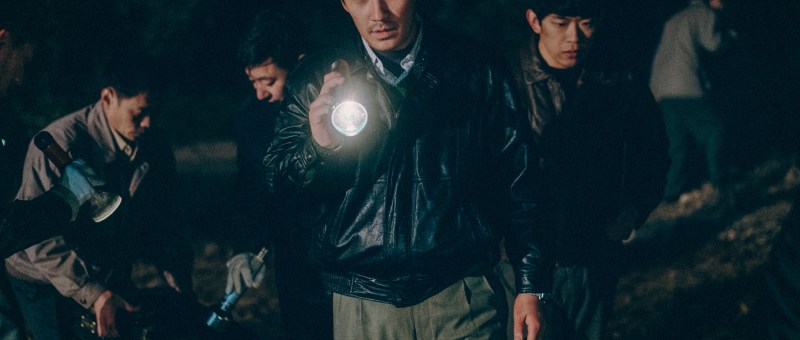
Wei fully recreates the aesthetics of sixth generation cinema, filming on grainy 16mm with a score that immediately echoes the films of the 1990s. Yet this small town in southern China is also a noirish place full of dank corridors and crumbling buildings that reflect the slow death of the old factory system along with the accompanying anxiety and displacement. Ma Zhe is also somewhat displaced. As he’s first introduced it’s as the only plainclothes detective in a room full of policemen in military uniform. His genial boss sells a message of “collective glory” that sounds somewhat outdated and is continually undermined by the fact he seems to do little himself and in fact continually instructs Ma to close the case he is working on even if he isn’t really convinced that primary suspect really is the guilty party. 

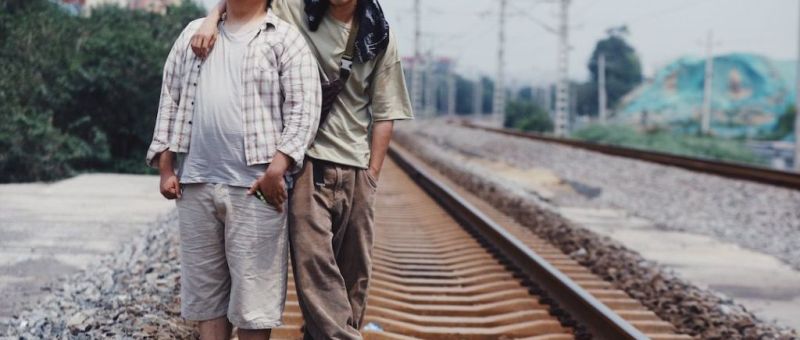
Based on a novel by Yu Hua, the film’s Chinese title more accurately means “a mistake on the river bank” which could refer to the murder itself, a strange case of an apparently well liked old lady killed with a sharp object, or to an encounter Ma later has with the suspect who is referred to only as “The Madman”. Apparently adopted by the old woman, Granny Four (Cao Yang), to stave off loneliness after her husband’s death (presumably they had no children of their own) the Madman is middle-aged with some kind of learning difficulties and otherwise mute and docile never having displayed any signs of violence or volatility. Yet in his way Ma is also a “madman”, increasingly out of touch with objective reality and driven near out of his mind by his preoccupation with the case. 

Pushed past his limit, Ma feels himself stalked and eventually descends into a lengthy dream sequence in which he watches his recollections projected on a cinema screen only for the negative to dissolve in flames as if it were burning a hole in his memory. His own perceptions are not reliable as confirmed by the confusion surrounding a commendation he received at a previous posting that he can no longer find, while a friend he contacts says he can’t remember him every receiving it and would have been surprised if he had as back then Ma was drinking quite heavily. Overburdened by the case, he begins drinking again and is also filled with paternal anxiety while his pregnant wife spends her time to trying to construct the image of their family by completing a jigsaw puzzle featuring a picture of a mother and child. 

The couple are told, by a very unsympathetic doctor, that there is a small chance the baby may be born with a genetic abnormality that could result in cognitive impairment. While Ma leans towards an abortion (the one child policy in this era perhaps influencing his decision) his wife is determined to keep it, calling Ma a heartless man but also suggesting that the fate that has befallen him is some kind of karmic retribution. He feels the Madman in himself echoed in the fate that awaits his child and is unwilling to accept it, wondering what their life would be like with the world the way it is.

His sense of “madness” is centred in his individuality as the member of a collective and something that he finds echoed in the frustrating dead ends of his case. Several witnesses saw the body but did not report it, fearful of their own secrets being exposed. More deaths soon occur, not exactly related to the first but somehow as a result of it as if murder were catching and Ma is a point of infection bringing a hidden truth to light that accidentally exposes something others would have preferred remain private. Ma’s quest is to quell the madman within himself, as perhaps he does in once again putting on his uniform and joining the collective even if it means accepting their truth above his own or the doubts in his heart. A brief coda featuring Ma and his wife happily bathing their son in an atmosphere of warmth and comfort might suggest that order has been restored were it not for the unsettling look in the child’s eyes in the film’s final frame. Beguiling and mysterious, the film lends itself to multiple viewings in its consistently slippery realities and noirish sense of existential dread as Ma attempts to find himself amid the contradictions of ‘90s China in a land very much under construction. 


Only the River Flows screened as part of this year’s BFI London Film Festival and will be released in UK & Irish cinemas in spring 2024 courtesy of Picturehouse Entertainment.

International trailer (English subtitles)
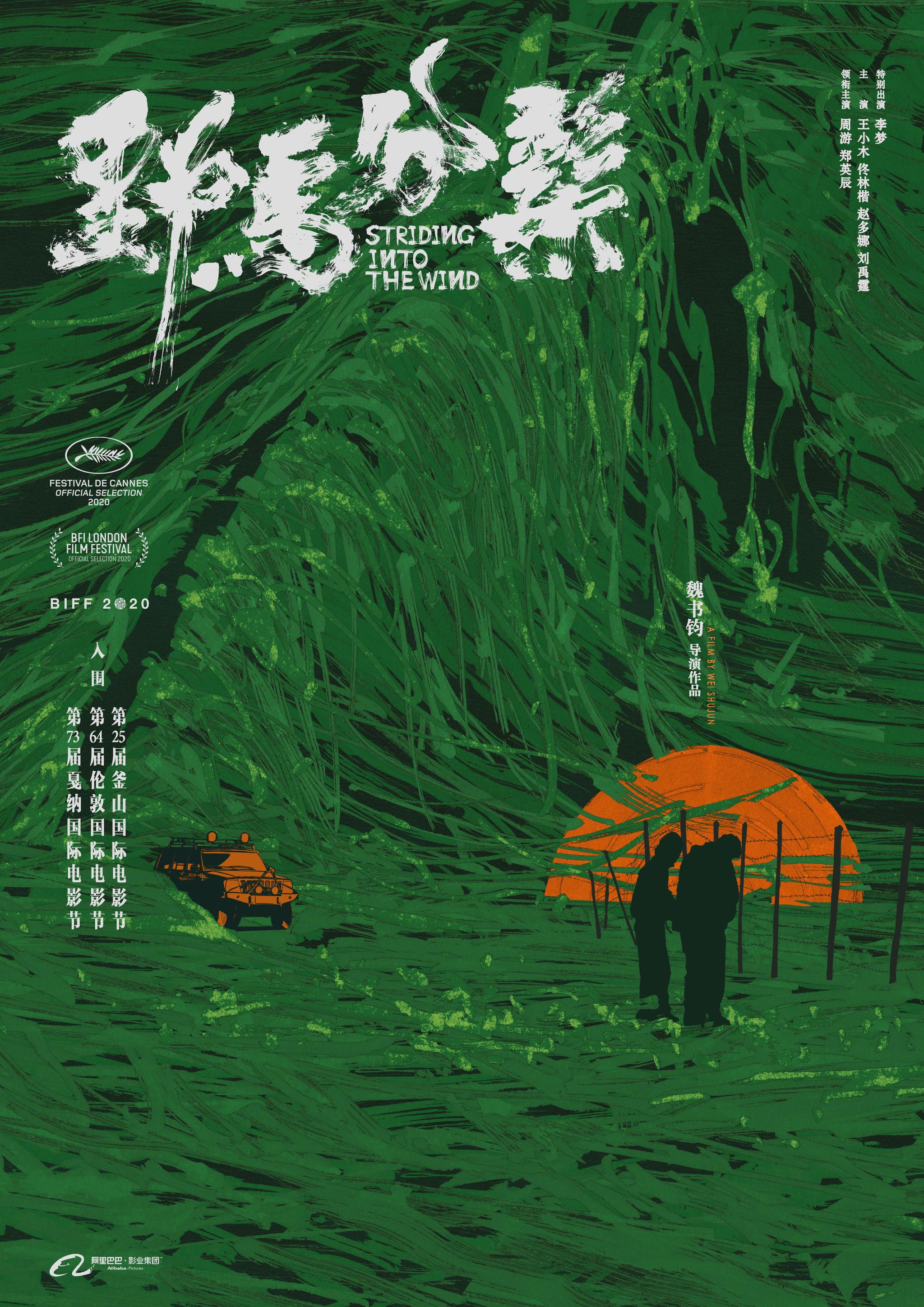
Striding into the Wind (野马分鬃, Wei Shujun, 2020)

“You’ll have a fabulous life too” dejected student Kun is advised, if only he’ll buy a secondhand ’97 Jeep Cherokee sitting forlornly on the lot of an irritated car salesman. If it’s so great why has no one else bought it, he not unfairly asks only for the salesman to reply that it’s because they’re morons who don’t know a good deal when they see one. The directorial debut from Wei Shujun whose graduation short On the Border won the Special Jury Distinction award at the 2018 Cannes Film Festival, Striding into the Wind (野马分鬃, Yěmǎ Fēn Zōng) is in many ways a tale of millennial malaise as the post-90s generation contemplate the relative elusiveness of the Chinese Dream in a society which seems to them much more authoritarian and restrictive than many would imagine.  

A 20-something film student, Kun (Zhou You) is not so much rebellious as founding his resistance in slacker passivity yet it’s his failure either to fully reject the rules of his society or accept his complicity that prevents him moving forward. As the film opens we watch him go rogue during a driving test, literally veering off course in his quest for independence as symbolised in his repeated failure to acquire a licence. So little does he care for the rules of his society that he goes looking for a car anyway, prepared to settle for the cheapest available which is what leads him to the Jeep Cherokee, wilfully mis-sold a vision of the Mongolian Dream by the overconfident salesman. Showing him videos of the wide open grasslands re-invisioned as a new frontier complete with wild horses running free over the horizon, the salesman of course neglects to mention that a vehicle of this age is not going to be particularly reliable, nor cheap to maintain especially if you can’t manage your own mechanics, and will soon be rendered unroadworthy under new emissions guidelines. Kun is being sold a pup. His quest for independence is primed to stall on the highway. It literally cannot take him where he wants to go. 

Meanwhile, he finds himself struggling under the weight of a young man’s ego squeezed on both sides by those who feel he’s not working hard enough at his studies and those who feel his quest to become an indie filmmaker is frivolous and irresponsible. Kun and his friend Tong (Tong Lin Kai) when they go to class at all more or less ignore their professor, at one point firing back at him that he teaches because he cannot do having never actually worked on professional film set. Kun’s attitude is to an extent vindicated in that he does actually seem to have more experience and be ahead of the man who is supposed to be teaching him, but on the other hand if he’d only bit his tongue and played by the rules he’d simply have passed the class and graduated rather than getting himself an instant fail for non-attendance with a side of pissing off the professor. Tong is mystified that, in essence, they’ve paid a lot of money and wasted four years to learn how to press a couple of buttons, but they’re also reminded by the not so subtle father of Kun’s girlfriend Zhi that these days you’re nothing without a PhD. Nervous and chastened, Kun lies that he might become a teacher like his mother as his parents intended, only for Zhi’s father to railroad him into applying for a steady civil service job right there and then, filling the form himself on his own laptop leaving Kun feeling even more emasculated at the hands of the older generation. 

For her part, Zhi is already getting bored with Kun’s irresponsibility. Forced to degrade herself with a part-time job as eye candy at various corporate events, she’s seemingly ready to head into a respectable middle class life while Kun is still dreaming of the grasslands and overly attached to his uncool car. She complains that he’s always saying he’s going somewhere but never actually goes, irritated when he rejects her offer to take him somewhere on her dime. Eventually she advises him to scrap the Jeep, a confrontation that threatens their relationship but Kun is still too attached to an illusionary dream of freedom to consider it. When he eventually gets to Inner Mongolia while working on a friend’s film shoot, he discovers that the “spirit of the grasslands” is largely absent. The banquet they’re invited to an awkward spectacle for tourists, the local culture repurposed and repackaged as a vision of an exoticised otherness that is the flip side of Kun’s equally inauthentic desire for a Chinese wild west. The grasslands appeal because their vast emptiness expresses infinite freedom, but paradoxically precisely because there is nothing there. 

Constantly frustrated by male authority figures from his father who is literally a cop to his resentful professor, quietly sneering girlfriend’s father, and the entire police force, not to mention his unseen mother apparently a well known professor synonymous with educational success, Kun finds himself constrained, longing to run free like the wild horses of the Mongolian plains but unable to shake off the yoke of social responsibility. Forced to give up the Jeep because of his own foolishness in misguidedly trying to evade authority, he becomes a passenger listening to the radio as a man he thought ridiculous and deluded is accorded unexpected success. Kun’s filmmaker friends emulate Wong Kar-wai, Hou Hsiao-Hsien, and Hong Sang-soo, looking beyond the Mainland for a sense of artistic cool but equally seeming to have few truly “independent” ideas of their own. The Chinese indie scene, Wei seems to say, flounders like Kun trapped by his own sense of inertia unable to free himself from an oppressive society, striding into the wind but ill-equipped to counter its resistance. 


Striding into the Wind streams in the UK 16th October, available to start between 6.30 – 7pm as part of this year’s BFI London Film Festival.

Clip (English subtitles)