Manok (이반리 장만옥, Lee Yu-jin, 2025)

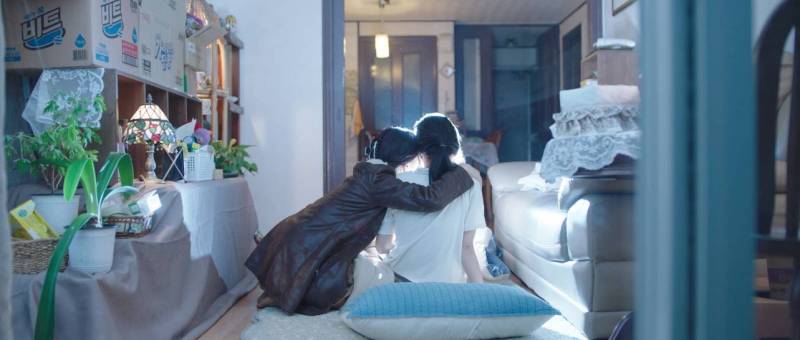
When Manok returns to her rural hometown in the wake of her mother’s death, the irony is that some accuse her of running away from the humiliation of the implosion of her life in Seoul, but in other ways she has unfinished business in Iban-ri and this time she isn’t going to let them drive her away. Lee Yu-jin’s warmhearted dramedy is at heart about a love of community, or rather communities that might not at first seem compatible or even mutually exclusive but are then integrated by the sheer force of Manok’s determination.

Now in her 50s, Manok (Yang Mal-bok) had owned a popular lesbian bar in Seoul and was at the forefront of queer activism in the city hosting the annual after party for the Pride parade for the last 20 years. But times have changed and the young queer community has begun to find new places to root itself while Manok struggles to adjust to the generational shift taking place. Finding out on the same day that her mother has died and her brothers don’t really want her at the funeral, she’s losing the parade after party and without it her bar will probably go out of business, and her long-term partner Geum-ja (Kim Jung-young) knew all along but didn’t say anything out of fear of her reaction, sends her into frenetic spiral in which she abruptly leaves town and decamps to the house her mother inexplicably left her back in Iban-ri.

Manok had left town to live a more authentic life having tried to accommodate herself to conventionality through marriage but finding it unbearable. She is not exactly welcomed back with open arms as her brothers repeatedly blame her for being a “nasty lesbian,” and using it as a justification for increasing their share of the inheritance to cut her out. Her ex-husband, meanwhile, has become the city chief and rules the local area with an iron hand while misusing his position to exploit the local community. Manok ends up coming to the rescue of his child, Jae-yeon, whose transgender identity he repeatedly rejects while Jae-yeon faces discrimination and harassment from his schoolmates.

Jae-yeon is in many ways the reason that Manok can’t simply leave again and try to reconstruct her life in Seoul because nothing’s really changed in Iban-ri and Jae-yeon is facing all the same problems she once did but without the well-earned armour the middle-aged Manok has managed to forge for herself that allows her to stare down injustice with a steely gaze. Then again, back in Seoul, younger members of the community had accused her of being self-aggrandising, that she was overfond of justifying her actions as being for their benefit when really she simply enjoyed the status of being a community leader. In Iban-ri, however, she gains some time to reflect and truly becomes a part of this community that she again wants to save, this time by challenging her ex to win the position of city chief herself and enact change through kindness and solidarity. While the young leave for the cities, many left behind are elderly and are in their way just as exiled as Manok with the city chief failing in his obligations to look after them.

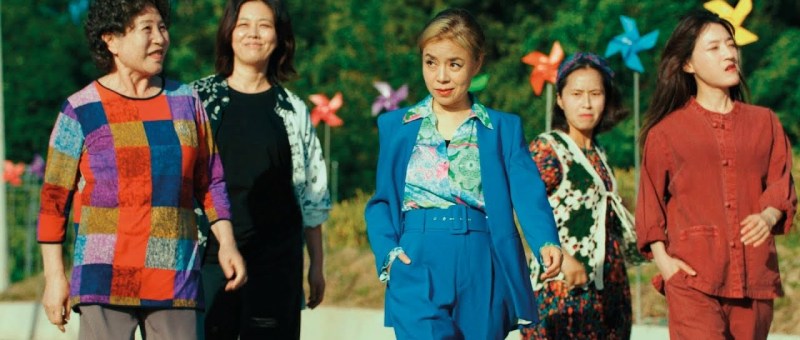
Later Manok says that her ambition is to make Iban-ri a place where no one is lonely or feels the kind of isolation she once felt through being rejected by those around her because of her sexuality. As her ex pathetically tries to cling on to his patriarchal authority, Manok decides to do things the Iban-ri way by winning hearts and minds and eventually showing them that there’s nothing to fear as she too reoccupies her mother’s house with her partner in tow finally claiming her claiming her space in this place that had no place for her. As Geum-ja had said, Manok really does love her community and sets about making Iban-ri a happier and healthier town where people care for and about each other and no one is left behind. A warm and quirky exploration of small-town life and the power of authenticity the film’s infectious spirit is difficult to deny as the joy it finds in the queer identity even amid so much fear and hostility brokered by one woman’s determination not to back down because there are kids who need protecting in Iban-ri and they all they deserve a Manok in their lives.


Manok screened as part of this year’s BFI Flare.

Trailer (English subtitles)
Yaksha: Ruthless Operations (야차, Na Hyeon, 2022)

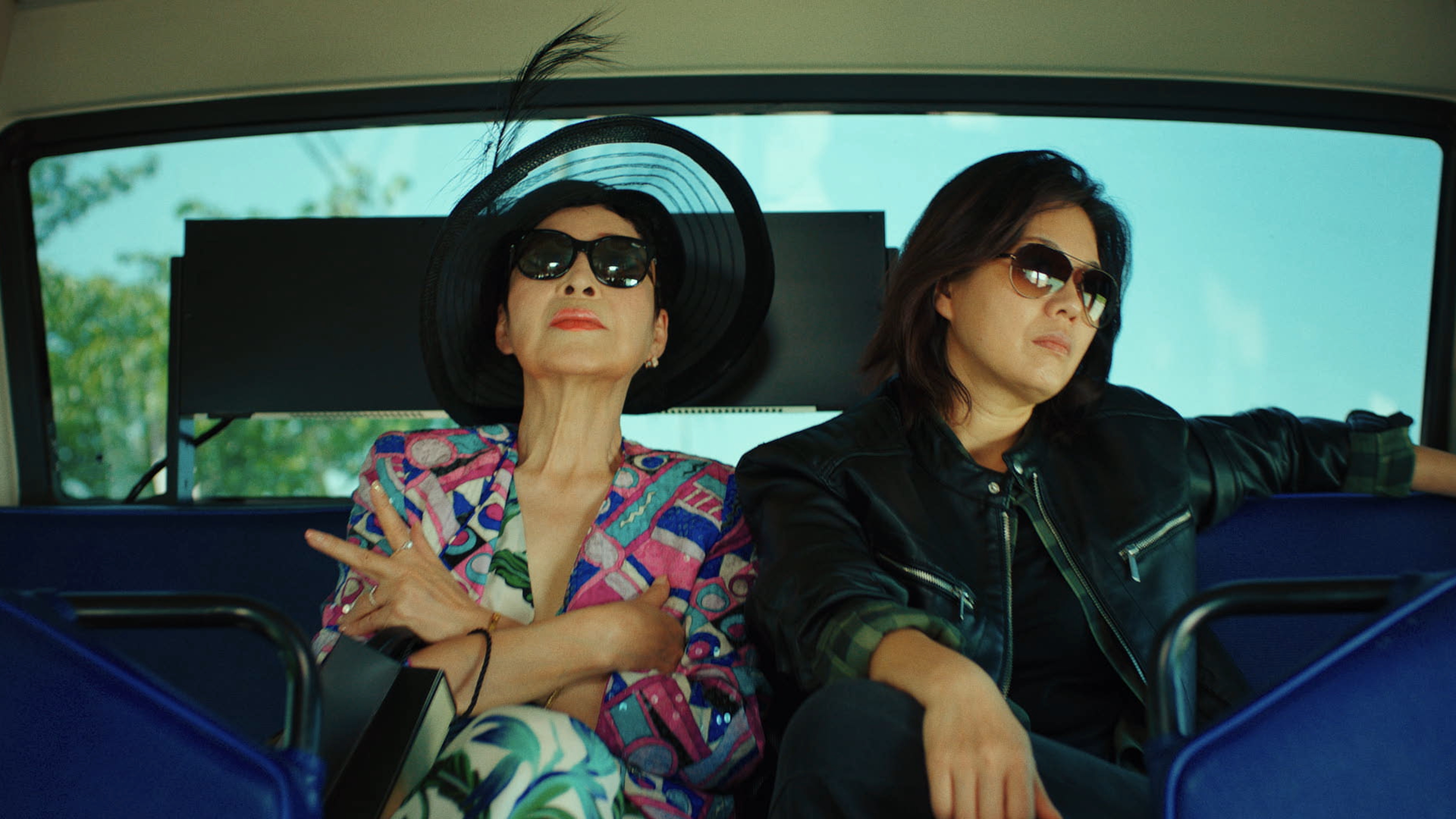
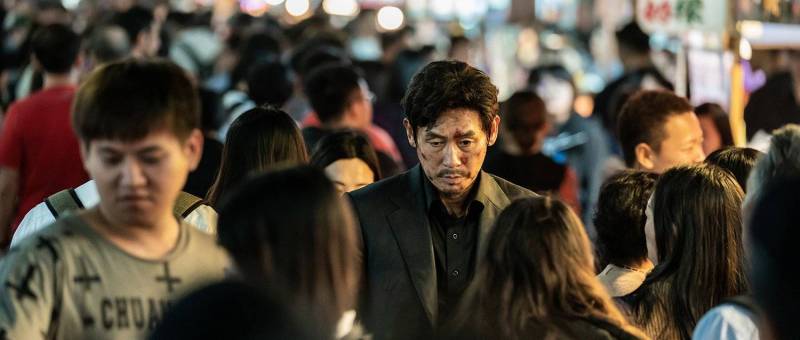
“Justice is preserved by being just” according to the idealistic hero at the centre of Na Hyeon’s Yaksha: Ruthless Operations (야차, Yacha) , though he’ll eventually come round to his sometime mentor’s belief that “Justice must be preserved by any means necessary”. Any means necessary is indeed the motto of the titular hero named for the unpredictable Buddhist deity and regarded by his superiors as a dangerous maverick though as it turns out he does indeed have justice in mind even if his idea of justice might not fully align with those whom he is intended to serve. 

The failure of the regular justice system is signalled in the film’s opening as idealistic prosecutor Ji-hoon (Park Hae-soo) finds his case against a corrupt CEO falling apart because of procedural mistakes by his own rookie team. Humiliated on the courthouse steps, Ji-hoon is given a punitive transfer to the NIS where he is kept out of trouble, told to draw a salary but given very little work. He and his jaded colleague who was once known as the “bulldozer of justice” but has been ruined by this bizarre form of punishment and no longer has the will do to anything much at all mostly spend their time doing jigsaw puzzles stave off boredom. When his colleague admits there’s no more hope for him and turns down an offer of reinstatement, Ji-hoon agrees to travel to Shengyang, a hotbed of international spies in China, to find out what’s going on with a series of false reports from their agents on the ground led by maverick black ops officer Yakska. 

What he soon discovers is that he’s been dragged into some murky geopolitical shenanigans between North Korean spies, his target’s possibly corrupt team, and the Japanese who are once again up to no good trying to prevent a possible alliance between North and South believing such a union would present too much of a threat to their economic position in North East Asia. His problem is that Yaksha’s field craft does not measure up to what he regards as appropriate conduct. He engages in firefights and commits what seem to be summary executions while later threatening to torture a hostage to force her to reveal the location of their missing asset, a North Korean financial kingpin, Moon (Nam Kyung-eup), who had been acting as a double agent for the Japanese but had become disillusioned with their imperialist outlook and decided to defect to the South bringing valuable information with him. 

It has to be said that however uncountable it may be to see a Japanese spy who behaves like a gangster committing acts of torture in a well appointed lab on a Chinese woman in China, Yaksha cannot exactly claim the moral high ground having attempted to do something similar only in his filthy hideout in an abandoned mine. Ji-hoon’s dilemma is that he doesn’t know whose side, if any, Yaksha is on or if he’s after the North Korean trillions Moon had been managing rather than a hugely beneficial national asset. Exposed to this morally grey world, however, Ji-hoon’s idealist edges begin to soften as shifts towards Yaksa’s “by any means possible” philosophy while trying to stop evil Japanese spy turned lobbyist from recovering the valuable data Moon had to sell and going on to do even more nefarious deeds undermining the possibilities for reunification along with the Koreas’ economic potential. 

Somewhat uncomfortably, the film does then more or less condone torture, betrayal, and summary execution if conducted in the pursuit of “justice” even while simultaneously approving of Ji-hoon’s idealistic pursuit of the rich and powerful who continue to misuse their position and cause pain to ordinary people. It comes to something when the safest ally is a gang of human organ traffickers with whom Yaksha seems to be suspiciously familiar. Nevertheless, what Yaksha eventually asks Ji-hoon to do is to “clean things up” hinting at the duo’s complementary qualities as they pursue “justice” in both the legal and more immediate senses. Filled with some quite literally explosive action sequences along with some admittedly broad comic book antics as the guys face off against Hideki Ikeuchi’s Japanese arch villain Yaksha is certainly a good looking film if one with a dark heart beating at its centre. 


Original trailer (English subtitles)

The Apartment with Two Women (같은 속옷을 입는 두 여자, Kim Se-in, 2021)

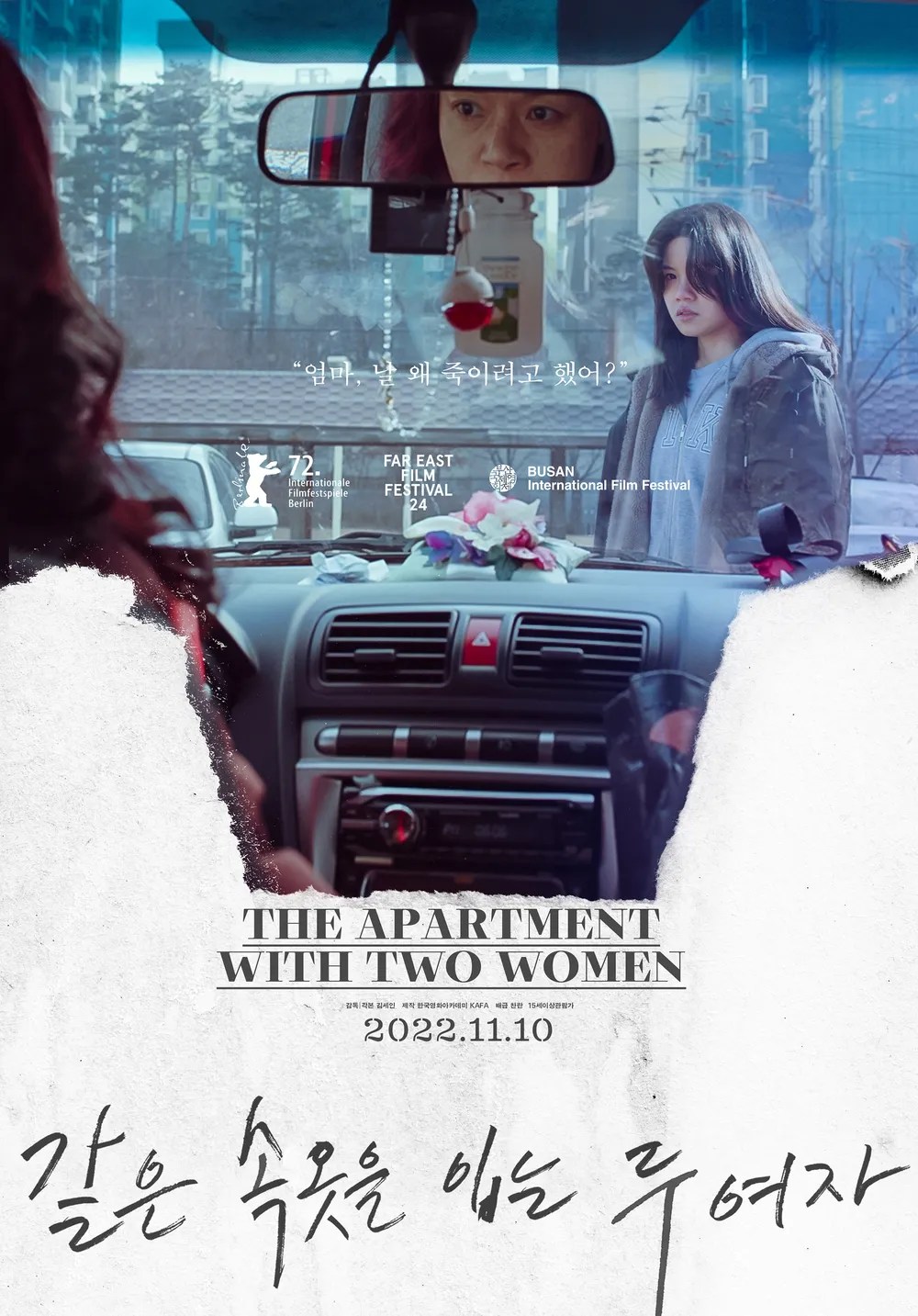
A mother and daughter remain locked in a toxic cycle of resentment and dependency in the debut feature from Kim Se-in, The Apartment with Two Women (같은 속옷을 입는 두 여자, gateun sogoseul ibneun du yeoja). While the English title may have an unfortunate sexist connotation implying that such a dysfunctional relationship is inevitable when two women live together, the Korean “two women wearing the same underwear” more closely suggests the awkward intimacy between them as they each seem to seek escape from the other but in the end are left with no option than to return or choose independent loneliness.

The awkwardness is obvious from the opening scenes as middle-aged, pink-haired mother So-kyung (Yang Mal-bok) chats to a friend on the phone while using the toilet even as her 20-something daughter Yi-jung (Lym Ji-ho) washes her undies in the bathroom sink. Once done, So-kyung slips off her underwear and simply throws them in with the others for Yi-jung to scrub, taking one of the newly washed but not yet dried pairs as a replacement before breezily leaving for work. So-kyung often becomes angry with her grown-up daughter for no ostensible reason, hitting and slapping her while a defeated Yi-jung can do nothing but cry no longer seeing much point in even asking what it is she’s done wrong. Matters come to a head when the pair argue in the car at supermarket car park. Yi-jung gets out and begins to walk away, but her mother suddenly jumps on the accelerator and hits her. So-kyung tries to claim the car malfunctioned but Yi-jung has long believed her mother would prefer it if she were no longer alive. 

During a blackout towards the film’s conclusion, So-kyung again insists the accident wasn’t deliberate reminding that Yi-jung that it wasn’t the first time she swore she’d kill her and forcing her to admit that she remained so calm because it wasn’t the first time she’d heard it. Later someone asks why she didn’t leave seeing as she is a grown woman with a salaried job capable of supporting herself and she answers that she thought she needed to save more money before making her escape but it’s also true that years of So-kyung’s emotional abuse have eroded her confidence in her ability to survive alone and that finally she is just so lonely that even her mother’s continual resentment is preferable to being on her own with no other friends or family to turn to. 

Yi-jung begins to bond with a woman at work who is in a similarly abusive situation with their employer, disliked by her co-workers and exploited by the boss who often hands her additional tasks to be completed for the next morning when everyone else is about to go home. But So-hee (Jung Bo-ram) evidently has troubles of her own, and in any case Yi-jung simply ends up in another apartment with two women while beginning to realise that So-hee is not interested in a close friendship with her for she too longs for “independence” and is turned off by her obvious neediness. So-kyung meanwhile is in a relationship with a genial man of around her own age, Yong-yeol, who has a teenage daughter, So-ra, to whom So-kyung more well disposed than to own but eventually cannot stand. So-ra is in many ways much like herself and So-kyung’s narcissistic tendencies prevent her from sharing Yong-yeol with another woman. When it comes to picking an apartment for them to live in after they marry, it comes as a surprise to her than Yong-yeol intended to bring So-ra to live with them roundly telling him that the “spare” room is for storage not a daughter. Given this ultimatum Yong-yeol choses So-kyung, agreeing that So-ra will live with her grandmother in a decision that shocks Yi-jung on discovering his letter prompting the realisation that her mother will happily abandon her too. 

Su-kyung is in many ways a narcissistic nightmare, refusing to apologise for who she is and always insisting other people are to blame for the way she treats them. All Yi-jung wants is an apology but what she gets is justification as her mother explains to her that her clients at her massage parlour dump all their negativity on her though she is also living a stressful life and so she dumps all of her negativity on Yi-jung whom she resents for trapping her poverty and loneliness as a reluctant single mother. Yi-jung asks her what she’s supposed to do with that, but her mother simply tells her she should have a daughter too. In any case it appears as if Yi-jung may finally be finding the strength to extricate herself from her toxic familial environment, finally being measured to figure out her correct bra size having presumably been forced to wear whatever her mother wore throughout all of her adult life in a moment which brings us back to underwear once again. At times darkly comic, Kim Se-in’s intense family drama circles around toxic dependency and an inescapable cycle of cruelty and resentment but does at least allow its heroines the glimmer of new beginnings in a more independent future.


International trailer (English subtitles)