Sanka: Nomads of the Mountain (山歌, Ryohei Sasatani, 2022)

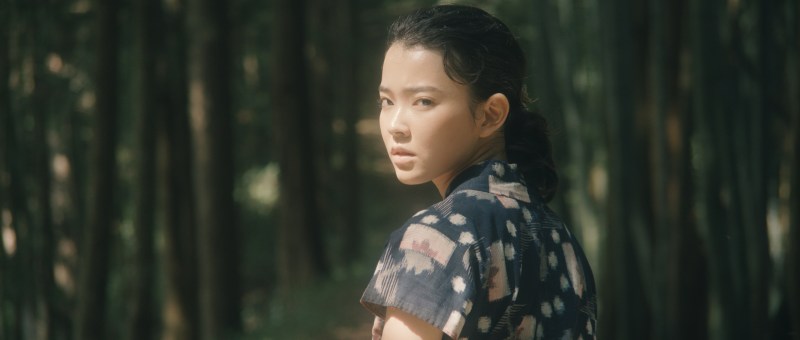
A young man finds himself caught between the new Japan and the old while befriending the last remnants of a nomadic people in Ryohei Sasatani’s poetic drama, Sanka: Nomads of the Mountain (山歌, Sanka). Set in the mid-1960s the film harks back to something older and more mystical that seems at odds with the Japan of the bullet train and economic miracle but equally sees its hero reckon with the more recent past in his father’s authoritarianism born of his militarist upbringing and wartime service.

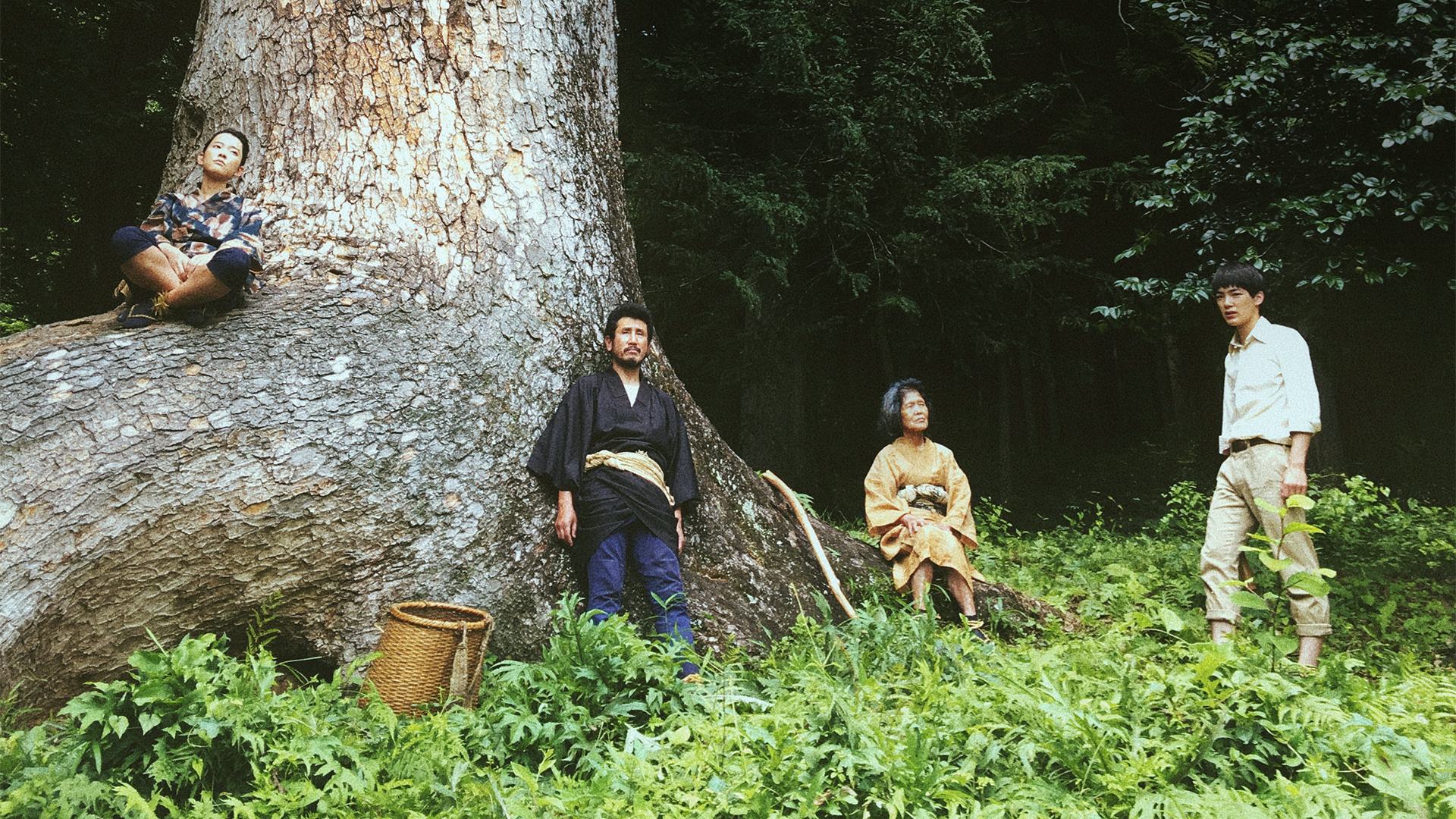
Norio (Rairu Sugita) does seem to be a more sensitive boy. Bullied at school he comes home with a bruised face and is berated by his father Sakaguchi (Kisuke Iida) for his lack of manliness while struggling to come to terms with the death of his mother on the mountain two years previously. That’s one reason he ends up bonding with Shozo (Kiyohiko Shibakawa), one of the last remaining members of the Kenshi people who live a nomadic lifestyle migrating across the mountain throughout the year to take advantage of the terrain. Becoming a kind of father figure, Shozo teaches him how to fish and live on the mountain while Norio also develops a fondness for his daughter Hana (Naru Komukai) who appears to be around the same age as he is. 

The contrast between the two men could not be more stark. People in the town still refer to Sakaguchi as “the sergeant” and fiercely respect him for his wartime service. Norio finds a picture of his father in uniform along with a gun wrapped up in the back of drawer as if reminding him of the oppressive authority that hangs over the house. The townspeople are also grateful to Sakaguchi because he’s planning to build a golf course, a symbol of a newly prosperous society with a growing middle class, that will bring a lot of jobs to the area which is struggling economically with the decline of the agricultural industry. To build the golf course, Sakaguchi plans to get to rid of the mountain which will force Shozo and his family off the land and sever their connections with the forest and earth. 

To the townspeople the presence of the Kenshi is something taboo that embarrasses them. People accuse them of thievery and try to shoo them away. A policeman even stops Shozo and forces him to throw the fish he was trying to sell back to the river claiming that he’s frightening people just in his presence. Norio experiences an additional layer of shunning solely because of his association with the Kenshi and is later berated by his father for causing him embarrassment by associating with them. He reminds him to be mindful of his “status” and describes the Kenshi as “trespassers” as if denying them the right to exist. 

Norio obviously disagrees and is quickly seduced by the mountain’s serenity explaining that it helps him forget about the troubles of his life. But for Hana the situation is more complicated. Her friend Yoshi and her family went town from the mountain two years previously and she enviously looks on as she gossips with her school friends torn between her loyalty to her Kenshi roots and the desire for modernity in which she could live a comfortable life and get an education. If she stays on the mountain, she’ll be the last of her kind yet she struggles to reconcile herself with the idea of moving on just as Norio struggles with his own future in a rapidly changing Japan and seeks refuge in the mountains and a world beyond invisible to humans. 

Filled with a gentle poetry as Hana dances amid a rainstorm and voices echo through woods along with the sound of feet clad in woven sandals, the film is a kind of lament for an older, mystical Japan eventually eroded by a quickening modernity along with a critique of the lingering militarist authoritarianism which has simply transformed into corporate capitalism as symbolised by Norio’s cruelly conservative father. Yet as Hana had said, they’ll be Kenshi wherever they go, implying perhaps that her culture will not necessarily disappear so much as be carried forward even as the mountain itself becomes a casualty of a society in danger of forgetting its roots in a headlong dash towards a prosperous modernity.


Sanka: Nomads of the Mountain screened as part of this year’s JAPAN CUTS.

Original trailer (no subtitles)

Boxer (ボクサー, Shuji Terayama, 1977)

Boxer posterArtistic polymath Shuji Terayama was fond of claiming that more could be learned about life from boxing rings and race courses than from conventional study. Immersing himself in the countercultural epicentre of mid-century Shinjuku, he became known for iconoclastic street theatre before shifting to film, instantly recognisable for his striking use of colour filter and theatrical, avant-garde aesthetic. 1977’s Boxer (ボクサー) is, however, his most conventional experiment, a generic tale of a struggling boxer yearning to be a champion and battling himself, along with his society, in the claustrophobic arena of the ring, but for all the expected triumph it’s futility which marks his life and the ropes which restrain rather than liberate.

Former boxing champion Hayato (Bunta Sugawara) now lives a lonely existence alone with his beloved dog in a rundown boarding house. His brother is about to be married and wanted him to be in the engagement photos, but he told the young couple to go ahead without him. He may come to regret that because his brother quickly becomes the victim of an accident that may not have been quite that at the construction site where he and his fiancée worked. It seems that another employee, Tenma (Kentaro Shimizu) – an aspiring boxer with a limp, had taken a liking to the same girl and, either distracted by the news she intended to marry someone else, or not thinking clearly, he allowed his digger to hit Hayato’s brother and kill him. Of course, Hayato is not happy about that and determines to track Tenma down, looking for him at a neighbourhood bar where a small boy guides him to the gym, which he is eventually expelled from by the other boxers. Nevertheless, Tenma, having heard about Hayato’s past and been dismissed by his trainers because of his disability, is determined to overcome the debt that exists between them and become Hayato’s mentee hoping to go on to boxing glory.

Like many a Shinjuku tale, this is one of scrappy chancers longing to escape the vice-like grip of an underworld that refuses to release them. In the land of broken dreams, the hopeless man is king, and Hayato is nothing if not hopeless. Years ago, we’re told, he was a champion, yet he suddenly quit boxing mid-way through a bout that he was clearly winning. He had a wife and daughter, but now lives alone (except for the dog), making a living by pasting up flyers. In response to Tenma’s request, Hayato recounts to him the histories of boxing champions in Japan all of whom met a sticky end: dying of typhus in Manchuria, drowning after demobilisation, dying under a bridge, hit by a train, suicide after revenge on a yakuza who’d killed his brother, killed when a runaway truck hit his home, car accidents etc. The boxing match which opens the film is preceded by a minute of silence for a champion who died just a few days previously. So what, Hayato seems to say, we fight but we all die in the ring anyway. What’s the point?

Still, for all the meaningless of his success, he too finds a kind of purpose in Tenma’s quest even if he knows it’s futile and that it is perhaps perverse to commit to saving the man who killed his brother either by accident, as he claims, or out of romantic jealousy. Tenma tells him that he wants to be a champion to appear on TV and be famous. He has, it seems, something to prove. Hayato tells him that boxing’s not for everyone, cruelly echoing the words of the president of the boxing society in his letter explaining to Tenma that there is no place for him in the boxing world because of his disability. His reasoning is however different. He asks him if he is able to hate, to which which he replies that yes, he hates his mother, father, brother, and in fact “the whole damn world” which makes him a perfect mirror for his defeated mentor.

Terayama opens the film with a melancholy black and white sequence in which a boxer walks down a long corridor towards a door filled with light while other contenders pass him from the opposite direction, some badly beaten and others unable to walk. This is the price, he seems to say, a literal manifestation of life’s battery. Even the denizens of the strangely colourful, warm and cheerful little neighbourhood bar with its Taisho intellectual, former actress turned streetwalker, smoking child, and bookmakers who don’t pay their bills, are fighting a heavy battle, crushed under the weight of their broken dreams. Hayato tries to offer encouragement from the sidelines, “Get up if you refuse to be a loser”, he yells to a barely conscious Tenma struggling raise himself from the mat, but even if he does what will he gain? Suitcase in hand the women leave looking for better lives, while Tenma struggles to escape from the ring, chasing hollow victories of illusionary manhood but finding salvation only in the struggle.


Opening sequence (no subtitles)