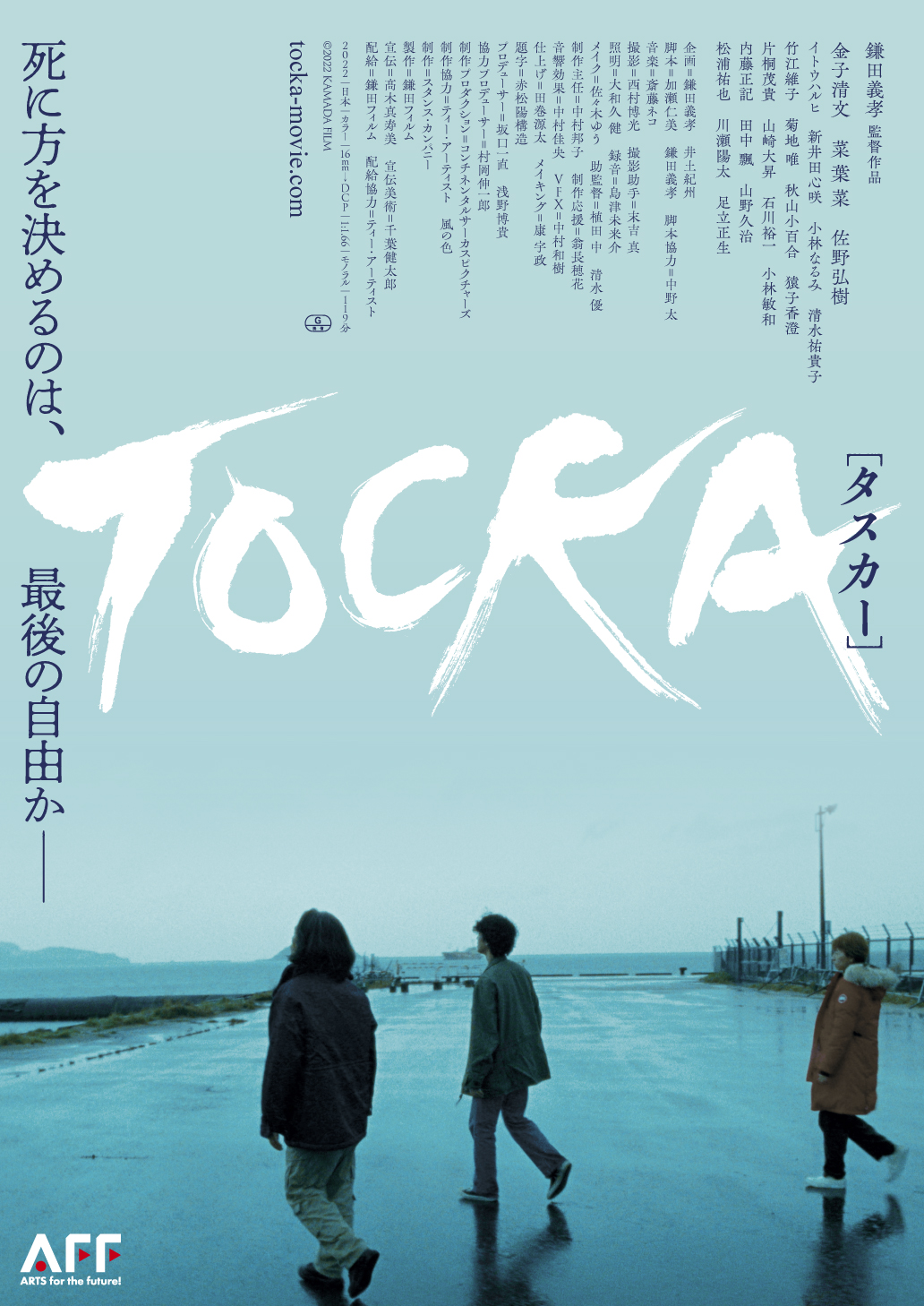
The man at the centre of Yoshitaka Kamada’s bleak social drama Tocka (タスカー) claims that he no longer knows why he’s alive, but as the woman he’s just asked to kill him replies no one else really knows either but even so they continue to live. Set in the northernmost reaches of Hokkaido where you can pick up Russian-language radio and it’s not unusual to spot signage in Cyrillic, the film’s title is taken from a Russian word that describes a quality of spiritual agony that manifests as listless ennui while its sensibility seems to be very much in tune with that of 19th century Russian literature.
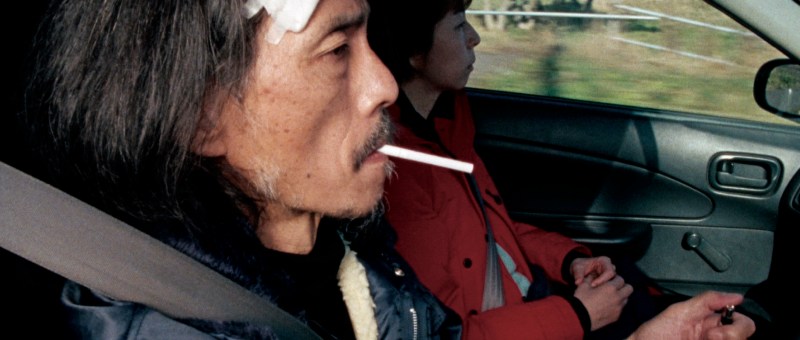
This indeed a cold a barren place almost devoid of signs of life. The heroine, Saki (Nahana), has returned in flight from the implosion of her life in Tokyo but has not told her parents who presumably live not too far away that she’s lost her job or broken up with her fiancé. Instead, she’s living a difficult and dissatisfying life with a part-time job in a local supermarket while contending with massive debts. Unable to see a way forward, she begins to consider taking her own life which is how she ends up meeting Shoji (Kiyobumi Kaneko), a man who wants to die but is unable to kill himself so is looking for someone to help him.
Perhaps it says something of Saki’s own desperation that she considers his proposal or at least does not necessarily see anything odd about it aside from Shoji’s general vagueness about the reasons he wants to die. Like her, he is living a dissatisfying life but mostly precipitated by the loss of his family and his subsequent descent into alcohol dependency. He used to run a junk shop selling second hand appliances, but his business has also gone bust leaving him with nothing. His only goal is to make sure his daughter receives the payout from his life insurance policy which would be void if it was ruled that his death was a suicide.
Yukito (Hiroki Sano) also works as a junk man, but scams his clients by pressing them to pay despite advertising a free removals service for unwanted appliances. He also steals petrol to sell illegally on the side and has nothing much going for him in his life while feeling guilty that he has failed to repay the sacrifices his mother made to raise him. Meanwhile, his sister is pregnant and the baby’s father has abandoned them leaving her in much the same position as her own mother but worried she doesn’t have the strength to manage on her own.
It’s not difficult to understand the reasons why they want to end their lives even if as they sometimes suggest it’s more that they lack reasons to live while those in favour of dying are readily apparent. There doesn’t appear to be much going on in Northern Hokkaido when the businesses seem to be those dedicated to moving around obsolete items, buying junk or selling junk or maybe even stealing junk to sell to people who can’t afford anything better or else for scrap. All three feels themselves already on the scrap heap with nothing more than broken dreams to their names. Saki once wanted to be a singer in Tokyo, but now can’t seem to see a reason to be much of anything at all.
The way she later sees it, it’s alright to want to die and it’s alright to do it too even if you’ll hurt the people you’ll leave behind. None of them are fully able to escape their sense of despair or hopelessness despite the bonds that arise between them as they try to fulfil Shoji’s dying wish. In the end, the firmest expression of friendship is that they will help one another die if and when it’s what they really want though they may never meet again in more pleasant circumstances. In any case, Kamada captures a sense of bleakness in the beauty of the snowbound landscape which remains otherwise barren and defined by emptiness even as those trapped inside it try to find reasons either to live or to die but more often than not find nothing much of anything at all.
TOCKA screened as part of this year’s Nippon Connection.
Original trailer (English subtitles)
Images: ©2022 KAMADA FILM
 Windows on Worlds