A middle-aged man dejectedly sitting on the side of the street drinking glances at his phone and we notice that his mother is the only person on his call list with several calls on recent days lasting only seconds. He then receives a call from his brother informing him that she is in a coma after having apparently attempted to take her own life in the wake of a terminal cancer diagnosis she had not shared with either of them.
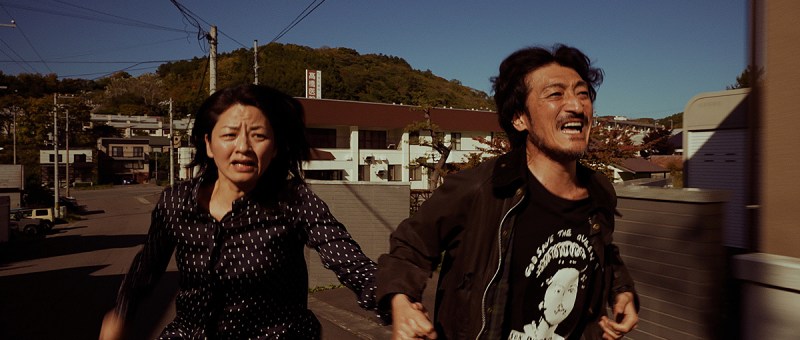
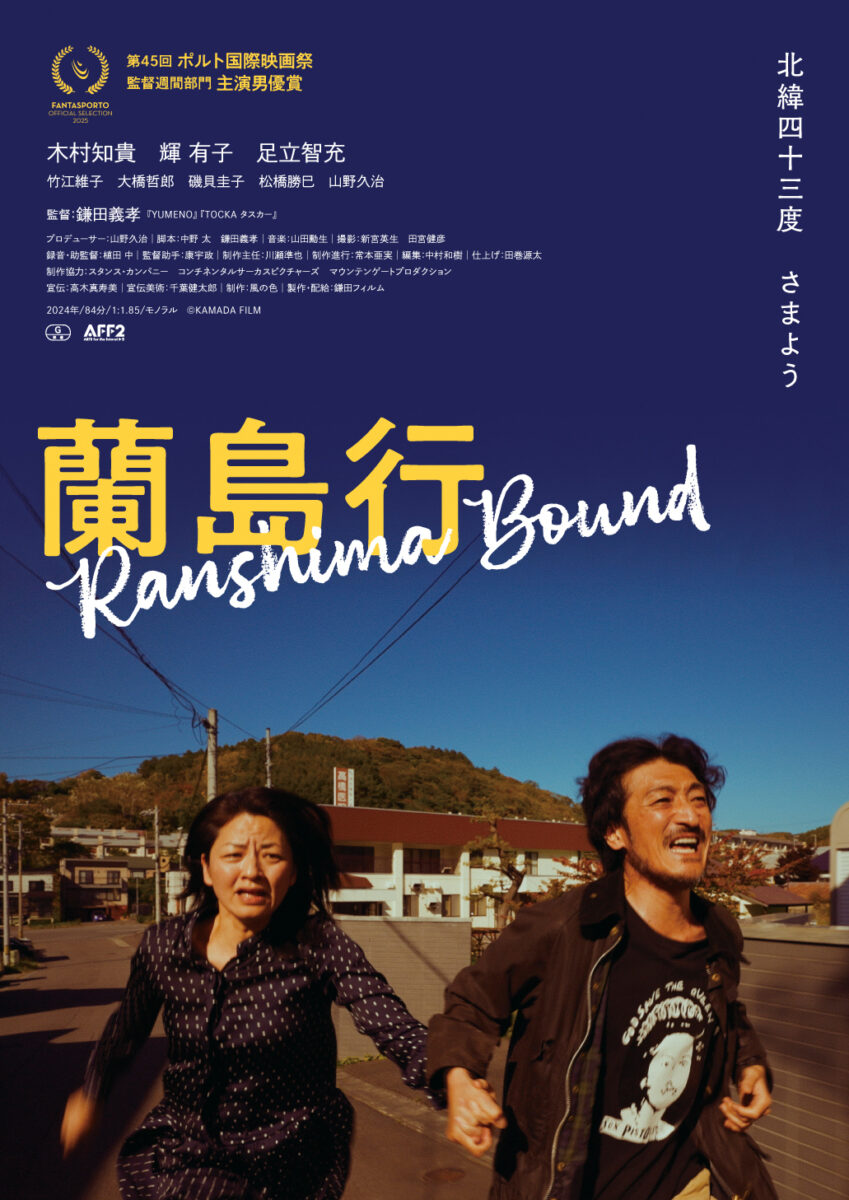
Apparently autobiographically inspired, Yoshitaka Kamada’s Hokkaido-set drama Ranshima Bound (蘭島行) examines fracturing familial relationships and the subterfuge that is sometimes necessary to make them work. After receiving the phone call, Yoshio comes across the body of a woman floating in a river. Next thing we know, she’s travelling with him to Ranshima where he purchases a pair of wedding rings and dress in a pawn shop. Feeling unhappy about what he has achieved in life, he asks Maki (Yuko Kii) to pose as his wife so that he can show her off to his mother when she wakes up.
It seems that Yoshio (Tomoki Kimura) went to Tokyo to be a punk musician, play in a band, and change the world, but he is no longer living a punk lifestyle and his musical dreams seem not to have panned out. He tells his brother than he has a part-time job inspecting concrete to ensure it meets safety standards, but it is not clear if this is actually the truth. Satoshi, meanwhile, is a respectable middle-aged man with a successful career who is married with a teenage daughter. The two brothers seem to be somewhat estranged and not particularly well informed about what’s going on with each other’s lives, though Satoshi is still a little hurt and surprised that Yoshio has apparently got married without even letting him know. In any case, he tries to include Maki in all the arrangements while she does her best to play along.
She does, however, become unexpectedly upset when the two brothers joke about disposing of their mother’s ashes, perhaps because she comes to stand in for the mother’s absence. Reading his mother’s diaries, Yoshio comes to understand his mother’s wishes for after her death and also that she missed her sons who seemed not to have paid her much attention while she was alive. For unexplained reasons, she didn’t contact them when their father passed away and seems to have become depressed in her widowhood even before the cancer diagnosis. Both sons appear to feel guilty in different ways, Yoshio having avoided his mother because of his internalised shame and suspicion that she would have preferred him to become a regular salaryman like his brother. Satoshi, meanwhile, justifies himself that he prioritised his family, though as it turns out he maybe a victim of his own “success”. His marriage is failing largely because he is always away working and hardly every home. He and his wife are considering divorcing when their daughter finishes high school.
Neither of them particularly want their mother’s apartment, but they don’t want to deal with it either while they’d still have to go on paying the land taxes until it’s sold if their mother were to die. They’re also now responsible for paying the storage fees at the temple where their mother had interred their father’s ashes, though in her diary she states that she wants their ashes scattered at sea together. The request baffles the boys who aren’t quite sure why she wanted that or what sea she means before deciding it’s probably where they used to go holiday when they children, a once prosperous but now rundown resort area that seems to mimic their own sense of lonely despair. It seems that their mother wanted to return to a time when the family was at its happiest, while in the present day each has become mired in their own sorrow and insecurity. Though in some ways it may seem as if Yoshio is able to heal a rift through his fake marriage subterfuge, it cannot in the repair his family nor can the family really save any of them. Nevertheless, there is a vague sense of hope amid bleakness as the Yoshio returns to say goodbye to his mother with Maki still waiting at the train station rather than leaving alone.
Ranshima Bound screened as part of this year’s Camera Japan.
Trailer (English subtitles)