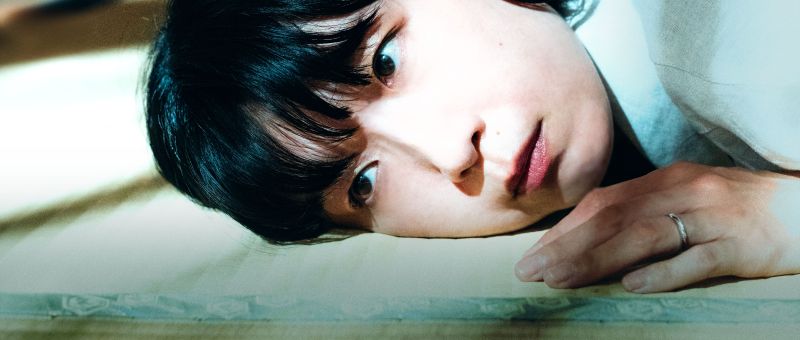
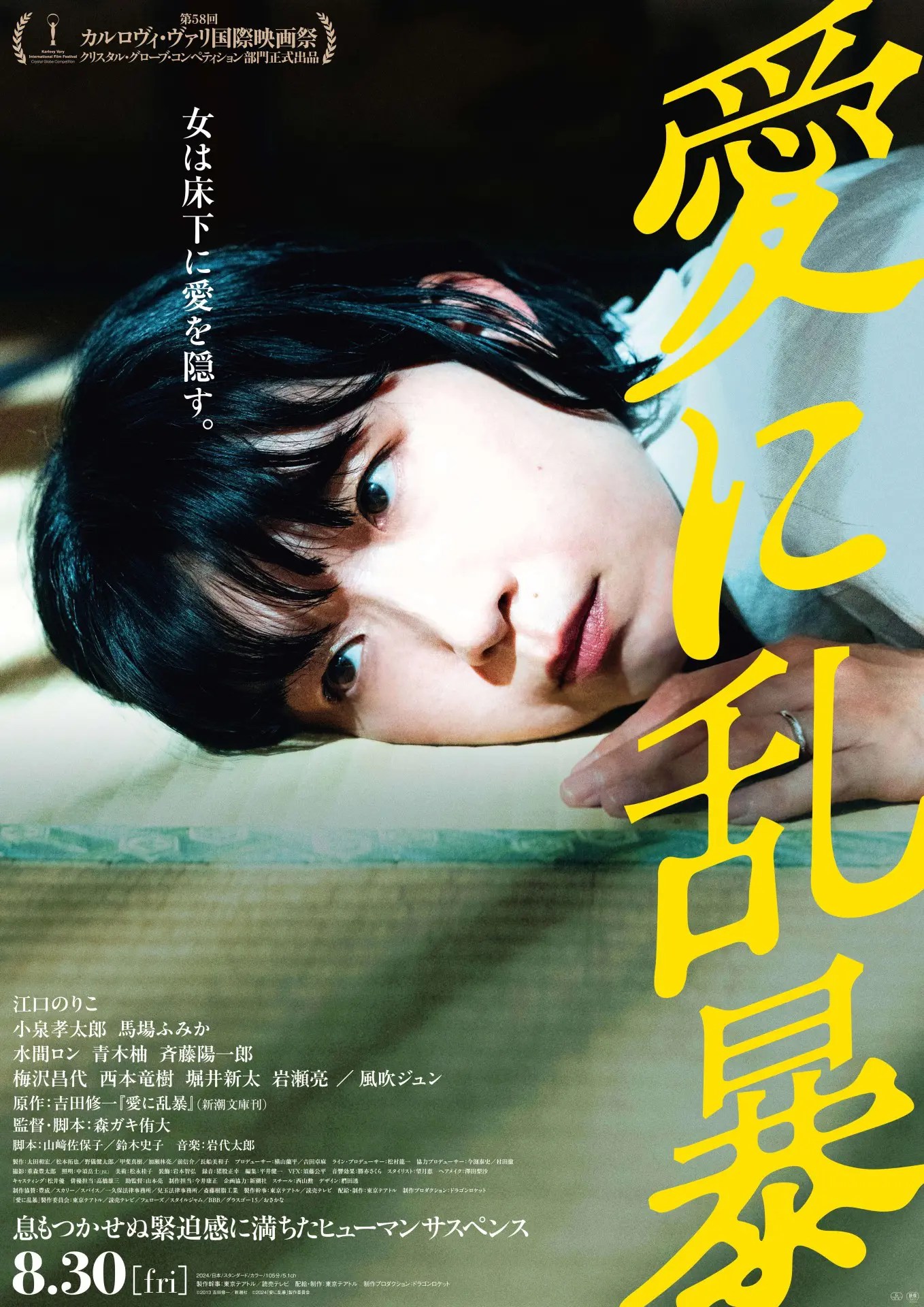
Momoko (Noriko Eguchi) can’t find her cat, Pi-chan. It hasn’t been home for days, and now there’s a stray prowling around near its water bowl. Her mother-in-law, Teruko (Jun Fubuki), can’t abide strays. They come into people’s homes and mess up their gardens. She shoos them away, making it clear they aren’t welcome here. It seems like Momoko’s not all that welcome either, and though her relationship with Teruko is civil enough, it’s clear Teruko has no great love for her and no desire to be any more friendly than she has to be to keep the familial peace.
In many ways, it’s Momoko herself that’s a stray cat and in trying to find Pi-chan she’s trying to reclaim her space within the domestic environment in which she fears she is imminently to be replaced, convinced that her husband, Mamoru (Kotaro Koizumi), is having an affair. At the core of Yukihiro Morigaki’s Rude to Love (愛に乱暴, Ai ni Ranbo) is a cry of despair from a middle-aged woman left with nowhere to turn. Someone in their quiet, residential district has been setting fire to the bins and it’s difficult to not think that the culprit is someone much like Momoko pushed to breaking point and desperate for some kind of release. For Momoko’s part, taking out Teruko’s rubbish has become a daily ritual and one of her key tasks as a dutiful daughter-in-law while she also goes out of her way to keep the place tidy, sweeping up the stray cigarette butts and tin cans that fall from other people’s loosely tied bags. But in other ways, we can see she wants things to change. She repeatedly approaches Mamoru with catalogues to talk about their plans for radically renovating their home, including the removal of a non-load-bearing pillar in the living room, but he generally ignores her.
In fact, Mamoru pays little attention to her at all and is frequently away on “business trips”. Momoko has a sideline in teaching other housewives how to make soap, but left her corporate job eight years previously when she married Mamoru. She tries approaching her old boss to expand the soap-making business and he suggests that she return to the office instead but almost certainly doesn’t really mean it and totally ignores her business proposal. Momoko knows that after so long out of the work force and as a middle-aged woman getting another corporate job is unlikely and the soap classes don’t pay enough to live on. If Mamoru leaves her, she’ll be left flat with nothing to fall back on. This is a key element of Mamoru’s betrayal and one of the reasons that Momoko holds fast to this domestic space to the point she would degrade herself by accepting Mamoru’s affair and begging him not to divorce her.
Yet in other ways Momoko feels uneasy within it because she and Mamoru had no children. She looks on at other women with their babies and visits a doctor who tells her that her increasingly painful menstrual cramps are a symptom of ageing that she may have been able to ameliorate by giving birth to a child, but also that she is likely heading into the menopause so this maternal milestone is one that may already have passed her by. She can’t escape the feeling that she’s failed to make a success of her womanhood and channels all of her ambitions and desires into the remodelling project that her husband remains entirely uninterested in because he’s already decided to vacate this space. In the depths of her rage, Momoko finally takes a chainsaw to the foundations of her home in the hope of “freeing Pi-chan,” and ends up lying in a grave-like pit in the middle of her living room much like the deluded patriarch of The Crazy Family.
The only person who seems to appreciate her efforts is the Chinese student, Li (Long Mizuma), who works at the local garden centre where he is treated poorly by some of the other customers. Mamoru never thanked her for anything, but Li expresses gratitude for her always keeping the rubbish drop tidy. Teruko resents her for something that is really a kind of misunderstanding, but has on some level some sympathy for her plight as a housewife. She idly remarks that she wishes she’d been widowed sooner, which sounds like a terrible thing to say, but also reflects the sense of doom a woman feels in her increasing age that a man does not. Men are never too old to start over but for a woman there are certain things for which is just “too late”, just as it was “too late” for Teruko to fulfil herself after her husband died. She tells Momoko that she still young enough to start over, but Momoko knows that in many ways she’s not. Still, at least the domestic space is hers to do with as she pleases no longer under the watchful eyes of her next-door neighbour and mother-in-law, stray cat no more but master of her own domain.
Rude to Love screens as part of this year’s Japan Foundation Touring Film Programme.
Trailer (no subtitles)
Based on the original novel Shuichi Yoshida “Rude to Love” published by Shinchosha
Images: ©2013 Shuichi Yoshida/Shinchosha ©2024 “Rude to Love” Film Production Committee
 Windows on Worlds