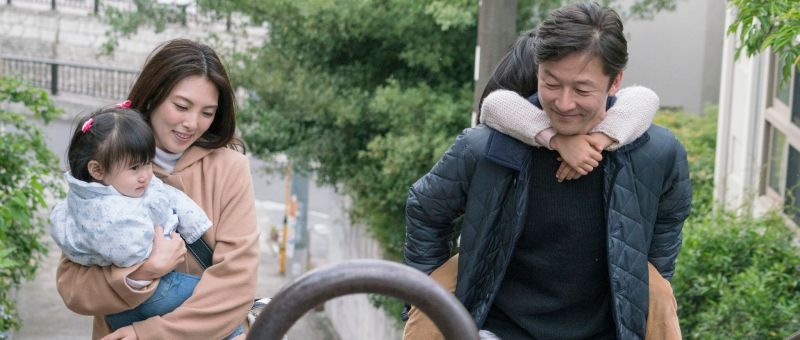
Bread of Happiness (しあわせのパン, Yukiko Mishima, 2012)

“Plain bread is nice too” a short-term visitor concedes having reached an epiphany after a few days’ stay at Cafe Mani in Yukiko Mishima’s slice of comfort cinema, Bread of Happiness (しあわせのパン, Shiawase no Pan). Perhaps in its own way a reaction to the devastating earthquake and tsunami of the previous year which is referenced in the closing arc, Mishima’s drama is one of a series of films from the 2010s advocating for a simpler life built on empathy and mutual compassion as a bulwark against the increasing disappointments of a relentlessly consumerist society. 

The heroine, Rie (Tomoyo Harada), was a lonely child who buried herself in a fantastical children’s book about a little boy, Mani, who was best friends with the Moon. Touched by Mani’s words when the Moon asked him to take down the sun because its brightness made his life unbearable that “what matters most is that it shines on you and that you shine on others”, Rie resolved to find her own Mani but has long since given up. She and her her husband Mizushima (Yo Oizumi) have recently relocated to a Hokkaido ranch where they run a cafe bakery that has quickly become a community hub tending to the wounded souls of the local area and sometimes even beyond. 

The urban/rural contrast is rammed home by the couple’s first guest, Kaori (Kanna Mori ), a young shop girl from Tokyo who was supposed to be going to Okinawa with her boyfriend but he stood her up and she’s come to Hokkaido instead. Although originally grumpy and sullen, Kaori begins to warm to the charms of rural life complaining that in Tokyo people have to force themselves to smile. Her words accidentally hurt the feelings of local boy Tokio (Yuta Hiraoka), conversely jealous of big city opportunity but lacking the courage to strike out from his small-town life in which ironically enough he works as a points switcher at the local railway. What Kaori learns through her various experiences and the kindness of the Mizushimas isn’t that country life is better just that small happinesses are often all you need, there is pleasure in simplicity, and there’s no need to submit herself to the pretentiousness of city life explaining that she’s going to tell her coworkers the truth about her Okinawan holiday and bring some of the wholesome homemade bread back for them too. 

But then, it isn’t always so easy as the couple discover trying to help a sad little girl in the wake of marital breakdown. In a slightly surprising twist, Maki (Yuki Yagi) has been abandoned by her mother who has left the family and is struggling to accept both her loss and the change in circumstances which goes with it. The dilemma revolves around a bowl of pumpkin soup which Maki refuses to eat despite having previously longed to taste her mother’s signature dish. The realisation she comes to is that something can be different but that doesn’t make it bad, bonding with her equally dejected father (Ken Mitsuishi) thanks to the gentle support of the Mizushimas who seem to have a knack for knowing just what everyone who comes through their door needs. 

That goes double for the elderly couple who turn up late one night in the dead of winter, husband Fumio (Katsuo Nakamura) worryingly explaining that they’ve lived long enough, that while you’re young you still have the possibility of change, of becoming “a different you”, but old age has no further possibility nor the ability to change. Having lost their daughter in the tsunami the old couple are trapped in an inertia of grief from which they are gradually awakened by the gentle care of the Mizushimas and the sight of the beautiful moon that shines down on Cafe Mani. 

Rie meanwhile remains privately dejected, longing for her own Mani but convinced she’ll never find him only to realise he’s been there all along. Just like the words in the picture book, Rie and Mizushima have resolved to be the light, Fumio later sending them a letter claiming that they have discovered the ideal form of happiness in their simple life doing as they please surrounded by friends who have already become family and offering love and support to all who come through their doors through the medium of delicious seasonal food. With a host of quirky side characters including an omniscient glass blower (Kimiko Yo), genial postie (Chikara Honda), farmers with an ever expanding family, and a regular customer who carries a mysterious trunk around, while narrated (seemingly) by a sheep with the voice of a child Mishima’s gentle drama is foodie pure comfort cinema in which good bread and a warm fire may yet save the world.


Bread of Happiness until 27th February in several territories as part of Japanese Film Festival Online 2022.

Original trailer (English subtitles)

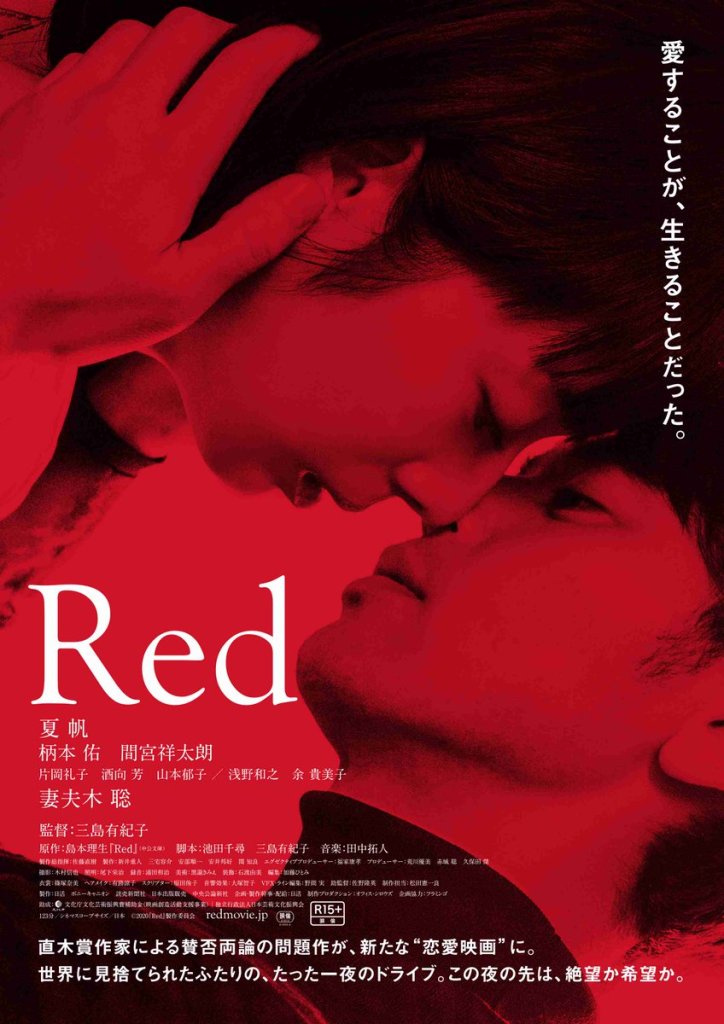
Shape of Red (Red, Yukiko Mishima, 2020)

“This isn’t A Doll’s House” the heroine of Yukiko Mishima’s Shape of Red (Red) is exasperatedly told by a well-meaning colleague, only in many ways it sort of is. Adapted from the novel by Rio Shimamoto, Shape of Red proves that not all that much has changed since Nora slammed the door on the patriarchal hypocrisies of a conventional marriage as its not quite middle-aged wife and mother is confronted by the weight of her choices, wondering if a dull yet secure middle-class life is worth the sacrifice of personal fulfilment. 

32-year-old Toko (Kaho) gave up a career in architecture to marry upperclass salaryman Shin (Shotaro Mamiya) and is now a housewife and mother to six-year-old daughter Midori. The marriage is unhappy only in the most ordinary of ways, leaving Toko feeling neglected and unfulfilled, treated as a servant in her own home expected to fulfil her husband’s needs while her own go unsatisfied. That is perhaps why she wanders off from a work gathering her husband has dragged her to (in the outfit he picked out for her to wear) into a more interesting party where she re-encounters an old flame who abruptly drags her into an unoccupied room for a rough and unexpected embrace. Leaving the party together for a walk along the beach, Toko fills Kurata (Satoshi Tsumabuki) in on the past 10 years, lying through her teeth that she’s blissfully happy though admitting that she would have liked to continue with her career. 

Meeting Kurata either awakens a dormant sense of desire in the otherwise button-down Toko, or merely gives her permission to pursue it. She plucks up the courage to tell the less than enthusiastic Shin that she wants to go back to work and takes a job at Kurata’s company where the pair grow closer, but struggles to decide what it is she really wants – the “traditional” housewife life she picked when she married Shin, or the right to fulfil her individual desires. Shin, it has to be said, is an unreconstructed chauvinist from a conservative background who runs all of his major life decisions by his parents. He told Toko he was fine with her continuing to work after marriage but didn’t really mean it, coming up with excuses why she shouldn’t even though Midori is now in regular school. He tells her she can give work a go, but views it as little more than a hobby he assumes she’ll fail, later instructing her to stop because his parents want a second grandchild and, tellingly, he would like a son. Toko, meanwhile, is beginning to feel trapped but conflicted, convincing herself this is the life that she should want while simultaneously accepting that it makes her miserable. 

A third potential man at her place of work, Kodaka (Tasuku Emoto), also quite sexist and a little bit creepy but perhaps ironically so, strikes at the heart of the matter in bringing up her family background. Like seemingly everyone else, she grew up without a father because her parents are divorced, something she’s kept a secret from her conservative in-laws. Toko’s far less conventional mother (Kimiko Yo), sick of keeping up the pretence, brands her daughter’s life choices as “pathetic”, disappointed that she’s deluding herself she’s happy “living a lie” with a man she doesn’t even love.

Yet as fiercely as her newly awaked desire burns, she isn’t convinced by Kurata. Kodaka tells her that she and Kurata are two of a pair, off in their own worlds not really caring about anything, while pointing out that if Kurata has an empty space inside him he refuses to let anyone fill then the reason she sees it is that she does too. The pair work together symbolically rebuilding an imagined future through designing their idealised home, Toko eventually deciding that the windows need to be bigger because she wants to see more, literally broadening her horizons. What she’s deciding is that she wants more of life, but struggles to free herself of the old patriarchal ideas which convince her she’s betraying something by choosing herself. 

Once upon a time, a film like Shape of Red might have punished its heroine for her pursuit of passion, pushing her back towards a life of traditional respectability in forcing her to accept her maternity at the cost of her personal happiness or accept that her only freedom lies in death. Times have changed, if not as much as you’d think. You still can’t have it all, a choice has to be made and largely the choice is the same as Nora’s – stay and live the lie, or leave and accept that social censure is the price of authenticity. “I’ve a feeling we’ll be trapped like this forever” Toko exclaims driving down a seemingly endless tunnel lit by the warm red glow of security lights. Sooner or later you have to choose where you want to live, the superficially cosy show home with tiny windows and no soul, or the drafty opportunity of a room with a view opening out onto wide open vistas of infinite possibility.


Shape of Red is available to stream in Germany from June 9 to 14 as part of this year’s online Nippon Connection Film Festival. It was also due to be screened as part of the 10th season of Asian Pop-Up Cinema prior to its suspension.

International trailer (English subtitles)

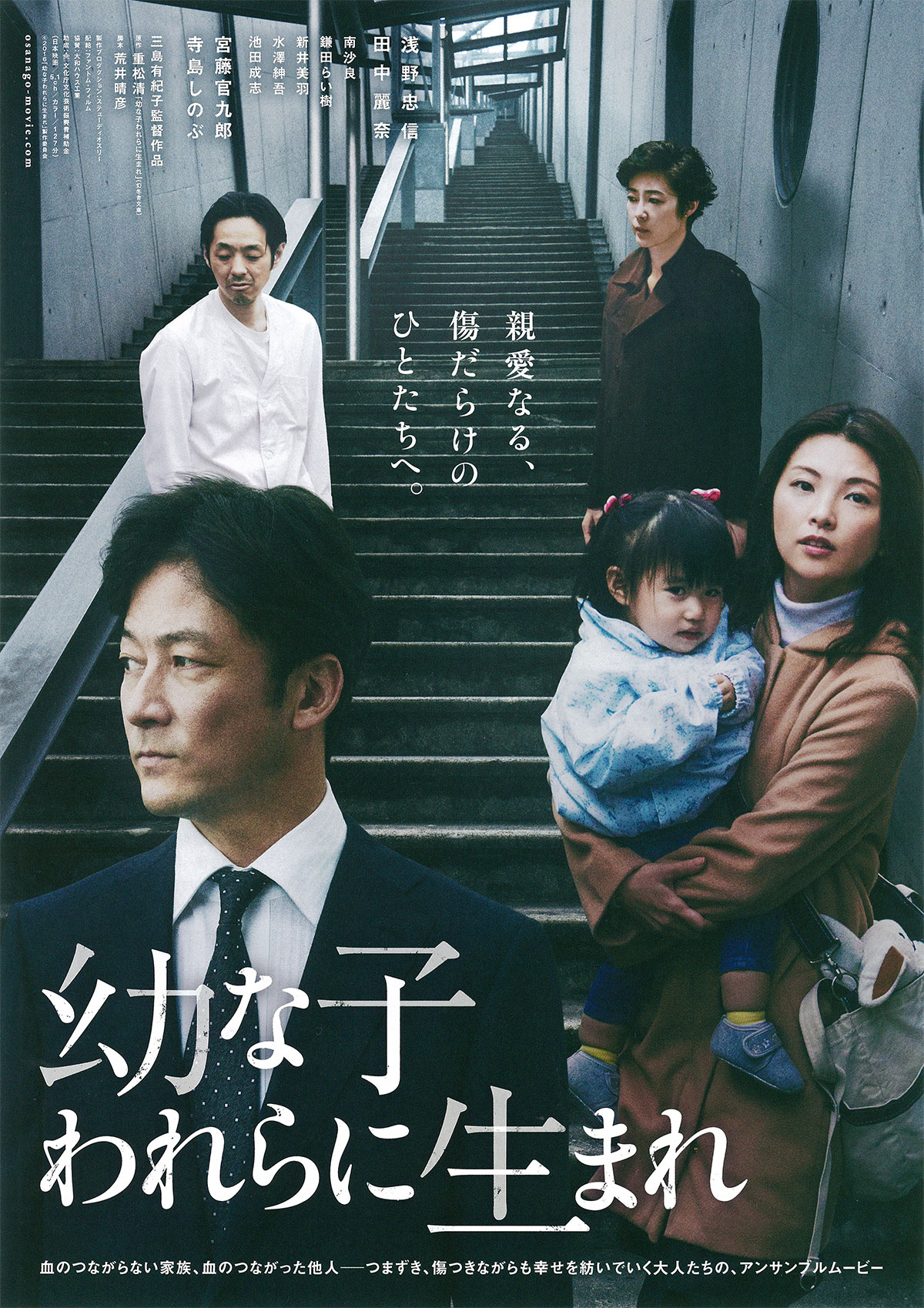
Dear Etranger (幼な子われらに生まれ, Yukiko Mishima, 2017)

Dear Etranger posterThe family drama has long been considered the representative genre of Japanese cinema, but with the days of Ozu long gone the family itself has become a subject for reappraisal. Yukiko Mishima’s Dear Etranger (幼な子われらに生まれ, Osanago Warera ni Umare) is the latest to take a scalpel to the nation’s basic social unit and ask what the word “family” means in an ever changing social landscape. In an Ozu picture, one family must be broken for another to be formed – this is the way of things and in the end must be accepted if with sadness, but does it really need to be this way or is there room for more as connections become less easy to define?

Makoto Tanaka (Tadanobu Asano) separated from his first wife some time ago and still spends time with his daughter, Saori (Raiju Kamata), though only a few times a year. Four years ago he married another woman, Nanae (Rena Tanaka), who had also been married before and has two children – Kaoru (Sara Minami) and Eri (Miu Arai). Nanae has recently discovered she is pregnant and is thrilled to bits to add to their family, but Makoto is conflicted. He liked the family as it was and worries that the new baby will place a wedge between himself and his step-daughters, that they may suddenly feel themselves pushed out and not really part of the new family that is being forged by a child who has a blood relation to both their parents rather than just one.

In truth, family dynamics aren’t all Makoto currently has to worry about. A 40-year-old man, he’s also hitting the scrap heap at work – rather than laying people off, they’re transferring them to unpleasant jobs in the hope they’ll resign. A lifelong salaryman, Makoto has been sent to the packing warehouse where his every move is logged on computer and he’s rated for speed. This is partly his own “fault”. Rather than play the salaryman game, Makoto wanted to be a family man. He doesn’t work weekends or overtime, he takes public holidays off, and never stays out late drinking with colleagues – all things which mark your card as an antisocial shirker in workaholic Japan.

Makoto’s superior, warning him about the imminent transfers, criticises his attitude. He tells him that he doesn’t think spending time with his children is his “job” as a father. He sees his responsibility as one of providing a role model and he thinks the best way to do that is to be seen working hard as a “respectable” member of society. Makoto couldn’t disagree more. He works to rule, but wants to be the sort of father that’s there for his kids, not just an authoritarian figure who comes home late smelling of booze and throws his weight around. He knows that as the children grow up they’ll grow away from him and won’t want to hang out with dad anymore, so he wants to spend time with them now while he still can.

Makoto’s intense desire to be a family man is perhaps unusual in Japan where men channel their ambition into work and women are (still) expected to channel theirs into the home. It is therefore doubly painful for Makoto when his elder step-daughter, Kaoru, heading into a difficult age, suddenly rejects him on hearing about the new baby. Despite the fact that Kaoru’s biological father (Kankuro Kudo) was violent towards both her and her mother, Kaoru begins to insist on seeing him, complaining that it’s unfair to be forced to live with “a stranger”. On one level, Kaoru is at the age at which most young women begin to find their father annoying and embarrassing, but her resentment is also informed by a fear of abandonment and cultural doubt about her place in a still atypical family, unconvinced that it’s possible for a man to become a father to a child that’s not his own by blood.

Blood ties still seem to trump all in most people’s minds, but bureaucracy plays its part too. Makoto still insists on making time to see Saori – something which is sadly unusual in Japan where divorce usually results not only in the children losing contact with the absent parent but also the entirety of an extended family. Kaoru doesn’t quite like it that Makoto does this, she feels almost betrayed as if he’s choosing his biological child over her and that continuing to associate with Saori means he hasn’t fully committed to her family. There seems to be an idea that the family unit is a distinct bubble and one can’t be inside more than one at a time, just as one can’t be listed on more than one “family register”. When an emergency occurs and Saori needs to get a lift from Nanae who has Eri in the back of the car, she isn’t sure if it’s OK for her to get in even with her father with her. She suddenly feels awkward, as if her presence in his car with his new family is inappropriate. None of these people know each other – the existence of a parallel family is so embarrassing as to be “unseen”, buried like a scandalous secret and kept entirely separate to avoid any cross-contamination. When Eri asks who Saori is, awkward silence prevails until she is forced to introduce herself as a “friend” of her father’s – something he doesn’t bother to correct until the drive home when another encounter has pushed him into reconsidering what it means to be a “father”. 

Makoto’s strong desire for acceptance and for forging a “family” that is “his” may perhaps seem selfish and possessive, yet he also tries to react with patience and empathy towards others in his position. He tries to be patient with Kaoru, advising her that he doesn’t think meeting her “real” dad is a good idea but if it’s what she wants he’ll try to make it happen. Likewise, he is grateful to Saori’s stepfather for raising his daughter when he wasn’t able to. Finally the walls begin to dissolve and it stops being about who belongs on which bit of paper and starts being about connections forged through love and understanding. The new baby, rather than forcing everyone apart, begins to bring them together, each joined by a feeling of joy and responsibility towards the new life to which they are all connected. 


Screened at Nippon Connection 2018.

Original trailer (no subtitles)

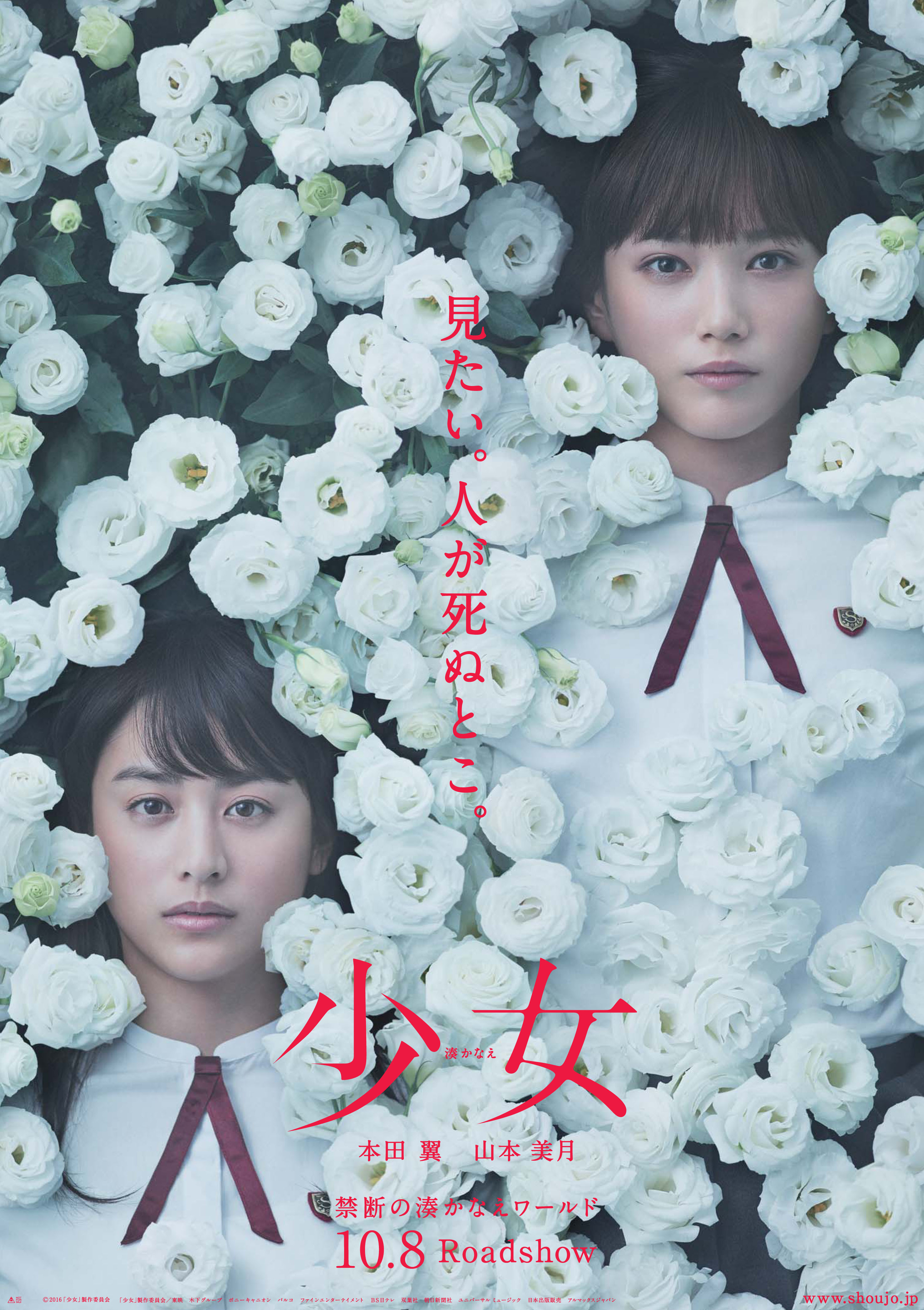
Night’s Tightrope (少女, Yukiko Mishima, 2016)

night's tightrope japanese posterKanae Minato is known for her hard-hitting crime stories from Confessions to Chorus of Angels, The Snow White Murder Case, and Penance but in adapting her second novel, Shojo (少女), Yukiko Mishima has moved away from the mystery for a no less penetrating look at the death of childhood in the story of two best friends each dealing with traumatic pasts and presents. Childhood is a place of tightly controlled powerlessness, but adulthood offers little more than corruption and selfishness with its predatory teachers, abusive parents, and dirty old men so obsessed with school uniforms they barely see the girl inside them. Adolescent anxiety provokes a fascination with the idea of death which perhaps reflects this transitionary stage, but at its centre is the fracturing of a friendship which has endured all else.

The film opens with a strange avant-garde play being performed in a church by a group of girls in austere school uniforms. The monologue offered by the collective reads like an instruction booklet for the birth of fascism with its calls for genetically engineered test tube babies and universal childcare in which each child is “equal” and receives “exactly the same” education and resources. The girls are students at a strict Christian fundamentalist school where they’re also expected to participate in strange rituals including dancing round the maypole (incongruous as that may seem).

Atsuko (Mizuki Yamamoto) – a former kendo champion with a limp, and Yuki (Tsubasa Honda) who has a large scar across her hand resulting from domestic abuse, have been lifelong friends but have recently begun to drift apart. Given the overriding survival of the fittest atmosphere in the school, it’s not surprising that the other girls have turned on Atsuko and proceeded to make her life a misery by telling her to die either in person, on line, or in one particularly grim episode by shoving a sanitary towel into her locker with the message written on it in blood. Yuki is trying to help her but doesn’t know how and has taken to writing everything down in a book instead.

The world of teenage girls can often be a vicious one but there’s a strange kind of mania in the way Atsuko’s schoolmates set about pushing her towards the edge. Formerly a top kendo player, Atsuko has vivid, panic attack inducing flashbacks to her life changing accident in which she recalls her teammates prentending to comfort her but secretly hurling accusations under their breaths while Yuki looks on in horror from the stands.

Yuki has been writing their story in the form of a novel she calls Night’s Tightrope but the completed manuscript goes missing. The girls’ teacher who has longstanding dreams of literary stardom steals it, sends it to a magazine, and even wins a prestigious literary prize for brand new novelists. Yuki’s revenge is swift but has terrible, unforeseen consequences which add to her obsession with death and dying, eventually culminating in the worrying desire to see someone die in order to fully understand the nature of the “phenomenon”.

While Yuki develops a friendship with a boy she met in a library while she was destroying copies of the teacher’s stolen story, Atsuko goes in a different direction by falling under the spell of troubled transfer student Shiori (Ryo Sato). Recently witnessing a dead body herself, Shiori is just as death obsessed as the other girls but her vision is darker. Shiori introduces Atsuko to her world of blackmail and exploitation, pulling her into a high school girl scam in which they accuse a nearby salaryman of groping them and then blackmail him. Shiori may think she’s taking revenge on venal older men who lust after school uniforms – there are plenty of these on offer from skeevy old men luring school girls to abandoned houses and then trying to get them to do laundry, to teachers visiting love hotels with their students – but actions have consequences and ramifications can be severe.

The girls are caught in a kind of limbo, walking a tightrope into adulthood but doing it blind and alone. Splitting up they take similar paths with Atsuko volunteering at an old people’s home, and Yuki spending time with terminally ill children but soon enough their death obsession changes form as their twin causes eventually overlap. Stepping away from Minato’s sometimes nihilistic pessimism, Night’s Tightrope leaves a space for hope in the reconciliation of the protagonists who rediscover their shared pasts once the message buried in the novel is finally delivered. The adult world may be mired in the dark of night but the girls have recaptured the sunlight, taking solace in the depth of their friendship and stepping off the tightrope and into the world of adulthood hand in hand.


Original trailer (English subtitles)
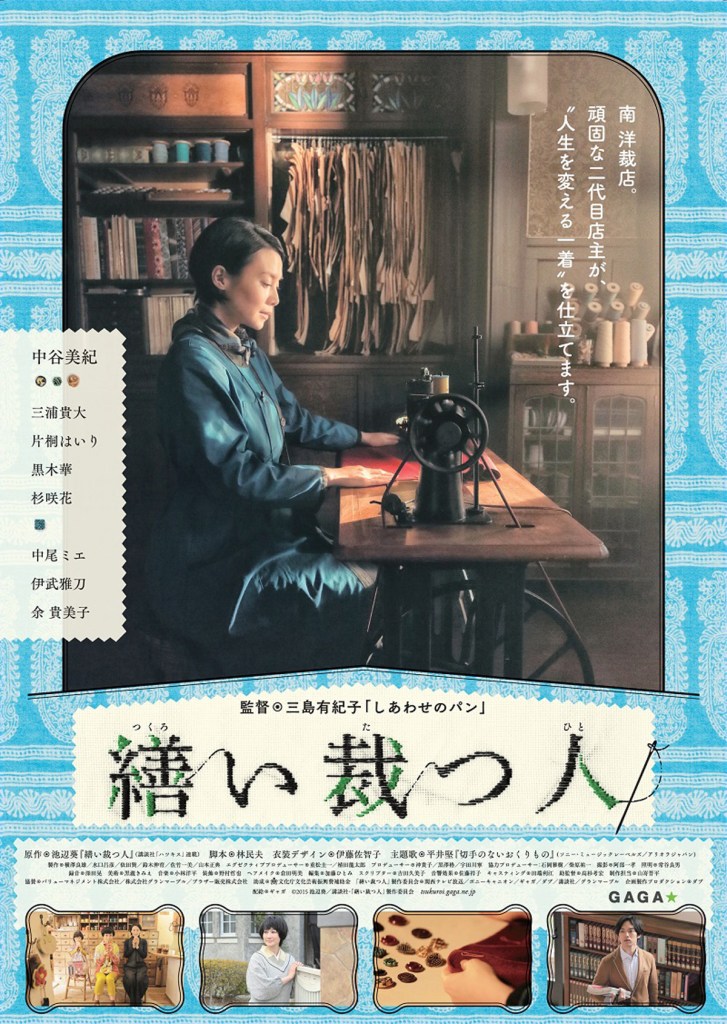
A Stitch of Life (繕い裁つ人, Yukiko Mishima, 2015)

stitch-of-lifeTradition vs modernity is not so much of theme in Japanese cinema as an ever present trope. The characters at the centre of Yukiko Mishima’s adaptation of Aoi Ikebe’s manga, A Stitch of Life (繕い裁つ人, Tsukuroi Tatsu Hito), might as well be frozen in amber, so determined are they to continuing living in the same old way despite whatever personal need for change they may be feeling. The arrival of an unexpected visitor from what might as well be the future begins to loosen some of the perfectly executed stitches which have kept the heroine’s heart constrained all this time but this is less a romance than a gentle blossoming as love of craftsmanship comes to the fore and an artist begins to realise that moving forward does not necessarily entail a betrayal of the past.

Ichie Minami (Miki Nakatani) has taken over the tailoring business started by her grandmother, using her grandmother’s vintage treadle sewing machine and mostly occupying her time by making alterations on her grandmother’s existing patterns. To make ends meet, she’s also been reproducing some of her grandmother’s designs for sale at a local shop which brings her to the attention of department store employee and fashion enthusiast Fujii (Takahiro Miura) who has the idea of getting Ichie to work on some new items for a branded fashion line. Ichie, however, is devoted to her grandmother’s legacy and has committed herself to continuing the work her grandmother started with no deviation from the current model. Undeterred, Fujii continues to visit Ichie while she works, reaching even deeper levels of understanding both of her craft and of her person. Something inside Ichie begins to move too, but the pull back to the past is a strong one and it takes more than just courage to decide to finally embrace all of your hopes and dreams.

When Fujii hands the portfolio pitch he’s designed to his boss at the department store she loves the clothes and exclaims that the person who made them must be nice too, to which Fujii sheepishly admits that Ichie is more like a stubborn old man. Rigid in her habits and a little standoffish, perhaps even austere, Ichie does indeed seem harsh and unforgiving. Yet the irony is that her work requires the opposite of her. The clothes Ichie makes, and those her grandmother made before her, are perfectly tailored to the person in question, not just in terms of their measurements but designed to bring out each person’s personality, to help them become more of themselves and live a little happier in beautifully made outfits. Thus, Ichie must look closely at each person she meets in order to understand them fully and arrange her craft in perfect symbiosis with their individual needs. Perhaps for this reason Ichie finds her solitary time listening to the rhythmical beat of the sewing machine particularly relaxing, but the shop remains somewhere the local people gather in search of something more than just a simple hem repair.

Ichie’s grandmother sought to create clothes that could be worn for a lifetime, remaining long after both she and the person they were made for have disappeared. This approach may seem odd from a modern perspective of wash and wear disposable clothing intended to be replaced in a matter of months, but the idea here was never about the fashionable but one of engineering personal happiness through attire. The clothes make the man, in a sense, but the man also makes the clothes. As she made her alterations, Ichie’s grandmother recorded the various goings on in her customers’ lives in her notebook, allowing the clothes themselves to become the story of someone’s life. As Ichie’s former teacher puts it when trying to explain the art of making tea, it takes more than just heart – it takes experience, and care, and dedication. Ichie’s grandmother was meticulous – a trait which her granddaughter has inherited, with every stitch perfectly placed, each hem perfectly straight, and garment perfectly tailored for its intended wearer.

Ichie may keep herself contained for good reason, but now and then something else comes through such as a love of truly giant cheesecakes or a sudden bout of worry on being asked to craft a funeral dress for a good friend, but Fujii’s gentle prodding does indeed lead her towards a period of self reflection on what exactly it is she wants to do with her grandmother’s legacy. A cynical person might regard the annual “soirees” Ichie’s grandmother began in the small town as an excuse to get people to buy an outfit they’ll only wear once a year but the event, like the clothes, becomes an occasion for the artifice which lays bare the truth. Eventually, her grandmother’s gentle spell works on Ichie too (with a little help from Fujii) as the love of the craft of tailoring helps her to become herself, cast off her grandmother’s shadow whilst honouring her legacy, and learn to take pleasure in doing the things which only she can do.


Screened as part of the Japan Foundation Touring Film Programme 2017.

Original trailer (no subtitles)