Inch Forward (走れない人の走り方, Su Yu-Chun, 2023)

Why does everything always go wrong just when it was about to go right? Everything has fallen into place for director Kiriko’s upcoming indie film but suddenly she finds herself experiencing a series of crises that are perhaps a bit of a wakeup call teaching her a few things about herself as well as the process of filmmaking. The latest film to tackle the perils of the independent movie scene, Inch Forward (走れない人の走り方, Hashirenai hito no Hashiri-kata) never shies away from the difficulties involved but does suggest they can be overcome with humility and a willingness to get creative.

Part of the problem is Kiriko’s difficulty in making decisions and lack of clarity over her role as a director. Her producer, Takimoto, tries to keep her grounded by pointing out places where the script will be difficult to film and dealing with the actors, but also tells her that she should have a better idea of the message she intends her film to carry and be prepared to answer questions about the script from her cast members. But Kiriko says she doesn’t really intend the film to have a message and thinks creating a character is an actor’s job not a director’s. Whenever Takimoto asks her to reconsider something, Kiriko childishly answers that she’ll think about it probably without really intending to.

But her irresponsible behaviour causes problems for others, particularly when she messes up the company car during a bit of unauthorised location hunting, or fails to shut the front door properly allowing her pregnant roommate’s pet cat to escape and thereby sending her into an early labour. It’s only after these series of crises that Kiriko begins to understand that she needs to make amends and be more considerate in future if she wants to continue receiving help and support from those around her. After all, you can’t make a film all on your own.

Ironically enough she describes her film as like a road movie but on foot about people going to the same place over and over again. Even one of her crew members asks her why it is indie filmmakers like to end at the sea hinting at her screenplay being slightly cliché even as she tries to think her way out of the problem. At a particularly low point, she has a vision of the film being taken away from her as her (all male) crew members and Takimoto remark on how useless she is and vow to take over their section from her. She also has an obsession with her horoscope which is usually a little negative further deepening her lack of confidence and general sense of despair. 

“Don’t worry, just believe in yourself and move forward’” one of her horoscope ads advises and it might indeed by good advice for an indie filmmaker. Learning to be a little more considerate of those around her, she begins to benefit from their help and advice rather than rejecting it in her own insecurity. Despite all of the constraints her friend tells her that she should make something authentic, what she actually wants to do rather than cynically doing what seems the most advantageous, but what’s really important is a sense of balance. As Takimoto told her, she needs to learn to prioritise rather than expect to get everything she wants and be realistic about what’s achievable while still aiming for the film she wants to make. 

Then again in the cinema scenes which bookend the film Su implies that the audience weren’t particularly impressed or perhaps confused by her road movie that doesn’t go anywhere. One audience member was so deeply asleep they had to be woken by an usher. Nevertheless, to overcome her problems Kiriko has to take the lead in more ways than one asserting control over her project but also prepared to work with others, listen to their suggestions, and make firm decisions as they inch forward towards their goal. Warm and quirky, Su’s lighthearted dramedy never shies away from the difficulties of indie filmmaking but finally resolves that it is possible to overcome them with a little mutual respect and solidarity between those on the other side of the screen.


Inch Forward screened as part of this year’s Osaka Asian Film Festival.

Original trailer (no subtitles)

My Sorry Life (愛のくだらない, Kozue Nomoto, 2020)

A dejected, self-involved TV producer is forced into a moment of introspection when dealing with relationship breakdown and career setback in Kozue Nomoto’s ironic character study My Sorry Life (愛のくだらない, Ai no Kudaranai). Examining a number of social issues from women in the workplace to attitudes to LGBTQ+ people in contemporary Japan, Nomoto’s unflinching drama never lets its abrasive heroine off the hook even as she begins to realise that her own less than admirable behaviour has contributed to her present sense of despair and impossibility. 

Kei (Maki Fujiwara) has been in a relationship with former comedian Yoshi (Akiyoshi Okayasu) for the last five years, but it’s clear that she is beginning to tire of him. The couple are supposedly trying for a baby, but Kei has been taking contraceptive medicine behind Yoshi’s back while complaining that she doesn’t understand why he insists on getting pregnant before getting married when he hasn’t even met her parents. At work meanwhile she’s beginning to feel left behind, secretly jealous when a slightly younger female colleague reveals she’s been promoted to become the lead producer on a variety show and a little resentful when her idea for a programme focusing on the lives of ordinary people as opposed to celebrities is turned down by her bosses. The idea does however bring her to the attention of indie exec Kinjo (Takuma Nagao) who wants to bring her on board to produce a web series he’s about to launch along the same lines. And then, Yoshi drops the bombshell that he thinks he’s pregnant which is, to say the least, unexpected. 

Yoshi’s surprise announcement signals in a sense a reversal of traditional gender roles within their relationship with the man the nester and woman reluctant commitmentphobe. Kei is also the main financial provider, but on some level both resents and looks down on Yoshi for his lack of conventional masculinity having given up his comedy career to work part-time in a supermarket, obsessing over discount produce like the pettiest of housewives but often indulging in false economies such as reduced price yet still extravagant sake. Strangely, Kei goes along with Yoshi’s delusion taking him to a fertility clinic where she assumes they’ll set him straight but thereafter begins staying with a friend who ironically has an infant child and may be experiencing some difficulties in her marriage to which Kei remains entirely oblivious. 

Despite her journalistic desire to witness everyday stories, Kei is often blind to those around her never stopping to wonder if Yoshi is trying to tell her something through his bizarre pregnancy delusion or if her friend might need someone to talk to. She does something similar on spotting the office courier (Yukino Murakami) whom many of the ladies have a crush on using the ladies’ bathroom. Assuming the delivery guy is a lesbian she asks him about coming on the webshow, becoming even more excited when he explains that he’s a transman after inviting Kei to an LGBTQ+ friendly bar where he works part-time. Kei doesn’t realise that her throwaway comment that “that sort of thing is popular now” hurts Shiori’s feelings and leaves him feeling exploited as much as he would like to appear on the programme to raise awareness about LGBTQ+ issues. 

For her part, Kei is obviously not homophobic but does undoubtedly treat Shiori and his friends with a degree of exoticism, declaring that she’s never met anyone like them before while staring wide eyed in wonder as if these concepts are entirely new to her. Kinjo, the producer of the web series, is squeamish when Kei raises the idea, introducing her to a male scriptwriter who obviously already has his own concepts in mind, rudely ignoring Kei’s input while dismissively allowing his drink to drip on her proposal. The studio turn the idea down on the grounds that LGBTQ+ topics are “inappropriate” because there may be children watching and parents won’t want to explain words like “gay” or “lesbian” to their kids. Kei is rightly outraged, but she’s also a hypocrite because her intentions were essentially exploitative and self-interested. She wasn’t interested in furthering LGBTQ+ rights, she just wanted to chase ratings. 

Kinjo dresses up his personal distaste as a dictate from above but it’s clear that he doesn’t really value Kei’s input and continues to treat her poorly for the entirety of the project, blaming her for everything that goes wrong and expecting her to fix it on her own. There’s even an awful moment when Kei’s friend Tsubaki (Sayaka Hashimoto) shows up with her baby and one suspects they may be about to rope her in as a replacement guest, but the result is even worse as Kinjo stares into the pushchair and then throws the pair out while embarrassing Kei in the process. 

“Being busy’s no excuse for being unreliable” Tsubaki sympathetically tells her though it takes a few more setbacks before Kei begins to realise that she’s been unfair and to be honest generally unpleasant to those those around her. Feeling inferior, she makes a point of bumping into an elderly male janitor, treating him with contempt even when he stops to try and help her after she collapses in the office. Only through an ironic moment of emotional honesty which allows her to come to an understanding of her relationships does Kei begin to piece things together, reflect on her own mistakes and anxieties, and realise what it is she really wants. A contemplative reconsideration of accepted gender norms, Nomoto’s gently humorous drama never lets its heroine off the hook but does allow her to find new direction if only through confronting herself and the world in which she lives. 


My Sorry Life streams in the US until Sept. 2 as part of this year’s Japan Cuts.

Original trailer (English subtitles)

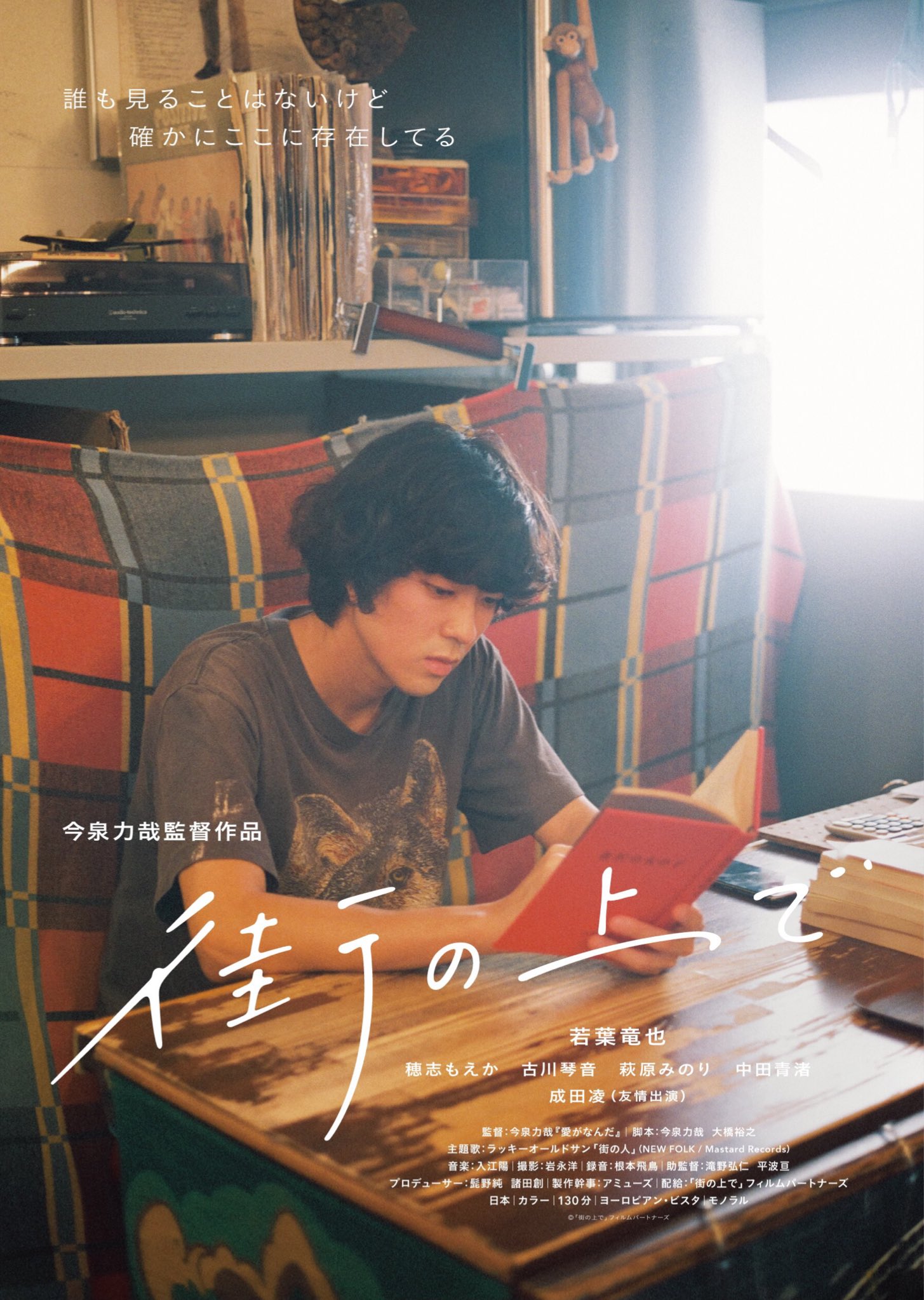
Over the Town (街の上で, Rikiya Imaizumi, 2019)

Frustrated youngsters chase an unrealisable dream of idealised romance in Rikiya Imaizumi’s ode to Shimokitazawa, Over the Town (街の上で, Machi no Uede). For the moment at least known as the bohemian, avant-garde artists quarter of the contemporary capital beloved for its slightly retro quality replete as it is with narrow lanes and period buildings, Shimokitazawa is also a place of constant change but as the hero later points out even if “parts change and disappear that doesn’t mean they never existed”. Nevertheless, he seems to be marked by a particular anxiety, as do many of his age struggling to make meaningful connections in an ever shifting world. 

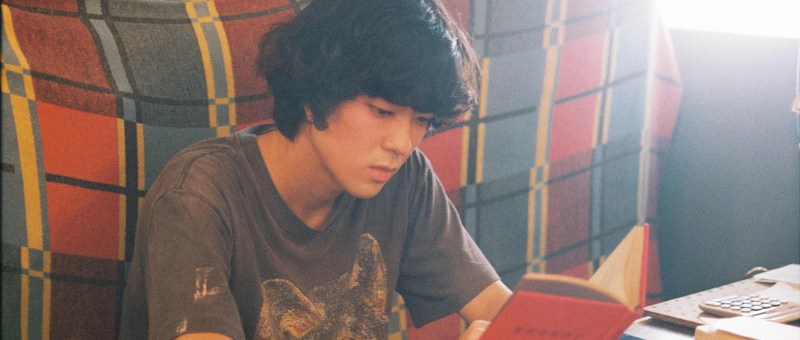
Ao’s (Ryuya Wakaba) world begins to crumble when he’s unexpectedly dumped by his beloved girlfriend, Yuki (Moeka Hoshi), on her birthday. Unceremoniously telling him that she’s met someone else, Yuki rationalises that breaking up is the only option but Ao tries to resist only for her to tell him that he can go on deluding himself that he still has a girlfriend but from now on she’ll be hanging out with someone new. From then on, Ao seems to be surrounded by frustrated couples and worryingly outdated ideas of romantic politics such as those of the students who drop into the vintage clothing shop where he works. Ao assumes they’re a couple, but a row slowly brews as the girl, Asako, declares herself bored with helping the guy, Shigeru, try on clothes that turn out to be for the purpose of impressing a different girl altogether despite knowing that Asako fancies him. Eventually Shigeru makes a highly inappropriate suggestion, almost akin to a bet, that if the woman he has a crush on rejects him he’ll deign to dating her even though Asako is “a distant second” in his heart. The shocking thing is that Asako agrees, a slightly mournful look in her eyes as she finally reaffirms that she really hopes it works out with the other girl. 

Throughout the exchange during which Ao looks on as an awkward bystander, it becomes increasingly difficult to see what’s so great about Shigeru. Meanwhile, not even Ao comes off particularly well, struggling to deal with his breakup and refusing to accept Yuki has moved on. So hung up on her is he that she eventually ends up contacting the barman at his favourite haunt to ask him to have a word, explaining that it’s inappropriate to go on texting your ex even if she doesn’t reply. Meanwhile, he finds himself at the centre of romantic missed connection, captivated by a sad woman at a concert who gives him a menthol cigarette he keeps in his ashtray as a kind of talisman for the rest of the picture. Infinitely awkward, he talks himself out a potential date with the cute girl at his favourite used bookstore (Kotone Furukawa) by asking an inappropriate question, later doing something similar to a woman (Seina Nakata) with whom he makes a more platonic connection as they each reflect that for some strange reason it’s much easier to open up to someone you have no romantic interest in. 

Perhaps that’s why a melancholy policeman keeps stopping random people in the street to ask their advice on his peculiar romantic dilemma in having inconveniently fallen in love with his “niece” (by marriage and the same age as he is, so maybe it’s “OK”, he’d like to think). Shimokitazawa, which Ao rarely leaves, is indeed a small world, the various strands of his romantic entanglements strangely connected from a young woman’s unrequited longing for her sumo wrestler childhood sweetheart to a TV actor’s (Ryo Narita) troubled love life and a young film director’s (Minori Hagiwara) attempt to deflect her own sense of romantic disaffection. Just as Yuki used another man as an excuse to break up with Ao, Ao finds himself recruited as a fake boyfriend to help a young woman shake off a controlling ex whose refusal to accept the relationship is over in the absence of another man skews even darker than his own signalling perhaps like that first vintage shop exchange the dangerously outdated sexual politics which continue to underpin modern dating. Perhaps boring love is the real kind of fun, comfortable and balanced marked by true connection and mutual vulnerability rather than a giddy anxiety. A stubborn holdout where everything’s secondhand in a continual circulatory process of exchange and return, Shimokitazawa is the kind of place where love finds you even if it takes a while to wander on its way. A charming ode to this timeless yet ever-changing district, Imaizumi’s quirky dramedy keeps the neurosis of young love on the horizon but suggests that romance, like a well baked cake, keeps much better than you’d think when cooled.


Over the Town screened as part of the 2021 Osaka Asian Film Festival.

Original trailer (no subtitles)

Orphan’s Blues (オーファンズ・ブルース, Riho Kudo, 2018)

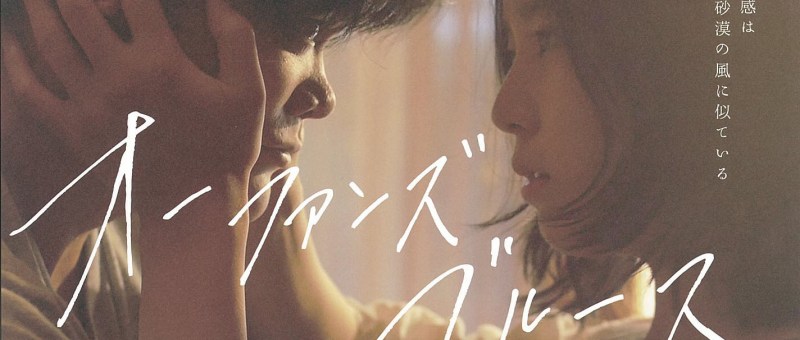
Orphan's Blues posterThe past becomes an irresistible trap for a collection of variously troubled souls in Riho Kudo’s Pia winning feature Orphan’s Blues (オーファンズ・ブルース). “Things change” the heroine laments, unable to keep up with the relentless passage of time as her memory begins to collapse in on itself, leaving only nostalgia behind. A poetic exploration of grief, rootlessness, and trauma, Kudo’s bold debut sends its fugitive protagonists on a sad road trip into the long buried past as they attempt to dig up their childhood innocence in escape from an intolerable present.

Emma (Yukino Murakami), a middle-aged woman making a living with a tiny book stand at the side of the road in a small town, has been experiencing unexplained moments of memory loss – forgetting to place a customer’s order, leaving taps on, repeating herself having forgotten that she’s asked this question several times before. Losing the present sends her back to thoughts of the past as evidenced by a picture of a pack of elephants drawn by her childhood friend, Yang (Yu Yoshii), with whom she grew up in the same orphanage. Longing for that same closeness, she decides to track him down but a visit to Chinatown proves fruitless, as does an attempt to call in at the last address she had. Determined to find out what happened to Yang, she reconnects with another friend, Van (Takuro Kamikawa), who is in the process of fleeing to Tahiti with his girlfriend Yuri (Nagiko Tsuji) after stealing some gangsters’ money. When that doesn’t work out they end up accompanying Emma to a small inn run by a woman, Luca (Tamaki Kuboso), who was once in a relationship with Yang, and where a mysterious young man, Aki (Shion Sasaki), is currently staying.

All of our protagonists, bar perhaps Yuri, have a prominent burn somewhere on their body. Emma’s is on her left shoulder – a scald mark she keeps rubbing at times of stress. Van has a scar from a cigarette burn on his right arm, while Luca has what looks like a brand where a wedding ring might once have been worn. Even Aki has some kind scar on his right wrist, conveniently hidden by his long-sleeved shirts. Each of these people is in some way connected by the absent Yang, desperately in search of him even if some perhaps are more aware than others what might have befallen their absent friend.

Luca, who has a series of elephant tattoos across the nape of her neck, recounts that Yang once told her that elephants separate from the pack after receiving a premonition of their deaths. To spare the others the suffering of seeing them pass away, they leave before they go. Yang, they posit, may have followed their example but if he has all he has done is provoke additional suffering among his confused friends. Emma struggles to remember, frustrated by her inability to stay in the present while being pulled towards the past, feeling as if she’s missing some vital clue which will explain everything.

Meanwhile, the tensions between the five residents at the inn ebb and flow. Yuri, who never knew Yang and is beginning to fear she and Van will never get to Tahiti after all, feels herself excluded from the ongoing drama. She resents the closeness between Van and Emma, irritated that only Emma knows how to calm him down in the midst of emotional meltdown, while wondering how long he’s going to keep her waiting in this strangely liminal space caught between a past she never knew and a possibly unattainable future.   

Waiting is however where they are. Van wants to go back, return to a happy place the three childhood friends once travelled and dig up something they buried but can no longer remember. Emma, confused, eventually finds herself rooted in a delusion of the past, unable to see the present clearly while Van is left with little choice other than to abandon himself to facilitate her temporary happiness. Scarred, they run from a disappointing future into childhood nostalgia unable to reconcile the adults they’ve become with the children they once were. Literally as well as figuratively orphaned, they remain adrift with no clear place to belong or return to. Subtle and poetic, Kudo’s beautifully lensed debut is an achingly melancholy piece but one which perhaps finds hope in the solidarity of the lost as much as it suggests there is no path forward for those who can only look back.


Orphan’s Blues screens in New York on July 28 as part of Japan Cuts 2019.

Original trailer (English subtitles)