
 Written by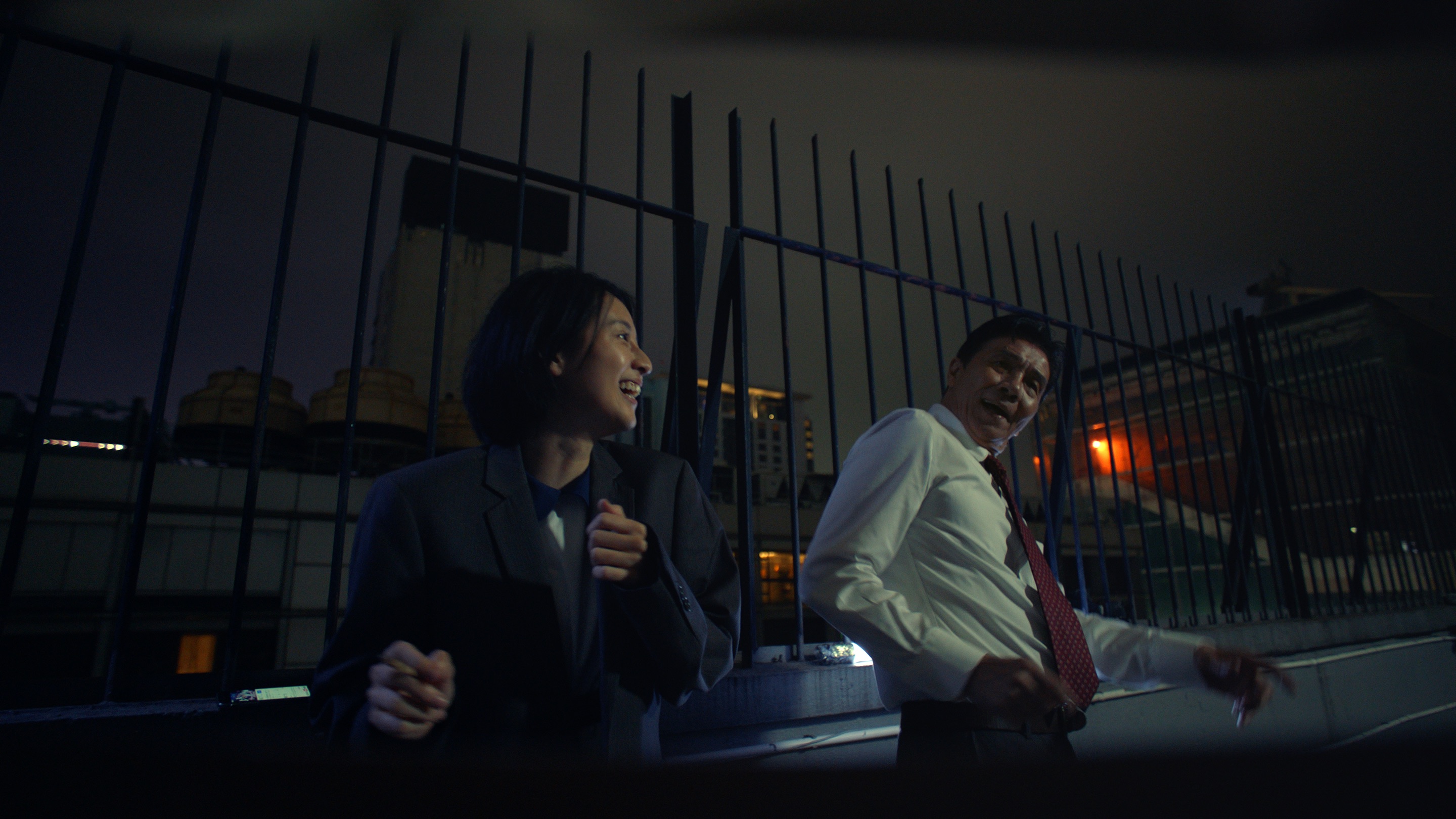
“I don’t know if I’m really lucky or really unlucky,” a young woman wonders after a series of narrow escapes amid the otherwise dismal circumstances of her life in Chow Kam Wing’s debut feature, For Alice (給愛麗絲). A lament for failed fatherhood, Chow plays with noir tropes and the legacy of classic Hong Kong cinema in his neon vistas of despair but eventually discovers a kind of catharsis even as the absent patriarch can redeem himself only in his absence.
Shuang has spent his life in and out of prison and evidently chose to not to maintain contact with his wife and daughter during his latest stretch. The titular Alice is like her namesake lost in the wonderland of contemporary Hong Kong though she named herself for the song and is doing her best to overcome the many problems in her life many of which stem from her relationship with her often absent mother and her string of problematic boyfriends including the latest one, a tailor, who is sexually abusing her. When her mother disappears yet again on a gambling trip to Macau she decides to run away, intending to stay with a friend and sleeping rough when it doesn’t pan out. She meets Shuang, she thinks, by chance sensibly wary but also grateful for the kindness of a stranger.
As it turns out, her mother may have had a reason for all those gambling trips and it isn’t all that different from Shuang’s for his life of crime in that they are both doing it for Alice while constantly frustrated by the socio-economic realities of contemporary Hong Kong. Now in his 60s, Shuang wants to make amends and live a more law-abiding kind of life while redeeming himself as a father but struggles to find a foothold while slowly but anonymously building a paternal relationship with Alice who is facing similar problems to those he faced as a young man. Longing to escape her circumstances she sets her sights on independence and is tempted by criminality, ironically suggesting she will become a smuggler or deal drugs to support herself even as Shuang counsels her against it, encouraging her to pursue her education so she doesn’t end up like him. He didn’t have a choice, he explains, but she does and could make a better life for herself.
But she’s still constrained by an overly patriarchal social system as she finds herself scrambling when her teacher wants to talk to her parents to discuss her smoking on school premises. Who could she possibly ask with her mother absent and the man in the position of a step-father actively harmful and in no position to help? Unbeknownst to her, Shuang accepts his paternal role and offers a genuine apology for his failed fatherhood, his irresponsible absence and its effects on the life of his daughter who was then left unprotected, vulnerable to life’s vagaries and the impossibilities of a stratified society. Yet in the end the only way he can help her is to damn himself, accept his choices and his absence and do what he can for Alice from afar.
Chow’s Hong Kong is place of constant danger and ever present futility filled with dank corridors, rundown buildings, and neon-lit streets. Yet there is something resonant about Alice’s resilience and desire for freedom while accepting the friendship, help and support of a friendly neighbour adopting a less oppressive paternal role that aims, like the bird in bottle, to set his daughter free both of his own destructive legacy and the constraints of the situation she finds herself in. A parallel is seen in the life of Shuang’s friend, Jiu, again fixing his sights on one last job to provide a better future for his family but at the same time risking it knowing that it may mean forfeiting it entirely. Nevertheless, Shuang redeems his paternity in its denial, an act both of self-sacrifice and revelation in which he restores to Alice a more positive paternal legacy along with a sense of love and support otherwise absent from her life as a young woman largely alone in an often hostile environment.
For Alice screened as part of this year’s New York Asian Film Festival.
 Windows on Worlds