 Written by
“We wanted to make easy money,” a down-on-his luck reseller admits, “is life easy now?” Factory worker Ryosuke (Masaki Suda) rebels against capitalism by subverting it through buying low and selling high while repeatedly refusing promotions at his job in a textiles factory. Though it might seem that reselling is just a way to earn an income that seems almost passive but is actually fairly labour-intensive, it’s clear that Ryosuke is a young man dissatisfied with capitalistic realities and lacking direction in his life.
Reselling has become a kind of game to him and like a gambler who plays to lose he’s hooked on the thrill of making a killing exploiting other people’s misery. He’s at once filled with pride and smugness over his apparent triumph over his society and consumed by self-loathing. His friend and fellow reseller Muraoka (Masataka Kubota) tells him that another acquaintance has been arrested for scalping concert tickets with both of them lamenting his foolishness in getting involved with something so risky. The implication is that their friend, Goto, must have been in real desperation to lower himself to such levels and they each fear they may someday end up in the same position. Muraoka laments that that kind of selling is a young man’s game and neither of them have the time or energy to spend all day queuing to buy stuff just to sell it on cheap. They are each, it seems, beginning to feel the increasing desperation of their age that they are running out of time and have little to show for their efforts nor any prospects for the future.
But on the other hand, neither of them want to be locked into the grind or join the oppressive but secure world of the salaryman. In many ways, Ryosuke’s factory boss Takimoto (Yoshiyoshi Arakawa) represents the “correct” path of hard and honest work, though his own paternalistic conviction in meritocracy seems outdated in a man of his age whose formative years occurred during an era of economic stagnation. He talks to Ryosuke as if he’s a young man who wants to get on but lacks confidence, telling him that he has leadership potential and is wasted on the shop floor, but his language also has an edge of the uncanny as if he were trying to recruit Ryosuke into his own worker drone revolution. In any case, even if it might be true that Ryosuke lacks confidence and ambition, that isn’t the reason he refuses promotions, which seems to be another way of rebelling against capitalism. When he eventually quits, he suggests it’s because he’s sick of being told what to do and wants more autonomy over his life and finances.
He tells his girlfriend Akiko (Kotone Furukawa) that she should quit her job too, which she’s only too happy to do because, unlike him, she actively doesn’t want to work and only wants to spend money. When she said she was thinking of giving up her apartment, Ryosuke naturally asked her to officially move in but she refused because his place is too small and she has too much stuff. Akiko has already been corrupted by the same consumerist bug that’s driving Ryosuke’s reselling business, but neither of them can really afford this lifestyle in the city. Ryosuke’s bright idea is to move to the remote countryside where he’s able to rent a huge, though ominous-looking, property for a fraction of the price with the idea of also economically supporting Akiko who will revert to traditional gender roles as a housewife in charge of the domestic space and most especially the kitchen.
But freedom cannot be found simply by retreating from urbanity and the couple soon find themselves plagued by a pervasive sense of resentment. The locals are not particularly accepting of people from Tokyo and are also needled by their success which is something they feel they’ve been unfairly denied. When Ryosuke tries to report a smashed window, even the policeman hassles him and says he’s received a tip-off that Ryosuke is breaking trading standards regulations by selling counterfeit goods as the real thing. Reselling in itself is not illegal, if definitely dubious morally and incredibly cynical. Ryosuke doesn’t seem to like to think about that and tells his new assistant, Sano (Daiken Okudaira), that he tries to sell all the items as quickly as possible so he doesn’t have to worry too much about their authenticity. If they’re wanted they’ll sell, Ryosuke justifies but he might as well be talking about himself.
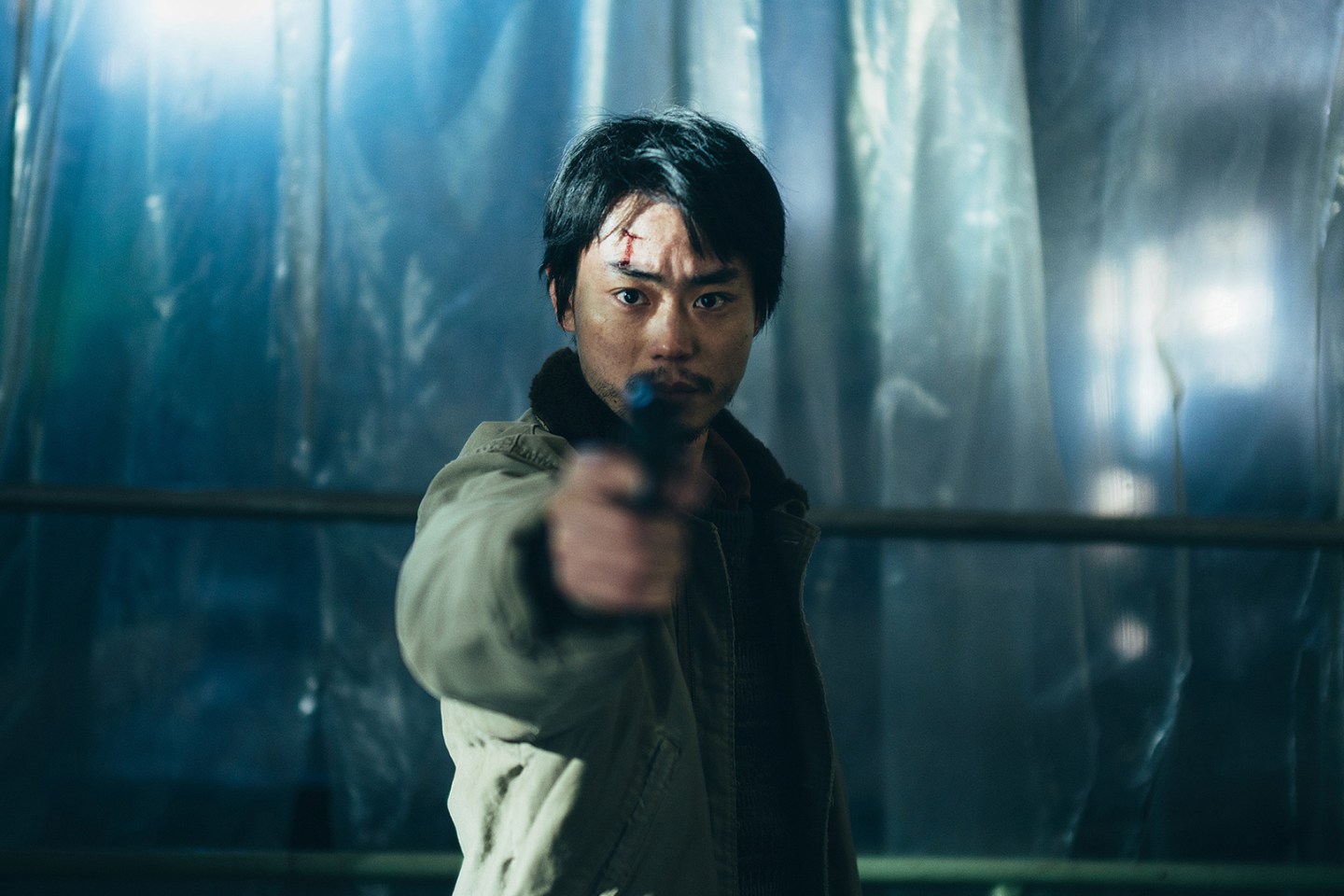
“Being real or fake doesn’t matter?” Sano asks him, just as Ryosuke’s online and offline personas start to blur. He’s unaware that there are people actively hunting him for selling them substandard goods and is later pursued by real life vigilantes acting like online trolls and planning to torture him to death during a livestream. Like many of Kurosawa’s heroes, Ryosuke is completely convinced that he’s the benchmark for normal and it’s everything around him that’s strange or unfair. As the internet once again invades the “real” world, or perhaps it’s more that Ryosuke’s living his online life offline, the increasing unreality of the situation makes us wonder if any of this is “really” happening or product of Ryosuke’s fractured identity as it finally collapses under the twin corruptions of capitalism and social media. “Please keep focusing only on making money,” his new guardian angel Sano tells him, “everything will be obtainable. Whatever you want. Even things that can end the world.” Flying through ironically heavenly clouds, Ryosuke reflects that the path to hell really is paved with gold and his Mephistophelian pact with hyper-capitalism may have damned him beyond all repair.
Cloud is in cinemas from 25th April courtesy of Blue Finch Film Releasing
UK trailer (English subtitles)
 Windows on Worlds