
 Written by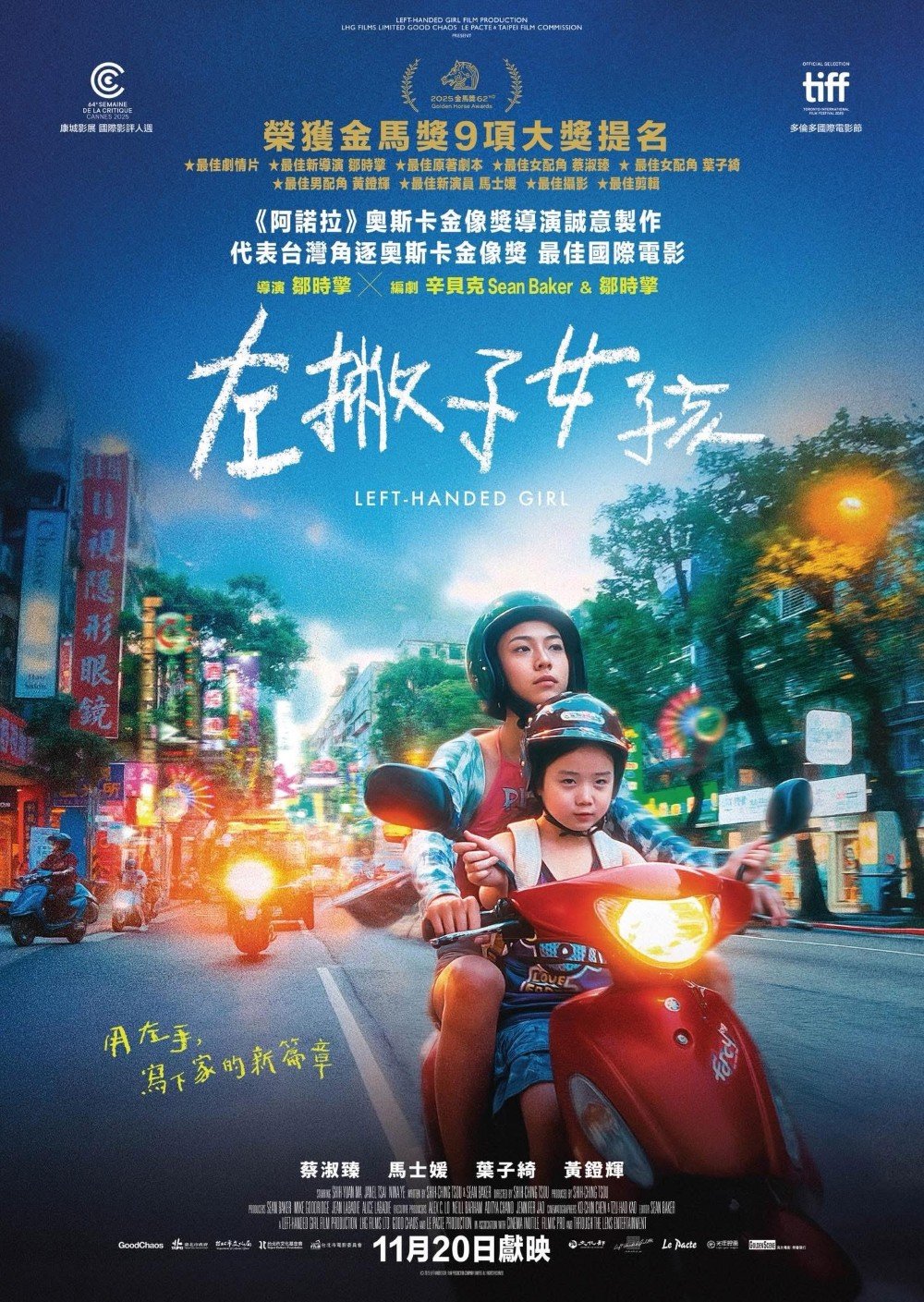
A small family’s attempt to start over by moving to Taipei is frustrated by the baggage they take with them and that which was already there in Tsou Shih-Ching’s whimsical family drama, Left-Handed Girl (左撇子女孩, zuǒpiězi nǚhái). As women alone, they must contend with a patriarchal society and harsh economic environment along with a conservative culture that is often unforgiving of difference and reluctant to grant second chances to those it believes have transgressed its boundaries.
The titular left-handed girl, I-Jing (Nina Ye) describes the city as seeming like a magical place, though it’s certainly noisy and indifferent to her presence. Her mother Shu-Fen (Janel Tsai) laments that their apartment is smaller than it looked in the photo, as if signalling a sense of disappointment even before their new life has started. Oldest sister I-Ann (Ma Shih-Yuan) never finished high school and has got at a job at betel nut stand where the boss explains to a new recruit that her job is to create a sexual fantasy for the customer. I-Ann’s grandmother chastises her for her revealing outfit, warning her about “perverts and psychos” and that it’s dangerous to dress like that in the big city.
The grandparents are representative of a generation who grew up under an authoritarian regime and are fiercely traditional. Though the grandmother tells him to let it go, I-Jing’s grandfather is outraged and offended by her left-handedness. He tells her that it’s the Devil’s Hand meant only for doing the Devil’s work and bans her from using it in his home. I-Jing takes him a little literally and comes to believe that her left hand is an evil entity, but rather than being afraid, sees it as somewhat liberating in allowing her to do morally questionable things such as shoplifting. Only when an action habitually conducted with her left hand while forcing herself to draw with her right has unforeseen and tragic consequences does she begin to believe that her hand is a liability and consider cutting it off.
While her grandmother appears to be involved with some kind of human trafficking gang to make extra money, she’s reluctant to supply any more financial aid to Shu-Fen partly because of complaints from her siblings and particularly her sister. Though the grandmother had said the apartment would be left to the three of them equally, Shu-Fen knows she’s planning to leave everything to their brother whom she continues to idolise, though he’s long since moved to Shanghai and rarely visits. Awkwardly turning down another gig from her handler, she tells him her son has organised a lavish celebration for her 60th birthday. In reality, the daughters have planned everything with the son only arriving to mop up the glory. That it’s other women who perpetuate these outdated, patriarchal social codes is fully rammed home by the arrival of the wife of I-Ann’s boss with whom she has been having an affair. On learning that I-Ann is pregnant, she demands that I-Ann give the baby to them to raise if it’s a boy as they only have three girls.
Shu-Fen, meanwhile, finds herself returning to care for her estranged husband who is dying of terminal cancer despite his abandonment and ill-treatment of her. Her decision doesn’t seem to be motivated by compassion or lingering affection so much as obligation. She feels she has to do this for him because he has no other family and she is still technically his next of kin. I-Ann in particular, along with the rest of her family, does not approve and is irritated that she’s once again allowing herself to be dragged down by a man. After he passes away, Shu-Fen is liable not only for all his medical fees but his funeral too, leaving her unable to meet her current expenses such as the rent for her pitch at a local hawker site where she supports the family with a noodle stand.
Her family also don’t seem to take to Johnny (Brando Huang), a man who seems nice and supportive, but also works as a market trader. The family appear to look down on him and implicitly on Shu-Fen for being engaged in what they see as a lowly occupation in much the same way that I-Ann becomes a figure of fun on bumping into some people from high school who are all now in university, though she left with no qualifications. Because of her betel nut store occupation, the boys treat her like a sex worker, while the boss, whom she did not know was already married, evidently never took their relationship very seriously. A desire to avoid reputational damage results in a series of destructive secrets that are abruptly blown open during the emotionally tense 60th anniversary party, but it does perhaps clear the air allowing the three women to reinforce their bond and finally begin living their own lives.
Trailer (English subtitles)
 Windows on Worlds