 Written by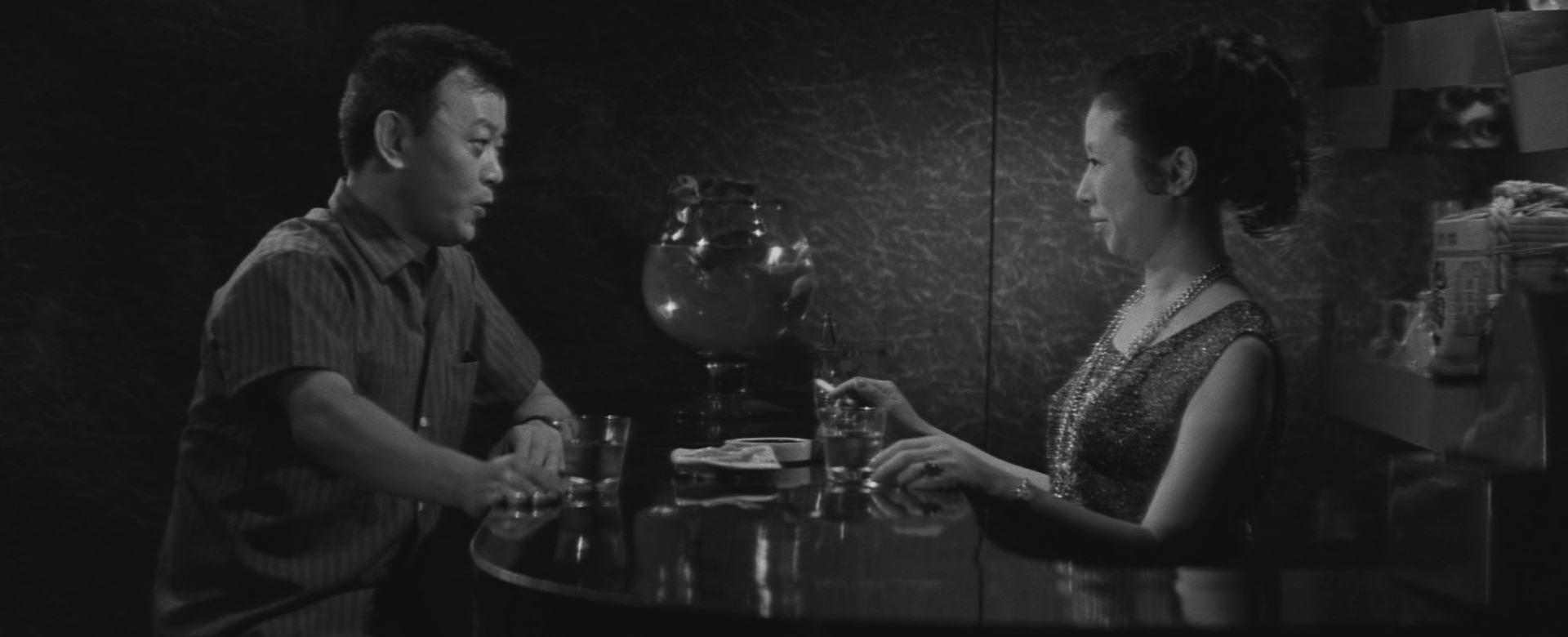
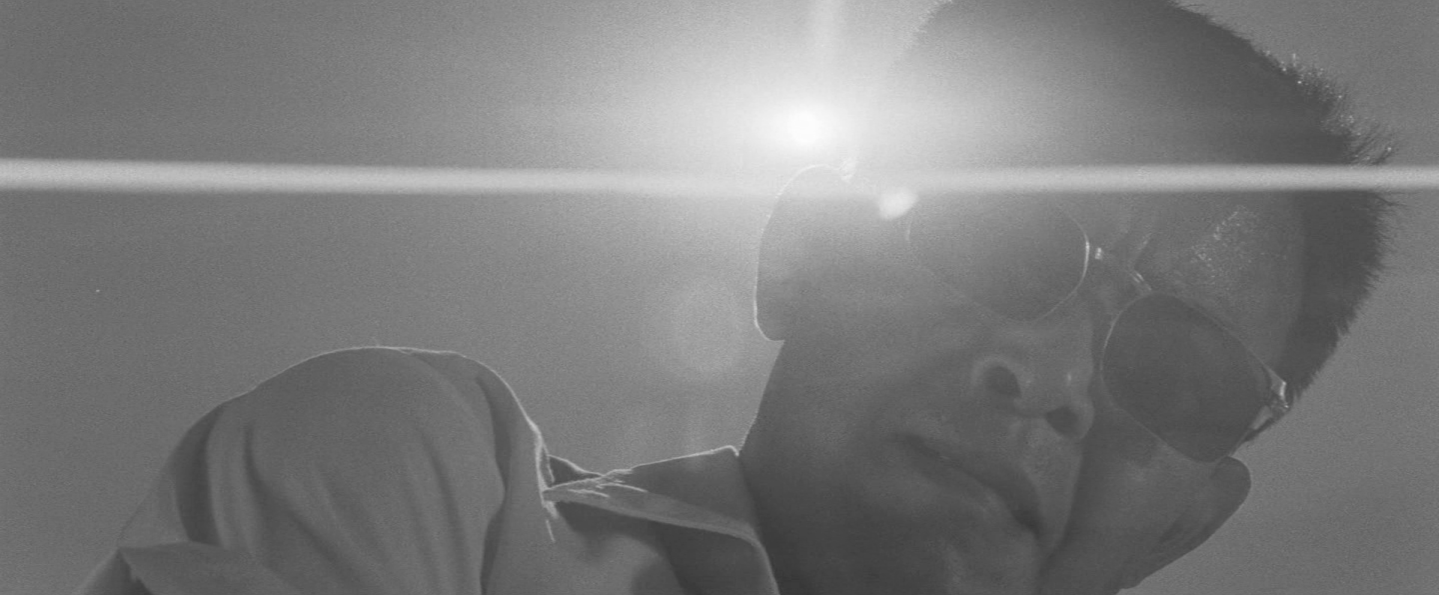
The death of a bar owner in Onomichi sparks a complex investigation into the condition of the islands surrounding the Seto Inland Sea in Kaneto Shindo’s darkly ironic crime drama, Heatwave Island (かげろう, Kagero). Produced by Kindai Eiga Kyokai, the independent production company founded by Shindo, Kozaburo Yoshimura, and the ubiquitous Taiji Tonoyama, the central thesis is that industrialisation has poisoned the waters surrounding the Japanese heartland, but also that the collection of weird islands had their share of darkness to begin with.
Indeed, having solved the crime, unusually chipper detective Oishi (Rokko Toura) states that it was the island that killed her. “Your traditions turned an island woman’s life to ruin,” he tells the very compromised village chief (Taiji Tonoyama) who refused to let a woman leave the island to seek medical treatment for her baby because of a taboo about setting sail on the night of a shipwreck. That’s not so much a supernatural fear or practical concern as much as a pact between islanders who have been killing shipwreck survivors and looting their boats. Nevertheless, the woman is eventually forced off the island when the men who killed her husband begin fighting over her body. The village chief tells her she has to go to preserve the “unity” of the island while her child, who survived but with brain damage, will be cared for by the other islanders.
Yet all the woman wants is to return to the island to live with her child after gaining the money to build a big house where everyone can see it. Some justification is given for the island’s cruelty in that it has essentially been starved out by post-war industrialisation. The fishing industry is dying, and the island terrain is only suited for growing wheat and potatoes, making farming unviable as a commercial enterprise. A man from another island says that as the salt fields were closed down factories arose in their place and leaked pollution into the surrounding seas, killing off all the fish. He is now bedridden due to industrial illness having worked on Poison Gas Island during the war. His wife now works in one of the “enemy” factories. “That’s how we survive,” he laments of the faustian pact between rural communities and large corporations.
In any case, most of the young people have been forced into the cities in one way or another where they often lack the skills to find well-paying work and end up in crime and the nightlife industry. The late bar owner, Otoyo (Nobuko Otowa), was herself once from an island village, as was her bar girl Michiko (Toyama Masako). Both of them are dreaming of better lives while filled with a sense of futility. A young man who gave up on fishing to work in factories is injured in a workplace incident and is prevented from leaving hospital until he can pay his extortionate medical bills which the company evidently isn’t going to cover.
The irony is that Oishi is from a farming background too. Rich kids don’t become detectives, Otoyo points out. A poor man’s son commits a crime, and a poor man’s son will catch him, she adds signalling the ways in which the poor work against each other rather than their common enemies such as the exploitative corporations which have ruined the beautiful natural scenery of Japan’s islands along with their traditional communities. Then again, Oishi is a slightly compromised figure in other ways too. He probably shouldn’t be investigating this case given that he used to drink in Otoyo’s bar and seems to have a crush on her, which interferes with his ability to accept some of the less pleasant things they begin to find out about her past. He also has more than a fatherly interest in young Michiko and is unwilling to accept she could be involved with the crime having taken out a sizeable advance on her salary to care for her father who is also bedridden following a stroke.
The implication is that these murders are more like earthquakes, an inevitable result of friction between people caused by conflicting societal forces. Oishi concludes his investigation, but it only seems to result in a further fracture that severs the connection between the islands and the mainland, leaving another woman in a state of limbo waiting for someone who may or may not return. The convoluted, island-hopping mystery taking place under the blazing sun of a sticky summer has its degrees of absurdity, from the weirdness of these retreating cultures to the poignant presence of the dog, who alone seemed to want justice for Otoyo, who, whatever her other faults may have been, was always kind to him when others often weren’t.
 Windows on Worlds