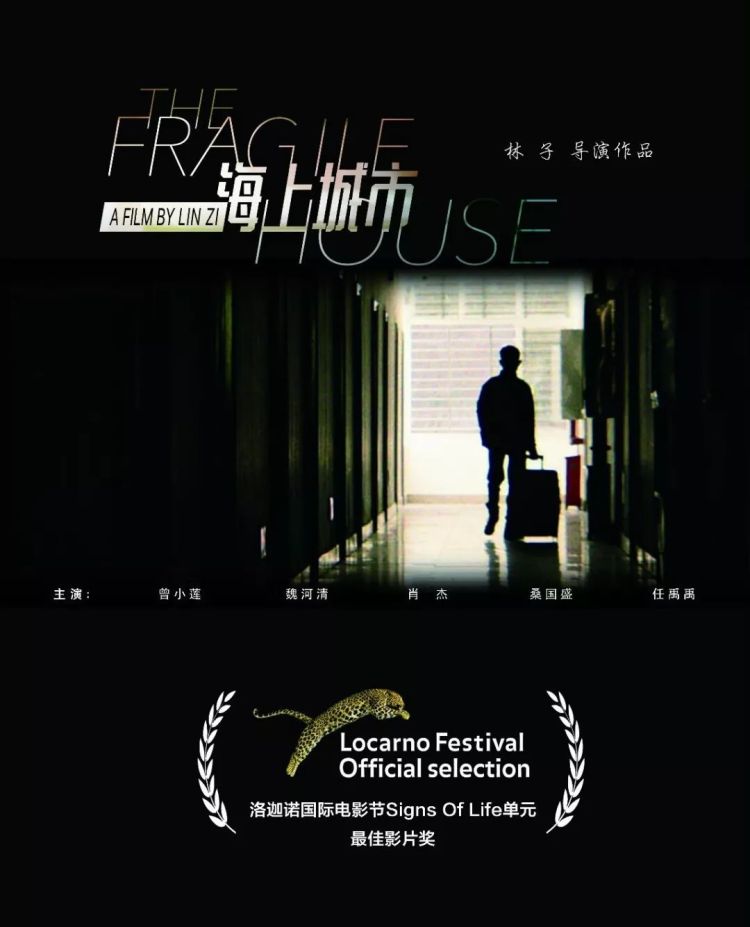
The Fragile House (海上城市, Lin Zi, 2018)

thefragilehouseposterAmong the many concerns of recent Chinese cinema, economic inequality and the fate of the family loom large. Lin Zi’s debut, The Fragile House (海上城市, Hǎishàng Chéngshì), neatly brings the two together in the tale of one ordinary family who’ve managed to carve out a degree of comfort for themselves but at great cost. Economic strain threatens the very idea of family, or at least of “family” as has traditionally been defined. The Huangs pay their respects to their elders and enact the rituals expected of them, but remain mere individuals drifting endlessly without direction in pursuit of an inflated ideal of middle-class respectability.

Lin opens on the most important family occasion of all – New Year’s Eve. The Huangs have gathered together as expected with even oldest son and heavily pregnant daughter-in-law in attendance, but there is an unexpected visitor. Cui Ying’s sister Cui Na has come calling but not to join the festivities – she’s come to claim a debt and is refusing to leave the Huang’s sofa until she gets her money. In an extreme power move, the Huangs have called the police to have her removed – an act of intense pettiness which results in little more than ruining everyone’s New Year by getting half the family detained at the local police station.

Originally from the country, Cui Ying and her husband work for a construction firm but there’s trouble on the horizon because Cui Ying, who seems to be in charge of payroll, hasn’t been given the construction funding by the developers who keep fobbing her off meaning she can’t pay her workers. The workers are understandably upset and angry, some resorting to thieving materials in lieu of their wages while quietly seething with resentment towards Cui Ying who swans around in her fancy car while they can’t pay their bills or feed their families.

Likewise, Cui Na finds it difficult to accept her sister’s excuses when she takes in her lovely middle-class family home. If she really has no money why doesn’t she sell the house or her car? Cui Na thinks it’s adding insult to injury when the Huangs throw a party to celebrate the birth of their first grandchild rather than paying her back, but then holding a celebration on the one month anniversary of a child’s birth is one of the many things which a “family” must do to be a family.

Yet this family is one already divided. Lin splits the screen in three, imprisoning the Huang’s in their own individual bubbles on a night devoted to the idea of togetherness. While Cui Ying and her sons pointedly do not eat their New Year dinner at a table in the back, her husband Jian perches on the edge of the sofa, while her sister remains petulantly all the way over to the side. The Huang’s have worked hard for this house, but this evening is one of the few times they will all occupy it at the same time. Jian will soon depart to play nightwatchman at the yard – they’ve no money to pay someone else to watch the place, while youngest son Chaochao has developed the habit of going to the local internet cafe to play games online rather than come home to an empty house, neglecting his studies in the process.

Though his father is more sympathetic and encourages him to find something else to do if he finds school does not interest him, Cui Ying eventually decides to send her son away, absenting him from the family altogether. She does this in the hope of training him to become a model citizen – something the school’s prominently displayed signs declaring “one lifestyle” seem to promise, but does not stop to consider the weakening bond between herself and her children with her oldest son already in the city and, like she with her own family, only coming home for the obligatory family occasions.

Chaochao seems to have picked up on his parents’ plight, that their constant search for success has left them with little more than constant anxiety and exhaustion. You couldn’t blame him for a desire to drop out, declining to fight a battle it’s impossible win. Lin’s constantly shifting aspect ratios, letterboxing, and colour variations highlight the claustrophobic quality of the Huangs’ existences as they go about their individually boxed lives while clinging fast to the idea of familial connection to provide some kind of framework in an increasingly chaotic world but even this is not immune from the corruption of money and the fragility of the house rests on the very forces which constructed it.


Screened as part of the BFI’s 2019 Chinese New Year programme.

Original trailer (English subtitles)
A Way Out (出路, Zheng Qiong, 2016)

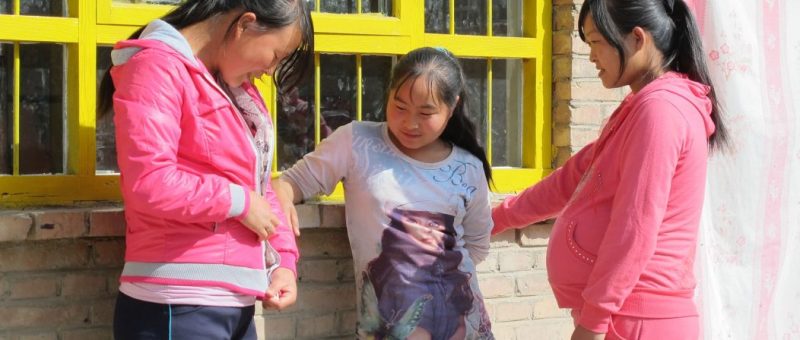
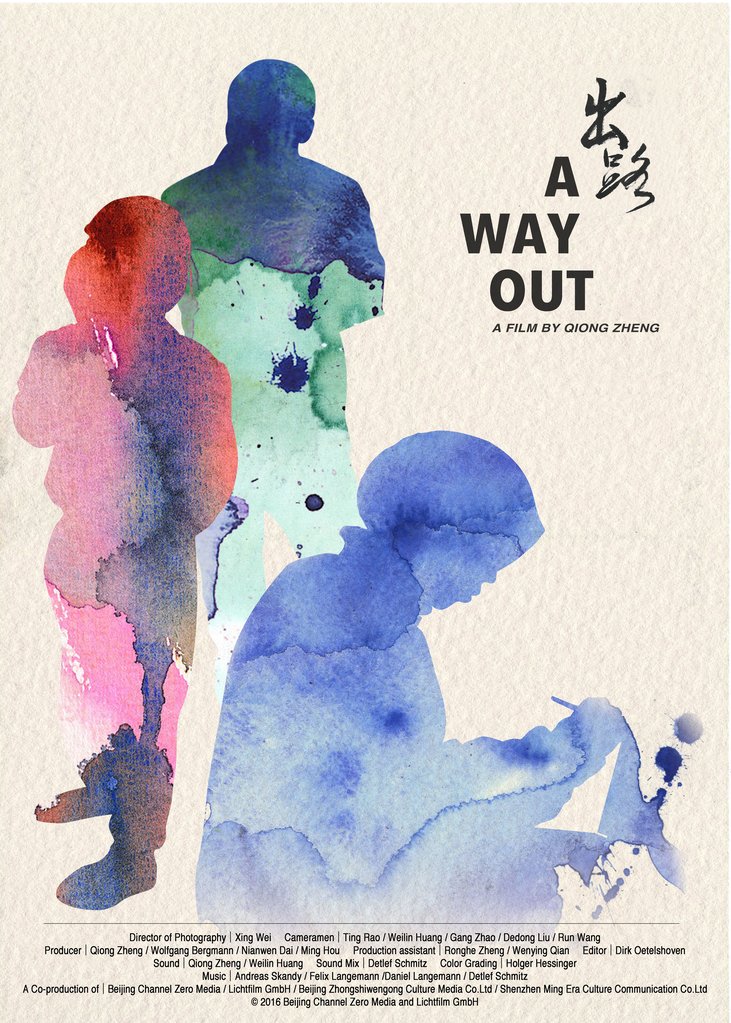
a way out posterThe duplicitous dichotomies of the modern China have become a permanent fixture in the nation’s cinema though mostly as a symbol of conflicted ideologies as some yearn for a return to an imagined past egalitarianism and others merely for a brake on the runaway train of capitalist materialism. Zheng Qiong’s documentary A Way Out (出路, Chūlù) follows the lives of three youngsters chasing the “Chinese Dream” albeit in their own particular ways only to discover that, in the end, despite the best intentions of those who might seek to lessen the advantages of privilege, birth may be the biggest factor in deciding one’s destiny.

Zheng opens with a little girl, Ma Baijuan, in rural Gansu. Her sing-song voice playing over her cheerful stride to school through the narrow mountain paths hints at a natural curiosity, a desire to know the “why” of everything, but Baijuan is only reciting by rote what it is says in her school book. Her education, which is received at a village school segregated by sex where she is one of only two little girls learning simple facts about the world around her while the boys next-door get a crash course in elementary maths, is largely a matter of questions and answers rather than thought or enquiry. Nevertheless, she excitedly tells us that she will soon be going on to the middle school in the nearest town and then hopefully to a college in Beijing after which she will make a lot of money and buy a new house for her family with a proper well so they can get water.

Meanwhile, 19-year-old Xu Jia has already repeated the final year of high school twice in the hope of bettering his exam grades to get into a good university. Like many of his contemporaries, Xu sees a degree from a reputable institution as the only “way out” of small town poverty. He is willing to sacrifice almost anything to make it happen and thinks of little else than achieving his dream of a getting a steady job at a stable company and then getting married in order to reduce the burden on his ageing single mother.

Xu may think that a white-collar job is the only path to success but others do not quite see things the same way. Yuan Hanhan is introduced to us as a 17-year-old “high school drop out” but is in fact a talented artist and bona fide free spirit. After brief stint in a hippy cafe, she eventually achieves her dream of studying abroad at art school in Germany where she struggles to adapt to the relatively laidback quality of European society, affirming that in a developed nation like Germany no one sees the need to go on developing. She complains that Germans only need to do their routine jobs like little stones arranged in a line by the country – perhaps an ironic statement given the restrictive nature of Chinese society but also one with its own sense of logic which places the insistent work ethic clung to by Xu on parallel with an economic model which may already be out of date.

Xu gets his start as a telephonist making cold call insurance sales where the staff are drilled like a military cadre to regard their pencils as machine guns as their mics as grenades, their jobs not means of survival but an enterprise for the common good which drives tax receipts to benefit the entire nation. In a sense he has found his “way out” though his life will be one of soulless corporate drudgery, a fact brought home by his mother’s casual appraisal of his wedding album which features her son in a series of intensely romantic photographs in which he has “absolutely no expression”. Meanwhile, Hanhan remains a free spirit. Even if she never quite felt at home in Germany, she maintains a healthy interest in the wider world and is determined to forge her own path rather than become simply one of many identical “little stones”. For Baijuan, however, the future is much less rosy. Her grandfather, commiserating that perhaps she didn’t have the kind of aptitude for schooling that she might have liked, regards a woman’s education as unimportant, as Baijuan’s only “way out” is a “reliable” man whom they would like to find for her as soon as possible.

As Hanhan puts it in her philosophical closing speech, when it comes down to it birth is the most important factor of all. Simply by being born wealthy in Beijing she had advantages that others do not have. Baijuan’s fate is sealed in being born to a poor farming family in a remote rural region, while Xu constantly refers to his “family situation” as the reason he feels he has to become a success as soon as possible, hitting all the social landmarks at all the expected junctures. Each of our protagonists is looking for a “way out” of their unsatisfactory circumstances, and each of them finds it, but perhaps not quite in a way everyone would view as ”satisfactory”. Zheng’s vision of the new China is one in which the old ideology has failed, leaving behind it only an entrenched social hierarchy from which there may be no “way out” save a willing refusal to comply.


A Way Out was screened as part of the Chinese Visual Festival’s New Year programme at the BFI Southbank and is also available to rent online via Vimeo.

Trailer (English subtitles)

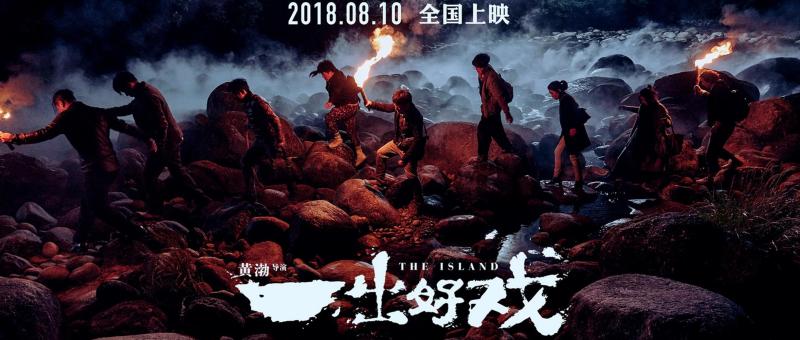
The Island (一出好戏, Huang Bo, 2018)

the island poster 1Comedy seems to have regained its bite of late. Filmmakers seeking to deliver pointed barbs at the modern China are pulling away from the traditionally safe areas of the period drama for a natural home in satire which for the time being at least is running rings around the censors’ board, albeit in a subdued fashion. The directorial debut from comedic actor Huang Bo, The Island (一出好戏, Yìchū Hăoxì) offers a mini lesson on the perils of untapped capitalism, tyranny, propaganda and “fake news” agendas in the form of a genial romcom in which a nice guy loser makes himself the king and wins the heart of his fair princess only for his empire to crumble under the weight of his own conflicted moralities.

On the day a meteor may or may not be on course to fall to Earth, dejected middle-aged office worker Ma Jin (Huang Bo) is off on a “team building” trip with his colleagues which involves a lengthy journey on an aquatic bus. Ma seems to owe money to just about everyone but swears he will soon pay them back, meanwhile he’s also hoping to get close to office beauty Shanshan (Shu Qi ) on whom he has a longstanding crush. At long last, it seems like Ma’s ship has finally come in – on checking his lottery numbers, Ma realises he’s the jackpot winner and can probably quit his boring job as soon as they dock, possibly even sweeping Shanshan off her feet as he does so. Alas it is not to be as seconds later the meteorite strikes engulfing the duck boat in a tsunami and eventually marooning the entire party on a deserted rocky island somewhere in the middle of the sea.

Huang wastes no time mocking modern consumerism. Ma Jin is now a millionaire but it couldn’t matter less. Likewise, slick boss Zhang (Yu Hewei) is at a similar impasse. He’s supposed to be in charge, an innovator and entrepreneur with all the ideas and a clear path to success but he is stunned and can only scream into the ocean while vowing to use his vast wealth to buy a new ship. The passengers look for leaders, some sticking with their social superior Zhang while others start to flock to the energetic bus driver Wang (Wang Baoqiang) who offers more practical solutions having discovered an abundant crop of fruit trees during an early exploration of the terrain. Wang used to be a monkey keeper and quickly assumes control with an authority born of strength and dominance as well as the withholding of the means to survive from those who do not submit to him.

It’s not long before some of the passengers long to be free of his oppressive yoke and the ideal opportunity arises when capitalist boss Zhang chances on a ready supply of capital in the form of a shipwrecked, upside-down boat which is laden with supplies. Ma Jin and his cousin Xing (Lay Zhang) follow Zhang who later institutes a market economy using playing cards for currency which offers the illusion of freedom but traps the employees in a system of capitalistic wage slavery while Zhang gets “rich” at the top of the pile. Ma Jin and Xing eventually grow disillusioned with their increased status at Zhang’s side when they realise he doesn’t have a plan for getting off the island and has given up on the idea of returning to civilisation.

Pitting two sides against the other, Ma Jin manages to create unity under a system of communism with capitalist characteristics (you see where he going with this?) in which he reigns as something like first among equals. Ma Jin’s “communist” utopia filled with laughter, song, and impromptu dance sequences is only born when he realises he’s missed the date to claim his lottery ticket and that there’s nothing worth going back for whether civilisation still exists or not. With his new found status, he’s finally able to get close the emotionally wounded Shanshan but becomes increasingly conflicted as the “fakery’ required to keep his regime in place begins to weigh on his mind, especially when a boat is spotted on the horizon and the entire system seems primed to crumble. Ma Jin gives in to his worst instincts at the instigation of his even more corrupted cousin who brands the boat visionary a false prophet, a madman who can’t accept the wonders of the new regime.

Only when confronted with Shanshan’s genuine emotion for the man he was pretending to be does Ma Jin wake up from his embittered fever dream to realise the dangers of the world he has created out of his own sense of inferiority, and particularly the harm done to his cousin who perhaps always felt a little oppressed just by him. The message is however compromised by Ma Jin’s otherwise positive realisation that lack of money was not as big a barrier to his success as lack of self confidence and avoidance of truthful emotional connections which of course undermines the central criticism of the increasing inequalities of modern Chinese society just as the ironic coda undoes the anti-consumerist message. Nevertheless, though overlong The Island successfully marries its romantic comedy core with its satirical aspirations thanks to the committed performances of the always radiant Shu Qi who invests the underwritten Shanshan with the necessary levels of wavering earnest while Huang Bo brings his usual hangdog charm to the role of the corrupted everyman.


International trailer (English subtitles)

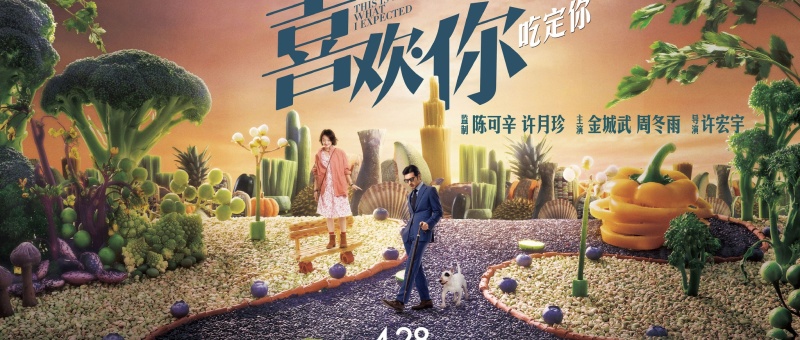
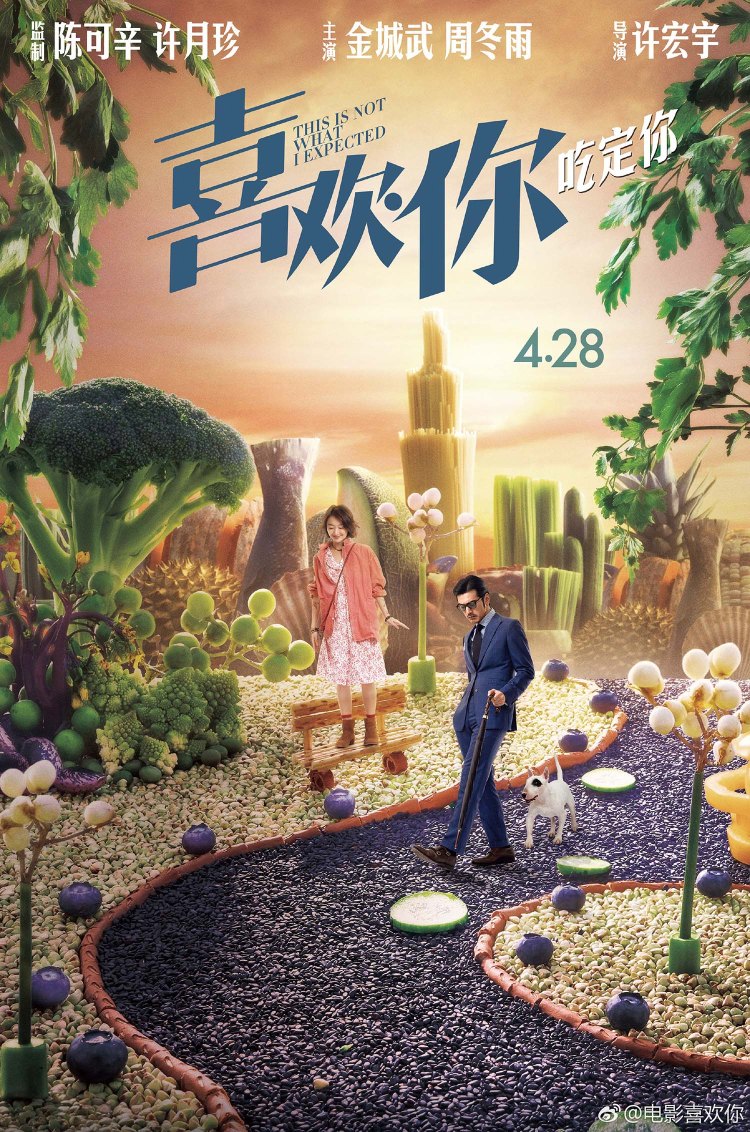
This Is Not What I Expected (喜欢你, Derek Hui, 2017)

This is not what i expected poster 1The way to a man’s heart is through his stomach, as they say, but the course of true love never did run smooth. The debut directorial feature from editor Derek Hui, This is not What I Expected (喜欢你, Xǐhuan Nǐ) is, to be frank exactly what you’d expect it to be but that only works in its favour. A classic tale of opposites attracting, This is Not What I Expected takes its cues from The Shop Around the Corner only this time it’s not pen pals and music boxes but big business and culinary communication.

Ditzy chef Gu Shengnan (Zhou Dongyu) has been having an affair with her caddish boss whom she decides to teach a lesson by carving a rude message into the bonnet of his car. Only, in a motif which will be repeated, she got the wrong one and has actually left her mark on the car of uptight international hotel magnate Lu Jin (Takeshi Kaneshiro). Jin is after some new hotels to acquire so where should he fetch up at other than the one where Shengnan works? Jin hates pretty much everything about the second rate establishment including the food which is when Shengnan’s sleazy boss asks her to cook up something special to stop Jin from leaving. Cleverly analysing the leftovers from Jin’s rejected meals, she cooks him something to remember and succeeds in capturing his heart. Intrigued, Jin decides to stay on the condition that Shengnan cook all his meals from now on. However, Jin has no idea that Shengnan is the culinary mastermind he can’t stop thinking about and is increasingly irritated by all of their bizarre encounters.

Despite their superficial differences, Shengnan and Jin are perfectly in tune, their culinary messages perfectly understood by each on an elemental level. In real life, however, things are quite different. Jin, a ruthless if eccentric businessman with a mania for precision and a terror of anything remotely out of place, finds Shengan’s happy go lucky, disaster prone existence particularly difficult to understand. Hoping to escape her, he even gives Shengnan an electronic tag that will set off an alarm whenever she’s close by so the pair can avoid each other and the chaos that seems to happen when they meet.

Meanwhile, the conflicts continue to expand in the background. Shengnan doesn’t have much of an issue still being single past the socially acceptable age, but worries that she’s not getting anywhere in her career and will be stuck sous-cheffing forever despite her obvious talents while getting her heart broken by sleazy players like her odious, ambitious boss. Rosebud, the ironically named hotel, is hardly a top tier establishment and probably too much bother for Jin to consider taking on if weren’t for his strange fascination with the cook. His extended stay is beginning to raise eyebrows with his coldhearted father/boss while a mild conflict begins to flicker in his heart when he realises the business plan requires firing the entire kitchen staff and hiring a three star Michelin chef.

Hui does perhaps over egg the pudding in creating a “romantic” rival for Shengnan once she discovers that Jin also employs a (female) “private chef” whose return from vacation might explain why he abruptly stopped dropping by the hotel (and her apartment where he’d virtually moved himself in). The lines between desire and hunger remain increasingly blurred as the two women resentfully vie for the position of tastemaker, tussling over which of them understands Jin better and truly deserves to be the one providing him with sustenance. Yet as the personal chef finally comes to realise (a few steps ahead of Jin), what Jin’s hungry for is no longer just food, what he needs is something more organic than a contractual relationship.

Jin is, in a sense, an embodiment of heartless modern capitalism, raised to be “despised” in order to preserve “solitude” and a “clear mind”. Jin’s austere father is all about order and control, he doesn’t like the emotional because it’s irrational and unpredictable, but the straw that finally breaks Jin’s back is when he tells him that the food at the hotel can’t be “too good” because it would be “distracting” for the clients. For the first time, Jin begins to question his ideology and realises that perhaps it wasn’t so much that he enjoyed eating alone as that he convinced himself he did to avoid thinking about the fact that no one wanted to eat with him. An epiphany born of a strange blow fish fever dream shows him that life in Shengnan’s world, for all of its problematic chaos, could be charming not to say warm even in the rain. It’s not what he expected, but it’s good – like an expertly prepared meal, best to savour it while it lasts.


Original trailer (English/Traditional Chinese subtitles)

Looking for Lucky (寻狗启事, Jiang Jiachen, 2018)

Looking for lucky posterA literal shaggy dog story, Jiang Jiachen’s Looking for Lucky (寻狗启事, Xún Gǒu Qǐshì) is not just the tale of one hapless young man’s attempt to regain his mentor’s approval in the form of his prize pooch, but of that same man’s desperation for a “lucky” break that will set him on a path to middle-class success without the need to debase himself through bribery. A melancholy exploration of the perils and pitfalls of youth in Modern China Jiang’s indie dramedy finds little to be optimistic about, save the faith that nature will run its course and perhaps you will end up where you’re supposed to be even if you have to go on a wild dog chase to get there.

Zhang Guangsheng (Ding Xinhe) is an ambitious grad student from a humble background. With graduation looming, he’s preoccupied about turning his educational investment into a solid job opportunity. Luckily he’s spent the last three years playing errand boy for his professor, Niu, who has all but promised him a cushy faculty job as long as he continues to play his cards right. Everything starts to go wrong when Guangsheng is asked to dog-sit while Niu is away and unwisely delegates the responsibility to his drunken grumpy father (Yu Hai) who loses him after the dog supposedly bites a stuck up little boy who was teasing him. Guangshang does his best to find the dog before Niu gets home, even succumbing to buying a new dog just in case, but all to no avail.

The reason Guangshang needs to find the dog isn’t just guilt and embarrassment at having potentially caused emotional distress to someone he respects, but because he knows that the failure to cope with this minor level of responsibility may ruin his relationship with Niu. Again, the relationship itself is not what’s important so much as what it can do for his career prospects. Guangshang is from a humble background and lacks the resources to buy his way to success as other young people often do – an endorsement from someone like Niu is his only chance to catapult himself into a steady middle-class life. Thus he’s spent the last three years bowing and scraping, debasing himself to be Niu’s go to guy and now it’s all going to out of the window thanks to his dad’s mistake.

A neurotic intellectual, Guangshang’s relationship with his polar opposite of a father is already difficult even before the dog incident. Guangshang’s dad is one of China’s many “laid off workers”, unceremoniously made redundant from a job for life as part the nation’s longterm economic modernisation. An embittered, angry man Guangshang’s dad quarrels with everything and everyone, sees scams everywhere, and has a much more cynical, world weary belief system than his kindhearted, idealistic son. The pair do, however, have something in common in their striving to live “independently” on their own skills alone. Abhorring the corruption of their society in which nothing is done fairly and money rules all, they each stubbornly refuse to give in and do things the “normal” way, not wanting the kind of success than can be bought.

Guangshang might be prepared to humiliate himself by playing servant, but he has his pride and doesn’t like seeing his poverty deployed as a weapon against him – especially by a “wealthy” friend who has looked at all the files and “admires” Guangshang’s perseverance, nor by his mother and her immensely calm second husband who are only too happy to give him the money to “buy” a university position, but not to help his father when he gets himself into trouble (again). Yet what Guangshang eventually discovers is that he has not lived as far from the systems of corruption as he had assumed – a realisation that both bolsters and destroys his sense of self confidence as he begins to understand his father’s true feelings while his sense of security in his academic prowess threatens to implode.

Everybody wants something – usually money, sometimes advancement, but no one can be trusted and nothing is done for free out of the goodness of one’s heart. Guangshang, without money, pays in other ways and then is cruelly undercut by someone else forced to do the same only in a sadder, even more morally dubious fashion as Niu is exposed for the corrupt figure he really is despite his “scholarly” standing. “Let nature take its course” Guangshang is urged by a fortuneteller he turns to in desperation for an indication of the whereabouts of his missing dog, but Guangshang is a young man in a hurry and has no time to wait around for a less than enticing fate. Yet for all the suffering and petty disappointments, justice is eventually served, patience rewarded and the virtuous victorious. Maybe it does all come right in the end, so long as you’ve the patience to let the dog off the leash and enough faith to see him safely home.


Looking for Lucky was screened as part of the 2018 New York Asian Film Festival.

Original trailer (English subtitles)
An Elephant Sitting Still (大象席地而坐, Hu Bo, 2018)

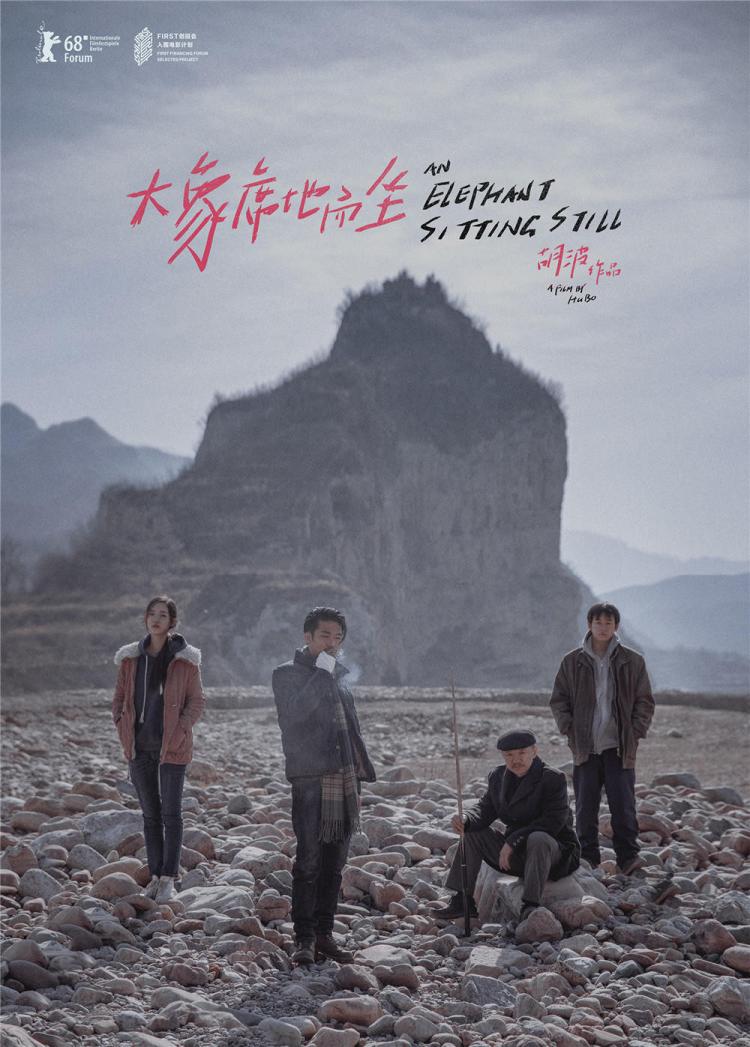
An elephant sitting still poster“It’s all about agony” a discredited adult figure intones midway into Hu Bo’s first (and sadly only) feature, An Elephant Sitting Still (大象席地而坐, Dàxiàng Xídì’érzuò). Latest in a long line of indie features to ask serious questions about the hypocrisies of the modern China, Elephant stops to wonder how one manages to live at all in world which has become so “disgusting” as to make life itself seem like a cosmic joke. In this “wasteland”, all that’s left of human connection appears to be a series of games of oneupmanship in which there must always be a loser and for which no one wants to take personal responsibility. Then again, they say there’s an elephant in a zoo in Manzhouli which has taken passive resistance to unnatural extremes but somehow survived all the world has thrown at it.

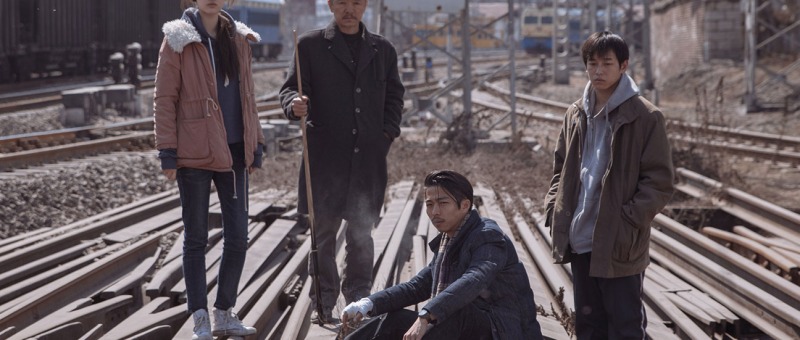
Four lives intertwine in the decaying industrial environment of a rundown town somewhere in Northern China. Petty gangster Yu Cheng’s (Zhang Yu) day gets off to a pretty bad start after he sleeps with his best friend’s wife only for him to return unexpectedly, spot Yu Cheng’s shoes in the hall, and then throw himself off the balcony in a fit of total despair. Meanwhile, teenager Wei Bu (Peng Yuchang) gets himself mixed up in his best friend’s altercation with school bully Yu Shuai (Yu Cheng’s little brother) over an (allegedly) stolen phone which ends in a scuffle and Yu Shuai tumbling down a set of stairs. Wei Bu decides to run and asks his female best friend Huang Ling (Wang Yuwen) to go with him, but she has troubles of her own in the form of a toxic relationship with her embittered mother and an ill-advised affair with the school’s married vice-principal. Lacking other options, Wei Bu turns to his genial next-door neighbour, Wang Jin (Liu Congxi), hoping to borrow some money but Wang is preoccupied with his declining family situation as his son and daughter-in-law attempt to force him out of his apartment and into a nursing home so they can move into the catchment area for a better school for Wang’s granddaughter.

Our four see themselves as walking dead, but are in some respects the last four standing. They wonder and they muse, asking why it is life has to be this way but unable to simply ignore the nagging threads of connection and human decency that those around them seem to have successfully eradicated. The older generation, having been betrayed by China’s rapid rise to economic prosperity, are cruel and embittered. They treat their children with contempt, smirking grimly in the knowledge that they will likely share the same fate. Yet they have managed to weather the storm, coming to an accommodation with the fact that life is disappointing and surviving even if in a form that makes survival just about as unpalatable as it’s possible to be.

For this survival, they have helped themselves to entitlement. This is a game of (occasionally literal) dog eat dog in which all that matters is winning no matter at what cost in order to avoid feeling like a nobody. Petty schoolboy thug Yu Shuai, learning a lesson from his disaffected brother, attempts to rule by fear and intimidation but finds his empire threatened by Wei Bu’s principled attempt to stand up for his friend. Wei Bu is a “loser” and his accidental “win” is a shock to the system that threatens to bring the whole thing crashing down but revolution was not in Wei Bu’s game plan and his resistance is short lived. Alone and friendless, he sees no alternative but flight.

Wei Bu’s friend, who turns out to have been unworthy of his loyalty, later achieves a rare moment of existential ecstasy in having frightened off two goons with a gun he pinched from his father. He is overawed to have inspired such fear and sure that most never feel anywhere near as alive as he feels at this moment. Wei Bu is unimpressed by his dark philosophy, but perhaps understands it as a grim encapsulation of the world in which he lives. Yu Cheng too tacitly accepts that his society values the strong, but it becomes apparent that his pretence of coldness is just that. He claims to hate everybody, and his brother most of all, but he walks back into a room on fire to save a man he doesn’t know and for all his attempts to abnegate the responsibility for his friend’s death is clearly affected both by his decision and his own role within it.

Responsibility is something nobody wants to take. Yu Cheng blames his friend’s death first on his own individual will, and then on his greedy wife for the unnecessary economic burden she placed on him, and finally on an unrequited love whose rejection he claims sent him into the arms of his best friend’s girl, but finally he cannot escape his own sense of guilt as embodied by the grieving mother his moral failings have produced. Huang Ling’s teacher expresses a similar life philosophy when she presses him as to why the school did not call the police over Yu Shuai’s accident. He tells her that if he’d called the police he’d be “involved” which not something that he wants to be. Unfortunately for him, his decision to pursue an “affair” with a vulnerable teenager is going to get him in “involved” in several sticky situations, most of which he blames Huang Ling for as the girl who has “ruined” him. Like the elephant of the title, Huang Ling’s lover sits and watches as the world spirals out of control, unwilling to stop it for fear of being dragged into its never-ending cycle of destruction and disappointment.

Intense individualism has fostered not only selfishness, but a refusal of accountability. Everything is always someone else’s fault just as someone else must always lose in each and very encounter in order to avoid the sensation of being a “loser” oneself. Alone among the older generation, Wang retains his youthful sense of human feeling, but eventually even his will is worn away and he considers giving in and entering the retirement home even after visiting it and realising it is little more than death’s waiting room. His advice to the young echoes that of Huang Ling’s lover, that there is no escape from sorrow and an attempt to evade it through starting again somewhere else will lead only to double failure. The best thing, he tells them, is to believe in a better place and then never go there so as not to have your illusions of a kinder world shattered. Yet there are flickers of possibility, Wei Bu wants to see the elephant anyway even if it changes nothing. Hu wants to ask us if it’s possible to go on living if you discover that there is nothing to live for and perhaps he found his own answer for that, but there is hope here, if faint and compromised, in the thought of distant elephants enduring all with stoic grace.


Currently on limited release in UK cinemas courtesy of New Wave Films.

International trailer (English subtitles)
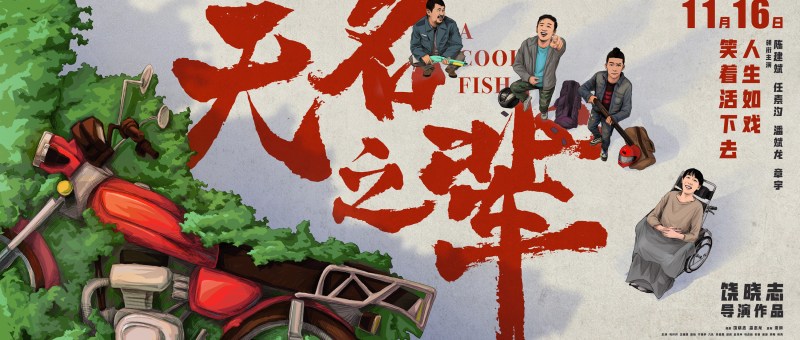
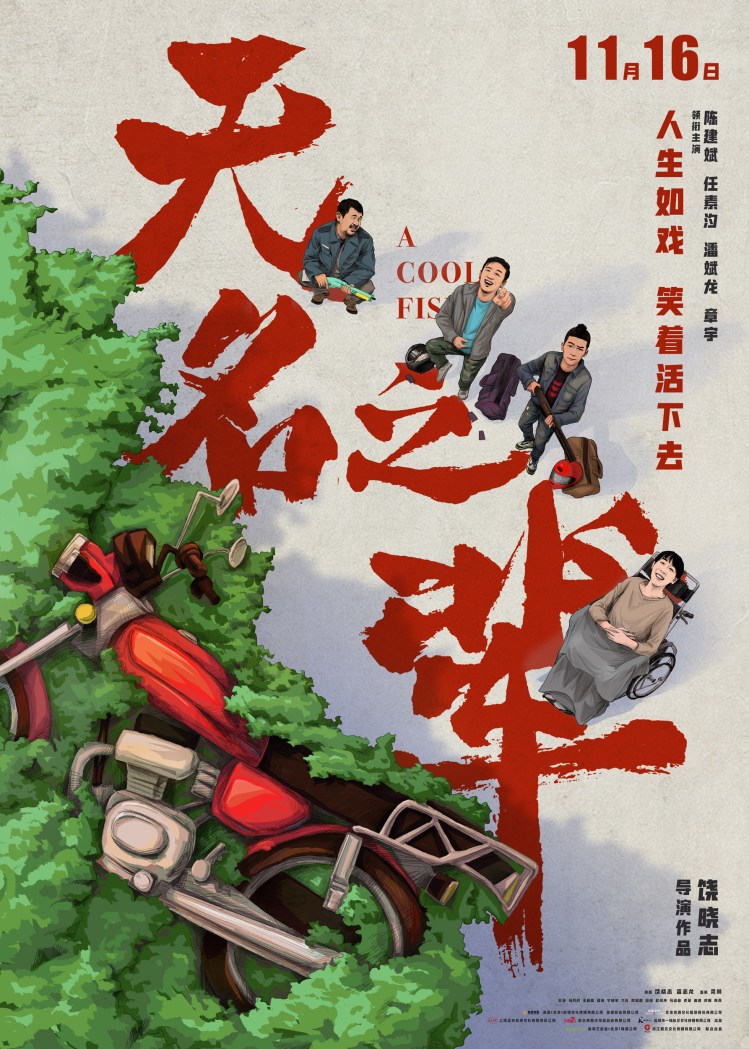
A Cool Fish (无名之辈, Rao Xiaozhi, 2018)

A Cool Fish posterThe genial loser is fast becoming a staple of contemporary Chinese cinema. Rao Xiaozhi’s second feature A Cool Fish (无名之辈, Wúmíng zhī Bèi) is the latest in a long line of comedies to make the “diaosi” world its home as a collection of disappointed and increasingly desperate failures become embroiled in a complex web of cosmological coincidence. China’s famously draconian censorship regulations ensure that the ending of this caper will be bittersweet at best, but even so a brief brush with violent crime does at least allow a bouncing back if only through hitting rock bottom and emerging with greater clarity.

Small town hicks “Bra” (Zhang Yu), short for “Cobra”, and Big Head (Pan Binlong) have talked themselves into a gangland future, planning a big city heist after getting their hands on a stolen gun and motorbike. Unfortunately, not everything goes to plan and they end up robbing a mobile phone shop next door to the bank rather than the bank itself because the security guard was too intimidating. Not only that, they manage to send their getaway bike into a tree while trying to escape by muddling the clutch with the accelerator meaning they have to escape on foot. Crawling in through an open window, they find themselves in the home of the spiky Jiaqi (Ren Suxi) who is paralysed from the neck down and completely unafraid to make use of her one remaining weapon – an extremely loud and imperious voice. Jiaqi is also the sister of widowed security guard Ma Xianyong (Chen Jianbin) who was once an auxiliary police officer and harbours a desire to get back on the force which he feels he could fulfil through investigating the robbery and retrieving the gun on his own initiative. Meanwhile, Xianyong’s boss, financially troubled property developer with a complicated family set up Gao Ming (Wang Yanhui), is on the run from gangsters to whom he has massive debts.

Like the cool fish of the title, Bra and Big Head are young men with impossible futures who find themselves cast out from mainstream society with no real way back in. No education, no connections, no job prospects or family – their futures look bleak. Bra sees himself as a gang boss in waiting even if Big Head is his only henchman, but the guys are no master criminals and despite their claims of working their way up in the crime world it’s clear they aren’t cut out for such cutthroat antics. Xianyong, by contrast, had opportunities but squandered them and then lost everything in a tragic turn of events for which he must bear some of the responsibility. Despised by his teenage daughter, humiliated by the gangsters chasing Gao Ming, and burdened by the guilt of having caused the accident that ruined his sister’s life, all Xianyong wants is to hit back and prove himself a someone, which means he’s coming for another pair of losers not so different from himself.

Rao Xiaozhi rolls the familial in with the political through rooting all of Xianyong’s various problems in his very male failures as a compromised father figure. Having lost his wife in a tragedy of his own making, Xianyong is resented by his daughter who has reverted to her mother’s maiden name out of shame while he engages in underhanded scams to bolster his fragile sense of self worth. Meanwhile, all Big Head dreams of is a small house in his hometown and to marry his childhood sweetheart, Xia (Ma Yinyin), who has come to the city in search of money. Big Head thinks she doesn’t want to marry him because he isn’t rich, but Xia’s reluctance turns out to be misplaced shame in having engaged in sex work and no longer seeing herself as good enough for the small town wholesomeness of a man like Big Head, never guessing he might go to such extreme lengths just to prove himself worthy of her.

Trapped by the crushing impossibility of life in a rapidly developing, relentlessly unfair, patriarchal, and conservative society each of our heroes takes desperate measures to enact their escape but quickly discovers that escape is a spiritual more than material matter and cannot be bought through transgression. This being China, crime cannot pay and so our guys cannot hope to emerge heroically from their less than heroic foray into gun toting criminality but even so you’d have to admit that their futures are brighter for having hit rock bottom and woken up with a better sense of self and a degree of forward motion. Rao’s ramshackle world of lovelorn little guys daring to dream of a (modestly) brighter future perfectly captures the bleak romanticism of the “diaosi” phenomenon and proves strangely difficult to resist save for its crushingly “necessary” finale.


Currently on limited release in UK Cinemas courtesy of China Lion.

International trailer (English subtitles)
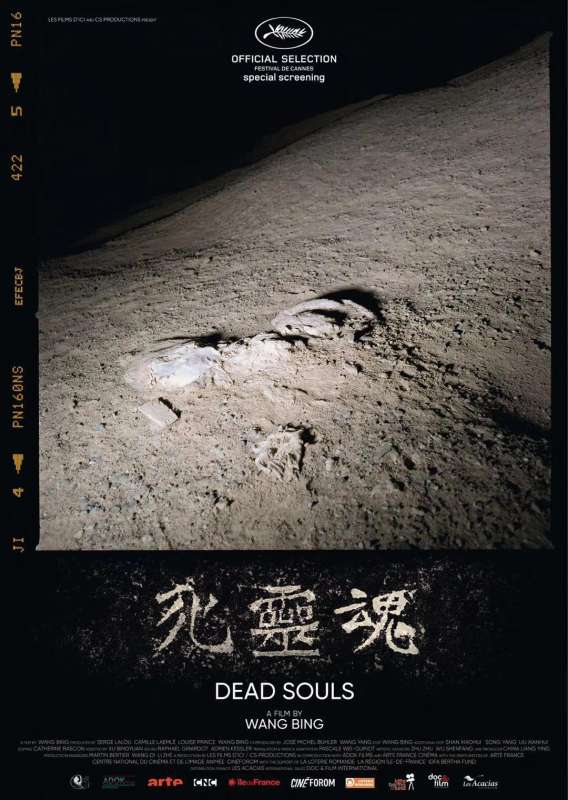
Dead Souls (死靈魂, Wang Bing, 2018)

Dead Souls posterFor his eight hour exploration of China’s painful past, Wang Bing borrows a title from Gogol’s famous 19th century Russian novel which aimed to poke fun at the various flaws in contemporary cultural norms. “Dead Souls” (死靈魂, Sǐ Línghún), in Gogol’s case, referred to serfs which had passed on but were still included in a landlord’s register of property and therefore liable for taxation (the novel’s protagonist, a corrupt former civil servant, is keen to “buy” these “virtual” serfs as part of a mysterious money making scam). Wang Bing’s aims are about as far from comic as it’s possible to be, but he too is intent on unmasking national hypocrisy in ensuring the testimonies of the hundreds of men and women who survived Mao’s “Anti-Rightest Movement” of the late 1950s are finally heard. The alleged rightists became “dead souls” in more ways than one – having lost their party affiliation they no longer quite existed in the intensely conformist post-revolutionary world where they found themselves betrayed and abandoned by an increasingly oppressive regime that eventually robbed them of their humanity.

In 1956, the Communist Party had announced the Hundred Flowers campaign in which ordinary people were encouraged to voice their innermost thoughts about the state of the revolution. After a short lived period of liberalism, the Hundred Flowers campaign was exposed as a ruse to root out so called reactionary elements. The Anti-Rightist Movement which began in 1957 rounded up those who had offered up constructive criticism of the party as well as capitalists, intellectuals, and just about anyone with a vaguely questionable history, and packed them off for “re-education” at various labour camps throughout China.

Mostly offered through lengthy direct to camera monologues, Wang presents a first hand account of the Jiabiangou Labor Camp from those who managed to survive (around 500 of 3200 internees) after famine and disease took hold. Many of the alleged “rightists”, most “rehabilitated” after the Cultural Revolution and subsequent economic reforms, affirm that they have no idea what it is they did “wrong” but are convinced that it was petty jealousies and personal resentments that landed them in hot water rather than a political dispute. Many found themselves at the mercy of an official they’d already reported for incompetence or corruption, disappeared for reasons of expediency or convenience. Others were told that their re-education was for the public good and they’d be back in a matter of months in their old job with their old salary, or else their family could come live with them on the utopian farm that would arise from their efforts in the camp.

Of course, the reality was very different and the harrowing stories recounted by the now elderly men with a mix of retrospective black humour and deeply held resentment speak of death on a mass scale, starvation, walking corpses, and rampant disease. With famine intensified by the failure of the Great Leap Forward, food supplies grew increasingly short while numbers of “rightists” in need of re-education only increased thanks to a kind of quota system. Those most likely to survive were the ones who made themselves the most useful – the physically strong, the tenders of horses, and the kitchen staff who could survive by pinching food when no one was looking. One strangely gleeful old man calmly recounts how he finagled his way into the kitchen and then set about pilfering the best of the supplies for himself with the help of the other cooks (seemingly without remorse), while another man recounts spotting a similar practice and taking the greedy to task by reminding them that the food they were scoffing came out of someone else’s mouth. Those who survived did so either because their families were able to smuggle in food for them, or else they were lucky.

Breaking away from the rigorous, sometimes oppressive interviews, Wang wanders the grounds of the former camps now levelled in an attempt to erase their existence but still painfully visible in the arid, scarred landscape. Bones litter surface as if squeezed out of the earth while human skulls rest eerily in the middle of barren land. A group of survivors attempts to identify remains through stones placed atop the bodies of those who died when those left behind still had the strength to bury them, but fail to read the faded names while their attempt to erect a monument to those who lost their lives to a malicious failure of government ends with only more destruction. What they were not permitted to do Wang accomplishes if intangibly in creating an indelible monument to human suffering through the first hand testimony of a persecuted generation finally able to break the long decades of silence and give voice to a truth still so painfully hidden.


Short clip from the beginning of the film (English subtitles)

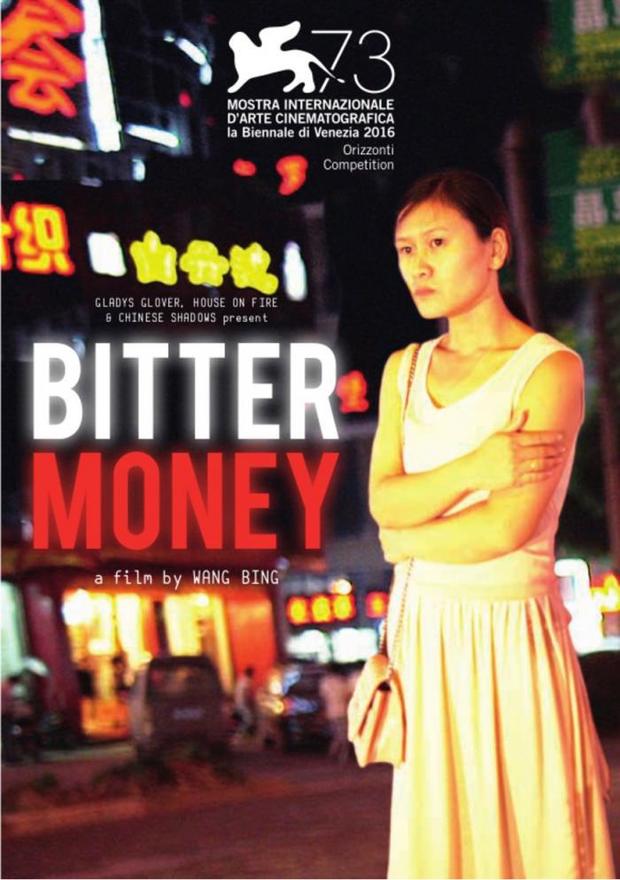
Bitter Money (苦钱, Wang Bing, 2016)

Bitter money poster“Bitter Money” (苦钱, Kǔ Qián), according to director Wang Bing, is a phrase on the rise. It may be that money is rarely sweet, but this kind is particularly hard to swallow. Not only is the youth of China thrown out of its villages towards the inferno of city industry, living alone and away from home, but finds nothing more than exploitation, drudgery and false promise when it gets there. Wang’s trademark immersive detachment captures the frustrating inertia of the young men and women of the modern China who find themselves very definitely at the bottom of a heap and consistently betrayed by a failed ideology.

Wang opens in the country with a trio of hopeful youngsters about to leave everything behind for the bright promise of a better life for themselves and their families bought with city money. They board a bus, and then a train, and then interminable hours later arrive in Huzhou, the centre of the modern garment trade. The girls find work in a small workshop which, all things considered, might not seem so bad save that it provides only extremely low pay and offers no guarantees.

Shifting away from the recent arrivals, Wang’s camera locks onto the melancholy figure of 25-year-old Ling Ling who wants to borrow it as ally in confronting her coldhearted husband who threw her out after she complained about his beatings and is now so resentful that she’s stayed away too long that he refuses to talk to her. Ling Ling’s attitude to her unhappy marriage speaks volumes about the oppressive, patriarchal world of Huzhou where physical strength and dexterity are the only real currencies.

Lamenting her fate to coworker, Ling Ling affirms that domestic violence is just a part of life and believes that women have a duty to “submit” to their husbands’ rages – after all, “no woman can beat a man”. Her husband, Erzi, is proud and insecure. He views his wife’s behaviour as a slight against him and is resolved to be rid of her, loudly threatening her life in front of half the neighbourhood guys each of whom gets up and abandons their mahjong game after sensing that something is about to kick off. Despite the disdain with which the other men treat his overt violence towards his wife, Erzi is convinced his “manly” behaviour is impressive and thinks nothing of grabbing his wife by the throat in full view of Wang’s camera which remains a purely passive presence despite this ongoing threat.

Ling Ling, however, has few real choices left to her. She can’t survive alone in this environment and has nowhere else to go. In a pattern repeated across the nation, Ling Ling’s son is being raised in the country while she and her husband try to make a go of things in the city. Her major argument with Erzi is that he kicked her out with no money and won’t even give her anything for their son. Yet a later scene shows them together again, seemingly “happier” even whilst they to continue to bicker about money if in a less obviously destructive way.

Most of the other workers are not quite as trapped as Ling Ling, but are caught by a feeling of threat and desperation which encourages them to push themselves beyond the limits of human endurance while their bosses reap the profits. One minute the garment workshop is in the hole because they backed a product which isn’t selling, and the next it’s doing so well that the “slow” workers are being laid off in favour of the more “efficient”. It goes without saying that work in these small workshops is almost entirely unregulated with very few enforceable labour rights which means the boss is free to hire and fire as he sees fit. Some consider “investing” in pyramid schemes despite an awareness of their risks in the belief that they could beat the system if they get out fast enough while others resolve to give up and go home to the comparative comforts of the country.

One worker retreats into drink, only for his boss to tell him he’s holding back his wages for his own good which seems like a dubious claim at best. The workers regard the “big factories” with fear and awe, enemies of their current establishments but perhaps also offering better opportunities if also requiring a further fall into the industrial inferno. With little else on offer, “bitter money” is all there seems to be but its rewards are scant and its toll heavy. The teenage girl we first meet full of excitement and enthusiasm is eventually worn down, realising she’s worked all these months and earned barely anything. Wang’s detachment mirrors that of his protagonists who find themselves at the mercy of a cruel and indifferent social system the ongoing violence of which it proves almost impossible to escape.


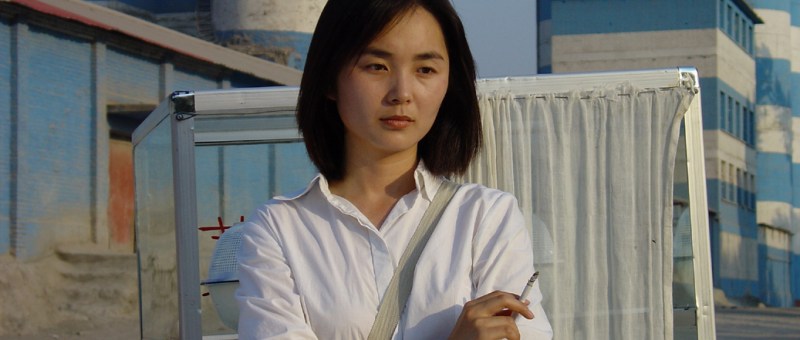
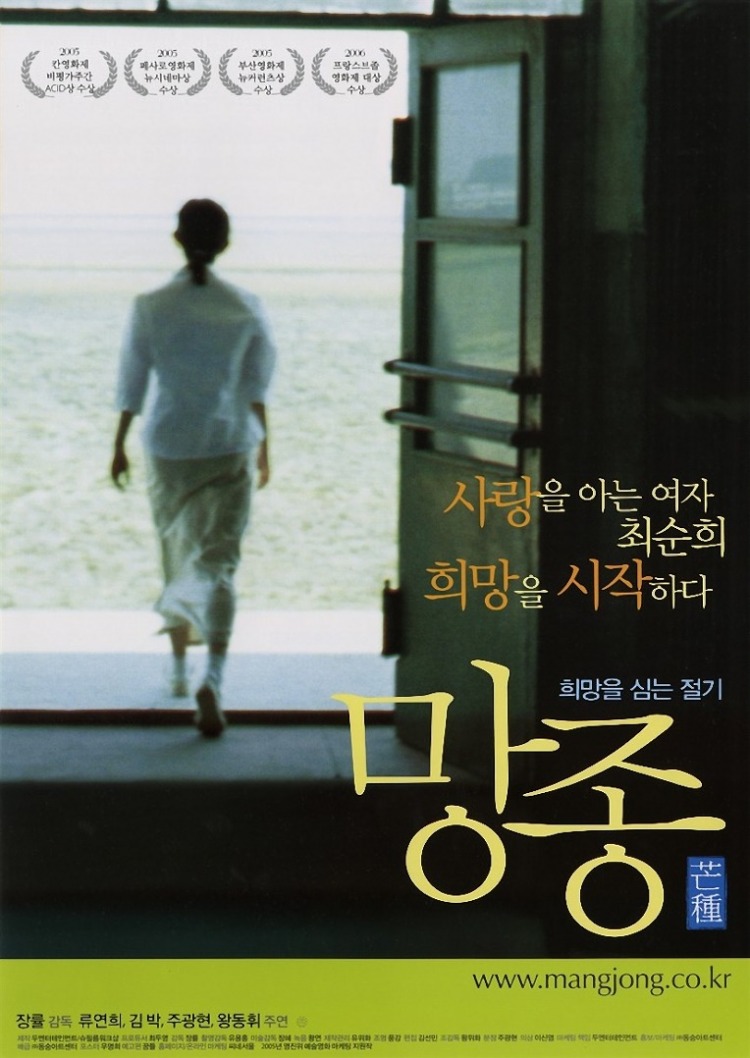
Grain in Ear (芒种 / 망종, Zhang Lu, 2005)

Grain in Ear posterChinese-Korean director Zhang Lu has made a career of exploring the lives of those living on the margins of modern China and most particularly those of the ethnic Korean minority. 2005’s Grain in Ear (芒种, Máng zhòng, 망종, Mang Jong) brings this theme to the fore through the struggles of its stoic heroine who bears all her troubles with quiet fortitude until the weight of her despair threatens an already fragile sense of civility, consistently eroded by multiple betrayals, misuses, and an unforgettable othering. Yet she is not entirely alone in her outsider status even if there is precious little value in solidarity among the powerless in a world of circular oppressions.

32-year-old Cui Shun-ji (Liu Lianji) has moved to a small town with her young son Chang-ho (Jin Bo) following her husband’s conviction of a violent crime. Unable to find work, she ekes out a living illegally selling kimchi from a cart without a permit while Chang-ho busies himself playing with the neighbourhood kids in the rundown industrial town. Isolated not only as a newcomer but as a member of the ethnic Korean minority, Shun-ji keeps herself to herself but can’t help attracting the attentions of the locals some of whom are merely curious about her spicy side dishes while others are intent on helping themselves to things which aren’t actually on sale.

There is something peculiarly perverse about Shun-Ji’s decision to make her living selling kimchi. It is both an act of frustrated patriotism and a kind of commodification of her ethnicity though she seems to have intense pride in her ability to produce her national dish even if there is not often as much calling for it as she would like. Meanwhile, at home, Shun-ji virtually tortures little Chang-ho into trying to learn the Korean alphabet as a way of fastening him closely to his heritage and community, but Chang-ho is a Chinese boy to all intents and purposes. He may understand Korean, but he doesn’t want or need to speak it and resents his mother’s attempts to reinforce his Koreanness.

Meanwhile, despite her aloofness, Shun-ji eventually forms a kind of relationship with a lonely Korean-Chinese man, Mr. Kim (Zhu Guangxuan), who visits her cart. Brought together by a shared sense of loneliness and a connection born only of a mutual ethnicity, the pair drift into an affair but Shun-ji’s dreams of romantic rescue will be short lived. Her lover is a weak willed man married to a feisty Chinese woman who will stop at nothing to recapture her henpecked husband. Cornered, Kim tells his wife it’s not “an affair” because money changed hands, branding Shun-ji a prostitute and getting her arrested by the police to prove his point.

To be fair, Shun-ji’s married lover is another oppressed minority afraid of the consequences of non-compliance, but he’s also just one of the terrible men that Shun-ji will encounter in her quest towards independence and self sufficiency. Her husband killed a man for money and left his family to fend for themselves when he went to prison for it. Her lover called her a whore and left her at the mercy of the police. A man who offered to help with a lucrative kimchi contract turned out to be after another kind of spice, and the kindly policeman who stopped by her cart with tales of his impending marriage turned out not to be so nice after all.

In this fiercely patriarchal world, women like Shun-ji have no one to rely upon but each other. Marginalised by poverty, ethnicity, and unfamiliarity, Shun-ji and Chang-ho live in a small shack behind the railway next to the local sex workers. Chang-ho, too small to understand why everyone calls the women next-door “chickens”, treats them all like big sisters while a kind of solidarity emerges between Shun-ji and the melancholy youngsters from far away towns who’ve travelled to this remote place to ply their trade out of desperation, too ashamed to stay any closer to home. One of the sex workers tries to warn Shun-ji about Kim – men who buy their services are not especially good romantic material, but it’s advice that falls on deaf ears. Shun-ji wants to believe better of her compatriot, but her faith is not repaid.

Zhang, in a familiar motif, foregrounds Li Bai’s famous ode to homesickness, giving it additional weight in the mouth of little Chang-ho whose longing is for another kind of home in contrast to his mother’s continued need to believe in the solidarity of her community. Yet even she eventually loses faith, tearing up Chang-ho’s Hangul cards and finally allowing him to give up on his Koreanness. Having endured so much, Shun-Li’s broken spirit eventually leads her towards an inevitable explosion and a grim, strangely poetic revenge against the society which has so badly wronged her. Only in this final moment of transgression does Shun-ji begin to harvest her own freedom, but escape is still a long way off and her final act of defiance may only further condemn her in world of constant oppressions.


Grain in Ear was screened as part of the 2018 London Korean Film Festival.

Original trailer (Mandarin and Korean with Korean subtitles only)