BFI London Film Festival Confirms Complete Programme for 2019

House of Hummingbird 6The BFI London Film Festival returns for 2019 with a packed programme of the best in recent international cinema. As usual the lineup includes an impressive selection of East Asian hits including Takashi Miike’s Cannes crowd pleaser First Love and sensitive Busan breakout House of Hummingbird.

Bhutan
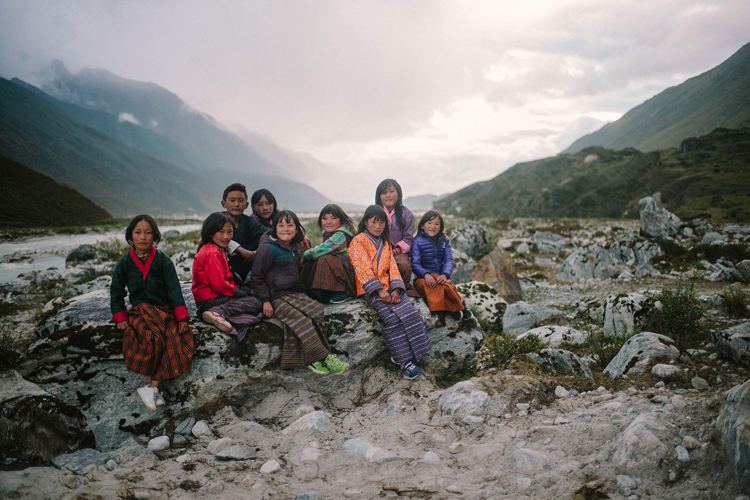
LUNANA- A YAK IN THE CLASSROOM

  • Lunana: A Yak in the Classroom – a frustrated teacher is dismayed to learn he’s being sent to a remote mountain outpost but is eventually won over by the kids.

China

White Snake Banner

  • So Long, My Son – Beijing Bicycle‘s Wang Xiaoshuai returns with a chronicle of the Chinese family from the ’80s reforms to the present day.
  • To Live To Sing – the leader of a struggling Sichuan Opera troupe tries to stave off eviction through impressing a local bureaucrat.
  • White Snake – beautifully animated “prequel” to the classic Lady White Snake folktale. Review.
  • Lucky Grandma – A Chinese-American grandma gambles away her life savings and ends up in the middle of a gang war after unwittingly stealing from Chinese gangsters!

Japan
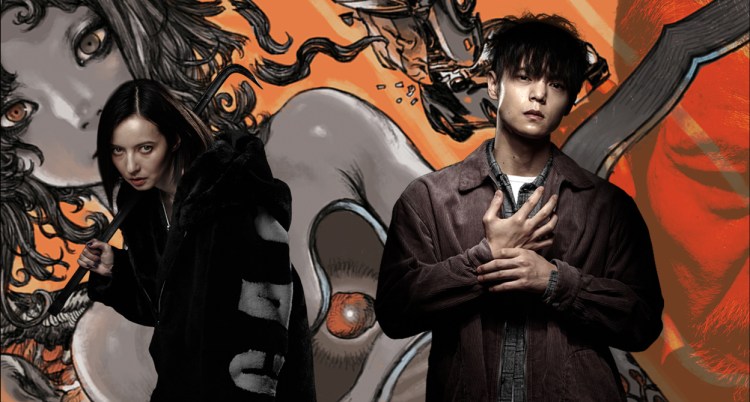
Miike first love

  • 37 Seconds – a manga artist with cerebral palsy sets out to claim her independence through embracing her sexuality.
  • First Love – a boxer with a brain tumour falls for a trapped sex worker in the latest anarchic crime thriller from Takashi Miike.
  • To the Ends of the Earth – Kiyoshi Kurosawa reunites with recent muse Atsuko Maeda as a lost TV presenter goes searching for herself while filming in Uzbekistan.
  • Family Romance, LLC – Tokyo-set drama from Werner Herzog revolving around a rent-a-relative business.
  • Earthquake Bird – Alicia Vikander stars as a Tokyo-based translator in bubble-era Tokyo who finds herself at the centre of a series of murders.

Mongolia
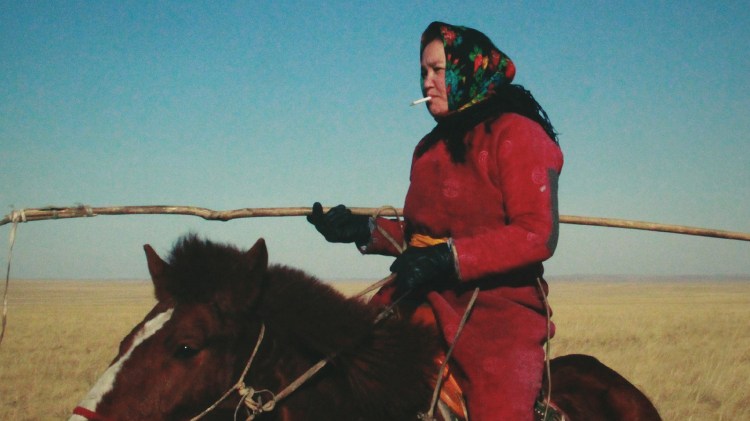
Öndög 

  • Öndög – a local herdswoman is brought in to take care of a wolf when the police discover a dead body.

Philippines

Overseas]

  • Overseas – Yoon Sung-a’s documentary exploring the lives of Filipina women working overseas.

Singapore
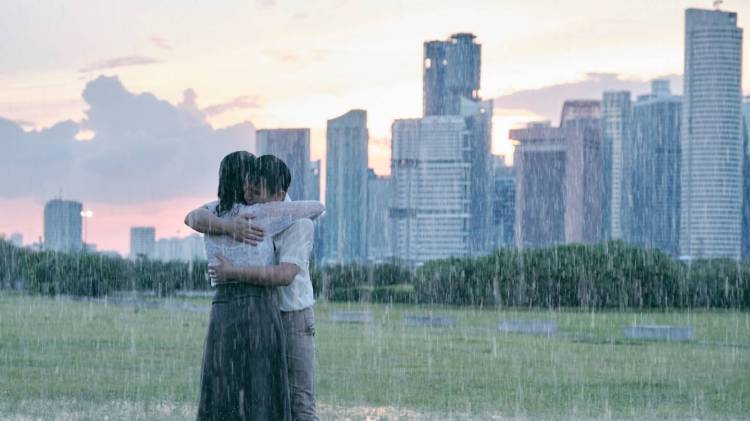
Wet season still 1

  • Wet Season – Ilo Ilo’s Anthony Chen returns with a monsoon tale in which a Mandarin language teacher is drawn to one of her students.

South Korea
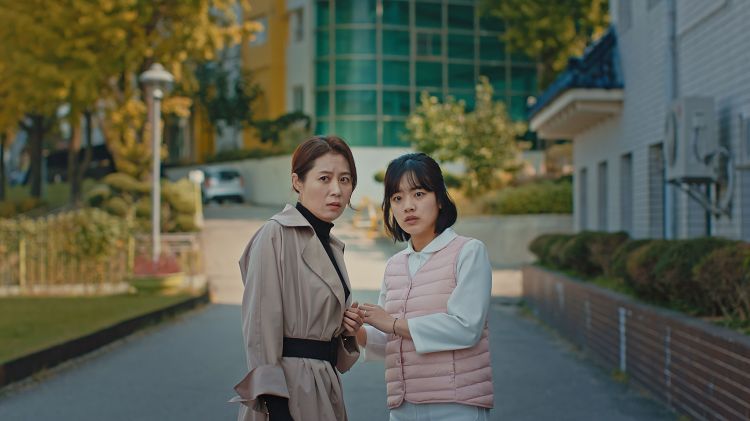
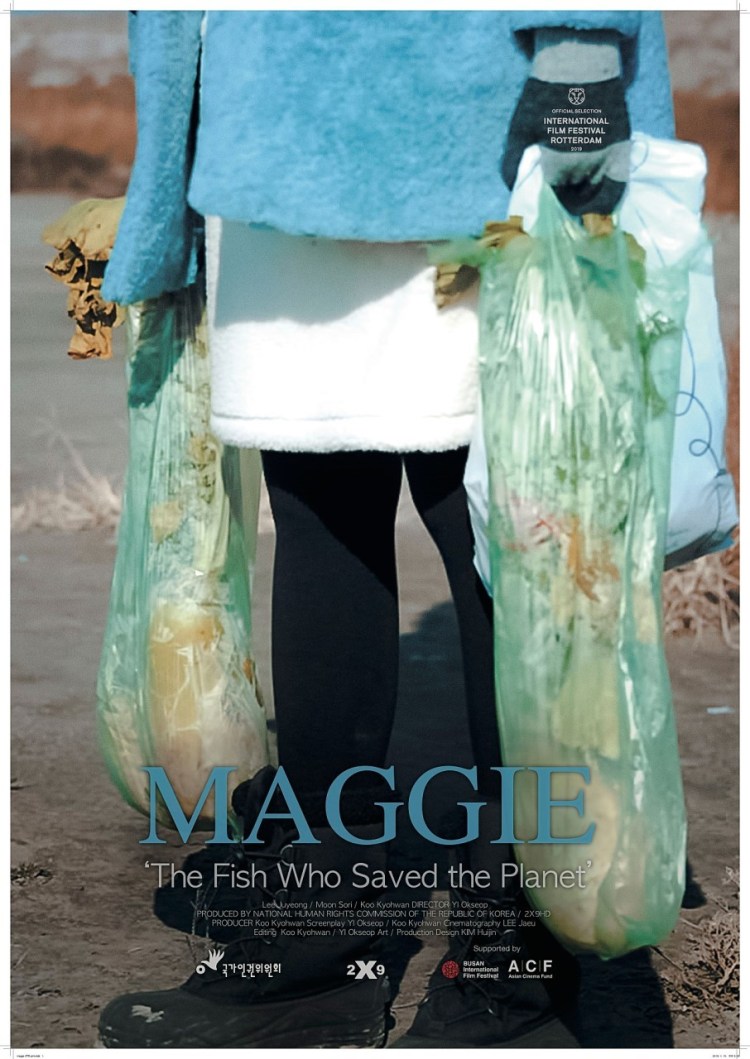
Maggie still 1

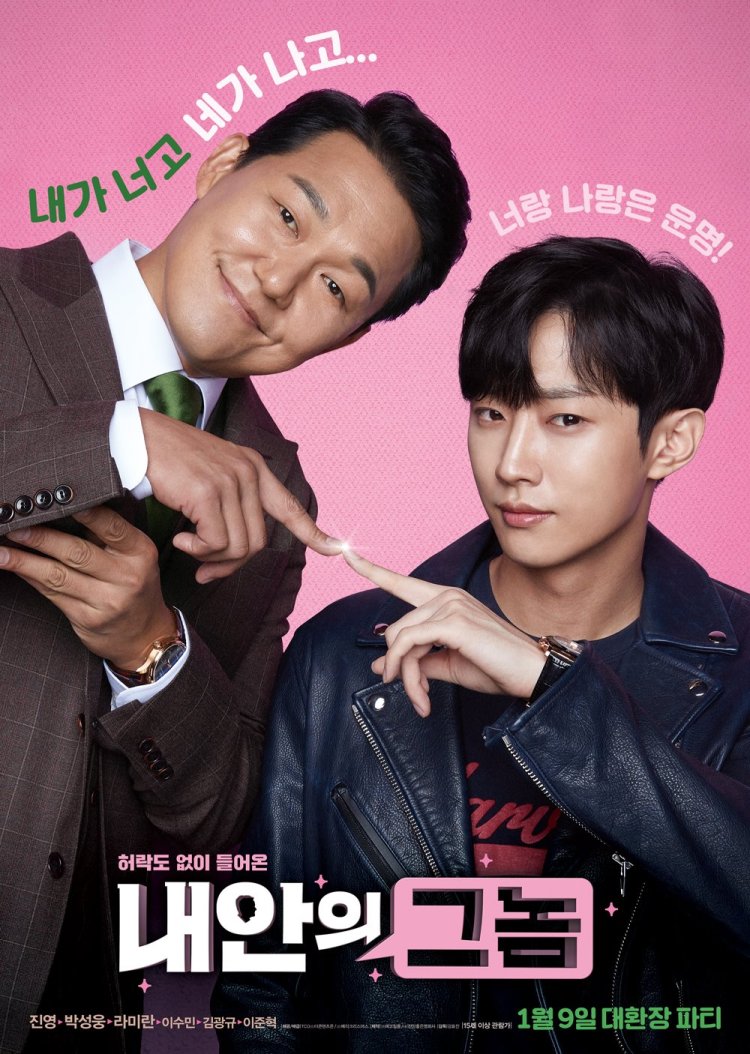
  • The Dude in Me – body swap comedy in which a jaded gangster gets a second chance to set things right when he swaps bodies with a mild-mannered teen. Review.
  • Heart – the latest from Bitch on the Beach‘s Jeong Ga-young in which she stars as a filmmaker who tracks down a married former lover for some additional advice about extra-marital affairs.
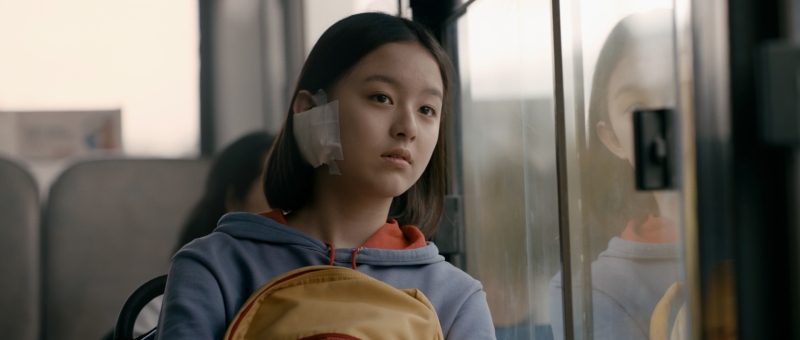
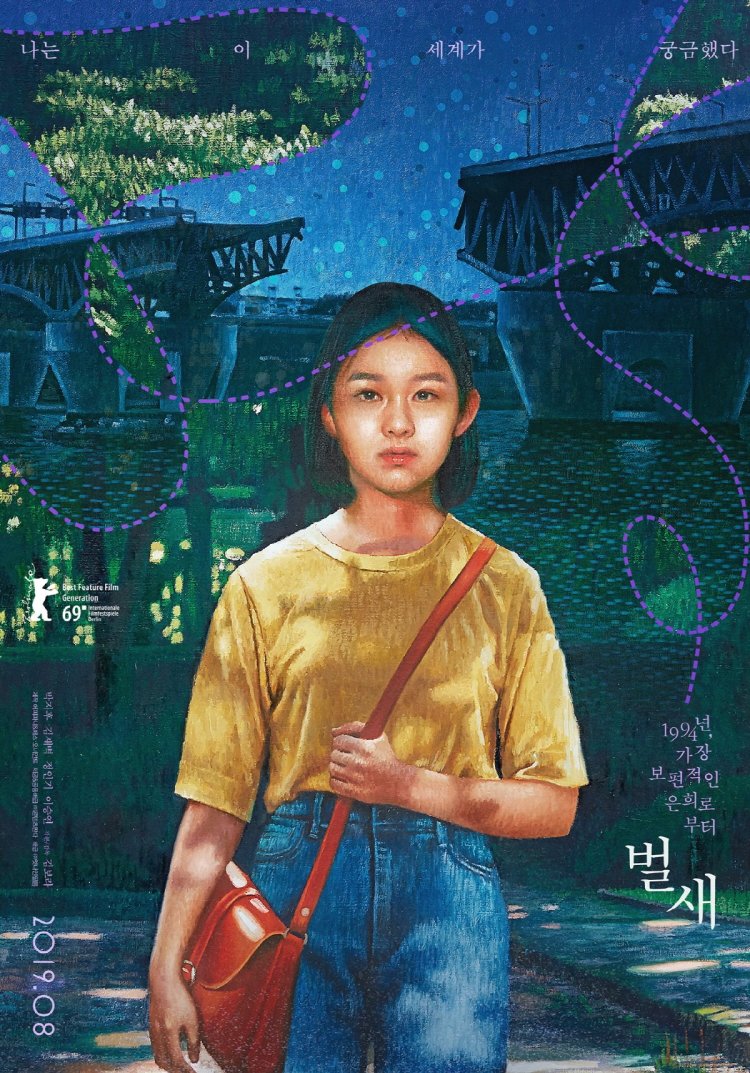
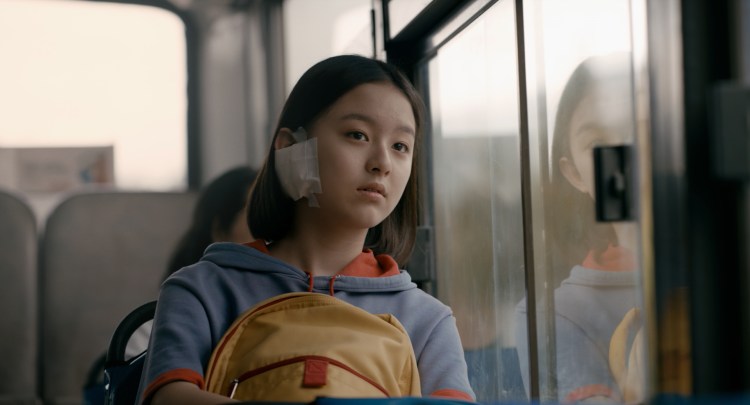
  • House of Hummingbird – a teenage girl from a problematic home finds inspiration in her enigmatic Chinese teacher in Kim Bora’s beautifully observed debut. Review.
  • The House of Us – Yoon Ga-eun’s The World of Us followup in which a young girl trying to get her parents to patch things up becomes a big sister figure to two other kids.
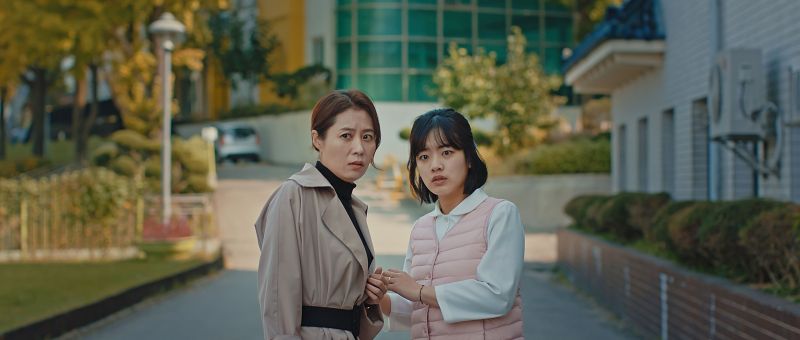
  • Maggie – surreal drama narrated by a catfish in which a conflicted nurse explores the interplay of truth and trust. Review.

Thailand
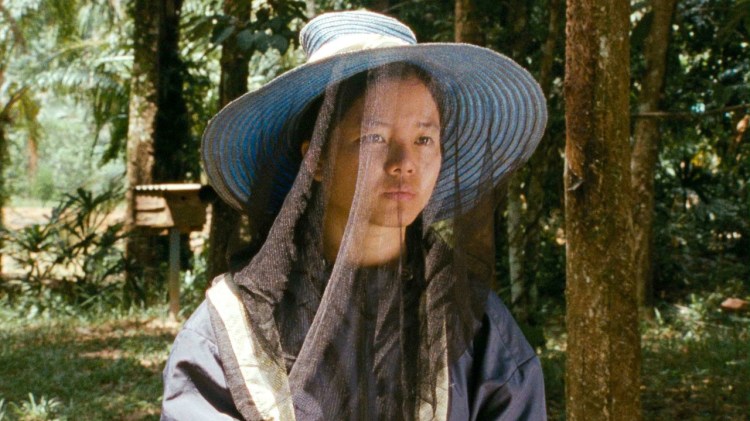
KRABI, 2562

  • The Cave (Thailand) – dramatisation of the international rescue operation of a team of young football players trapped in a Thai cave.
  • Hope Frozen – documentary following the parents of a little girl who died of a brain tumour as they try to reconcile their decision to opt for cryogenic preservation with their Buddhist beliefs.
  • Krabi, 2562 – Anocha Suwichakornpong and Ben Rivers team up for an unusual portrait of the Thai tourist town.

The BFI London Film Festival takes place at various venues across the city from 2nd – 13th October 2019. Full details for all the films as well as screening times and ticketing information are available via the official website. Priority booking opens for Patrons on 3rd September, for Champions on 4th September, and Members 5th September, with general ticket sales available from 12th September. You can also keep up to date with all the latest news via the festival’s Facebook page, Twitter account, Instagram, and YouTube channels.

The Dude in Me (내안의 그놈, Kang Hyo-jin, 2019) [Fantasia 2019]

Dude in Me poster 3“What’s more important than being with your family?” – A cynical crime boss is forced to reconsider his life choices following a series of crises which see him inadvertently swap bodies with a dimwitted high school boy in Kang Hyo-jin’s take on the classic genre, The Dude in Me (내안의 그놈, Naean-ui Geunom). Less a story of two men from different generations learning from each other, Kang’s film leans heavily into patriarchal myths as its jaded hero is given a second chance at youth and discovers he may have made a grave error in choosing to reject love in favour of advancement.

17 years after breaking up with high school sweetheart Mi-sun (Ra Mi-ran), Pan-su is a high flying “businessman” in the newly corporatised world of suited gangster thuggery. Old habits die hard, however, as his current problem is his minion’s failure to put sufficient pressure on the last holdout in an area they’ve earmarked for redevelopment – Jong-gi (Kim Kwang-kyu), the earnest owner of a carpentry firm intent on holding on to the family business. It’s during a visit to Jong-gi’s that Pan-su stops off at a ramen joint he used to go to in his youth, only to discover that the young woman who owned the restaurant all those years ago has moved on which is why his favourite dish doesn’t taste like it used to.

Inside, he gets into a heated debate with the new owner while a portly high school boy, Dong-hyun (Jung Jin-young), who needs to leave in a hurry, discovers he’s lost his wallet. The old lady bamboozles Pan-su into paying for the kid’s (unusually large) meal, assuring him that she has “something in store” for him. That “something” turns out to be Dong-hyun falling from a nearby roof and landing on Pan-su’s head. When Pan-su wakes up, he realises he’s in Dong-hyun’s body while Dong-hyun is presumably still inside his which remains in a coma.

Such is the force of Pan-su’s personality that he’s able to convince his chief underling of his real identity pretty quickly, but it remains a serious problem for him that a once serious gangster is humiliatingly trapped in the body of a misfit high schooler ostracised by all but the equally bullied Hyun-jung (Lee Soo-min) for his pudgy physique and dimwitted cowardice. Pan-su makes little attempt to blend into Dong-hyun’s life, behaving much as he has before and seemingly oblivious to the commotion his newfound boldness provokes in those around him. Though Dong-hyun’s new crazy backbone could be written off as a bizarre side effect of his head injury, the contrasts between the diffident teenager and unpredictable gangster do not end there. Where everything about Pan-su screams control from his obsession with straightening other people’s ties to habitually wiping down surfaces, Dong-hyun is the sort of boy who doesn’t think too far beyond his belly. Indeed, Dong-hyun’s vast appetite does not sit well with Pan-su’s uptight concern for his health even as his new body finds it almost impossible to resist the lure of tasty junk food in truly staggering proportions.

Nevertheless, Pan-su gradually begins to take ownership of Dong-hyun’s body, doing him the “favour” of “improving” it by shedding all that weight and revealing the hot guy trapped inside. Part of the reason he decides to do that is realising that the mother of Dong-hyun’s childhood friend Hyun-jung is none other than love of his life Mi-sun, who seems to have remained single since they broke up around the time in which Hyun-jung must have been conceived. Wielding his newfound hotness as a weapon, he vows to protect Hyun-jung in the most fatherly of ways – by teaching her to protect herself through shared self-defence classes. He will, however, need to sort out a few other problems on his his own, going up up against an entrenched system of delinquency and a dangerously predatory high school prince who likes to invite vulnerable girls to his parties as a form of entertainment.

Meanwhile, he’s still dealing with the ongoing gang war and a series of personal problems relating to his treacherous wife and austere father-in-law who praises “family values” above all else. Living as a high school boy again and realising that he’s got a daughter whose life he has entirely missed out on because of a choice he has always on some level regretted forces Pan-su to wonder if his ill-gotten gains were really worth the lonely, loveless years. Strangely, perhaps only Dong-hyun is brave enough to admit for him that perhaps they weren’t and what he really wants is a warmer kind of “family” than the cold obligation of gangster brotherhood. A quirky tale of softening bad guys and toughening soft ones, The Dude in Me eventually locates a happy medium in the merger of the professional and personal as a new family rises up in Mi-sun’s homely new restaurant filled with warmth and possibility in having rediscovered the simple joys of true human connection.


The Dude in Me was screened as part of the 2019 Fantasia International Film Festival.

International trailer (English subtitles)

House of Hummingbird (벌새, Kim Bora, 2019) [Fantasia 2019]

House of hummingbird poster 1“The world is fascinating and beautiful” the teenage protagonist of Kim Bora’s House of Hummingbird (벌새, Beolsae) is told in an especially poignant letter recited in the film’s closing moments. It’s a lesson that she’s longing to learn, but finds few willing to teach her in a society whipping itself up into a frenzy of aspiration perhaps at the cost of true human connection. A chronicle of one surprisingly traumatic summer in the newly democratised Korea of 1994, Kim’s film charts its heroine’s gradual progress towards a kind of self acceptance with a melancholy ease as she begins to find her own way despite the toxicity of the world all around her.

14-year-old Eun-hee (Park Ji-hu) is one of three siblings living in a cramped apartment with her harried, emotionally distant parents who run a small rice cake shop. A mediocre, disinterested student she falls asleep at school where the other kids cruelly exclaim that dozy girls like her never make it to college and are destined only to become housemaids to the “successful” adults they assume they’ll be. Meanwhile, Eun-hee’s hardline dad (Jung In-gi) makes her go to Chinese cram school where she “studies” along with her best friend, Ji-suk (Park Seo-yun), spending most of their lesson time making fun of the teacher in hastily written notes.

Previously purposeless, her world begins to widen when the Chinese teacher abruptly quits and is replaced by the infinitely cool, enigmatic university student Young-ji (Kim Sae-byuk) whom she first glimpsed smoking a melancholy cigarette by an open window on the stairs. Strangely captivated by this “odd” young woman, Eun-hee suddenly has the urge to study, especially as Young-ji turns out to be unique among the adults that she knows in that she seems to genuinely care about her and is interested in hearing all about her troubles, which, as we will find out are many.

In the mid-90s, Korea was a newly democratised and rapidly modernising society keen to claim its place on the economic world stage. Where Eun-hee’s parents are defeated, disappointed figures, they want better for their children in the new society but struggle as to how to get it for them. Eun-hee’s mother (Lee Seung-yeon), as we find out from her dejected brother, was bright but had to leave school to pay for his tuition (a promise he seems to think he has not fulfilled). Consequently, the parents are convinced “education” is the way out but fail to realise that their obsession with academic grades is slowly destroying their family home. While Eun-hee is sullen and withdrawn, pushed out by her rowdy family, her older brother’s exam stress often turns violent and her sister skips school to go clubbing in an attempt to escape adolescent anxiety.

Even when Eun-hee discovers a lump on the side of her neck, her mother sends her off to the doctor’s alone though he can’t actually treat her without parental consent which Eun-hee fears they won’t get round to giving. Though they visit her once, they don’t bother to pick her up from an extended stay in hospital and are not home when she returns. Not even an accusation of shoplifting rouses them from their busyness. Eun-hee’s father rudely tells the shopkeeper to stop bothering him and call the police, causing the shopkeeper to feel so sorry for her that he lets her go.

Meanwhile, Eun-hee looks for intimacy in other places. She tries innocent teenage romance with a feckless but good-looking boy, Ji-wan (Jeong Yun-seo), whom truth be told she perhaps likes more as an abstract idea than in himself. The unexpected gift of a bright red rose from a bashful girl (Seol Hye-in) sends her thoughts in another direction but leaves her more confused than ever when that too betrays. Through it all she idolises the mysterious figure of Young-ji with whom she seems to share some kind of affinity and the sense of connection so painfully absent in her frenetic family home.

Eun-hee’s difficult path towards an acceptance of adulthood mirrors that of her nation, finding itself in one particularly traumatic summer marked by a dangerous sense of anxiety in the end of eras as the North’s Kim Il-sung passes away, provoking fears of a disturbance in carefully won political equilibrium. Meanwhile, a literal bridge collapse threatens to destroy Eun-hee’s new path towards maturity once and for all, taking her only source of solace with it. Yet what she learns is that though bad things happen, good things happen too and there are always new people to share them with. She may feel herself to be alone, lost in a confusing landscape and uniquely indifferent to her nation’s relentless pursuit of consumerist success, but she does finally perhaps have herself and new hope for the future found in the security of her own hands.


House of Hummingbird was screened as part of the 2019 Fantasia International Film Festival.

Festival trailer (English subtitles)

Maggie (메기, Yi Ok-seop, 2018)

Maggie poster 1“When we fall into a pit, what we need to do, is not dig any further but quickly climb out” according to a mysterious post-it discovered by a nurse when picking up the laundry (apparently inexpertly performed by her preferred cleaning service). The aphorism turns out to belong to Doctor Lee (Moon So-ri), the head physician at Love of Maria hospital where the titular Maggie (메기), a catfish, lives in a small tank observing the life around her and sometimes predicting earthquakes and other earth shattering events. A surrealist odyssey across the “pitfalls” of modern society, Yi Ok-seop’s quirky debut feature ponders the ramifications of distance as her various heroes weigh up the nature of “truth” as an absolutist concept.

Narrated by Maggie, the drama begins when the radiographer and her boyfriend are unexpectedly snapped during an intimate moment in the X-Ray room. The picture is then stolen and held up for everyone to see, at which point nurse Yoon-young (Lee Joo-young) worries that she and her boyfriend Sung-won (Koo Kyo-hwan) have been caught out using the privacy of the X-ray booth for unintended purposes. As Maggie says, no one pays much attention to who took the photo only to who might be in it, which is why the entire hospital, except Doctor Lee, ring in sick the next day with only Yoon-young turning up in the morning with the intention to resign. Figuring out what must have happened (and seeing as she’s the only one not embarrassed we can guess who took the photo), Doctor Lee is very upset to realise that the entirety of her staff has probably lied to her. With her intense belief in humanity shaken, Doctor Lee decides to engage in a trust game with her new best friend, Nurse Yoon-young, and simply choose to believe what they’re told, testing their hypothesis by visiting a random employee to verify if they really are “sick”.

Meanwhile, as a result of the earthquakes Maggie intermittently predicts,  mysterious sinkholes have begun appearing all over the nation. This is good news in one sense because it provides lots of extra work for otherwise unoccupied young men like Sung-won who have lost out in Korea’s insanely competitive economy. Like Sung-won, the other men on his team are also well-educated types who otherwise wouldn’t be considering manual work and are hoping for something better once the sinkhole business finally clears up. Mistrust, however, also works its way into their relationship when Sung-won loses a precious white gold ring given to him by Yoon-young, later becoming convinced that one of his colleagues has swiped it.

The loss of the ring leads to an increasing unease between Yoon-young and her boyfriend which is deepened by a visit from Sung-won’s ex who suggests there may have been problems in their relationship which she feels Yoon-young ought to be aware of. Though Sung-won seems sweet natured and laidback, never having acted in any way that would have given Yoon-young cause for concern, she begins to doubt him – suddenly worried by his overly violent crushing of a can out in the street. Doctor Lee’s advice is to simply ask Sung-won directly if the accusations are true, but Yoon-young can’t seem to do it and continues living along side him somewhat resentfully as she eventually comes to the decision to “believe” her friend at face value without investigating further.

“The truth cannot exist wholesomely”, according to Maggie’s “father” (Kwon Hae-hyo). It will always be polluted by self-interest and personal bias. As Doctor Lee says, there will always be people who believe you and people who don’t, so perhaps a healthy level of cynicism is something you need to accept in order to go on living in the world. Even Love of Maria Hospital is not immune to the disease of misrepresentation – a former convent given over as a place of healing it was later bought by an arch capitalist and is now run as a private hospital business (not that it appears to have many “customers”), despite Doctor Lee’s rather amusing ad which proclaims it “of the patients, by the patients, for the patients”.

Finally Yoon-young concedes she’ll need to simply ask Sung-won about his past and gets an honest response, but his honesty only seems to see him falling into a deep pit of despair, calling out from the bottom in the hope of being understood. A surreal exploration of contemporary social woes from the rabidly capitalist society to the growing distance between people in an increasingly interconnected age, Maggie attempts to find the emotional honesty sweet spot but discovers that trust, like everything else, is a complicated business.


Maggie screens on 13th July as part of the 2019 New York Asian Film Festival. It will also be screening as part of the 2019 Fantasia International Film Festival on 17th/18th July.

Interview with director Yi Ok-seop from the Busan International Film Festival

White Snake (白蛇:缘起, Zhao Ji & Amp Wong, 2019)

White Snake posterOne of the best known classical Chinese folktales, Madame White Snake has already inspired a host of cinematic adaptations, most famously Tsui Hark’s Green Snake. CGI animation White Snake (白蛇:缘起, Báishé: Yuánqǐ), co-produced by Warner Bros. in the US and China’s Light Chaser, takes a different tack in imagining a prequel to the original legend that hints at a wider destiny for the eponymous Bai Suzhen and the doctor Xu Xian. Like other similarly themed family films, White Snake is also a surprisingly progressive, if melancholy, love story which insists that love is love and does not, or should not, change if you discover the person that you love is a little different than you first thought – in this case, that she’s giant snake demon in beautiful human form.

A framing sequence opens with Bai Suzhen, here called Xiao Bai / Bianca, lamenting to her friend Xiao Qing / Verta (Tang Xiaoxi) that though she has meditated for 500 years she cannot achieve enlightenment and feels the block is due to a memory that she cannot recall. Xiao Qing then gives her a jade hairpin which casts us back 500 years to the Tang Dynasty and a time of chaos in which an evil general has ordered the mass killing of snakes in order to steal their energy for black magic purposes to improve his relationship with the emperor. The snake demons declare war and Xiao Bai is sent to assassinate the general but is injured before she can complete her mission. Washing up on a nearby shore, she is rescued by a local boy, Xuan (Yang Tianxiang), who happens to be a snake hunter. Having lost all her memories, Xiao Bai thinks she is human and bonds with Xuan as they team up to investigate her past with the hairpin as their first clue.

We are told that the land is in chaos and that the peasantry is cruelly oppressed by onerous loans and unjust treatment at the hands of the feudal lords. The general is forcing them to kill snakes and deliver them to him as a kind of tax incentive while threatening their livelihoods if they fail to comply. Despite participating in snake culls, however, Xuan is a kind and energetic young man who is also the village’s herbalist and dreams of becoming a doctor. Having rescued Xiao Bai, he does his best to help restore her memory and vows to be at her side protecting her no matter what. On figuring out that she is really a snake demon, his devotion doesn’t change and he stays with her all the same even knowing that she will be in danger if anyone else learns of her true identity.

Xuan may insist that your fate’s your fate but you can choose how you live, but he also acknowledges that “life is short and sorrows long”, affirming that it’s better to live in the moment making happy memories for less cheerful times. Then again, as Xiao Bai says, you can’t always do what you want and this is indeed a “heartless world” with rules which must be followed. As in any good fairytale, Xiao Bai and Xuan are divided by being on opposing sides of a supernatural plane with differing conceptions of time and eternity. As his song says, “this floating world is but a dream”, and Xiao Bai’s sojourn among the humans is likely to be a short one. Suspected of treachery, Xiao Bai’s good friend (or perhaps a little more than that) Xiao Qing volunteers to wear the Scale of Death, pledging her own life in place of Xiao Bai’s if she fails to fetch her back within three days only to immediately take against Xuan possibly for reasons unconnected to her distrust of humans who, she has been taught, are universally treacherous and hostile to snakes.

Of course, the original legend and the opening framing sequences are clues that this isn’t going to end happily but then with eternity to play with perhaps nothing is ever really as final as it seems. Beautifully animated with gorgeously rendered backgrounds and a melancholy romantic sensibility, White Snake is a huge step forward for Chinese animation which pays tribute the classic legend while creating a universe all of its own with sequel potential aplenty.


White Snake screens on 7th July as part of the 2019 New York Asian Film Festival. It will also be screened in Montreal as part of the 2019 Fantasia Film Festival on 27th July.

Original trailer (Mandarin with English & Simplified Chinese subtitles)