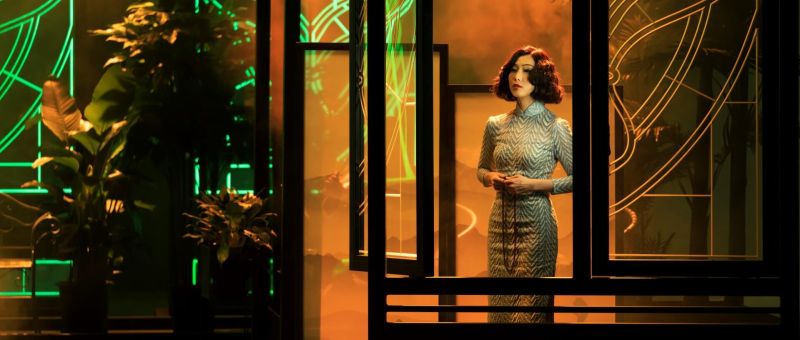
Chinese Visual Festival 2019 Announces Full Lineup

Tracey still 3The Chinese Visual Festival returns for its 9th edition in May 2019 with a weeklong celebration of Chinese language cinema including a special focus on the legendary Hong Kong director Stanley Kwan who will be in attendance for a series of conversations and Q&As.

Thursday 02 May:

6.10pm: First Night Nerves + Stanley Kwan Q&A 
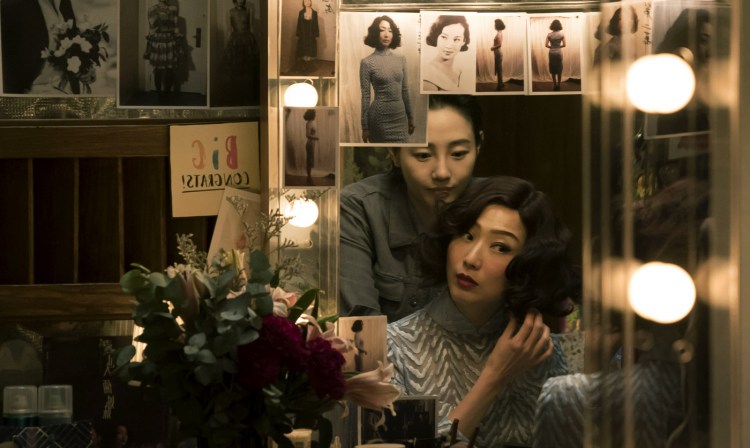
BFI Southbank, NFT1

first night nerves still 1Stanley Kwan returns to the stage with a backstage melodrama of backstabbing actresses as a veteran star makes her comeback alongside the talented youngster who threatens to eclipse her…

The legendary director will be present in person for a Q&A following the UK premiere of the film.

Friday 03 May:

4pm: Crack of Dawn: Roundtable Discussion with Director Ying Liang
King’s College London, Anatomy Museum
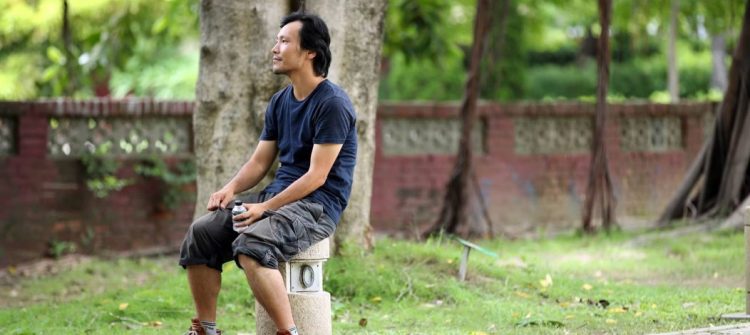
Ying Lang
Director Ying Liang whose When Night Falls, Sunny Day, and Family Tour are all screening in the festival will be in conversation with East Asian cinema specialist Tony Rayns, and film scholars Jessica Yeung and Victor Fan.

7pm: When Night Falls + Ying Liang Q&A
Joint ticket with A Sunny Day
King’s College London, Lucas Theatre

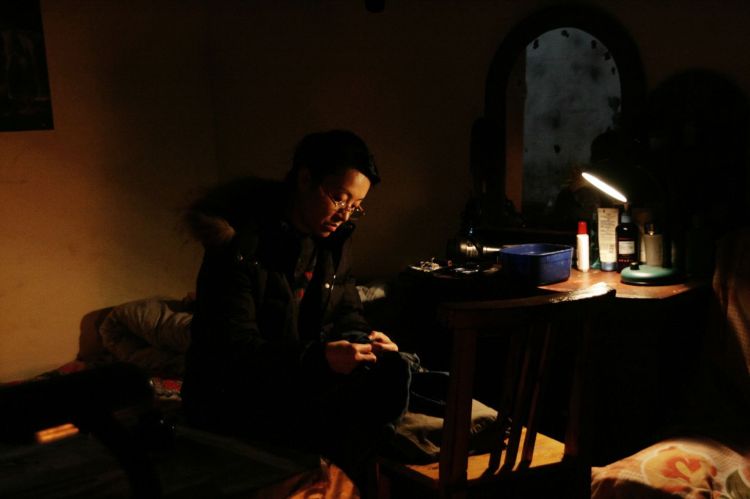
When Night Falls still 1The mother of a man sentenced to death for killing six policemen continues to fight for justice in Ying Liang’s probing drama. 

7pm: A Sunny Day + Ying Liang Q&A
Joint ticket with When Night Falls
King’s College London, Lucas Theatre

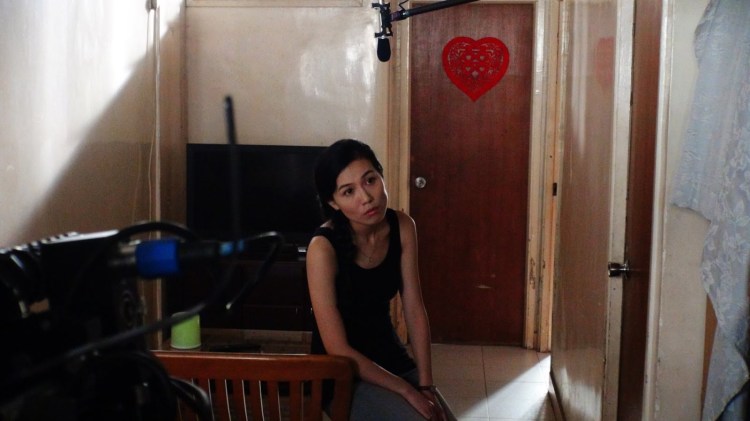
Sunny day still 1A young woman visits her father for lunch in Ying Liang’s Occupy-themed short.

Saturday 04 May:

2pm: A Family Tour + Ying Liang Q&A
King’s College London, Lucas Theatre

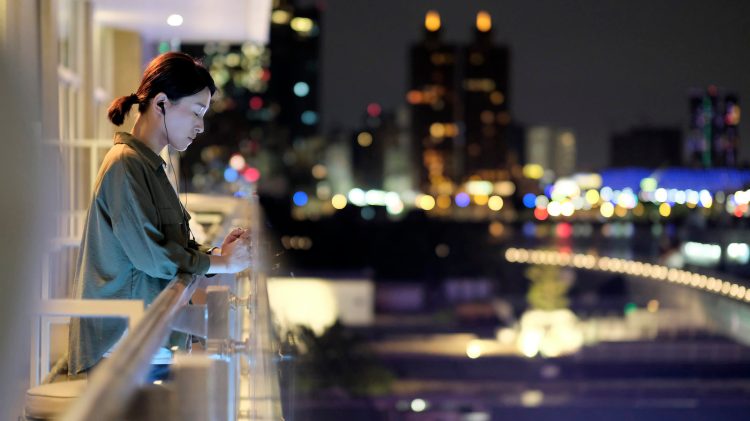
Family Tour still 1An exiled film director takes a “holiday” to Taiwan in order to tag along after her mother’s old persons’ tour bus knowing they will likely never meet again in Ying Liang’s poignant semi-autobiographical drama. Review.

6.15pm: Rouge + Stanley Kwan Q&A
BFI Southbank, NFT3

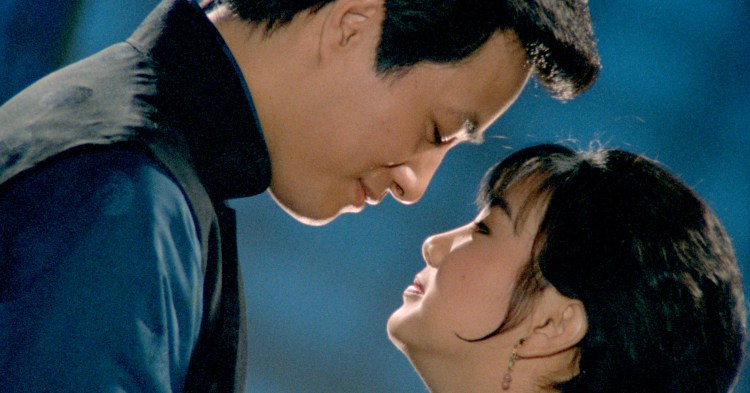
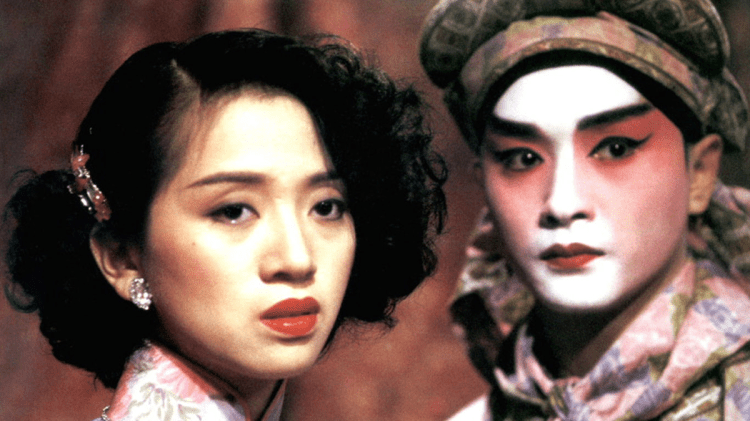
Rouge still 1Stanley Kwan’s sumptuous supernatural romance stars Anita Mui and Leslie Cheung as a pair of lovers who determine on double suicide, only she is the only one who dies. 50 years later, her spirit returns to a much changed ’80s Hong Kong in search of answers.

The director will be present for a Q&A following the film.

Sunday 05 May:

1pm: Stammering Ballad

King’s College London, Lucas Theatre

Stammering ballad still 1A Chinese folksinger leaves his hometown to wander and eventually ends up on China’s Got Talent only to return home and find his beloved landscape much changed in this visually stunning documentary.

3.30pm: Women + Stanley Kwan Q&A
King’s College London, Lucas Theatre

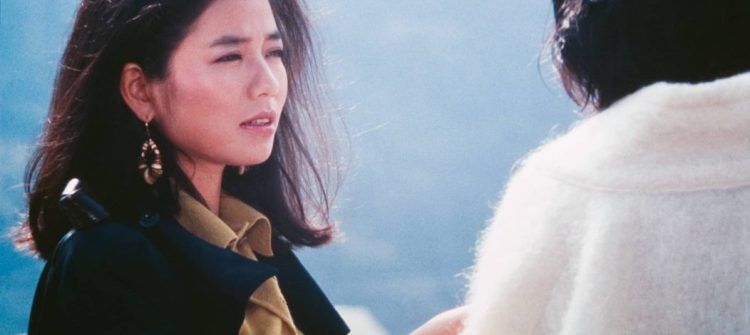
Kwan women still 1A woman leaves her husband after discovering he has been unfaithful and joins the “Spinsters’ Club” but is conflicted when he wants to patch things up. Stanley Kwan will also be present for a Q&A following a screening of his 1985 debut feature.

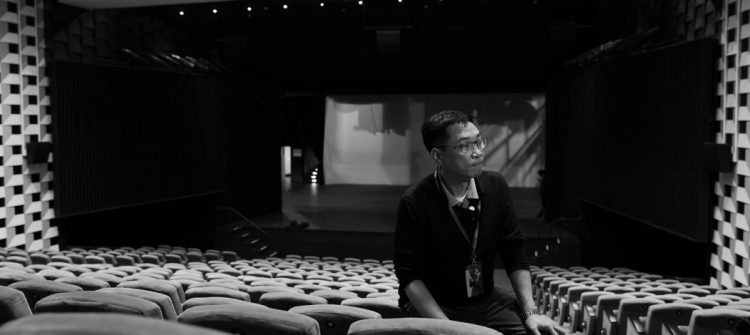
5.30pm: Stanley Kwan in Conversation

King’s College London, Lucas Theatre
Register Free

stanley kwan
The legendary director joins EasternKicks’ Andrew Heskins and Professor Victor Fan from King’s College London to disuss his life and career in the Hong Kong film industry.

7.15pm: The Land of Peach Blossoms

King’s College London, Lucas Theatre
Land藕粉peachblossomsstill1
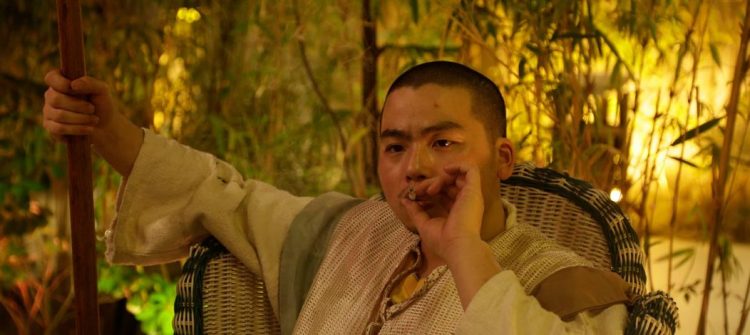
Documentarian Zhou Mingying explores a “utopian” restaurant run along collectivist lines in which personal thought is forbidden and becoming like the leader an ideal.

Monday 06 May

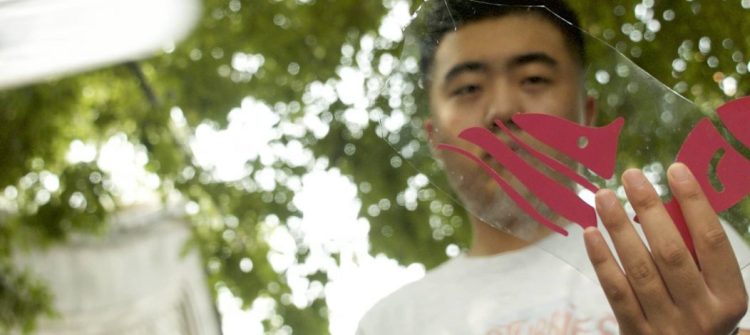
1pm: The Drum Tower + Fan Popo Q&A
King’s College London, Lucas Theatre

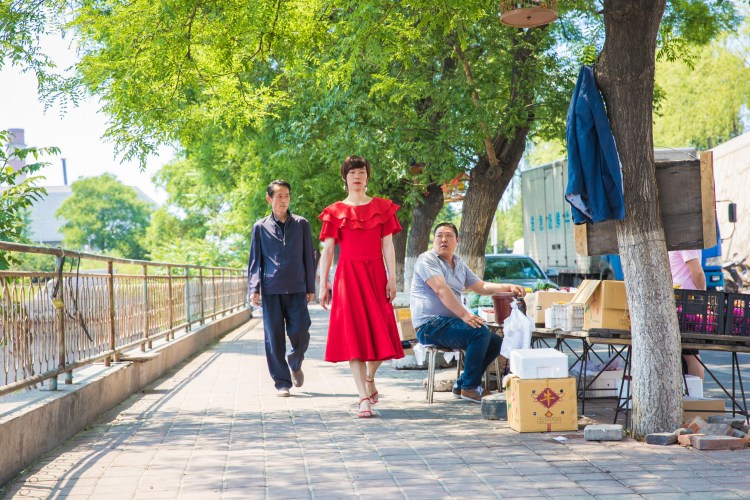
drum tower still 1An introverted high schooler and transgender vintage shop owner are the protagonists of the latest short from Fan Popo.

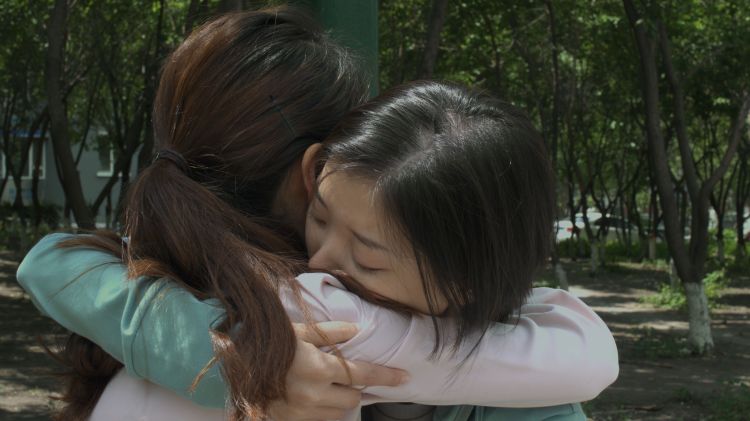
1pm: Meili
King’s College London, Lucas Theatre

Meili still 1A young girl abandoned by her parents and abused by her brother-in-law hopes to escape with her girlfriend in a powerful debut from director Zhou Zhou.

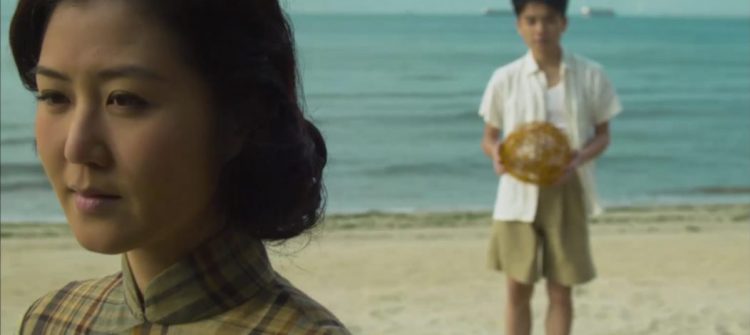
4pm: Thin Dream Bay + Imagining Evan Yang
King’s College London, Lucas Theatre
Imagining Evan Yang
Independent filmmaker Shu Kei explores the literary life of director and songwriter Evan Yang  .

7.15pm: The Rib

King’s College London, Lucas Theatre

47483187072_1c2af9ba0c_oFactory Boss‘ Zhang Wei follows a religious father’s struggle to accept his transgender daughter.

Tuesday 07 May
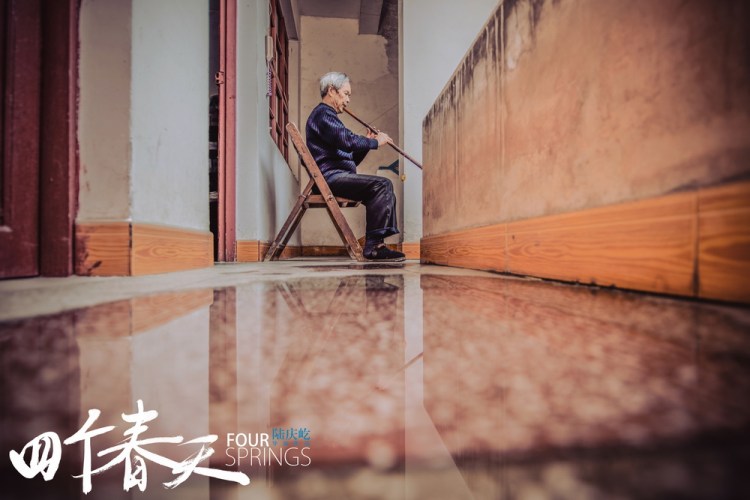
7pm: Four Springs

King’s College London, Lucas Theatre

four springgs still 1Director Lu Qingyi’s beautiful documentary follows his own family through four celebrations of New Year bringing with them both joy and sorrow. Review.

Wednesday 08 May

8.45pm: In Character
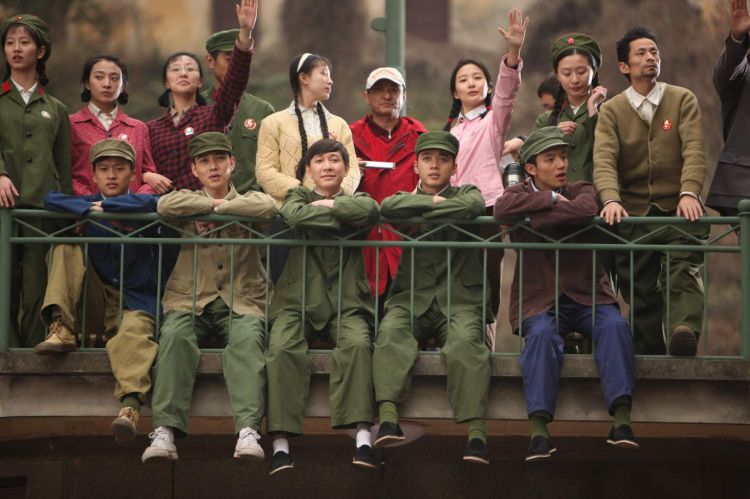
BFI Southbank, NFT3

In Character still 1A director making a semi-autobiographical film takes 13 actors back to the Cultural Revolution by bringing them to a disused firearms factory in Sichuan where they must wear the clothes and listen to the music of the era.

Thursday 09 May

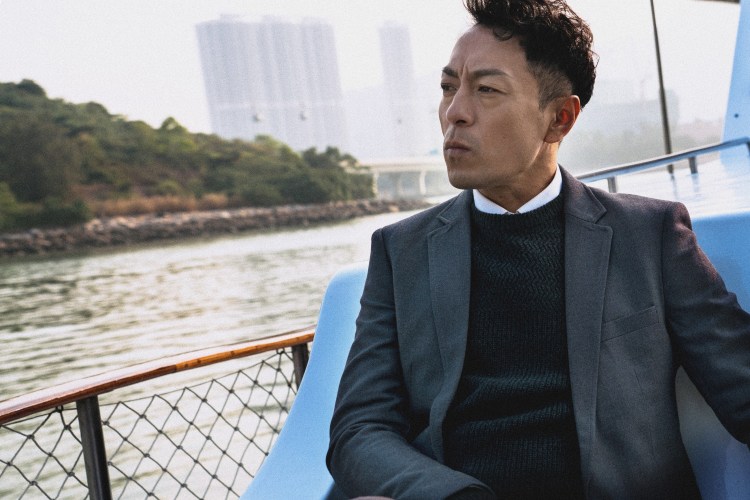
3pm: Tracey Cast and Crew in Conversation
King’s College London, Nash Theatre

Tracey still 1The cast and crew of Tracey are in conversation with EasternKicks’ Andrew Heskins and Dr. Victor Fan from King’s College London.

6pm: Tracey + Cast & Crew Q&A

BFI Southbank, NFT2
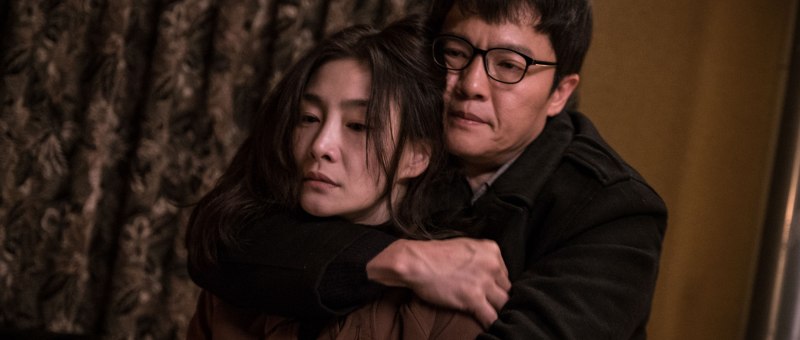
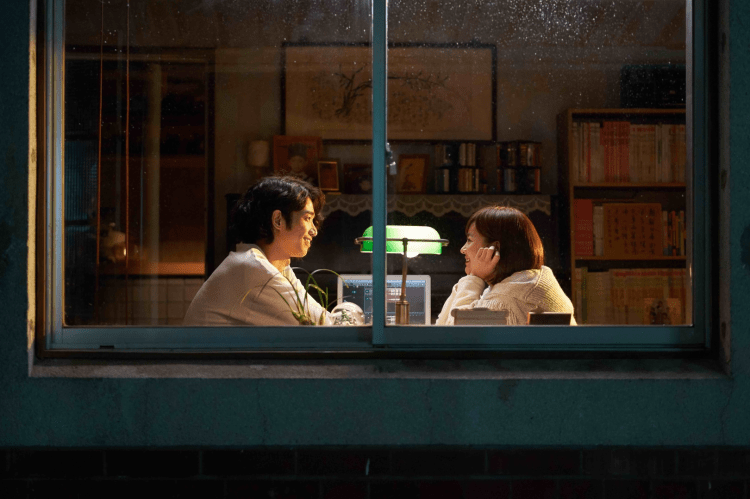
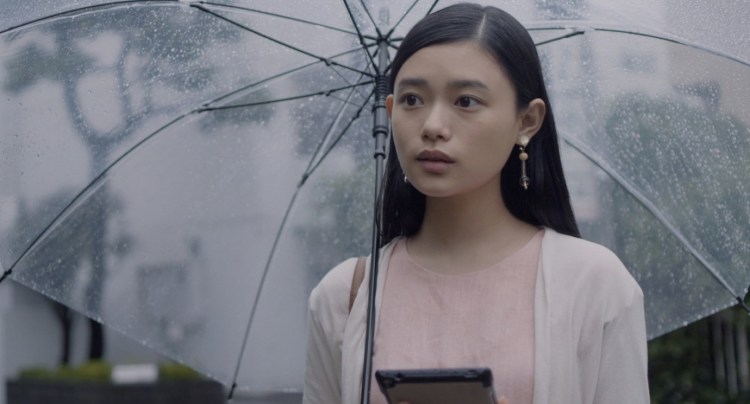
Tracey still 2A 51-year-old married father of two grownup children begins to come to an acceptance of a transgender identity after hearing the news of the death of a close friend in the beautifully observed debut from Li Jun.
The Chinese Visual Festival runs at BFI Southbank and King’s College London from 2nd to 9th May 2019. Full details for all the films are available via the official website and you can keep up with all the festival’s latest details via the official Facebook Page, Twitter account, and Instagram.

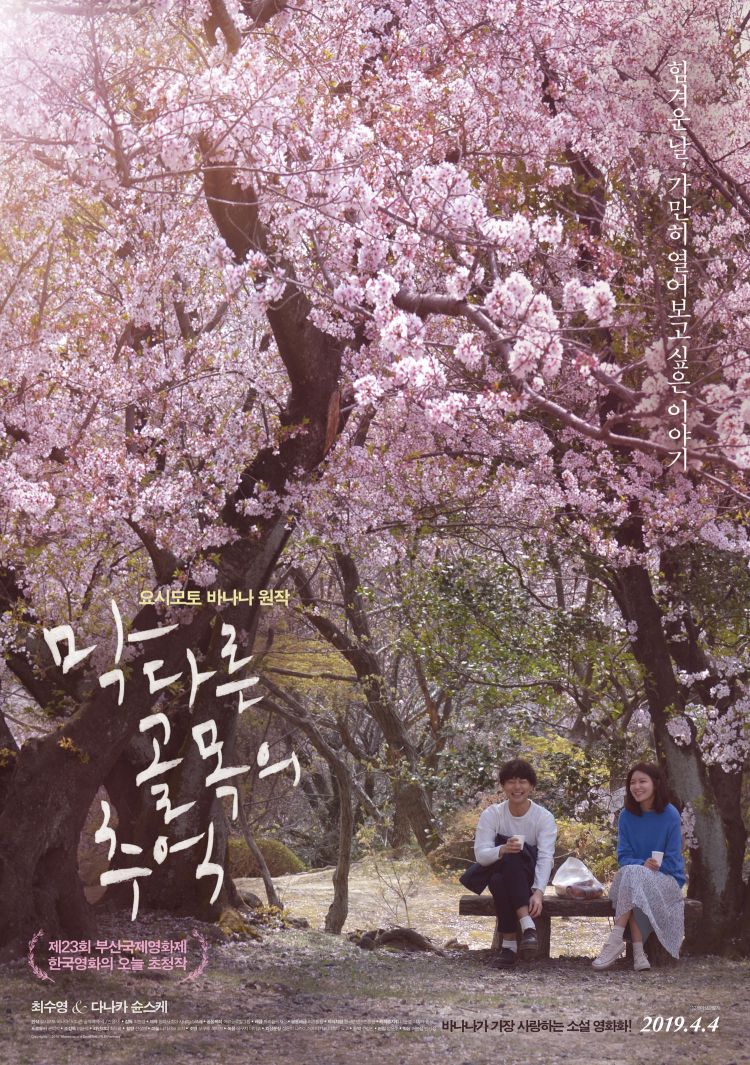
Memories of a Dead End (막다른 골목의 추억, Choi Hyun-young, 2018)

Memories of a dead end posterSometimes dead ends show up unexpectedly, as the heroine of Memories of a Dead End (막다른 골목의 추억, Makdareun Kolmokui Chueok) points out while ruminating on the abrupt revelation which has just rendered all her life’s hopes and dreams null and void. Adapted from the Banana Yoshimoto novella, Choi Hyun-young’s debut feature follows a young-ish Korean woman to Japan where she finds out something she probably knew already but didn’t quite want to accept and, thanks to the kindness of strangers, begins to see a way forward where she feared there might not be one.

Yumi (Sooyoung), a woman in her late 20s from a wealthy family, has been engaged to Tae-gyu (Ahn Bo-hyun) for the last few years but he has been working away in Japan supposedly preparing for their shared future. Unable to get in touch with him and worried he seems to be dodging her calls and refusing to return her texts, Yumi decides (against the advice of her steadfast sister) to go to Japan and confront him. Sadly, her family were right when they advised her that perhaps she should just forget her fiancé and move on. Tae-gyu has met someone else. On arriving at his apartment, Yumi is greeted by another woman who knows exactly who she is and why she’s come, but takes no pleasure in explaining that she and Tae-gyu plan to marry and were hoping Yumi would take the hint given a little more time.

Confused and heartbroken, Yumi checks into a hotel for the night planning to return to Korea the following day but a nagging phone call from her “I told you so / plenty of fish in the sea” mother (tipped off by her loudmouth sister) makes her think perhaps that’s not the best idea. Wandering around, she winds up at the End Point hotel and cafe where she cocoons herself away to think things through, trying to reconcile herself to the “dead end” she has just arrived at in the life path she had carved out for herself.

“End Point” is not perhaps an auspicious name for a hotel. A hotel is, after all, a deliberately transient space and not in itself a destination. The reason it might accidentally become one is perhaps on Yumi’s mind when she decides to check in, but despite the name the cafe is a warm, welcoming, and accepting place perfectly primed to offer the kind of gentle support someone like Yumi might need in order to rediscover themselves in the midst of intense confusion.

This is largely due to the cafe’s owner, Nishiyama (Shunsuke Tanaka), who, we later discover, was himself neglected as a child and almost adopted by the community who collectively took him under their wing and sheltered him from his childhood trauma. This same community still frequents the End Point cafe and is keen to extend the same helping hand to those in need, becoming a point of refuge for a series of lonely souls many of them travellers from abroad. Despite her desire for isolation, Yumi is finally tempted out of her room by the gentle attentions of the cafe’s regulars who make sure to include her in all their gatherings, reawakening something of her faith in humanity in the process.

In introducing her to the cafe, Nishiyama remarks that though it is literally in a dead end, many begin their forward journeys from here. A dead end does not, after all, have to be an “end point” but can become an opportunity to turn around and start again without necessarily having to go back the way you came. Yumi likes the End Point so much she briefly considers staying, but it would, in a sense, be a betrayal of its spirit. Nishiyama, becoming a staunch friend and ally, finally comes to the conclusion that her former fiancé was not a bad man even if he was a weak one, but that in all the time he knew her he never discovered the “treasure” of her heart as he seems to have done despite knowing her only a few days. Yumi takes this new knowledge with her on her forward journey as she abandons her much commented on practicality for warmhearted connection as a path towards fulfilment, learning to treasure her “dead end” memories not as time wasted but as a pleasant diversion which led her to exactly the place she needed to be in order to discover the treasure in her own heart and the willingness to find it in others.


Memories of a Dead End screens as part of the eighth season of Chicago’s Asian Pop-Up Cinema on April 17, 7pm, at AMC River East 21.

International trailer (English subtitles)

The Pension (더 펜션, Ryu Jang-ha, Yang Jong-hyun, Yoon Chang-mo, Jung Heo Deok-jae, 2018)

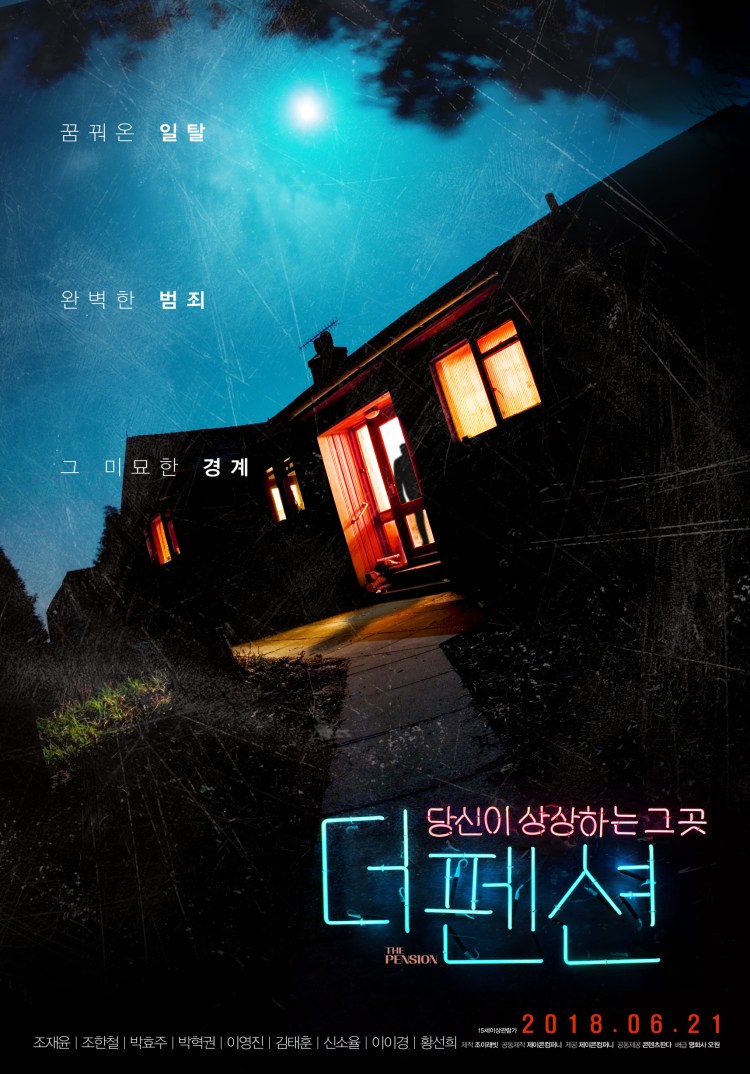
The Pension poster“We’re all lonely beings” the proprietor of a small mountain lodge advances hoping to comfort a distressed guest. The temporary denizens of The Pension (더 펜션), a four part omnibus set in a charmingly old-fashioned forest hideaway, are indeed mostly lonely beings making use of this liminal place to process the taboo away from the prying eyes of civilisation, embracing the savagery of the natural world as they cast off conventional morality to pursue their illicit desires be they vengeful, violent, protective or loving.

We begin with darkness as our first pair of guests, a man, Choo-ho (Jo Han-chul), and his wife Mi-kyung (Park Hyo-joo), seem to be all too interested in the family next door. Eventually we discover that the couple have come with ill intentions and revenge on their mind, though the man they’re after doesn’t seem so bad to begin with – he asks them to dinner with his wife and son who seem happy, but the atmosphere grows tenser as he begins to drink and a darkness creeps in. Before long Mi-kyung has set her mind on poetic justice, leaving the other couple’s young son in peril while Choo-ho struggles with his desire to stop his wife making a terrible mistake while not wanting to upset her.

Unhappy families continue to be theme with the second pair of guests – a married couple hoping to rekindle their listless romance in the peace and tranquillity of the remote mountain lodge. While the arrival is pleasant enough, perhaps too much so as the husband (Park Hyuk-kwon) puts on a show of making the effort, despair creeps in when he realises he’d made sure to bring his wife’s (Lee Young-jin) favourite coffee but forgotten the grinder. He wants her all to himself, but she just wants to go home and worries about their young daughter staying with a mother-in-law she doesn’t seem to like very much. Eventually the couple decide they need some time apart and she ends up meeting someone else (Kim Tae-hoon) in the woods to whom she recounts all the loneliness and isolation she experiences in her married life, seemingly trapped by conventionality but unconvinced that anything would be very different if she left.

The hotel owner (Jo Jae-yoon) might agree with her – a lonely soul he is too, though it appears he opened this hotel for just that reason, burying himself away from his heartache by coming to live alone with the transient presence of strangers and peaceful isolation of the woods. His mother, however, is not convinced and is constantly nagging him to get married – in fact, she’s set up a meeting for the following day meaning he’ll have to close the shop. That might be a problem, because he gets a surprise guest in the middle of the night, a distressed woman (Shin So-yul) intent on staying in a very particular room. Finding it odd, he can hardly turn her away with nowhere else to go but a TV programme on the causes of suicide (loneliness, the decline of the traditional family, economic pressures etc) convinces him he ought to check on her. Assuming she is merely lovelorn (as is he), he tries to comfort her with platitudes but pulls away from her emotional need only to find himself eventually wounded only in a much more physical way as he idly fantasises what it might have been like if he’d gone back to her room and been a bit more sympathetic.

Our proprietor is notably absent in the final segment, replaced by a much younger man (Lee Yi-kyung) with much more urgent desires. Despite being there to do a job, the boy has brought his girlfriend whom he alienates by failing to explain a mysterious text from another girl all while making eyes at the attractive young woman (Hwang Sun-hee) staying next door who claims to be “from the future”. When another guest turns up and starts making a fuss about a missing engagement ring she supposedly left behind, everything becomes much more complicated than it seems but one thing is certain – there is precious little love to be found in this hotel where everyone has come to embrace the side of themselves the city does not allow to breathe.

Much more cynical and obviously comedic than the preceding three tales, the final chapter perhaps bears out the message that it’s not so much rest and relaxation people have come to The Pension for, but “privacy” or to be more exact “discretion”. Some came for love, others for lack of it, but all of them are looking for something they are unlikely to find here though the first couple could perhaps have found it if only they had stuck together. Nevertheless, hotels are transient places for a reason – take what you need from your stay and leave the rest behind.


The Pension screens as part of the eighth season of Chicago’s Asian Pop-Up Cinema on April 16, 7pm, at AMC River East 21.

International trailer (English subtitles)

Small Talk (日常對話, Huang Hui-Chen, 2016)

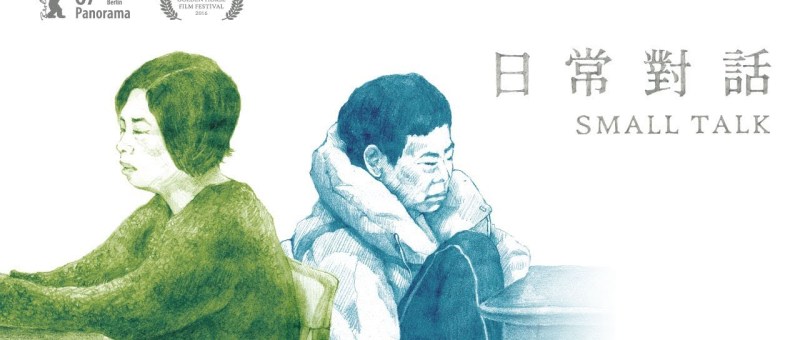
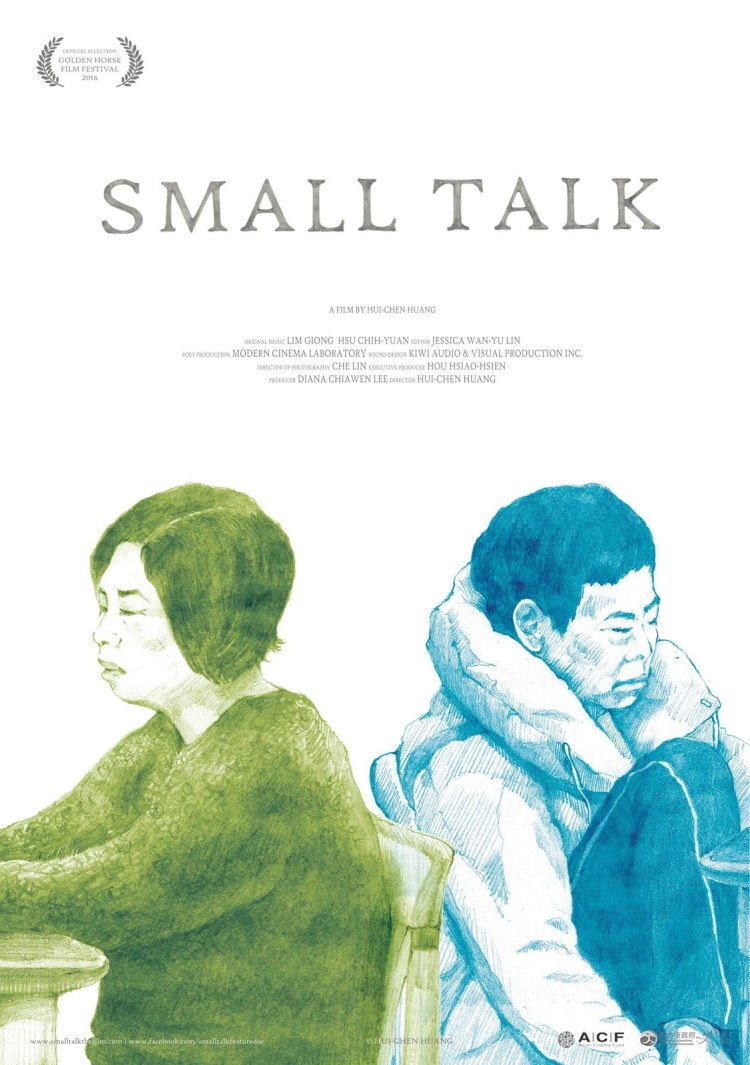
Small talk poster“Who would want to understand me?” asks the laconic mother of filmmaker Huang Hui-Chen early in her autobiographical documentary, Small Talk (日常對話, Rì Cháng Duì Huà). “We do” the director replies, “but you won’t let us”. Huang’s film is, in a sense, an attempt to break through an emotional fourth wall in order to make sense of her complicated relationship with her distant mother Anu if only to ensure that her own daughter never feels as rejected or isolated as she herself has done living under the same roof with a woman she cannot quite claim to know.

In fact, Huang’s childhood memories of her mother are mainly to do with her absence. Even her younger sister eventually remarks that she always felt as if her mother was uncomfortable at home, preferring to spend time out with her friends rather than with her children. Forced to join her mother in her Spirit Guide business rather than attend school like the other kids, Huang began to resent her but also longed to be close to Anu despite her continuing distance. This desire for closeness is, ironically, only achieved through the introduction of the camera, acting as an impartial witness somehow uniting the two and making it possible to say the things which could not be said and ask the questions which could not be asked.

For Huang, the central enigma of her mother’s life is why she married man and had two daughters if she always knew she was gay. That her mother is a lesbian is something Huang always seemed to just know – it’s not as if Anu ever sat her down and explained anything to her, she gradually inferred seeing as her mother had frequent female partners and seemed to prefer spending time with groups of other women. Putting the question to her extended family perhaps begins to illuminate part of an answer. Like Anu, they will not speak of it. They claim not to know, that they do not want to know, and that they would rather change the subject. Even Anu, who otherwise seems to have no interest in hiding her sexuality, remarks that it “isn’t a good thing to talk about”. Nevertheless, her marriage seems not to have been a matter of choice. In those days marriages were arranged by the family, which is perhaps how she ended up with a man her sister describes as “no good” who later became a tyrannical, violent drunk she eventually had to flee from and go into hiding with her two young daughters.

Abusive marriages become a melancholy theme as Anu briefly opens up to recall throwing away sleeping pills her own mother had begun to stockpile in desperation to get away from her violent husband. A former girlfriend also mentions having divorced her husband because he was abusive, but seems surprised to learn that Anu had been a victim too. According to her, Anu had told her she was married once but only for a week and that her two children were “adopted”. Of course, this is mildly upsetting for Huang to hear, but seems to amuse her in discovering her mother’s tendency to spin a different yarn to each of her lovers to explain the existence of her family while also distancing herself from it. This seems to be the key that eventually unlocks something of Anu’s aloofness. Humiliated by her capitulation to marriage and then by her mistreatment at the hands of her husband, she cannot reconcile the two sides of her life and has chosen, therefore, to reject the idea of herself as a mother. Something she later partially confirms in admitting that though she does not regret her daughters, given the choice she would not marry again, not even if same sex marriages were legal believing herself to be the sort of person best off alone.

Huang interrogates her mother with a rigour that is difficult to watch, often to be met only with silence or for Anu to walk away with one of her trademark “I’m Off”s. It may be true that most people have something they would rather not talk about, and perhaps Anu is entitled to her silence but if no one says anything, then nothing will change and the cycle of love and resentment will continue on in infinity. Using the camera as a shield, Huang brokers some painful, extremely raw truths to her elusive mother and does perhaps achieve a moment of mutual catharsis but is also too compassionate to satisfy for laying blame, exploring the many social ills from entrenched homophobia to persistent misogyny and even the class-based oppression hinted at by the use of native dialect rather than standard Mandarin which help to explain her mother’s complicated sense of identity. Yet she does so precisely as a means of exorcising ghosts more personal than political in the hope that her own daughter will grow up to know that she is loved, unburdened by a legacy of violence and shame, and free to live her life in whichever way she chooses.


Small Talk was screened as part of the Taiwan Film Festival UK 2019.

Original trailer (English subtitles)

Udine Far East Film Festival Confirms Lineup for 21st Edition

47541986391_dbe90761ea_oThe Udine Far East Film Festival returns for its 21st edition on April 26! As usual, the festival has brought together some of the most highly anticipated East Asian cinema releases with 77 films included in this year’s programme including a retrospective strand dedicated to classic Korean cinema and sidebar on Korean indie comedy. This year’s guests of honour are veteran Hong Kong star Anthony Wong who will be receiving the festival’s Golden Mulberry Award, and Chinese superstar Yao Chen.

China

A Cool Fish Banner

  • A Cool Fish – comedy crime caper in which two losers, a woman in a wheelchair, and a dejected security guard get mixed up in a strange series of coincidences. Review.
  • Crossing the Border – heartwarming drama in which a grandpa goes on a tractor roadtrip with his 6-year-old grandson.
  • The Crossing – a teenage girl becomes a mobile phone mule in Bai’s sensitive coming of age drama. Review.
  • Dying to Survive – dark comedy drama in which an aphrodisiac seller becomes rich smuggling generic cancer medication.
  • Lost, Found – remake of the Korean film Missing in which a lawyer in the middle of a custody dispute discovers her nanny has disappeared with her daughter.
  • Pegasus – New Year comedy drama in which a disgraced middle-aged racing driver tries to make a comeback. Review.
  • The Rib – a trans woman tries to get the approval of her devoutly religious father.
  • When Love Blossoms – a Beijing delivery boy is inspired to pursue his secret crush on a real estate agent who is also his roommate.

Hong Kong

Project Gutenburg still 1

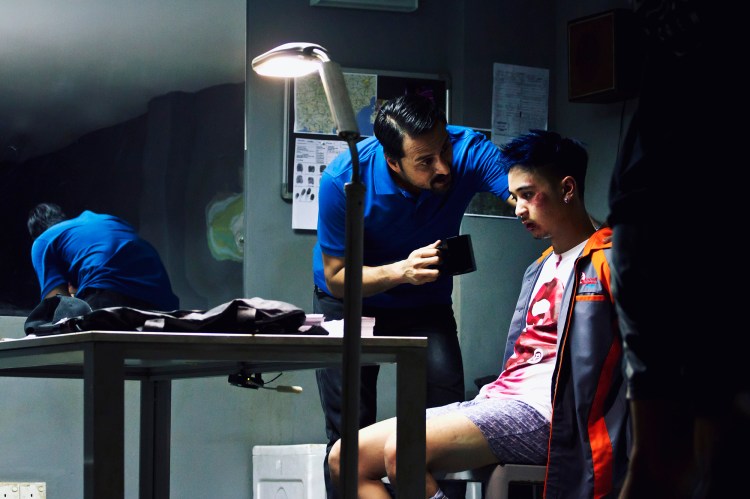
  • Bodies at Rest – a pathologist and his assistant are suddenly accosted by crooks wanting access to a body in Renny Harlin’s action drama.
  • A Home with a View – Mr. Lo sinks all his savings and his father’s pension into buying a flat which has a view of the ocean that calms the rowdy family down, but one day their lovely view is suddenly blocked by an illegal billboard in a dark family comedy from Herman Yau.
  • Hotel Soul Good – comedy in which a hardbitten exec starts seeing ghosts and then forces them to open a hotel with her.
  • Master Z: The Ip Man Legacy – spin-off / sequel to Ip Man 3 starring Max Zhang and directed by Yuen Woo-ping.
  • Missbehavior – New Year rom-com from Pang Ho-cheung in which a secretary tries to replace a bottle of breast milk belonging to her boss after accidentally using it to make coffee for a client.
  • Project Gutenberg – twisty action drama from Felix Chong starring Aaron Kwok and Chow Yun Fat. Review.
  • Still Human – Intouchables-esque drama starring Anthony Wong as a man in a wheelchair who doesn’t immediately take to his Filipina carer.
  • Three Husbands – Fruit Chan satirises modern Hong Kong through the story of a sex worker with a high libido who lives on a boat with her three husbands.

Indonesia

212 warrior

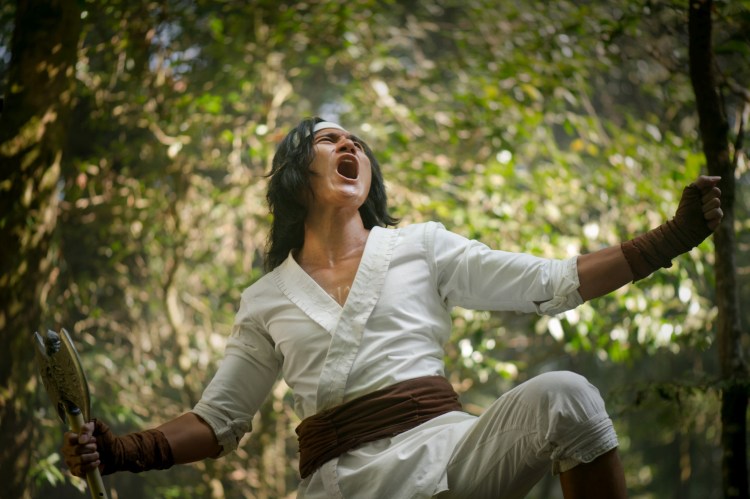
  • 212 Warrior – historical martial arts action comedy.

Japan

dare to stop us still 1

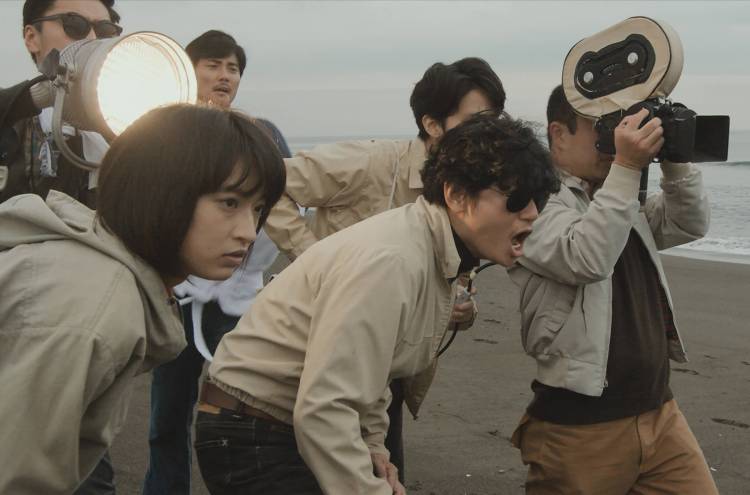
  • Dare to Stop Us – drama directed by Kazuya Shiraishi set at Wakamatsu Productions in the early 1970s.
  • Every Day a Good Day – tea ceremony drama featuring one of the last screen performances by the late Kirin Kiki.
  • Fly Me to the Saitama – local humour comedy in which residents of Saitama have been relegated to second class citizens. Review.
  • HARD-CORE – robot comedy from Nobuhiro Yamashita.
  • Jam – absurdist comedy from SABU in which a singer is kidnapped by a crazed fan.
  • JK Rock – comedy in which a washed up rocker mentors a girl group.
  • Lying to Mom – black comedy in which a family keep up the pretence that their oldest son who committed suicide is alive and well in Argentina.
  • Melancholic – a dejected university graduate takes a job in a bathhouse but discovers it is used as a location for killing after hours.
  • Only the Cat Knows – a disappeared cat places a wedge between husband and wife.

Malaysia

fly by night still 1

  • Fly by Night – taxi drivers running an extortion scam become embroiled in crime conspiracy
  • Motif – a policewoman investigating the disappearance of a teenage girl in a small town finds herself digging deep into family secrets.
  • Two Sisters – horror in which a woman is released from a psychiatric hospital and returns to live with her sister only to encounter dark family secrets.

The Philippines

47542035261_7d0d676976_o

  • Eerie – a clairvoyant guidance counsellor investigates the deaths of a series of girls at a convent school in Mikhail Red’s supernatural drama.
  • Heaven’s Waiting – two old souls trapped in purgatory find each other in Dan Villegas’ supernatural romance.
  • Miss Granny – Filipino remake of the classic Korean musical comedy in which an old woman becomes young and gets to relive her youth.
  • Signal Rock – indie drama set in an island community where a brother determines to help bring his sister and her daughter home to the Philippines on learning that she is in an abusive relationship abroad.

South Korea

Believer still 1

  • Believer – Korean remake of Johnnie To’s Drug war. Review.
  • Birthday – melancholy family drama exploring the aftermath of the Sewol ferry tragedy.
  • Door Lock – remake of Spanish film Sleep Tight in which a woman living alone suspects a stranger has been breaking in to her home.
  • Default – drama exploring the 1997 Asian Financial Crisis.
  • Extreme Job – bumbling police officers go undercover running a chicken restaurant to catch drug dealers but the restaurant ends up taking off.
  • The Great Battle – historical drama centring on the siege of Ansi Fortress.
  • Innocent Witness – Jung Woo-Sung stars as a lawyer defending a housekeeper accused of murdering her boss who discovers the only witness to the crime is an autistic teenage girl.
  • Intimate Strangers – Korean remake of the Italian film Perfect Strangers in which dinner party guests unwisely agree to share all their incoming mobile messages.
  • The Odd Family: Zombie on Sale – comedy in which a family’s life is disrupted when dad gets bitten by a zombie.
  • Rampant – historical zombie action starring Hyun Bin.
  • Romang – romantic melodrama in which an elderly couple fall in love all over again while suffering with dementia.
  • Unstoppable – Ma Dong-seok stars as a former gangster hot on the trail of human traffickers who’ve made the mistake of kidnapping his wife.

Singapore

konpaku

  • Konpaku – A young man upset after his girlfriend leaves him ends up in a relationship with the sensuous Midori but is disturbed when strange things start happening to those close to him.

Taiwan

More than blue still 1

  • The Devil Fish – spin-off/sequel to the Tagalong franchise this time revolving around an urban legend about a fish with a human face.
  • More than Blue – remake of the Korean romantic melodrama in which two young people try too hard to please each other. Review.
  • The Scoundrels – action drama in which a former basketball player gets mixed up in crime.

Thailand 

47489432632_1103a63727_o

  • Krasue: Inhuman Kiss – an innocent village girl discovers she is a victim of a strange curse in which her head detaches from her body to hunt for blood!
  • Reside – haunted house horror starring Ananda Everingham.

Vietnam

47585242932_0a092b7ec6_o

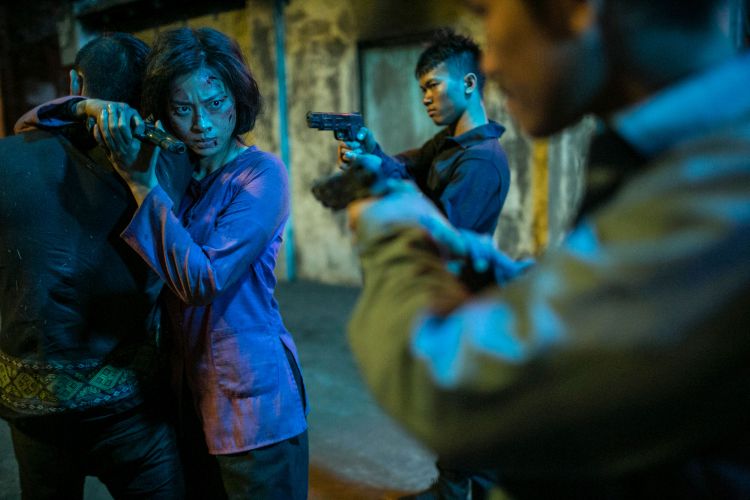
  • Furie – some thugs make a very bad decision when they kidnap a former gangster’s daughter.

Documentaries

47536019831_4ecb80fed6_o

  • BNK48: Girls Don’t Cry – Thamrongrattanarit Nawapol interviews members of the Thai idol group.
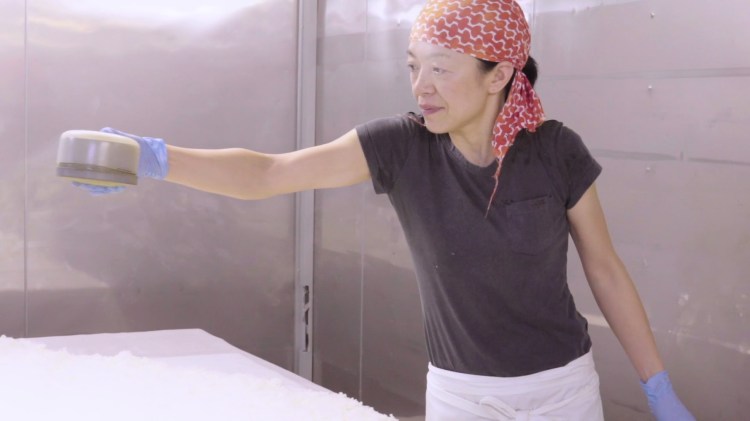
  • Kampai! Sake Sisters – documentary following three women in the historically male sake world.
  • People’s Republic of Desire – documentary exploring the growing Chinese online streaming industry. Review.
  • YI DAI YI LU – One Belt One Road – Italian documentary exploring the One Belt One Road initiative.

The Odd Couples

47489613742_b62f29b9e1_o

  • The World of Suzie Wong – classic 1960 British/American HK drama in which an American artist falls for a sex worker.
  • My Name Ain’t Suzie – 1985 HK drama following a 1950s bar girl.
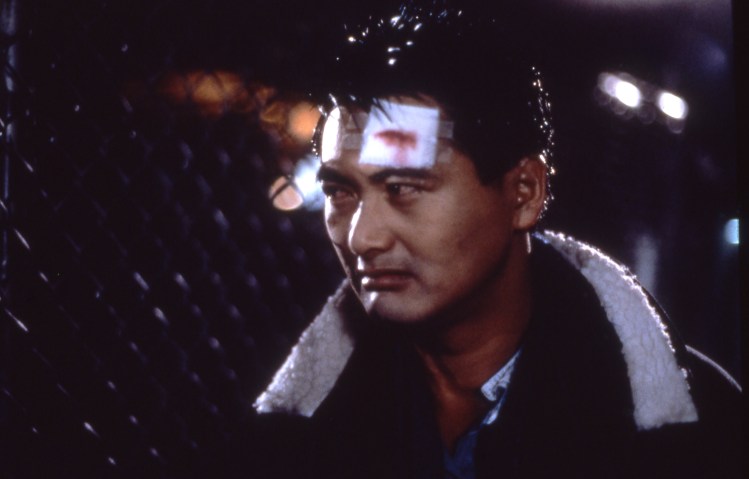
  • City on Fire – 1987 Ringo Lam classic starring Chow Yun-fat and Danny Lee in which an undercover cop infiltrates a gang of thieves only for the operation to go very wrong.
  • Reservoir Dogs – Tarantino’s 1992 crime drama.

100 Years of Korean Cinema:
I Choose Evil – Lawbreakers Under the Military Dictatorship 

black hair still 1

  • Black Hair – Lee Man-hee classic from 1964 in which a betrayed gangster’s moll mulls going straight thanks to the attentions of a cheerful cabbie. Review.
  • The Body Confession – Jo Keung-ha’s 1964 melodrama in which a woman turns to sex work to raise her three children.
  • A Day Off – Lee Man-hee’s bleak 1968 melodrama following an impoverished couple as they face an impossible situation. Review.
  • Promise of the Flesh – 1975 melodrama from Kim Ki-young in which a young woman on temporary release from prison meets man and promises to meet him two years later.
  • Jagko – Im Kwon-taek pioneers the division film in exploring the parallel fates of a partisan and the man who failed to catch him in the very different world of 1980. Review.
  • The Last Witness  – a detective’s investigation of a brewery owner’s murder takes him right into the dark heart of the recent past in Lee Doo-yong’s powerful drama. Review.
  • Ticket – 1985 Im Kwon-taek drama exploring the lives of five “coffee girls”.
  • Lovers in Woomukbaemi – Jang Sun-woo’s 1990 romantic melodrama stars Park Joong-hoon as a henpecked husband who begins an affair with a battered wife. Review.

Info Screenings 

10 Years Japan still 1

  • A First Farewell – A muslim boy in Xinjiang prepares to say goodbye to his deaf/mute mother when his father decides to put her into a nursing home.
  • Ten Years Japan – omnibus film featuring five visions of near future Japan. Review.
  • Ten Years Taiwan – omnibus film featuring five visions of near future Taiwan.
  • Ten Years Thailand – omnibus film featuring five visions of near future Thailand.

Korean Independent Comedies

Coffee Noir

  • Coffee Noir: Black Brown – prohibition-themed comedy as a barista turns her coffee shop into a speakeasy following the outlawing of the beverage.
  • Passing Summer – A couple running a Jeju hotel are stunned when a pair of faces from the past turn up as guests.
  • Saem – a man goes to Seoul to look for his first love but has a rare condition in which he is unable to recognise faces.

Restored Classics 

wheel of Life

  • A Speck in the Water – 1976 Philippine fishing village drama from Ishmael Bernal
  • The Wheel of Life – Omnibus film featuring three tales directed by King Hu, Li Hsing, and Pai Ching-jui in which the same two actors play lovers across different ages.

The 21st Udine Far East Film Festival runs from 26th April to 4th May 2019. Full details for each of the films will be available shortly via the official website where you will also be able to find the daily screening schedule. Screenings take place both at the Teatro Nuovo and Cinema Centrale. You can keep up with all the latest festival news via the festival’s Facebook PageInstagram and YouTube channels, Twitter account, and Tumblr.

God Man Dog (流浪神狗人, Chen Singing, 2007)

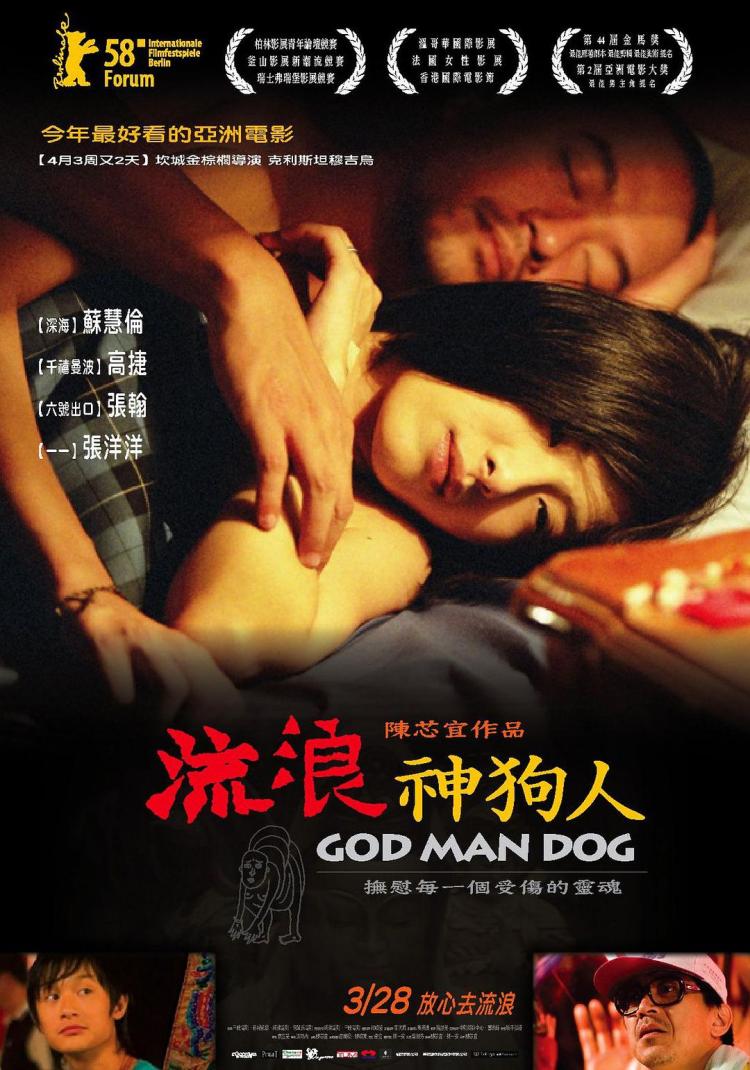
God Man Dog posterEverybody’s looking for something but mostly in all the wrong places in Chen Singing’s spiritually inclined God Man Dog (流浪神狗人, Llàng Shén Gǒu Rén). Lonely and disaffected, Chen’s portrait of contemporary Taiwan is of an island set adrift with no clear path to the future and no reliable guides to follow. Many turn to religion, be it Eastern or Western, while others embrace consumerism or literally fight to find a way out while refusing to let those around them drag them down. Cosmic coincidence does perhaps begin to show them the way, but it’s less a matter of faith than chance as they each find opportunity to refocus and reclaim what it is they really wanted out of life.

Hand model Ching (Tarcy Su) is suffering from postnatal depression after the birth of her first child but her husband, Hsuing (Chang Han), remains detached and insensitive – running off to new age country retreats to avoid the strain of caring for his delicate wife and baby daughter. Meanwhile, an indigenous couple have lost a child of their own and then suffered the departure of both their daughters because of the father’s persistent alcoholism. Their daughter, Savi (Tu Hsiao-han), is living in Taipei with a beauty obsessed friend who’s doing dodgy modelling to pay for a boob job while Savi works hard on her martial arts as a possible path out of rural poverty. A chance encounter brings her into contact with mysterious Buddha bus driver Yellow Bull (Jack Kao) who is saving money to pay for a new prosthetic leg while making a point of rescuing and reviving the many broken and abandoned Buddha statues which seem to call out to him from around the island, adopting a stray child, Xian (Jonathan Chang), in the process.

Everybody here wants something that they aren’t convinced they can have. The upper middle class couple Ching and Hsuing might seem comfortable enough but are filled with spiritual emptiness and feel trapped by conventionality. They’ve started to drift, and the baby far from bringing them together has only forced them further apart in thinly veiled mutual resentment. Hsuing refuses to play any role in caring for his daughter, or in trying to care for Ching whose dangerously deteriorating mental state seems to be receiving almost no support from family or medical personnel even when she tries to ask for it. In desperation she turns to Christianity, creating a further rift between herself and the intensely Buddhist Hsuing (not to mention his fortune telling obsessed mother).

Christianity is also a dominant force in the life of the indigenous couple who have been participating in AA meetings led by the local church in an effort to get their daughters to return though their faith is beginning to wane thanks to constant setbacks and the lingering conviction God has it in for them. Only through an improbable encounter with the Goddess of Mercy sitting beatifically on the back of Yellow Bull’s truck does the drunken father begin to wake up in making a symbolic act of sacrificial recompense in the hope of being forgiven for a transgression he did not perhaps wholly make. Guanyin, apparently, is there for them even if God was sleeping.

The indigenous couple, whose land is being infringed on by those like Hsuing who want to repurpose it to turn the beautiful natural surroundings into man made spas and thereby turn spiritual peace into a marketable commodity, tried to escape their troubles via alcohol and then turned to religion to save them from drink only to find it not quite as supportive as they’d hoped. Then again, kindly Yellow Bull stuffs his fortune telling box full of positive fortunes because, after all, people looking for fortunes are looking for hope so perhaps it’s not so much that Buddhism is “better” than Christianity, as it is that people are basically good and in the end that’s what you ought to have faith in. On the other hand, Savi and her friend end up making extra pennies through a fake dominatrix double act during which the girls rob their sleazy johns in a potentially dangerous piece of societal revenge that is, ironically, her friend’s plan to save money for a boob job to conform to those same patriarchal conventions they were just superficially rebelling against.

In any case, some kind of cosmic force eventually pulls them all together through the intervention of the many “abandoned” stray dogs who run free across the landscape, as does one supposedly million pound pedigree pup after making a break for freedom as the sole survivor of a nasty car wreck. “Freedom” might mean different things to different people at different times, but each of these lonely souls is in a sense trapped by their own sense of disconnection and the anxiety of feeling abandoned by those around them. Dogs, or maybe gods, bring them back together and accidentally reawaken their faith in themselves and each other to send them back out into the world with slightly lighter hearts if in acceptance more than hope.


God Man Dog was screened as part of the Taiwan Film Festival UK 2019. Also available on DVD in the UK courtesy of Terracotta Distribution.

UK Terracotta release trailer (English subtitles)

Father (紅盒子, Yang Li-Chou, 2018)

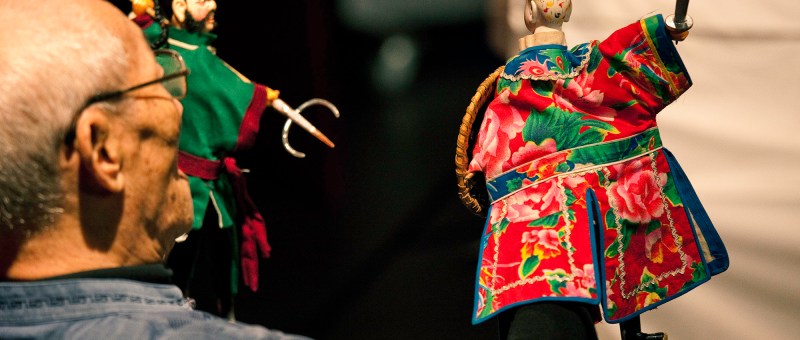
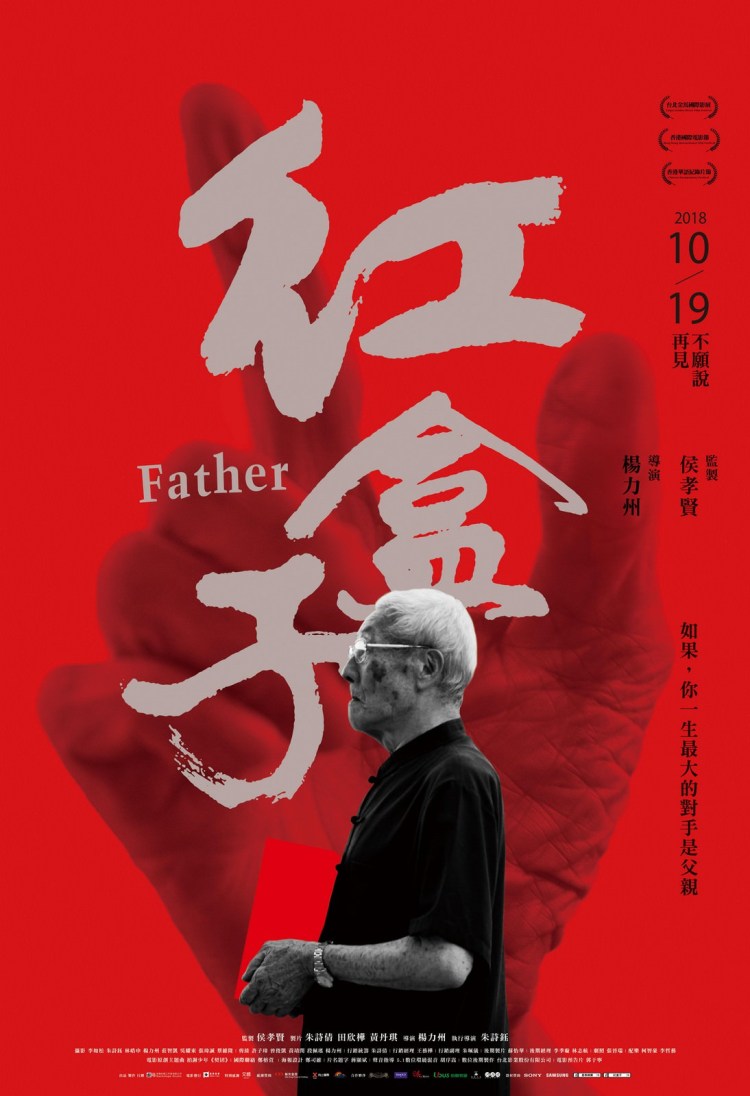
Father posterBudaixi, the art of traditional Taiwanese puppet theatre, is a form that’s fast dying out – not least because of the persistent erosion of the native Taiwanese dialect with which it is most closely associated, but there are those desperately trying to save it despite the relative lack of interest from audiences and the cultural sector. The “father” of the art, Li Tien-Lu, will be familiar to many as the inspiration behind Hou Hsiao-Hsien’s The Puppetmaster, as well as several appearances in Hou’s films including his memorable role as the grandfather in Dust in the Wind. It is not Li, however, who is the subject of Yang Lichou’s documentary but his son – Chen Hsi-huang.

Chen Hsi-huang, now very elderly, is an exiled master of the art who has dedicated his remaining time to ensure its survival by attempting to teach the next generation. Chen is not fussy – he will teach anyone who wants to learn including those from abroad and frequently tours his shows around the world often pairing them with local examples of puppet theatre. His standards are, however, high and he does not entirely approve of the “modernisation” of the art believing that while innovation is one thing technique is another and what he sees in the next generation often disappoints him.

Yang opens with a hypnotic sequence of Chen’s naked hand rehearsing doll movements against a black screen, showcasing his now gnarled fingers bearing the effects of a lifetime’s experiences. Yet despite his various successes, Chen still feels himself slighted and as if he has something left to prove – perhaps ironically, he cannot seem to emerge from the shadow of his late father even now himself in advanced old age. Yang’s subtle suggestion lays the blame for Chen’s internalised resentment on the confucian society and its patriarchal obsession with the “father”. Li had married into his wife’s family and so, as is the custom, his first son took his mother’s surname – Chen, something which seems to have placed a wedge between parent and child leaving Chen more or less rejected by his father simply for having the wrong name. For this reason, he was prevented from inheriting Li’s puppetry company (that honour went to his younger brother surnamed Li) which might, in a way, have been a blessing in giving him the opportunity to remove himself and start again with his own company under his own name were it not for the fact that he is almost always introduced as the son of Li Tien-Lu.

In the traditional arts, it is not uncommon to think of a master as a “father” to his pupils and this does seem to be something Chen took to heart for good or ill. His own father had been extremely strict, often beating him with the head of a doll when he made a mistake. Chen is careful not to make the same mistake with his pupils, but is demanding none the less and often disappointed. His fatherly fixation is perhaps mirrored in his mild rejection of his own first pupil, standing in for a son (his own child did not follow him into the profession), whom he declined to name as a successor despite knowing that he is the most skilled member of the troupe. Somewhat embittered, Chen struggles to escape from the traps set by his father both in terms of his life and of his art.

Chen’s story feeds into that of Budaixi, set against 50 turbulent years of political history which saw it banned by the Japanese for being too nationalist, then defacto banned because of a prohibition on native dialects only to be resurrected in Mandarin to be used for anti-communist propaganda and then the same but pro-China. Chen just wants to be a craftsman perfecting his technique and serving the patron god of puppeteers as best he can. As one of his pupils suggests, regarding Budaixi as an “art” and its practitioners “artists” may perhaps have been a mistake in encouraging the wrong kind of competition and thereby weakening the industry as a whole just when it should be uniting in a shared mission to save Budaixi from disappearing completely.

Chen too struggles to emerge from his father’s shadow, perhaps gripping on too tightly to traditional Budaixi while rejecting its progeny in the burgeoning world of contemporary puppet theatre. Nevertheless, he was able to become a master of the art and to pass his knowledge on to a new generation committed to preserving it even in the face of mild opposition to a supposedly difficult, if infinitely beautiful, art form.


Father (紅盒子, Hóng Héziwas screened as part of the Taiwan Film Festival UK 2019.

Original trailer (English subtitles)

Long Time No Sea (只有大海知道, Heather Tsui, 2018)

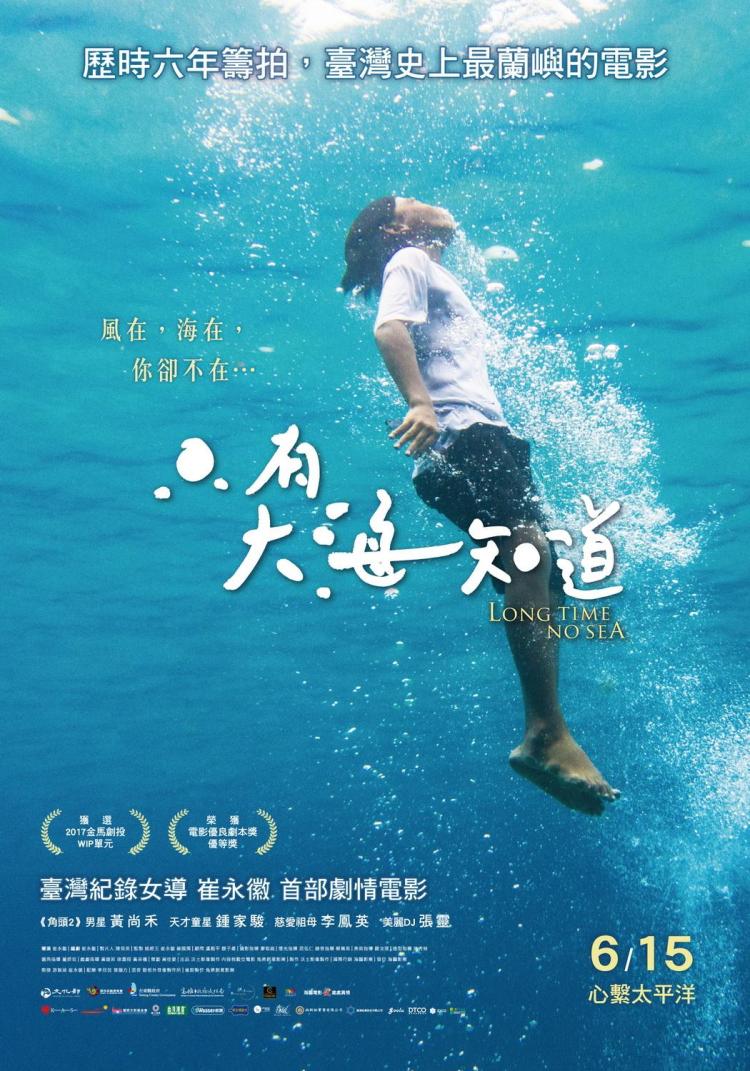
Long time no sea posterWhile Taiwanese cinema has not been an exclusively urban affair, Taipei stories have tended to loom large, perhaps presenting an unfairly uniform view of what is in reality an extremely diverse cultural landscape. The debut film from Heather Tsui (Tsui Yung-hui), Long Time No Sea (只有大海知道, Zhǐ Yǒu Dàhǎi Zdào) is set on one of Taiwan’s many islands and among the indigenous Tao whose culture is perhaps being gradually erased thanks to the increasing demands of the modern society and its constant pulls towards the city. A coming of age tale in more ways than one, Tsui’s debut is also a heartrending exploration of learning to cope with parental disappointment while also learning to reappreciate the beauty of island life which might before have seemed unexciting in contrast to city glamour.

The hero, Manawei (Pangoyod Si / Zhong Jia-jin), lives alone with his grandmother (Feng Ying-li) and uncle while his father works as a taxi driver in Kaohsiung. The family is not hungry, but they live humbly and rely on money sent by Manawei’s father whose visits are becoming ever more rare. Missing his dad terribly, Manawei is sometimes resentful towards his grandmother, rejecting her home cooked island fare while longing for junk food and jealous of his friend whose mother, also working in the city, is doing much better and can afford to send him expensive toys as a kind of recompense for rarely being able to come home. Manawei, meanwhile, has been badgering his dad to buy him new shoes for the past few years (his own are so worn out he can no longer even glue the soles back together), and has been reduced to wearing flip flops to school.

The flip flops eventually get him into trouble with authoritarian schoolteacher Chung-hsun (Shang He-huang) who he first met rescuing his sunglasses from the harbour after Chung-hsun lost them in a bout of violent sea sickness. A middle-class city guy, ending up on Orchid Island isn’t something Chung-hsun was looking for and he’s intensely resentful of his new posting, particularly as it’s taken him away from a girlfriend he fears is losing interest. This is perhaps why he’s so hard on his new pupils, roughly berating Manawei for turning up late and in flip flops with no attempt to find out if there might be a reason for his behaviour. Needless to say, his approach backfires in making the boy reluctant to come to school at all in reinforcing his embarrassment over not being able to afford proper shoes.

Long Time No Sea is as much a coming of age tale for Chung-hsun as it is for Manawei as he begins to accept his position as a surrogate parent for his pupils, many of whom are living with relatives (or even alone, at least partially) while their mothers and fathers are away working in the city. This is perhaps why there are relatively few young adults on the island which is home mostly to children and the elderly as well as middle-aged returnees and the few who’ve decided they like the island life best such as radio host Chin-yi (Zhang Ling) who is currently supplementing her income by helping out pretty much anywhere else she’s needed. Chung-hsun only decides to help out with a school entry into a national “traditional dance” competition because he thinks it might improve his prospects of getting off the island faster, but, partly thanks to Chin-yi, gradually begins to embrace the rich cultural history of the Tao while bonding with the kids and coming to the conclusion that perhaps the simple life is indeed best.

Meanwhile, Manawei comes to learn a similar lesson in an ordinary, if heartbreaking, way as he gradually begins to wonder if his father has emotionally abandoned him to make a new life in the city. While his grandmother speaks to him in the local dialect, which he obviously understands, he replies to her mostly in Mandarin and knows he will one day leave the island if only to pursue his education. Longing for his father, he idolises the city with its 24hr junk food and bright flashing lights but most of all for the river of love his father told him flows through it. Finally visiting Kaohsiung he is abruptly confronted with its reality and finds himself warming to his island home with its taro root and longan fruit, no longer tempted by superficial modernity. While Chung-hsun’s assertion that “it’s better with just one road” might be somewhat restrictive if not didactic, it is also a tribute to a simpler, more honest way of life in contrast to city duplicity and empty ambition. Beautifully photographed and evocatively scored, Long Time no Sea is an important window into the little seen indigenous culture of the Tao as well as into the economic realities of modern living and the painful processes of growing up no matter how old you are.


Long Time no Sea was screened as part of the Taiwan Film Festival UK 2019.

Original trailer (English subtitles)

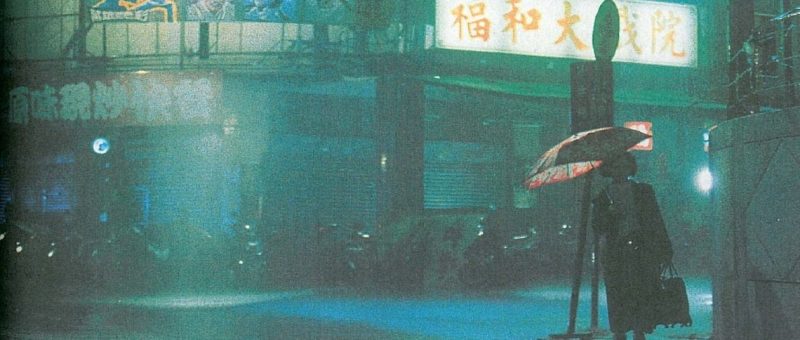
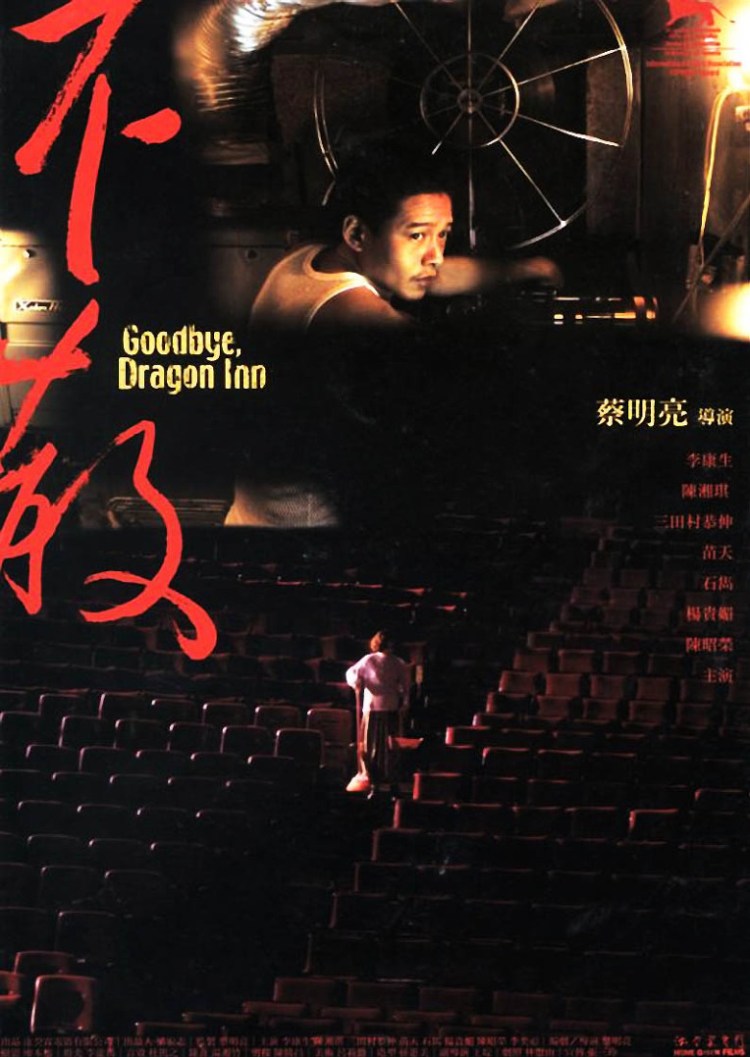
Goodbye, Dragon Inn (不散, Tsai Ming-Liang, 2003)

Goodbye, Dragon Inn poster“So much of the past lingers in my heart” laments the melancholy song which closes Tsai Ming-Liang’s Goodbye, Dragon Inn, (不散, sǎn) “I’ll remember with longing forever”. What is cinema if not an expression of irresolvable nostalgia, a kind of visual hiraeth for something that probably never quite existed but is so painfully missed. Everything in here stayed the same, but everything outside changed and now the present seems to be literally raining in leaving the last few fugitives from reality lost in halls of memory like lonely ghosts trapped on the wrong side of the screen.

On the wrong side of the screen is where we find ourselves. We begin in darkness with the opening narration from King Hu’s 1967 wuxia masterpiece Dragon Inn before the curtain in front of us begins to flicker and reveal an entire theatre filled with people. We pull back, and eventually the people are gone leaving just a few desperate souls returning to watch this now classic picture on what could be its very last evening as this theatre – now so unsuitable for the modern cinema environment, will be closing “temporarily” as soon as the reels stop turning.

Truth be told, no one much is even very interested in the movie. Some have merely come in to shelter from the rain, but unfortunately for them not even here is safe thanks to a leaky roof. The dazzling labyrinths of the backstage environment seem to have been co-opted by the local cruising community, men brushing past each other looking for another like them but needing to be sure their desires will be returned. Meanwhile they gaze at each other in the dim half light of the cinema screen, aching with unspeakable longing.

Longing is also something on the mind of an older gentlemen, seemingly the only one actually watching the film, who turns out to be one of its actors shedding a silent, solitary tear for time passed. Running into a friend much like himself outside he laments that “No one comes to the movies anymore”. Everyone has forgotten them, turning them into ghosts of cinema, immortal but unremembered. They have, in a sense, been attending their own funeral, entombed inside a moribund building lit only by spectres of the past.

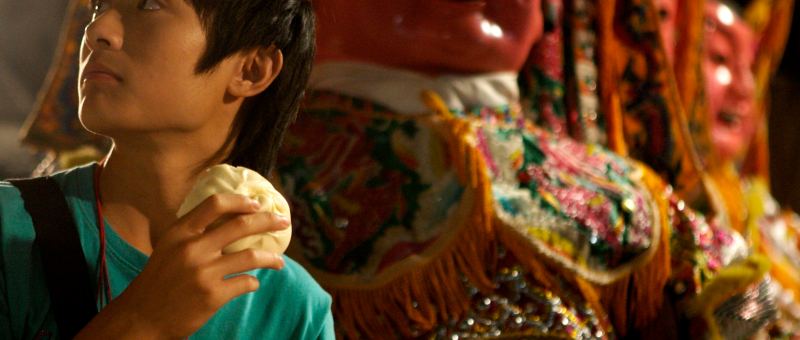
All this is, however, secondary to the backstage drama of the lonely box office cashier (Chen Shiang-chyi) and her inexpressible crush on the projectionist (Lee Kang-sheng) who never seems to be around when she needs him. Sadly cutting into a celebratory bun, she saves half of it for him – the least ambiguous expression of love which seems to be possible within this space. Slowly climbing the stairs with a lame leg, she gazes fondly at the screen while the heroine fearlessly dispatches a series of bad guys, but the light cast on her face seems only to emphasise her lack of courage before she sadly retreats back to the ticket booth where no customers require her services.

Meanwhile, in the auditorium, a young woman (Yang Kuei-mei) munches peanuts and throws her legs over the backs of the seats in front much to the chagrin of the confused tourist whose confusion seems only to deepen when the crushing noise stops and the woman disappears (unbeknownst to him she’s on a mission to retrieve a lost shoe, or perhaps has evaporated into thin air). The first words spoken, which occur at the 45 minute mark, are to state that this theatre is haunted. Departed spirits all, the lonely denizens are indeed haunting the room and themselves as they attempt to escape the relentless march of the modern world through self-internment in a damp and crumbling mausoleum of cinema.

A lament for a dying world stripped bare by the passage of time, Tsai’s exploration of urban loneliness is a nostalgic elegy for a simpler age, filled with unresolvable longing and the ironic misconnection of an individualised communal activity. Stillness and solitude define all for these lonely, disconnected souls chasing oblivion. The past can never return, nor can the missed opportunities and brief moments spent bathed in celluloid splendour, but then perhaps you wouldn’t want it to anyway because then you couldn’t miss it. “I’ll remember with longing forever” – romanticism at its finest, but it’s a trap that’s difficult to resist.


Goodbye, Dragon Inn screened at Tate Modern as part of the Taiwan Film Festival UK 2019 and The Deserted film series.

International trailer (dialogue free)

Liu Lian by Yao Lee – the poignant song playing over the end credits.

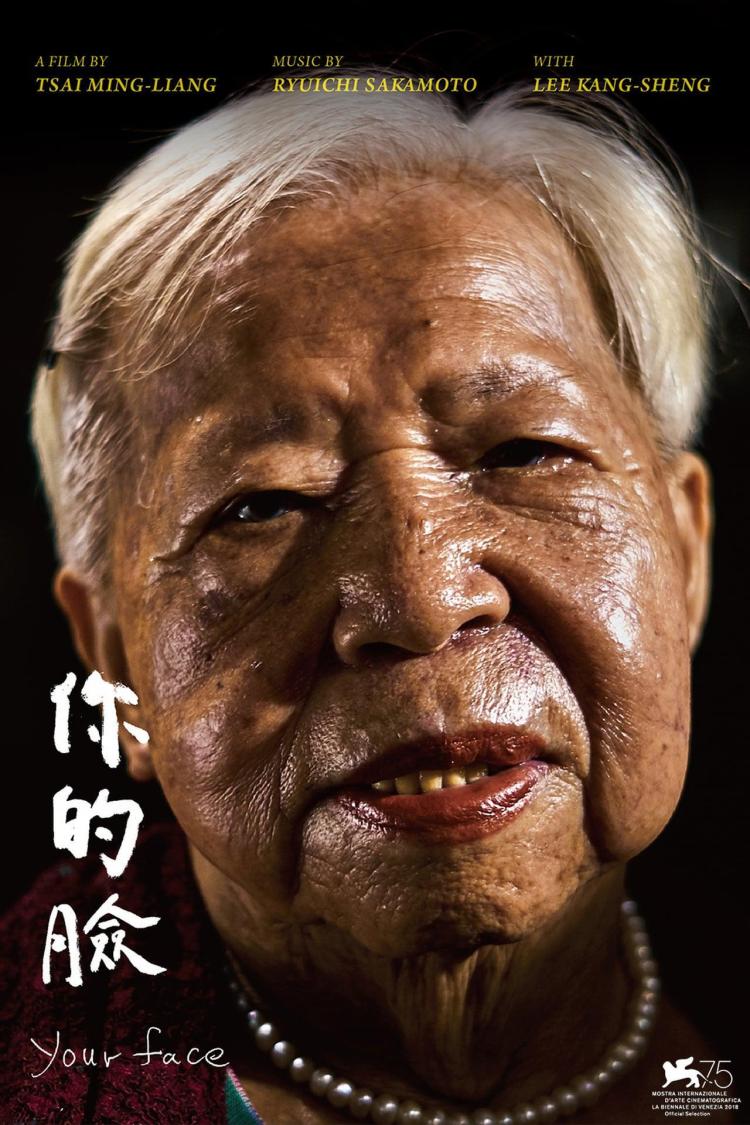
Your Face (你的臉, Tsai Ming-Liang, 2018)

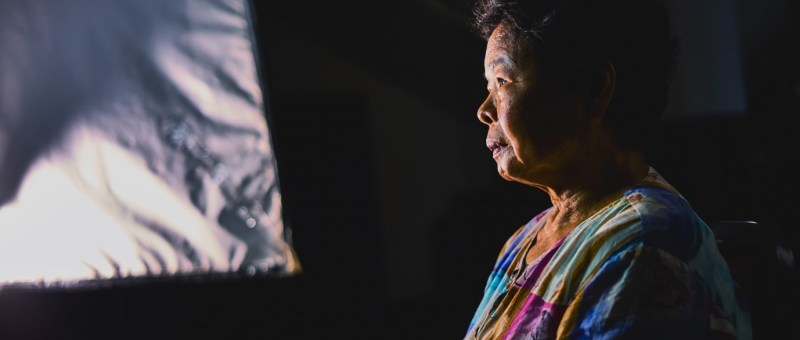
Your Face posterThe act of looking is an oddly intimate experience, which is perhaps why it becomes so uncomfortable to be looked at. The 13 souls who brave the camera for director Tsai Ming-Liang’s Your Face (你的臉, Nǐ de Liǎn) have all, obviously, given their consent to to become a subject for contemplation and are fully aware of being observed but still suffer the self-conscious embarrassment of being on show. That embarrassment is perhaps the point, pointing to a different kind of truth than the one we might have thought ourselves to be looking for but it’s also true that the camera becomes a kind of veil shielding us from our own anxiety safe in the knowledge that we can look all we please because we will never be seen.

Tsai’s subjects, aside from one or two, are mostly elderly residents of Taipei spotted by chance in the street and selected for their interesting faces. These faces, perhaps in contrast to those most often seen in cinema, are lined and worn. They wear their stories rather than tell them. Tsai gave few instructions, solely asking for an hour of time – 30 minutes spent in silence and 30 in conversation. The results are varied. Old men fall asleep, one plays a harmonica, a woman boils her life philosophy down to a love of making money, and a man laments a life wasted on pachinko and romantic disappointment.

Flickers of a smile erupt around a woman’s lips until she can’t contain her amusement any longer, finally breaking into a laugh in noting the strange incongruity of her position. It all looks so different on the screen than it looks at the scene. Tsai shoots in the same location as his earlier short Light, Zhongshan Hall – a public auditorium completed in 1936 when Taiwan was under Japanese rule (and therefore coincidentally close in age to many of Tsai’s subjects), but from different angles which almost obscure a sense of space until the hall itself gains its own portrait in the final shot, empty of life but somehow no longer passive.

Tsai encourages us to look deeply into the faces of others in manner which would be inappropriate in any other context. Yet the faces themselves react to Tsai’s camera and the people standing behind it. They do not and cannot react to us, except in an abstract sense, while we lurk behind a two way mirror protecting our own fragile senses of self from the same kind of scrutiny. Yet there is a kind of commonality in the way in which those on each side of the screen reach a point of mutual vacancy during which something else begins to emerge. The subjects fall into a kind of reverie, be it a literal sleep or motion towards activity such that of as one lady who decides to show off some of her “exercises” designed to stave off the effects of old age.

Those moments of activity, however, in breaking the stillness rupture the sense of contemplation in simply beholding an unfamiliar face. The ordinary had become uncanny, but now we have other concerns, narrative concerns with which to engage on an intellectual rather than instinctive level. On hearing the story, we forget about the face and concentrate on words while also forgetting that these stories are not really being told to us but to whoever is behind the camera and that the subject may also have lost consciousness of the camera itself while concentrating on relating their truth.

Then again, Tsai rejects the medium of documentary and we have only our own assumption that what we’re told is authentic and offered in the natural feeling of the moment. This is particularly true of the final subject who happens to be Tsai’s longterm muse Lee Kang-sheng (whose mother also appears in the film). Lee too muses on his family history, offering a meta comment on his face and its transitory likeness to that of his father, lamenting that though they say Lee’s father looked like him when he was young Lee knows that in “reality” he no longer is. Tsai’s camera turns its lens on ageing, on changes superficial and spiritual while remaining rooted to the spot as if fighting for an impossible objectivity. Closing in an empty room, Tsai nevertheless finds the light and the soul in the stonework as if to suggest that perhaps it wasn’t faces that were so important after all.


Your Face screened at Tate Modern as part of the Taiwan Film Festival UK 2019 and The Deserted film series.

Festival trailer (English captions)