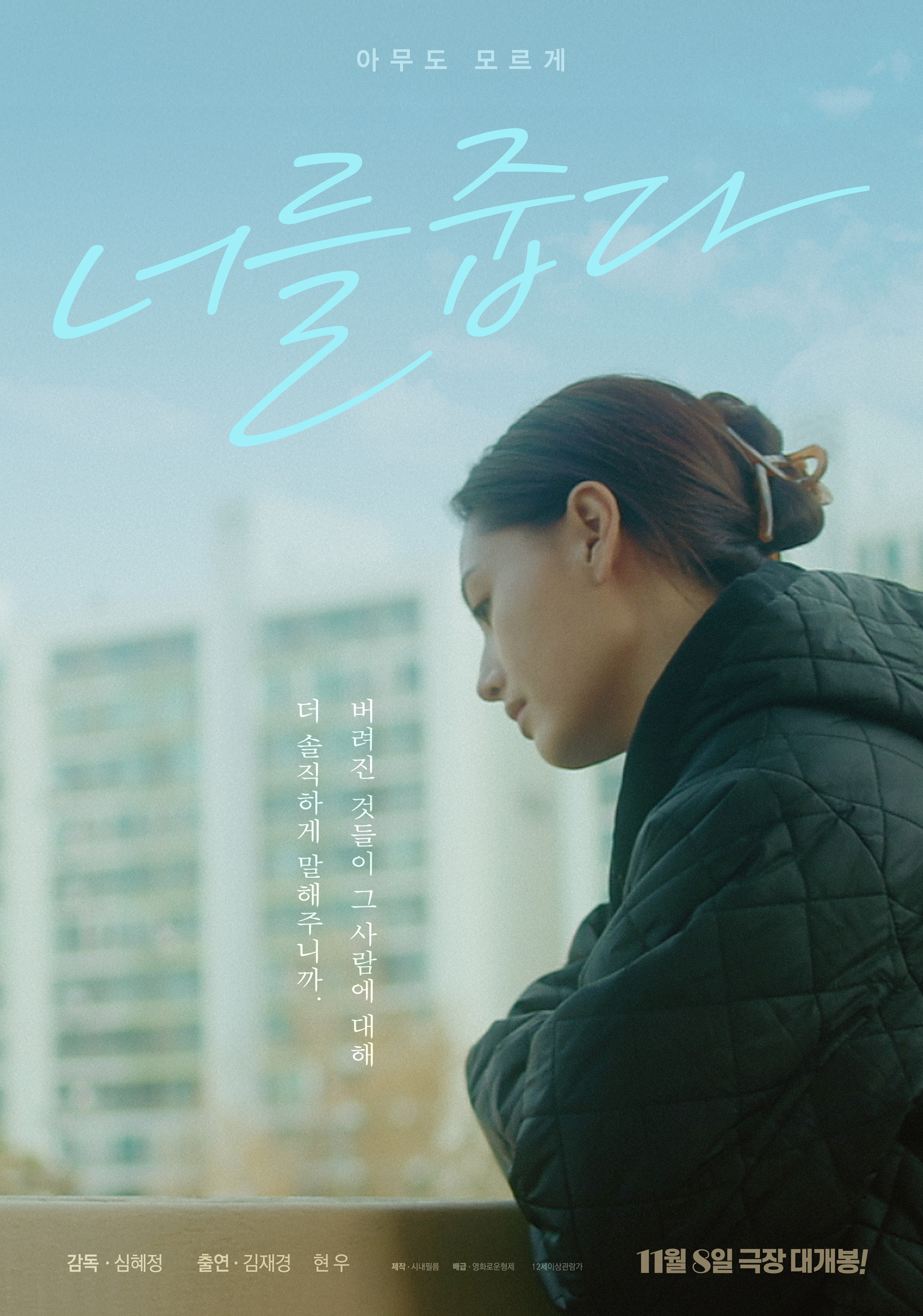
Flowers of Mold (너를 줍다, Shim Hye-jung, 2023)

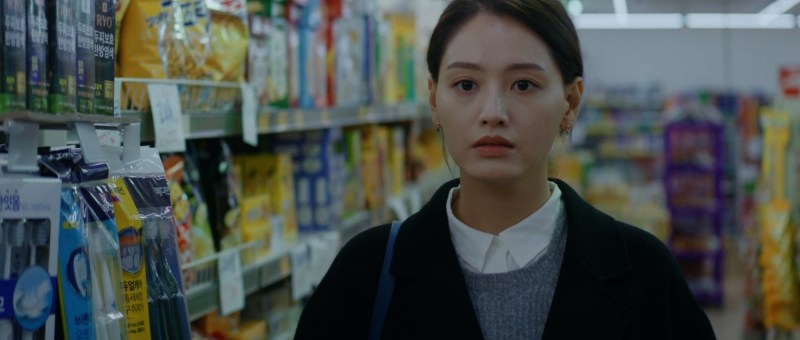
The heroine of Shim Hye-jung’s Flowers of Mold (너를 줍다, Neoleul Jubda) isn’t wrong when she says that you can learn a lot about a person from the things they throw away, though it also helps to explain her nature as an emotional hoarder like the pet fish she only starts keeping as a way of feeling close to a handsome neighbour unwilling to come out of her cave. Based on a story by Ha Seong-nan, the film is in essence an unexpectedly sweet romance but also a mild critique of the disconnected nature of urban living in which everything has already been broken down to its essential components in an overly ordered, judgemental society. 

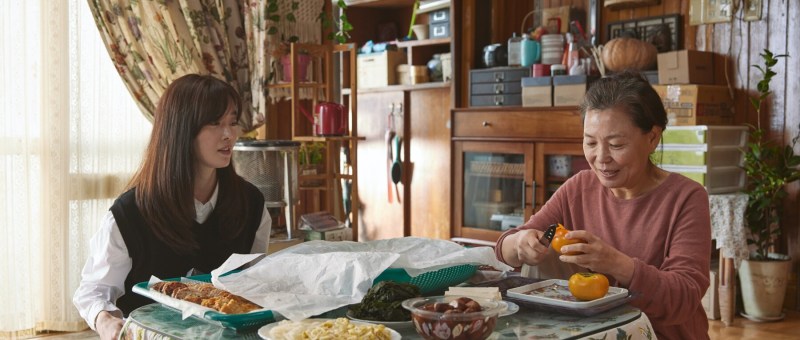
The disposal of rubbish, for example, is ridden with rules the breaking of which invites censure from a self-policing society as Ji-su (Kim Jae-kyung) discovers when she’s hauled in front of a trio of middle-aged women who put her on trial for inadvertently including inappropriate items in her regular rubbish, acting as if what she’s done is worse than murder and an indication of a deep ill will towards the community. In an odd way, this might be what sparks Ji-su’s strange hobby of rooting through her neighbour’s bins and keeping detailed records of them in a frustrated attempt at one-sided connection. She’s similarly conscientious at work, accepting belligerent calls from a customer who always complains that his meal kit deliveries have spoiled under the justification that he seems to work late and they should have just added an evening delivery tag even if he neglected to ask for one. She makes a similar suggestion that another customer with a young baby sometimes forgets to add not to ring the bell, so she goes ahead and adds that to her delivery note just in case.

“This is the age of big data” she jokes, but few us really like to be seen in this way and often we throw things away because we no longer like the self that owned them. Ji-su’s overbearing mother is forever telling her to get to rid of old things and buy new in a consumerist fantasy that novelty equals happiness, which might help to explain Ji-su’s reluctance to give anything away possibly afraid of the judgements others may make of her. An unfortunate encounter with a duplicitous man has left her feeling naive and mistrustful, needing further information in order to navigate the world and fill the void where real connection should be.

That’s one reason that she unwittingly begins to take on the characteristics of an attractive man who’s recently moved in next door and undergone an very loud breakup with a woman who seems otherwise totally unsuited to him and indeed understands him far less than Ji-su who has begun to build a profile after trawling through his trash. Perhaps wanting to know more only a natural consequence of falling in love, but it’s also an undeniable invasion of privacy that threatens to destroy a relationship even before it’s begun.

Even so, Ji-su begins to poke her head outside of her cave even deciding to take a leaf out of Woo-jae’s (Hyun Woo) book and take a leap of faith so out of keeping with her characteristic risk aversion. Cripplingly shy, she admits that she’s still afraid of people and in the end unable to trust them, remaining somewhat closed off and unknown perhaps even to herself. Then again, a teenage girl who’d originally reacted angrily to her well meaning advice later thinks better of it and wants to thank her “for her attention” being one of a few people who seems to have really seen her and taken an interest in her wellbeing in the midst of an indifferent city. 

Shim often cuts back to the anonymous apartment blocks, presenting an ersatz world of uniformity echoed in the meal kits Ji-su sells at work which reduce a complex dish to its component parts removing all sense of creativity or spontaneity. Woo-jae’s improbably possessive ex Sera describes him as “boring”, but perhaps he’s simply a man who knows how he likes to live much as the fish do and as he suggests it doesn’t always work out when you put two different kinds in the same tank. If Ji-su wants to break free of her self-imposed isolation, what she needs to figure out is how to give more of herself away and gain by doing so, accepting but also looking past someone’s trash to whatever it was they decided to keep.


Flowers of Mold screened as part of this year’s London Korean Film Festival.

Original trailer (English subtitles)

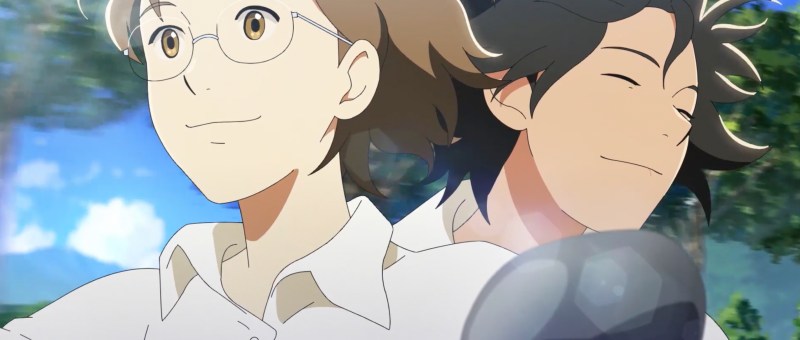
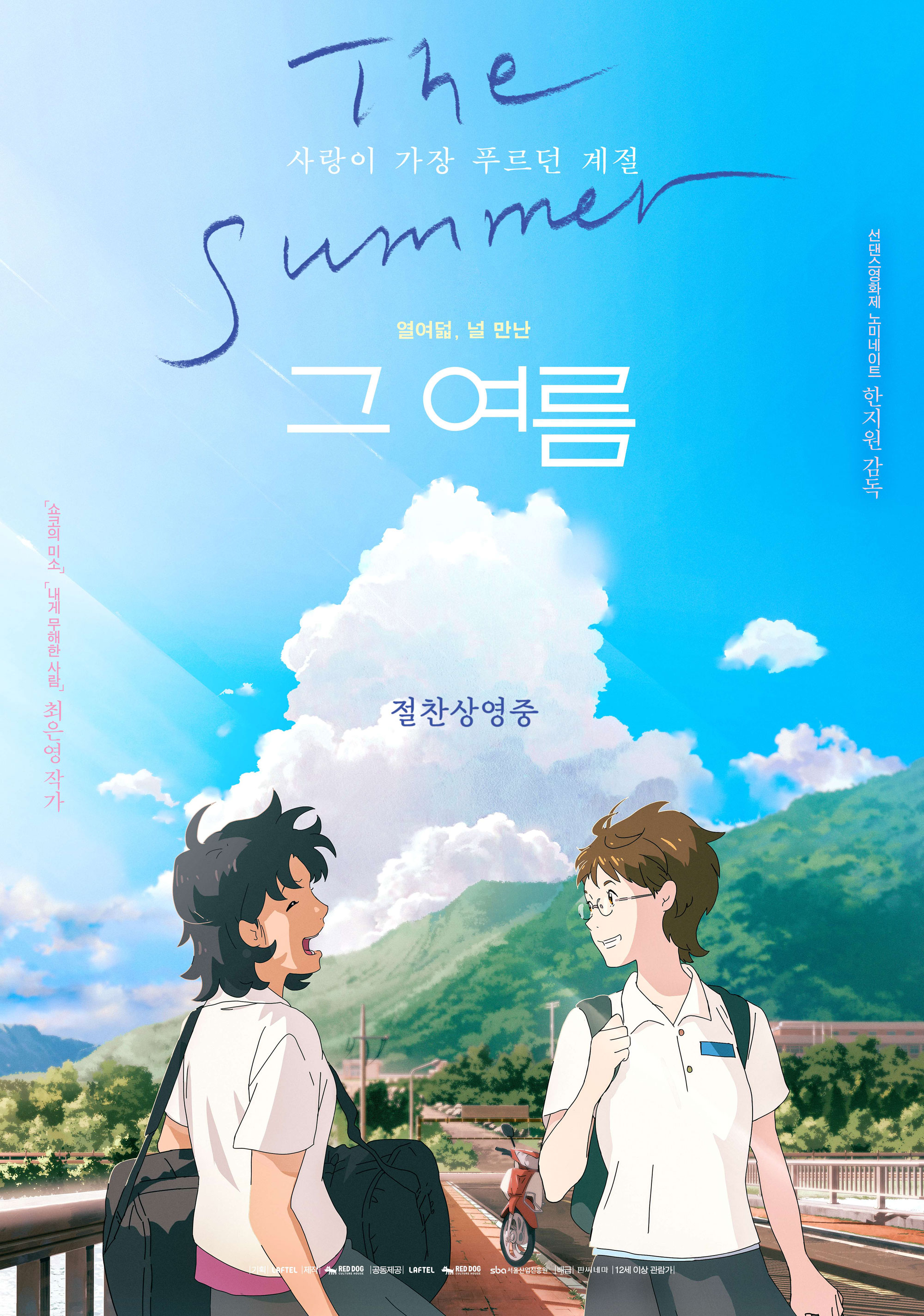
The Summer (그 여름, Han Ji-won, 2023)

A rueful young woman meditates on first love while losing direction in the city in Han Ji-won’s nostalgic adaptation of the story by Choi Sun-young, The Summer (그 여름, Geu Yeoleum). Set in the late ‘90s and early 2000s, the film finds an unexpected optimism for better future even in a society perhaps (even) less tolerant than that of today, but equally positions opposing reactions to their queerness as a force which erodes the innocent romance between two girls who met in high school and fell in love along with the more obvious stressors of city life such as social class and aspiration.

As Yi-gyeong later admits, “everything changed when we moved to Seoul”. Han depicts the tranquil rural town where the girls grew up as place of light and warmth, a kind of eternal summer of memory. Yet perhaps there’s something in the fact that when they first meet, footballer Su-yi accidentally breaks Yi-gyeong’s glasses rendering her at least temporarily unable to see clearly. A connection develops that first leads to an awkward friendship and finally to love, but where as a naive Yi-gyeong plans to come out and live openly as a lesbian, Su-yi is terrified and withdrawn. A few mocking sneers from her classmates show Yi-gyeong that Su-yi may have had a point and there are reasons they may have to keep their relationship secret.

Yi-gyeong’s inner conflict is reflected in a conundrum over her hair which is naturally lighter than than that of the uniform black of the girls around her. A teacher often stops to tell her to stop messing with it, leading her to wonder if she shouldn’t dye it the “correct” colour to be the same as everyone else thereby erasing her otherness and symbolically rejecting her homosexuality. She is also teased for having hazel eyes which are to some the eyes of a dog, and it’s Su-yi’s straightforward gaze into them that eventually brings the pair closer, Yi-gyeong feeling seen and accepted while Su-yi calmly tells her not to pay so much attention to what others think.

Yet for Su-yi the words are a double edged sword. Her way of not caring what other people think is to retreat into a bubble in which only she and Yi-gyeong matter, as if the rest of the world simply did not exist. Yi-gyeong, however, wants more. These divisions between them become even more palpable in the city when Yi-gyeong begins frequenting and then working at a lesbian bar which Su-yi still afraid to step into preferring to keep her relationship with Yi-gyeong an entirely private matter.

Han shrouds the city in shades of cold, blue and grey while the summer of their hometown gives way to a harsh winter. Where an orange cat had basked in the sun on Yi-gyeong’s desk, in the city a starving kitten shivers in an alleyway as if symbolising the love between the two women which is no longer being cared for or sheltered. While Yi-gyeong lives in a university dorm studying economics, an embittered Su-yi has given up her football dreams to become a mechanic while living in a dank room with mold on the ceiling that causes her to feel as if she’s compromising Yi-gyeong’s health simply by inviting her over. 

Conversely, as Yi-gyeong integrated more closely with the community through working at the bar she begins to grow apart from Su-yi, beginning to look down her as a working woman visibly irritated when she finally shows up at the bar but in her work clothes with grease on her face. Her new friends immediately put their foot in it by asking what Su-yi is studying at uni only to cause her embarrassment as she admits she didn’t get in and is doing a manual job instead. Yi-gyeong has to admit that what she feels is shame, now harbouring desires for city sophistication and nice middle class life as symbolised in her nascent crush on a slightly older nurse seemingly much more at home with who she is. 

But even so, an older Yi-gyeong can’t help asking herself why she swapped her dull but idyllic hometown for the emptiness of urbanity while meditating on the failure of her first love, wondering if she was wise to give it up or in the end betrayed both herself and Su-yi in her desire for something that was “more” than this without appreciating its innocent fragility. Poignant in its sense of melancholy regret, Han’s hazy drama lends a touch of warmth to Yi-gyeong’s infinite nostalgia for the endless summer of first love that in its way for her will never really end. 


The Summer screened as part of this year’s London Korean Film Festival.

Original trailer (Korean subtitles only)

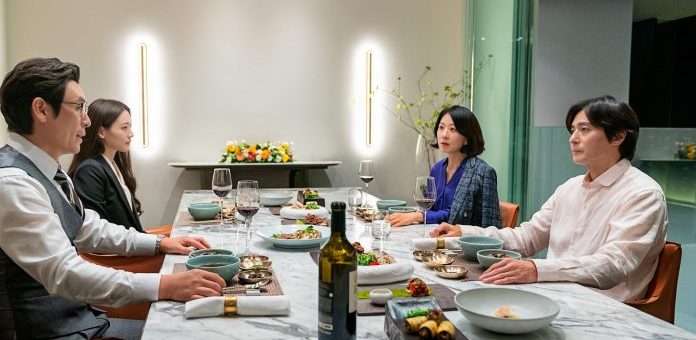
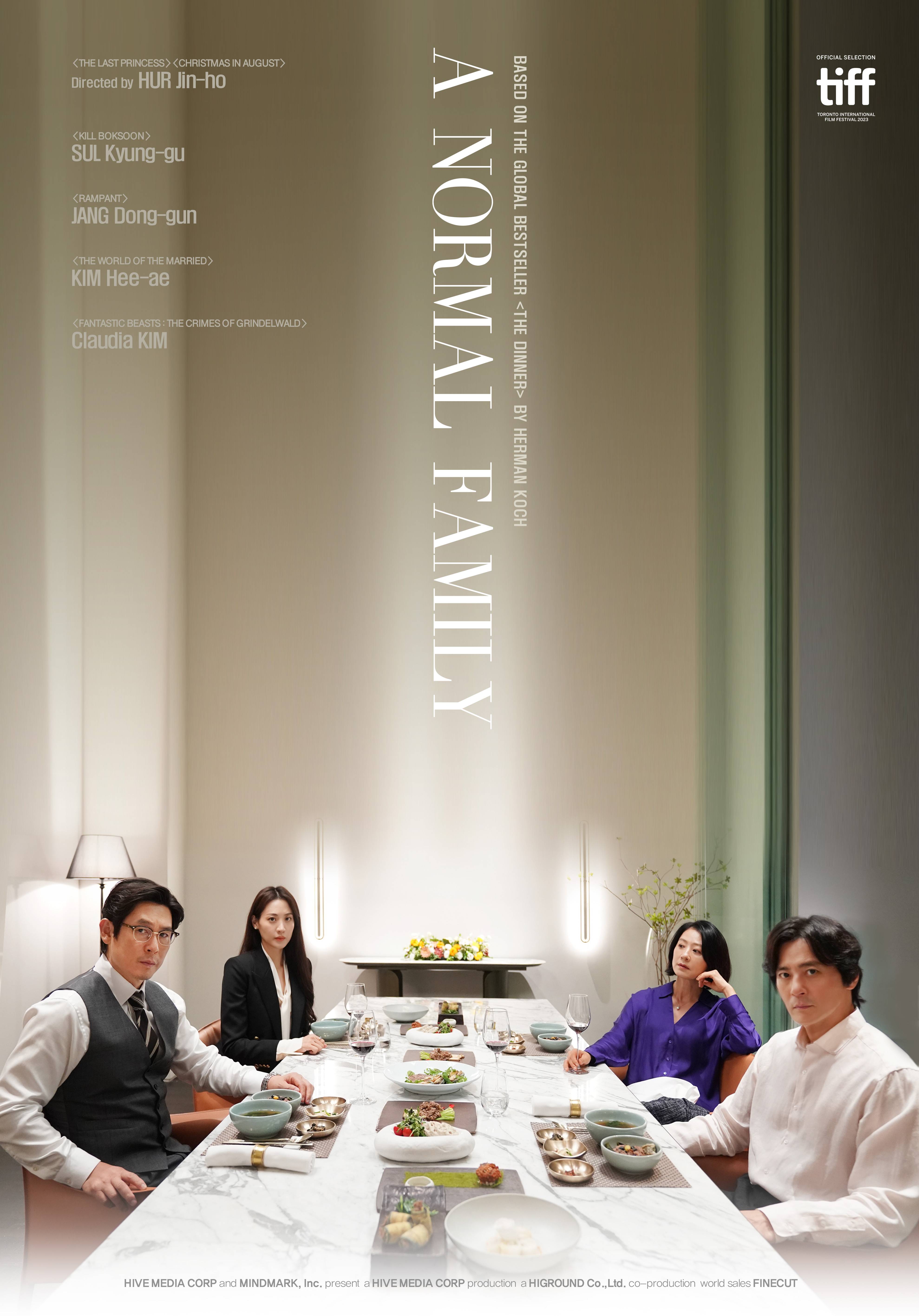
A Normal Family (보통의 가족, Hur Jin-ho, 2023)

“Parents are weak before their children” according to an apparently doting dad in Hur Jin-ho’s A Normal Family (보통의 가족, Botong-ui Gajok), yet later he will have to ask himself what it means to be a father and what exactly it is that he’s raising his daughter to be. Based on the Dutch novel The Dinner and a departure for Hur who is best known for romantic melodrama, the film nevertheless takes aim at the chaebol culture of the contemporary Korean society in which consequences are only for those without means. 

Twin cases further exacerbate the rift between two brothers, cynical lawyer Jae-won (Sol Kyung-gu), and earnest doctor Jae-gyu (Jang Dong-gun) as one finds himself defending the feckless son of a wealthy industrialist, and the other doing his best to save the life of a child seriously injured when a case of road rage resulted in the death of her father. Meanwhile, the brothers’ respective children, Jae-won’s daughter Hye-yoon (Hong Ye-ji), and Jae-gyu’s son Si-ho are later the subject of a viral video which appears to show two teens beating a homeless man half to death. 

Jae-gyu had resented his brother and rejected the idea of Si-ho doing an internship at his hospital on the grounds that he wants him to grow up to be a person with “integrity” rather than one who’d unfairly use his privilege and connections to get ahead. Yet as time moves on we begin to wonder if it isn’t also a little because he’s ashamed of his son who is socially awkward and apparently struggling academically. His wife Yeon-kyung (Kim Hee-ae), meanwhile, is a classic helicopter parent who spends an evening out repeatedly calling Si-ho’s phone and irritated when he doesn’t pick up. The implication is that they’re so hellbent on getting Si-ho into a good university to fulfil their own sense of esteem as parents that they’ve raised a child to conventional success that they’ve lost sight of what might actually be best for him as a whole individual.

On realising Si-ho maybe the violent teen in the video, Jae-gyu’s first instinct is to go to the police but he soon loses his moral authority on failing to follow through. Once again, the question is whether they choose to protect Jae-gyu from the consequences of his actions because they fear for him or because they fear the embarrassment his criminal status would bring to them. On the surface, Jae-woo has no such qualms, immediately torching the dress Hye-yoon was wearing that night while going into damage limitation mode trying to keep the teens’ identities secret. Yet he must also reckon with the fact that he’s brought her up in a world without consequences in which conventional morality no longer really applies to her because she is wealthy and has an elite lawyer for a father. 

In any case, just as Jae-gyu’s morality began to crumble so Jae-won begins to wake up to the idea that perhaps it’s a problem that his teenage daughter and her cousin beat a man half to death and then went back to their lives without batting an eyelid. Hye-yoon shows no remorse, cheekily asking her father for a car he promised her if she passed her exams while later expressing the view that as the man was homeless, a person who in her eyes had failed to achieve personhood through attaining markers of conventional success such as a degree and steady job, his life was of no consequence. Yeon-kyung later says something similar, not understanding why they’re making a fuss over “someone like that” whose life is worth nothing in comparison to her son’s future. 

Yeon-kyung is also relentlessly rude to Jae-won’s second wife, Ji-su (Claudia Kim), who is from a much more ordinary background and does everything she can to try and get along with her. Ji-su presents a much more conventional moral compass in considering what kind of mother she wants to be not only to her own newborn child but to Hye-yoon who like Yeon-kyung mainly treats her with contempt. It’s she who begins to wonder if covering this up is really the right thing for Hye-yoon and Si-ho or if failing to show them that actions have consequences will only encourage them to behave in ways otherwise offensive to a commonly held sense of humanity. 

The brothers switch sides, but the truth is that each of them has been teaching their children the wrong lessons in creating a world in which money settles everything and consequences are only for those who can’t pay. Yeon-kyung tries to justify herself that as she’s done a lot of good deeds it somehow balances out, Si-ho too echoing her on suggesting going to church as if you could buy your right to behave badly by saving up goodness points which is also another way of saying that consequences don’t apply. The children think that as long as they fulfil the role they’re expected to play, get good grades and become successful members of society, then nothing else really matters. Darkly comic, Hur’s steely drama suggests that the inequalities of the contemporary society, the elitism and anxiety have slowly eroded not only the most essential of relationships but the soul of the nation’s children who know nothing other than those with money need not pay for their crimes.


A Normal Family screened as part of this year’s London Korean Film Festival.

Original trailer (English subtitles)

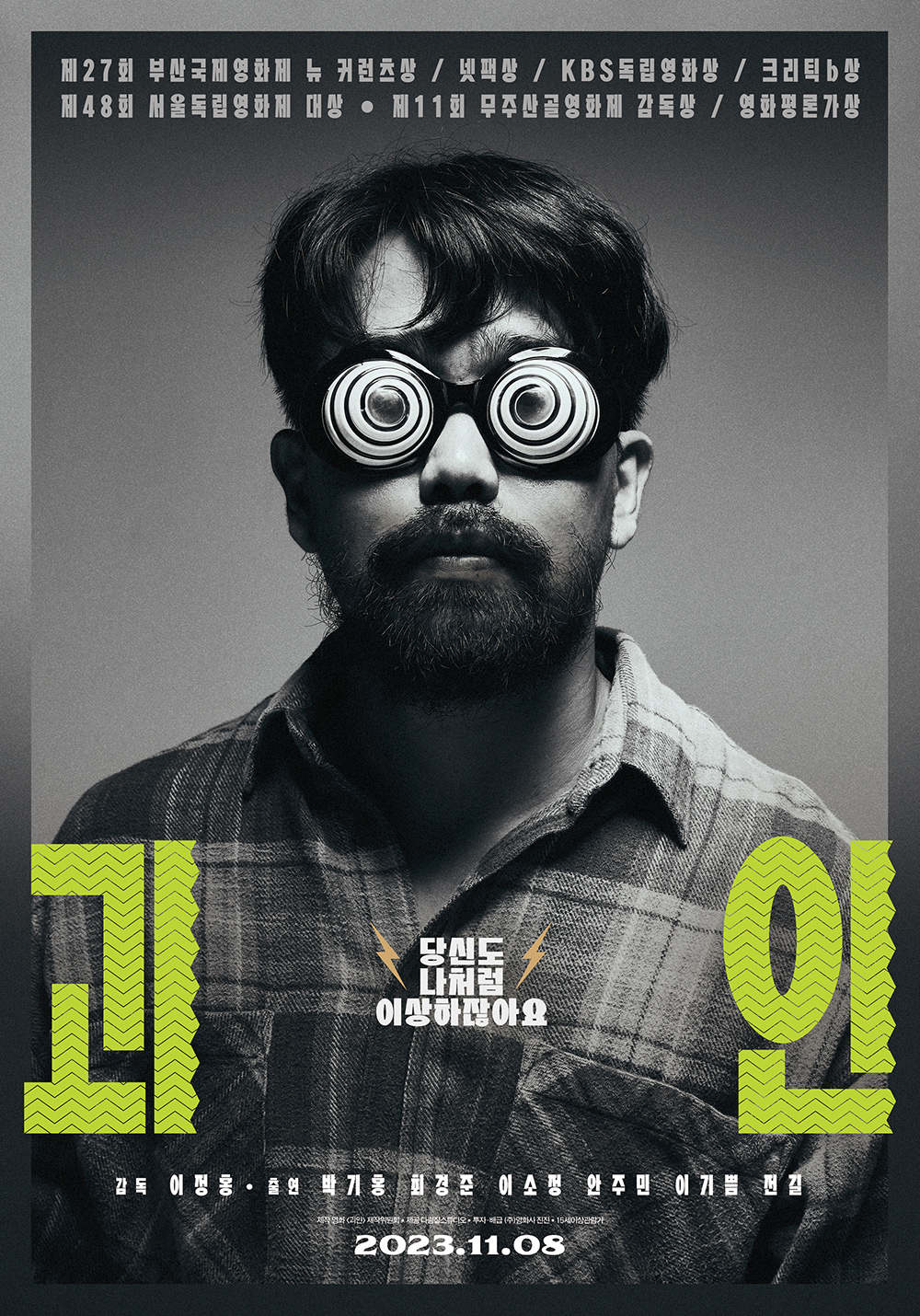
A Wild Roomer (괴인, Lee Jeong-hong, 2022)

“Separation and connection” is apparently the architectural theme of the well-appointed home where not completely qualified carpenter Gi-hong (Park Gil-hong) takes up residence in Lee Jeong-hong’s quirky drama, A Wild Roomer (괴인, Goein). It’s not quite clear if Gi-hong is the strange person of the Korean title or if it refers to the young woman he subsequently encounters, to all of us, or someone else entirely but what does seem to be true is that Gi-hong lives a kind of separated life from those around him.

Ironically enough, Gi-hong’s job is as a joiner though as a conversation with a friend he’s hoping to recruit for his moribund business makes clear he may not actually have finished his apprenticeship and has jumped the gun setting up on his own. The way he tells it, people these days don’t hire interior design firms for small jobs but entrust them to a carpenter, such as himself, who can subcontract the other services involved. But it seems Gi-hong is not a particularly considerate boss, looking down on his employees while complaining that labourers are money grubbers and it’s alright for him to be rude to them because that’s how working men talk to each other. He criticises an elderly electrician who asked about his pay because he has medical expenses for not having planned better for his old age but appears to be doing little to plan for his own while keen to give everyone the impression that his struggling business is actually doing big numbers. He also doesn’t appear to care very much about finesse either, using the cheapest materials possible and doing a slapdash job that even loyal colleague Kyoung-jun (Choi Kyung-june) thinks is not really up to scratch. 

What’s also clear is that Gi-hong has an inappropriate crush on the piano teacher whose studio he’s refitting and a lack of understanding about personal boundaries. At several points he encounters doors that don’t open for him, while ironically his landlord doesn’t seem to believe in them. Though he rents the annex which has a separate entrance, Jung-hwan is keen for Gi-hong to treat the main house as his own entering and exiting through the front door which is all very well but also means that Jung-hwan (Ahn Ju-min) could presumably also wander into Gi-hong’s space whenever he feels like it. Jung-hwan is also living a “separate but connected” life with his enigmatic wife Hyun-jun (Jeon Gil) who he says doesn’t actually like him and never has. For reasons not entirely explained, Jung-hwan is home all day and seemingly lonely hoping he can adopt Gi-hong, who is also home a lot because there’s no work coming in, as a kind of surrogate little brother. 

Yet for all that Gi-hong seems, as his friend describes him, “irresponsible” and self-interested, there’s childlike vulnerability in him that finds an outlet when he unexpectedly encounters a young woman he assumes is responsible for the sizeable dent in the roof of his van. Skittish in nature, Hana (Lee So-jung) is in someways earnest and others helpless. She has no home or family and is in that sense separate and in search of connection while Gi-hong seems to feel guilty about asking her to take responsibility for what happened to his van considering she has no means to do so though is doing her best. She assumes that Gi-hong, Jun-hwan, and Hyun-jun must be “family” considering that they share the same space and seems to want to join them in a separate but connected existence. 

The mechanic they contact about fixing the van goes off on a minor rant about the younger generation, or more accurately those now approaching middle age in their 30s or early 40s, who he claims have been given false expectations because of Korea’s unexpected success in the 2002 world cup which has led them to assume that dreams come true on their own and things will just work out without the need to really do anything to make them. The irony is that he’s pretty much describing Gi-hong who seems to have an insecurity and baseless hope that his business will pick up while terrified it won’t. But then everyone seems to be living a life of quiet separation, privately anxious and dependent upon the loose connections that have replaced the certainties of a blood family. Gi-hong, whose attempts to construct pleasant spaces for others are often imperfect, may have found himself a home of separate connection. “It feels so weird” a woman exclaims on looking at a precariously balanced rock, but like so many things in Lee’s strange world it seems to work even if you think it shouldn’t.


A Wild Roomer screens 11th November as part of this year’s London Korean Film Festival.

Origina trailer (English subtitles)

Small Fry (잔챙이, Park Joong-ha, 2023)

A dejected actor begins to feel like a fish caught on a hook only to be cast back in Park Joong-ha’s tense chamber drama, Small Fry (잔챙이, Janchaengi). Small fry is how Ho-joon sees himself, at least in comparison to Hee-jin, an up and coming actress recently the star of a Netflix show though equally insecure in her career while each of them find themselves at the mercy of a director with a fragile sense of masculinity and a tendency to bully that masks his insecurity. 

Indeed, the tale opens as masculinity drama as former actor Ho-joon turns up at a fishing lake intending to record an episode for his YouTube fishing channel only there’s a weird guy hanging around that immediately tries to oust him from his position on hearing his patter about a tip off about the best seat from the guy in the shop. The man later revealed to be a film director, Nam, is obnoxious and prickly. Not content with having forced Ho-joon to move, he loudly complains about the noise from his live-streaming using it as an excuse for not having caught any fish. 

You’d think it would be an unwritten rule that touching another guy’s rod is inappropriate, yet a third man soon turns up while Ho-joon is taking a break and messes with his equipment apparently resentful of his status as a top YouTuber insisting that he’s “cheating” by using Japanese techniques and his success is entirely down to the Japanese-style paste he uses for bait. The same man turns up later but obsequiously plays the devoted fan, asking for an autograph much to the consternation of the all but ignored director and his star who has also tagged along. 

Nam evidently feels threatened by Ho-joon’s relative fame along with genuine fishing skills, petulantly rejecting his hints like a man who won’t ask for directions while Hee-jin, the actress, grows ever more exasperated wanting to keep Ho-joon around if only as a buffer between herself and Nam who she realises had ulterior motives for this trip. Then again as it turns out each of these three people is connected in unexpected ways that play into the drama between them as well as into that of the screenplay for the film Hee-jin has all but been promised the lead for. 

Repeated fishing metaphors suggest that both Ho-joon and Hee-jin are just waiting to reel in their big break while at the mercy of the dupliciotous Nam who never catches anything. Gradually He-jin realises that he may already have given the part to another, more famous, actress while continuing to string her along. He later makes a kind of promise to Ho-joon to consider him for the male lead, but as expected blames the drink and feigns ignorance once the sun has risen. Yet even Nam claims he’s at the mercy of others, insisting that there are times when you just need to tell the producers to “fuck off” while secretly placating them in preparing to cast an actress with a profile over one with the skills to do the job. 

They’re all small fry, just waiting around trying chomp on a hook and get reeled into something good but finding that they move too quickly or that even if they’re caught they’re soon thrown back in favour of bigger fish. At 40, Ho-joon is beginning to feel as if he’s missed his chance and his fishing-themed YouTube channel may be all he’s got left even as he’s forced to play another kind of role humiliating himself filming sponsored ads for bait manufacturers to earn his keep. “There are too many ordinary people like you,” Nam cruelly tells him affecting an authority he doesn’t really have to suggest he has no future as an actor. Hee-jin, meanwhile, is wondering if it’s worth putting up with Nam’s false promises in the hope of finally getting her big break even if her management still won’t let her do the films she really wants to do. 

Yet in some senses, Ho-joon is still on the hook hoping he can reel something in while Hee-jin may have decided that her big break’s not worth all this bullshit and there will other opportunities or perhaps it doesn’t really matter even if there aren’t. Maybe it really is all about the paste after all and a poor fisherman like Nam is likely to end up with nothing in the end while at least Ho-joon and Hee-jin though small fry they may be have a better idea of which lines to cast. 


Small Fry screened as part of this year’s San Diego Asian Film Festival.

Original trailer (English subtitles)

A Wing and a Prayer (동에 번쩍 서에 번쩍, Lee Kwang-kuk, 2022)

A pair of 25 year olds find themselves marooned in adolescence thanks to the precarious socio-economic conditions of contemporary Korea in Lee Kwang-kuk’s indie dramedy A Wing and a Prayer (동에 번쩍 서에 번쩍, Dong-e Beonjjeog Seo-e Beonjjeog). Not quite as quirky as Lee’s previous work, the film nevertheless finds its twin protagonists undergoing parallel journeys while each preoccupied with the progression to adulthood and what that might actually mean in real terms while perhaps guilty of a childish naivety in their vision of what it is to be grown up.

Seol-hee (Yeo Seo-hee) and Hwa-jeong (Woo Hwa-jeong) are best friends and roommates each currently without jobs and feeling lost without clear direction for their future. Seol-hee was on track to be an athlete but was forced to give up following injury. At an interview for a job in a coffee shop she’s asked a series of questions which seem to her somewhat unnecessary. “Do I need a dream in order to work here?” she asks, “Can’t I just make good coffee and try my best at everything?” Predictably, her answer does not go down well with the interviewer and it seems unlikely she’s going to get this job though Seol-hee remains cheerful and upbeat unable to understand why everyone keeps pressing her about her hopes and dreams when she’s just trying to live. By contrast, Hwa-jeong has reached the final stages for a job at a company and feels her interview went well so she’s optimistic that this time it really might work out.

Though in quite different places, the pair decide to take an impromptu trip to the seaside to wish on the sunrise only to fall asleep and completely miss the moment. The mismatch in their circumstances comes to the fore when Hwa-jeong reveals that with their lease about to come to an end she’d like to try living on her own, “like a real adult”. Of course, that’s quite destabilising and hurtful for Seol-hee who has no real expectation of being able to get the kind of job that would let her find an apartment she could rent on her own. After a small argument, the pair end up separated and on parallel adventures as Seol-hee bonds with a slightly older woman, Ji-an (Seo Ji-an), whose life has been ruined by unresolved trauma caused by high school bullying while Hwang-jeong meets a high schooler, also bullied, who is looking for her missing parrot. 

When Hwang-jeong comes to the rescue of the high school girl after she’s lured by bullies who claimed to have info on her parrot, it’s obvious that they immediately recognise her as an “adult” though she holds little sway over them. Hwang-jeong is fond of saying that she isn’t a kid anymore, but it’s also clear that getting a job is central to her definition of adulthood. When the high school girl asks what she does for a living, Hwang-jeong answers pre-emptively that she’s a “respectable company employee” to which the high school girl replies “an adult” but then goes on to ask at exactly what age one becomes one. Hwang-jeong has no answer, because perhaps it’s not an age after all but a state of being. 

She also accuses Seol-hee of behaving like a child as they continue to argue about Hwang-jeong’s plans for solo adulting. Seol-hee meanwhile finds herself trying to help another lost woman who is herself arrested but trying to break of the “jail” she feels she’s been placed in by an overprotective mother she nevertheless feels may be ashamed of her for her own “failure” to progress into a more conventional adulthood. Like the high school girl Seol-hee claims she has no friends and tries to make one of Ji-an only she refuses. On seeing the flyers for the lost parrot, which Seol-hee herself at times resembles, she wonders if recapturing it is the right thing to do or if it wouldn’t be happier flying free rather than trapped within a cage that to Seol-hee represents conventionality and socially accepted ideals of success.

They’re all lonely, wounded, and insecure, afraid of talking to each other about their worries because of the internalised shame of feeling to meet the demands of “adulthood” despite, in all but the case of the high school girl, being well over the age of majority. The high school girl herself may represent Hwang-jeong’s refusal to confront her past while throwing herself into an adulthood she hasn’t quite earned just as the parrot represents both her friendship with Seol-hee and the elusiveness of their future, but it also returns to her the sense of positivity she may have been missing just as Seol-hee’s care of Ji-an also allows her to take care of herself. They might not quite be adults, but then who really is and at least they have a little more clarity about that means and what they want out of life in the realisation that they aren’t alone and not least in their worries.


A Wing and a Prayer screens 10th November as part of this year’s London Korean Film Festival.

Original trailer (English subtitles)

I Haven’t Done Anything (좋.댓.구, Park Sang-min, 2022)

The central irony of Park Sang-min’s meta comedy I Haven’t Done Anything (좋.댓.구, Joh.Daes.Gu) is that a man who remains defiantly silent generates much more interest than the one desperately chasing YouTube success. Adopting a “screen life” aesthetic in which much of the action is told through social media and video screens, the film asks a series of questions about our petty obsessions, online authenticity, media manipulation, and the impossibility of escaping a predetermined image as its embattled hero strives to reinvent himself by his inhabiting most famous role.

Actor Oh Tae-kyung plays a version of himself who is struggling to maintain his career as an actor having begun as a child star with his most high profile roles including that of the younger Oh Dae-su in Park Chan-wook’s Oldboy. With work thin on the ground, he turns to YouTube but fails to make an impact with content that commenters describe as old hat such as “mukbang” eating videos and unboxings. It’s then that he comes up with the idea of rebranding as “Li’l Oh Dae-su”, dressing up as the protagonist of Old Boy and accepting viewers’ challenges which at one point include him taking revenge on a gang of class bullies by hitting them on the head with a plastic mallet while mimicking the famous corridor fight scene from the landmark drama.

But then, someone else has already shared their screen with us. Going under the name “Bulldog”, a viewer asks Tae-Kyung to solve the mystery behind a man who’s been standing silently in the square with a large sign reading “I Haven’t Done Anything”. Tae-kyung reasonably wonders why Bulldog didn’t just ask the guy himself, but as he explains “Picket Man” refused to answer him. Given the large amount of money Bulldog has pledged for this seemingly simple request, Tae-kyung accepts the challenge but Picket Man continues to ignore him no matter the silly stunts he pulls an attempt to break his concentration. 

Bulldog’s apparently strong desire to know the truth, willing to offer up vast sums of money just to satisfy his curiosity, hints at our own petty obsessions. After all, the cryptic quality of the sign is intriguing. What exactly is Picket Man trying to say, what didn’t he do and who says he did it? Of course, in another way, Tae-kyung also feels he hasn’t done “anything” with his life and stuck in a career morass unable to shed the image of himself as a child actor and young Dae-su in particular. Every time someone offers him another role, he worries that the baggage of his early career follows him and he’s simply not credible as a hardened gangster, for example, if everyone only sees him as the eldest of six siblings in a much loved TV drama or the little boy who grow up to become the schlubby captive Oh Dae-su. 

When the skit becomes an accidental viral hit, Tae-kyung begins to worry that perhaps he’s doing Picket Man a disservice and this kind of publicity isn’t really what he was after though it’s puzzling that he himself refuses to speak about what it is he hasn’t done. What he realises is that Picket Man is much like himself and he’s done to him what others have done to Tae-kyung in reducing him to a single image. How will anyone ever see this otherwise anonymous person as anything other than “Picket Man” now? Tae-kyung has unwittingly exploited him for his own ends and possibly ruined his life in the same way that anyone who becomes a meme is robbed of an identity. 

Then again, in this very meta tale not everything is as we think it is and we ourselves, like the YouTube commenters, are being manipulated by unseen forces. As Picket Man becomes the latest social media phenomenon, other content creators start arbitrarily jumping on the hashtag, randomly mentioning Picket Man to boost their own views while unscrupulous forces also exploit the meme potential to run scams featuring Picket Man’s image. Park carries the meta quality through to interrupting the film with fake YouTube ads and product placement from sponsors that remind us we are being sold something whether we realise it or not and that we might not even realise what the product is or who’s selling to us as the final reveal implies. Nevertheless, there’s a sense of triumph in the success of this heist that’s been pulled on us in the winning self-deprecation of dejected former child star Tae-kyung and his great master plan to shed himself of an otherwise inescapable image. 


I Haven’t Done Anything screens 5th November as part of this year’s London Korean Film Festival.

Original trailer (English subtitles)

Road to Boston (1947 보스톤, Kang Je-kyu, 2023)

The right to participate in a foreign marathon becomes a victory for the Korean in people in Kang Je-kyu’s sporting period drama, The Road to Boston (1947 보스톤, 1947 Boston). Skewing towards the nationalistic, the film finds two brands of exceptionalism colliding while hinting at the sense of destabilisation in a nation which has not only been divided but rather than the promised liberation only re-colonised by an entirely different military regime who insist that Korea is not a real country merely a protectorate. 

In 1936, Sohn Kee-chung (Ha Jung-woo) won a gold medal for marathon running in the Berlin Olympics but when he stood on the podium they played the Japanese anthem and flew the Japanese flag. They announced his name pronounced the Japanese way, and when Kee-chung covered the Japanese emblem on his uniform he was banned from sports and put under police surveillance. Japan had annexed Korea in 1910, and the victories were accredited to the Japanese Empire. The country had been liberated from Japanese rule at the end of the war, but the nation was divided in two with the Americans occupying the South and the Soviets the North. 

Part of Kee-chung’s bitterness is that his family are trapped over the border and he’s been unable to bring them South, but it’s also that he was not able to run “freely” under the flag of his nation or in his true name. Yet now that they’ve been liberated, it’s as if only the names have changed. Loutish American GIs make trouble in the streets bullying the locals much as the Japanese had while the nation in general remains poor. There’s a chance that Korea could compete in the 1948 Olympics in London, but they’ve been told they don’t qualify because Korea doesn’t really exist and even in the way it does it’s only for a couple of years so they have no track record of international competition, all their previous successes are still attributed to Japan. To qualify, they decide to enter the Boston Marathon, but are told there are additional hurdles because Korea is a “refugee country” and the authorities are worried they might just stay there. 

When they do actually arrive in the US, they get a similar attitude told that winning the Boston Marathon might help them gain US citizenship as if that were some ultimate prize they must be secretly longing for when all they want is to be recognised as Koreans. Because the Military government signed off on their participation, the shirts prepared for them carry American flags, but Kee-chung does not want his protege Yun-bok (Im Si-wan) to suffer the same fate as him and compete under a flag that is not his own as he outlines in a powerful speech to the person in charge of the marathon while cheered on by outraged Asian Americans who also suffer racism and discrimination in the so-called land of the free.

At the press conference, reporters ask offensive and embarrassing questions such as whether Korea has universities, newspapers, or even electricity. The US guarantor Nam-hyeon (Kim Sang-ho) also states that even when he says he’s Korean, people ask him if he’s from China or Japan while Yun-bok receives racial slurs from a runner representing America. America is also presented as the land of immoral capitalism in which the only thing that matters is money in direct contrast to Kee-chung’s claims that runners aren’t in it for the cash. He originally rejects Yun-bok for his “arrogance” and lack of interest in anything that isn’t about money but later changes his mind on realising his crushing poverty and desire to help his ailing mother. 

On the other hand, the runners are constantly reminded how different the US (and elsewhere) is from Korea, asked if they know how to sleep on a Western-style bed or use a shower while reminded that everything in the mini bar you’ll be charged for. Yun-bok comically washes his face in the toilet seeing only a basin of water little knowing what taps are or how to use them. On his first taste of Coca Cola, a symbol of American capitalism, he is captivated and wonders if they should just accept the American flag for the right to run and a quiet life while Kee-chung will not be put through that humiliation again. The right to participate in the marathon under the Korean flag becomes a victory for the Korean people as a whole who had chipped in to crowdfund it in the face of resistance from the US military government. A big wig who made his money in dubious ways might have a point when he asks if it’s right to spend so much on a marathon when people are starving in the streets, but then what Kee-chung is trying to reclaim is national pride which to some at least is worth the price. In any case, the historical victory becomes a crowning moment of Korean independence, no longer a refugee state but (symbolically at least) a sovereign nation and finally free to run just as far as it can go.


Road to Boston screened as part of this year’s London East Asia Film Festival.

International trailer (English subtitles)

The Boys (소년들, Chung Ji-young, 2022)

A “mad dog” policeman uncovers a miscarriage of justice but finds that his faith in his institution may have been misplaced in Chung Ji-young’s pressing judicial drama, The Boys (소년들, Sonyeondeul). Like much of Chung’s previous work critiquing the power imbalances of the contemporary society, the film is one of several recent dramas taking aim at the justice system and the utter contempt of those in power for those without most notably for the titular boys exploited by a failure of the system.

In 1999, a trio of teenagers is picked up and arrested for the robbery of a convenience store in which an old woman died. Newly transferred to the district, “mad dog” policeman Joon-cheol (Sol Kyung-gu) receives a tip off that actually someone else did it. The informant says he’d previously told the investigating officer, Choi (Yoo Jun-sang), but was ignored. Joon-cheol might assume that’s because he didn’t think there was anything in it and didn’t find the informant credible, but something nags at him and he begins to look at the case only to realise too much of it doesn’t make sense. He soon discovers that Choi and his underlings beat the suspects, who were terrified and naive due to their youth, into a false confession in order to get a promotion by solving a prominent case.

Chung switches back and fore between 1999 and 2016 when the boys’ retrial finally takes place and discovers Joon-cheol a somewhat broken, defeated man who has served out the past few years on a peaceful rural island never receiving any further promotions. With his retirement looming, he’s been offered a return to the mainland, but apparently only thanks to Choi which leaves a sour taste in Joon-cheol’s mouth. Like pretty much everyone else, he is haunted by a sense of guilt that in the end despite his promises he was powerless to help these innocent young men escape their false imprisonment. 

Then again, Joon-cheol is also a product of the system. The “mad dog” beat suspects too, and there’s something chilling in his justification that he only beat the “guilty” and never the “innocent”. He got his promotion after being stabbed on the job, a strange sacrifice that seems the inversion of Choi’s greedy venality. Choi really thought nothing of these boys, one whom had learning difficulties and was illiterate so could not have written his statement on his own, because they were poor and defenceless and is unrepentant even when confronted with the truth. He himself could have caught the real culprits but simply chose not to because it was easier and more convenient to him to destroy the lives of three innocent boys instead. 

Choi’s reach seems to be eerily extensive though the police force’s reluctance to correct a miscarriage of justice because it would make them look bad is obviously an institutional flaw along with the use of violence to elicit confessions. The older version of Choi with slick backed hair and an arrogant manner behaves as if he’s untouchable, giving an answer for everything and leaving no room to be challenged while others are only too keen to support his version of events with equally smug manipulations of the law. 

The boys find themselves powerless. They cannot challenge Choi and though they’ve served their sentences and paid a debt to society that was never theirs to begin with cannot move on with their lives because they are still branded murderers meaning no one will hire them. Meanwhile, at least one of the real killers has had to opportunity to start again and is reluctant to help because they do not want their new family to find out about their past. Everyone is harbouring some kind of guilt or desire to bury the truth for a quiet life, Joon-cheol too not wanting to get involved and cautioning the boys against applying for a retrial because it will only cause them further pain. 

Though the truth is eventually revealed and the boys’ names cleared, the overwhelming implication is that you cannot really win against men like Choi. The sentiment is rammed home by a final title card explaining that nothing happened to any of the policemen involved in framing the boys while Joon-cheol only has the satisfaction of having helped to free them neither vindicated as a police officer or successful in undercutting the corruption inherent in the police force and embedded in the society itself. Nevertheless, Joon-cheol’s righteousness and the the unexpected support he receives from those around him for doing the right thing add an inspirational quality that simultaneously suggests justice is a distant dream but also that it can be achieved if enough people can be persuaded to chase it even while against their own interests.


The Boys screened as part of this year’s London East Asia Film Festival.

Original trailer (no subtitles)

White Badge (하얀 전쟁, Chung Ji-young, 1992)

Change was in the air in the Korea of 1979. Park Chung-hee, who had seized power in 1962 by means of military coup and thereafter ruled as a repressive dictator, was assassinated by the head of the KCIA for reasons which remain unclear. A brief window of possible democratic reform presented itself but was quickly shutdown by a second military coup by general Chun Doo-hwan who doubled down on Park’s repression until finally forced out of office in the late ‘80s. It’s into brief moment that Chung Ji-young’s White Badge (하얀 전쟁, Hayan Jeonjaeng) drops us as a traumatised reporter finds he is being given permission revisit the painful past now that they are finally “free” to speak their minds, but remains personally reluctant to open old wounds. 

Han Gi-ju (Ahn Sung-ki) is a functioning alcoholic whose wife has left him and remarried though he still spends time with his small son who appears to adore his dad. In the wake of Park’s assassination, his boss wants him to write the true story of his experiences as a soldier in Vietnam, but Gi-ju is not convinced. He’s still haunted by nightmares of his time in the army and has no desire to go delving into his own painful memories even if it is perhaps the right time to let the people know how it really was. A little while later, however, he starts getting nuisance phone calls which turn out to be from an old war buddy, Byeon Jin-su (Lee Geung-young), who remains too shy to get in touch but later sends him a collection of photos and, somewhat worryingly, a pistol taken as a war trophy from the Viet Cong. 

We only come to realise the significance of the pistol’s passing at the film’s conclusion, but the fact remains that both men have been permanently changed, perhaps damaged, by their experiences in Vietnam only in different ways. Displaying obvious symptoms of PTSD, Jin-su has reverted to a childlike state, somewhat unsteady in his mind, and quickly flying into a panic on hearing loud noises such as helicopters or fireworks which return him to the battlefields and the terrible things he saw there. Gi-ju, meanwhile, is brooding and introverted. He drinks himself to sleep but is woken by nightmares. His marriage has failed and his only friendship seems to be with his editor who drags him to a karaoke box to schmooze a wealthy friend from school who, somewhat ironically, made most of his money manufacturing weapons used in Vietnam while never having to serve himself. “What’s wrong with that?” he asks, “We made money thanks to President Park. When President Park died, my dad cried.” unwittingly outlining the entire problem and in fact embodying it as he continues throwing his money about with the excuse that the only thing to do with dirty money is spend it dirtily. 

Prior to that, he’d criticised Gi-ju’s manhood by betting that he’d never actually killed a Viet Cong soldier. Gi-ju laments that all anyone ever wanted to know about Vietnam was how much money he made and whether he bedded any Viet Cong women. They never wanted to know the reality of it, that he found himself increasingly disillusioned not just with his country and the war but with “human values and history”. While in Vietnam he witnesses street children chasing soldiers for candy and flashes back to his own days as a street orphan after the Korean War tugging on the sleeves on American GIs who crudely threw him only empty packets of cigarettes. The colonised is now a coloniser and it’s an uncomfortable feeling. On a long march, Gi-ju and another soldier pass an old man along the wayside who keeps shouting “pointless” and explains to them that in his 70 years he’s seen many people walk along this road. First it was the Chinese, and then the French, the Japanese, the Americans, and now the Koreans. If you truly want to help, he says, go home and leave us in peace. “We don’t care who wins, we just want to farm and nothing else. So please leave us alone”. 

The utter senselessness of their presence is further brought home to Gi-ju when his unit panics and fires on what it thinks is a huge unit of Viet Cong soldiers, but actually turns out to be a field full of cows. The locals are obviously upset, demanding compensation, but his Staff Sergeant is unrepentant, little caring that they’ve just destroyed the local economy and the ability of these ordinary people to feed themselves in their panic and incompetence. Yet in his first few pieces for the paper, Gi-jun recounts that the first six months were ones of ambivalent tedium in which they mostly dug ditches and bonded over beer. They were torn, hoping it might stay this way but also embarrassed by the thought of going home with no combat experience. 

As time goes on, however, they find themselves on ever more dangerous missions only to discover that they have been used as decoys, their heavy casualties dismissed as “small sacrifices of war”. Betrayed by their country, these men were also forced to betray themselves. After firing on civilians in panic, the Staff Sargeant orders his men to kill the survivors to cover up his mistake, threatening them at gun point. One is never quite the same again, and the other finally kills his superior to avenge his transgression. Gi-ju is not witness to these events, only to their effects, but is obviously aware of the cruelty that his service entails. 

Dissatisfied with his first manuscript recounting a humorous episode from the early days, Gi-ju’s boss tries to curate his memories, asking him for a cliched anti-war tract about how combat turns intellectuals into cowards while the ignorant are reborn as heroes. Something much the same happens with a documentary crew on the ground who actively ask the soldiers to re-stage the action for the camera. Everyone has their Vietnam narrative, and no one is quite interested in the full horror or the present pain of these wounded men. Reuniting with Jin-su whose mental state is rapidly declining, the pair are caught up in a democracy protest by students who actively resist the draft and the militarisation of education, ironically on the other side, targeted by men like they once were. Abandoned by a country which essentially sold them as mercenaries to curry favour with the Americans, Jin-su and Gi-ju struggle to gain a foothold in this strange moment of hope in which martial law, the force which dictated the course of their lives, may be about to fall. That was not to be, but for the two men at least, something has perhaps been put to rest if only with the terrible inevitability of a bullet finally hitting its target.


White Badge screens 22nd October as part of this year’s London East Asia Film Festival