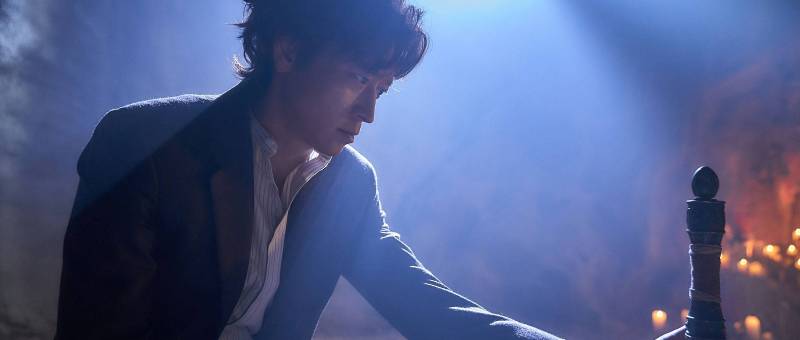
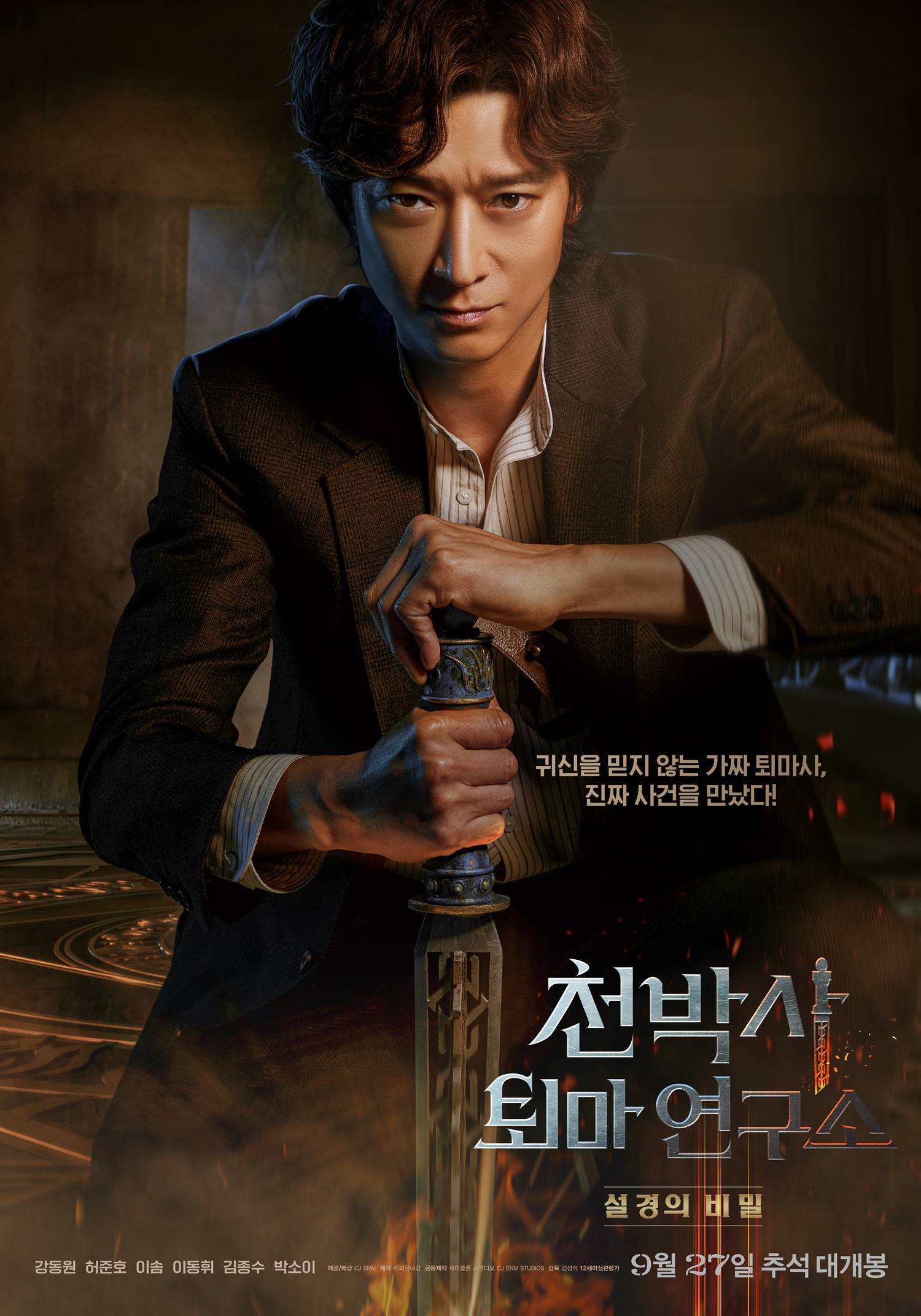
Rebound (리바운드, Jang Hang-jun, 2023)

A collection of underdog teens learn a few valuable lessons in perseverance and determination while taking their moribund high school basketball team all the way to the national championships in Jang Hang-jun’s sporting drama, Rebound (리바운드). Inspired by the real life tale of Busan Jungang High School’s meteoric rise from obscurity to top rated team, the film quietly touches on inter-city rivalry and social inequality while otherwise spinning an inspirational tale of the power of solidarity and a never say die spirit. 

They are all in their way rebounding from something, and not least the team itself which is threatened with closure after being judged a bad investment by the penny pinching headmaster given its “embarrassing” series of total losses across a series of years. The team is given a brief reprieve but only as a token of its former reputation, the plan being to have one just for show but not actually enter any competitions while the school let it gradually fall into obscurity. Accordingly, they begins looking for “cheap” coaches who might be prepared to manage a phantom team and eventually land on 25-year-old social worker Kang Yang-hyun (Ahn Jae-hong) who is a former minor leaguer and alumnus of the school looking to reclaim his own failed hoop dreams vicariously through a new generation of new players. 

There are however only four left on the team, two of whom immediately quit leaving Kang scrambling around the city looking for tall boys who might be good with a ball and can be convinced to switch schools. The problem they have is that talented players are quickly snapped up by more prestigious institutions in Seoul which can after all offer more opportunities to ambitious youngsters aware that they probably won’t be playing basketball for the rest of their lives. No one really envisages a future for themselves in Busan which remains a kind of underdog in itself as it struggles against the the allure of Seoul as place of greater sophistication and possibility. Keen basketballer Ki-bum (Ahn Jae-hong) turns down Kang’s offer for just this reason insisting that his career is dead if he stays in Busban even while his parents seems to be turning down good offers on his behalf. He only agrees to join the team on learning that ace player Jun-yung (Lee Dae-hee) will be playing for them. 

Jun-yung is valued mainly for his height which sort of runs against the messages of the game in that it’s not something the players can control and no matter how hard they train they will always be at a disadvantage to those who are simply bigger. Kang’s first mistake is that he builds everything around the pillar of Jun-yung, barely letting the other players play while instructing them to pass every ball to him so he can shoot. In any case, Jun-yung too is eventually poached by a better team apparently forced to betray his teammates by his ambitious parents who are after all merely making what they see as a smart decision on his behalf. A disastrous fight between two players with unfinished business from middle school also results in a lengthy suspension ending the team’s hopes of competition success for the current season. 

But as Kang later says, it’s only really a “fake failure” in that it gave him a rebound he could use to realise his mistakes and start over prioritising their shared love of the game over his own insecurity now more willing to take a risk while concentrating on making the team as good as it can be rather than the external validation of championship wins. As he later tells them in an inspirational locker room speech, not all of your shots go in but that’s OK because they come back to you on the rebound and what matters is what you do with them then. Whatever happens, life goes on and fear of failure is not a reason to give up on something you love.

Jang does his best to avoid underdog sports movie cliches while subtly hinting at the pressures of social inequality as moody player Gang-ho (Jung Gun-joo) struggles with an old injury he couldn’t afford to have treated properly while trying to make extra cash betting on basketball games with other wayward neighbourhood kids. Capturing a real sense of energy in the various basketball games along with a wholesome sense of possibility as the team begin to bond and “improve” each other, Jang is careful not to be blinded by a false narrative of inspirational success but rather doubles down on the rebound mentality of seizing opportunities as they come and continuing to chase your dreams in your own way no matter how hopeless they may seem. 


Rebound screened as part of this year’s New York Asian Film Festival.

International trailer (English subtitles)

Images: ⓒ 2023 NEXON Korea Corporation, B.A. ENTERTAINMENT, WALKHOUSECOMPANY ALL RIGHTS RESERVED

The Childe (귀공자, Park Hoon-jung, 2023) [Fantasia 2023]

“Isn’t money great? Everything is solvable with it” according to a lawyer working for an ailing chaebol CEO, but for the man he’s talking to money is at the root of all his problems because he doesn’t have any and is therefore powerless not least to save his equally ailing mother who needs an expensive operation to survive. The latest action drama from Park Hoon-jung, The Childe (귀공자, Gwigongja) implies an apparent focus switch in that the korean title, Nobleman, is also that of its absurdly cheerful assassin. “Childe” in its medieval spelling may simply be an attempt to lend a eerie mythical quality similar to the way the word “witch” is used in Park’s previous films, but in its original meaning also hints at the ostensible protagonist’s liminal status as a “nobleman” who has not yet come of age. 

That’s in part because Marco (Kang Tae-joo) has no idea of his parentage, only that his father was Korean and returned home alone leaving him and his mother behind in the Philippines. Referred to by a derogatory term for children fathered by Korean men as a result of sex tourism, Marco is an embittered young man filled with resentment and little hope for the future whose literal fatherlessness is an allusion to his cultural orphanhood. His mother sent him to Korean schools and raised him only to speak English and Korean, either feeling some affection for his absent father or more practically deciding he might have a better life as a Korean even if in the end neither culture fully accepts him. He would never have attempted to look for his father were it not for his mother’s illness hoping in some way to make him accept responsibility for his actions and the family he abandoned. 

In essence, Park uses the ailing chaebol patriarch’s familial irresponsibility as a wider metaphor for corporatising colonialism and exploitation while emphasising the corrupting influence of chaebol culture in which money really can solve pretty much everything even, it’s implied, imminent death. Picked up by a slick lawyer, Marco is told his father is looking for him too because, ironically enough, he is also ill and near death so simply wants to see the son he abandoned. Chairman Han will fly him to Korea and also cover his mother’s medical bills if he agrees to come but once he arrives Marco realises he’s in a very precarious position caught in the middle of a succession battle between his two half-siblings who each see him only as a pawn and ultimately want him dead. A mysterious assassin billed as The Nobleman (Kim Seon-ho) but introducing himself only as a “friend”, possibly the last you’ll ever make, is hot on his tail though his motivations remain unclear. 

As in some of his other films, Park hints at a mysterious shadow world filled with conspiracy and dominated by chaebol interests though in this case the figure of the corrupted patriarch takes on a poignant sensibility in which he too has become little more than a pawn. It appears he may disapprove of his children’s actions and actually has a genuine interest in meeting the son he abandoned who is like the hero of a fairytale the most just, deprived of his birthright by the greedy machinations of others. The abiding mystery may be why the chairman is kept alive though it seems that oldest son Yi-sa (Kim Kang-woo) is otherwise unable to maintain control of the corporate empire without recourse to his father’s identity for he has little power of his own. 

That might go some way to explaining the absurdity of his sociopathic violence, wandering around in a bathrobe carrying a shot gun and executing newspaper editors who’ve tried to expose their dodgy dealings in the midst of a vast estate bordered by forests. Even the school girl half-sister roams around with a pistol taking pot shots at Marco and The Nobleman but interestingly not at Yi-sa or the Chairman which hints at an odd kind of familial solidarity even in this incredibly dysfunctional and corrupt environment along with a wilful determination to deprive Marco of what may be his birthright. As with his previous films, Park loads up on gore delivered with more than a little absurdity in a series of high impact action scenes, but finally returns again to an unconventional friendship and unexpected brotherhood between the powerless and dispossessed in a sense at least reclaiming something that was theirs by right with the only means at their disposal. 


The Childe screened as part of this year’s Fantasia International Film Festival and is released in the US courtesy of Well Go USA.

International trailer (English subtitles)

Mother Land (엄마의 땅: 그리샤와 숲의 주인, Park Jae-beom, 2022) [Fantasia 2023]

A little girl becomes the spiritual defender of her traditional culture in her quest to cure her mother’s mysterious illness in Park Jae-beom’s stop motion fairytale, Mother Land (엄마의 땅: 그리샤와 숲의 주인, Eommaui Ttang: Geulisyawa Sup-ui Ju-in). Taking place seemingly in mid-20th century Siberia, the film focusses on the Yates people, nomads who live on the tundra raising reindeer in much the say way they have for centuries even as their existence is threatened by the militant modernity of Soviet Russia.

Krisha is a young woman who has begun having strange dreams believing she can see a huge red bear with shining eyes. Distracted, she is almost hurt when wind threatens to blow their half-built yurt down during a move but is saved by her mother, Shura. Shortly after they are visited by Captain Vladimir and Bazak, a member of the Yates who has betrayed his people to team up with the government in an effort to kill the “Master of the Forest” in order to claim the tundra and bring it into a fully modern society. When Krisha’s father Tokcha tells him it’s not a good idea and he’ll be punished for desecrating their sacred land, Vladimir counters that they too should join the collective farm threatening the very survival of their traditional culture. After insisting that the tundra is their home and they won’t leave it, Shura is taken ill with a mystery condition a shamaness says she has only seen in a Western village which no longer exists. 

It could be said that Shura’s sickness is born of the threat that modernity poses though her family is faced with a choice over what to do about it. The shamaness says she knows no cure and their only hope lies in visiting The Master of Forest to ask for his help but Tokcha balks that no one’s ever seen him and he’s not convinced that he exists let alone that he could help. While Krisha wants to follows the Shamaness’ advice, her father instead decides to ride into the city in search of modern Western medicine. Once he’s gone she secretly steals away with her little brother Kolya and their trusty reindeer steed Serodeto to look for the Master of the Forest whom she thinks may be the big red bear that’s been haunting her dreams. 

When she eventually finds him, the bear tells her that it is not his place to save her mother though he has been waiting for her for he believes she has come to save him. Bazak, who is in search of vengeance for his wife and daughter, asks what the point is of a god who only watches while others suffer but Krisha comes to see him as a manifestation of the healing power of the land he tells her is being lost because of its mistreatment by those like Captain Vladimir who describes Tokcha as an “arrogant barbarian” and has no respect for his culture or even for nature itself. 

Vladimir isn’t wrong when he calls the tundra the hope of the country though obviously not in the way that he means it. Krisha’s quest to save her mother is also a quest to save her land, the bear and her mother becoming symbolically linked while Krisha develops a maternal sense of herself as a guardian of her culture insisting that she will remain on the tundra practicing what she’s learnt as a link between heaven and earth. 

Even so, Park captures a sense of nature red in tooth and claw in the opening scenes in which a deer is butchered and some of its blood returned to the land in a ritual of gratitude to mark its sacrifice. The icy emptiness of the tundra is broken only by the appearance of Vladimir’s military van spewing black smoke into the otherwise pure landscape, while Park’s designs have a kind of warmth in their tactile quality from the powdery snow to the fabric covering the yurt and the tunic made for Krisha by her mother out of deer pelt and fur. Impressive scenes of wolves running are tempered by quiet moments of self-reflection as Krisha goes about her quest and begins to accept her destiny as a guardian of her culture. A quietly powerful fable, the film mediates on gods and nature along with the costs of modernity but ends on a note of comfort and relief in a longed for reunion and a restoration of normality.


Mother Land screened as part of this year’s Fantasia International Film Festival.

International trailer (English subtitles)

Greenhouse (비닐하우스, Lee Sol-hui, 2022)

A middle-aged woman makes a series of questionable choices while pursuing her dream of a stable home with her teenage son in Lee Sol-hui’s downbeat tale of life on the margins of contemporary Korea, Greenhouse (비닐하우스). The Korean title of “Vinyl House” might be a little more accurate, in that the heroine lives in a disused polytunnel on an allotment her son later says the family used to go to every weekend before his parents’ divorce while eagerly waiting for his return after which she hopes to start again.

The son, however, first says that he has no desire to live with her and intends to stay with an uncle after leaving juvenile detention. The film never directly states what led him there, but he later mentions he and some friends all seemingly released at the same time used to break into houses owing to having “nowhere to drink.” One of his chief objections seems to be his mother’s lack of a more traditional home and the embarrassment it causes him with his delinquent friends which is one reason why Moon-jung (Kim Seo-hyung) is desperately saving her money for a deposit on a modern flat and a life of comfort she can otherwise only dream of. She has a job as a housekeeper for a wealthy older couple, the wife has dementia and is paranoid Moon-jung is trying to kill her, and the husband has all but completely lost his sight, but faces the implosion of her dreams with the announcement that they are considering moving into a nursing home.

In a repeated motif, Moon-jung often violently slaps herself on the side of the head in an apparent act of self-harm. Explaining that she used to see a psychiatrist but can no longer afford it, she joins a support group for people in a similar position and encounters a vulnerable young woman, Soo-nam (Ahn Ji-hye), with whom she later develops a sisterly connection after realising that she may be trapped in an abusive relationship she is unable to escape because of her learning difficulties. 

They are each in their way pushed out of mainstream society by virtue of their age, poverty, or disability and largely reliant on the kindness of strangers that rarely comes their way. The film only ever hints at the hard life Moon-jung may have lived but suggests that her past trauma may help to explain some of her otherwise incomprehensible decisions after the old lady hits her head and presumably dies in a domestic accident. While she cares for a wealthy older couple who remain independent in their own home, Moon-jung’s mother lives a miserable life in an inexpensive nursing home. A woman visiting her roommate soothes and strokes her mother encouraging her to keep on living as long as possible even if it’s “like this” while Moon-jung seems to have mixed emotions, on one level guilty not to be able to care for her mother herself and perhaps wanting to be relieved of any responsibility towards her. 

In some ways, Moon-jung’s tragedy may be that she is at heart just an ordinary, decent person and is torn between a genuine desire to help and care for others and a cynicism that tells her she is foolish for doing so. She wants to help Soon-nam perhaps identifying with her suffering, but is also resentful of her sudden attempt to latch on to her and fearful her presence may disrupt the new life she dreams of with her son which is the only ray of hope in an otherwise miserable existence. When that dream is threatened she decides to anything she can to save it even if it seems obvious that her series of bad decisions will not pay off because her subterfuge will quickly be exposed. 

What she doesn’t bank on is the sheer magnitude of cosmic ironies the film throws at her in which every avenue of her life is somehow undermined by another from her relationship with the elderly couple to her friendship with Soon-nam, and a romance with a man who may have been in someway abusive. Exploring the hopelessness experienced by an abandoned generation whose children have mostly moved abroad and outsourced their care, the plight of women like Moon-jung trying to do their best but frustrated by extreme bad luck, and vulnerable young people like Soon-nam who has no one to defend her as an orphan with learning difficulties, the film may suggest that they are each trapped in the hothouse of the modern society baked alive by hopelessness and indifference while struggling to find a place for themselves in an increasingly unforgiving city. 


Greenhouse screened as part of this year’s New York Asian Film Festival.

Original trailer (Korean subtitles only)

Killing Romance (킬링 로맨스, Lee Won-suk, 2023) [Fantasia 2023]

A once famous actress sets out to reclaim her autonomy from an abusive, controlling, billionaire husband in Lee Won-suk’s hilariously off the wall comedy Killing Romance (킬링 로맨스). Partly a satire on the extreme power of wealth, social inequalities in contemporary South Korea, toxic masculinity and rampant patriarchy, along with the stigma of failure and loserdom, the film is also an inspirational rallying cry to break of oppressive social codes and embrace your authentic self even if others don’t quite understand. 

It’s a sudden fall from grace for top star Yeo-rae (Lee Hanee) that causes her to rethink her career goals when a sci-fi movie she starred in becomes a cult hit for all the wrong reasons leaving her a national laughing stock derided for her poor performance. Deciding to get out of the spotlight for a while, she travels to the remote island of Qualla but is immediately mugged by locals and rescued by mysterious Korean billionaire environmentalist Jonathan (Lee Sun-kyun) who sees them off with a well placed Taekwondo neck chop. One has to wonder if Jonathan had that set up, but in any case Yeo-rae soon falls in love with her handsome suitor and the pair marry. 

But seven years later it’s clear the marriage has not been a success. Yeo-rae is miserable, trapped in the ostentatious house Jonathan has had built in Seoul which is covered in oversize pictures of himself in muscle poses. He controls everything in her life right down to what she eats because he likes her at a certain weight and even goes so far as to cancel a job offer on her behalf telling the director of a movie she wanted to star in that she’s mentally ill while pelting her with tangerines for daring to envision a life as anything but a doll for him to play with. 

His control over her is born of a sense insecurity that his money cannot cover. Attempting to strike an alpha male persona, Jonathan wears a fake moustache and struts around in ostentatious outfits but is also always accompanied by his well-built bodyguard Bob while waited on hand and foot by twin servants he refers to as “The Susans”. The romantic song he uses to control Yeo-rae through a kind of brainwashing isn’t even his own but a pop hit from 1997, while Yeo-rae tries to recover herself by singing her own iconic hit Yeo-raeism (a repurposed version of the classic hit by Rain, Rainism) with its defiant chorus of “I’m gonna be a bad girl” in her attempt to shake off Jonathan’s patriarchal programming. 

Jonathan’s bid for hyper masculinity, his hatred of losing, is subverted in the the softness of Yeo-rae’s top fan Bum-woo (Gong Myung) who is perpetual student on his fourth attempt to get into Seoul University in the hope of fulfilling familial expectations. On realising his new next-door neighbour is none other than his favourite idol, Bum-woo figures out that she’s trapped and abused by Jonathan and is determined to rescue her even if it means killing him but is in reality too nice to carry it through. A bizarre series of assassination plots using paper aeroplanes and Jonathan’s personal kryptonite peanuts along with an attempt to steam him to death in a sauna flounder when a remorseful Bum-woo saves him at the last second potentially swayed by Jonathan’s promise to “change his life” in gratitude. But in the end neither he nor Yeo-rae are fully capable of actually killing him or escaping his control. After all, “Jonathan is above the law” as Yeo-rae laments.

Then again, even he seems to be a little swayed by her song as do his yellow-clad henchmen slowly moving to the music persuaded by her beat over his. The battle ends in a huge sing-off in which Yeo-rae is joined by her ever supportive fan club and finally gets to dance to her own tune accompanied by a cohort of “losers” fighting back against sneering chaebol oppression though vengeance eventually comes from an unexpected source. Quirky in the extreme, Lee plays with a retro ‘70s aesthetic framing the story as a fairytale performed Log Lady-style by an old woman for a TV children’s book hour while throwing in constant references to ostriches and tangerines along with zany karaoke and musical sequences in a deadpan fantasia of self-actualisation that is quite simply sublime.


Killing Romance screened as part of this year’s Fantasia International Film Festival.

International trailer (English subtitles)

Night of the Assassin (살수, Kwak Jeong-deok, 2023)

The vagaries of the times take a toll on the heart of a killer for hire in Kwak Jeong-deok’s low budget historical drama, Night of the Assassin (살수, Salsu). Set in feudal Korea, the film takes place in a world in which “human lives have no meaning” and corrupt authorities fight amongst themselves while exploiting the suffering people for their own gain. As someone later says there is no end to a person’s greed in this constantly uncertain society. 

Inan (Shin Hyun-joon) is regarded as the best assassin in Joseon seeing as his targets always end up dead, but it seems the moral duplicities of his life as a sword for hire have begun to weigh on him and resulted in a heart that is in effect broken. His doctor warns him that his body can no longer support martial arts (or sleeping with women) while the only thing that might help him is a mythical herb, Mahwangcho, he isn’t really sure actually exists. Weakened as he is, knives are quickly out for Inan though somehow he manages to escape living a quiet life searching for the herb and reflecting on the dark deeds of his life. 

A year later he fetches up in a village where he’s taken in by a widow, Seon-hong (Kim Min-kyung), after making a non-violent intervention on seeing her bullied by local guards. Soon he becomes a waiter at her roadside restaurant and becomes a surrogate father figure to her young son, Chil-bok, who ironically enough wants to become an assassin when he grows up having become obsessed with a martial arts serial while determined to get revenge for his father who was killed by bandits while searching for a herb. 

The bandits are the reason Inan can’t just go and look for the Mahwangcho himself seeing as they pretty much own the mountain and are not so secretly in league with the guards where corrupt official and former gang boss Ibang (Lee Moon-sik) has made a bundle getting the local peasants hooked on opium so he can press them into debt and then take their land. Only, Ibang has had enough of working with bandit chief Baek Ga and figures he may as well use Inan, after learning his true identity, to take him out and put a weaker willed subordinate “in charge” while running things from behind the scenes. 

Inan is fighting a battle on several fronts, the first being his health and his reluctance to fight because of it which is also a symbolic manifestation of his moral conflict with his life as a hired killer. As he tells Chil-bok, they weren’t all bad guys even if he rationalises to himself that every one dies some day so today is as good tomorrow. Ibang justifies himself that he’s appeasing the bandits by containing them in the mountain while simultaneously peddling opium to the local population to make it even more difficult for them to resist him. Then again, Inan doesn’t rise up to free the villagers nor even to take out the bandits to get access to the mountain but only in defence of Seon-hong and her son when Ibang uses them to manipulate him into killing Baek Ga.

The film is framed as a kind of fable much like that in the serial Chil-bok is reading only related by an old friend of Inan’s who’s retired from the underworld and is attempting to live a quiet life in the country though as he points out real life doesn’t always have a neat ending. As such, the film works in a minor hook for a sequel in the mysterious identity of whoever it is sending assassins after Iban and the reasons why they want him dead though there may be a kind of explanation in the flashback scenes to his life as a young assassin. Likewise, the film has a kind of episodic structure in which Iban battles with a coldhearted mercenary much like himself and a female assassin with red eyes who seems to have some kind of hypnotic superpower. Though obviously constrained by budgetary limitations, Kwak’s attention to costuming and architecture help lend a potent sense of place to the feudal-era setting while the visceral quality of the action scenes reinforces Inan’s existentialist questioning in a land in which human life has little value.


Night of the Assassin is available to stream now in the US via Hi-YAH! and will be released on DVD & blu-ray Aug. 8 courtesy of Well Go USA.

International trailer (English subtitles)
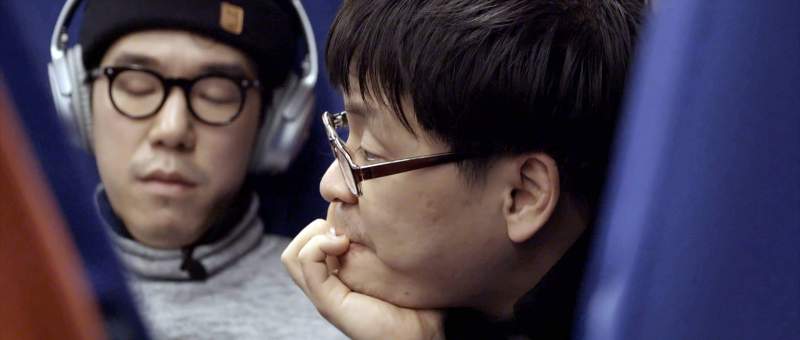
Devils (악마들, Kim Jae-hoon, 2023) [Fantasia 2023]

A detective consumed by thoughts of vengeance suddenly wakes up in the body of the serial killer he had been hunting, but how can we truly know who is who when each is so transgressively corrupt? The pluralisation in the title of Kim Jae-hoon’s bodyswap thriller Devils (악마들, Akmadeul) is no accident as the two men become in some senses interchangeable, their identities constantly shifting and largely dependent on those ascribed to them by others. “If you closed your eyes you’d swear he was Jae-hwan,” his confused partner admits though having witnessed him brutally torture a suspect/witness by hammering nails into his thighs. 

Jae-hwan’s (Jang Dong-Yoon) rage is partly born of guilt in that he failed to properly support his previous partner, who was also his brother-in-law, during a raid on a killer’s lair during which he got his throat slit by sadistic murderer Jin-hyuk (Oh Dae-Hwan) who has been brazenly posting snuff videos on the internet while continuing to evade the police. Two years later, Jae-hwan has been partnered with reletive rookie Min-sung and is determined not to make the same mistake when they get another shot at Jin-hyuk instructing him to stay behind and let Jae-hwan lead. But during the operation Jae-hwan goes rogue, chasing Jin-hyuk on his own and going missing after diving over a ridge in the woods. A month later a car carrying both men rams into a bollard outside police HQ only when he wakes up Jin-hyuk insists on speaking only with Min-sung and claims that he is in fact Jae-hwan.

Of course, Min-sung doesn’t really believe him despite being presented with information only Jae-hwan would know but is a little more convinced on visiting his former partner and observing him behaving strangely. The problem is, how can you tell the difference between a man using extreme violence for “justice”, which in this case is actually revenge, and one who uses it for pleasure? After teaming up with him, Min-sung is called to a station and assists Jin-hyuk/Jae-hwan drag an old man to a grimy trailer in the woods where he tortures him into giving up information on his fellow criminals by hammering nails into his legs while filming his “confession” as the kind of backup evidence which can’t be used it court but still might prove useful. You could say that it’s Jin-hyuk’s subconscious poking through, but Min-sung is fairly unfazed by this unorthodox investigative tactic and his conviction that Jin-hyuk is really Jae-hwan never wavers despite seeing him commit such a violent act so naturally.

Jae-hwan too hints at similarity between himself and Jin-hyuk when he complains that as a police officer he must “fight inside the fence known as law,” while the criminals are bound by no such constraints. He completely misses that this is what ought to separate them, to make their identities distinct, but now they are more or less the same in Jae-hwan’s willingness to turn vigilante, step outside the protection of the law, and do anything it takes to catch Jin-hyuk. “You’ve got my face, take advantage of it” Jae-hwan/Jin-hyuk sneers as he sends his opposite number to catch the men that have betrayed him, while each of them is to an extent adept at playing the role assigned to them at this and any given time. 

It goes without saying that the women who were murdered in the snuff videos have been more or less forgotten, Jae-hwan’s desire to catch Jin-hyuk is born of that to avenge himself as a policeman and gain vengeance for his brother-in-law’s death. In a pointed exchange, Jin-hyuk asks Jae-hwan how he knows that he is not merely toying with him, allowing Jae-hwan to think that he’s manipulating him but secretly in control, hinting at a kind of cat and mouse game between the two to claim the identity of the chaser and the chased. Yet whichever way you look at it, Jae-hwan has overplayed his hand, releasing a “hunting dog” he can’t control with disastrous consequences for himself and others. With a distinctly B-movie sensibility, Kim plays with identity and the malleability of memory to ask if we can really be sure of who we are at any given time while suggesting that’s something Jae-hwan should have been asking himself in his relentless pursuit of his spiritual mirror.


Devils screened as part of this year’s Fantasia International Film Festival.

International trailer (English subtitles)

Phantom (유령, Lee Hae-young, 2023)

Neatly subverting the drawing room mystery, Lee Hae-young’s intense colonial-era spy thriller Phantom (유령, Yuryeong) positions female solidarity as the roots of resistance towards oppressive militarist rule. Inspired by Mai Jia’s novel Sound of the Wind which focused on Chinese resistance towards the Japanese puppet government in Nanking, the film does indeed begin with the suggestion that one of the people in this room is a spy but soon encourages us to wonder if they all may be or some other game may be being played by an infinitely corrupt authority in the midst of a constant series of betrayals and reversals.

Opening in Kyungsung (modern day Seoul) in 1933, the film both begins and ends with a radio broadcast in Japanese reporting on the actions of “terrorist” group known as the “Shadow Corps” which has been conducting “organised crime” through a network of spies known as “Phantom”. An assassination attempt has recently been made in Shanghai on the new Korean governor and all members of the organisation are reported as dead following shootout with the Japanese authorities, though that obviously turns out not to be the case and we are quickly introduced to operative Park Cha-kyung (Lee Hanee) who works in the intelligence division of the colonial government and utilises a local cinema permanently screening Shanghai Express to communicate with her handlers. New instructions are boldly announced in plain sight through coded messages on cinema posters including one for Tod Browning’s Dracula. 

The group plan to assassinate the new governor when he visits a Japanese shrine in the city. A young woman dressed as a Shinto shrine maiden using a pistol concealed in a tray manages to wound but not kill him. She makes an escape but is shot by an unseen hand that could have come from either side. Following, Cha-kyung witnesses her death but can do nothing other than make a swift disappearance before the authorities arrive. Cha-kyung is often depicted as a shadow presence, disappearing phantom-like from the scene both there and not there as she tries to maintain her cover, but Lee also imbues her with an additional layer of repression in that the assassin, Nan-young (Esom), had been her lover. The two women meet briefly outside the cinema in an emotionally charged scene in which they can display no emotion as they must appear to be two strangers exchanging a match on the street though it’s clear that something much deeper is passing between them. 

The exchange of cigarettes itself becomes repeated motif standing in for deepening intimacy in an atmosphere of intense mistrust. The box of matches that Cha-kyung had given to Nan-young as a parting gift and means of buying a few seconds more, blows their operation in leading investigating officer Takahara (Park Hae-soo) to a bar opposite the cinema where he figures out their code. Seemingly unsure as to who is the “Phantom”, he rounds up five suspects and takes them to a clifftop hotel where he encourages them to identify themselves or else they will be interrogated the following day. Along with Cha-kyung whom we already know to be “a” if not “the” Phantom is a police officer against whom Takahara bears a grudge (Sol Kyung-gu), the governor’s flapper secretary Yuriko (Park So-dam), codebreaker Cheon (Seo Hyun-woo) who is very attached to his cat, and terrified mailroom boy Baek-ho (Kim Dong-hee). 

Lee keeps the tension high and us guessing as we try to figure out what’s really going on, who is on which side, and if there’s to this than it first seems. Cha-kyung too seems uncertain, unable to trust any of her fellow suspects who obviously cannot trust her either while trying to maintain her ice cool cover. With sumptuous production design evoking the smoky, moody elegance of the 1930s setting, Lee drops us some clues in focussing on footwear particularly Cha-kyung’s ultra-practical boots and Yuriko’s totally impractical high heels and fancy outfits which as it turns out may have their uses after all when the simmering tension finally boils over and all hell breaks loose at the combination luxury hotel and state torture facility. In any case, as we gradually come to realise, the real “Phantom” the title refers to may be Korea itself, the resistance fighters accused of clinging on to the ghost of a nation which no longer exists while themselves rendered invisible, forced to live underground until the liberation day arrives. 


Phantom screens July 30 as part of this year’s New York Asian Film Festival.

International trailer (English subtitles)

Images: ⓒ 2023 CJ ENM Co., Ltd., THE LAMP.ltd ALL RIGHTS RESERVED

Dream (드림, Lee Byeong-heon, 2023)

A disgraced football player gets a shot at redemption after agreeing to coach a team hoping to take part in the Homeless Olympics in Lee Byeong-heon’s sporting drama, Dream (드림). The Homeless Olympics was founded in order to advocate for the end of homelessness while combatting discrimination and stigma and takes place annually with teams of homeless people from all over the world taking part. Set in 2010 and inspired by the first Korean delegation to participate, the film is essentially an underdog sports drama in which the act of scoring a single goal is the same as an overall victory.

It is also, meanwhile, heavily critical of celebrity and sensationalist media each of which have a habit of latching onto popular causes in order to further their own careers. Hong-dae (Park Seo-jun) was a popular footballer insecure in his talents, but gained notoriety after poking an obnoxious reporter in the eyes when he repeatedly brought up the topic of his mother who happens to be a fugitive from justice. Deciding to retire from the game, Hong-dae is picked up by a talent agency who want to make him a star and is convinced to become the coach of the homeless football team in order to improve his personal brand while documentarian So-min (Lee Ji-eun) hopes to do something much the same by producing a semi-scripted reality show following the team’s fortunes.

Accordingly, So-min instructs Hong-dae to let her “cast” the key players on the basis of their touching backstories rather than their sporting ability. She comes up with a selection of people who have each for various reasons ended up on the streets but are looking for a way to turn their lives around and repair fractured relationships with family members. One man turned to booze and women while riding high but found himself out of luck when the Asian Financial Crisis ruined his business, while another claims that he’s not really homeless just lying low for a while, and a third was scammed by a friend and saddened by the impending exit of his ex-wife and daughter who will shortly be moving to Australia with her new husband. The film strays into more interesting territory in exploring the story of 44-year-old Beom-su (Jung Seung-gil) who ended up on the streets after a workplace accident left him with a chronic illness he did not have the money to treat, but otherwise falls into the same trap as So-min’s documentary in taking a fairly superficial view of homelessness. By the end of the film many of the players have thankfully moved into stable accommodation but do so largely without explanation aside from having apparently managed to save up for a deposit. 

Positioning their battle for sporting success as a means of reclaiming their self-esteem might also uncomfortably suggest that the reason they’re on the streets is a matter of mental attitude while ignoring other systemic issues that led them there or prevented them from moving on (assuming that they wish to do so). Aligning their struggles with Hong-dae’s and to a lesser extent So-min’s might do something similar while they too are also battling cynicism and self-esteem issues, Hong-dae continuing to blame his mother for his problems complaining that he was born to be second place because she never put him first. As Hong-dae later points out, So-min is also to an extent exploiting the homeless in trying to create an inspirational narrative for her TV show before she like everyone else realises there are other ways to win besides the literal. 

The final message is more one of never giving up as the team finally travel to the Olympics and find themselves out of their depth before deciding to give it everything they have even if it’s very unlikely they will win. There had indeed been discrimination in Korea, a sponsor pulling out describing the homeless as “smelly and disgusting” and expressing a degree of squeamishness about involving them with their brand, but at the Olympics they become the most popular team despite their lack of skill purely because of their charismatic perseverance. One player’s late in the game announcement that he is gay but has now come to accept himself in the knowledge that the problem lies with the world that will not accept him also makes the case for a greater equality if perhaps clumsily conflating two different issues. Nevertheless, IU’s lively performance and the film’s warmhearted tone help to overcome any mild sense of discomfort in its otherwise genial tale of never giving up and regaining your self-esteem even if you feel as if the world has already abandoned you. 


Dream screens July 17 as part of this year’s New York Asian Film Festival.

International trailer (English subtitles)
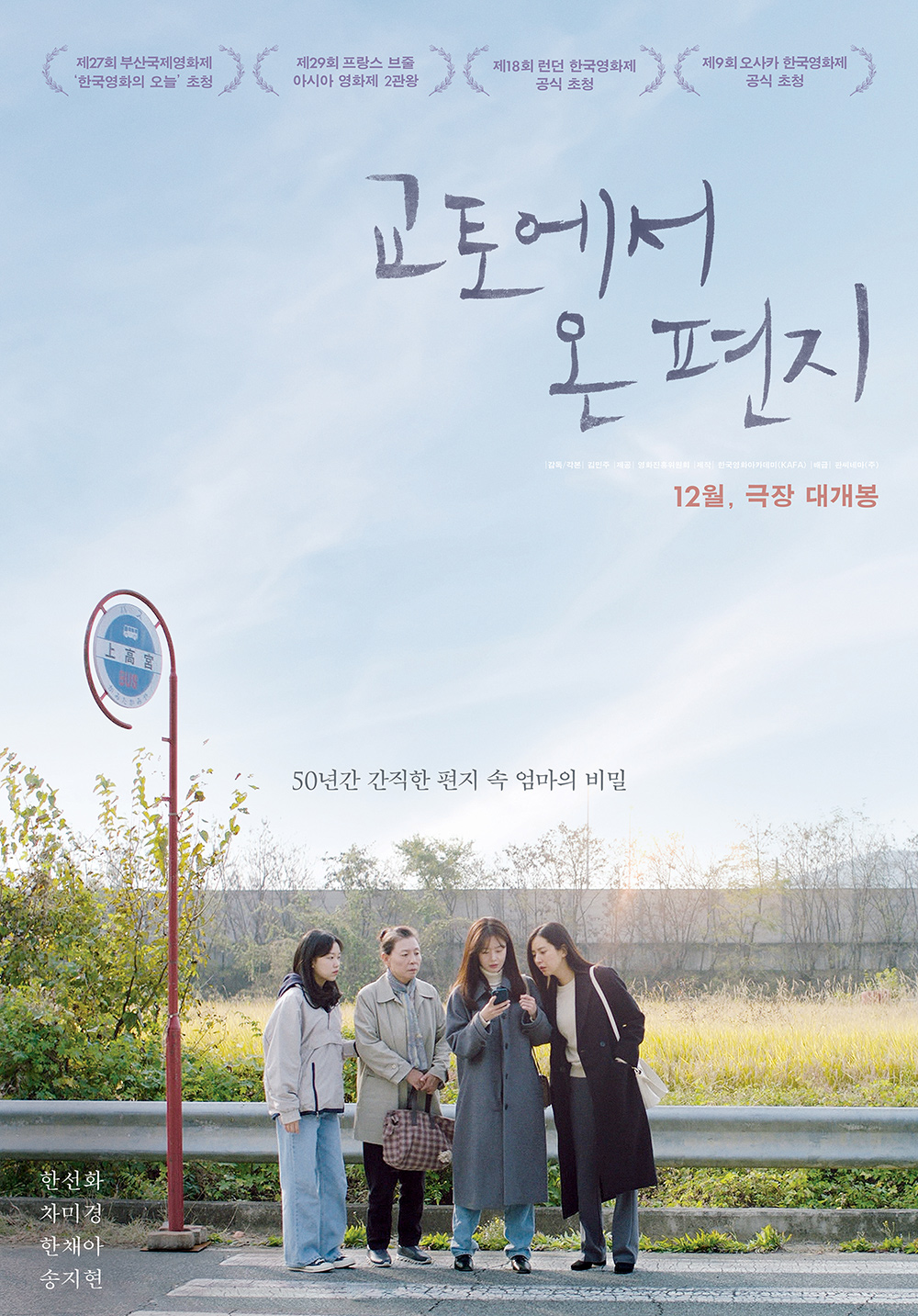
Images: © 2023 PLUS M ENTERTAINMENT & OCTOBER CINEMA INC. ALL RIGHTS RESERVED.

The Roundup: No Way Out (범죄도시 3, Lee Sang-yong, 2023)

Ma Dong-seok has been cultivating an image of himself as an action star for quite some time. The kind of marquee name who generally plays the hero, Ma looks back to the genre’s heyday presenting an uncomplicated vision of righteous masculinity, a bruiser with a heart of gold. The Roundup: No Way Out (범죄도시 3, Beomjoedosi 3) is the third in a series of films that began with The Outlaws and is projected to total at least eight instalments each starring Ma as the maverick detective his superiors hate to love. 

It’s true enough that you can’t get away from the more problematic elements of his unreconstructed good bad cop persona. We often see Seok-do (Ma Dong-seok) beat information out of suspects which the film treats as a cheeky joke in an otherwise tacit endorsement of police brutality that suggests red tape is the reason the guilty often evade justice. Meanwhile, in a step back from other Ma vehicles there are almost no women in the film and none in the police force. The heart of the case is the death of a 28-year-old woman who “fell” from a hotel room window and is later discovered to have died of a heart attack after being drugged in a club and dragged off by a random man who then literally threw her away to distance himself from the crime. The murder which Seok-do is supposed to be investigating is totally forgotten in his all encompassing drive to find out where the drugs are coming from which eventually descends into a battle of wits with a corrupt police officer who’s teamed up with a Korean-Japanese yakuza to skim his boss’ supply of new designer drug Hiper. 

There is a distinctly uncomfortable thread of xenophobia that runs through the series even if in this case the villainy is discovered closer to home in the form of police corruption. This time around, the threat is once again Japan which is apparently where Hiper originated though petty yakuza Tomo (An Se-ho) now manufactures it in Korea where he’s cut a freelance deal with dodgy cop Joo (Lee Joon-hyuk) to distribute it in the local night life scene without the knowledge of his boss back in Japan, Ichijo (Jun Kunimura). Joo has also cut a deal to sell the drugs to a Chinese gang, so it’s quite bad news for him when Ichijo gets wind of the situation and Tomo takes off with a suitcase full of pills for his own protection. Unluckily for him, Ichijo has already sent his most intimidating assassin, Riki (Munetaka Aoki), to find out what’s been going on behind his back. 

Problematic as it may be, Ma’s retro take on the action star is undeniably entertaining with his frequent hero moments and penchant for one liners. The first time he appears, we see him break up a street fight but mostly interested in finding out if the guy on the ground started it the implication being that perhaps if he did it’s none of his business but otherwise he’s going to have to intervene. Then again as he tells his exasperated boss, his personal motto is “punish and serve” and he’s here to get the job done even if that means wading in all fists blazing without much thought for regulations or procedure. At one point Seok-do and his guys stumble on a crime scene and walk around it touching everything in sight without bothering to even put on so much as gloves. 

In any case, Lee makes every punch land and quite literally as the screen seems to vibrate on contact almost as if the camera itself were taking a blow. Ma’s thunderous fists clash with the sound of justice as he all too easily disables hardened gangsters with one well placed slap. At times, his invincibility borders on the ridiculous but he does eventually allow himself be “defeated” if only temporarily as in his miraculous recovery from being run over by a gangster’s car. In many ways, Joo is Seok-do’s mirror, a bad bad cop with crazy eyes who kills without a second thought and behaves with narcissistic recklessness, overconfident in his abilities to sort his problems through his status as a law enforcement officer. Bruiser he may be, but Seok-do likes arresting people and never uses lethal force even when the opportunity is presented to him, symbolically snapping Riki’s katana and then proceeding to slap him seven ways to Sunday leaving the ice cool assassin collapsed amid a display of Japanese parasols. An end credits scene set three years later in 2018 sets up a fourth instalment and the return of a familiar face besides that of Seok-do himself who continues to charm as the world weary bruiser slapping down crime wherever it rears its ugly head. 


The Roundup: No Way Out is in UK cinemas now.

International trailer (English subtitles)