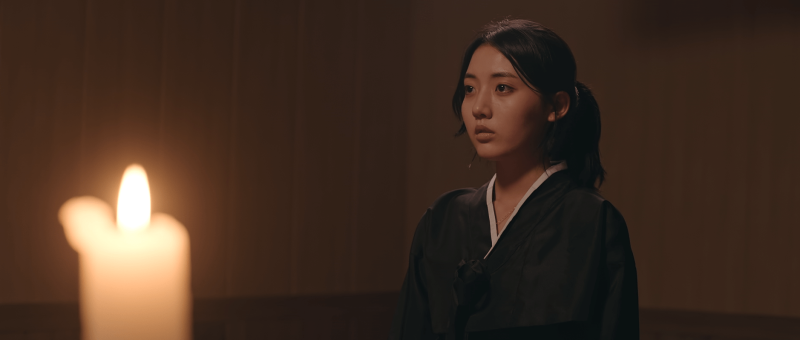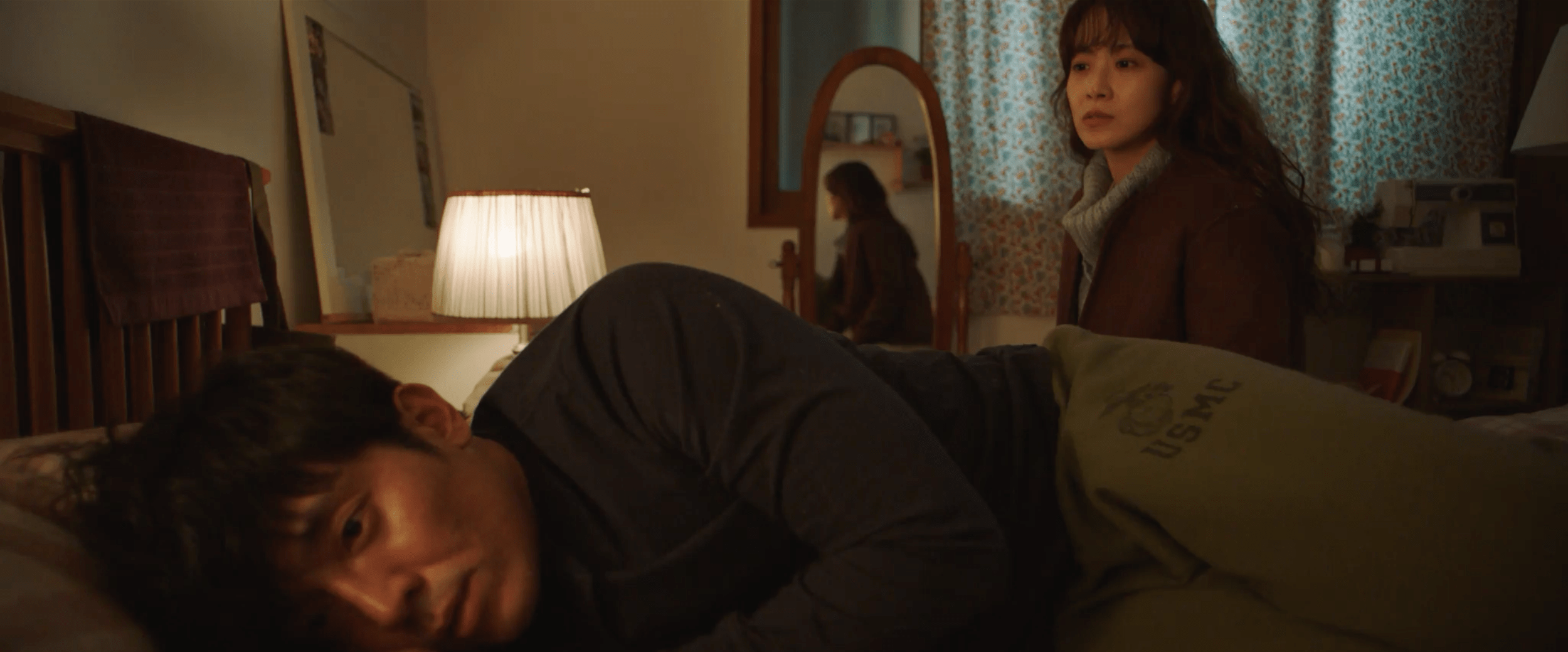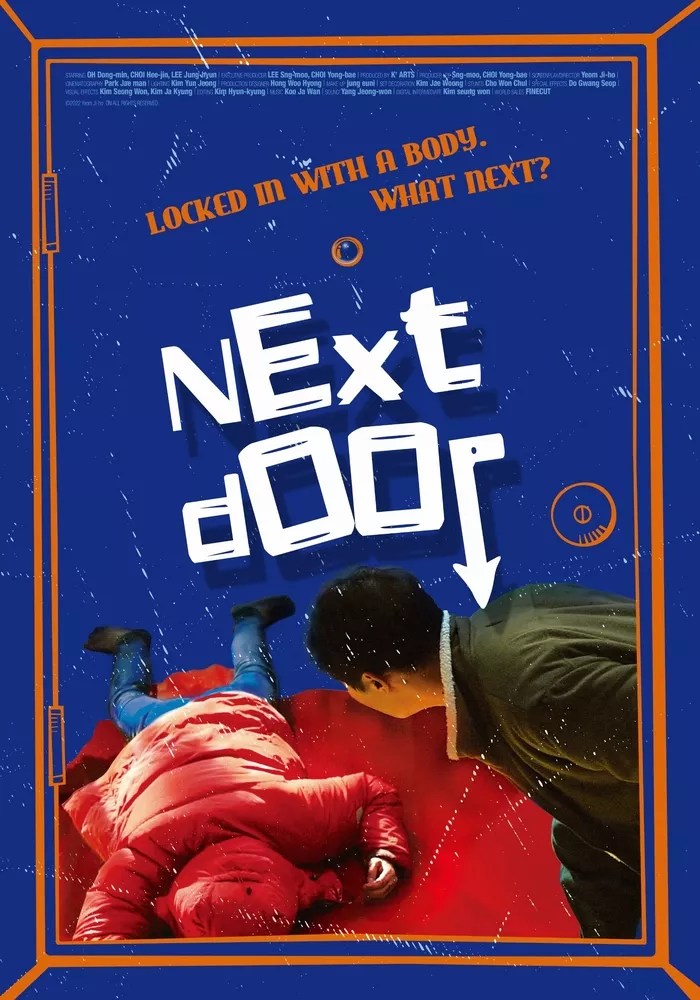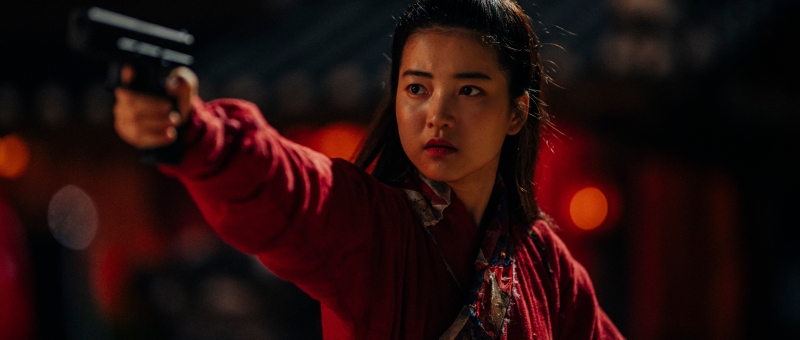
Next Sohee (다음 소희, July Jung, 2022) [Fantasia 2022]

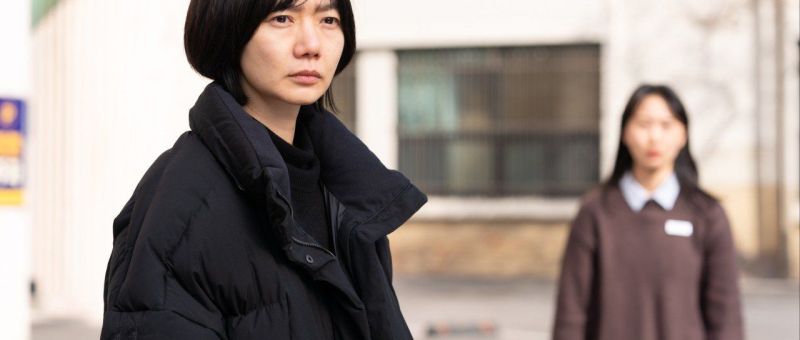
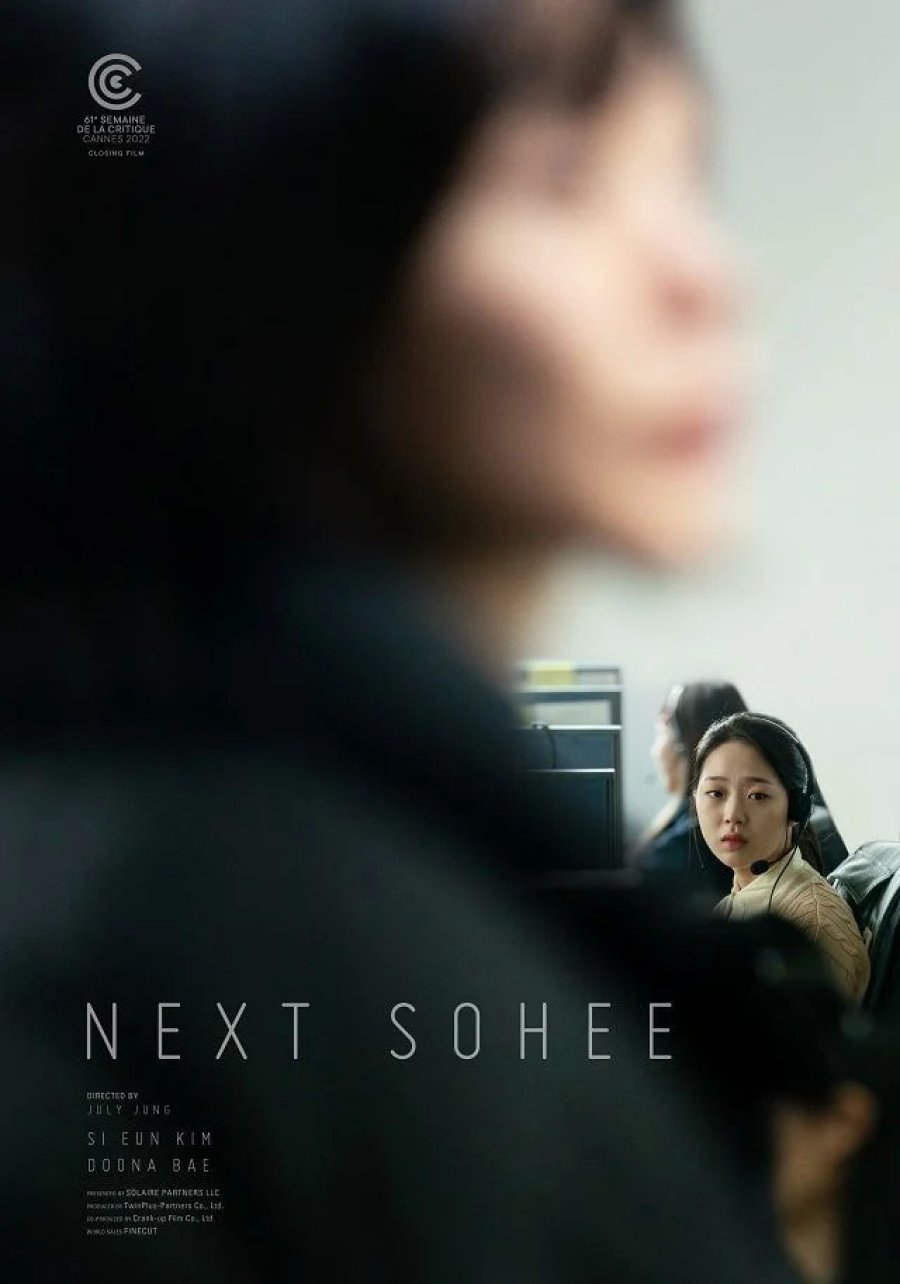
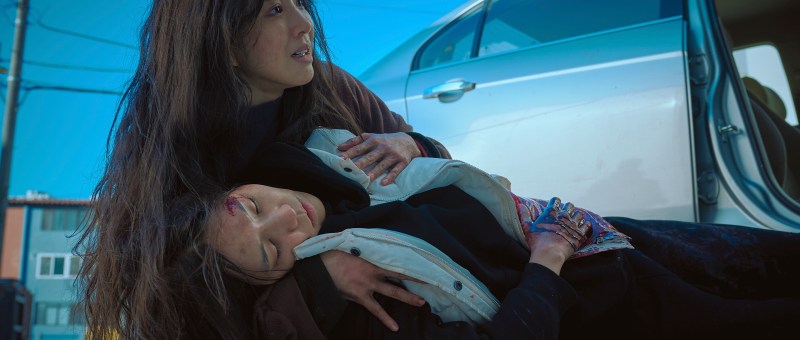
“She just went quietly” an older woman running a cafe explains to a police officer against all advice attempting to investigate the suicide of a young woman in July Jung’s long-awaited A Girl at My Door followup, Next Sohee (다음 소희, Daeum Sohee). In the end, Sohee (Kim Si-eun) did indeed go quietly, cowed into submission by the apparent hopelessness of her life amid the grinding crushingness of contemporary capitalism while even the policewoman who shares her fiery sense of outrage comes to a similar conclusion on uncovering the endemic abuses of the modern society. 

Jung devotes the entire first half of the film to Sohee’s slow burn disintegration as a high schooler selected as an “extern” for a call centre business while dreaming of becoming a dancer. These exploitative work experience programs are technically part of Sohee’s high school education and dropping out of them incurs the possibility of not graduating along with being “red tagged” by the school in a lesson in banishment room tactics which sees the kids forced to perform menial tasks such as cleaning the toilets while wearing clothing that marks them out as a failure who has brought shame on their institution. A proud young woman, Sohee is thought of as mentally strong and academically earnest originally excited by the extern opportunity which the teacher sells to her as being a cut above, she being the first of their students to land a position at a “major” company which is also feather in his own cap. 

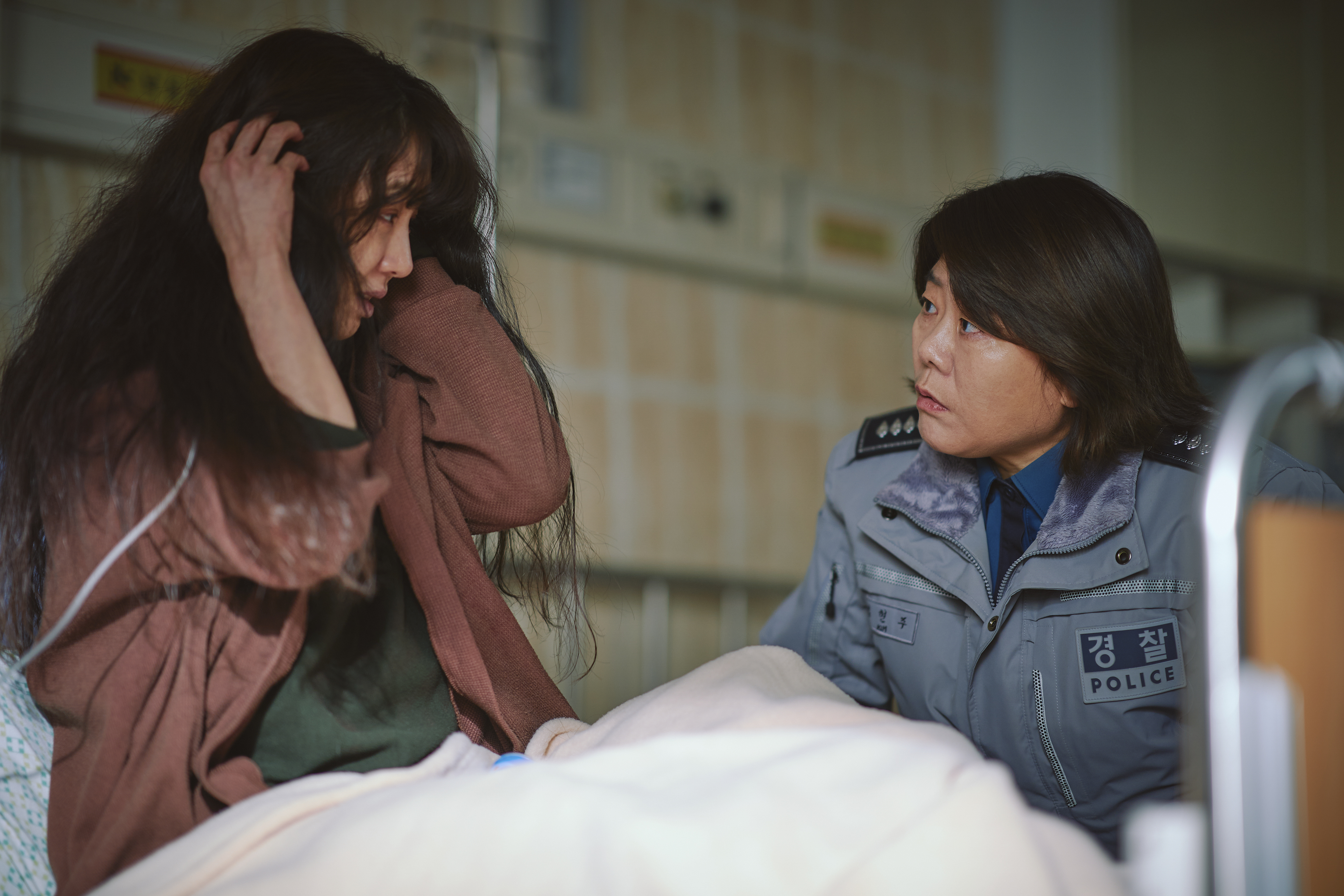
Later Yoojin (Bae Doona), the policewoman who briefly met Sohee at a dance class, asks the teacher why he didn’t bother to investigate what was really going on at the call centre but he only tries to shift the blame explaining that he needs to find good jobs for other kids to maintain the school’s rankings which means keeping on the good side of employers. As Sohee sat vacantly and cried having attempted to take her own life, he dismissed her concerns and told her to work harder. Each time Yoojin interviews an authority figure they tell her it’s not their fault, it’s the system, while blaming Sohee for having “attitude problems” and pointing out that she should have just quit if she wasn’t up to the job. 

But Sohee couldn’t quit in part because of the shaming culture that surrounded her in which she’s constantly reminded that her actions have negative consequences for others. Firstly she’s told that her subpar performance brings down their team’s rankings, then shunned by her colleagues because her top scores are pushing up the targets for everyone else. She doesn’t want to let her teacher down by quitting, and even on trying to explain to her parents after her first suicide attempt is simply told to work harder under the fallacy that if you obey all the rules and work hard you’ll be alright. The call centre is almost entirely staffed by externs, in the main teenage girls, who are made to listen to irate customers verbally abuse or sexually harass them while instructed that they must do whatever possible to stop them cancelling their accounts. The call that breaks Sohee comes from a sobbing father who wants to cancel because his child has died so he doesn’t need the service anymore but she still has to try and sell him a new TV package while giving him the run around on the contract cancellation. 

Because the externs have a high turnover, the company defers payment of their bonuses to discourage them from leaving while continuously docking their wages reminding them of the clauses in the contract they signed which state that remuneration is subject to change. Sohee was in fact forced to sign two different contracts so the company could get away with paying her below minimum wage which is a violation of what little labour law actually exists while as these are essentially children who’ve signed contracts they don’t understand because their teachers and parents told them to they have no idea of their rights but are gradually realising they’re being exploited and there’s nothing they can do about it. Sohee was thought of as the type to fight back, and she was, she did, but in the end she went quietly because what else could she have done. 

She went quietly from the dance class where Yoojin first encountered her too, but does not pass so quietly from her mind. Yoojin asks why it was that she danced given there’s no gain to be had by it, she was too old to become a K-pop star and there’s no money in dancing but for her there was perhaps freedom and a small act of rebellion in the use of her physical body for something other than labour. An inspector who calls, Yoojin shares Sohee’s “attitude problems” and refuses to let the case rest realising that the poor kids at the below average schools are being forced into employment that is almost entirely unregulated while the companies that exploit them paint themselves as the victim, pressuring employees and bereaved family members into signing documents denying any wrongdoing. Betrayed by the company, Sohee first refuses to sign but in the end she does so, quietly, and at the cost of her integrity. Yoojin too is eventually forced to sign a form and put her name to something she believes is not quite true. Sohee’s death was as she puts it a workplace accident, or perhaps a slow motion murder, and “nobody gives a damn” because she was just a teenager with a “bad attitude” who went quietly because no one would have listened to her anyway. 


Next Sohee screened as part of this year’s Fantasia International Film Festival.

International trailer (English subtitles)

Stellar: A Magical Ride (스텔라, Kwon Soo-kyung, 2022) [Fantasia 2022]

A cynical man learns to forgive the father he resented for abandoning him while on a road trip in his banged up ‘80s Hyundai Stellar in Kwon Soo-kyung’s quirky dramedy, Stellar: A Magical Ride (스텔라, Stellar). Not everyone is suited to being a parent, as he’s fond of saying not incorrectly, but even if his father’s love was imperfect it doesn’t mean it wasn’t there and just because he feels his own father failed him it doesn’t mean he’d do the same to his own child.

Young-bae (Son Ho-jun) makes a living repossessing luxury cars on behalf of shady gangsters. After unwisely entrusting a Lamborghini to his childhood friend Dong-sik (Lee Kyu-hyung) who now runs a logistics company, Young-bae’s life is derailed when he goes awol leaving him to deal with his violent boss. Meanwhile, he’s just found out his wife might be pregnant after stumbling on a pregnancy test in their bathroom and his sister has been in contact to let him know their estranged father has passed away. After the gangsters track him down to the funeral, he manages to make a daring escape by taking off in his father’s old Hyundai Stellar which is not exactly the most ideal getaway vehicle seeing as Young-bae struggles to get it over 30 and the driver’s side door doesn’t open anymore. 

In a way there might be a reason for that, Young-bae both driver and passenger as he shifts over into his father’s old seat at the wheel. For some reason he finds himself talking to the car without really understanding why while the car itself always seems to come to his rescue just at the right moment as a magical twinkling plays in the background. It’s difficult to avoid the interpretation that the car is possessed by his father’s spirit, though it may equally be the manifestations of Young-bae’s childhood memories as he remembers a happier time in his life when he spent time with his father in the car which he described as his family’s “star”. 

“Becoming a father is easy, but living as one is hard” Dong-sik laments having been somewhat humiliated in front of his own kids little knowing that Young-bae is facing just this dilemma as he tries to come to terms with impending fatherhood. As an older man looking back on traumatic childhood memories, he gains a new perspective if perhaps still struggling to forgive his father for abandoning him only later coming to the realisation that he may have shown his love in a different way in thinking that the best thing for his family might be to remove himself from it. 

The root cause of all these problems is however debt. Young-bae resents his father for getting into trouble with loansharks after a traffic accident disrupted his taxi business, while the reason Dong-sik double-crossed him with the car is because he is deeply in debt himself. Even a farmer’s wife he meets explains that they’re alive because they can’t die, now in masses of debt following several poor harvests and the onset of her husband’s lumbago. Young-bae technically makes a living off debt given that the reason most of these cars are being repossessed is that their owners have fallen into financial difficulty. One such man Young-bae targets is currently living in the car when he tries to repossess it having lost his life savings and everything he owned trying to pay for medical treatment for his wife. Young-bae unsympathetically tells him that he hates irresponsible and incompetent fathers projecting memories of his own onto him while unable to show any kind of compassion or mercy for the difficulties he is facing. As the film opens, he helps save a man who was planning to take his own life but only so he can get his signature on the repossession papers before he passes away. 

Literally having to take his father’s perspective by sitting in the driving seat of his car while interrupted by nostalgic songs from the tape deck which seems to have a mind of its own, Young-bae comes to an acceptance of paternity while making peace with his father’s memory. A quirky road trip movie with a series of strange characters who all have important lessons for Young-bae about the nature of friendship and family, Stellar is certainly a magical ride through frustrated grief and paternal anxiety finally arriving at a place of warmth and safety free of past trauma and resentment in the driving seat of a beaten up family car. 


Stellar: A Magical Ride screened as part of this year’s Fantasia International Film Festival.

International trailer (English subtitles)

Chun Tae-il: A Flame That Lives On (태일이, Hong Jun-pyo, 2021) [Fantasia 2022]

“We are not machines” became the rallying cry of a nascent workers movement in late 1960s Korea which gained momentum following the suicide by self-immolation of 22-year-old labour activist Chun Tae-il. 25 years on from his death, Park Kwang-su’s A Single Spark examined Chun’s legacy at the intersection of the labour and democracy movements, while Hong Jun-pyo’s animated treatment Chun Tae-il: A Flame That Lives On (태일이, Taeil-i) sees him as an ordinary man radicalised by his own compassion in his desperation to liberate those around him from the hell of poverty and exploitation. 

As such the film opens with a happy family scene of Tae-il (Jang Dong-yoon) playing with his siblings near the river and then joining his mother as they walk home only for the atmosphere to darken when bailiffs arrive to confiscate their sewing machine, the only means they had of supporting themselves. Tae-il’s mother is forced to leave the family to find work in the city, while his father becomes an embittered drunkard who is little help to his children. Forced to give up on education, Tae-il too later travels to the city where he reconnects with his mother and begins seamstressing, eventually agreeing to a small pay cut in order to train as a tailor in the hope of earning more money for his family further down the line. 

A kind and earnest young man, Tae-il first barely notices his exploitation while working hard trying to get a foothold on the employment ladder. He comes in early to sweep the floors and is caught out after curfew having spent his bus fare buying cakes for the children who help out on the shop floor. It’s only when a seamstress, Young-mi, collapses and is found to be suffering from TB caused by the poor conditions at the shop that he begins to question the wisdom of being loyal to his employer especially when he fires Young-mi for being ill and then refuses to pay her medical bills. When a floor manager quits after being accused of embezzlement, Tae-il is technically promoted but actually charged with doing two jobs for only a little more money which he doesn’t actually get because his boss uses the embezzlement as an excuse to cut everyone’s pay packet. 

Tae-il starts to think there should be a law against this sort of thing and is shocked to discover, from his father no less, that there is but its existence has been deliberately kept from him. Whenever he raises the idea of standing up to his exploitation his father urges him not to, to remain complicit and hang on to the job no matter what, but eventually changes his mind and instructs his wife not to stop Tae-il from what he’s trying to do in challenging the existing social order. Even once Tae-il has managed to get through the statute on labour law which is written in difficult legal language and in Chinese characters he would not have learned to read as someone with only a primary school education, Tae-il tries to go to the authorities with evidence that the law is not being followed but they don’t care. They even accuse him of being selfish and unpatriotic in standing in the way of the nation’s drive for economic prosperity while meeting any attempt at worker solidarity with a charge of communism. 

Earlier in the film, Young-mi had placed a plaster over a scratch on her sewing machine treating her means of production with a care and tenderness absent in her relationship with her employer who ironically sees her only as an expendable tool. What Tae-il and his friends are asking for isn’t anything radical, they just want the existing law to be respected along with basic improvements in their working conditions such as better ventilation and lighting to prevent workers falling ill. It’s small wonder that he starts to despair when his goals are so small and yet so impossible. 

In truth Hong’s pains to present Tae-il as an ordinary man sometimes undercut the film’s premise, presenting his working situation as so normalised as to not seem that bad save for when a colleague ominously drops off caffeine pills and energy drinks ahead of a big order, while Tae-il’s mission also appears quite sexist in his frequent assertions of protecting the “poor sisters” who work on the shop floor as if they were incapable of participating in the movement themselves. The association he starts which is admittedly for local tailors is entirely staffed by men with Young-mi invited only to come and watch. Only later does he pass it on to his mother (Yeom Hye-ran) as the guardian of the flame which he has ignited in the hope of a better world. Perhaps in keeping with the film’s family friendly intentions, Tae-il’s martyrdom is presented in quasi-religious terms as he walks in flames carrying a new testament which on another level deprives the action of its essential violence and weakens the message Tae-il was trying to send in the horror of his death. Nevertheless, Hong’s gentle designs lend a degree of pathos in the pure-hearted intensity of Tae-il’s otherwise kindly eyes.  


Chun Tae-il: A Flame That Lives On screened as part of this year’s Fantasia International Film Festival. Readers in Chicago will also have the opportunity to see the film as part of the 15th Season of Asian Pop-Up Cinema on Oct. 2.

Original trailer (English subtitles)

Soup and Ideology (수프와 이데올로기, Yang Yonghi, 2021)

In her 2006 documentary Dear Pyongyang, documentarian Yang Yonghi explored her sometimes strained relationship with her parents whose devotion to the North Korean state she struggled to understand. Her father having passed away in 2009, Yang returns to the subject of her family with Soup and Ideology (수프와 이데올로기) which is as much about division and how to overcome it as it is about her complicated relationship with her mother along with the buried traumas of mother’s youth as a teenage girl fleeing massacre and political oppression for a life in Japan marked by poverty and discrimination. 

In animated sequence towards the film’s conclusion, Yang outlines the political history which led to the Jeju Uprising of 1948. Her mother Kang Junghi was born and raised in Osaka but when the city was all but destroyed in the aerial bombing of 1945, her parents decided to return to their hometown in Jeju. After the war, Korea was occupied by America and Russia and in 1948 an election was due to be held to ratify the upcoming divide. Ironically enough, the Jeju Uprising was a protest against division but brutally crushed by South Korean government forces resulting in a massacre in which over 14,000 people were killed. Then 18, Junghi lost her fiancé, a local doctor who went to fight in the mountains, and barely escaped herself walking 35km with her younger siblings in tow towards a boat which brought her back to Japan. 

There are a series of ironic parallels in the lives of Yonghi and her mother, Yonghi forced to undergo a North Korean education with which she became increasingly disillusioned while her mother was educated in Japanese and obliged to take a Japanese name while living in a Zainichi community in Osaka. Near the film’s conclusion after Junghi has begun to succumb to dementia, she struggles to write her name in hangul on a visa needed to travel to South Korea but is able to recall it in Chinese characters, which also hang outside her home, perfectly. Meanwhile, Junghi was also parted from her family in tragic circumstances and left with a continual sense of absence and displacement. There is something incredibly poignant in seeing her at the end of her life surrounded by the ghosts family members who had long been absent, continually looking for her brother who moved to North Korea where he passed away, and asking for her late husband and eldest son who took his own life unable to adjust to the isolated Communist state where he was denied access to the classical music he loved. 

Resolutely honest, Yonghi admits that she had little patience with her mother and saw her as a burden she cared for more out of obligation than love consumed with frustration and resentment towards Junghi’s devotion to North Korea and decision to send her three sons away leaving Yonghi a lonely child at home. An early scene sees her trying to confront her mother over her financial recklessness, pointing out that she is now retired and living on a pension. She can no longer afford to send the expansive care packages she prepared in Dear Pyeongyang which supported not only her sons and their families but whole communities in North Korea, while as Yonghi points out no one is going to be sending them after she passes away. Denied contact and company, these care packages were perhaps the best and only demonstration of maternal love available to her and the inability to send them is in its own way crushing. 

Sending her brothers away, as she emphasises against their will, was the source of Yonghi’s resentment towards her mother yet on discovering the depth of her traumatic history as a survivor of the Uprising, Yonghi begins to understand, even if she does not condone, the various decisions her mother made throughout her life. Distrustful of the South Korean government having witnessed their treatment of ordinary citizens in Jeju while experiencing a hostile environment in Japan and forced to pick a side in the politicised environment of the Zainichi community, she sent her sons to North Korea ironically believing they would be safe from the kinds of horrors she encountered as a young woman. It is the literal, geographical and psychological division of Korea that lies at the heart of the divisions in Yonghi’s family dividing her ideologically from her parents and physically from her brothers while leaving Junghi orphaned in Japan

Banned from travelling to North Korea because of her previous films, Yonghi wonders how she will one day manage to deliver her mother’s ashes to their resting place next to her father in Pyongyang, but otherwise suggests that bridging the divide is possible not least in her marriage to a Japanese man, Kaoru, who adopts her mother almost as his own patiently taking care of her and learning the recipe for the traditional chicken soup she often makes stuffed with garlic from Aomori and generous quantities of ginseng. Touched by the sight of Junghi surrounded by photos of relatives she is unable to see, Kaoru tells Yonghi that even if they disagree politically they should make time to eat together peacefully as a family. A touching portrait of a difficult mother daughter relationship, Yang’s poignant documentary suggests there’s room for both soup and ideology and that divisions can be healed but only through a process of compassion and mutual understanding. 


Soup and Ideology screens at the Korean Cultural Centre, London on 11th August as part of Korean Film Nights 2022: Living Memories.

Original trailer (English subtitles)
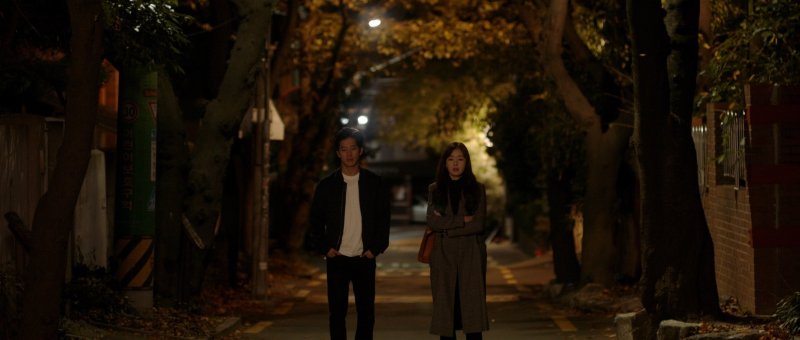
The Killer (더 킬러: 죽어도 되는 아이, Choi Jae-hoon, 2022) [Fantasia 2022]

A retired hitman gets back in the game when he’s charged with babysitting a naive teen who almost immediately ends up getting kidnapped by human traffickers in Choi Jae-hoon’s retro action fest, The Killer (더 킬러: 죽어도 되는 아이, The Killer: Jookeodo Dweneun Ai). The Korean title of the film is appended by that of the novel from which it is adapted, The Girl Who Deserves to Die by Bang Jin-ho, and hints at the secondary drama which underpins the main narrative in which the kind of masculinity the cynical hitman projects is redefined to accommodate a nascent paternity, 

When questioned by the 17-year-old Yoon-ji (Lee Seo-young), Ui-gang (Jang Hyuk) tells her that he has no children because he didn’t want them. Even so he appears to be in touch with some of the children of his wife’s friends whom he mostly calls by generic names such as “Punk Ass 1”, and his rejection of paternity appears to be born of a desire for a simple life spent in comfort with his wife without additional responsibilities. When his wife asks him to take care of her friend’s daughter so the two of them can jet off to Jeju island for two weeks, he’s understandably reluctant especially as a girl of 17 hardly needs a babysitter but at the end of the day he generally does as his wife tells him. 

Consequently, he allows Yoon-ji a high degree of (illusionary) freedom while placing a tracker on her so he can at least keep tabs on where she is. Perhaps because her mother is away and has left her with a random middle-aged man she doesn’t know, Yoon-ji takes advantage of the situation and makes a few bad choices which result in her falling into the trap of a gang of people traffickers. Ui-gang wants to get her back mostly because his wife will be upset with him if he doesn’t but also begins to develop a fatherly bond with Yoon-ji while morally outraged by the societal corruption he uncovers through searching for her. 

In a genre archetype, sensitive killer Ui-gang has the moral high ground in that he has a code to live by along with a sense of justice that is revulsed by the casual cruelty of those who would trade human beings like cattle. He discovers that Yoon-ji’s kidnapping was not an accident but that someone actively chose her and wants to know who and why stopping not just at rescuing her but trying to take down the whole corrupt mechanism while discovering that its roots extend even further than he had expected. His final resolution that no child deserves to die restores his humanity as evidenced by his acceptance of a paternal responsibility and the creation of a new family unit with his wife and Yoon-ji. 

Even so his path to rescuing her is structured in the same way as a video game, Choi’s composition sometimes referencing that of a first person shooter as Ui-gang emerges from lifts and cooly takes out a gangster who then crashes violently into the background. He fights his way towards resolution hacking and slashing at hordes of oncoming foot soldiers while armed with nothing other than a pair of chair legs or else cooly executing them with a single shot. An arms dealer friend literally references The Man from Nowhere which the film at times also echoes both narratively and visually in its tightly controlled and well choreographed action sequences. This sense of unassailability is in itself a reflection of Ui-gang’s moral goodness while the bumbling quality of the crooks and the ease with which he dispatches them equally reflects their immorality. 

A retro action fest, The Killer makes the most of a modest budget while taking aim at a contemporary society that leaves young people so unprotected that traffickers can even claim to be “helping” them given that there are few other ways for runaway teens to earn a living on the streets. Then again it may be a little problematic that the solution presented lies in a restoration of the patriarchal ideal in Ui-gang’s resumption of his paternity in pledging to protect Yi-joon until she comes of age. Nevertheless, anchored by another strong performance from veteran actor turned rising action star Jang Hyuk, Choi’s stripped back action thriller is a visceral journey into the dark heart of the contemporary society.


The Killer screened as part of this year’s Fantasia International Film Festival.

International trailer (English subtitles)

The Witch: Part 2. The Other One (마녀 2, Park Hoon-jung, 2022) [Fantasia 2022]

In Park Hoon-jung’s The Witch: Part 1.The Subversion, a young woman managed to escape a shady research facility to live as a regular high schooler while her adoptive parents wondered if their love for her could cure the violence with which she had been nurtured. Four years on, Hoon returns with Part 2: The Other One (마녀 2, Manyeo 2) which as the title implies follows another girl who similarly escapes her captivity and fetches up on a farm where she forms a surrogate family with a brother and sister in immediate danger of displacement. 

Unlike the first film’s Ja-yoon (Kim Da-mi) who rebuilt a life of “normality” after seemingly losing her memory, the unnamed girl emerges into a confusing and unfamiliar world in which everything is new to her. Challenged by a shady gang of guys on a highway, she’s bundled into a car which is where she encounters Kyung-hee (Park Eun-bin), a young woman kidnapped by a former associate of her late father who plans to murder her and steal her land for a lucrative construction project. Realising what might be in store for her, Kyung-hee tries to protect the girl and urges the gangsters to let her go before the girl decides to protect Kyung-hee in return by using her special abilities to total the car and set them both free. The girl is just about to finish off one of the mobsters when Kyung-hee tells her that she doesn’t need to, starting her on a path to questioning the indiscriminate violence with which she has been raised even as she determines to continue protecting Kyung-hee and later her brother Dae-gil (Sung Yoo-bin) who are now caught between the venal gangsters and an international conspiracy with various groups of people intent on either kidnapping or eliminating the escaped test subject. 

As had been hinted at in the previous film’s conclusion, there is a definite preoccupation with twins but also with internal duality. The shady corporation hints that the girl may be an upgraded edition, the “perfect model” of transhumanism, yet she appears less amoral than the unmasked Ja-yoon almost always seeking to incapacitate rather than kill while determined to protect Kyung-hee at any cost. To begin with, she is largely unable to speak but reacts with wide-eyed wonder to outside world visibly stunned by the wide open spaces on her way to the farm and develops a fascination with food eager to try anything and everything charging round a supermarket eating all the free samples while piling the trolley high with snacks. 

Like Ja-yoon however and in a superhero cliché she finds refuge on a farm and helps to complete the family which had been ruptured by absence but her new happiness is fragile on several levels not least of them that the farmhouse is under threat from venal gangster Yong-du (Jin Goo) who wants the land to build a resort. In an undeveloped plot strand, it seems that Dae-gil has lingering resentment towards his sister for leaving for America and returning only when their father died with the intention of sorting out the estate while it otherwise seems clear that their father was himself a gangster who may have used his ill-gotten gains to buy the farm in the first place. This is no ordinary rural backwater, but one brimming with darkness as the backstreet doctor turned drunken vet makes clear. 

In another duality, the girl is chased by a series of opposing forces split between “union” and “transhumanism” and represented by mercenary Sgt. Cho (Seo Eun-soo) and her South African partner (Justin John Harvey) and a gang of Chinese vigilantes from the Shanghai lab who are looking for the girl to get her to join them. Like the girl, the mercenaries appear to act with a code of ethics, trying their best to avoid civilian casualties while viewing death as a last resort while the ruthless vigilantes rejoice in violent brutality. In any case Park leaves the door open for a further continuation of the series in which the two women search for their shared origins in the hope of a literal, physical salvation but also perhaps the answer to a mystery long withheld from them. With a series of large scale and well choreographed action sequences, Park builds on the first film’s success and quite literally tells a sister story as “the other one” pursues her mirror image destiny while ironically finding beauty in the fireworks of a volatile society. 


The Witch: Part 2. The Other One screened as part of this year’s Fantasia International Film Festival and is released in the US courtesy of Well Go USA.

International trailer (English subtitles)

Images: Courtesy of Well Go USA Entertainment

Halmoni (Daniel Kim, 2017)

A Korean grandmother creates a paradise amid the arid lands of Argentina in Daniel Kim’s personal documentary, Halmoni. Underneath the film’s title, the Spanish translation, Abuela, appears hinting at the duality of cultures which the director contemplates while examining the longterm effects of the migration on his family who seem to console themselves with the notion that home is a place where you “live with a fully belly” while his grandmother finds a reason to live in the cultivation of land, planting flowers that will bloom long after she is gone. 

Kim’s grandparents married during the chaos of the Korean War and migrated to Argentina after a fire claimed the school where his grandfather had been working as a teacher. Travelling firstly to Brazil, the family then came to Argentina and received land from the government with a plan of growing lettuce which was otherwise thought unsuited to the terrain though grandfather was confident he could make it work after seeing fields of chicory growing in the same area. Though there have apparently been some problems with money and ownership, the farm now appears large and successful with the family still working it, the grandmother explaining that work keeps her alive and gives her life both rhythm and meaning. 

Yet it’s obvious that life there has not been easy. The land and farmhouse are very remote and when the family first arrived, there was not even a road that led to it. The grandfather and his son made one themselves while the son was later forced to give up on his education in Buenos Aires to help his family run the farm. As we later discover both men later took to drink in disappointment with their lives and eventually died of it. The women of the family who have largely kept the farm going also complain about the extreme cold and heavy snow which further isolate it and trap them in a liminal place that is both Korea and Argentina and simultaneously neither. 

The daughter suggests she’d rather be in Buenos Aires, but when she’s in Buenos Aires all she thinks about is the farm. Later in the film, the grandmother travels to Korea for the first time in 23 years and is moved on realising that she no longer recognises her now middle-aged nephew. Many of her friends and remaining family members encourage her to return to Korea, but she points out that her children and grandchildren are all settled in Argentina while the cultures have become so blurred for her that she lives moment to moment not always sure of what is Korea and what is Argentina. Another woman later says something similar but in Spanish, that if she were to go to Korea she doesn’t think she would feel Korean but neither does she feel Argentinian in Argentina and does not know where she is from. 

Yet the grandmother’s friends also worry for her when she tells them that despite her long years of hard work she has no savings while those who migrated to America or stayed in Korea were often able to find financial stability that will accompany them into old age. Kim briefly includes a scene from home video in which one of the children angrily challenges the grandfather and accuses him of misusing money while also raising some kind of religious dispute which receives no further explanation but hints at a buried resentment and discord within the family which is otherwise absent from the cheerful footage of them celebrating a wedding and coming together with other members of the Korean community. Meanwhile the government is said to have taken back half of their land when the farm experienced financial difficulty and that it was the inability to finish what his father had started that later drove the son to drink. Even so another of the women hurriedly finishes her tea worried that people watching the film will assume they are lazy while a man behind her counters that they should show them that they rest too. The grandmother tells her granddaughter about planting seeds and that some flowers must disappear so that new ones can grow as she patiently tends to her orchards, a hard-won paradise forged in arid land by little more than love and perseverance. 


Halmoni screens at the Korean Cultural Centre, London on 4th August as part of Korean Film Nights 2022: Living Memories.

Hansan: Rising Dragon (한산: 용의 출현, Kim Han-min, 2022)

“A battle of the righteous against the unrighteous” is how Admiral Yi (Park Hae-il) frames his resistance against the Japanese invasion, not a war between nations but an attempt to push back against the authoritarian ruthlessness of Toyotomi Hideyoshi’s desire to conquer most of Asia in a bid to cement his historical legacy as his health continued to fail. Hansan: Rising Dragon (한산: 용의 출현, Hansan: Yongui Chulhyeon) is a kind of prequel to 2014’s The Admiral: Roaring Currents set five years earlier during Hideyoshi’s first campaign and pits the the wise and steadfast Admiral Yi against ambitious yet overconfident Japanese general Wakizaka* (Byun Yo-han). 

Wakizaka’s ruthless cruelty is not in dispute even as the film opens with him dispatching a report stating that he intends to destroy the Korean naval detachment harboured on the southern coast which it seems is all that stands between him and conquest of the peninsula in its capacity to disrupt his supply line. When some of his men return in defeat talking about a “Bokkaisen” with a dragon’s head spouting fire, Wakizaka orders them killed to stop them spreading rumours of supernatural threat among the troops. Retrieving what looks to be a dragon’s tooth from the ruined vessel he begins to realise there might be something their story but still doesn’t take the threat of Admiral Yi’s fleet very seriously. 


Admiral Yi meanwhile, who was wounded in the same battle pitching his bow and arrow against a Japanese rifleman, is plagued by dreams and anxiety while trying to sort out a strategy for dealing with the Japanese invasion. Some of his fellow officers think offence is the best defence and they should try to strike before Wakizaka is able to amass his forces, while others think they should play it safe and continue to defend the coast. He and his chief engineer are working on improvements to their turtle boat which had so spooked the Japanese soldiers at the previous battle but at the same time had its limitations. They don’t call it a turtle boat for nothing, on ramming into the Japanese vessel its dragonhead became lodged in the side locking the two boats in a deathly embrace. Yi suggests removing it, but as it turns out the ability to latch on to the enemy like a snapping turtle can also be an advantage if you know how to use it while figuring out how to get the best out of limited resources, along with managing interpersonal relations, turns out to be Wakizaka’s weakness. 

Ever ambitious, Wakizaka is distracted by petty rivalry with his co-general who disagrees with his strategies and eventually betrays him. A Korean-speaking Japanese retainer sent as a spy later decides to defect precisely because of this ruthless disregard for the lives of one’s fellow soldiers, struck by Yi’s personal presence on the battlefield and willingness to put himself in harm’s way to protect his men. Though he is originally viewed with suspicion by some, Junsa (Kim Sung-kyu) is embraced as a fellow soldier after joining the defence forces at an inland fortress and told that all that is necessary is that he have a “shared righteous spirit” fighting together against the “unrighteous” Japanese invasion. 

In any case, neither Wakizaka or the Japanese care very much about Korea all they’re doing is clearing a path to China. Meanwhile, the nervous king continues to travel North leaving his generals fearful he will defect to the Ming and they will end up losing their sovereignty to China if not to Japan. Wakizaka’s strategy is somewhat hubristic, leaving himself vulnerable in the rear as he pushes forward while using land tactics to fight a war at sea and thereby allowing Yi to set a trap for him perfectly tailored to his vain complacency. Wakizaka may have the numbers, but Yi has superior technology and the respect of his men. Quite fittingly the real Wakizaka was marooned on an island after the battle and had to survive on seaweed while waiting for his chance to escape. With plenty of spy action, double crossings and betrayals, Kim Han-min saves the big guns for the final naval battle which begins in ominous fog before exploding in all out war but still makes clear that the battle is on the side of righteousness and that Yi owes his victory to human solidarity and compassion (leaving aside his torture of suspected spies) and Wakizaka his defeat to hubris and cruelty. 


Hansan: Rising Dragon screened as part of this year’s New York Asian Film Festival and is in US cinemas now courtesy of Well Go USA.

*these subtitles use Wakizaka but his name is sometimes also romanised as Wakisaka.

International trailer (English subtitles)
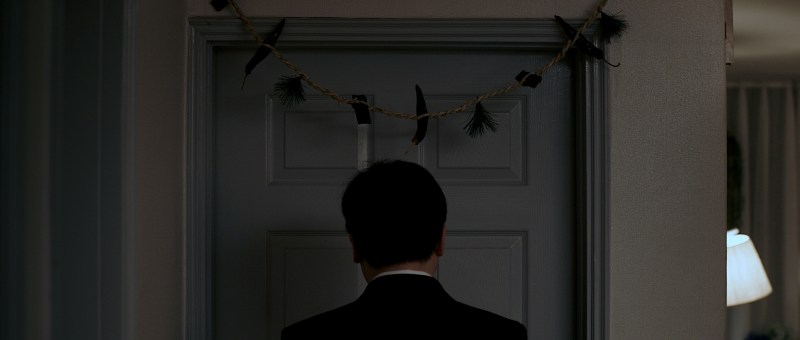
Images: Courtesy of Well Go USA Entertainment

Confession (자백, Yoon Jong-seok, 2022)

An accused man and the woman sent to defend him battle over the elusive nature of objective truth in Yoon Jong-seok’s steely psychological thriller, Confession (자백, Jabaek). A remake of the Spanish film Contratiempo, Confession is nevertheless the latest in a longline of Korean films critical of expanding chaebol culture and the utter entitlement of the elite who assume they have the right to do whatever they want because their money, status, and connections protect them from any potential consequences of their actions. Then again as the lawyer tells her client, salvation is never painless. 

Min-ho (So Ji-sub) had something of a golden life. Married to the daughter of the chairman of a large corporation, he was a rising star of cybersecurity who had even been named IT businessman of the year but was about to throw it all away through a lengthy affair with a woman, Se-hee (Nana), whom he has now been accused of killing. You’d have to admit, he had a motive and the circumstantial evidence against him is convincing yet Min-ho claims that he didn’t do it and there was a third party involved in this otherwise locked room mystery. 

Much of the film takes place in a claustrophobic wooden cabin in the woods all but cut off by heavy snow in which Min-ho has chosen retreat after his chairman father-in-law managed to get his arrest warrant canceled. What emerges is a psychological battle between Ms. Yang (Kim Yunjin), the fancy lawyer hired by the chairman, and Min-ho who have somewhat opposing goals. Min-ho wants her to sign the documents confirming her as his legal counsel and therefore making anything he might have said subject to privilege while she presses him for the location of vital evidence while trying to expose the objective truth behind Min-ho’s selective testimony. 

Neither of them are reliable narrators, Ms. Yang coming up with potential scenarios and at times implying she has evidence that she does not in order to push Min-ho towards revealing the facts of the case. As she says, a lawyer can only help you if you’ve been rigorously honest because she in turn needs to construct a narrative that can undercut the prosecution’s case. The truth might in one sense be irrelevant, as she implies when advising that they frame Se-hee as the villain suggesting that she orchestrated a plot to blackmail Min-ho over their affair in a mix of vengeance and greed when he decided to end their relationship because he could no longer bear the guilt of cheating on his wife. 

Yet there are further transgressions in Min-ho’s past aside from his affair and it’s the attempt to cover them up more than the affair itself which has landed him in so much trouble. As he tells the lawyer, he doesn’t just want to avoid prison but is set on total exoneration unwilling to accept any kind of responsibility for what is currently happening to him. Because of his wealth and status he believes he is not subject to the same laws as everyone else and that even if he had killed Se-hee as his lawyer is beginning to suspect, he would still not be guilty of any crime. “What’s important is to survive” he tells the lawyer revealing his inner ruthlessness along with the complacent reckless streak which might hinder her attempts to defend him. 

There’s no denying that the film’s earliest twists are obvious and heavily foreshadowed but like a seasoned lawyer it is also laying a trap that leaves its final revelations extremely satisfying in implying a kind of justice at least is possible in this inherently corrupt society where dodgy lawyers and elite privilege go hand in hand to destroy the lives of ordinary people. Dark in its implications, the cat and mouse game between lawyer and client who each lie in an attempt to expose the truth hints at the malleability of what is considered to be “true” in the way in which we all construct the narrative of our lives to suit ourselves while denying the realities of others. There may be no such thing as objective truth, but guilt and complacency will still come for you in the end. Visually referencing Alfred Hitchcock’s Psycho, Yoon’s tense psychological drama is in its own way hopeful in its reeling conclusion even if as the lawyer says salvation is never painless. 


Confession screened as part of this year’s New York Asian Film Festival.

International trailer (English subtitles)
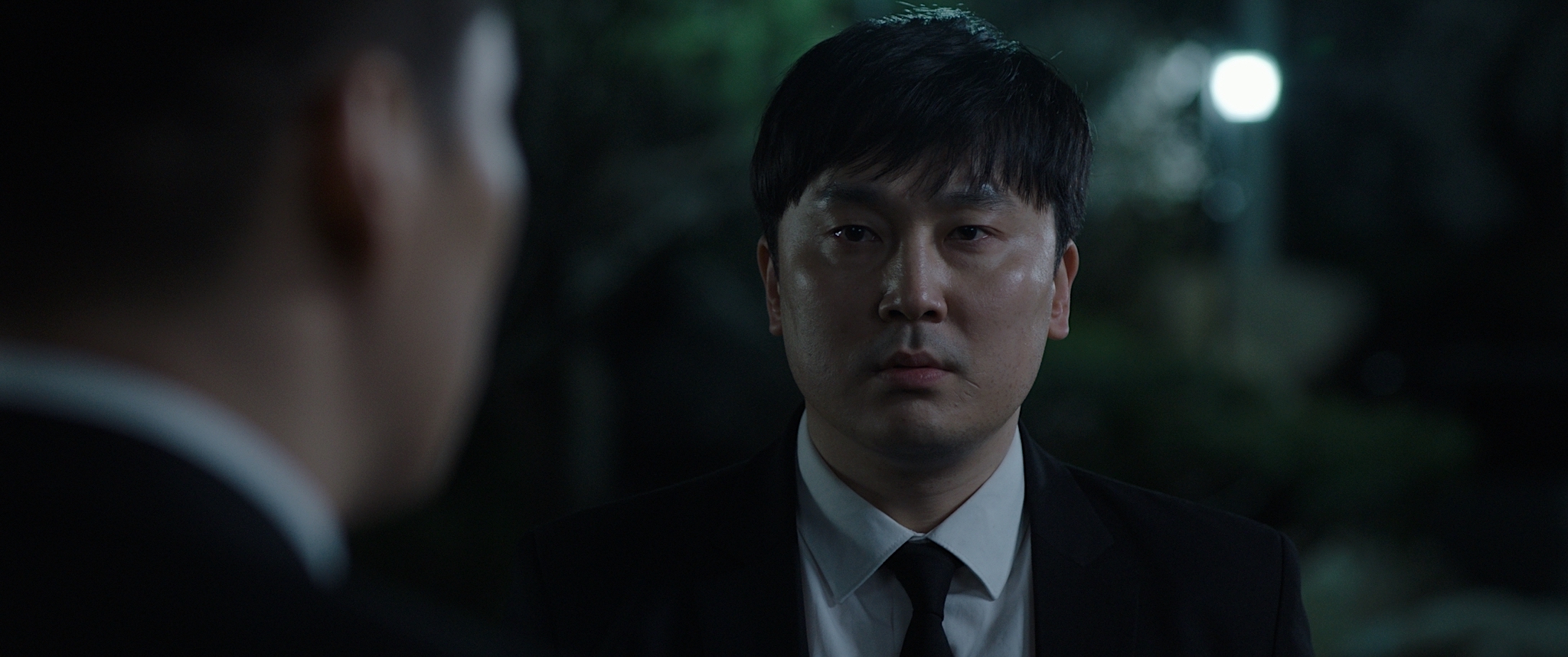
Korean Film Nights 2022: Living Memories

Korean Film Nights return on 29th July with Living Memories, a series of five documentary films screening throughout out August at the Korean Cultural Centre, London, and Birkbeck Cinema.

29 July, 6.30pm: Under Construction (2018)

Birkbeck Cinema

Personal documentary from director Jang Yun-mi following her construction worker father and exploring the impact of his 40 years of labour on his body and mind.

4 August, 7.00pm: Halmoni (2017)

Korean Cultural Centre, London

Personal documentary from Daniel Kim who was born to a Korean family of farmers in Argentina exploring his complex cultural identity.

11 August, 7.00pm: Soup & Ideology (2021)

Korean Cultural Centre, London

Documentary from Dear Pyongyang‘s Yang Yonghi focussing on her mother as she begins revealing tragic memories of her flight from South Korea to Japan during the Jeju Incident of 1948.

18 August, 7.00pm: With or Without You (2015)

Korean Cultural Centre, London

Documentary focussing on two elderly women who were once married to the same man at the same time and continue to live together long after his death.

25 August, 6.30pm: Factory Complex (2014)

Birkbeck Cinema

Experimental documentary exploring the lives of workers in the textile industry from the 1960s onwards eventually contrasting their experiences with those of women in contemporary Cambodia..

Living Memories runs at the Korean Cultural Centre, London, and Birkbeck Cinema 29th July to 25th August. Full details and ticketing links for all the films are available via the official website and you can keep up with all the latest screening news by following the London Korean Film Festival on FacebookTwitter, and Instagram.