Search Out (서치 아웃, Kwak Jung, 2020)

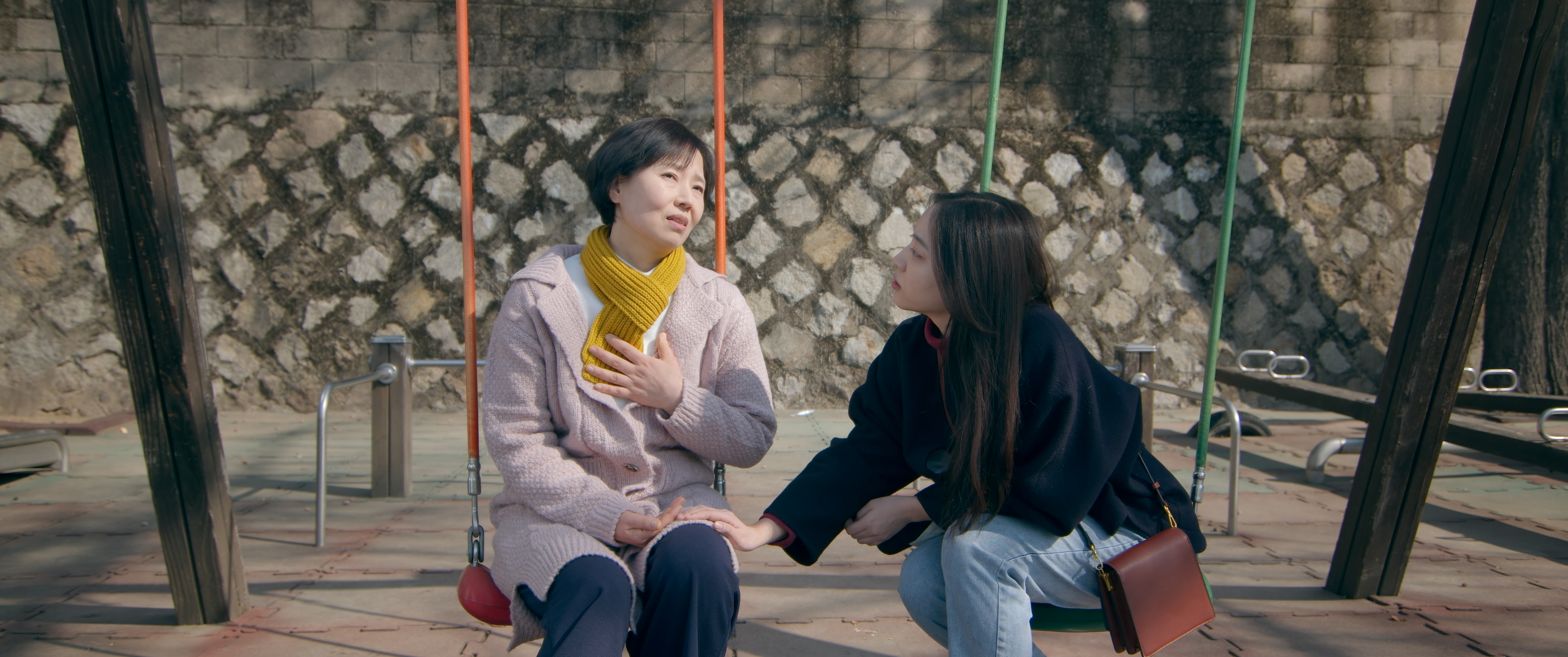
A trio of disillusioned youngsters kick back against Hell Joseon by chasing down an internet serial killer in Kwak Jung’s dark cyber thriller, Search Out (서치 아웃). As the title implies, the three are each looking for something to tell them that they still have time, their dreams are still achievable, and their lives are worth living, yet as they discover there are those keen to convince them otherwise including a mysterious online presence who seemingly takes advantage of those already in despair and pushes them towards a dark and irreversible decision. 

The hero, Jun-hyeok (Kim Sung-cheol), is currently job hunting while working part-time in a convenience store. His best friend, Seong-min (Lee Si-eon) is desperate to join the police force but having trouble passing the civil service exams. To pass the time, Jun-hyeok also does odd jobs for people who need help under the pseudonym “Genie” via his social media accounts, but when he’s unexpectedly approached by a woman in the same boarding house who tells him that she’s in a dark place and needs someone to talk to, he turns her down out of embarrassment afraid that his “real” identity might be exposed and ashamed to admit that “Genie” is just regular guy who can’t get a job. Unfortunately, however, the young woman is later found dead in an apparent suicide. 

Consumed with guilt, Jun-hyeok tries to ease his conscience but accidentally stumbles across a weird account the young woman had been interacting with shortly before she died. “Ereshkigal” asks all the wrong questions of those already in a dark place, probing them about the meaning of life and whether their lives are really worth living before, as Jun-hyeok later realises, blackmailing them into completing various “missions”. Paradoxically, Jun-hyeok’s quest to stop the mysterious online threat is partly a way of absolving himself of guilt while simultaneously fighting back against those same feelings of despair that he too feels as a young man who can’t seem to get his foot on the ladder, rudely insulted by a cocky high school kid for being an “adult” still doing a student’s job. 

Seong-min feels much the same, indulging his love of justice as a man who just wants to protect and serve and feels it’s unfair he’s being prevented from doing so because he struggles with paperwork when his true strengths lie in the field. Turning to a private detective when the police won’t listen to them, the guys team up with frustrated hacker Noo-rie (Heo Ga-yoon) who like them also feels as if she’s stagnating, slumming it with a shady job at the detective agency when she obviously has major IT skills. A psychiatrist Jun-hyeok meets through his Genie job warns them that the killer may be leveraging his victims’ feelings of despair to convince them that the only way to escape suffering is through death. Despite himself, it’s a sentiment that Jun-hyeok can well understand. 

Like other young people his age, he attempts to mask his sense of loneliness through social media, another weakness the killer sees fit to exploit. Yet as a potential suspect later points out, “it’s fun to peek at others’ private lives” exposing himself as a banal voyeur while simultaneously revealing the unexpected vulnerability of those who live online. In any case, the final revelations are perhaps expected, and not, in the way they bare out the inequalities of the contemporary Korean society. Jun-hyeok starts to wonder if it really was all his fault from the very beginning as his own not quite innocent but largely accidental moment of social media notoriety may have had unintended, unforeseen consequences even as he sought a kind of justice in exposing wrongdoing by the rich and powerful. 

Nevertheless, as Seong-min is fond of saying, “you must do what’s right. You must bring justice”. Others might argue that it’s “natural to kill others to survive”, but the trio at least prefer mutual solidarity as they work together to take down the killer while fighting their own demons along with the continued indifference of the authorities which are supposed to protect them. Partly a treatise on why you should be more careful about what you post online and how you interact with others in general, Kwak’s steely thriller is also a story of three young people searching out a reason to live and finding it largely in each other as they come to an acceptance of life’s ambiguities but also of their right to define them for themselves. 


Search Out streams in the US March 24 – 28 as part of the 12th season of Asian Pop-Up Cinema.

International trailer (English subtitles)

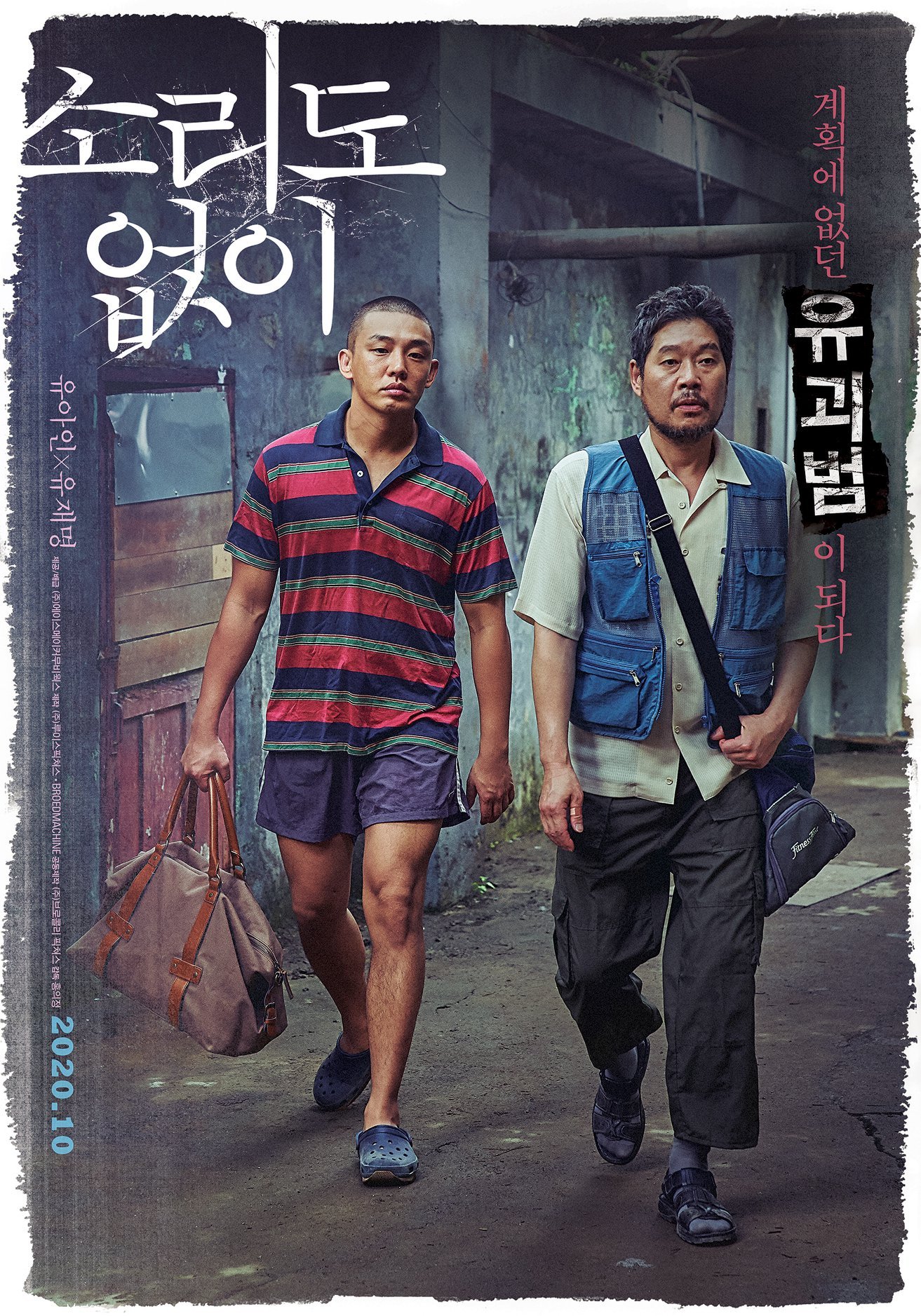
Voice of Silence (소리도 없이, Hong Eui-jeong, 2020)

“Once you join a family, you have to pitch in, right?” the aphorism-loving protagonist of Hong Eui-jeong’s disturbingly warmhearted crime caper Voice of Silence (소리도 없이, Sorido Eopsi) explains to a little girl who has recently come into his “care” as she dutifully begins massaging the earth towards a half-buried body. Partly an exploration of the family bond and its propensity to arise even in the most duplicitous of circumstances, Hong’s ironically cheerful drama is also a mild condemnation of the modern society and its capacity to push good people to do bad things in its infinite oppressions. 

Egg farmer Chang-bok (Yoo Jae-myung), for example, is a man of faith who places great stock in protestant virtues of hard work and humility. Yet he sees no irony in the sign reading “Today’s honest sweat is tomorrow’s happiness” on the wall of a disused barn where he carries out his second job preparing torture victims for gangsters and then disposing of the bodies even going so far as to say a little prayer for them, bible in hand, as he places them into shallow graves in the forest. He and his mute partner Tae-in (Yoo Ah-in) dutifully wait outside as the violence takes place, rejecting entirely their sense of complicity with the corruption of the gangster world viewing themselves only as providing a service and taking pride in providing it well.

Nevertheless, when their “manager” pays them an unexpected visit and gives them an unusual assignment of “looking after” a person for a few days they can hardly refuse even as Chang-bok reminds him it’s not in their job description. Contrary to expectation, however, the “person” turns out not to be sequestered gangster but an 11-year-old girl, Cho-hee (Moon Seung-ah), whose father is haggling over a ransom payment. When the manager is consumed by the same system he previously operated, it leaves them with a problem. They can’t simply let the girl go because the kidnappers want their cut, but the father won’t pay up and so the only other option is handing her over to child traffickers. Chang-bok and more particularly Tae-in would rather that didn’t happen, but on the other hand they aren’t really doing too much to actively prevent it. 

Just as Chang-bok and and Tae-in are “egg farmers”, the child traffickers run their business out of a moribund chicken farm. The rural economy is apparently not faring so well in the modern society. Yet Hong’s countryside vistas are presented as an idyllic paradise with bluer than blue, cloudless skies and fields of verdant green. Then again those who live off the land are perhaps most aware of its compromises and of the price of survival. Chang-bok is fond of spouting vaguely religious aphorisms such as “whatever you do, do your best and be humble. Always be thankful for what you have”, later blaming his predicament on his recent laxity in attending church, but evidently sees no contradiction between his creed and way of life. He doesn’t want to hand Cho-hee over the child traffickers, but he won’t resist it either merely seeing it as an inevitable consequence of events already in play in which he is but a passive participant. 

Tae-in, meanwhile, though literally voiceless is beginning to reject his passivity. Apparently raised by Chang-bok from infancy, he is currently a guardian to a mysterious “sister”, Moon-joo (Lee Ga-eun) around 15 years younger than he is though no mention is made of their parents or what might have happened to them. Charged with taking care of Cho-hee he finds himself developing a paternal fondness for her while she quite unexpectedly slides neatly into his home, bringing a strangely maternal if perhaps in its own way problematic order in tidying the place up and giving Tae-il a more concrete sense of familial rootedness. When the pair picked her up, they wondered if Cho-hee’s father was haggling over the ransom amount because the kidnappers took his daughter when they meant to take his son. Chang-bok is morally outraged, believing sons and daughters should be treated the same and shocked a father would’t immediately do everything he could to protect his little girl. But Cho-hee knows only too well that they value her brother more and in fact doubts her father will help her. She carries these old fashioned patriarchal values into Tae-in’s village home, brushing Moon-joo’s rather feral hair, teaching her to fold clothes away neatly, instructing her to speak more politely to her brother and not to start eating until he has taken his first bite. 

Despite themselves, the four become an accidental family cheerfully enjoying ice lollies on a hot summer’s day trying to figure out a polaroid camera which has been bought for a slightly less happy purpose. There is perhaps an idea that Cho-hee might simply not return to her wealthy, urban family in which she feels unwanted and inferior but stay here in the more “innocent” countryside where the people are “honest”, value their daughters the same as their sons (even the child traffickers apparently charge the same discriminating only by age and blood type), and bury their bodies together. Chang-bok and Tae-in aren’t bad people, just members of a corrupt society who’ve internalised a sense of powerlessness that encourages them to be “humble” and complicit doing what they can to survive. Each marginalised by disability, Chang-bok walking with a pronounced limp and Tae-in rendered impotent by his inability to speak, they do not want to turn to “crime” but are trapped at the bottom of the social hierarchy and dependent on the illicit economy. Is Cho-hee any worse off with them than with the father who wouldn’t pay to get her back? The jury is most definitely out. 


Voice of Silence streamed as part of the Glasgow Film Festival.

Original trailer (English subtitles)
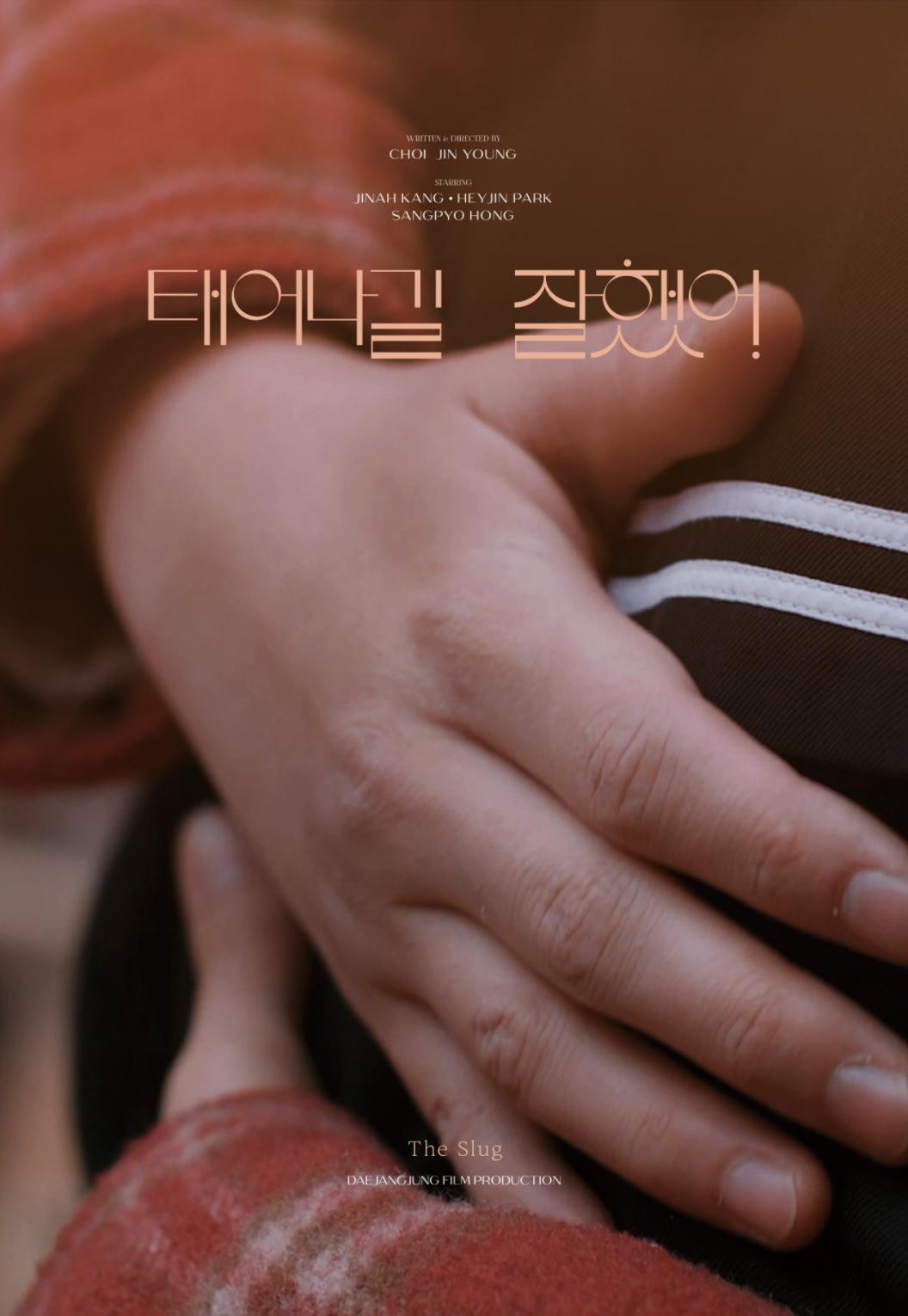
Our Midnight (아워 미드나잇, Lim Jung-eun, 2020)

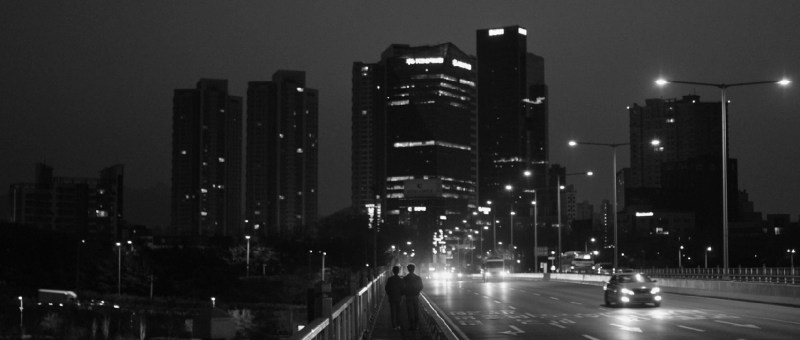
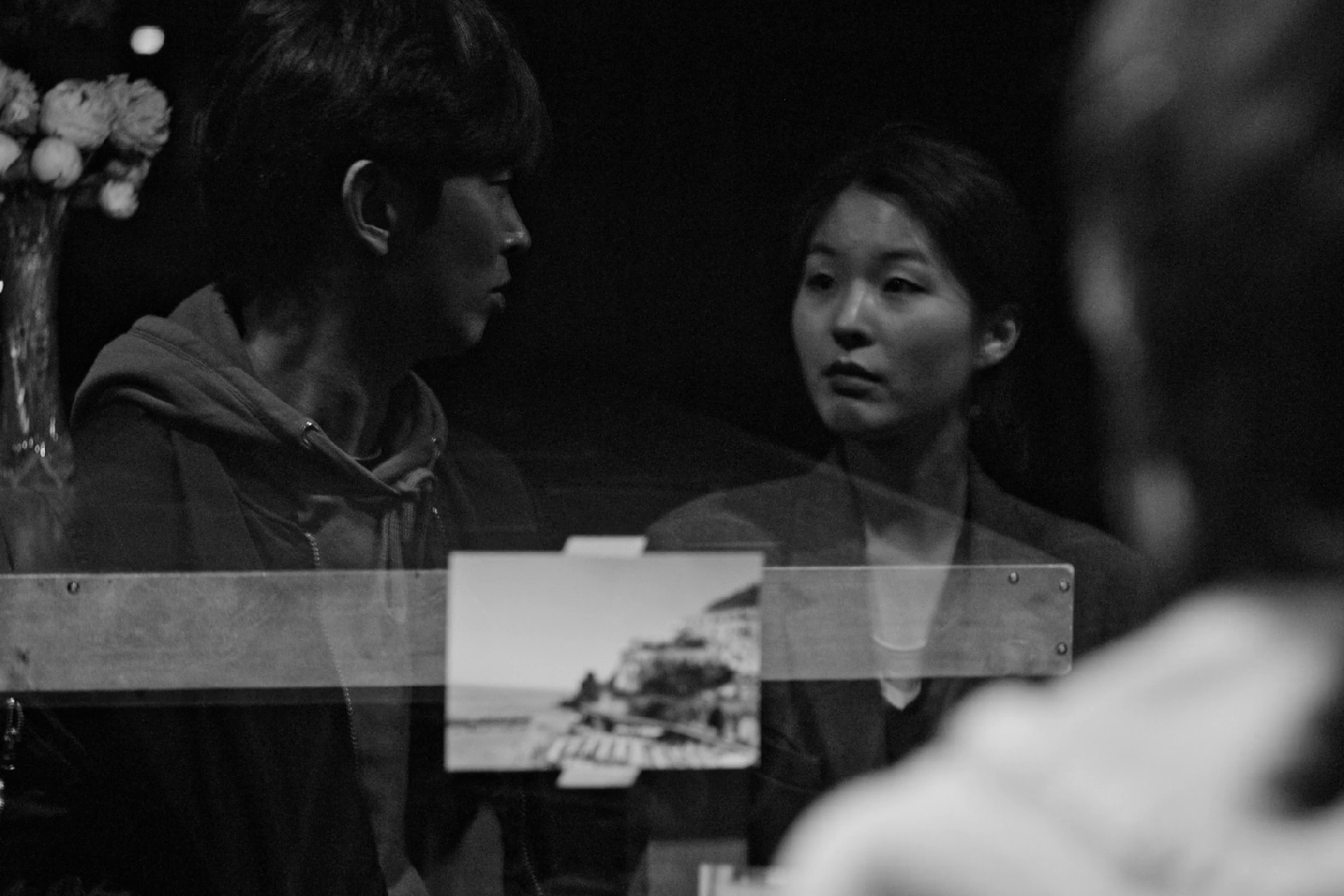
Should you continue following your dreams or accept defeat and “grow up” into a conventional adulthood with a steady job, marriage, and comfortable home? The hero of Lim Jung-eun’s Our Midnight (아워 미드나잇) is reluctant to give up on his acting dreams while his friends look down on him in bemusement, all secretly miserable in the regular corporate careers they’ve opted for partly for practical reasons but also because of intense social pressure. Meanwhile, across town a young woman finds herself dealing with the other side of the same problem struggling under the weight of patriarchal norms in which it becomes impossible to separate the personal and the professional. Approaching the same bridge from opposite directions, the pair of youngsters begin to find a sense of peace in shared anxiety emerging from the heavy gloom of a midnight city into a brighter light of day. 

Now in his 30s, Jihoon (Lee Seung-hun) is still an “aspiring” actor trapped in exploitative part-time work in which he has to actively fight to be paid the money he is rightfully owed. He finds himself hanging out in the old rehearsal room from his student days as if nothing had changed in the decade since he graduated. Meanwhile, his nine-year relationship with Areum (Han Hae-in) which began when they were both student actors is about to come to an abrupt end. She’s already “grown up” with a regular job earning real money and is sick of Jihoon’s fecklessness. Areum wants to get married and settle down, but not with Jihoon. Approaching another uni friend now apparently a civil servant (Lim Young-woo), Jihoon is offered a strange new job which ironically reflects the pressures of the world in which he lives. In order to combat Seoul’s notoriously high suicide rate, an experimental programme is being set up in which a squad of samaritans will patrol the local bridges overnight looking for people who seem to be in distress and may be thinking of taking their own lives. 

As one of the other employees points out, if you’re in a dark place perhaps the last thing you want is some guy turning up with a series of platitudes about how you’ll feel better in the morning but all Jihoon has to do is wander round at night so he might as well give it a try. His new role, however, may also feed into his hero complex while allowing him the opportunity to rehearse for real life in the streets. It’s on one nighttime voyage that he first encounters Eunyoung (Park Seo-eun) as she collapses on the bridge after mournfully peering out over the edge. As he later discovers, Eunyoung is a lower grade office worker who is facing workplace discrimination and career insecurity after experiencing domestic violence in her relationship with a co-worker. After reporting the matter to the police, she finds her own job in jeopardy, the older male bosses concluding she is the one at fault for causing embarrassment by dragging this taboo matter into the light while her abuser presumably gets a free pass to continue his career without further penalty. 

In any case, it seems that Jihoon’s friends aren’t faring much better in the world of work, one lamenting that Jihoon has it made because he’s living the way he chooses while another exclaims that his life is about to end because he’s getting married. In a coffee shop, he overhears a cynical businessman on the phone to his boss about scapegoating a middle-aged woman for a workplace mistake presumably to avoid keeping her on the books. Still in his hero mode, Jihoon eventually decides to say something and let the woman know she’s being manipulated, but his intervention is of little use. Like Eunyoung, the woman realises her lack of agency in the corporate hierarchy and accepts that she’s losing her job whatever happens so she might as well take the blame with the money. After all, she’s unlikely to find another position very easily in Korea’s famously difficult employment market. 

All in all, it isn’t difficult to understand why so many people are pushed towards ending their own lives, crushed by the various pressures of Hell Joseon. Yet through their midnight walk through the strangely empty streets the pair begin to generate a kind of solidarity, literally role playing their way out of mutual despair as they each stand up to those who try to keep them down be it an abusive partner and internalised shame or dismissive friends and family who disapprove of those who refuse to follow the accepted path to conventional success. A black and white odyssey through a depressed city, Our Midnight throws up its strangely colourful title card in a vibrant yellow and purple at the half hour mark, allowing its wandering heroes finally to board the train out of despair through mutual acceptance crossing the bridge together into a brighter, less oppressive existence. 


Our Midnight streamed as part of the Glasgow Film Festival.

The Swordsman (검객, Choi Jae-hoon, 2020)

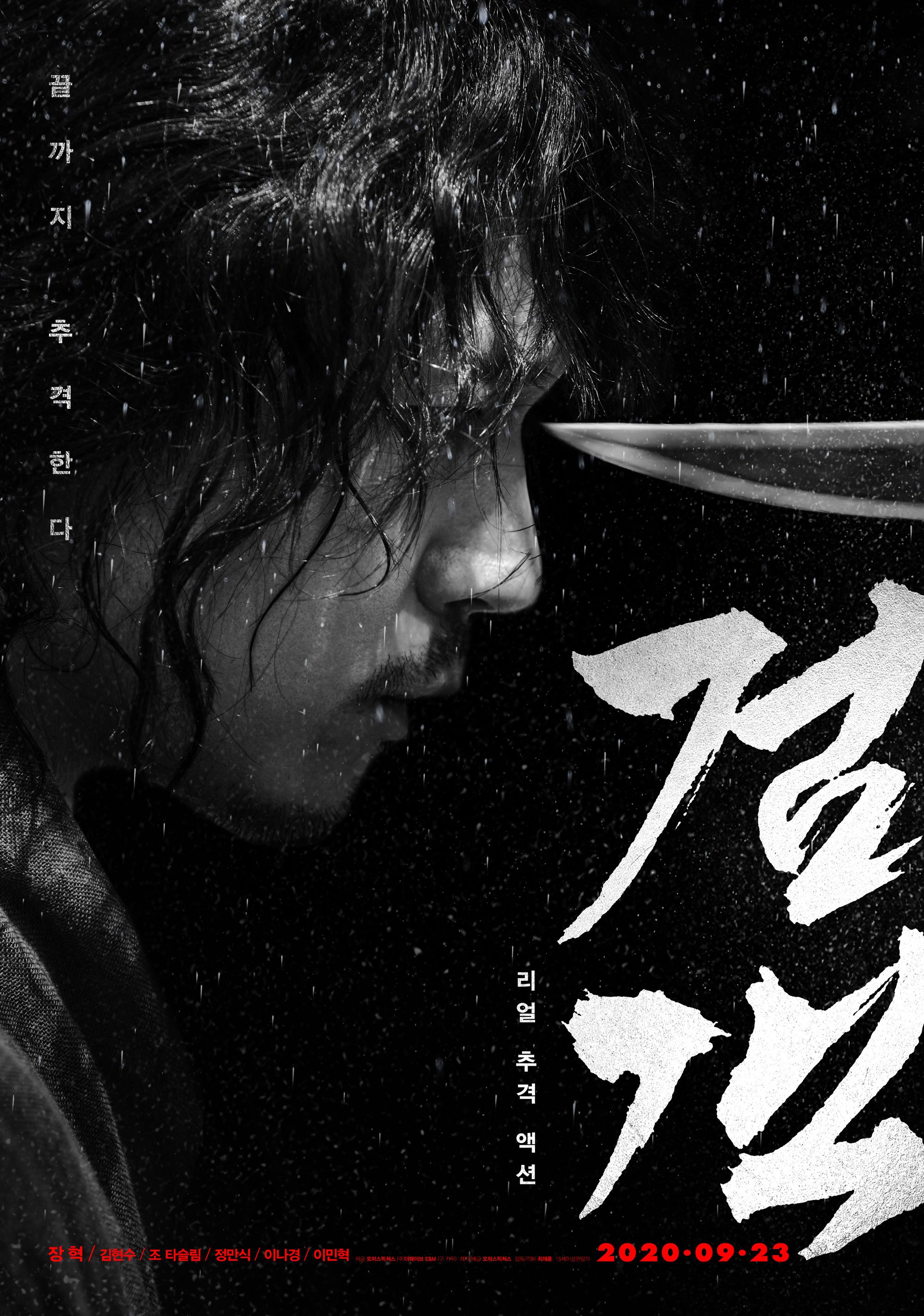
“Is this all there is to being a soldier?” a jaded young man asks of an apparently reluctant mentor as he, also reluctantly it seems, prepares to betray his king merely because the balance of power has shifted. Drawing heavily from wuxia and chanbara, Choi Jae-hoon’s The Swordsman (검객, Geomgaek) once again takes on the futility of violence as the two men who might each lay claim to the title attempt to escape the complicated world of Joseon politics but find themselves unable to escape the legacy of the blade while facing an internal debate as to how to protect that which is most precious to them.

Loosely “inspired by true events” as the opening title card insists, the action opens in 1623 with King Gwanghae (Jang Hyun-sung) fleeing the palace in the wake of insurrection. Like pretty much every other ruler, he’s been accused of murdering his siblings to usurp the throne and has lost the the support of the army, including his personal swordsman Min Seung-ho (Jung Man-sik), after instructing his generals to surrender to the enemy. Valiantly protected by lone defender Tae-yul (Jang Hyuk), Gwanghae makes the ultimate sacrifice for his people and agrees to go quietly pausing only to secretly entrust his infant daughter to the last man standing. 

Flashforward 15 years or so and Tae-yul is now a mountain recluse raising his teenage daughter Tae-ok (Kim Hyun-soo) alone in hiding from nefarious forces. The problem is that his eyesight is now failing and a trip to the physician to acquire medicine proves fruitless when it turns out such rare substances are available only to those with connections. Tae-ok wants to take up an offer from a local lord to become his foster daughter in order to get her father the medicine, but he is understandably reluctant. Meanwhile, a new threat has arrived in town in the form of thuggish Qing slave traders apparently intent on further disrupting the already unbalanced Joseon political situation which is divided in support of the Ming. 

The political context in itself is only subtly conveyed, though this is a rare period drama in which the focus is only tangentially on courtly intrigue in the suggestions that constant machinations by ambitious lords have undermined the notions of soldierly honour and loyalty that ordinarily support the feudal system. The conflicted Min, a man of the sword, retires from the court because he isn’t certain he acted correctly in his actions towards Gwanghae and fears he was merely manipulated as he later is by bloodthirsty slave trader Gurantai (Joe Taslim). Gurantai and his henchmen seem to be on the look out solely for a worthy opponent to satiate their boredom, threatening an entire kingdom in the process. Tae-yul, by contrast, has renounced the way of the sword altogether and attempted to isolate himself from worldly violence in order to better protect his daughter only to find himself dragged down from the mountain by her love for him in insisting he find the means to fix his eyes. 

When Tae-ok is kidnapped by Gurantai who has figured out who she is (in one sense or another), Tae-yul enters full on Taken mode determined to save both the girl herself and reclaim this relic of an earlier, purer world to which she is perhaps the heir pausing only to free a few slaves on his way. Operating on a much lower budget than your average period drama, Choi shoots mainly in a shaky handheld maintaining an indieish aesthetic in keeping with the rough and ready quality of the narrative which seems to draw equally from Hollywood westerns, Hong Kong wuxia, and Japanese samurai movies in its relentless drive towards the final showdown. Making a few points about he changing nature of the times and the futility of violence, the minions of a venal lord are eventually cutdown by rows of Qing armed with rifles while they flounder helplessly with only their blades, swordsmanship itself now an obsolete art though apparently one still valuable to bored, insecure leaders such as Gurantai. Nevertheless, the expertly choreographed action scenes have a mounting intensity from Tae-yul’s early refusal to unsheathe his distinctive double-edged blade to the merciless killing of a female bystander at the film’s conclusion. Ending with an ironic return to the world, apparently now changed, The Swordsman kicks back against feudal hypocrisies while its blinded hero uses the only weapons available to him in order to protect what he considers to be worth protecting. 


The Swordsman streamed as part of the Glasgow Film Festival.

US trailer (English subtitles)

Da Capo (다시 만난 날들, Shim Chan-yang, 2020)

Do what you love and never work a day in your life is what everyone says, but turning your passion into a job can be a soul-destroying process. The hero of Shim Chan-yang’s Da Capo (다시 만난 날들, Dasi Mannan Naldeul) is beginning to wonder if it’s all worth it and whether the reason he’s not getting ahead is his own pig headedness or the increasingly soulless music industry apparently only interested in “catchy tunes” and “simple love songs”. Feeling maudlin he’s beginning to dwell on what it was he loved about music in the first place and realising perhaps it wasn’t about the tunes after all. 

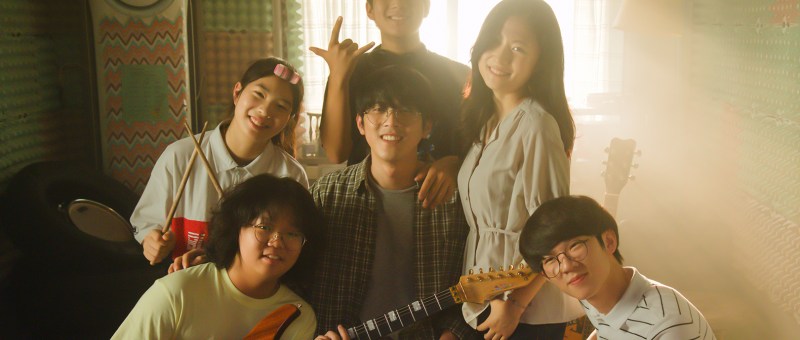
Approaching 30, Tae-il (Isaac Hong) has recently returned from abroad and is currently slogging it out as a singer-songwriter in Seoul. Handed a potential opportunity in a card from a powerful A&R woman best known for managing a top idol, he ponders trying to write a generic pop song but keeps stumbling over a simple lyric about the sea thinking back on his days in a high school band and the friends he may never see again. Taking a visit back to his home town for inspiration brings him into contact with former bandmate Ji-won (Jang Ha-eun) now working as a guitar teacher at her uncle’s music academy, and a collection of nerdy yet passionate kids hoping to hit no. 1 on the Billboard charts with their innovative fusion of nu-metal, post-grunge, and traditional Korean instrumentation (to be added at a later date). 

Though perhaps harbouring a little resentment over Tae-il’s apparently abrupt departure overseas, Ji-won allows him to stay on her sofa while helping him figure out how to finish his simple pop song, a plaintive ballad about lost love and regret. Secretly, he may be looking down on her a little, thinking she’s failed in someway slumming it as a guitar teacher in their old home town but unlike him Ji-won has maintained her passion for music while honing all her skills. She later reveals that she once had a recording contract but eventually decided against it, having realised it wasn’t all about the music and apparently not wanting the rubbish that goes with chart success. Tae-il, however, isn’t so sure especially after the song they wrote together is optioned by the A&R woman though attending the meeting means breaking a promise to the kids he helped to mentor to be there for them at their big concert. 

Like Ji-won, the kids are all full of the joy of music even if they’ve slightly contradictory ideas, lead singer Deok-ho (Seo Young-jae) simultaneously penning grisly death metal lyrics yet wanting mainstream acclaim. Deok-ho apparently decided rock was his thing because the girl he liked liked it, but now she likes hip hop and an older, thuggish sort of boy. He doesn’t take kindly to Tae-il’s taking their metal beat and reconfiguring it as coffeeshop lo-fi, but eventually comes round and takes his advice about authentic songwriting, allowing each of his buddies the chance to shine in putting the track together as a team. 

Meanwhile, Tae-il finds himself relegated to the back of a music video in a garish New Wave outfit, standing in front of an inflatable flamingo, and handed a guitar with no strings in a pointed piece of symbolism especially as he realises they’ve added a rap section just to spice it up a bit. Observing the kids at the beginning of their musical journey and thinking back on his days in a high school band he begins to realise that what he liked about making music was the excitement of collaboration and the gentle camaraderie of after-jam dinners. Perhaps Ji-won has it right and all the rubbish isn’t worth it when you can just stay home and make music with your friends without caring too much about pleasing the commercial aspirations of A&R execs looking for the distinctive generic. Not quite a romance and surprisingly uninterested in the band’s concert journey, Shim’s soulful drama allows its two old friends the space to find new equilibrium brokered by their shared love of music while gleefully ceding ground to the eager youngsters as they too bond through common endeavour discovering the pure joy of creative connection and emotional harmonies. 


Da Capo streamed as part of the Glasgow Film Festival.

Original trailer (English subtitles)
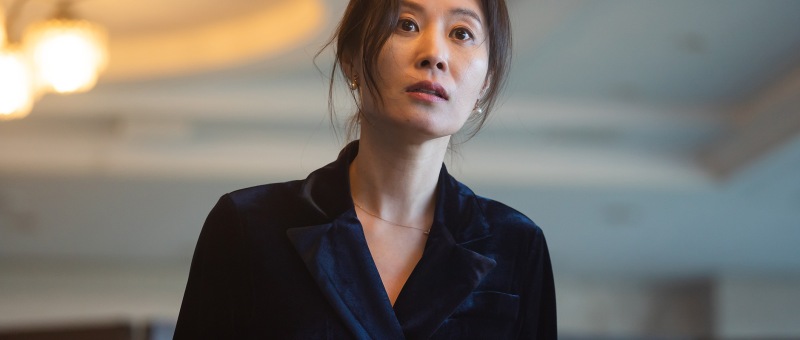
Start-Up (시동, Choi Jung-yol, 2019)

Two young men experience a failure to launch in Choi Jung-yol’s Start-Up (시동, Sidong), a much gentler coming of age tale than his 2016 feature debut One Way Trip. Like the earlier film, however, Start-Up finds its two heroes pulled in different directions while experiencing the same dilemmas, these being in the main a kind of toxic masculinity that sees them in part reject their respective maternal figures in internalised shame as sons who feel they should be but are fundamentally incapable of taking of care of them and perhaps concluding that their only familial connection must be disappointed and resentful.

We can see the boys’ sense of futility in the opening sequence in which they literally fail to kickstart a scooter that 18-year-old Taek-il (Park Jung-min), the hero, has somehow managed to buy on the internet but seems to be a dud. Eventually they wind up having an accident and being taken to the police station where Taek-il’s mother Jeong-hye (Yum Jung-ah) has to bail them out leaving even the desk officers looking quite embarrassed as she takes Taek-il to task for his irresponsibility, disappointed to learn he spent money intended for lessons to help him (belatedly) get his high school diploma on the useless scooter. He tells her he’s dropped out of school and has no interest uni, fiercely resenting her refusal to accept his decision while unwisely cutting in that she doesn’t have the money to send him anyway which earns him one of her trademark volleyball slaps. 

Taek-il’s unwise words perhaps hint at part of the reason he’s rejecting the life his mother wants for him in that he knows how much she’s suffered and sacrificed on his behalf and doesn’t want to add to her burden by encouraging her to overwork herself to pay for college when he doesn’t think he’s worth it anyway. Of course, he can’t say any of this to her, and she can’t tell him she only wants the best for him, so they alternate between silence and blazing rows with Taek-il retreating into peaceful visions of life on a desert island when everything gets too hard. Wanting to prove himself independent, he ends up running away but doesn’t have money to get very far so ends up working in a Chinese noodle restaurant in provincial Gun-san. 

His friend Sang-pil (Jung Hae-in), meanwhile, is an orphan living with his elderly grandmother (Go Doo-shim) who appears to be suffering from dementia and has been supporting the pair of them by peeling chestnuts. Like Taek-il, Sang-Pil desperately wants to be able to take care of his grandmother and make her life as easy as possible but is largely out of options which might be why he lets a shady friend, Dong-hwa (Yoon Kyung-ho), introduce him to his “company” which turns out to be a local loansharking gang for which Dong-hwa is an enforcer and debt collector. Sang-pil tells Taek-il that he’s got a job “in finance”, and though he’s conflicted enjoys the sense of self worth he gains as a working man earning money to look after grandma. He is too naive to realise that the first family they visit is aggressively nice to Dong-hwa because he’s probably been less than nice to them in the past, coming away with the mistaken idea that the job’s not so bad and people are grateful for the “service” they’re providing. 

A repeated gag sees both boys getting repeatedly beaten up, literally struck down every time they attempt to move forward. Taek-il finds himself punched in the stomach by an amateur boxer with problems of her own and thereafter knocked around by the eccentric chef at the Chinese restaurant (Ma Dong-seok), while Sang-pil is finally awakened to the dark side of his new job when he’s thrown through a glass doorway by a drunken client very clearly at the end of his tether. The answer is less fighting back than it is standing together and up for oneself as the boys begin to make mutual decisions about the future directions of their lives and the kind of men they’d like to be even if they still don’t quite know where they’re going. 

Start-Up’s genesis as an online webmanga might help to explain its myriad unresolved plot strands including the backstory of the mysterious boxing high school girl (Choi Sung-eun) who appears to have lost or become estranged from her family but ends up becoming the surrogate daughter of the kindly man who owns the Chinese restaurant (Kim Jong-Soo) which seems to be a haven for lost people of all ages looking for a place to call home, while Jeong-hye’s past success as a volleyball star is resolved as little more than an awkward punchline and her desire to start her own business which she is then swindled out of presented as something done solely for her son rather than for herself. The difficult economic circumstances of contemporary South Korea are certainly a factor in the boys’ malaise and general sense of hopelessness but it’s less Hell Joseon that’s trapping them than a complex web of familial love and resentment coupled with their desire as a young men to feel in control of their own lives rather than being constrained by parental expectation. “You should decide where to go first” Taek-il is repeatedly told, but when it comes right down to it the most important thing is figuring out how to start the engine, everything else you can figure out later.


International trailer (English subtitles)
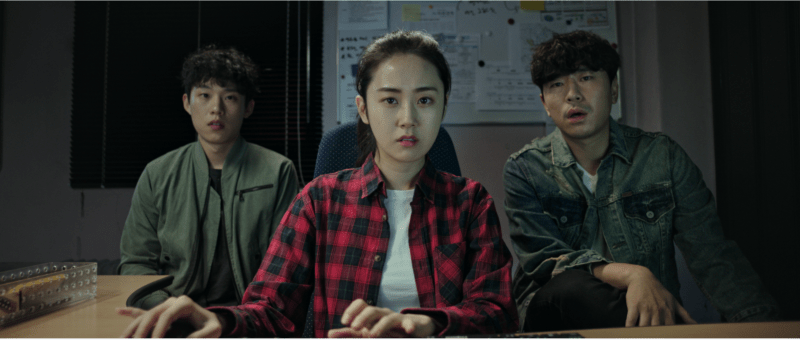
The Closet (클로젯, Kim Kwang-bin, 2020)

Parents in Korean horror films are often uniquely flawed but go to great lengths to redeem themselves through saving their children from supernatural peril. This much is true for the narcissistic hero of Kim Kwang-bin’s grief-stricken ghost story, The Closet (클로젯). The title, perhaps in contrast to its first implications, has a poignant quality as it represents in one sense a place of safety for children trying to protect themselves from the things that frighten them but of course it is no safe place and only leaves them trapped, vulnerable, and traumatised by a world of adult cruelty they are far too innocent to understand. 

Architect Sang-won (Ha Jung-woo) lost his wife in a car accident in which he was driving. He has just bought a large house in the country where it’s quiet and the air is clean to help his young daughter Ina (Heo Yool) recover from her trauma, but his decision is causing trouble in his professional life because his firm prefer their architects to be onsite during in builds and Sang-won obviously needs to be with Ina until he can find a nanny. Ina is generally avoidant around her father, something which probably isn’t helped by her overhearing him blame all his problems on her while arguing with work on the phone, but her personality undergoes an abrupt change after she opens the closet door in her new bedroom, rendering her suddenly cheerful while carrying around a strange doll. 

Sang-won’s first concern is the manky old toy which irritates him because he’d gone to trouble to buy Ina a fancy limited edition doll as a present which she hasn’t played with. Ina is probably ageing out of dolls, and doubtless not that impressed with the supposed pedigree of her father’s gift seeing as neither is she old enough to appreciate a purely decorative present, but in any case Sang-won’s gesture was largely for himself as he proves flagging up how much trouble he went to to get it without, it seems, thinking about what Ina might actually like. When the accident happened, Sang-won was having a minor argument with his wife because he hadn’t made it to Ina’s school concert. He was faintly dismissive, superficially apologetic but clearly unrepentant in choosing his career over his family. Still traumatised over his role in the accident, Sang-won fails to connect with his daughter out of a mix of emotional unavailability, guilt, and intense resentment.

Facing potential humiliation at work on learning he’s been “paired” with a younger architect, Sang-won gets a random local woman to watch Ina, telling her he’ll be away for two months but will visit at weekends. With all of the craziness in the house the “nanny” quits and Ina goes mysteriously missing soon after. Sang-won goes to the police and then the media, but once they catch sight of his medication and mental health profile, he all but becomes a suspect in his daughter’s disappearance, some thinking he killed her and is covering it up and others pitying him as a madman who simply doesn’t remember having harmed his child. An exorcist (Kim Nam-gil), however, has another explanation and Sang-won, though originally sceptical, is forced to trust him because he is the only one who doesn’t think him guilty of murdering his little girl. 

As might be expected, Sang-won’s paternal failures are the root of all his problems. Not only did he neglect his family before the accident, but continues to reject his paternity while rendered a single parent, hoping to palm his daughter off on a nanny so he can go back to concentrating on his career. Questioned by the well-meaning but insensitive exorcist, Sang-won is forced to realise he knows nothing about his little girl. He has no idea if she likes K-pop or if she has any friends. Faced with her continued indifference, he was planning to send her away to an art therapy camp, throwing his hands up in the air and declaring fatherhood too difficult. As the exorcist points out, kids are smart and they know when they aren’t wanted. It’s precisely this feeling of insecurity which has invited in the supernatural. Sang-won will have to prove his paternal love if he truly wants to bring his daughter home. 

The grudge-bearing ghost, it seems, is trying to provide a refuge for all those other children bullied, mistreated, or neglected by the adults who were supposed to protect them, but all Sang-won can do is apologise on behalf of failed fathers everywhere which is, it has to be said, not much of a victory even if refocuses our attention on the true villainy which is sadly much more societal than it is supernatural. In any case, Sang-won doesn’t seem to have changed very much even if he’s had something of a humbling and been superficially restored as a “good” father rededicating himself to raising his daughter. The final sting, however, is perhaps a little on the flippant side even as it reminds us of the evils still lurking in the dark corners of our societies. 


International trailer (English subtitles)
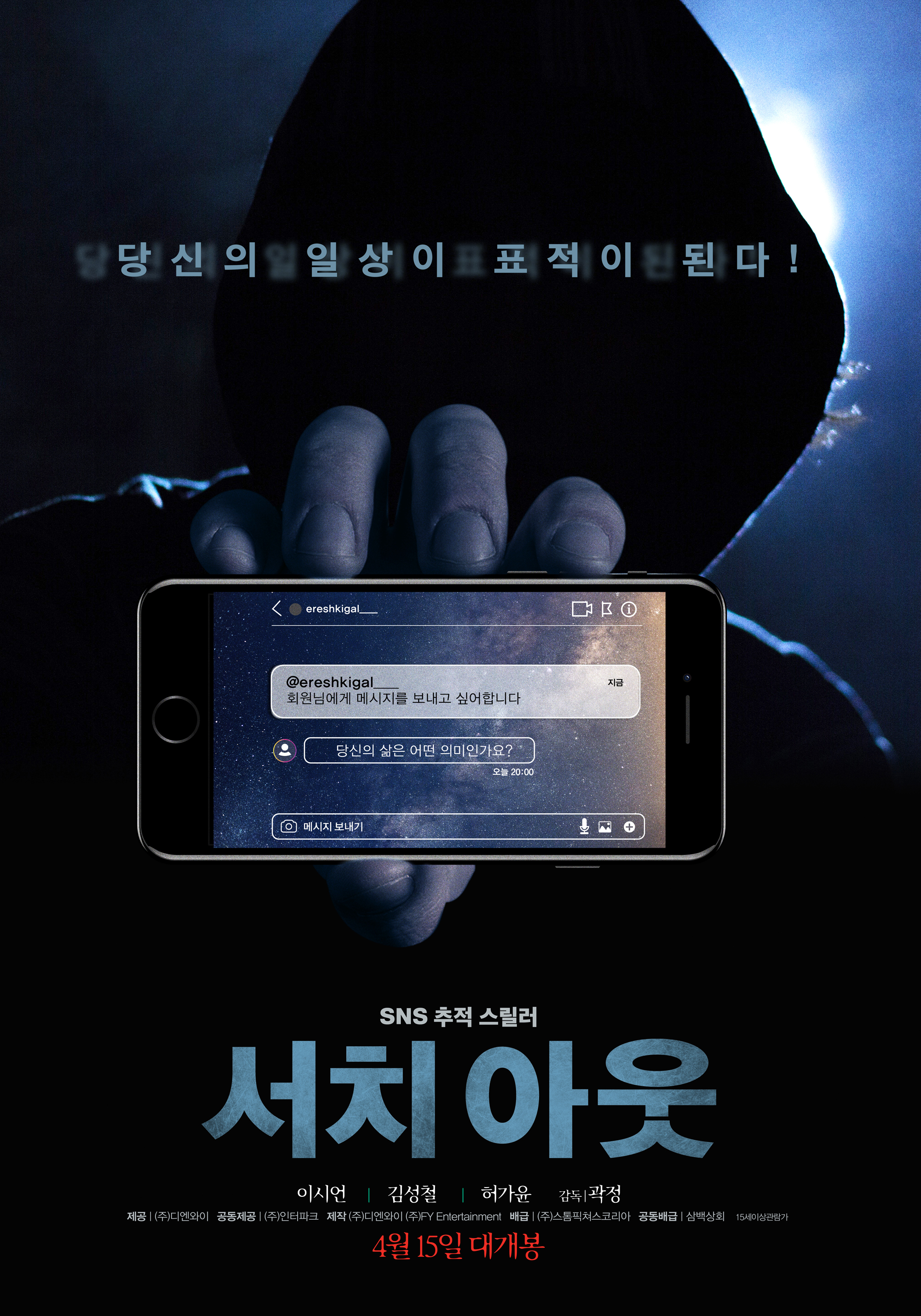
The Man Standing Next (남산의 부장들, Woo Min-ho, 2020)

“You have my full support. Do as you please” so says the dictator, unambiguously manipulative but still somehow inspiring the loyalty of his many underlings perhaps still too wedded to an idea or at least an ideology to countenance moving against him. It turns out that nothing really changes and whether it’s feudal Joseon or the modern nation state, there is intrigue in the court. Neatly adopting the trappings of a ‘70s conspiracy thriller, Woo Min-ho’s The Man Standing Next (남산의 부장들, Namsanui Bujangdeul) explores the events which led to the assassination of President Park Chung-hee, father of the recently deposed president Park Geun-hye, by a member of his own security team. Many of the names have been changed and historical liberties taken, but the lesson seems to be that there is always a man standing next in readiness to inherit the throne. 

Our hero is KCIA chief Kim Gyu-peong (Lee Byung-hun), preparing as the film opens to halt Park’s (Lee Sung-min) increasing authoritarianism by assassinating him. A combination of the personal and the political Gyu-peong’s eventual epiphany is precipitated by an old friend’s “defection”. Park Yong-gak (Kwak Do-won), former director of the KCIA which operated as a secret police force propping up Park Chung-hee’s oppressive regime, is giving testimony to an American inquiry into the so-called “Koreagate” scandal in which the KCIA is accused of bribing members of Congress to propagate favourable views of the Korean president and reverse Nixon’s decision to pull US troops from South Korea. Yong-gak uses the opportunity to denounce Park Chung-hee, planning to publish a memoir titled “Traitor of the Revolution” as an exposé of the inner workings of the KCIA.  

Somewhat ironically, Gye-peong and Yong-gak are old comrades who fought together in the “revolution” led by Park in the early 1960s following the ousting of corrupt autocrat Rhee Syngman. Yong-gak has become disillusioned with their cause and with Park himself, but this largely ignores the fact that Park’s revolution was mainly a repackaging of Japanese militarism, something signalled by an exchanged between Park and Gye-pyeong in Japanese to the effect that their days of revolution were their best. All of which makes Yong-gak’s wistful eulogising of a betrayed ideal along with his supposed admiration for democracy somewhat ironic. The essential motivator in their loss of faith, however, is also a militaristic one. They learn firstly that like any dictator Park has been embezzling from the state for years and has a collection of slush funds in Switzerland. That’s not the problem, the problem is that to manage them he’s been running a “private” intelligence service unknown even to the KCIA. They’ve been displaced, and their hurt is personal more than it is political. 

Yong-gak calls Park a traitor to their revolution and objects to the continuing human rights abuses for which he himself as a member of the KCIA has been directly responsible. All of this creates a series of crises for Gye-peong who is torn between loyalty to his old friend and Park while increasingly worried for his own safety. He begins to suspect that Gwak (Lee Hee-joon), Park’s security officer who had not fought with them in the revolution, may be the mysterious “Iago” figure Yong-gak had been warned about by the CIA. Increasingly sidelined, Gye-peong continues to do Park’s dirty work but draws attention to himself in his resistance towards the president’s increasingly militaristic rhetoric. Pro-democracy protests have already broken out in Busan in response to Park’s “unfair” treatment of the city’s governor and the opposition party. Gye-peong advises reinstating the governor with an apology. Gwak says frame the protestors as communists and Northern sympathisers and send in the tanks. “Cambodia killed three million people, is it such a big deal if we kill one or two million?” Gwak blurts out in a quip which seems to catch Park’s attention, the president now thinking himself untouchable. A militarist perhaps but an educated man who speaks good English and gets on well with the Americans, Gye-peong does not see the Khmer Rouge as a source of inspiration nor, like Yong-gak, does he think those values align with the ones he fought for bringing Park to power. 

Then again, even in the immediate chaos of the early ‘60s, it’s difficult to see how you could join that particular revolution without assuming it would come to this. Gye-peong has apparently been OK with human rights abuses and mass oppression, but has been quietly reassuring himself and others that Korea is changing, Park is preparing to move aside, and they are progressing towards democracy. In true conspiracy fashion, Woo paints Gye-peong as a tragic hero, unable to reconcile himself with the choices he has made or the radically different version of the world he is now seeing, but taking what is essentially a personal revenge in return for a slighting from a man to whom he’d given his life. Perhaps in a sense he thinks he’s saving Park from himself, or merely protecting the revolution he fought for from a cruel traitor, but in the end lacks the courage to carry it through. He thought Gwak was his Iago, but he missed the “man standing next” in the shadows. As the April Revolution led only to Park, so Park leads only to Chun and second military coup even more brutal than the last. Nothing really changes, but the next revolution will have to be one enacted by more peaceful means because the spectre of authoritarianism is eclipsed only in the freedom from fear.


The Man Standing Next is available to stream in the UK from June 25 and on download July 5 courtesy of Blue Finch Releasing.

International trailer (English subtitles)
Miss & Mrs. Cops (걸캅스, Jung Da-won, 2019)

When the Burning Sun scandal exploded in early 2019 it promised but perhaps did not deliver a reckoning with the generalised misogyny at the heart of a fiercely patriarchal society. Almost a year previously, 12,000 women had assembled at Hyehwa Station to protest the prevalence of “molka” or spy cam pornography in which footage captured of ordinary women through the use of hidden cameras in ladies’ bathrooms, changing areas, and fitting rooms had been uploaded to the internet without their knowledge or consent. Despite all of this, there has been relatively little progress. Miss & Mrs. Cops (걸캅스, Girl Cops), a lighthearted comedy dealing with the weighty issues of molka, date rape, and the indifference with which they are treated by an overwhelmingly male police force obsessed with targets and performance, was filmed before the Burning Sun story broke but drops neatly into the post-scandal society as two women discover that they’re on their own when it comes to taking down a vicious drug gang. 

Mi-young (Ra Mi-ran) was once an ace detective well known for her ice cool arrests, but after marrying a feckless man who repeatedly failed to pass the bar exam she was forced to leave active policing and take an admin job in the complaints department for higher pay. Her sister-in-law, Ji-hye (Lee Sung-kyung), has since joined the force as a rookie officer but has little support amongst her colleagues and is often in trouble for her worryingly aggressive policing which eventually gets her “demoted” to complaints where she ends up working with Mi-young. While they’re busy bickering, a young woman arrives looking lost and confused but is frightened off by a rowdy group of men before she can say anything. As she’s left her phone behind, Mi-young chases after her, but the woman immediately steps out into traffic and is hit by a car. Obviously extremely concerned, Mi-young and Ji-hye get their tech expert colleague to Jang-mi (Choi Soo-young) to help them crack the phone and discover a compromising photo of the young woman posted on an illicit web channel promising to release the full video when it reaches 30,000 likes. 

Talking to her friend, Mi-young and Ji-hye realise that the young woman has tried to take her own life out of shame because of what these men did to her. Yet their attempts to report the matter to the legitimate authorities fall on deaf ears. Ji-hye’s colleagues joke and complain about having to investigate “perverts” instead of doing “real” policing, as if it’s all just meaningless silliness. Back when Mi-young was on the force she was placed into a special woman’s squad dedicated to dealing with crimes against women. Ji-hye quite rightly points out that times have moved on and the woman’s squads were in their own way essentially sexist in that they were created because the male police force did not regard crimes against women as “serious”, nor did they regard female officers as “real” police, so they killed two birds with one stone to allow them to get on with more “important” matters. 

The women realise that they’ll have to deal with this on their own, but even once they do discover that the male officers are only too keen to take the credit for exposing a drug ring while leaving the “peeping toms” to the ladies as not worth their time. Ji-hye’s boss even lets his mask slip in irritatedly suggesting she’s being over emotional because she is a woman and should let the boys get on with their jobs, but it’s only when she has a moment of impassioned rage explaining to them that they’re consistently failing in their duty to protect the women of Korea that they are finally shamed into realising the consequences of their lack of concern. 

Meanwhile, each of the women has been in some way been deliberately obstructed in their career solely for being a woman. Mi-young was forced off the force and is now in danger of losing her complaints job because of budget cuts. An older woman doesn’t tick any boxes on the employment quotas and so they have no reason to keep her. Ji-hye, meanwhile, is ignored by most of her team and left without support, and even Jang-mi, we discover, had NIS training but quit in resentment after they put her on a pointless Twitter monitoring programme. Their much maligned boss was also a part of the woman’s squad and wanted to continue in the police after having children, but they put her in charge of complaints instead. 

Yet Mi-young says she isn’t on the case because of female solidarity but because it makes her so angry that most of the women this happens to, like the woman who stepped in front of a moving car, blame themselves. The woman’s friend blames herself too for getting her friend into a dangerous situation because she convinced her to come to a private party with guys in a club thinking “they seemed OK”. In that sense it’s a shame that the villain concerned turns out to be a drug-addled sociopath who apparently only does the date rape stuff “for fun” because the real reason for all those clicks is data collection, rather than a perfectly ordinary guy who is probably someone’s son, brother, or even husband, not to mention chaebol kid or Kpop star. Still even if a little flippant in presentation (including some extremely unfortunate racist “humour”), Miss & Mrs Cops maybe no Midnight Runners but has its moments as its determined heroines strike back against patriarchal indifference by refusing to give up on justice.


International trailer (English subtitles)
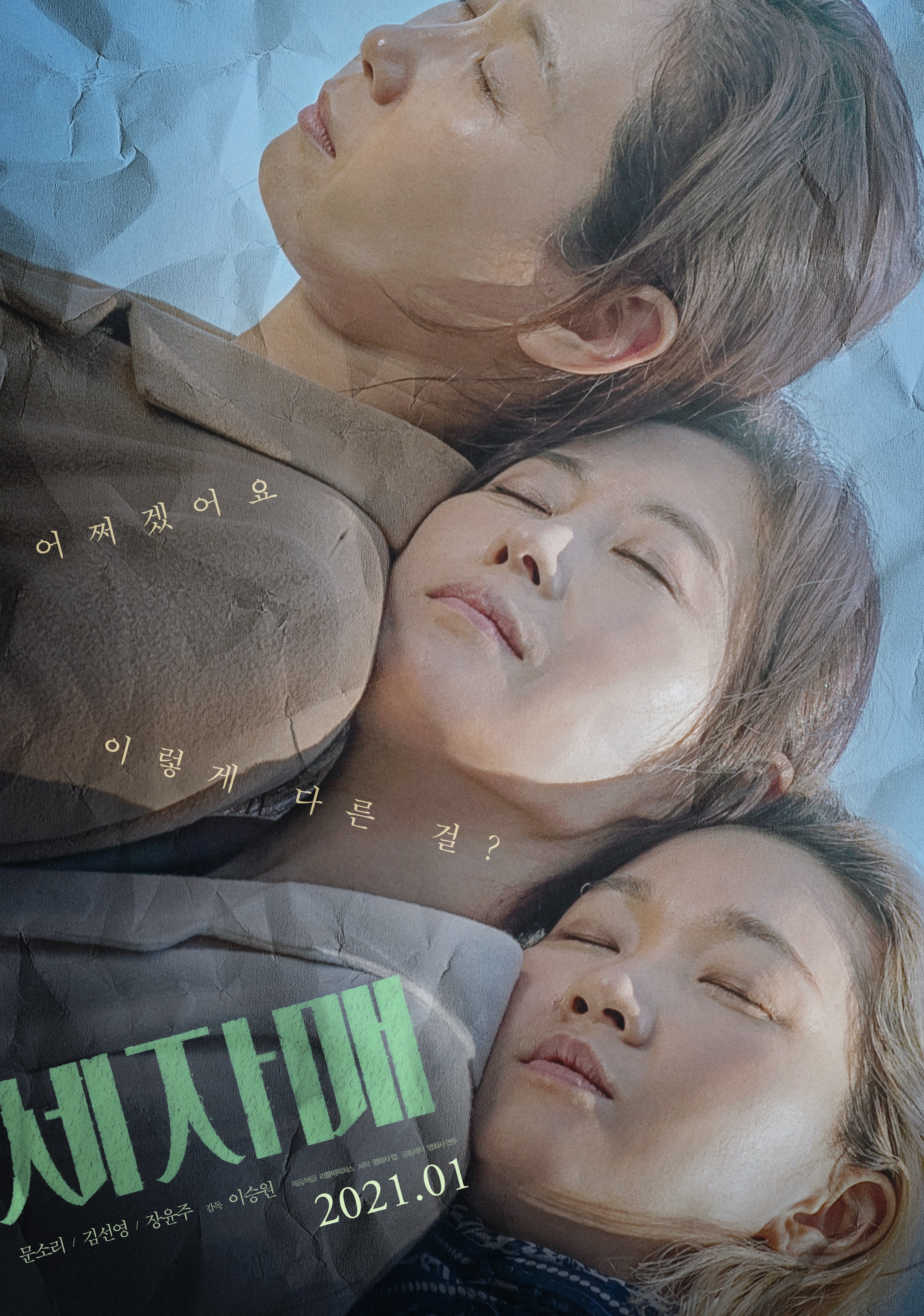
Moving On (남매의 여름밤, Yoon Dan-bi, 2019)

Life is a series of partings, but somehow they never seem to get any easier. The heroine of Yoon Dan-bi’s award-winning debut feature Moving On (남매의 여름밤, Nammaewui Yeoreumbam) seems to have already developed a healthy sense of nostalgia for an irretrievable past despite her young age, acutely aware of her silent grandfather’s aching loneliness though somehow unable to ease it. Yet it’s the complicated business of family that she finds herself sorting out one difficult summer while temporarily displaced, living in a sense in the past as her equally lost father attempts to rediscover some kind of foothold in the modern society by moving back into his childhood home.

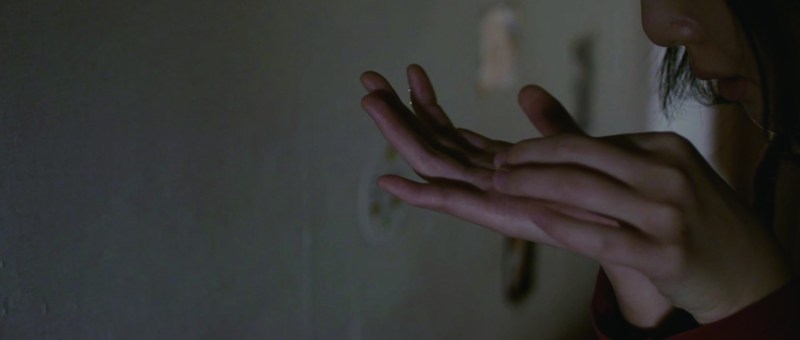
Teenage Ok-ju (Choi Jung-un) takes one last look around her old apartment before her dad Byunggi (Yang Heung-joo) drives them to grandpa’s, a place and indeed man she doesn’t know particularly well. In fact, she’s worried he might not even know they’re coming. When they arrive, it turns out grandpa isn’t there, he’s in hospital after being struck down by heatstroke. As they will every other time we see them bar the last, Ok-ju and her younger brother Dong-ju (Park Seung-joon) enter the house alone, waiting patiently for their father to come back while still not really quite at home, fearful of causing a disturbance in an unfamiliar environment. When they finally return it seems as if Ok-ju’s hunch might have been right, her father asks grandpa for permission to stay to which he merely gives a few words of assent. 

Byunggi paints their stay as something like a summer holiday, which it is in a way, a brief moment of pause while they figure out what to do next. What he hasn’t told the kids is that he’s broke, selling factory second sneakers on the street in an unsuccessful attempt to make ends meet while he studies to pass an exam to get a better job. They’re piling into grandpa’s two-bed, two-storey home because they don’t have money for rent. Yet like any teenage girl Ok-ju has the usual worries. She wants $700 from her father for cosmetic surgery, partly as she later explains to her aunt Mijung (Park Hyun-young) because the boy she’s been seeing only texts her when she texts him leaving her feeling insecure in her looks and mistakenly believing he’d be more proactive if her eyes were more generic. Later she swipes a pair of her dad’s trainers to give to him as a birthday present, trying to buy his attention, and then another trying to sell them to get the money her dad wouldn’t give her not realising the trainers are fake. The awakening she gets is then two-fold, firstly that she made a huge mistake turning to crime and secondly realising that her dad’s a fraud, a failed businessman who’s resorted to peddling knock offs and moving back in with his father because he can’t support his family. 

Meanwhile, she’s still harbouring a great deal of resentment towards her absent mother who has for unknown reasons left the family. She argues with her cheerful brother Dong-ju who still wants to maintain contact with her, angrily accusing him of having no pride when quite the reverse is true. It’s she who is too proud to admit she misses her mother and too hurt to forgive her for her abandonment. She rejects Dong-ju’s right to choose for himself, insisting that he shouldn’t see their mother because she doesn’t want to, trying to enforce sibling solidarity but only further driving a wedge between herself and her brother as she reduces him to tears in the absurdity of her misplaced rage. With father and mother both discredited, only the arrival of aunt Mijung provides an alternative source of adult reliability but aunt Mijung has problems too, sneaking out at night to drink and smoke while contemplating a middle-aged divorce from her possibly abusive husband. 

There’s an odd kind of symmetry in the secondary family that is thrown together at grandpa’s, Ok-ju and Dong-ju younger versions of Byunggi and Mijung living in their childhood home now cast in the parental roles if somewhat awkwardly. They have each in a sense failed, Byunggi unemployed and separated from his wife and Mijung heading for a divorce. They’ve come “home” to be children again, get a reset on middle-aged disappointment while contemplating future loneliness as they consider the problem of grandpa, asking themselves if he might not be better off in a home as his health declines especially after the kids go back to school and they’ll need to hire a carer. Mijung wants to sell, but it’s impossible to sort the desire to do right by dad from the material lure of turfing him out his own house to unlock its hidden equity. Figuring out what’s going on, Ok-ju is further disappointed in her father. After all, it’s just not right. But he fires back at her that stealing his dad’s house out from under him isn’t so different from what she did when she took the shoes, which is a point but maybe not the one he thinks he’s making. 

Still, sometimes events can overtake you. Walking downstairs late one evening Ok-ju is struck by the sight of her grandfather sitting sadly alone listening to a melancholy song from his youth about lost love, overcome with nostalgia and a deep sense of loneliness, a longing for something or someone perhaps the family of bygone days. The Korean title, “a brother and sister’s summer night”, has its sense of poignancy too as the pair are forced to contemplate summer’s end, processing loss as they adjust to the new normal of their unusual family circumstances Ok-ju finding an adult accommodation with disappointment as she prepares to “move on” from this summer interlude into a much less certain world. Shot with warmth and naturalism, Yoon’s debut captures a family on the brink of disintegration but does perhaps find a kind of solidarity in the siblings’ self-reliance as they face the summer night alone but also together. 


Moving On streamed as part of this year’s New York Asian Film Festival.

Festival trailer (English subtitles)