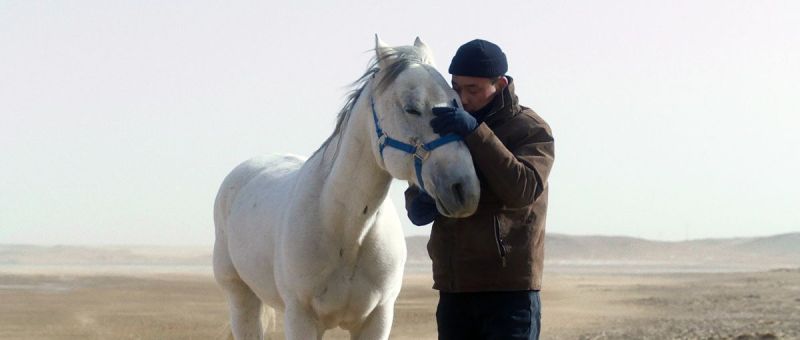
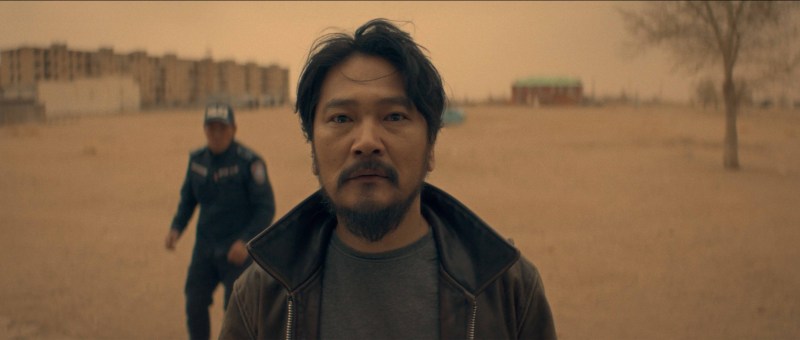
The Mongolian Steppe is known for its vastness and ever-extending horizon, but for Saina it’s shrinking to the extent that seems to be homing in on him and threatening to destroy the only environment in which he feels he belongs. Saina is himself often likened to a runaway horse, though he’s forever catching them and bringing them back, longing for a world in which he could exist within this natural environment just as his ancestors did but finding only futility everywhere.
Once a racer, Saina injured his shoulder and is now relegated to the sidelines while trying to find other ways to work. His father, a broken man who drinks and gambles, has already sold off most of his sheep and is on at Saina to sell the horses too. His friend Hasa has also sold up, first rejoining the circus but then declaring himself sick of being a herdsman. After getting injured he decides to try his luck in the city and ironically ends up getting a job working for the mining company that is quite literally disrupting the foundations of Saina’s life.
The main enemy is modernity, but it’s delivered by the Chinese. Saina finds himself surrounded by Mandarin speakers, while it’s a Chinese mining company that is gradually buying up the Steppe to open a mine and eventually tries to force Saina and his father off their land. Saina’s father keeps telling him a Chinese horse broker could get them a good deal, but he’s also told that his beautiful white horse isn’t worth very much because it’s Mongolian. It’s meat wouldn’t even be worth as much as a cow’s, though that’s the only reason the broker is interested in it.
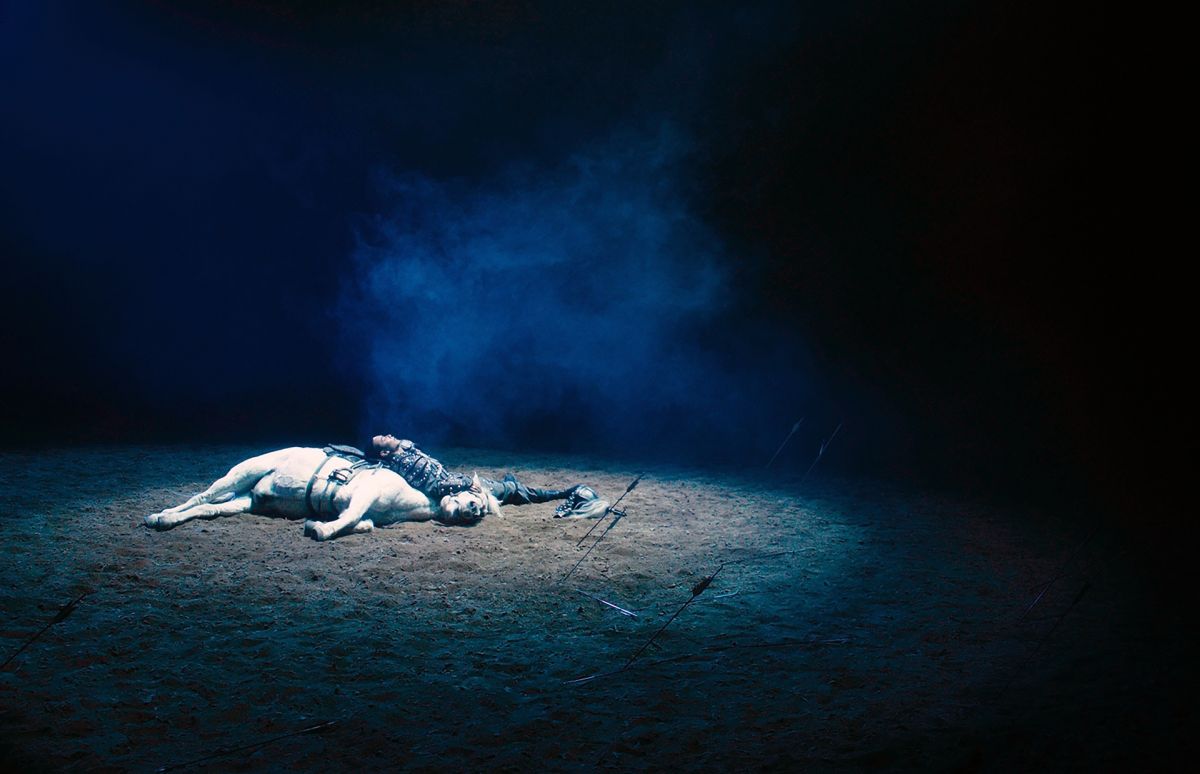
Nevertheless, it’s largely for Chinese tourists that Saina is obliged to parade his culture. He takes part in Medieval Times-style dinner shows where the audience is repeatedly reminded they can buy drinks for their favourite riders and carrots for the horses, though the riders and horses almost certainly don’t see them. Saina rides dressed as a heroic Mongol warrior, but has dreams of himself dying on the battlefield alone with his white horse. His ex-wife Tana encounters something similar, as her Chinese boss makes her serve drinks at dinner parties with Chinese businessmen while insisting she sing a Mongolian song for the local colour. Later Saina gets a job at a ranch where city slickers come to experience life on the Steppe, but complains that the tourists ride the horses too hard and end up injuring them. They don’t have a connection to the land or know how to treat animals, while the ranch owners exploit the horses in the same way they exploit Saina, taking little interest in their physical wellbeing only their ability to work. At the show, Saina discovers his horse is injured and asks to switch to another one to let it rest, but encounters resistance in being told to get higher approval from the boss.
Meanwhile, he applies for a job at a fancy equestrian facility but is basically told he’s too he’s common for this elite, aristocratic Western sport that’s no longer about racing but fine technique. The snooty woman who interviews him says that Mongolian riders don’t ride properly and their skills aren’t needed somewhere like this. Saina could possibly start from the ground up as a stable boy but most of those are teenagers. Meanwhile Saina reflects that his father never actually taught him how to ride, he just placed him in the saddle and left the rest up to him with the natural consequence that it feels like something that is innate and essential. Yet he wonders if his son will ride at all or if these grasslands will still exist when he comes of age. Tana lives in the city and wants to send the boy to a school she thinks is better where they speak Mandarin and English while Saina is worried he’ll lose his Mongolian. When he puts him on a horse, the boy is terrified and asks to get off. All Saina really seems to want is to ride horses and raise sheep, but this way of life is dying out and the grasslands are shrinking all around him. There is something quite sad and defiant in his riding of his horse along a motorway in the juxtaposition between the traditional way of life and the modernity which all but destroyed it even as Saina is seemingly left with nowhere to go and no place to roam.
To Kill a Mongolian Horse screened as part of this year’s New York Asian Film Festival.
Trailer (English subtitles)


 Windows on Worlds