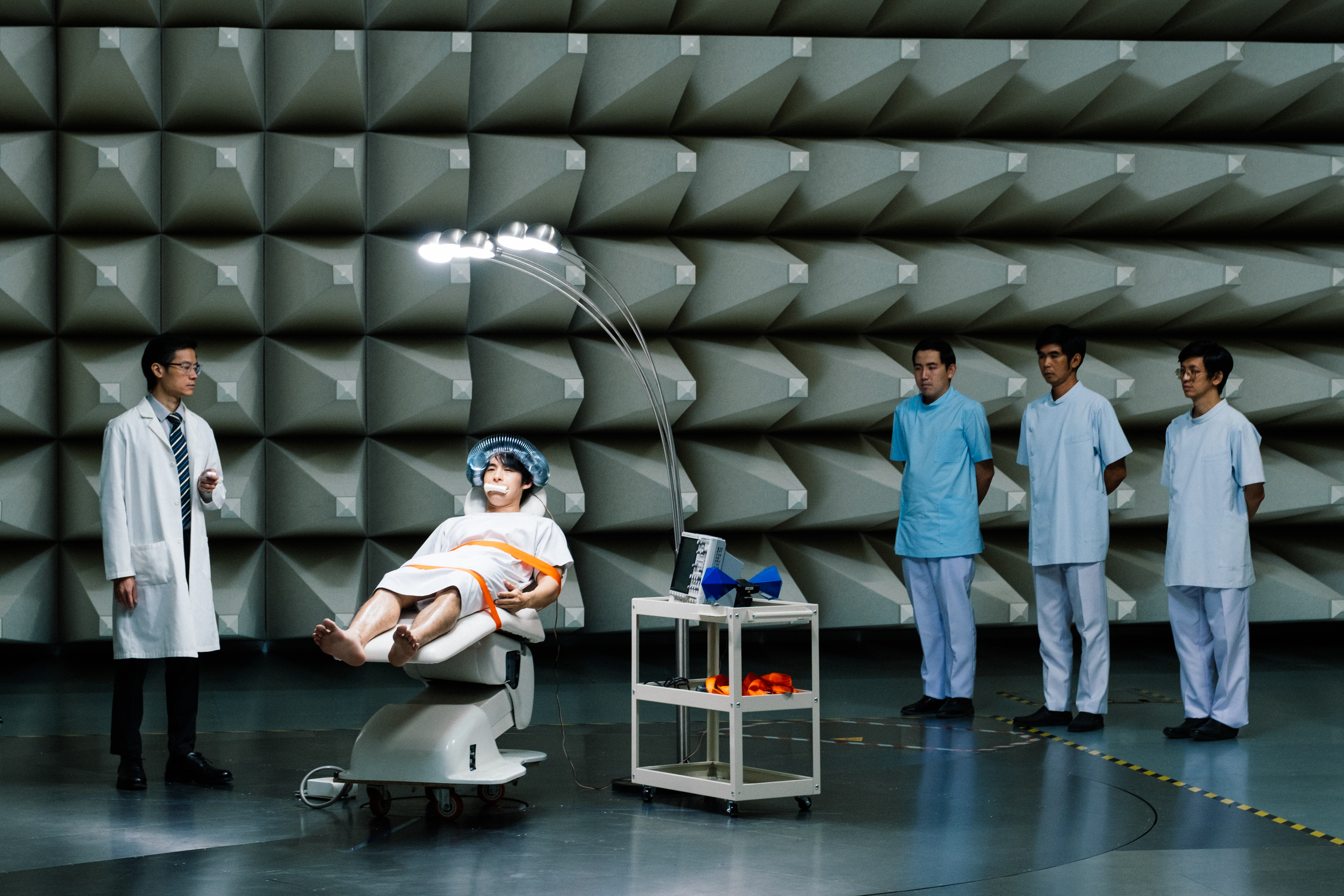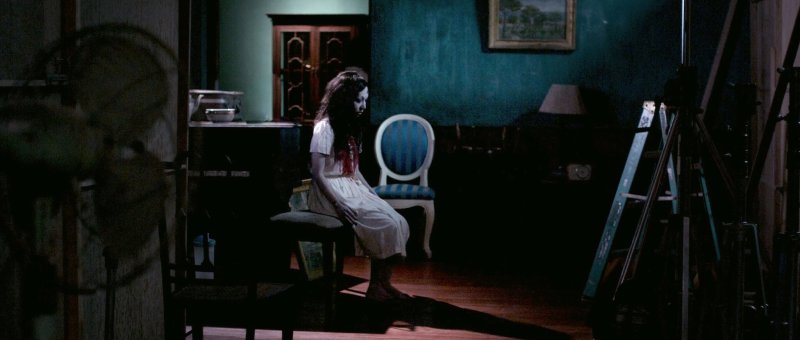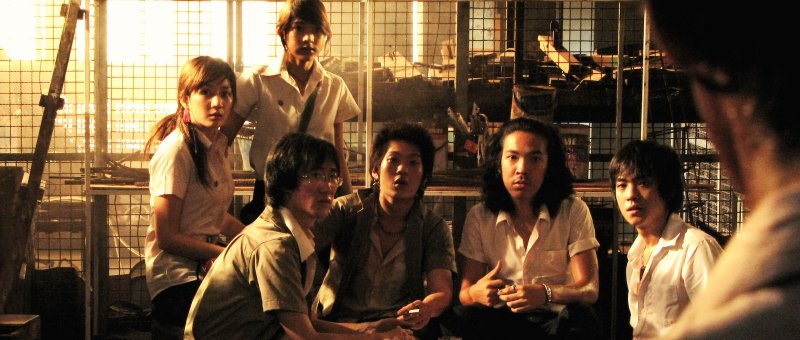
Pee Mak (พี่มาก..พระโขนง, Banjong Pisanthanakun, 2013)

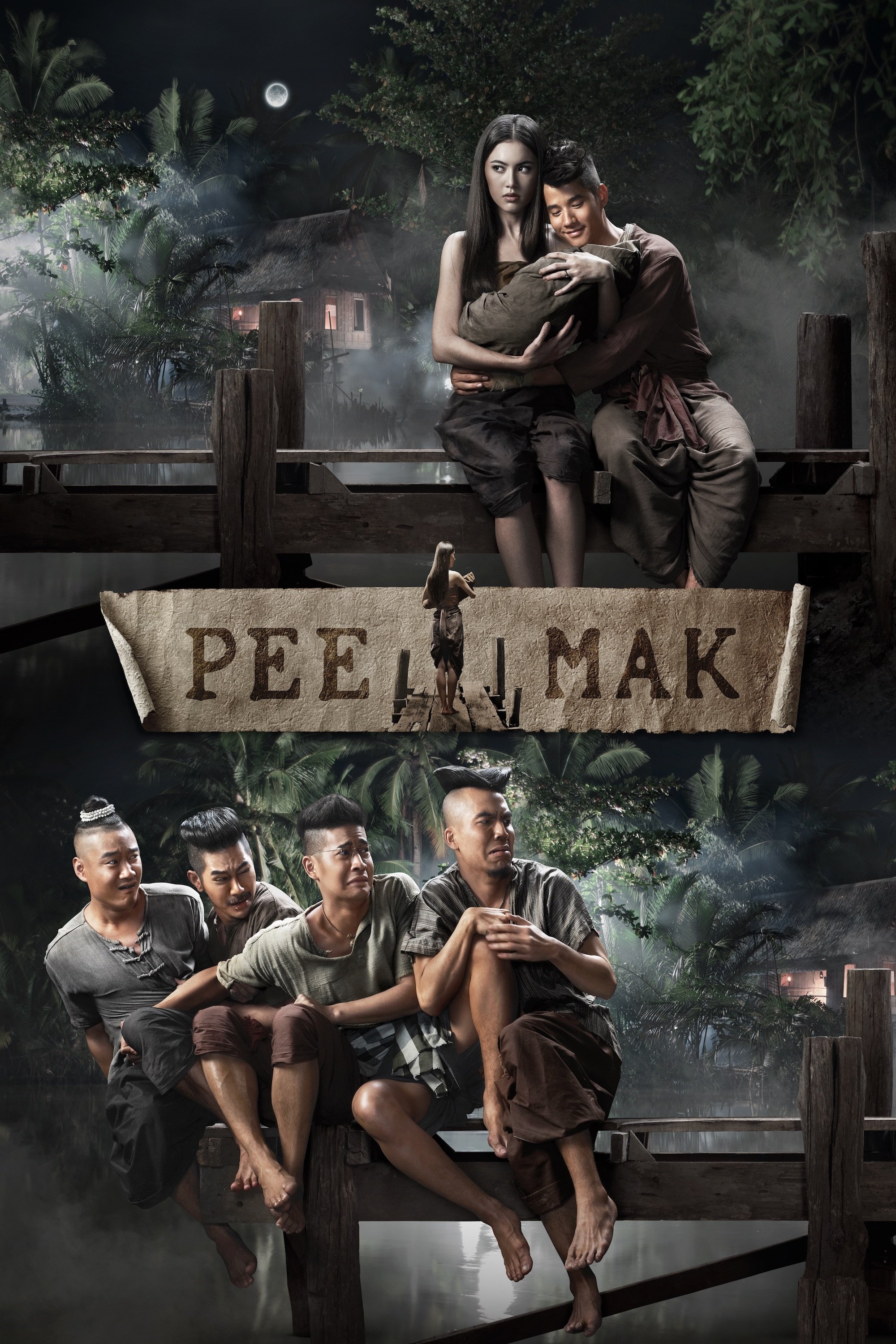
If you suddenly discover your spouse is a member of the undead, do you really have to break up with them or is it alright to go on living with a ghost? The conventional wisdom in Banjong Pisanthanakun’s horror comedy take on the classic folktale Mae Nak Phra Khanong, Pee Mak (พี่มาก..พระโขนง), is that the dead cannot live with the living, but perhaps love really is strong enough to overcome death itself and living without the person who means most to you really might be more frightening than living with an all-powerful supernatural entity.

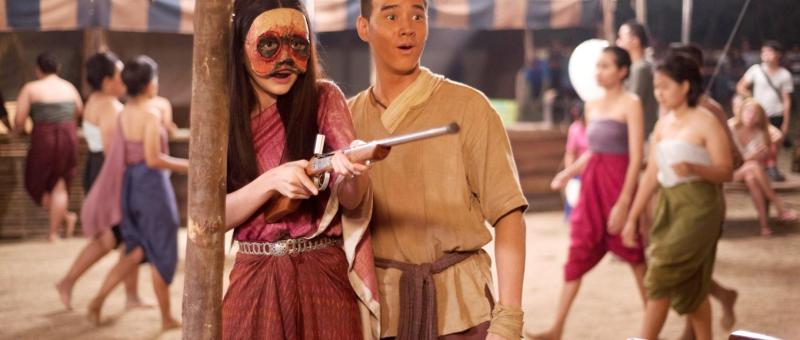
In any case, much of the comedy revolves around the desperate attempts of Pee Mak’s friendship group to make him realise that wife, Nak (Davika Hoorne), is a ghost. The men had all been away at the war and have now returned but the village seems different and the villagers are all avoiding Pee Mak. Gradually, it dawns on them that Nak actually died due to complications from a miscarriage after going into labour alone at home given Pee Mak’s absence. But Pee Mak himself remains unaware of this fact, or so it seems, and refuses to listen to his friend’s attempts to convince him which are also frustrated by their fear of Nak and the worry that she might curse them if they reveal her secret.

The four friends are each played by the same actors and have the same character names as those in the shorts Banjong Pisanthanakun directed for 4Bia and Phobia 2, and as in those two films there is a degree of confusion about who is and isn’t a ghost. On their return, the men are passed by a ferryman who is returning the bodies of dead soldiers to their families explaining that the graveyards are all full. This of course hints at the destructive costs of the war and haunted quality of the depleted village to which not all men have returned, but also leaves the door open to wondering if the five of them are not already dead themselves and have returned home only in spirit without realising. Pee Mak, after all, sustains a serious injury from which he miraculously recovers driven only love and the intense desire to return home to his wife and the baby he’s never met who must by now have been born. 

Meanwhile, Nak tells Pee Mak that the rumours of her death are greatly exaggerated and mostly put about by a local man, Ping, who had been harassing her while Pee Mak was away at the war and was upset by her rejection. Ping then later also accuses Nak of killing his mother after she drunkenly told Pee Mak about Nak being a ghost, but in general the villagers only avoid Nak until one rather late intervention rather than try to exorcise her spirit. Nevertheless ghost or not, it does not actually appear that Nak is particularly dangerous. She does not drain Pee Mak’s life force nor randomly attack other people and at most only seems to glare intensely at his friends who might just be annoying in far more ordinary ways especially as one of them seems have developed a crush her.

Which is all to say, is it really so wrong for Pee Mak to enjoy a happy family life with his ghost wife who may have developed a set of really useful skills such as super-stretchy arms and the ability to hang upside down? Banjong Pisanthanakun constantly wrong-foots us, suggesting that perhaps everyone’s already dead, or maybe no one is, while eventually coming down on the side of the power of love to overcome death itself. Despite the film’s setting in the distant past, he throws in a constant stream of anachronistic pop culture references that might suggest this is all taking place in some kind of universal time bubble but also lends to the sense of absurdity in what is really a kind of existential farce as the gang attempt to figure out who’s alive and who’s a ghost before eventually realising that it might not really matter. Dead or alive, it seems like life is about just being silly with your friends free from the folly of war, which is surely a message many can firmly get behind.


Trailer (English subtitles)
A Useful Ghost (ผีใช้ได้ค่ะ, Ratchapoom Boonbunchachoke, 2025)

Right at the beginning of Ratchapoom Boonbunchachoke’s A Useful Ghost (ผีใช้ได้ค่ะ, Phi Chaidai Kha), we see a man creating a classical-style relief that’s positioned in a tranquil spot surrounded by nature. It features people from all walks of life, a mother and her child, a monk, a scholar, a soldier, a labourer and so on, as well as a goat, and is later revealed to have the title “democracy monument”. But as soon as it’s put up, it’s brought violently down as developers move in to replace this oasis of peace with a modern shopping mall. 

The construction gives rise to more “dust” which is what’s polluting the country, directly linking rampant capitalism with the erosion of democracy. Even the home lived by the self-proclaimed “Academic Ladyboy” (Wisarut Homhuan) may one day be consumed as the traditional streets are replaced by yet more upscale shopping opportunities. In an effort to get rid of the dust that’s plaguing him, he buys a vacuum cleaner, but it turns out to be haunted and coughs in the middle of the night, spitting out all the dust he made it swallow. 

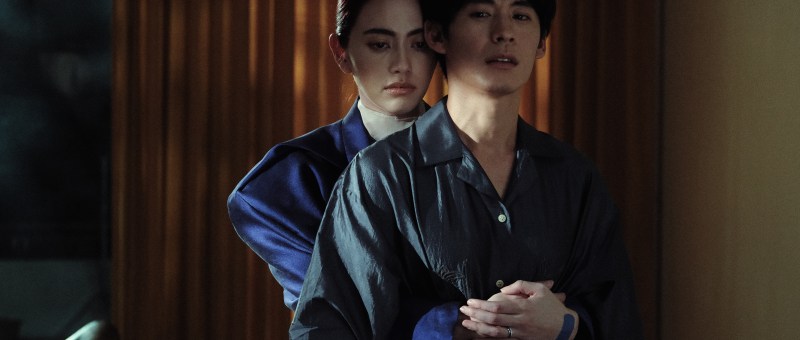
“Dust” is also a term that’s come to stand in for those exploited by this increasingly capitalistic society whose lives are afforded little value, such as factory worker Tok who died after being exposed to too much dust while working at a factory producing vacuum cleaners. Meanwhile, the factory owner’s son has just lost his pregnant wife, Nat (Davika Hoorne), to a respiratory illness caused by dust. Nat has also possessed a vacuum cleaner and reunites with her broken-hearted husband, March (Witsarut Himmarat), but finds herself increasingly compromised after sucking some of the dust out of a government minister’s eyes.

Nat’s desire to stay in the mortal realm longer than is proper is reminiscent of the classic ghost Nang Nak, but what she also becomes is a kind of class traitor increasingly involved with the oppressive regime and betraying her own people to ensure her personal survival. Government minister Dr Paul gets her in on his programme chasing ghosts through dreams and banishing them from people’s memories in order to erase their existence and history. When people refuse to give up their ghosts, he has them given electroshock therapy so that they forget them, as he once tried to do to March before Nat made herself useful to him. And so “dust” and “ghosts” have now become metaphors for those who resist as the souls killed not only during the 2010 massacre but Thammasat University massacre in 1976 rise again to make their presence felt. 

According to the Academic Ladyboy, that these ghosts came back at all is itself an act of resistance, as if these memories themselves could become reminders that resistance is possible and things weren’t always this way. He loathes Nat for the choices that she made in turning on her own, but she was also facing other kinds of oppression in never being accepted by her husband’s upperclass family who in themselves become a symbol of autocratic elitism. Her mother-in-law, Suman (Apasiri Nitibhon), who owns the factory and is unsympathetic towards Tok insisting his death was nothing to do with the working environment, submits herself to them too because like Nat she didn’t belong either and felt she had no other choice. Her eldest child Moss was taken away from her because she spoke a Northern dialect and they feared the child wouldn’t learn standard Thai. Now she tries to talk to her son’s Australian husband in Teochew, only for Moss to roll his eyes and say no one knows how to speak that outside Thailand. Just as they rejected Nat for being an outsider, they rejected Moss for being gay until he became useful to them.

The longer Nat stays beyond her allotted time, the more it corrupts her so on restoring her corporality she would betray even March, who has come to sympathise with the ghosts, in order to be allowed to stay and maintain her position. She’s the “useful ghost”, from a certain point a view, but from another, all the others are “useful” too in keeping the spirit of resistance alive. Quirky and surreal with its tales of haunted hoovers, obsessive bureaucracy, and factories where singing is randomly banned, not to mention truly awesome shoulder pads, Ratchapoom Boonbunchachoke’s deadpan absurdist drama is deadly serious where it counts right until its intensely cathartic conclusion.


A Useful Ghost screens as part of this year’s BFI London Film Festival.

Trailer (English subtitles)
Human Resource (Nawapol Thamrongrattanarit, 2025)

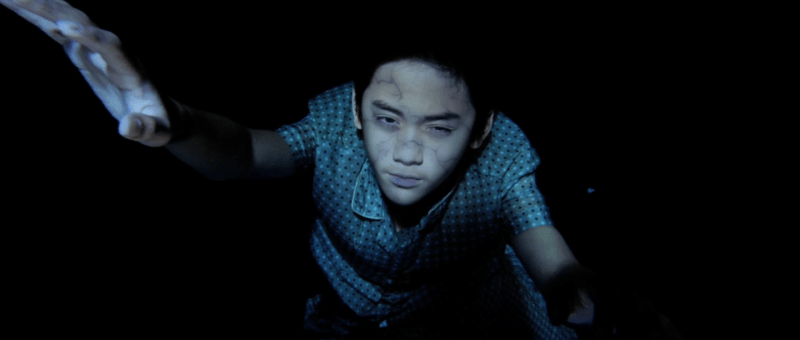
Fren (Prapamonton Eiamchan) has been having trouble sleeping. The doctor she visits to confirm her pregnancy tells her that she’ll have to stop taking her sleeping tablets, but to try gentle exercise such as walking on a treadmill instead. But Fren’s whole life is walking on a treadmill. The reason that she can’t sleep is that she works in HR for a terrible company and is knowingly bringing people into this world of cruelty and exploitation. She doesn’t really want to do the same for her baby, which is one reason she hasn’t told her husband Thame (Paopetch Charoensook) about the pregnancy even though they’ve been trying for two years.

Nawapol Thamrongrattanarit’s Human Resources paints a fairly bleak picture of contemporary Thailand which is all the more chilling for its seeming normality. Fren listens to radio hosts talk about how the economy is tanking, there are floods in the north and no one’s doing anything about it, and also apples might be full of microplastics. You should also fit a filter in your shower because there’s cadmium in the water despite the government’s assurances that it’s safe. No wonder everyone feels on edge. Fren is increasingly uncomfortable with her own complicity, but sees no real way around it.

The main problem is that she works for a bully for who demands an apology from her when she has to have a word with him about his workplace behaviour which includes throwing piles of paper in the face of employees. June hasn’t been coming to work, and according to Fren’s colleague Tenn (Chanakan Rattana-Udom), a few other employees quit their jobs like this too because they just couldn’t live this way any more. Between Jak’s rages, low wages, and the demand to work six days a week, they know they can’t keep staff and feel bad about trying to recruit people. Tenn laments that given the economy, someone will desperate enough to bite, while the pair of them make themselves feel better by deciding to be upfront in interviews about the working culture and letting the candidates decide for themselves.

But how much do you really get to decide? When Thame finds out about the pregnancy, the couple to go look around an expensive international school. Fren agrees that’s very nice and the children seem happy, but it wasn’t their choice to be here and no one’s ever asked them if their parents’ idea of a “decent” person is what they really want to be. To Fren, the international school seems like another level of complicity in perpetuating the inequality in society that’s fuelling the violence and resentment all around them. The candidates might not have the option of turning down these jobs, and Fren doesn’t really have the option to leave, either. But Tenn comes from money and he could always get a job at his family’s company, so in the end only he has the choice of whether to stay or go.

Lectures Fren attends talk about the working revolution and the threat of AI, insisting that the “average” worker is dead because those jobs are gone, so the only way to make a mark is to work yourself to death and make use of personal connections. That seems to be the route Thame is taking after becoming chummy with the police chief in the hope of selling him some of their ultra thin stab vests that are comfortable to wear all day long as if implying the world has already got to that point that you need to be wearing armour at all times. He has a worryingly authoritarian streak and is incensed by the moped drivers who keep going the wrong way up their one-way street. Thame refuses to back up and let them pass, though isn’t so brave when one of them jumps off his bike and begins pounding the windscreen with his helmet. Humiliated by his inability to combat this kind of violence despite having brought it on himself, Thame later runs the guy over deliberately and then gets the police chief to make it go away. 

Meanwhile, Fren feels as if all she can do is carry on walking the treadmill. The shutter at the car wash comes to symbolise that of the furnace at the crematorium where a colleague who took their own life because of overwork and bullying was laid to rest as if Fren’s life were a kind of living death. A famous woman convicted of a crime reveals she’s had an abortion because she didn’t want her son to be born in prison or to bring a child into that world. Fren isn’t sure she wants to either, but like everything else, she might not have much choice.


Human Resource screens as part of this year’s BFI London Film Festival.

Trailer (English subtitles)
Phobia 2 (5 แพร่ง, Paween Purijitpanya, Visute Poolvoralaks, Songyos Sugmakanan, Parkpoom Wongpoom, Banjong Pisanthanakun, 2009)

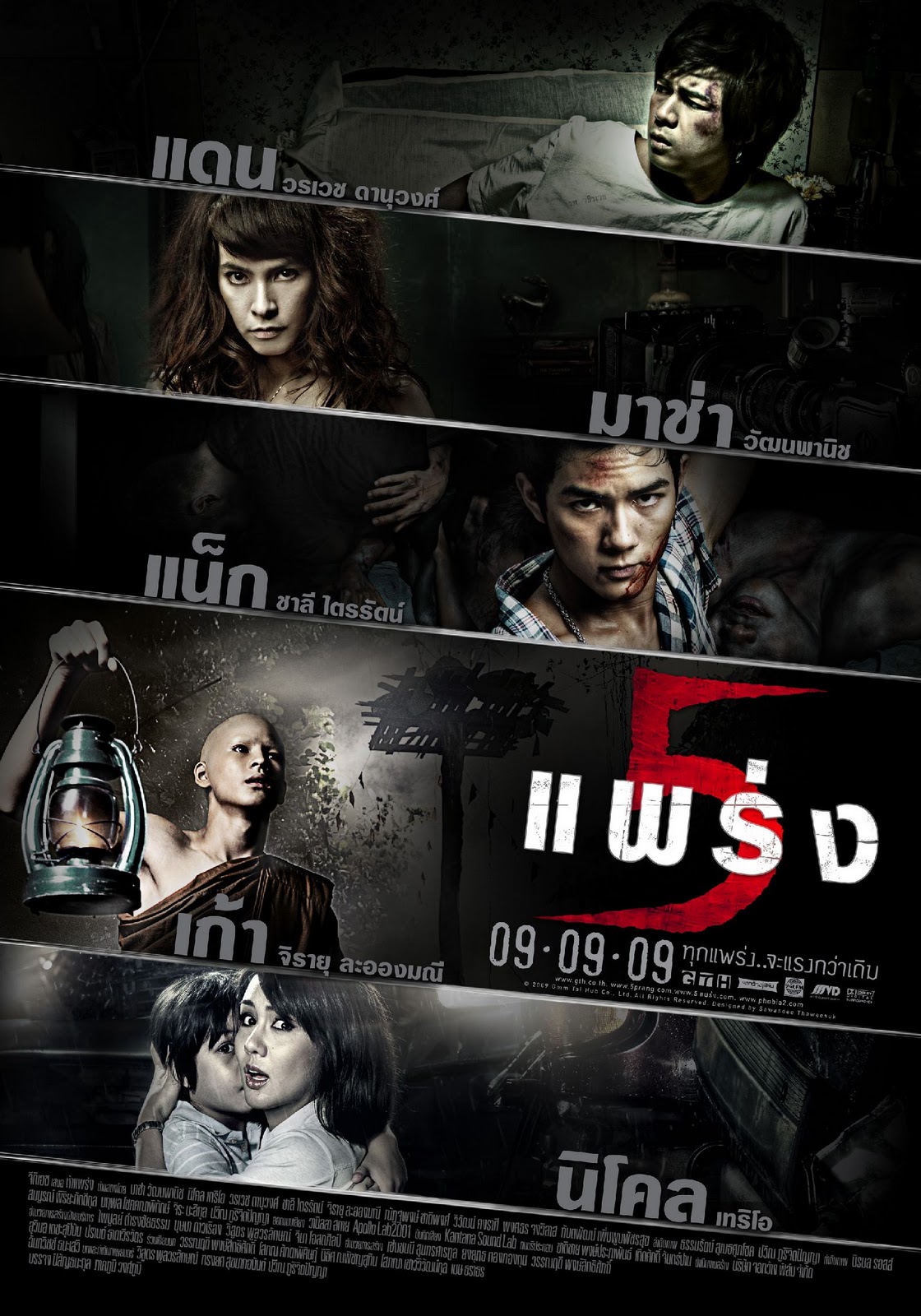
Aptly termed “5bia” but retitled in English as Phobia 2, this sequel to the original four-part anthology adds an additional director for five tales of Thai horror. Unlike the first film, there aren’t any particular linking details though they each someway turn on an anxiety towards cars and other forms of transportation along with exploring the effects of unresolved guilt and natural justice in the form of karma.

Thus in the first sequence, Novice, a young man, Pey (Jirayu Laongmanee), is sent to a temple to hide out after being involved with a crime. He evidently did not want to become a monk and is resentful towards his mother and stepfather for bringing him here. But what he soon becomes involved with is a haunting, a hangover from the hungry ghosts festival that confronts him with his unresolved feelings towards his mother and lingering guilt over the crime he committed. Elegantly lensed, the film has a creeping sense of dread and eerieness as Pey begins to accept responsibility for his actions even if as it seems he must also pay for his lack of respect towards traditional custom.

Continuing the theme, in the second part, Ward, a young man, Arthit (Worrawech Danuwong), with casts on both of his legs is intrigued by the patient in the next bed, a former priest who it seems is not quite ready to move on. Rendered vulnerable by his incapacitation, Arthit can only watch as a weird ritual seems to unfold while the hospital staff do not seem to take his distress seriously. Despite its grim strangeness, there is a dark humour underpinning the action along with a kind of absurdity in the oddness of this weird black magic.

There’s nothing quite so supernatural in the third instalment, however, as a pair of Japanese hitchhikers are unwittingly picked uo by a people trafficker whose entire cargo turns out to be dead because his son tried to use them as drug mules. The film might have something small to say about exploration and the devaluing of the human life, but soon slips into zombie drama as the truckers try to outrun the consequences of their actions while the tourists pay a heavy price for their naivety. 

Just as in the earlier sequences, Salvage too finds a source of fear in the car but this time its largely because it’s haunted, both literally and by the spectre of amoral capitalism embodied by the boss’ attempts at corning cutting. Nuch (Nicole Theriault) has largely been making her money by buying wrecks and selling them as second-hand without telling the new owner they were involved in a fatal accident. After being taken to task by a mother who complains her son was nearly killed, she can’t find her son Toey anywhere and while looking at him is confronted by the ghosts of the various people who’ve been killed by her cars. It’s a neat indictment of the various ways capitalism is killing us even if ending on a note of improbable cruelty.

The fifth, final, and best instalment meanwhile takes on a meta quality. Directed by Shutter’s Banjong Pisanthanakun, it follows the action on the set of a sequel to his film Alone and stars the same actors as his segment in 4bia which Banjong Pisanthanakun humorously references while inverting its structure. After the supporting actress is taken ill, a rumour begins that she has in fact died only for her to turn up on the set provoking terror from the boys who become convinced she’s s vengeful ghost.In any case, it turns out it wasn’t the supernatural they really needed to look out for but a sleepy, overworked driver. Like Man in the Middle, the gentle camaraderie between the guys and zany humour help carry the witty tale alone as the gang start suspecting each other and acting irrationally in an attempt to escape “the ghost.” All in all, it’s a fitting way to end the series, concluding on a note of cosmic irony as the real threat turns out to be all too human and an exmplifcation of an exploitative employment culture rather than a vengeful spirit seeking revenge from beyond the grave.


Trailer (English subtitles)
4bia (สี่แพร่ง, Youngyooth Thongkonthun, Banjong Pisanthanakun, Parkpoom Wongpoom, Paween Purijitpanya, 2008)

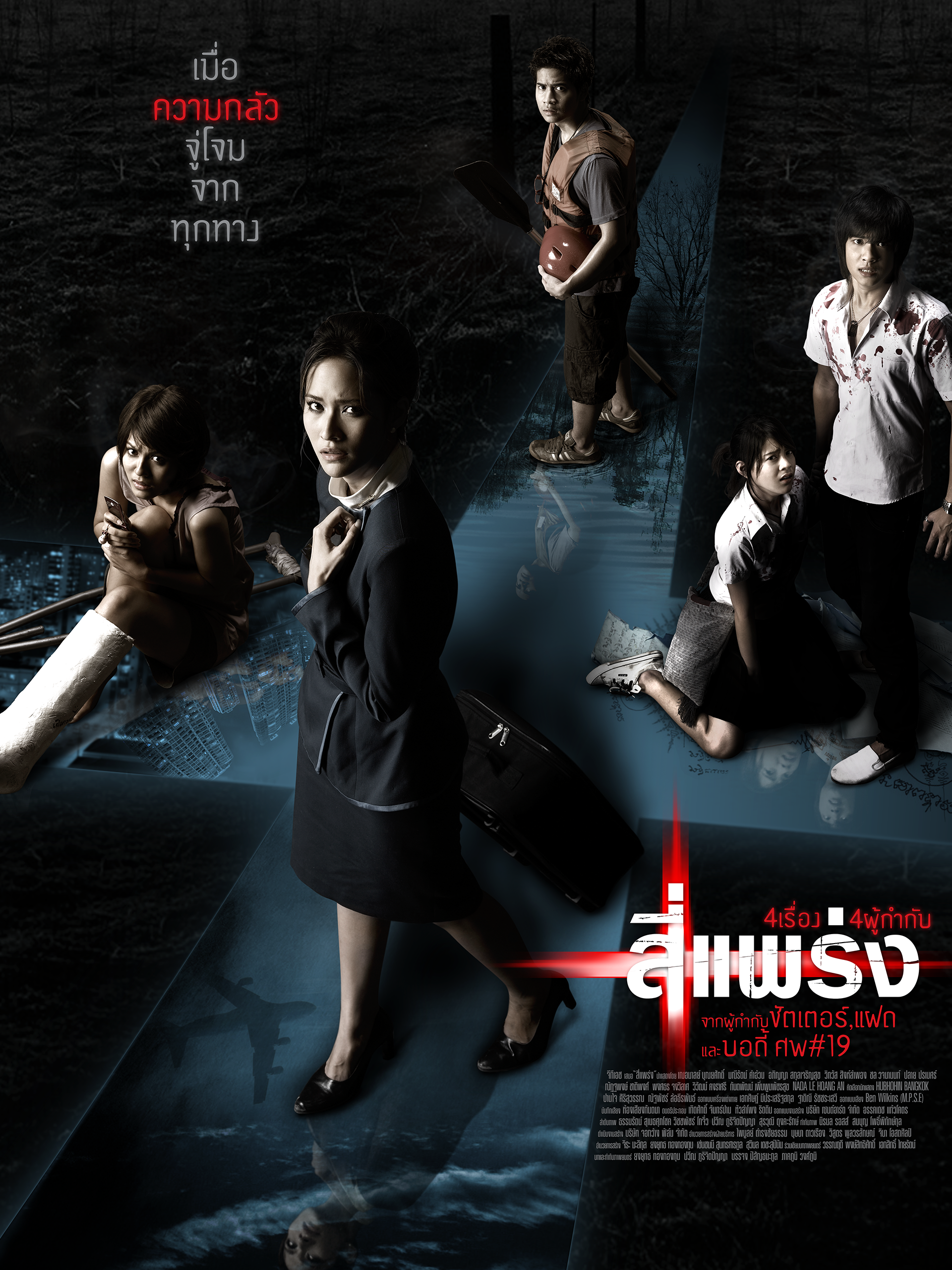
A quartet of Thai directors come together for four tales of horror in the appropriately titled 4bia (สี่แพร่ง). Though the stories are largely unconnected save for a few common details that locate them in the same universe, they each deal with a particular kind of anxiety and different sorts of ghosts who for various reasons are haunting the protagonists. What’s certain is that if you’re targeted by an otherworldly spirit, finding escape will not be easy.

That’s something quite obvious even in the first episode in which a young woman trapped alone in her apartment after breaking her leg in a horrific car crash begins chatting with a total stranger who sends her a random text message. Of course, replying to a message like that is not very sensible and even perhaps dangerous, as Pin (Maneerat Kham-uan) herself may release when she asks the (presumably) male messenger to send a photo only to be sent back the one she just sent of herself with the reply that he’s in it next to her. In any case, the real malevolent force here seems to be loneliness itself which is what motivates Pim to message back having already spent 100 days without interacting with another human being. The messenger has also spent the same amount of time alone in what he calls a “cramped space,” which is why he wants company. It’s gradually revealed that the pair share a kind of destiny which is an inversion of the kinds of meet-cutes you might find in a romantic comedy that makes Pim’s 100 days a purgatorial space of borrowed time in which she might as well have been a ghost herself.

But in the second chapter, Tit for Tat, it’s almost the opposite of loneliness that’s the problem as bunch of delinquent high school students and recreational drug users bully a bookish boy, Ngid (Nattapol Pohphay) and end up killing him. The boy then becomes a vengeful spirit and uses black magic to take them all out. Though one of them quips that they need to start smoking less weed, there’s no real question that the ghost is real or that the gang pretty much deserve what’s coming to them for having been so obnoxious in real life. The later part of the drama focuses on Pink (Apinya Sakuljaroensuk), a peripheral member of the gang who did try to tell the others to stop but otherwise did nothing to help Ngid and is punished for her sin of omission, though she does eventually think of a way to break the curse if only ironically in poetic justice for simply standing by and watching in the face of injustice. 

The third sequence, Banjong Pisanthanakun’s Man in the Middle is, however, a meta textual-delight that asks why ghosts in films always have long hair and pale faces. Four boys go on a rafting trip and swap campfire stories about how you should never sleep on the end when you’re close to the jungle in case a succubus comes to get you. When they get into an accident on the water and are separated, it leads to a sense of suspicion as some wonder if their friend actually died and is a ghost come to haunt them who, like in the Sixth Sense, may not know he’s dead. Though the twist maybe somewhat predictable, the tale is told with good humour and a sense of narrative cohesiveness that is lacking in some of the other chapters. 

Similarly, the final instalment Last Fright, is a chamber piece focusing on a stewardess who is unexpectedly charged with escorting a princess (Nada Lesongan) who’s fallen out of favour on her trip to Thailand where she spent her honeymoon. Pim’s (Laila Boonyasak) secret is that she’s been having an affair with the princess’ husband whom she met on their honeymoon flight which is why the incredibly imperious woman tortures her all the way through the flight before dying in a hotel room on arrival. Pim must, for reasons that don’t really make sense, escort the body back only to begin going out of her mind while haunted by the princess’ spirit. This is the only sequence which flirts with the idea of the ghost not actually being real but a manifestation of Pim’s guilt, or else a vengeful spirit come to punish her not for her secondary crime but for the transgression of adultery. Despite its potentially moralising overtones it’s a pretty chilling moment on which to end the film suggesting that in the end there is no real escape either from a vengeful ghost or your own questionable decisions.


4bia is available as part of Umbrella Entertainment’s Thai Horror Boxset.

International trailer (English subtitles)
Alone (แฝด, Banjong Pisanthanakun & Parkpoom Wongpoom, 2007)

A young woman returns to her apartment in Seoul to find the lights don’t work. She begins to feel uneasy, as if there’s a presence around her she can’t see or hear. Slowly, she moves towards the source of her discomfort, but the lights soon come back on. This isn’t a haunting, it’s a party. Her devoted boyfriend Wee (Vittaya Wasukraipaisan) has organised a surprise birthday celebration, though Pim (Marsha Wattanapanich) is indeed a haunted woman attempting to outrun her ghosts in a new country a world away from the nexus of her trauma.

This is just one of many ways in which Banjong Pisanthanakun and Parkpoom Wongpoom attempt to misdirect us while foreshadowing Pim’s eventual confrontation with ghosts of her past on returning to Thailand after her mother suffers a stroke and is hospitalised. A brief prologue sequence had seen her mother sewing a dress that’s oddly shaped, we later realise intended for her daughters who are conjoined twins. A guest reading the tarot at Pim’s party had hinted that something she’s lost would soon return, or else someone to whom she’d broken a promise would come back seeking recompense. This soon proves to be true, Pim haunted by the spectre of her sister Ploy (also played by Marsha Wattanapanich) who passed away unable to adjust after Pim’s apparently unilateral decision to separate.

It’s for this reason that Pim feels intense guilt, convinced that she killed her sister in breaking their promise to always stay together because she desired individual fulfilment. To that extent, some might wonder if the ghost Pim sees is “real” or merely a manifestation of her unresolved trauma. Wee eventually convinces her to see a psychiatrist, who is also a good friend of his, who tells him that Pim is suffering from a delusion while advising her to try to make peace with herself over her sister’s death if she wants to stop seeing the ghost. But perhaps there really is something dark and malevolent, a resentful spirit haunting her family home which is otherwise full of childhood memories. Pim flips through old photos all featuring her and her sister living their shared life of enforced closeness that is at first blissfully happy in its isolation but then suffocating and constrained. 

Nevertheless, though it’s Pim who’s left “alone” in being the one left behind, it’s also true that Pim’s actions have left Ploy “alone” too, only on the other side. The film plays into their nature as twins who represent two halves of one whole rather than two separate beings and locates the source of trauma in their separation as if they must in some sense be reunited in order to exorcise its taboo. In many ways, the psychological drama revolves around a quest for identity as Pim tries to reassert herself in the face of Ploy’s reflection, to become the whole rather than an orphaned part of it, while in other ways affecting a persona that is not quite her own. One cannot take the place of the other, just the new dog the pair get after moving to Thailand cannot replace their old one even if as Pim says they are otherwise identical. 

Yet Pim wonders if it was alright to desire an individual future, choosing herself over Ploy and thereby condemning her to a life of loneliness. To that extent, her dilemma is that of a contemporary woman torn between familial devotion and personal fulfilment, though of course, her words turn out to have a hidden implication suggesting that all is not quite as it seems even if she begins to confront her trauma by finally explaining the circumstances of her separation to an ever supportive but increasingly worried Wee. As the tarot reader had implied, perhaps all promises must in the end be fulfilled as the grim conclusion suggests, literally burning down the house as if to purify this space and restore order in uniting the sisters in an eternal embrace, alone together. Banjong Pisanthanakun and Parkpoom Wongpoom engineer a slowly creeping sense of dread in the gothic eeriness of Pim’s family mansion while edging towards the fatalistic conclusion in which a kind of balance is finally restored, the sisters are both separated and united once again two halves one perfect whole.


Alone is available as part of Umbrella Entertainment’s Thai Horror Boxset.

International trailer (English subtitles)
Dorm (เด็กหอ, Songyos Sugmakanan, 2006)

“Are you scared of ghosts?” one child asks another. Perhaps it’s an odd question. Ghosts are generally assumed to be frightening, but they can also in a way comfort though their presence may be painful. Songyos Sugmakanan’s poignant ghost story Dorm (เด็กหอ) casts the school at its centre as an infinitely haunted place, not just because of the associations it later takes on in the mind of the protagonist, but a prison-like space of emotional repression that nevertheless later becomes one of friendship and liberation.

It isn’t surprising that it feels like a prison to Chatree (Charlie Trairat) who has been abruptly sent there by his father (Suttipong Tudpitakkul) he feels as a kind of banishment for a very particular transgression. According to his father, however, it’s all because his school isn’t strict enough and Chatree spends too much time playing games and watching television. Intensely authoritarian, Chatree’s father soon alienates his son who bears intense resentment towards him not only for his severity and unwillingness to recognise his autonomy, but because of his failures as a father and eventually exiling of him because of the challenge he presents within this household. 

Further challenging notions of masculinity, Chatree’s father had told him that “a man must be able to live anywhere.” Though he had said the school had everything, the environment is grey and austere. Chatree is met by a rather cold woman, Pranee (Chintara Sukapatana), who takes him to the dorm where he will be sleeping which is in a large room with high ceilings and several rows of camp beds. Parnee cooly tells him that he’s expected to fend for himself, while his immediate neighbours proceed to haze him by telling him several ghost stories said to take place the school. Chatree’s school days continue in utter misery until he befriends Vichien (Sirachuch Chienthaworn), another lonely boy seemingly shunned by the others but as Chatree gradually realises actually a ghost unable to move on from the scene of his trauma just as Chatree is unable to move from his abandonment by his family. 

To that extent, the school is a kind of liminal place and it becomes clear that Pranee is also haunted by her own sense of guilt for something that turns out not to have been her fault after all but has, as the other boys say, turned her “weird”. The guilt that she feels has made her turn in on herself, become cold and repressed denying the boys the kind of maternal love and affection she appears to give them in flashbacks to her younger days. Chatree’s attempts to help Vichien are also attempts to liberate Pranee and himself from the limbo of the school and exorcise their traumas so that they may live again.

In Chatree’s case, his quest to help Vivhein is what allows him to make friends with the other boys, lifting the perpetual gloom of the school building and returning to him a sense of familial warmth that he felt that he had been denied in being exiled from his family. Though his resentment towards his father may in a sense ease, he does not seem to have forgiven him for his failures or transgressions but rather let his traditional family go in favour of friendship acknowledging that even the hardest times in life will soon pass if you have one close friend at your side. There are of course hints of queerness in the relationship between the two boys each of whom are in some way different and alike in their feelings of otherness and lack of belonging, while it may also in other ways explain Chatree’s father’s harshness towards him along with his preoccupation with traditional masculinity and obsession with academic success.

In that way unlike similarly themed nostalgia dramas, the school does not remain a purgatorial space and Chatree’s decision to remain within it is not an acceptance of limbo but of moving on in accepting himself and his identity and actively choosing a place to belong which is with his new friends rather than the repressive atmosphere of the traditional family as represented by his father. With shades of The Devil’s Backbone and Les Diaboliques, Songyos Sugmakanan conjures a gothic atmosphere of lingering dread but tempers it with humour and warmth in the genuine friendship between two lonely boys who in the end save each other and make what was once a prison a space of liberation.


Dorm is available as part of Umbrella Entertainment’s Thai Horror Boxset.

Trailer (no subtitles)

Laddaland (ลัดดาแลนด์, Sophon Sakdaphisit, 2011)

Laddaland (ลัดดาแลนด์) is a strangely haunted place. The people who live there are mainly ghosts, but also haunted by the spirits of financial anxiety and toxic masculinity amid the continual impossibility of an aspirational suburban existence and happy family life. In the opening scenes, a man patiently sets up the new home he’s bought for his family, painting a cherry blossom tree on his daughter’s wall and throwing a Ben 10 quit over his son’s bed. “I’m glad all four of us are finally together,” he sighs to an empty room while sitting alone at his dining table. 

But there are already cracks in the foundations of this family which probably can’t be repaired by simply moving into another life. They had already been separated by financial anxiety with eldest daughter Nan (Sutatta Udomsilp) living largely with her grandmother who seems to come from a much wealthier, class-conscious background. Her father Thee’s (Saharat Sangkapreecha) desire to reunite his family breaks that Nan had formed with her grandmother, to whom she is constantly on the phone, and it is unsurprising that she isn’t happy about being forced to leave her friends in Bangkok to live in this suburban paradise. Yet her attitude towards her father is in part motivated by his failure to give her this life, repeatedly reminding him that he essentially abandoned her and is incapable of doing what is expected of a man in providing for his family.

It’s this sense of toxic masculinity that may have prompted Thee to embark on this grand venture. The house he’s bought on an aspirational housing estate in a recently gentrified area is a large family home and as his wife Parn (Piyathida Woramusik) reminds him, the mortgage is bit of a stretch. But Thee is so focused on his dream that he can’t think of anything else. He’s given up his steady job and gone in with a friend on what is very obviously a dodgy pyramid scheme. The foundations of his new middle-class life are built on shaky ground, while every attempt at rapprochement with Nan seems destined to fail as he becomes an increasingly authoritarian father and she a resentful and contemptuous teen. 

But times are hard for everyone. The woman next door already lives like a ghost because her husband is violent and abusive. Parn tries to help her, but there isn’t much that can be done. We learn that the man is also, like Thee, under increasing strain from financial anxiety as his factory business flounders amid the turbulent Thai economy. He too is subject to the same sense of humiliation and insecurity as a man who is failing to live up to the codes of masculinity in being unable to provide his family with a comfortable life. Thee doesn’t exactly become violent, but he does later buy a gun after being burgled and fantasise about using it to free himself of his responsibility and the burden of this aspirational life that he can’t really afford.

In an odd way, the ultimate transgression may have been his attempt to hire a maid. A local Burmese woman, she is soon found dead in a house owned by a foreigner and thereafter becomes a more literal ghost haunting the local area and his family in particular due to their attempt to exploit her for cheap labour, perhaps hinting at Thailand’s relationship with Myanmar. Yet it’s also Thee who seems to have been possessed by a vengeful spirit, becoming increasingly cruel and irrational in his attempts to hold on to his home while simultaneously alienating Nan by refusing to listen to her or let her hang out with her new friends. Even Parn begins to turn against him, fed up with his financial fecklessness and pondering swallowing her pride and going back to her mother who loathes Thee for ruining Parn’s life by getting her pregnant in college. Parn suggests going back to work, but that doesn’t fit Thee’s old-fashioned vision of a patriarchal family while he also accuses her of having had an affair with her admittedly sleazy former boss and needles her about leaving him for someone with better financial means. Perhaps this the curse of Laddaland, a liminal space inhabited by hungry ghosts obsessed with fulfilling aspirational, if outdated, ideas of suburban bliss only to end up destroying the very house they were trying to build.


International trailer (English subtitles)
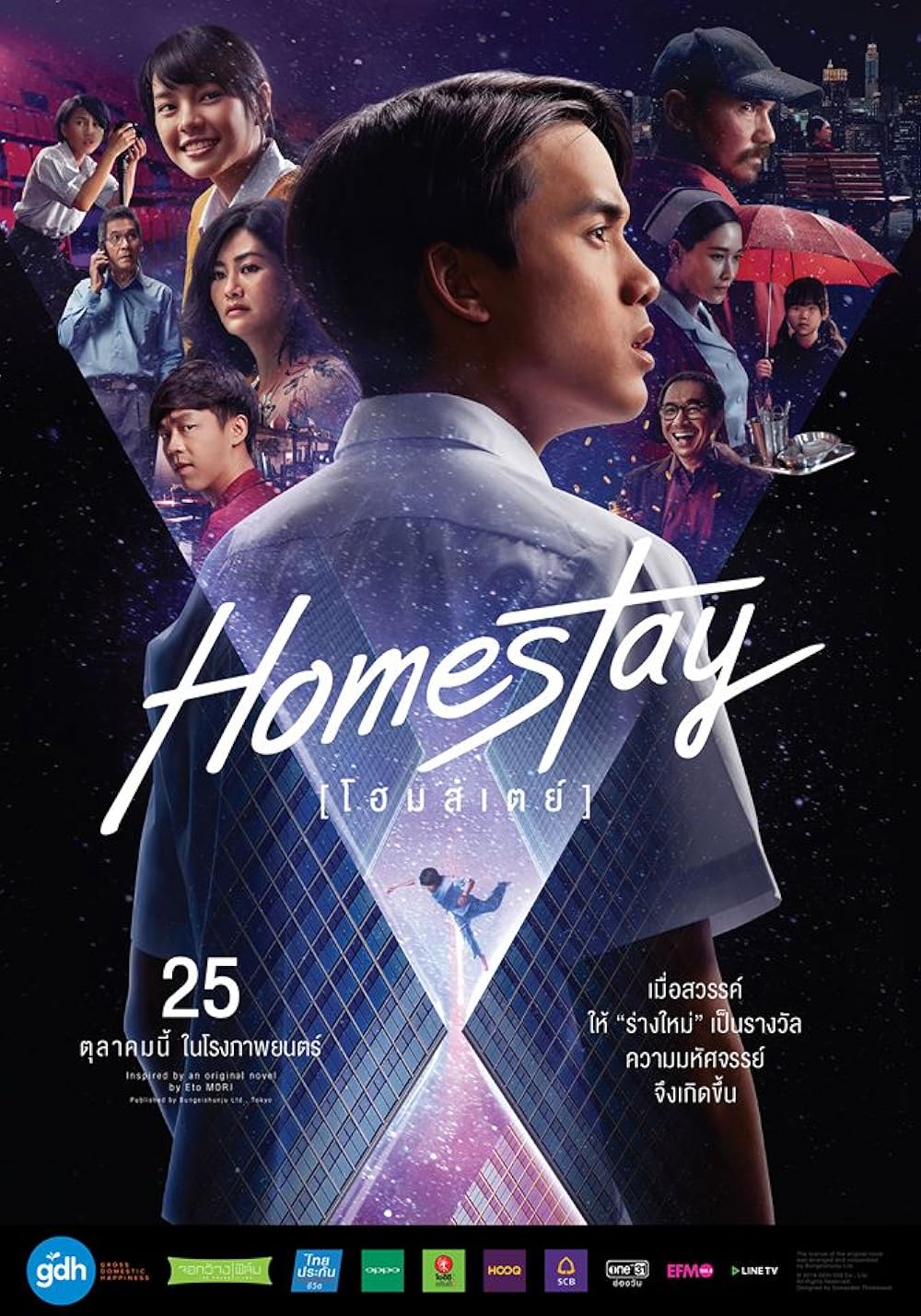
Homestay (ฮมสเตย์, Parkpoom Wongpoom, 2018)

“You got a prize!” the hero of Parkpoom Wongpoom’s spiritually-tinged existential drama Homestay (ฮมสเตย์) is told, though he won’t really realise the kind of gift he’s been given or that in reality he had it all along until the end of the picture. Based on a Japanese novel, the film is part mystery, part psychodrama as the hero is charged with finding out who caused the young man whose body he’s taken over to take his own life and why. If he manages to figure out the answer within the 100-day time limit, he can extend this “homestay” indefinitely and win the chance at a new life. If he fails, he’ll die and won’t even be reborn.

Taken another way, this Min (Teeradon Supapunpinyo) trying to understand why he did what he did having apparently lost his memories after his traumatic experience of being clinically dead for an entire day. In any case, he’s helped and hindered by a collection of “guardians” who appear to taunt him and issue reminders about his time running out. Though no one suspects Min is not Min, they all remark that seems like a different person from his new ability to eat durian fruit to his outward cheerfulness. As for why he hasn’t been attending school and even missed a set of important exams, they’ve been told he had “the flu” and seem to believe it. But even as this fresh soul seems to ease into Min’s life and originally finds it not bad enough to want to die to escape, he soon begins to discover fracture points in Min’s reality.

The biggest of those would be friction with unsympathetic brother Menn (Natthasit Kotimanuswanich) along with animosity towards his father who apparently gave up a steady job as a teacher to join a multi-level marketing scam peddling vitamins. The other Min was apparently embarrassed by him, as is new Min when he turns up at school and tries to recruit his classmates while giving him a bag of samples for one of the teacher’s which turns out to be a trick to get him to see a child psychologist. Old Min also resented him for the way he treated his mother who works at a factory in another city while he reduces the family to financial ruin even going so far as to sell her wedding ring. 

But as much as he wants to know about Old Min, New Min is also determined to start again. He gets a fancy haircut and starts dressing in a snappier fashion in part in hope of getting together with Pi (Cherprang Areekul), his crush before and after, while less than kind to old friend Li (Saruda Kiatwarawut) who also seems to have a crush on him. The more he finds out about how Old Min lived, the more his world darkens. He begins to understand why he might have wanted to end his own life and feels as if it’s everyone else’s fault or the essential corruption of the world. But what he gradually comes to understand is that it was a choice he made himself. Having turned too far inward, old Min lost the ability to see that others around him were also suffering. He couldn’t see how unhappy his mother was in her marriage, nor his father’s humiliation, or how hard and lonely it must also have been for his brother who dreamed of studying abroad solely to escape. “Stop thinking that no one loves you,” Menn eventually tells him in admonishment of his tendency to take it all on himself.

To that extent, life itself is the prize and that was something Min already had though his vision had been clouded by his intense pain and sense of futility. Guided by his post-death experiences, Min awakens to the suffering all around him and in an odd way feels both less alone and a greater responsibility not to cure it but simply to be present and more compassionate towards others. Parkpoom Wongpoom reflects his dilemma in the ever present tonal incongruity. New Min’s school life is shot like a typical rom-com complete with jaunty score only for him to suddenly find himself confronted by one of his Guardians and reminded his time is running out, as it is for us all. Strangely uplifting even in its touches of existential horror, the film has a genuine empathy for its embattled hero in his moments of selfishness and self-obsession as he begins to find his way back towards a less bleak existence through discovering the power of mutual compassion and forgiveness.


International trailer (English subtitles)
Home for Rent (บ้านเช่า..บูชายัญ, Sophon Sakdaphisit, 2023)

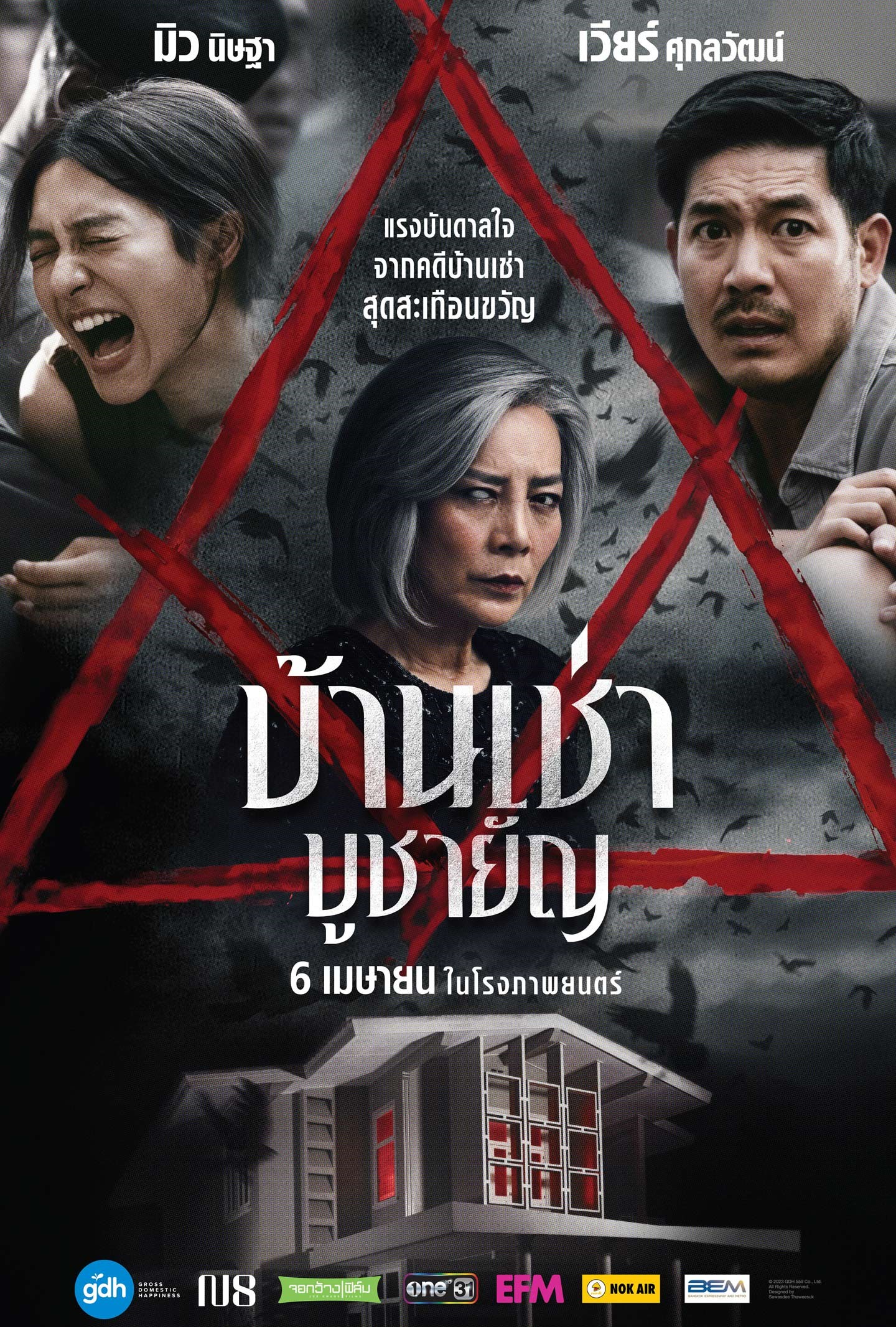
An inability to overcome the traumatic past leaves a family vulnerable to the dark machinations of a black magic cult in Sophon Sakdaphisit’s supernatural thriller, Home for Rent (บ้านเช่า..บูชายัญ). The film’s title is eventually revealed as a grim irony, the home in question a seat of the soul though like the director’s previous films it’s economic anxiety and social aspiration that open the door to damnation even if in this case there’s something more than fate in play.

All of Ning’s (Nittha Jirayungyurn) problems start when the flat she owns to let out is vandalised by a vacating talent. As she explains to the estate agent, Tom (Suphithak Chatsuriyawong), she can’t afford to refurbish it and the rent was covering the mortgage on the house she actually lives in which belongs to her husband, Kwin (Sukollawat Kanarot). Tom floats the idea of the family moving into the flat while they tidy it up and renting the house out instead, but Ning is worried Kwin won’t like the idea. She’s right, he doesn’t and suggests it would be easier to just sell the flat but Ning doesn’t want to do that either. The reasons for her attachment to it aren’t completely clear, but if she were keeping it as a safety net it might hint at a degree of insecurity in her marriage though as we later see she’s also job-hunting and not having much luck. Seeing the candidate next to her write down a much lower salary expectation she hastily changes hers too, fearing she’s pricing herself out of the market. 

As for Kwin’s reluctance to move, it may be a degree of snobbishness in not wanting to leave his large suburban house in a wealthy area for a small flat where he ends up sleeping on the sofa because the couple’s daughter Ing (Thanyaphat Mayuraleela) can’t seem to settle. As it turns out, Kwin has other reasons for remaining attached to the house and not wanting anyone else to live there but even as it stands it seems far too big for their small family and an obvious financial burden. Yet Kwin’s outward anxiety is to do with finding “high quality” tenants given what’s just happened with the flat. Ning is reassured by Tom’s confirmation that the prospective tenants are a retired doctor and her daughter though as Kwin points out, it’s mere snobbishness to assume a doctor will be a better tenant than anyone else. 

Nevertheless on meeting them, Kwin unexpectedly agrees only for Ning’s aunt and neighbour Phorn (Natniphaporm Ingamornrat) to report strange goings on at 4am such as ominous chanting and the sudden arrival of large numbers of crows. Strange things begin happening around Ning too, while Kwin’s behaviour has also become weird and irrational. Ning is however facing an uphill battle trying to get people to believe her that the couple renting her house are actually crazed cultists who may be targeting her daughter while others assume she’s going out of her mind because of the stress of maintaining it. 

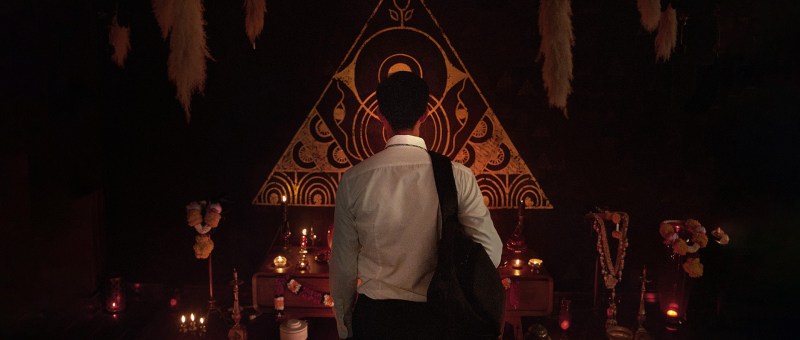
The space that’s for rent in fact seems to be the human body as it becomes clear what kind of home is being sought. Aside from financial worries, the curse essentially stems from the inability to accept loss, or perhaps also the attempt to escape it by assuming new identities rather than deal with a painful past. Only Ning remains in the dark in this triangular series of relationships with pyramids an often repeated motif mimicking the dark symbol of the cult. Sophon Sakdaphisit conjures a genuine sense of eeriness within the genial suburban environment that hints at a largely invisible but pervasive evil that has Ning and her family firmly in its sights. But in other and perhaps slightly uncomfortable ways, it may be the family that eventually repairs itself in what amounts to the complete integration of the once buried traumatic past which may have destroyed what once was but has birthed something new in its place that at last seems to be free of the gloominess that once overhung the family home having relocated to a much warmer and down to earth environment in the absence of both financial and aspirational anxiety but simply content to have found a place to call home.


International trailer (English subtitles)