Assassination Classroom (映画 暗殺教室, Eiichiro Hasumi, 2015)

photo_4First Published on UK Anime Network in November 2015.


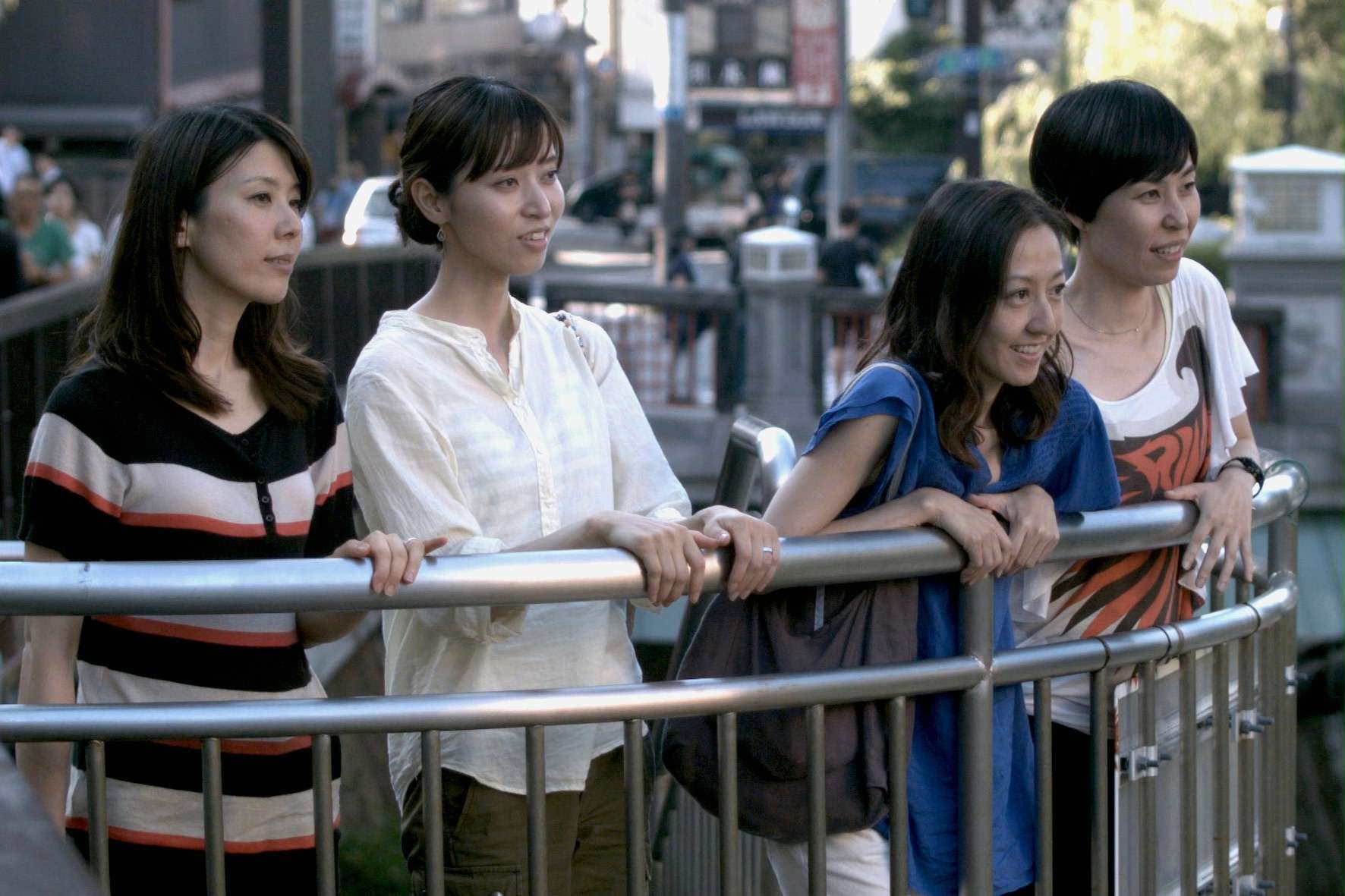
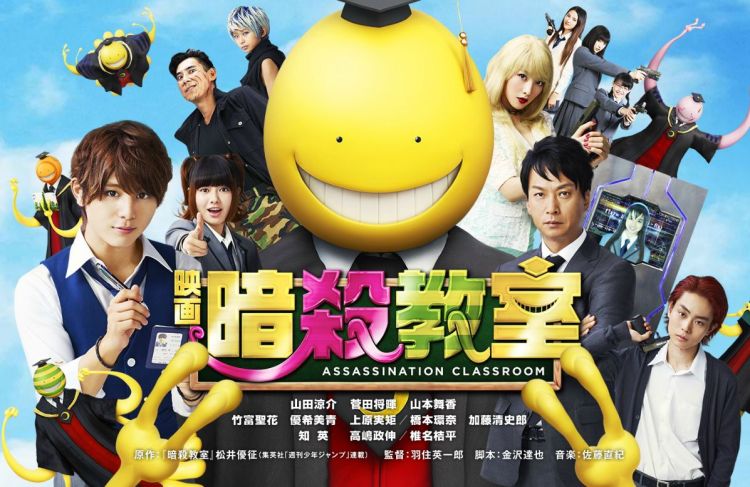
You might make the mistake of thinking that the E in class 3E just means it’s the 5th 3rd year class, or that it stands for “elite” and contains some of the top students in the school. You’d be wrong, “E” stands for “end” because these are the no hoper kids that everyone’s already written off as having no future. However, it’s precisely these kids that a mysterious extraterrestrial being insists on becoming the teacher of in return for not destroying the Earth (just yet). Nicknamed UT (unkillable teacher), the giant yellow octopus-like creature has already destroyed 30% of the moon just for kicks and has now set the challenge that if the boys and girls of class 3E fail to assassinate him before graduation he’ll destroy the Earth too.

The ironic thing is, UT is the best teacher they’ve ever had, but to pass the course (and save the world) they have to kill him. The high schoolers are also under the tutelage of a self defence forces officer for their military training and a sexy assassin who randomly ends up becoming their English teacher (and giving them one of the least appropriate English lessons ever recorded on film). Every morning they bow and then pull out their various kinds of firearms as UT takes the register whilst flitting about dodging bullets. Despite wanting to destroy the Earth, UT is 100% committed to training his students both in the arts of assassination and in the more regular subjects. Because of his super speed and ability to be in several places at once he has time for everybody and is quick to work out each of his charge’s specific weaknesses and help them work on those to become better people as well as ace students.

Still, the students are supposed to kill their teacher and there’s a little bit of sadness creeping in as they inevitably grow closer to UT and his quirky antics. Up ’til now everyone has given up on them and now they’re supposed to kill the one person who’s actually trying to help. Of course, even while this surreal situation is going on these are just regular high school kids undergoing regular high school stuff like wanting to sneak into the girls’ changing rooms or having a crush on someone who hasn’t even noticed you. Despite the impending end of the world, the kids of Class 3E are just enjoying their time trying to work out ever more complex ways of trying assassinate their seemingly invincible teacher.

UT himself is strangely adorable with his giant yellow smiley face style head and bizarre little laugh. He also changes color according to his mood and has a tendency to go off on tangents with one notable example which turns into a long form ‘80s style melodrama about abandoned single mothers before being politely shut down by the bored students. Assassination Classroom is undoubtedly bizarre, surreal and full of absurd humour but all the better for it. It’s just very silly but has an undeniably clever and very witty script that proves near impossible to resist.

To put it mildly, Assassination Classroom is just heaps of zany, crazy fun. It also manages to be genuinely heartfelt as we come to care for this rag-tag bunch of no hopers but also for UT himself as we start to hope the kids will somehow fail and succeed at the same time so we can save both the world and UT. The film drops us a few hints about UT’s backstory but stops short of offering a full explanation for the crazy goings on. Thankfully a sequel, Assassination Classroom: Graduation Day is already in production and even if it doesn’t offer any answers, Assassination Classroom is already one of the most enjoyably absurd offerings to come out of Japan this year.


Assassination Classroom receives its UK premiere at the Leeds International Film Festival on 15th November 2015.

Look out for a review of Tag which is also playing at the festival as it Happy Hour, and Our Little Sister.
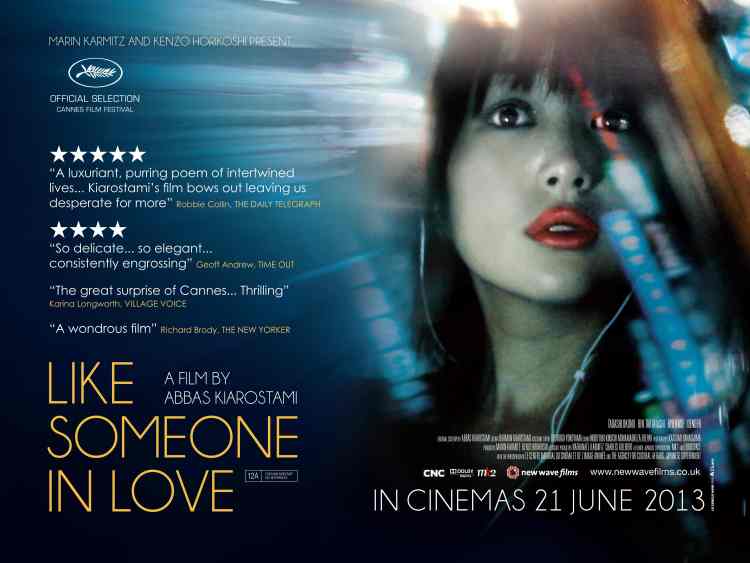
 

Like Someone in Love (UK Anime Network Review)

Like_someone_in_love_quad_v5_HRFirst published on UK Anime Network in June 2013.


Like Someone In Love is only Iranian director Abbas Kiarostami’s second international venture after 2010’s Certified Copy but this time sees his familiar preoccupations with ambiguities and poetic imagery transported to modern day Tokyo. Although in this case all the characters are quite clearly drawn and presented somewhat unambiguously, the reasoning behind the decisions they make and the way they behave, however, remains oblique. The title implies someone is acting ‘like someone in love’ if not exactly ‘in love’ themselves but who is it, who or what are they (‘almost’?) in love with, and what exactly would that mean – these are all the gentle ambiguities that Kiarostami wishes us to think about in this perfectly excised cross section of modern life.

As the film opens we are placed statically looking onto a scene which appears to be some sort of bar, a woman’s voice can be heard speaking to someone – not us, this clearly isn’t a voice over, there is obviously someone else involved in this dialogue that we cannot hear. We search the screen for the owner of the voice and even though we can see that nobody else is speaking somehow the thought that the woman is off camera hasn’t quite occurred to us. Eventually we find a young woman has been talking on the phone, presumably to her boyfriend – ‘I’m not lying’ she says, though we know she is. The boyfriend suspects her and makes her go to the bathroom to count the number of tiles so he can come there later and compare to see if she’s telling the truth.

Shortly afterwards, an older man (Denden) starts talking to her and encourages her to break up with said jealous boyfriend ‘not just for business reasons’ but as fatherly advice. He wants her to visit ‘a very important man’, she doesn’t want to because she’s tired after cramming all night for an exam and anyway her grandmother is in town and she’d like to see her. The man makes it very clear he isn’t forcing her, but he leaves her no room to refuse and she goes anyway even though she doesn’t want to. He puts her in a taxi for an hour’s drive across the city – on the way she gets a message from her grandmother that she’ll be waiting outside the station until her train so Akiko (Rin Takanashi) asks the driver to pass the station twice just so she can catch a glimpse of her.

Fast asleep in the car she arrives at a rather nondescript little address behind a ramen shop where a retired sociology professor (now sometime translator), Watanabe (Tadashi Okuno), lives. As soon as they enter the phone rings and Akiko takes the opportunity to poke around – she finds some pictures of an older and a younger woman – a wife and daughter perhaps? Strangely they look a little like her, as does the woman trying to teach a parrot to speak in the famous print on one wall.  ‘I always thought the parrot was teaching the woman’ Akiko says and the professor laughs. Still tired she makes straight for the bedroom, undresses and gets into the bed. This wasn’t what the old man had in mind though – he’s cooked a full dinner and bought wine, soft music ‘Like Someone in Love’ is playing in the background. After trying to convince her to eat and failing the professor gives up and turns the light out to let her sleep.

The next morning he drives her to school only to witness an altercation with the jealous boyfriend, Noriaki (Ryo Kase) who’s been lurking in wait after not being able to get through on Akiko’s phone. It’s clear he’s angry, he grabs at her then sulks after she goes inside before trying to talk to the professor, mistakenly thinking he’s her grandfather. He of course keeps up the pretense simply by not (directly) correcting the mistake. It’s clear though that something is coming to head and the meeting of these three people is going to produce a fundamental change in one or all of their lives.

Like Someone in Love might be one of those films where the reaction to it says much more about the viewer than it does about the film. It’s so much more about what isn’t said, the things that one infers from brief snippets of possible backstory than it is about what is actually seen on the screen. We don’t know exactly why Akiko got into this line of work or why she does it or even how she really feels about it. It’s plain in the first scene that she doesn’t want to go, at least tonight, and that she’s refused to go before but when she arrives at Watabe’s house she’s anything but coy and seems every inch the seasoned pro ready to get down to business. She’s a cipher, the clearest thing you can say about her is that she’s defined by her own passivity. She says she won’t go and then bows to pressure and goes, she obviously wants to break up with her awful boyfriend but doesn’t, she wants to see her grandmother but obeys her pimp(?) instead. She seems to spend her entire life bowing to the whims of other people rather than making any sort of decision for herself.

The two men by contrast appear as virtual mirror images of each other. The elderly scholar Watanabe, contemplative and introspective and the violent, obsessively jealous high school dropout garage owning Noriaki. What is Watanabe’s interest in Akiko? Is this something he’s done often? it seems maybe not, perhaps this is a gift from his former student now Akiko’s ‘boss’. At any rate it seems he’s after some kind of romantic evening rather than a torrid few moments in bed with a girl young enough to be his granddaughter. He’s arranged things for her comfort – cooking her local dish, lighting candles, setting the dinner table etc just as someone in love might do. Perhaps he’s just lonely (though his phone is always ringing and he never answers it) and wants to relive fondly remembered memories of his wife. Noriaki by contrast seems much more territorial – he wants to own Akiko, he’s decided she’s useless on her own and needs his protection but he’s obviously terrified someone’s going to steal her out from under him. He’s also hugely over sensitive about the phone box card which looks like Akiko (because we know it is) maybe because he’s got a Madonna-whore conception of women to begin with.

The film ends as abruptly as it started which is inevitably going to be a problem for many viewers. This is not the end, but it is an end – perhaps the beginning of something new rather than the end of something old. An internal world is penetrated – like the intrusion of falling in love into an otherwise dull life, old securities prove inadequate and perhaps it’s harder to protect the things that are precious to you than you might hope (especially if you are old and your aggressor is not). In many ways we are like the old curtain twitcher whose sole entertainment is her window onto Watanabe’s doorstep – we can’t know what happened before our one and only window was opened, nor can we know what will happen once it’s closed but still we can’t help but wonder.


Available now in the UK from New Wave Films.

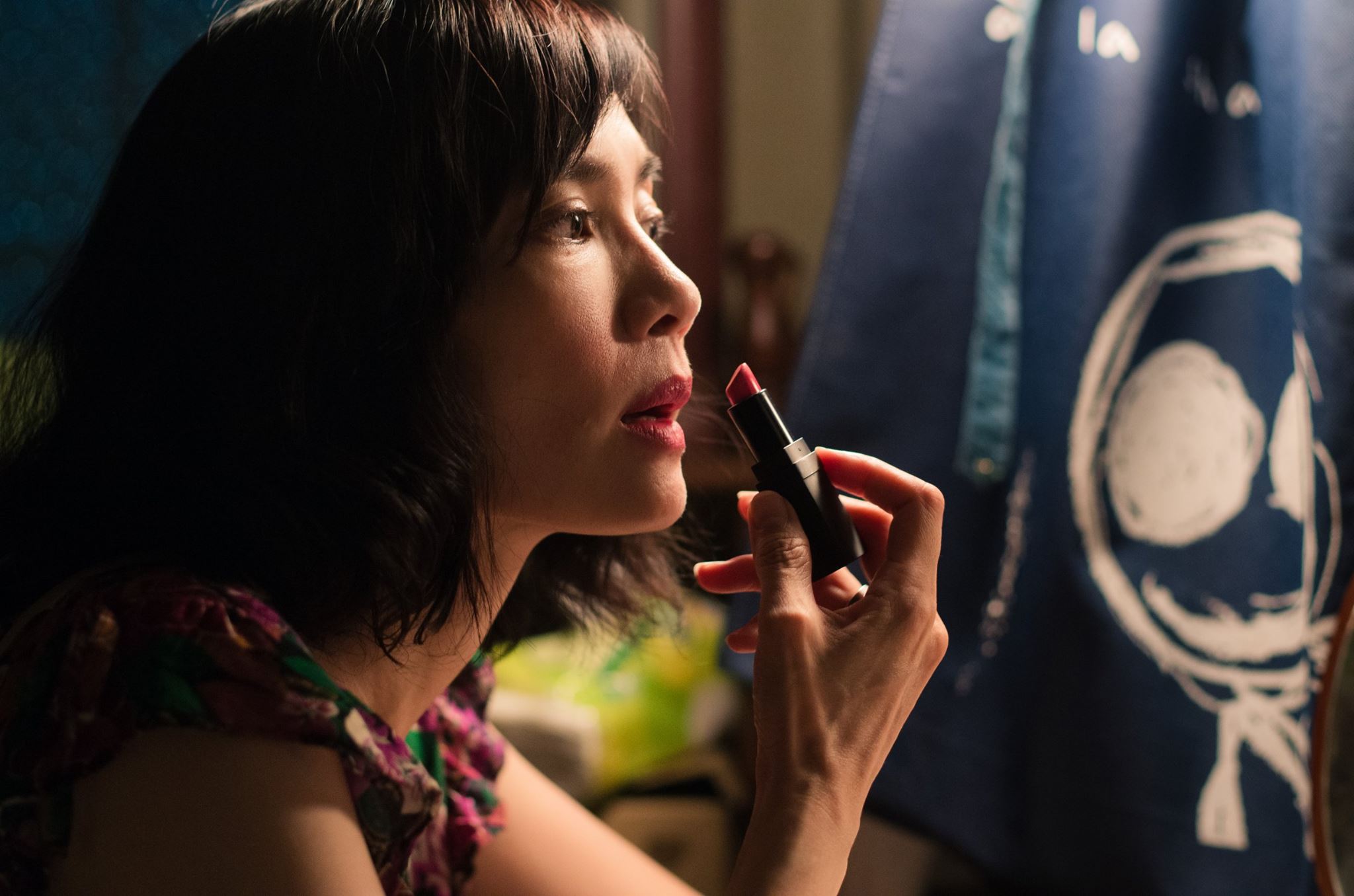
Makeup Room (メイクルーム, Kei Morikawa, 2015)

SBLEkl5First Published on UK Anime Network


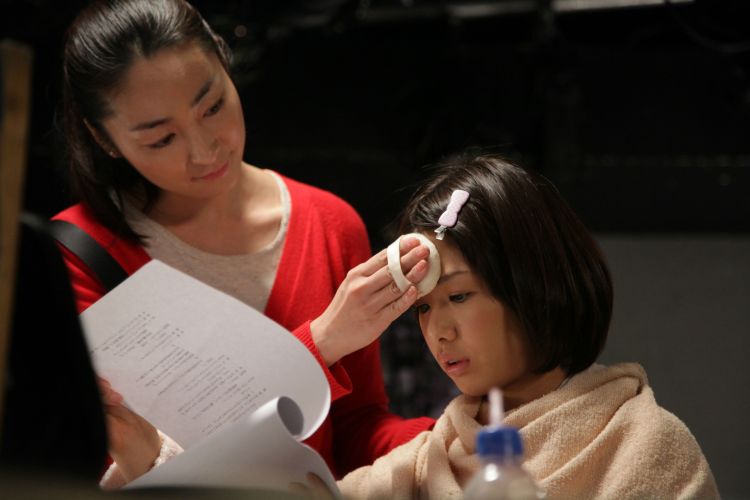
It’s a little known fact that everyone seems to know, but the Japanese pornography industry is one of the most lucrative in the world producing countless hours of “AV” or “adult video” movies every year. No one expects the world of erotic filmmaking to be glamorous, but rest assured Makeup Room is not interested in exploring the dark side of the industry either. For the characters involved in this rather witty backstage drama it’s just another working day filled with personal concerns and petty office disputes.

In fact, Makeup Room began as a stage play and occupies just the one set – the green room where the various starlets hang out before the performance. The star of the show in here is the veteran makeup artist, Kyoko, who is responsible both for creating whichever look the director has asked for from innocent school girl to sexy cop or dominatrix and for providing guidance and moral support as she chats away to the various divas and ingenues who occupy her chair. Porno shoots happen very fast, the team only have a brief amount of time in this location before the next crew arrive to shoot another porno so everything needs to go to plan. Today, nothing goes to plan. The lead actress is late, another actress has an undisclosed tattoo meaning she’ll have to switch roles requiring some hasty script edits, and the new girl who’s apparently an inexperienced nymphomaniac is having a few last minute jitters. The director’s stressed, the veteran actress is getting antsy and they’re all just lucky Kyoko is around to keep everything running smoothly!

Makeup Room starts with a rather worrying disclaimer to the effect that this was an extremely low budget shoot and that given the materials available, there is a degree of stuttering in the video which cannot be fixed. In actuality it isn’t that much of a problem but you’d have to admit Makeup Room is never a very pretty looking film. Perhaps appropriately it has a very cheap video look and a simplistic directing style using mostly static shots camera from different angles of its one set location.

However, the rather basic approach does allow the script and performances to shine. Undoubtedly witty, the dialogue both rings true and offers a fair amount of humour at the expense of the diverse cast and crew many of whom are played by real life AV actresses making their “debuts” in a purely narrative film. This is not a tale of fallen women forced into the sex industry through a series of traumatic events, each of the women is fine with their career choice and likes what they do. Though one character reveals that many of the people in her life don’t know what she does and not all of those who do approve, including her boyfriend who’s only just found out and not taken it well, mostly the women talk about the practicalities of their work. Whether that’s having a tattoo that’s much larger than your manager tells people it is, or having your nails done right before finding out you’re down for a lesbian scene meaning they’ll all have to be cut off, or chatting about the way your work is going to change as you get older, the kind of workplace problems that occur perhaps aren’t altogether different than those women experience in all industries.

Director Kei Morikawa has had a long career in the AV industry as well as in more mainstream fare and makes good use of his personal experience to create a film which at least feels very authentic as well as giving the impression of a group of friends getting together to send themselves up in classic style. Full of frank humour though very little explicit content, Makeup Room comes across as a warm and refreshingly straightforward look at the Japanese porn industry though its extreme low budget stylings are likely to put off viewers who prefer the glossier side of things.


Out now from Third Window Films

Happy Hour ハッピーアワー ( Ryusuke Hamaguchi, 2015)

get.doThere are a number of films which centre around an unexpected disappearance. The negative space of the missing person both in their physical and emotional absence brings with it its own mini black hole, sucking those left behind into a pit of confusion and despair which forces them to consider their own lives in more detail than they’d ordinarily be comfortable with. For the four women at the centre of Happy Hour, a five and a bit hour long film from Ryusuke Hamaguchi (The Depths, Touching the Skin of Eeriness) the sudden escape of the “lynchpin” Jun sends each of the women into a tailspin as they re-examine their stable, if unfulfilling, existence.

The four women are Sakurako – a housewife and mother to a teenage son, Jun – her best friend since middle school, Fumi – who works in events and is married to an editor, and Akari – a divorced nurse. The four became friends just because Jun thought they’d all get on so introduced Fumi and Akari forming the little quartet of late 30s ladies. They hang out together and talk about the general kinds of things women talk about – their husbands, jobs, children etc. However, Jun has a secret she hasn’t told the group. She’s in the middle of contesting a divorce from her emotionally abusive husband who refuses to consent, necessitating a long and nasty court battle. When the truth is revealed in an unwise way, it causes a rift in the group and brings the cracks in its foundations closer to the surface. When the gang enjoy one last trip to a hot spring, Jun stays behind and then never comes home. Without their binding thread, will the three women’s relationships to each other and to the other people in their lives be able to survive?

Each of the women in Happy Hour has her own particular sadness. Each in each, they’re all lonely or in some way dissatisfied with the way their lives have turned out. Sakurako married her high school sweetheart, has a nice home, a not unhappy marriage and a teenage son who’s doing OK until he gets himself into a more serious situation. However, her husband believes in a strict division of labour where he takes care of everything outside of the home (i.e. earning the money) and she the inside meaning he has little input into the raising of his son and refuses to help her when she really needs his support. She longs to be noticed again – as a woman, but also as a person outside of “wife” or “mother” which have begun to sound more like job titles or names of appliances rather than warm terms for the most important person in your life.

Fumi’s problem is similarly common – she resents her husband’s interest in another woman. Though Fumi and Takuya look like a model couple, they both work so much that they’re hardly ever together and are in danger of drifting apart. Takuya seems taken with a young novelist he’s working with and though Fumi says she doesn’t have a problem with it because she trusts him, she does and she doesn’t. Matters come to a head first at the hot springs resort where the women are taking a holiday while Takuya escorts Nose, the novelist, as she explores the resort for a series of onsen themed short stories. Later when Nose arrives for a book reading, Fumi’s frustration is palpable as Takuya’s clueless insensitivity continually places her in an awkward position.

Akari’s problems aren’t atypical either as finding herself divorced at 38 she’s the only one in her group of friends without a husband and perhaps worrying about running out of time to find one. She’s the loud mouth of the group, the one who isn’t afraid to speak her mind though she tends to speak without thinking and make the situation worse. However, her brashness is masking a deeper lack of confidence as she worries about being valued both inside and outside of work. Though we’re constantly told how important she is in her working environment both as a steady pair of hands and as a mentor to the younger members of staff, doubt seems to creep into her mind and she finds complements hard to believe.

The person we get to spend the least amount of time with is Jun, whose problems are a little more unusual. Married to a scientist with a cold and logical approach to life, her marriage has turned into a prison sentence with an unrelenting gaoler of a husband. Kohei’s love is selfish to the extreme, he says he loves Jun so he has to keep her even though he knows she doesn’t want him.

Occasionally, the four begin to feel like archetypes in somewhat contrived situations designed to help the film explore the contemporary lives of middle-aged women. Perhaps Jun really did select them for their complementary qualities – a little like a girl group with the fluffy one, the quiet one and the feisty one, but every so often it’s a little on the nose. Hamaguchi largely manages to make the extreme running time work for him by giving his characters the necessary breathing space, allowing key episodes the room to develop into deliberate tedium. Both the early workshop and later book reading, almost the two axes of the film, play out in essentially real time, pushing towards a particular kind of abstract realism.

Happy Hour fully justifies its mammoth running time but does undoubtedly stumble at certain stages. Still, it supplies ample room for exploring the everyday lives of its wide-ranging cast and more particularly of its central group of women each of whom, essentially, just want to be seen. Turning in surprisingly pleasing production values for its low budget approach, Happy Hour is an ambitious if not always successful film but even where it fails it’s never less than interesting.

LFF 2015 Round-up

still-loveandpeace2Total films:

  1. Mountains May Depart
  2. A Guy From Fenyang
  3. My Love Don’t Cross That River
  4. Der Nachtmahr
  5. Lost in Munich
  6. Jia Zhangke & Walter Salles Screentalk
  7. Ryuzo and the Seven Henchmen
  8. Salaam Bombay
  9. In the Room
  10. Assassination
  11. Beeba Boys
  12. Ghost Theater
  13. Son of Saul
  14. Invisible Boy
  15. Right Now, Wrong Then
  16. Love & Peace
  17. Black Mass
  18. A Bigger Splash
  19. Our Little Sister
  20. The Assassin
  21. Evolution
  22. Poet On a Business Trip
  23. Cemetery of Splendour
  24. The Witch
  25. The Apostate
  26. Desierto
  27. Madonna
  28. An
  29. Youth
  30. The End of the Tour
  31. A Tale of Three Cities
  32. The Boy and the Beast
  33. Office
  34. Ruined Heart
  35. Murmur of the Hearts
  36. My Golden Days
  37. Happy Hour
  38. Yakuza Apocalypse

Somehow, this list was longer than I thought it was going to be. Not sure how that happened really but I did manage to pack in all of the Asian films plus a fair few others. This year I really did feel victimised by the dreaded LFF clashes meaning I missed out on a few things I really wanted to see but nothing too major. There were only a couple of choices I regretted making, though I suppose I had to see them to find out. Nothing really grabbed me like last year’s A Girl Walks Home Alone at Night – perhaps because I ended up seeing bigger films with more established buzz around them so I wasn’t really caught off guard in that way. Still, some fine discoveries. Now the long wait for LFF 2016 – oh, what wonders shall ye bring?

Top 5 (somewhat arbitrary):

  1. Son of Saul
  2. Mountains May Depart
  3. Murmur of the Hearts
  4. Office
  5. Our Little Sister

Sneaky review previews of stuff coming up on UK Anime Network, might put a few other things up here too:

A Snake of June ((六月の蛇, Shinya Tsukamoto, 2002)

Mr9TSdN - ImgurOne day, I will add some new content to this blog! Today is not that day. Nor is tomorrow, or the day after or the day after that (probably) but someday soon and for the rest of my life! Sorry, carried away there. Anyway, review of the newly restored HD blu-ray release of Shinya Tsukamoto’s masterpiece A Snake of June up at UK Anime Network. It’s very weird and I love it a lot.


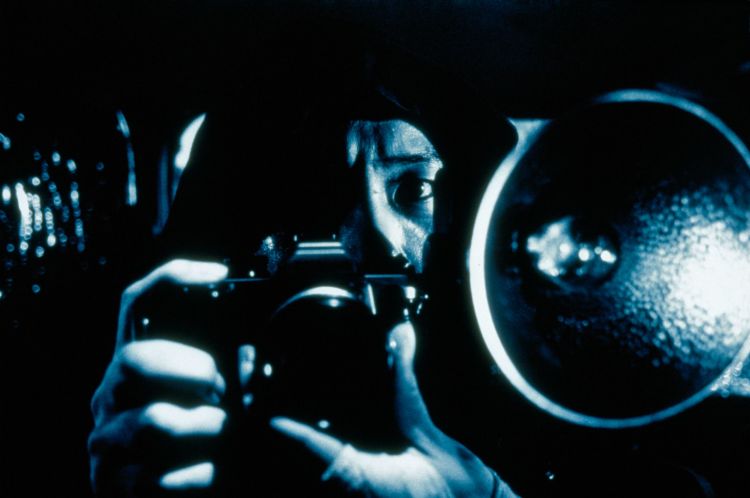
Shinya Tsukamoto made his name with body horror infused, pulsing cult hits such as Tetsuo the Iron Man, Tokyo Fist and Bullet Ballet (all of which are also available in the UK on blu-ray courtesy of Third Window Films). He’s no stranger to the avant-garde, the surreal or the troubling but even then Snake of June takes things one step further than even his generally intense filmmaking would usually go. A literal “blue movie”, Snake of June is the story of one woman’s sexual awakening, her husband’s release from OCD and the final fulfilment of the couple’s relationship set against the backdrop of a cold and unfeeling city.

Rinko is an attractive, if slightly mousy, young woman who works a telephone counsellor at a Samaritans-like call centre. As for her homelife, she lives in an upscale Tokyo apartment with her salaryman husband Shigehiko. It’s unkind to say, but the couple are a total mismatch – Rinko, young and pretty even if a little shy, is obviously way out her slightly overweight, balding middleaged husband’s league. Though they seem to have a pleasant enough relationship, there’s no spark between them and they live more like friends or roommates than a married couple. Shigehiko also has an extreme love of cleaning and a touch of OCD that sees him more often caressing the bathtub rather than his wife.

All that changes however when Rinko receives a mysterious envelope full of voyeuristic photos of her masturbating and looking up erotic material on the internet. Soon enough, it turns out these are a “gift” from a troubled photographer, Iguchi, who had planned to commit suicide before talking to Rinko on the helpline. Now he wants to help her by encouraging her to embrace her sexuality and her deepest, darkest desires. Iguchi sets her several tasks to set her on her way such as buying sex toys and walking through town in revealing outfits in an attempt to make her more comfortable with her own sexuality. However, having watched Rinko blossom, Iguchi eventually turns his attention to her husband and events take a decided turn for the surreal.

Erotic – yes, in some senses of the word, but never exploitative. Shot in a melancholy blue designed to mimic the color of the falling rainwater that stains a rainy season June in Tokyo, A Snake of June is a neon inflected journey into urban isolation where the demands of city life drown out the inner fire of those who live in it. Shy and repressed Rinko makes her first foray into town wearing the ridiculously short skirt her blackmailer has “prescribed” for her nervously, clutching a long umbrella in front of her like a shield. Making the same journey sometime later Rinko walks with a swagger, almost dancingly flirtatious she owns herself – her former shield is now a sword. Her “awakening” has nothing to do with her husband or with Iguchi, it’s something she’s achieved for herself and by herself and has left her a happier and more complete person than she’s previously been allowed to be.

Her husband, Shigehiko, by contrast hasn’t quite come to terms with this new version of his wife and even when graphically confronted with it responds in an entirely passive, selfish way. Cracking Shigehiko’s shell will require a little more than gentle coaxing, manipulation and blackmail and thus begins the nightmarish second volume of the film which becomes increasingly bizarre from here on out. Strange drowning themed sex shows where a woman bangs a drum and you have to wear a funny cone on your face which only lets you view everything through a tiny circle like the iris of a an old silent movie? It’s certainly an unorthodox solution.

Like all of Tsukamoto’s work, A Snake of June is exquisitely shot with its blue tint only adding to its native beauty. This new blu-ray edition from Third Window Films remastered from the original negative and supervised by Tsukamoto himself is a pristine presentation of the film which reveals all the tiny details that were rendered invisible by previous transfers. Strange and surreal, A Snake of June is a richly multilayered film dripping with symbolism, not to mention urban melancholy, that has lost none of its power in the intervening years since its shocking debut.


Stuck on Tsukamoto? Here are some more reviews by me:

Also, look out for a review of his latest movie Fires on the Plain which is ready to go some time soon!

Over Your Dead Body (喰女 クイメ, Takashi Miike, 2014)

003_b
Oh! I think there’s something in your eye…

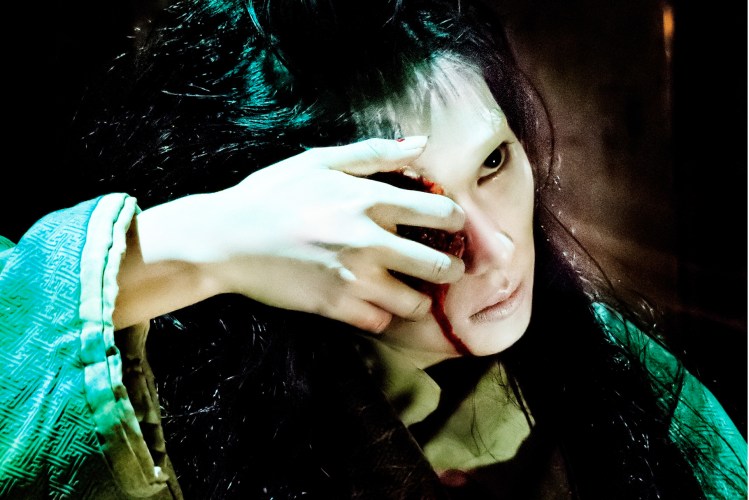
Review of Miike’s latest (well, not really latest…maybe recent? Does recent still work? This is Miike after all) classy horror shocker Over Your Dead Body up at UK Anime Network. It’s OK but it’s not very scary, gets a bit too clever for its own good and shows you a film you’d much rather be watching than the one that you came for. It’s fine though, really. And quite pretty to look at.

over-your-dead-body-(2014)-large-picture 4
see what I mean?

Nobody could ever accuse Takashi Miike of being a slouch and his breakneck pace of film production continues here with a more classically subdued take on the horror genre than his casual fans may expect. It’s not the first time the director has dipped a toe into the world of kabuki theatre – indeed he’s no stranger to the stage and his most recent outing made sure to inject a little of his characteristic craziness including space aliens and references to Star Wars. Over Your Dead Body is much more in the vein of Harakiri than of Audition or Ichi the Killer and despite its often grotesque overtones and suggestions of supernatural machinations its chief merit is in the beauty of its stagecraft rather than in its infrequent thrills.

Miyuki (Ko Shibasaki) is a successful kabuki actress and has landed a plum leading role in the classic play Yotsuya Kaidan. Using her status and connections, she’s been able to wangle the central male role in the piece for her boyfriend, Kosuke (real life kabuki superstar and previous Miike collaborator in Harakiri Ichikawa Ebizou XI), with whom she’d like to settle down and have a family. Kosuke, however, has a wandering eye and may not be quite as committed to the relationship as Miyuki. Before long, onstage and offstage events begin to blur as supernatural forces, mental illness and distorted realities begin to take their toll on this unlucky troupe of actors.

Yotsuya Kaidan is a true classic of kabuki theatre. Filmed countless times, it’s the story of down on his luck samurai Iemon who’s in love with a young woman but denied by her father thanks to his lowly status. Eventually, Iemon murders him and hides the body so he can marry his one true love after an appropriate amount of time has passed. However, Iemon’s crimes begin to weigh heavily on his conscience and having got what he wanted he finds himself haunted and unable to live the happy life he’d dreamed of. His dreams of becoming a high ranking, respected samurai consume him and when he’s offered the opportunity to marry into a more impressive family he makes a shocking and bloody decision.

The darkness of this stygian tale doesn’t take long to seep into the “real” world and it quickly becomes near impossible to distinguish between several different layers of reality. Wronged heroine Miyuki’s behaviour becomes increasing erratic as her rather cold and calculating boyfriend Kosuke gradually takes on the cruel persona inherited from Yotsuya Kaidan’s Iemon. Her elaborate revenge plot seems to go around in circles, culminating in an extremely bloody and completely insane set piece before heading off into the realms of the supernatural.

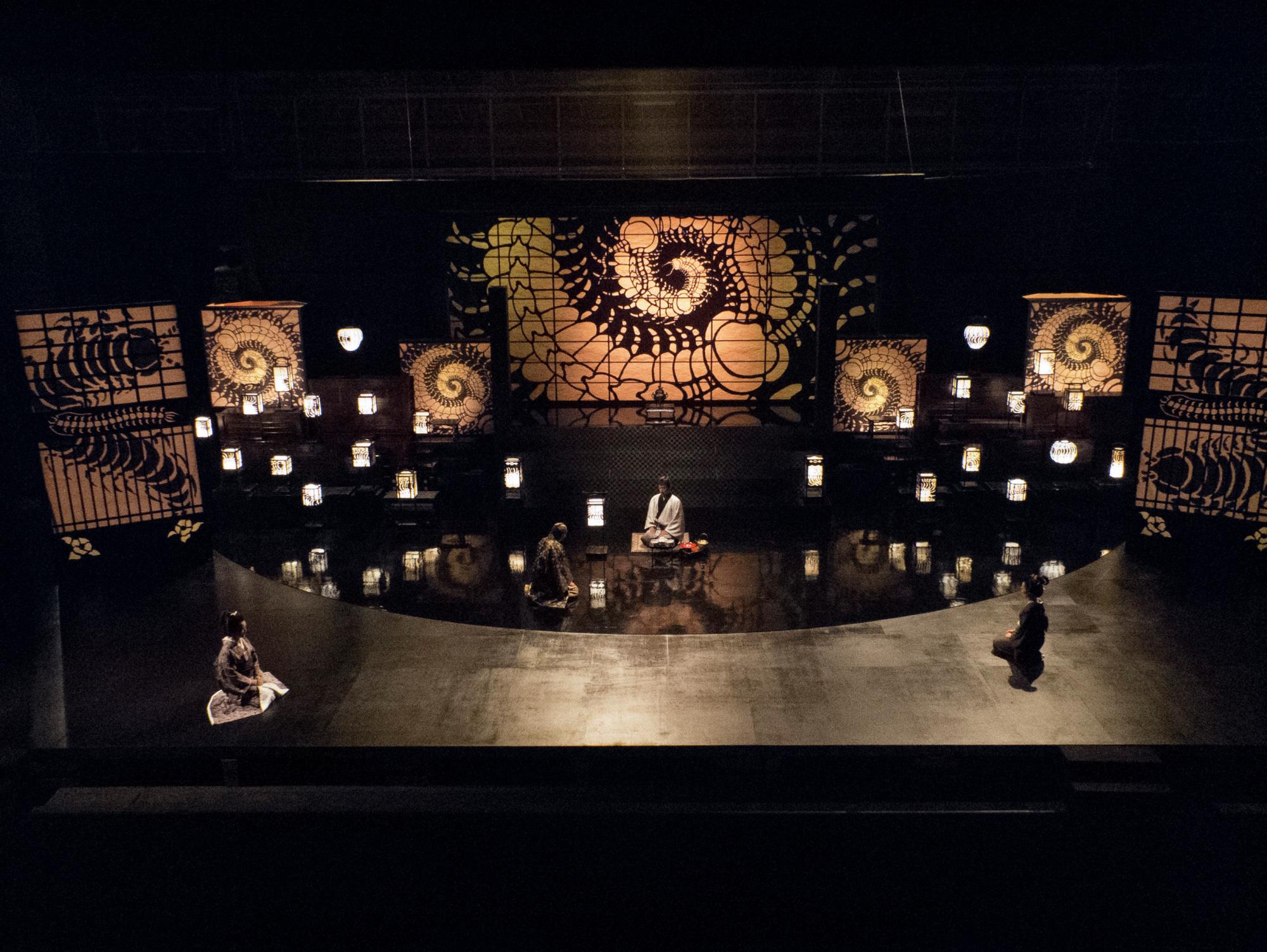
However, the real success of the film lies in the kabuki scenes themselves and some viewers may even windup wishing they were watching Yotsuya Kaidan instead. Built with an unfeasibly beautiful theatrical set utilising a modern, fully revolving stage Miike blurs us seamlessly from the theatricality of the stage set into the world of the play. Always beautifully filmed, the world of Yotsuya Kaidan comes to life before our eyes whereas the regular “reality”, our world with its everyday demands, feels cold, sterile and emotionless. One actor even remarks that he wishes the world of the play were real – quite an odd thing to say considering it’s a morality play about the wages of sin which is soaked in blood including that of a young infant.

Despite the committed performances of the cast, the off stage antics which ought to be the focus of the film end up feeling superfluous. Ultimately, despite its relatively short running time Over Your Dead Body feels like a short story unwisely expanded into a novella which might have benefitted from stronger editorial control. The overall tone is one of unexplained mystery but its refusal to explain itself is more likely to frustrate rather than delight and something about its plot machinations just never manages to come together in a satisfying way.

Something of a mixed bag, Over Your Dead Body is not without its merits – it looks beautiful for one thing, yet never manages to engage. It lives and breathes in its kabuki scenes and perhaps a filmed kabuki production of Yotsuya Kaidan may ultimately have proved more satisfying. Gore fans and lovers of the bizarre who stay with the slow burn approach will find a lot to like in Over Your Dead Body but die hard horror aficionados  maybe advised to look elsewhere for their supernatural thrills.


Here be a trailer:

If you’re a Miike fan don’t forget that another of his more “recent” efforts will also be screening at the London Film Festival before being released on DVD & blu-ray by Manga in November – Yakuza Apocalypse, which sounds like a very boring film about a weird frog or something? Yeah, you probably wouldn’t like it anyway. *buys all the tickets*

Wanna read more about Miike?

Phew – that was actually a lot of work. Someone remind me I’ve already done it so I don’t have to do it next time. Takashi Miike probably made ten more movies while I was writing that list!

Taiwanese Cinema About to Hit the UK in a Big Way

exit 1This is kind of another link post, but bear with me! First up Ang Lee’s first three films finally became available on DVD in the UK. Cunningly titled The Ang Lee Trilogy, you can now feast your eyes on Pushing Hands, The Wedding Banquet and Eat Drink Man Woman for the first time. Feast is the right word too as all the movies feature food in a very prominent way so make sure you have the proper supplies arranged before you sit down to watch them. You can read my review of the trilogy over at UK Anime Network. They’re all great, but I particularly like The Wedding Banquet because it’s just so funny!

Here’s an awful old school trailer for The Wedding Banquet (the film is better than this, I promise).

OK, moving on you can also pick up the award winning debut from Chienn Hsiang EXIT on DVD and VOD courtesy of Facet Films. I reviewed the film when it played at the Glasgow Film Festival and you can read that at UK Anime Network too. I also had the opportunity to interview the film’s star Chen Shiang-Chyi while she’s over here shooting The Receptionist. Contrary to expectations, Chen Shiang-Chyi was actually very chatty and super nice so the only reason the interview seems a little short is because she gave very long and detailed answers! You can checkout the interview over at UK Anime Network.

Which brings me on to the upcoming Hou Hsiao-Hsien season at the BFI which begins tomorrow. Pretty much everyone is expecting his new movie The Assassin starring his regular muse Shu Qi to appear in the film festival (it would be really strange if it didn’t right?) and I for one am really looking forward to seeing it.

Hou Hsiao-Hsien will be appearing in conversation at the BFI on 14th September (tickets apparently still available) ahead of a screening of one of his greatest films, The Time to Live and the Time to Die. I was lucky enough to see this one during the BFI’s extended season of Chinese films last year and though it’s not always an easy watch, Hou’s biographical tale of mainland refugees and their Taiwanese offspring is nevertheless a moving and fairly universal coming of age tale.

I’d also recommend Dust in the Wind 

and A City of Sadness

but I just have to post this scene from Three Times again because I love it so much

They’re also showing Hou’s Ozu tribute and Japanese set Café Lumière starring Tadanobu Asano if that’s more your speed.

That’s a lot of Taiwanese cinema all of a sudden right? It’s a good thing though! If you still want more I’ll direct you to the films of Edward Yang as mentioned in Chen Shiang-Chyi’s interview:

Yi Yi: A One and a Two

No trailers for a Confucian Confusion or A Brighter Summer Day though – both are a little more difficult to get hold of but worth the effort. A Confucian Confusion has a great Rom-Com style ending (though not as good as Comrades: Almost a Love a Story which has the best ending of any film, ever, but I digress) and A Brighter Summer Day which is an epic at four hours long but a total heartbreaker.


The Yellow Handkerchief (幸福の黄色いハンカチ Yoji Yamada, 1977)

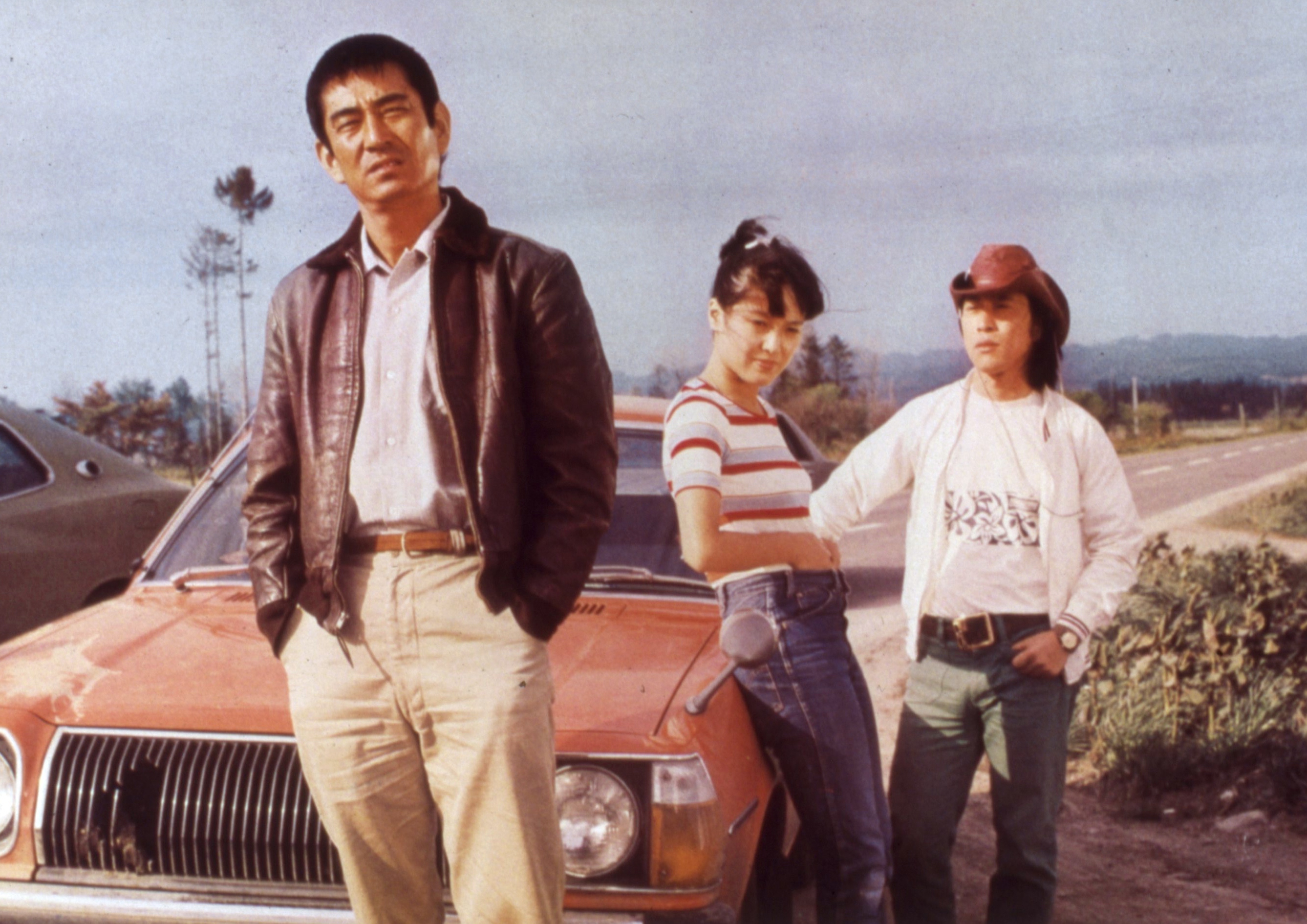
siawasenoWhen you hear the name Yoji Yamada, you pretty much know what you’re getting. A little laughter, a few tears and a reassuring if sometimes sad ending. You’ll get all that and more with the Yellow Handkerchief although, to allow a minor spoiler, the ending is anything other than sad even if it provokes a few tears. Yes it’s sort of syrupy and it’s not as if it breaks any new cinematic ground but once again Yamada has been able to work his magic to turn this romantic melodrama into a warm, funny and ultimately affecting tale.

Kin-chan, nursing the pain of unrequited love buys a garish red car and goes north where he attempts to pick up girls in fairly cack handed ways. Finally he hooks one outside of a station as she’s too shy and polite to tell him to buzz off. Things get decidedly awkward until the pair bond over a shared hatred of miso noodles at which point Akemi becomes a little more lively. A short way into their road trip, they meet the forlorn figure of Yusaku (Ken Takakura) who ends up joining them on their random road trip around Hokkaido. However, Yusaku’s brooding nature raises a few questions – where has he been, where is he going and why does he both very much want to go and not want to go at all?

Given that it’s Ken Takakura playing Yusaku, you might have a few ideas and you wouldn’t be *entirely* wrong but Takakura amply proves there’s more to his talents than playing a yakuza badass in series of extremely popular but by then out of fashion gangster movies. Suffering from an excess of nobility, Yusaku is a man who’s made a series of poor life choices and is slowing building up the courage to find out if a particular bridge he tried to burn is still salvageable.

Kin-chan and Akemi by contrast turn out to be a pair of live wire odd balls with Kin-chan desperately chasing Akemi and Akemi blithely ignoring him. Despite various attempts to shake Kin-chan off he generally ends up coming back (one time with a giant crab dinner) and getting himself into all kinds of hilarious trouble. They may be the film’s comic relief but in their story proves strangely moving too.

The Yellow Handkerchief won the very first Best Picture award at the Japanese Academy Prize ceremony back in 1978 as well as a host of other awards from Kinema Junpo and other critical bodies and it’s not hard to see why. It’s a prestige picture, and a pretty saccharine one at that, but Yamada makes it all work and comes out with a genuinely affecting piece of cinema. Filmed against the gorgeous backdrop of the island of Hokkaido, The Yellow Handkerchief is the ideal rainy day movie and though it may all end in tears they are far from tears of sadness.

The Happiness of the Katakuris (カタクリ家の幸福, Takashi Miike, 2002)

DB9gUGk
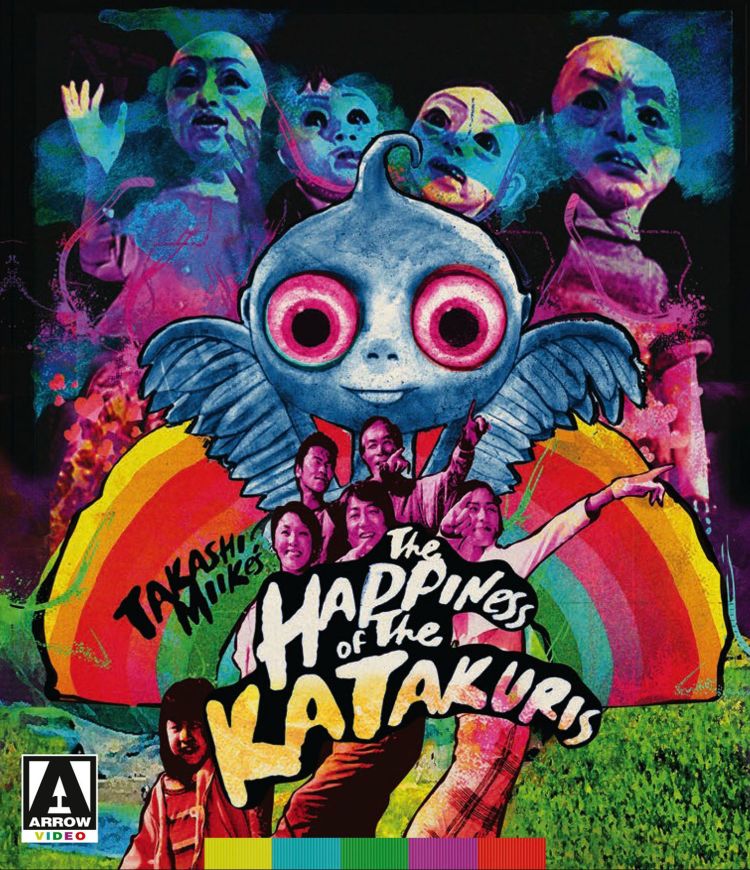
This new cover art from Arrow is actually really great, isn’t it?

Arrow Films are really spoiling us lately when it comes to amazing Japanese cinema – they’ve given us some cool ’60s classics and forgotten gems like Lady Snowblood, The Stray Cat Rock movies, Branded to Kill, Massacre Gun and Retaliation but now they’ve zapped back to the more recent past and brought us one of Takashi Miike’s zaniest and best loved efforts, The Happiness of the Katakuris. You don’t need me to tell you what this crazy, zombie and murderous inn keeper themed musical psychedelic masterpiece is about but you can read my review of the film and Arrow’s new HD effort over at UK Anime Network. (Spoiler, it’s pretty great).


Ah, Takashi Miike – that unpredictable Japanese auteur who’s equally at home with bloody yakuza dramas, gore soaked satire and strange fever dream experiments. There’s no denying his out put is decidedly patchy, which given his prolific career isn’t particularly surprising, but there’s really nothing he won’t at least try. Such is the joy of a Takashi Miike movie. The Happiness of the Katakuri’s wasn’t the first time he made use of musical sequences in his films and it wasn’t the last, but it is one of the craziest. Inspired by the 1998 Korean film The Quiet Family (debut movie of Kim Jee-woon) The Happiness of the Katakuris is, essentially, a family drama which incorporates shady goings on at a guest house, singing zombies, volcanoes and weird stop motion creatures appearing in people’s soup only to fly off with their uvulas (dangly bit between your tonsils).

The film begins with a young girl finding a weird looking creature in her soup which then rips out her uvula and flies off with it before before being snatched by a crow which is then hit with a log by an old man with surprisingly good log throwing game. The old guy is the grandpa of a family which runs a small hotel in the middle of nowhere. Family patriarch Masao used to be a shoe salesman but after losing his job was convinced to buy a hotel after a tip off that a road was supposed to be built nearby which would likely mean lots of customers. Predictably, the road has not materialised and the fledgling inn isn’t exactly packing them in. Besides grandpa, Masao is helped out by his long suffering wife, grown up daughter with a little daughter of her own and a grown up yet seemingly feckless son.

At last, a guest arrives but unfortunately dies soon afterwards. Bearing in mind the declining state of their new business, Masao makes the decision to quickly bury the body in the woods rather than report the death and suffer the negative publicity. Just when things were looking up, another two guests arrive and then promptly die too (in somewhat embarrassing circumstances). As if that weren’t enough, love sick daughter Shizue has fallen in love…again! With “Richard” the secret Japanese love child of the British royal family who’s also some kind of sailor which is why it’s difficult to get in touch with him. All told through the child’s eye view of the youngest member of the family, Shizue’s daughter Yurie, this was one crazy summer in the life of this strange family.

It would be wrong to call The Happiness of the Katakuris a musical, there’s no real musical through line so much as a collection of musical sequences inserted at points of high tension. The musical numbers themselves often act as parodies of other genres with their traditional ballads, karaoke video style sequences and the bonkers Sound of Music-esque field frolicking. Then there’s the singing corpses – who knew zombies were so jolly?

It all undeniably gets a bit grim as the family have to contend with burying the bodies of their unfortunate customers all the while waiting for someone to finally build this long promised road so their business can take off. Each of them is chasing a different kind of “happiness” the father in looking for success in business which will lead to financial security for the family, the daughter in looking for love (in all the wrong places) but it takes the totally bizarre death filled adventure of demons, corpses and escaped murderers to make them realise that they had what they needed to be happy all along – each other. The Katakuris may not be a model family, but everything runs better when they work as a team and they are very happy together no matter what strange adventures befall them. Despite all the trappings of weirdness, The Happiness of the Katakuris maybe Miike’s most subversively conservative film as it ultimately fulfils the role of that most Japanese of genres, the family drama, in which the traditional family is reformed and everything in the world is right again.

Available for the first time in HD, Arrow’s new set is nothing short of a wonder. Shot near the beginning of the digital age before the cameras where anywhere near as good as they are now, you wouldn’t assume The Happiness of the Katakuris would look this good and even if it does show its age here and there the presentation is pretty much top notch and the best it’s ever going to look. The set also comes with a host of special features, some ported over from the original release but also adds a Takashi Miike commentary with critic, Miike champion and sometime actor Toshitoki Shiota in Japanese with English subtitles but also, in an appropriately strange and surreal option, a dubbed version with actors “playing” Miike and Shiota speaking their lines in English too. You also get an entirely new commentary from Japanese film scholar and Miike expert Tom Mes of the recently deceased Midnight Eye plus a short video essay about Miike’s career and a couple of new Miike interviews too.

Almost 15 years on, The Happiness of the Katakuris remains as endearingly bizarre as it did on its first release and is truly worthy of its status as a beloved cult movie that continues to be the go-to weird Japan choice for the genre savvy cinephile. Back and better than ever, this new set from Arrow breathes new life into the film and is a great excuse for another stay at the White Lover’s Inn.


Here’s a trailer for the film:

If Takashi Miike x musical madness is your thing you also need to see Ai to Makoto (AKA For Love’s Sake) – available in the UK from Third Window Films.

Also a mini reminder for Miike fans that Over Your Dead Body is going to be at Frightfest and is apparently going to receive a UK release from Yume Pictures (the same people who released A Tale of Samurai Cooking: A True Love Story, now available on UK DVD). Miike madness is back! In more ways than one.

Over Your Dead Body trailer: