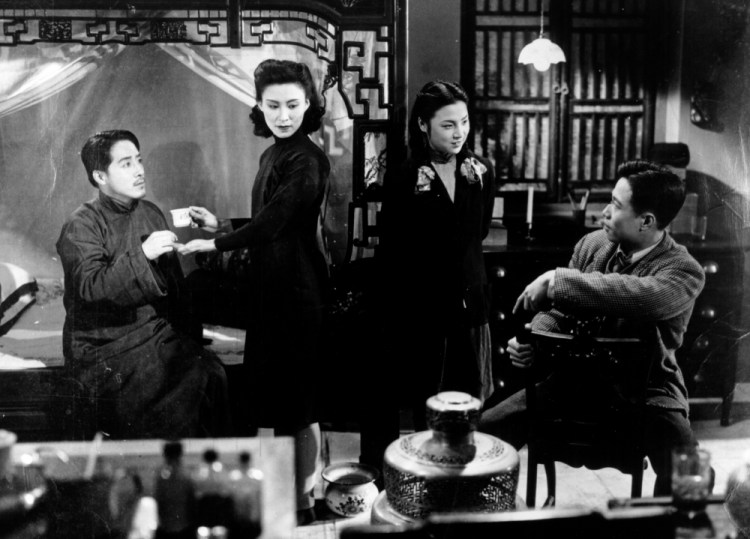
Spring in a Small Town (小城之春, Fei Mu, 1948)

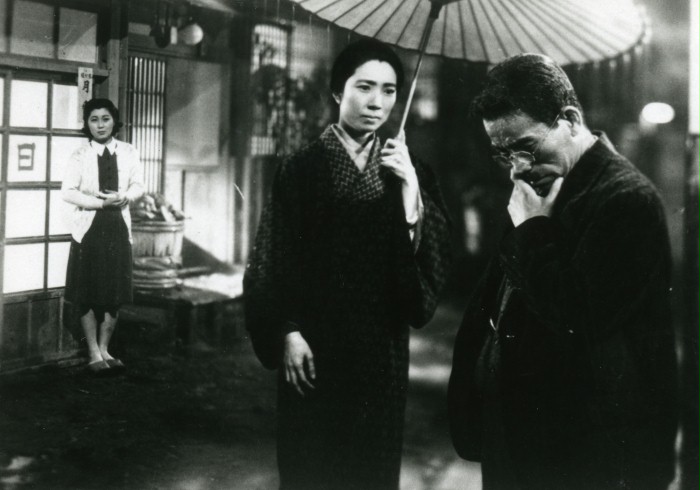
spring-in-a-small-town-1948-001-two-couples-in-the-householdReview of this Chinese lost classic up at UK Anime Network


Fei Mu’s Spring in a Small Town is often regarded as one of the great lost masterpieces of Chinese cinema. Completed in 1948, it stands on the borderline of China’s transformation into a communist state and ultimately paid the price for its “questionable” politics (or, indeed, lack of them). Fei like many at the time relocated to Hong Kong where he set up a production company but sadly died not long after at just 44 years of age and Spring in a Small Town became his final film. Based on a short story by Li Tianji, the film is a complex portrait of frustrated hopes and failed marriages against the backdrop of a society in rapid change.

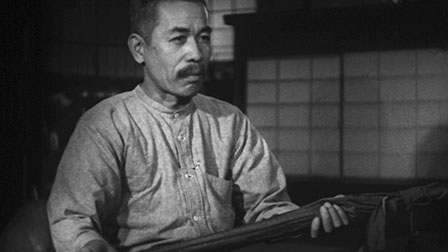
Yuwen is a married woman who lives for her daily errands which take her out of the decaying house she shares with her invalid husband and his school aged younger sister. Her one pleasure in life is the solitary walk she’s accustomed to take along the ruined wall which leads into town. Her husband, Liyan, believes himself to be suffering from tuberculosis and confines himself to what remains of their estate and its once fine garden. The house is little more than rubble in places and bears the heavy scars of the war years on its un-repaired exteriors. One day, an old friend of Liyan’s, Zhang – a doctor, comes to visit. Unbeknownst to anyone, Zhang and Yuwen grew up in the same village and were, in fact, childhood sweethearts until time and circumstance forced them apart.

Shot through with Chekhovian melancholy resignation (but perhaps without his trademark sense of humour), Spring in a Small Town is a tightly wound character drama which uses the plight of its characters to deliver a much wider message. Yuwen narrates her inner life for us (a stylish device which anticipates the technique coming into its prime nearly twenty years later in the French New Wave), giving voice to thoughts that could never be expressed directly. Her unhappiness is the first thing that strikes the viewer along with the decayed grandeur of her surroundings. Having become more nurse than wife to a husband that she never loved, Yuwen has resigned herself to a life of morning walks and embroidery devoid of all stimulation. Zhang’s unexpected re-entry into her life spells both doom and salvation. Liyan suspects nothing and even sees Zhang as a potential match for his sixteen year old sister, Xiang! Zhang’s arrival threatens to throw a hand grenade into this delicately balanced yet unhappy household with long buried emotions slowly working their way to the surface.

Fei keeps the tension up by keeping a tight lid on the repressed emotions of the time. What could so easily have become an overwrought melodrama retains its emotional power precisely because of its naturalistic restraint. Spring in a Small Town has been described as “the Chinese Brief Encounter” and it certainly shares something of that film’s powerful emotional manoeuvring pushed through with a level of reserve many would consider typically British. Both films also resolutely reinforce the prevailing social order of the day where duty conquers all and properness comes before personal happiness. However, where Brief Encounter ends on a note of melancholic restoration, Spring in a Small Town dares to be a little more upbeat (if still just as melancholic) with a sense that spring may really have returned to these four people after a long and hard winter. The frost has finally thawed and new life can begin again.

It’s not completely clear what exactly the new regime found problematic about Spring in a Small Town though it’s certainly a long way from socialist realist cinema. The world it depicts is an upper class one with not a little sorrow over the decline of this once noble house and fretting about its legacy neither of which gel very well with communist party guidelines. Otherwise the film is fairly apolitical which would render it a little frivolous from their point of view but far from trivial in ours. Enormously influential since its rediscovery by the Fifth Generation filmmakers in 1980s, Spring in a Small Town is a gloriously melancholic character study that deserves to finally take its rightful place alongside finest romantic dramas the golden age of cinema has to offer.
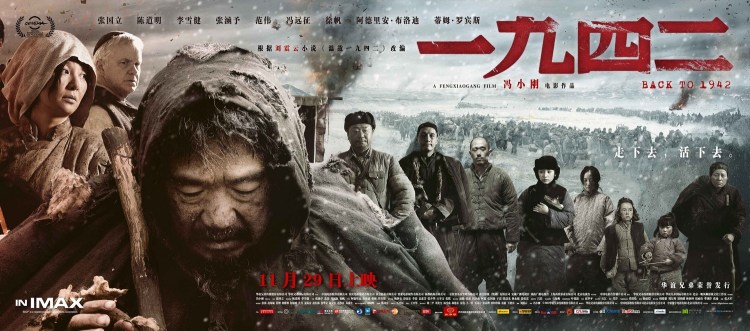

Back to 1942 (一九四二, Feng Xiaogang, 2012)

back-to-1942-poster08Review of this (slightly stodgy) war time starvation drama up at UK Anime Network.


Feng Xiaogang might not exactly be a household name in the West but at home he’s one of China’s most bankable directors. Dubbed the Chinese Spielberg (perhaps a little reductively) he made his name with a series of crowd pleasing comedy films that had audiences queuing ‘round the block in expectation. In recent years, he’s moved away from the comedy genre in favour of big budget, Hollywood style dramas centred around historical events like the 1976 Tangshan Earthquake in Aftershock or the Civil War themed Assembly. Back to 1942 sees him step back even further in time to one of China’s great hidden tragedies, the great Henan famine of 1942.

In 1942 China was in a precarious political position as it faced the ongoing Japanese incursion and came under increasing pressure to align itself with Japan’s enemies as part of the wider global conflict. A serious drought could not have come at a worse time as ever dwindling resources were pulled in several directions at once. The story here concerns the landlord, Fan, who had originally a sizeable grain store set aside to feed his family and retainers. However, after his village is raided by bandits he too is forced to travel westwards in hope of finding better supplies. Along with his wife, pregnant daughter-in-law, daughter and servant as well as another family from the village he faces increasing hardship as he tries to find food to survive. Meanwhile an American journalist employed by TIME magazine has got wind of the story and is trying to get something done about it but to no avail. The government has the war effort as its top priority – what does it matter if a few peasants die as long as the army remains well fed.

Politically speaking, you can get away with talking about ‘unpleasant’ historical events assuming that they happened before the communist revolution. The finger here is pointed quite squarely at Chang Kai-shek and his nationalist government who are portrayed not only as unfeeling and self interested but also as ineffectual when it comes to the business of conducting war with the Japanese. Indeed, at once point Chang suggests simply ceding Henan to the Japanese rather go to the expense of defending this barren stretch of land. Though it is clear he is aware of the extent of the famine, he does little about it until eventually sending “emergency supplies” to “the disaster area” to try and alleviate the damage to his reputation and diplomatic relations with other powers when news of the famine finally reaches them after the conflict. Though the local governor appears genuinely concerned and does his best to get help for the starving people (even if it’s only to alleviate the ridiculous burdens placed on them to supply grain for the army even though there is none) he is hamstrung by the top heavy hierarchical system.

No help is going to come from the government for Fan and his family. They might have been bigwigs once but now they’re in the same boat as everyone else – forced on a virtual death march through the arid land desperately trying to find anywhere that will yield to them the resources to survive. Bodies litter the landscape as the weaker succumb to starvation, donkeys and pack horses are eaten and finally wives and children are bought and sold in the hope of surviving a few hours more. Make no bones about it, Back to 1942 is almost two and a half hours of pure misery as one tragic yet inevitable event follows on the next. Unfortunately, Feng has laid the gloom on a little thick in this understandably bleak tale. The tone never wavers and somehow the constant nature of its sorrows fail to engage as they take on a sadly predictable air. Despite the obvious potential of the story, there’s precious little actual drama and the performances fail to capture the audience’s sympathies as Fan & Co. forced into increasingly degrading acts trying to ensure their own survival.

However, Back to 1942 was an expensive production and you can see all of that money on screen as the battle and action sequences rival those of any Hollywood blockbuster. Whatever reservations there may be with the plotting, it always looks good and you could never accuse it of skimping out on its production design. The only minor criticism may be that the performances of non-Chinese actors feel significantly under rehearsed with Tim Robbins’ priest being the obvious example as he struggles with a strange accent and unclear position in the narrative. Adrien Brody fares better as the idealistic reporter but still fails to convince. The film doesn’t quite seem to know where to put itself when it comes both to the role of religion and of other powers active in China at this time and though neither of those ideas are at the forefront of this film, they muddy the waters in ways other than intended by the filmmaker.
An often beautifully photographed film Back to 1942 is also a cold one and given its depressing subject matter something of a chore. The famine that struck the Henan region in 1942 and subsequent (non) reaction to it from the powers at be is indeed something that should be addressed and brought to light in the modern world but perhaps it doesn’t need to be in such a blunt fashion. The film is long, and wearing but ultimately fails to connect with the viewer in a non cynical way making its drawn out proceedings a little on the tedious side for most viewers. Those with a taste for sentimental melodramas with high production values may find a lot to enjoy with Back to 1942 but those who prefer a more nuanced drama will likely leave disappointed.


Uzumasa Limelight (太秦ライムライト, Ken Ochiai, 2014)

tumblr_nfxugkn3kO1seecgzo1_1280Another one from The Glasgow Film Festival (which starts today!), Uzumasa Limelight reviewed at UK Anime Network.


Once upon a time, Japanese network television was dominated by Jidaigeki or samurai dramas filled with tales of glorious battles and petty vendettas. Of course, they had their stars – the guys on the posters looking mean with their swords held high, but they couldn’t have run without the “kirareyaku” or the guys whose sole job it is to get killed by the star of the show over and over again. However, times have changed and samurai dramas aren’t as popular as they used to be. Consequently, there’s not so much work to go around and it’s hard to make a living getting by on ordinary “extra” work in modern day dramas when you’re used to the comparatively more active chanbara world. The days of the once famous Uzumasa studios as the capital of period drama in Japan are coming to a close, yet perhaps it’s just time for the older generation to step out of the limelight so that the young ones can enjoy its glow.

Inspired by Charlie Chaplin’s Limelight – the story of a once famous washed up clown who finds a new lease on life after saving a young dancer from suicide, Uzumasa Limelight is a poignant tale of the transient nature of art as it evolves from one generation to the next. In a bit of smart casting, the leading role of the veteran kirareyaku, Kamiyama, is played by a real life master – Seizo Fukumoto who has been dying on screen for over fifty years and takes on a leading role here for the first time! After falling over in the street he encounters a young, hopeful actress just leaving an audition. Satsuki (played by world champion martial artist Chihiro Yamamoto in her first dramatic role), it turns out is fascinated by the kirareyuki craft and becomes intent on training under Kamiyama despite being warned there are generally very few of these sorts of roles available for women. Nevertheless, Kamiyama begins to pass on some of his skill and before long Satsuki herself has begins to step into the limelight.

Things have certainly changed a lot since Kamiyama began working back in the glory days of the TV chanbara serial. A new producer has come in and a series which had run for over forty years has been cancelled to make way for a new show – still a period drama but more modern and up to the minute. It’s going to star a handsome idol from a top dance group – one who refuses to wear the bald cap so they have to put him in a ridiculous helmet with a giant fur train. He also can’t use a real sword so all the fights will be done with cut off green sticks and replaced with CGI blades. The new producer doesn’t care about skill or experience, he just wants handsome faces to pull in the youth viewers – old guys like Kamiyama are totally out of luck! Who wants to see some random old guy when you could just pull in a few idols to wave a little stick around and fall over on queue? It’s a shame, but it’s the way of the world. Old soldiers fall but new faces rise in their place. There may be scant respect for craft, but the art form carries on – it changes and evolves from one generation to the next but the spirit remains.

In this way, Uzamasa Limelight feels very Japanese in that it sets up the conflict between a perceived decline in values in modern movie making – what was once an art is now a (fairly ridiculous) business, whilst simultaneously accepting the transient nature of all things. Kamiyama accepts his time has passed, he barely fights it and when he decides it’s time to go he does so with dignity. He passes his skills onto his young protege and watches her use them to become a star in the new artistic world whilst retiring to the sidelines, content to have played his part to the best of his ability. Uzumasa Limelight is a beautiful, poignant tribute to the bit players of countless movies whose performances are little appreciated but without whom an entire industry would not have been able to function. Imbued with a gentle melancholy, Uzumasa Limelight also offers not a little hope for the younger generation who will pick up where their forebears left off and create something, if not necessarily better, then at least different.


On a side note, this is a really well made trailer!

Pale Moon (紙の月, Daihachi Yoshida, 2014)

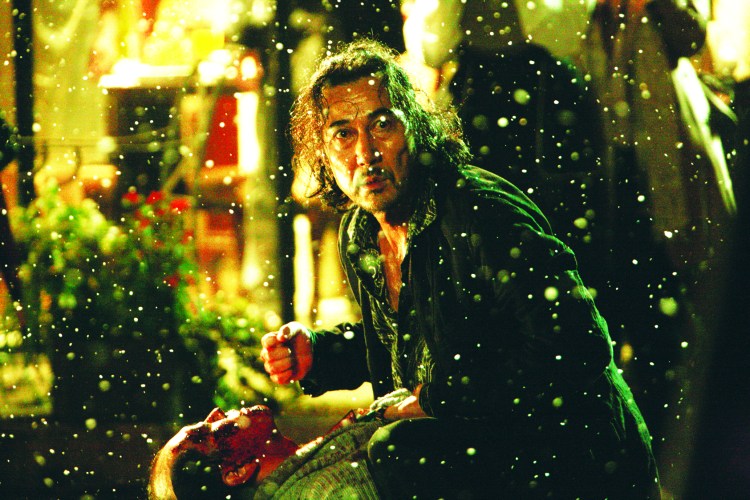
Pale-Moon_MainDaihachi Yoshida’s last venture into human dynamics, The Kirishima Thing, took the high school environment as a microcosm for society as a whole. In some senses painting on a large canvas by illuminating the inner lives of these teenagers acting as both individuals and as members of a group, The Kirishima Thing was equal parts ensemble character drama and probing social commentary. Pale Moon (紙の月, Kami no Tsuki) is no different in this regard although it focuses more tightly on one individual and shifts age groups from turbulent adolescence to middle aged desperation. Set in 1994 just after the bubble burst, this gleefully cheeky (im)morality tale takes another sideways glance at the social norms of contemporary Japan.

Rika (Rie Miyazawa) is a demure woman in her early forties. A childless former housewife, she’s recently moved from a part time position at a bank to a full time job where she works as a kind of personal banking assistant visiting wealthy clients at home to discuss their financial needs and physically depositing their money in the bank for them. Efficient, reserved, reliable – Rika is the perfect employee, that is until one day she spends some of a client’s money because there isn’t quite enough in her purse. She takes the money straight out of an ATM and replaces it right away, of course, but a line has been crossed. It’s a quick step from a gentle misappropriation of funds to a series of interestingly decorated hotel rooms with a boy half your age, embezzlement on a grand scale, blackmail, bank fraud – the list goes on. How did it ever come to this? Yet, it’s the strangest thing – Rika has never felt more alive.

Money – it’s the life blood of capitalism. It makes the world go round and drives people crazy as they try to amass even more little bits of paper with numbers written on them. It’s fake, an illusion that we’ve all bought into – no more real than a paper moon (to go by the film’s original Japanese title), though we continue to set all of our hopes afloat on its surface. When Rika finally convinces her financially challenged young lover to accept her (stolen) money, she tries to convince him that nothing will change but, of course, it does. The dynamics fluctuate and money gets in the way, the toxicity of debt starts to eat away at any genuine connection that may have existed. The irony is, Rika is one of those people who steals in order to give away. It sounds selfless, even altruistic, but is in fact the most intensely selfish action that can be taken. “It’s better to give than to receive” goes the mantra of the nuns of the Catholic school where young Rika was educated, but they also council that charity should never have anything to do with your own gratification. This is the lesson that Rika finds so hard to learn, it feels so good to give – how can it be wrong to take?

It’s easy to say that the world has changed a lot in the intervening twenty years between now and the time the bulk of the action takes place, but maybe it hasn’t. The first thing that strikes you is how extraordinarily sexist Rika’s world is. It’s not long before she’s being asked questions about her marital status whilst being made to feel uncomfortable, alone in the home of her elderly male client. Then at the office her boss praises her efforts whilst sadly lamenting that women have more “tools” at their disposal than men do, which is both insultingly crude and a put down of her skills and hard work. Rika only gets her permanent position because another woman, an employee of nineteen years standing, has been forced out through a campaign of constructive dismissal because the big wigs don’t like paying higher salaries to older female workers but they won’t promote them past a certain level either. Her younger colleagues make fun of their “spinster” supervisor, Sumi (Satomi Kobayashi), who, only a generation older, had to make a clear cut choice between work and family and having chosen a career now sees the rug being pulled out from under her with the standard “transfer to head office” game plan in place to force her into retirement.

Rika’s home life offers a similar level of hope for the future. Her husband is probably well meaning, but totally insensitive and the marriage is at best unfulfilling. He pooh-poohs his wife’s thriftiness and her new “hobby” at the bank, totally failing to understand her motivation. At one point he announces he’s being transferred abroad so she’ll have to give her notice – it never occurs to him she may not wish to go, let alone that she’d refuse over something so trivial as her own job. It’s little surprise then that she’d so quickly fall for a handsome and attentive stranger. An “amour fou”, an old story but no less potent than it ever was.

Rika knows none of it’s real – that her temporary crime fuelled reprieve can’t go on forever, but that only makes her feel more free. In one telling episode, Rika is talking to a granny she’s in the process of swindling and remarks on her beautiful new necklace. What a shame it’s fake, Rika says, but the old lady replies that she knows it’s only imitation but she doesn’t care – it’s pretty, she likes it and she’s happy. That perhaps is the answer. Rika saw her chance and she took it. That takes some courage and whatever the moral outrage one might feel, there’s something undeniably admirable, even exciting, about Rika’s dramatic escape from the constraints of conventional social behaviour.


Pale Moon is receiving its UK Premier at the Glasgow Film Festival on 19th February so if you’re in the Glasgow area be sure to check it out!

Wood Job! (Wood Job(ウッジョブ)神去なあなあ日常, Shinobu Yaguchi, 2014)

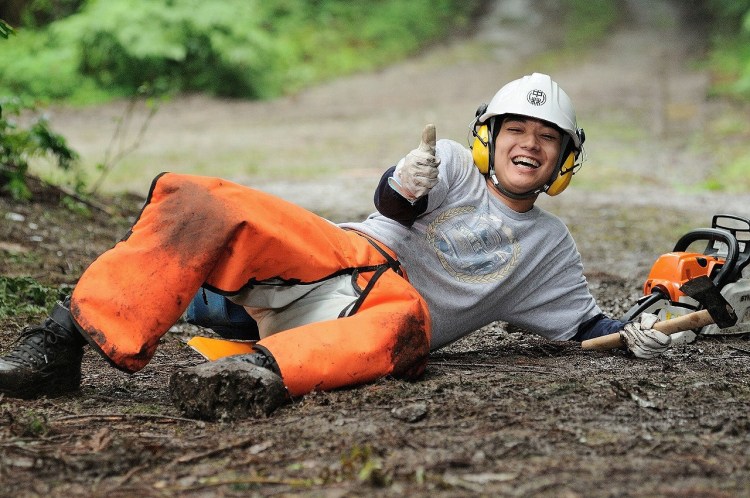
ff20140516a1aHe’s a lumberjack and he’s OK! Well, after a while anyway – climbing trees all day is not quite as much fun as it sounds in Shinobu Yaguchi’s latest comedy which sees a streetwise city kid randomly decide on a career on forestry. Not so much fish out of water as duck in a tree, Wood Job! is a heartwarming comedy drama which more than lives up to the puntastic comedy of its title.

Yuki Hirano is your typical slacker teenager. Like many guys his age, he’s run into something of a life crisis as he didn’t get into university and he hasn’t really thought about what to do. At first he thinks it’s no big deal, he’ll just take the tests again next year but after being abandoned by his girlfriend and seeing all his friends set off without him Yuki feels a little lost. That is until he notices a shiny magazine advertising a new life in the open air – “come and work with me!” it says next to a picture of a pretty girl. Yuki’s packed his bags and caught the next train before you can even say “Where’s the nearest combini”? but his new found occupation is a little more intensive than he was expecting and Yuki’s not sure he’s cut out for this no frills life. Then however he meets the girl from the advert herself – can Yuki really stick around long enough to convince her he’s not some city boy layabout but a real mountain man?

Wood Job! is that rare film that manages to mix a fair amount of slapstick comedy with the kind of naturalistic, everyday humour that can’t help but give it an endearingly warm quality. Taking the classic fish out of water approach as its basis, the film highlights the absurdity of country life (at least to eyes more accustomed to the city) but crucially never mocks it and seems to have a profound respect for the rural way of life and all that entails. Neither does it shy away from the fact forestry is hard work which is often dangerous and requires an extremely specific skill set – you can’t just rock up one day because you’ve seen a picture of a pretty girl on a poster and instantly become a man of the mountains over night. The villagers are all too used to people who turn up in the country with romantic ideas about getting back to the land or living a more simple life but go home after a week or so because they can’t adapt to this very different environment. Already pre-conditioned to expect disappointment, their approval is hard to win but worth all the more because of its rarity.

Yuki Hirano is something of a departure for Sometani who ranks as one of Japan’s most promising young actors. Having hitherto made a name for himself playing “intense” characters, Wood Job!’s laid back slacker couldn’t be more different than the tortured soul of Himizu though Sometani carries off this seeming 180 degree turn with aplomb further proving his versatility as an actor. He’s also surrounded by an equally talented cast including Hideaki Ito (most recently seen as the sociopathic teacher in Lesson of Evil, also alongside Sometani in a small role) as his hard tasking forestry mentor as well as Ken Mitsuishi and Akira Emoto in smaller roles and Masami Nagasaki as Yuki’s longed for poster girl for the world of forestry. Filled with realistically drawn characters near perfectly pitched by its well put together cast, Wood Job! manages to achieve just the right comedy-drama balance which makes some its more outlandish moments seem perfectly plausible.

It may be a very conventional film in many ways, but Wood Job! succeeds in doing what it set out to do incredibly well. Filled with warmth and good humour, director Shinobu Yaguchi manages to breath new life into this old idea to create a charming and engaging tale of the virtues of country life. Any film which manages to pack not one, but two distinct puns into its title alone has to be worth a look but Wood Job! more than lives up to the comedic promise of its name.


This is playing as part of the Japan Foundation Touring Film Programme so it’ll be a bunch of places between now and the end of March including:

  • MAC Birmingham (24th February)
  • Dundee Contemporary Arts (25 February)
  • Tyneside Cinema Newcastle (15th march)
  • Nottingham Broadway (25th March)
  • Brewery Arts Centre Cumbria (25th March).

So if you’re near any of these be sure to check it out! Also because people always say this – if the festival isn’t coming near you it’s most likely not Japan Foundation deliberately snubbing you, get in touch with your local indie cinema and try and convince them to book some of these films. If you don’t have a local indie cinema you’re probably out of luck though as the big chains often won’t take these kinds of special screenings :(. In short, support your local indie (or a not so local one if it’s your only option).

Review of the forestry themed comedy Wood Job! up at UK Anime Network. I love how many puns they managed to pack into the title of this film, it wins just for that.

Kumiko the Treasure Hunter (UK Anime Network Review)

Screen-Shot-2014-12-29-at-10.49.38I wrote this getting on for a year ago when the film was screened at Sundance London (which is apparently dead now) but seeing as it’s getting a proper release by Soda Pictures from 20th February here it is again! Hit the jump to read my review over at UK Anime Network.


Famously, the Coen Brothers’ 1996 film Fargo begins with a black screen and a caption telling us that everything we’re about to see is based on real events that took place in Minnesota in 1987. What is perhaps less well known is that this is an out and out lie – a manifestation of the Coens’ strange sense of humour that’s just really there as a sort of in joke to mess with the viewer’s head. When a Japanese woman was found wandering around a wintery Minnesota, underdressed for the cold weather and pointing to a hand drawn map of tree next to a road, it wasn’t long before someone connected her actions to the famous movie. When she was found dead in the woods some days later, an urban myth was born about a crazy Japanese lady who froze to death looking for Steve Buscemi’s buried suitcase. As it so often does, the truth turned out to be much sadder and more ordinary than the legend suggests and that this poor woman became the butt of a global joke seems cruel and unfair. Now the original myth has spawned another story of its own – of Kumiko, who sees herself like a Spanish Conquistador who alone has learned of vast riches hidden deep in the new world.

Kumiko is a 29 year old office lady from Tokyo who lives alone in a tiny apartment aside from her pet rabbit Bunzo. As she goes about her everyday life she looks worn out, like someone who’s been carrying a heavy burden for a long time. She barley speaks to anyone and resents her boss so much she almost spits in his tea before thinking better of it. As it turns out one of the reasons she looks so tired is that she spends every night sat in front of her ancient TV scouring an old VHS of the movie Fargo (which she found in a cave buried under a pile of rocks at the end of a previous treasure hunt) for clues as to where Steve Buscemi buried his money. When her boss calls her in one day to ask why it is she always looks so miserable and points out, in a nice avuncular way, that 29 is really far too old for an office lady things have come to a crisis point. Using his company card she’s booked herself on a flight to Minneapolis armed only with her hand embroidered map and unshaken faith that her treasure exists and is hers alone to find.

Of course, her delusion is ridiculous for a multitude of reasons: to begin with, it’s obviously a constructed film – not a documentary so even if the events were real how would you know they recreated the exact burial spot in their movie version. Secondly, why would they have done that and then left the actual money where it was. Thirdly, the money was supposedly buried in 1987 – surely someone else would have come up with a similar idea in the intervening fifteen years and found the money already, wouldn’t they? Fourthly, he only buried it in the snow. Snow melts. How could anyone believe this? The film opens with Kumiko following another of her intricately made hand embroidered maps that results in her finding the fateful tape as if she alone had been handed some kind of divine revelation. Accordingly she pours all of her energy into divining its holy secrets. Hers is a literal leap of faith – she simply believes in it even though we ‘know’ it’s absurd.

What would make someone cling on to this kind of bizarre idea as their only true hope of salvation? We’re never given very much backstory, but it seems that somewhere along the way Kumiko’s life diverged from the one she wanted to live and ever since then she’s been treading water. Her mother rings her periodically to try and convince her to move back home ‘until she gets married’ whilst asking all sorts of questions about her love life and career that Kumiko would rather not answer. At work she’s the odd one out in the office as generally young women either decide to leave and get married or pursue a more demanding career long before Kumiko’s almost ancient 29. She keeps herself apart from her colleagues and barely speaks to them which is fine because they think of her as a creepy old lady anyway. She does eventually agree to meet an old school friend for coffee but bolts once left alone in a cafe with her friend’s five year old daughter. It’s almost as if Kumiko herself feels she’s failed and is too ashamed to interact with other people. Faced with her friend’s successful home life with a healthy young daughter compared to Kumiko’s own dreary, lonely existence it’s not difficult to see how loneliness and frustrated desperation could lead to a state of psychosis. If she can just prove it, show everyone she has a destiny – something she alone is supposed to do then they’d all see.

Once she reaches America things begin to take a darker turn. Dressed only in her usual blue dress and little red hoodie, she’s like Red Riding Hood stepping off alone into the woods. She hasn’t brought winter clothes, cash or even made a proper plan of how to actually get to Fargo. She meets some nice people along the way – a lonely old lady who means well has almost kidnapped the poor girl and keeps trying to thrust James Clavell’s Shogun at her, and a truly decent policeman who can see there’s something wrong but is prevented from helping by the impenetrable language barrier. Every time it seems as if there might be a better way out of this the door is cruelly slammed in Kumiko’s face and left entirely alone in a strange land there really is nothing else for her to do than trudge on in hope of finding her treasure. Kumiko could so easily have been a series of crazy lady tics and quirks but thanks to Kikuchi’s extremely nuanced performance the infinite sadness of her story is completely laid bare. All this happened, more or less – mostly less in this case, but there is truth in this story. The world is full of lonely people whose minds have turned in on themselves through having nowhere left to run. Kumiko the Treasure Hunter is an existential tragedy that nevertheless is shot through with enough charm and whimsy to make its often unpalatable message easy to digest. A strange fairytale for adults, Kumiko’s story is heartbreakingly bleak but it’s also immensely beautiful.


Army 陸軍 (Keisuke Kinoshita, 1944)

Dem-3 Photo. Helene Jeanbrau © 1996 cine-tamaris.tif

With a name like “Army”, you’d expect this to be a stridently propagandistic film about brave men fighting for their countries – some of whom will likely fall but will cover their families in eternal glory through their selfless sacrifice. Those are certainly the ideas behind Kinoshita’s 1944 film, the last film he’d be permitted to make before the war’s end, however any lingering feelings of pro-militaristic ardor are completely undercut by the film’s near silent closing moments.

Like The Living Magoroku, we begin in another historical era – one just as turbulent as the contemporary action. As people flee burning houses at the dawn of the Meiji era, a father and son shelter a wounded samurai who gifts them a set of historical encyclopaedias. Despite the changing times, the father is convinced a man’s highest duty is to his country and makes a deathbed plea that his son Tomohiko become a fine soldier. Tomohiko tries his best, as an infantry Captain through the several of Japan’s international conflicts of the early 20th century he’s certainly had ample opportunity to distinguish himself. However, luck is not on Tomohiko’s side as minor injuries, illness or simply failing to be selected have kept him safely away from the front lines. Eventually invalided out, Tomohiko tries to make a go of civilian life, finally ending up trying to run a pawn shop (before realising he’s not good at that either and leaving the heavy lifting to his more capable wife). Still convinced of the wisdom of his father’s philosophy, Tomohiko pushes his wishes for military glory onto his oldest son – the equally weedy Shintaro whose slight frame and kindly nature don’t exactly point to a future Field Marshall. Japan needs soldiers though, it’s time for every man and boy to stand up to defend her!

Final scene excised, Army would look like the most obviously propagandistic film in the box set. Full of references to the importance of military virtue and physical strength over book learning, Army brings home that a man who does not fight is not a man. He is weak and womanly and is to be shamed. Even those who are in poor physical health or simply not built for brute force attacks are expected to suddenly shape up and join every other young man in sacrificing themselves nobly for the Emperor. Mothers, even, are not permitted to grieve as their sons were never theirs in the first place – they were merely taking care of them for the Emperor. Now they’ve done their duty and returned their progeny to the father of the nation, they ought to feel nothing more than relief at a job well done, or so says Tomohiko’s wife, Waka. Wouldn’t it be shaming to have a grown up son still at home, after all, or even one that was far from the front line but relatively safe? Prepare for the worst or hope for it? It’s an oddly macabre way of thinking.

However, the last scene of the film which is played almost silently, undercuts this cold willingness to sacrifice and shows it up for its own hollowness. Having originally claimed not to be going to see the brigade depart because she’s a weak and emotional woman, Waka is suddenly overcome by something. She rises and follows the other townspeople drifting towards the noise of the parade with its crowds of cheering, flag waving supporters. Desperately, anxiously, she searches for her son in amongst the multitudes of other young men in identical uniforms marching off gleefully almost certainly not to return. Having pushed through the ranks of ecstatic civilians, she finally catches a glimpse of Shintaro who smiles at her before disappearing back into the ranks of anonymous infantrymen. Waka is left bereft, alone and terrified – her only recourse is prayer.

Unsurprisingly, the army didn’t really like this bit. In fact, one high ranking official marched right down to Shochiku and accused Kinoshita of treason! Luckily, not too much came of that but Kinoshita’s next script about kamikaze pilots was rejected and he wasn’t allowed anywhere near a camera until after the end of the war. Waka’s final uncertainty, her grief at losing her son to this faceless monster undercuts the entirety of the previous 80 minute celebration of glorious military history and masculine pride. All of a sudden it’s not a joyful celebration anymore, it’s a funeral peopled with grieving wives and mothers – hardly the sort of message you want to send out when you’re trying to give the barrel a final scrape when it comes to conscripting for the army. Army is a film that’s defined by its final minutes and is surprising in the level of ambiguity it was allowed to get away with given the strict censorship conditions in place. As a propaganda film it fails, but by design. Kinoshita once again refuses to depict his characters as unfeeling robots who can suppress their natural empathy in the name of duty or honour and a mother’s love proves the most dominant (if hopeless) force of all.

Tetsuya Nakashima Interview (Via UK Anime Network)

WorldOfKanako-PYou might remember I was lucky enough to interview Tetsuya Nakashima during the London Film Festival when he was over here promoting his (really quite remarkable) The World of Kanako and the whole interview is now available for your perusal on UK Anime Network. You can read my review of the film over here too should you be so inclined – Third Window Films will releasing The World of Kanako in the UK this coming June! Check out the trailer for the film below.

Jubilation Street 歓呼の町 (Keisuke Kinoshita, 1944)

20138117_1_IMG_FIX_700x700The third entry in Criterion’s Kinoshita and World War II box set takes a decidedly darker turn than either of its predecessors. Made a little later in 1944, Jubilation Street is surprising addition, not least because for the majority of its running time it’s hard to see how it could have ever have fulfilled the propaganda requirements of the time. Its title is almost ironic, there’s nothing here but an inevitable sadness and eternal partings both between people and between eras. It’s not until the closing moments of the film that anything even remotely “inspirational” occurs, and even then it’s all a little bit tacked on and feels like a token epilogue to please the censors. With far less obvious comedy moments Jubilation Street is taking us somewhere significantly darker, but is not without Kinoshita’s characteristic sympathy.

Jubilation Street is an old-fashioned row of modest housing home to a small community of families who’ve each lived there for many years. Now they’re all being “relocated” because the government wants the land for the war effort. Some are ready to leave, others are not – either because they feel too old to start again somewhere else or simply because they don’t want to be split up from the people they’ve shared their lives with. The family who own the printer’s shop want to finish their last few orders and wait until their baby is born, the crotchety old man who runs the bath house just doesn’t want to go anywhere and Mrs. Furukawa is afraid to leave in case the husband who walked out on her and their son ten years previously finally comes home. Shingo, Mrs. Furukawa’s son, is a test pilot in the air force and wants to marry childhood sweetheart Takako, though her parents are against it given his family circumstances and dangerous work. Just in the knick of time, Mr. Furukawa makes a shocking reappearance, unbeknownst to his wife and son but will his ten years away with nary a word damage his chances of a happy reunion? With the evacuation date drawing nearer, important decisions will have to be made, and made in a hurry.

There may have been hope and happiness in this little street once, but now there’s just waiting and desperation. Towards the beginning of the film, the war still feels something far off – the relocation programme might as well be for a new dam or a modern housing development as much as being down to a war. Shingo is the only person directly involved with anything military and though his work is dangerous in one sense he gets to live at home with his mother and nothing seems very different than before. Towards the end, however, a traumatic event will drop the devastation of war right into the middle of this little community with as much force as any bomb. Doomed romance, shattered dreams, a lifetime’s work going for nothing – there’s nothing to celebrate here. Having undergone a tragedy and forced out of their homes, the community each vow they’re going to honour the sacrifices made by each doing their best for the war effort, but it comes dangerously close to being insulting. “So you’ve lost people, you might have lost your home or your business or a child but that just means you have to work even harder to make your loss mean something”. A fairly bleak message, if understandable given the circumstances, but it’s debatable that it’s one a worried populace would have wanted to receive in the normally escapist realms of the cinema.

It’s remarkably ambiguous for a film of its time. Perhaps because, again, he kept the war effort in the background, Kinoshita was able to get away with showing a less “jubilant” group of people each facing their various difficulties with an enviable degree of stoicism (coupled with their determined resolutions at the end). There’s no way you could read Jubilation Street as a “pro-war” film. Though it stops short of any kind of direct criticism, war (and even in one case the whole idea of Manchuria) has ruined each of these people’s lives, destroyed their community and cast them adrift in an uncertain world. What sort of glorious nation is this, and was it worth all this sacrifice?

Jubilation Street is not as well preserved as either Port of Flowers or The Living Magoroku, though the actual film is fine for the most part the soundtrack is very badly damaged with strong hiss and distortion throughout. However, it doesn’t detract from the experience too much and given that it’s a minor miracle it survives at all you can’t complain. Kinoshita has once again tried to put the lives of ordinary people up on screen with all the warmth, empathy and truth that was permitted to him at the time. The last days of Jubilation Street were not altogether happy ones, but as a metaphor for a place and time it’s about as close as you’d be allowed to explore.

The Living Magoroku 生きてゐる孫六 (Keisuke Kinoshita, 1943)

Film_Eclipse_LivingMagoroku_original

The Living Magoroku, the second film in Criterion’s Kinoshita and World War II box set, is the director’s second feature also made 1943 shortly after Port of Flowers. Like his previous film, it was also made under the severe censorship requirements in place during the war but this time around the propaganda is far more pronounced though still fairly mild given the time period. That said, The Living Magoroku is still full of the wit and warmth characteristic of Kinoshita’s filmmaking even if it is forced to up its jingoistic content.

Incongruously beginning with a samurai battle taking place in 1573, the action quickly shifts to the same battleground where a group of raw recruits are being put through their paces before being sent off to die nobly for the Emperor in distant lands. Berating them for their lack of respect, the instructor reminds them that each recruit is descended from the very men who died on fields like these whose graves they should still be tending. This small rural town still goes by the old ways. There may be no real samurais anymore but each and every decision has to go through the local matriarch, Mrs Onagi. Actually, Mrs Onagi has a son who should rightfully be in charge but he’s such a neurotic drip who thinks he’s dying of lung disease that no one pays much attention to him. The Onagis own the entire battlefield area, some 75 acres, given to their ancestor after the battle and legend has it there’s a curse that should anyone try to cultivate it all the men of the Onagi line will die young. The field has remained untouched for 300 years, but with a war on shouldn’t the Onagis rethink their reluctance to turn this wasteland into a productive agricultural area, even if the ridiculous idea of an ancient curse was somehow real?

Like Port of Flowers, The Living Magoroku is actually fairly light on militarism despite featuring a group of soldiers and prefers to focus on the slightly backward looking nature of this small village. Even under the conservative nature of wartime Japan, it’s odd that a couple of young people would feel the need to ask the old lady at the manor for permission to marry given that she really has very little to do with them – and even odder that she would refuse to give it and that her refusal would actually bother them. The cause of the problem being that the girl’s brother is the chief instigator of the motion to get the field back in use, and that he went directly to the young master rather than the mother who’s been de facto in charge of these things. Local politics – some things never change! The young people want to use the land, curse-shmursh, but the old people would rather not. Just suppose the curse is real – poor Yoshihiro, technically head of the Onagi family, is so worried about his prospective fate (and the way his mother, grandmother and sister seem to worry about it for him) that he’s almost paralysed with fear and resentment!

Thrown into the mix is another problem concerning the sword referenced in the title – a sword of unparalleled fineness forged by Maguroku the First of which very few survive. The instructor at the army base claims to have one which infuriates the local blacksmith and sword expert as he simply refuses to believe it. By coincidence, the Onagis also have one of these swords and are paid a visit by an army doctor seeking to buy it as, it turns out, his family once owned one but he sold it unknowing its rarity to pay for his medical tuition. Of course, the Onagis don’t want to sell a precious family heirloom, though they admire the doctor’s zeal to repay his debt to his late father by acquiring another one. The instructor’s sword turns out to be a fake anyway prompting the blacksmith to make him a new one – after all, needs must and a sword is just a sword, the name on it won’t matter much on battlefield. Similarly a field is just a field, isn’t it selfish not to use it when the country needs grain even if it might cost your life seeing as every other young man is looking down the barrel of a gun at the present time? The message is clear, traditions should be honoured, yes, but when it comes down to it, the present is more important than the past and superstition gives way to clearheaded pragmatism. Every resource must be pooled for the common good and personal sacrifices must be made to ensure a better future for everyone.

The Living Magoroku feels a little more uneven than Port of Flowers, and actually ends quite abruptly with a strange newsreel style wrap-up of events. Luckily, it’s still broadly a comedy in strictest sense (it ends in a series of marriages, everyone not already married ends up wed), poor old Yoshihiro gets a new lease on life and becomes a productive member of society, the village gets a bumper harvest and all is right in the world save the strange final message about the instructor who is apparently carrying his new sword bravely in the heat of battle. Like Port of Flowers, it wants to reinforce the traditional values of community spirit and giving up your own individual pleasures and freedoms for everybody’s good. The past informs the future, how could it not, but when push comes to shove you have to let it go. Like everything in life there has to be a balance, respect your history – yes, but not so much that it costs you your future.