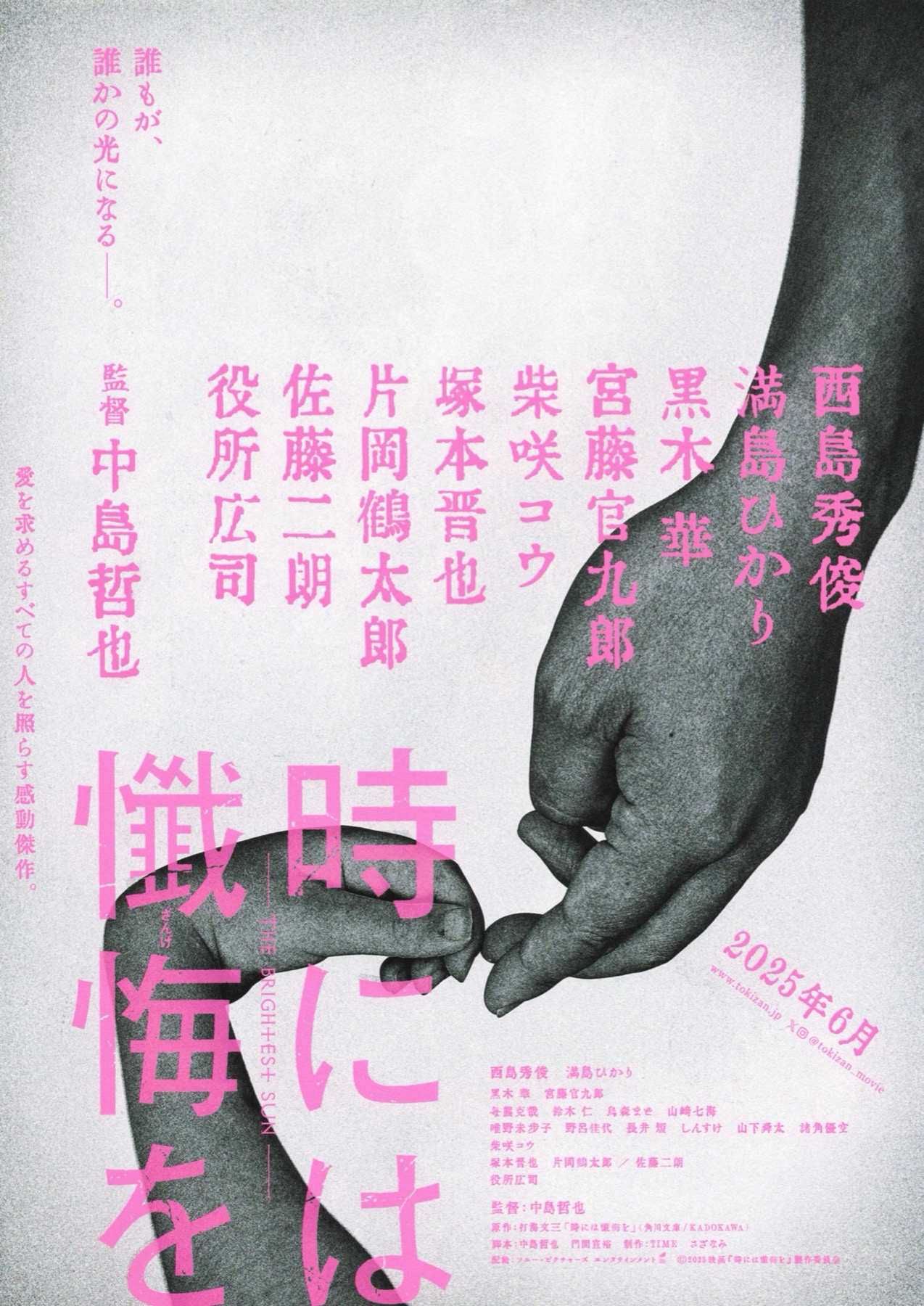
The Brightest Sun (時には懺悔を, Tetsuya Nakashima, 2025)

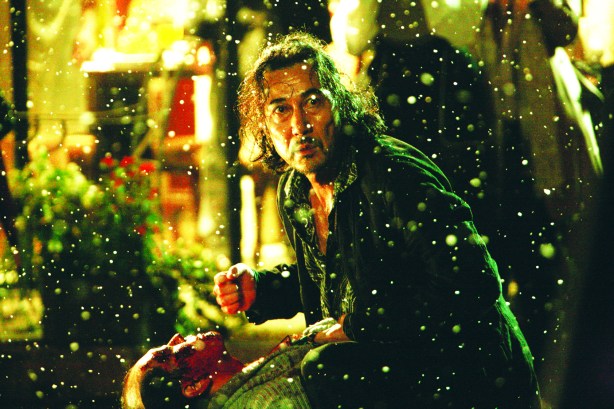
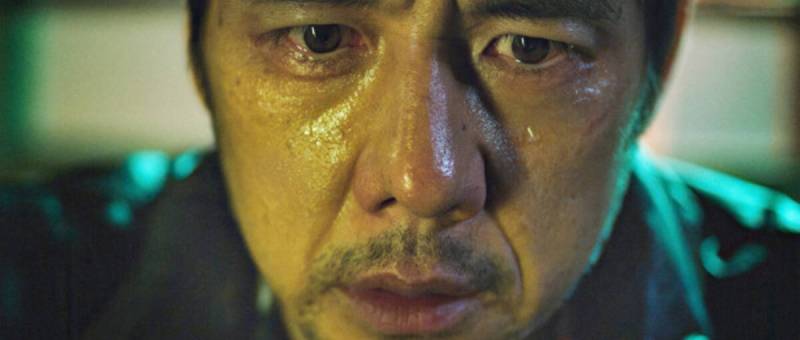
Tetsuya Nakashima’s more recent films have often dealt with more controversial subjects. His latest, Brightest Sun 時には懺悔を, Toki ni wa Zange wo), adapted from the novel by Bunzo Uchiumi and delayed from last year due to allegations made by an actress on World of Kanako that nude footage was used without her consent, is not so much a film about disability as the taboo of parental selfishness or a sense of disconnection from one’s biological children.

Nevertheless, the way the film approaches it subject matter may seem insensitive to some in that it often reduces the existence of disabled children to a burden that must be born by someone and preferably by a biological parent. Though rookie detective Satoko (Hikari Mitsushima) raises the issue of the child’s subjectivity and quality of life, others struggle to see him as anything more than an object for which someone must accept responsibility. This is doubly true for her reluctant partner, Satake (Hidetoshi Nishijima), who has taken to drink and is riddled with guilt over his ambivalent feelings regarding his own disabled son who has since passed away. His wife (Ko Shibasaki) has fallen into depression and is living in a psychiatric facility while he is seemingly incapable of caring for their teenage daughter who has become resentful of both parents, feeling as if they were unable to care for her because all their attention went to her brother while she too now feels guilty that she did so little for him and left his care entirely to her mother.

At times, the film is critical of this tendency to force women to accept full responsibility for childcare while men remain otherwise absent from the domestic space, but seems to walk this back in the closing moments. In any case, Satake’s rejection of his son is mirrored in that of Tamie’s (Haru Kuroki) husband who openly declares that it would have been better if Taku had not been born, blaming Tamie for giving birth to a disabled child. His embarrassment makes plain a lingering stigma towards disability or difference in the wider society, as if having a child he sees as imperfect reflects badly on him personally. Tamie, meanwhile, seems as if she may have been suffering from a kind of post-natal depression and is clearly affected by her husband’s resentment along with her own inability to bond with the baby. Though she witnesses her child being kidnapped, she does nothing to stop it with implication being that perhaps she is glad to be relieved of the burden. 

Satoko too has become estranged from her young daughter who struggles with the trauma of witnessing her stab her abusive husband. The implication is that this resentment is born of having seen through her mother and realised that she did not do this out of a desire to protect her, but merely out of selfish rage. The fact is that her desire to protect Shin/Taku is a displacement activity. Everyone’s actions are to one extent or another a vicarious attempt to atone for something they are otherwise unable to address in their own lives. 

This appears to have been true for the man whose murder they are supposed to be investigating, Yonemoto (Jiro Sato), who is said to have been the worst of the worst. Someone who really was “better of dead” as Satoko puts it, though we never really find out why exactly everyone had such a low opinion of him and the detective company itself does not actually seem as sleazy as one might expect. Satake suspects he may have planned to blackmail Tamie, who has since remarried and has two step-children, over the discovery of her son, but in fact he was apparently quite moved by the tender care the kidnapper provided to Shin/Taku all these years and though knowing that he should turn him in, wanted to ensure the child would continue to be well cared for. 

This is apparently where Yonemoto found the redemption centred in the Japanese title and explained in an opening title card. Satake similarly is forced to face his complicated emotions towards his son and family, trying to do the best for Shin/Taku as means of assuaging his guilt much as Satoko shifts her maternal anxiety onto Tamie. The film’s conclusion seems to undercut the idea presented by the policeman that blood ties may not be that important, having witnessed the care and devotion the kidnapper showed to a child that was not his by blood and had complex needs, in its concerted efforts to force Tamie to accept her maternity. Nevertheless, the film does its best to extend sympathy and understanding to all, suggesting that the best thing to do in this situation might have been to leave well alone, but for various reasons that won’t be possible. Opting for a noirish aesthetic, Nakashima abandons his pop aesthetics for something a little more subdued but maintains his fast-paced editing style, drip-feeding us the mystery while pondering the nature of the bonds between parents and their children.


The Brightest Sun screens as part of this year’s New York Asian Film Festival.

Trailer (no subtitles)
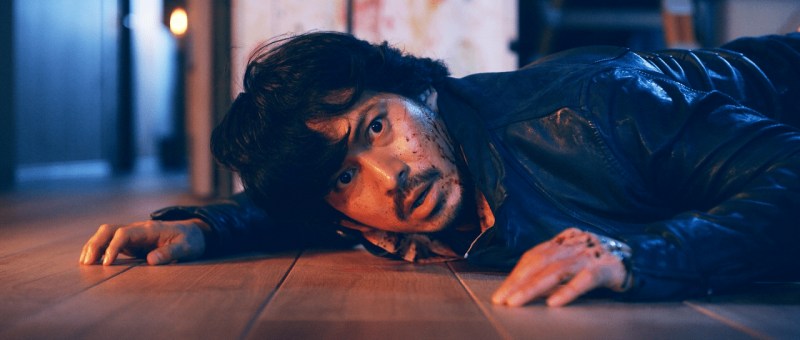
It Comes (来る, Tetsuya Nakashima, 2018)

According to a duplicitous folklorist in Tetsuya Nakashima’s anarchic horror film It Comes (来る, Kuru), monsters aren’t real. People made them up so they wouldn’t have to face an unpleasant reality. Farmers who had more children than they could feed invented a monster who came to claim their infants rather than have to live with the reality that they left them in the in the forest to die. As it turns out this monster may actually be “real”, but undoubtedly fuelled by the loneliness of a neglected child whose parents are burdened by their own particular legacy of parental toxicity. 

The mother of soon-to-be-married Hideki (Satoshi Tsumabuki) more or less says as much when he brings his fiancée to meet the family at a memorial service for his late grandfather. “Maybe it’s her upbringing” she snidely suggests, remarking that Kana (Haru Kuroki) is “a little gloomy” (which seems like an odd criticism to make of a guest at what is effectively a reenactment of a funeral). A strangely beaming Hideki keeps reassuring his fiancée that she’s “perfect” while she continues to worry about whether she’s a good fit seeing as she never knew a “real” family having been raised by a mother she regards as neglectful. But even at the couple’s wedding it’s clear that Hideki mostly ignores her, so obsessed is he with being the centre of attention. “Is it ever not about you?” one of the fed up guests eventually heckles, but it evidently never is. After setting up his “perfect” life in a “perfect” luxury flat and having a “perfect” baby, Hideki sets up a blog about being the perfect dad and barely helps with their small daughter Chisa driving Kana slowly out of her mind with his narcissistic self-obsession and thinly veiled emotional abuse. 

When the ghosts start coming, we might wonder if they reveal the truth or effect a distorted reality that leans in to otherwise unspoken dark thoughts, but Hideki really is as someone puts it all lies. When he’s persuaded to visit an “exorcist” she simply tells him to treat his wife and daughter properly to make the monster go away sending Hideki into a small moment of rage implying that he really does know what he is rather than having “forgotten” a cruel alter ego. In his charmed life, we might even wonder if he made some kind of deal with the devil which would explain his rather vacant smile though as it turns out it’s more like he’s cursed by a forgotten childhood encounter with an ancient forest spirit which hints at a deeper, older evil going all the way back to those farmers and the children they abandoned. 

Then again, it seems as if Hideki was rather spoiled as a child leaving him craving both attention and approval, while Kana is still struggling with resentment towards the mother she mainly had to parent herself and is afraid of becoming. Hideki snaps at her that she shouldn’t lose her temper with the baby because children remember, though as it turns out neither of them can really give their full attention to Chisa because of the realities of parenthood which among other things include constant anxiety and feelings of inadequacy. The parents are effectively haunted while cursed by their own toxic parental legacies that they will inevitably pass on to their daughter whether they mean to or not. 

It’s much the same for occult writer Nozaki (Junichi Okada) brought in to help solve the case with the help of his girlfriend, Makoto (Nana Komatsu), a bar hostess with psychic abilities. He once persuaded an old girlfriend to have an abortion because he was afraid of becoming attached to something he might eventually lose, and may be in a relationship with Makoto partly because she is unable to bear children for reasons connected to her frustrated love for her icy exorcist sister Kotoko (Takako Matsu) who like Nozaki wilfully distances herself from others to protect herself from the pain of loss. But as another shaman tells him, in a land of darkness where you no longer know right from wrong pain is the only truth. 

Nakashima shoots with a thinly veiled irony, vacillating between the ridiculousness of demonic spirits wreaking havoc in a well-appointed Tokyo apartment and the concession that there are indeed monsters in the world and as another infected suggests, they are we. Once again set at Christmas much like World of Kanako, Nakashima’s familial horror juxtaposes the season of goodwill with supernatural violence even as Kotoko marshals every power at her disposal from her roots in Okinawa shamanism to Buddhism and Christianity to hold back the latent evil born of a little girl’s loneliness. Meanwhile, he draws inspiration from classic J-horror and particularly the work of Nobuo Nakagawa in his green mists and swamp-based set piece in which Nozaki finds himself mired in a lake of life and death. Kotoko’s wounded eye and fear of mirrors hark back to Yotsuya Kaidan and the betrayed ghost of Oiwa, herself a victim of a man whose self-involved quest for approval cost her her life. At heart an interrogation of the parental bond the film eventually comes down on the side of family as Nozaki reclaims his frustrated paternity while a little girl dreams of nothing more sinister than a land of omurice. 


It Comes screened as part of this year’s Japan Foundation Touring Film Programme.

International Trailer (English subtitles)

Tetsuya Nakashima Interview (Via UK Anime Network)

WorldOfKanako-PYou might remember I was lucky enough to interview Tetsuya Nakashima during the London Film Festival when he was over here promoting his (really quite remarkable) The World of Kanako and the whole interview is now available for your perusal on UK Anime Network. You can read my review of the film over here too should you be so inclined – Third Window Films will releasing The World of Kanako in the UK this coming June! Check out the trailer for the film below.

The World of Kanako (渇き, Tetsuya Nakashima, 2014)

WorldOfKanako-PAnother LFF review up at UK Anime Network – The World of Kanako. I was also lucky enough to interview the director, Tatsuya Nakashima, who was actually very nice and quite chatty in contrast to some of the other interviews I’d read with him! (The consequence being I had way too many questions so it’s sort of a front loaded interview, oh well.) Interview’s already transcribed and in the system so hopefully live soon.


Tetsuya Nakashima is probably best known for his 2010 film, Confessions, which saw a school teacher’s extremely convoluted bid to avenge the death of her daughter at the hands of her students spill out to reveal a whole host of other ‘confessions’ of varying natures from its out of control teenage cast. Though Confessions had its fair share of violence and blood, this is nothing compared to the hellish darkness which fills The World of Kanako. Corrupt cops, teenage femme fatales, wife beaters, child traffickers, pimps and drug dealers make up the cast of this grim exposé of just how wrong you can be about the people most close to you. Those of you with a weak disposition had better step off here – this journey is not for the faint of heart.

Disgraced former policeman Fujishima has a whole host of problems in his life, alcoholism and possible schizophrenia being but two of them. Suddenly he gets a call from his estranged wife who’s out of her mind with worry because their teenage daughter, Kanako, has not been home in a few days. On searching her room in true detective style, he finds a stash of illegal drugs hidden in her school pencil case. This alarming discovery sends Fujishima down an increasingly dark alley way that leads only to the heartbreaking realisation that the kind and beautiful straight A student he believed his daughter to be was no more than a figment of his own imagination.

Fujishima is not a nice guy. There’s not really any other way to put it – he’s an arsehole. A self aggrandising drunk who lives inside a dream where he’s a hero fighting for justice with a loving wife and adorable little daughter waiting for him in their beautiful home. Except that his wife wants nothing to do with him, he hasn’t seen his daughter in a very long time and he’s been kicked off the force and currently works in security. Often drunk and on medication he’s never quite in the moment and therefore neither are we – thrown between flashbacks and unreliable mental images, we begin to float just as freely as Fujishima. It’s testimony to the abilities of the great Koji Yakusho that somehow we still feel a degree of sympathy and a desire to understand Fujishima’s complex psychology despite his deep seated rage which is directed both at himself and others. Deluded beyond belief, his quest to find his daughter is really a thinly veiled attempt to save himself by resurrecting the idealised image he had of her as the one decent thing he’d been able to  build in his life.

His daughter turns out to be daddy’s little girl after all, just not in the way Fujishima originally thought. She may be beautiful and clever, but never kind and her attentions are always part of some grander plan. Like the femme fatales of old and despite her young age, Kanako knows how to get what she wants but what she wants is to cause other people pain. She too lives in a dream, or perhaps a nightmare, as she says at one point falling like Alice in Wonderland through a seemingly endless black hole. There aren’t any ‘decent’ people in this world, everyone is fighting to maintain some kind of delusional self image that will allow them to believe in their own goodness – often through projected images of an idealised family.

Coupled with this intensely dark world, the film wears its influences on its sleeve including ‘60s quirky cool action films, as evidenced by its psychedelic title sequence, and 50s Noir B-movies with their down at heel antiheroes who are often lost in worlds far darker than their imaginings. It’s also true the film is extraordinarily violent in way you don’t generally see in modern times but that doesn’t mean that Nakashima’s gift for intensely beautiful set pieces is entirely absent. The teenager’s world is full of extreme bubblegum pop and purikura garishness coupled with introspective retro tunes and animated sequences which contrast heavily with the adults’ universe of bespoke kitchens and ordered realities.

Ironically, Fujishima turns out to be quite a good detective, though the clues don’t lead him to the answers he really wanted to find. Where they do lead him is ever onward down a dark and dingy rabbit hole with no end in sight. It’s a gloriously bleak tale, but told with an ironic, detached eye that seems to be finding all of this cosmic lack of clarity ever so slightly amusing. The World of Kanako almost redefines the word ‘extreme’ but it does it with so much style that even the most jaded of viewers couldn’t help raising a wry, if slightly depressed, smile.