
 Politics in South Korea has never been exactly drama-free, though recent times have seen a multitude of storms engulf its top brass running from the national to the personal. Frequent Park Chan-wook collaborator Lee Kyoung-mi’s followup to her acclaimed 2008 debut Crush and Blush, The Truth Beneath (비밀은 없다, Bimileun Eobda) begins as if it’s going fit into the ‘70s dark political thriller mould but gradually shifts gear to present both a bleak family drama and the story of one woman’s descent into the near madness of grief as she attempts to uncover the true circumstances behind her private tragedy even as it plays out on a national stage.
Married to a prominent candidate in a tightly contested electoral race, Yeon-hong (Son Ye-jin) is perfect first lady material save that she’s from an inconvenient home town. Two weeks before the big day, Yeon-hong’s daughter Min-jin (Shin Ji-hoon) does not return from school as expected which, aside from the obvious distress, is not ideal for her father as his political campaign has largely been run on Min-jin’s face and the slogan “I will protect your children”. Jong-chan (Kim Ju-hyeok), Min-jin’s ambitious father, is reluctant to report her disappearance for fear it will hurt him politically and, after all, Min-jin has “disappeared” at times before. Yeon-hong is deeply worried and unable to understand her husband’s indifference to their daughter’s mysterious absence. As time passes, Yeon-hong steps up her investigation becoming ever more suspicious of those around her.
On the surface of things, Yeon-hong had the ideal life with a wealthy, handsome husband, and a nicely turned out, studious teenage daughter. The first glimpse we catch of them is a celebration of the campaign’s launch in which Yeon-hong is furiously cooking away, a motif which is to be repeated with an entirely different sense of celebration some time later. Yet there’s something slightly artificial about the setup even in its beginning as the conversation between the men takes on a barbed, guarded quality while Min-jin lies to her mother even whilst pledging to straighten up now that the campaign is in full swing.
The more Yeon-hong investigates, the more she realises how much of the life she’d been living was careful artifice. Min-jin had gone off the rails before, though perhaps no more than any other teenage girl and given her father’s position, she’d been under a considerable amount of strain. The “friend” Min-jin had claimed to be meeting does not seem to exist and on visiting her school, Yeon-hong finds out that Min-jin had been ostracised by the other girls, even experiencing violent treatment at their hands.
Min-jin had, in fact, eventually embraced her outsider status by forming a performance art-influenced, punk-inspired rock band with a similarly “uncool” girl, Mi-ok. Mi-ok may have been one of the last people to have contact with Min-jin before her disappearance and quickly becomes a person of interest in Yeon-hong’s investigations but whatever it is she’s hiding, it’s clear that there was a whole side of Min-jin’s life that her mother was entirely unaware of.
As Yeon-hong becomes increasingly desperate, she starts entertaining the idea of conspiracy. Her first thoughts turn to her husband’s rival, Noh, an unscrupulous man who may just be capable of kidnapping Jong-chang’s poster girl in order to punch a hole through his opponent’s ill-advised slogan by demonstrating that he can’t even protect his own child, let alone anyone else’s. Then again, how far would her husband be prepared to go in the quest for power? Would his campaign team really kidnap his own daughter to cast suspicion on Noh and win public sympathy? Jong-chang’s ongoing indifference could be easily explained if he already knows the score, but the more Yeon-hong finds out the more she begins to doubt everything she thought she knew about her family.
Son Ye-jin turns in a career making performance in capturing Yeon-hong’s increasingly volatile emotional state. A once elegant political wife, Yeon-hong’s disintegration is manifested in her untidy hair and progressively relaxed dress sense as she becomes ever surer that there is something larger at play than a runaway teen. Yeon-hong defiantly rejects the entirety of her experience through her appearance at a funeral wearing a bright and colourful floral dress almost as if demanding to be seen, remembered, and addressed. No longer will she remain Jong-chang’s silent partner, Yeon-hong’s grief-stricken, maternal fury requires answers and will not rest until the whole of the truth is known.
Lee’s composition is simply stunning making frequent use of dissolves, superimpositions, and a subtle floating of time periods to underline Yeon-hong’s precarious mental state. When Yeon-hong discovers a particularly unpleasant truth, the previously balanced camera suddenly slides into a canted angle, leaving the ordered world of a political thriller behind for a new kind of noir-ish murkiness. Yeon-hong is, literally, unbalanced, wrong footed and wild as she enters into a desperate quest to understand not only the truth beneath the events which have engulfed her, but the essential truth beneath her life. Playing out almost like an inverted The World of Kanako, the Truth Beneath is a similarly bleak tale filled with coldness and duplicity, yet its distressing finale carries with it a fragmentary warmth and the slightest glimpse of hope in the embrace of a motherless child and childless mother.
Reviewed at the 2016 London Korean Film Festival.
International trailer (English subtitles)
 Review of Kitano’s Kids Return first published by
  When it comes to intelligent farce, Kenji Uchida is Japan’s undisputed master so remaking his 2012 tale of love, crime, and mistaken identity Key of Life was always going to be a tall order. Thankfully it’s one Lee Gye-byeok largely manages to meet as he skilfully relocates the tale to South Korea and swaps Uchida’s complicated farce for a more lateral double sided comedy. While not as accomplished as Uchida’s hilariously intricate original, Luck-key (럭키) manages to charm with its thoroughly romantic, comically absurd, approach.
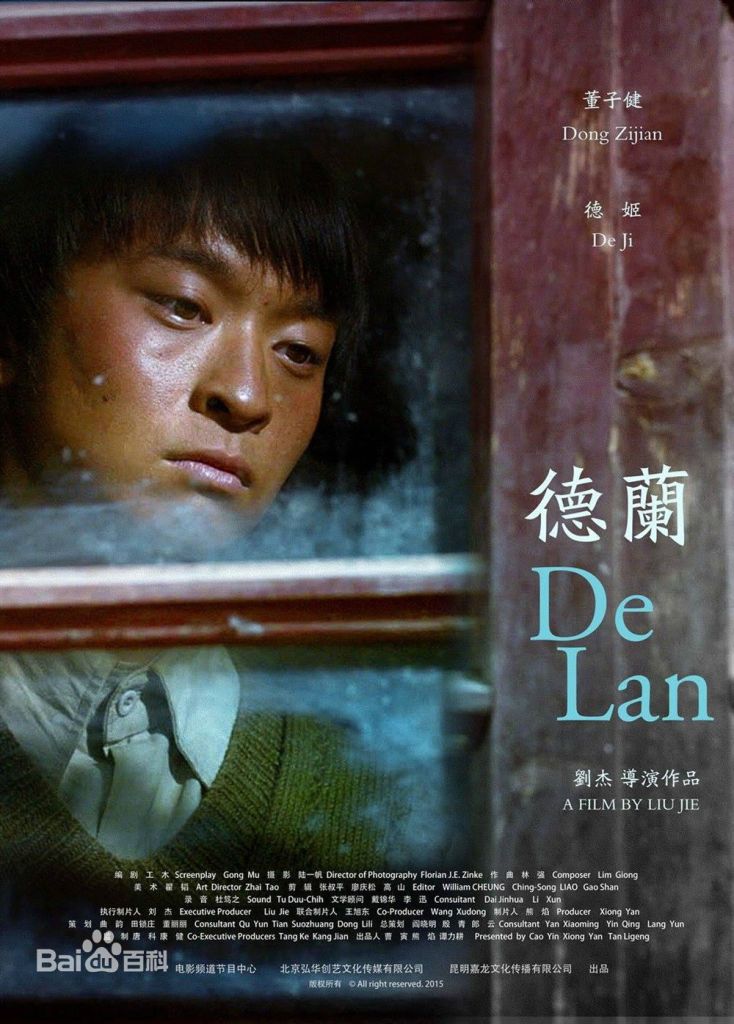 Set in 1984 in a rural Chinese backwater, De Lan (德蘭) is named not for its central character, but for his first love – a mountain woman far from home in search of a missing relative. Tasked with following De Lan (De Ji), Wang (Dong Zijian) finds himself entering a strange new world which he is incapable of fully understanding, not least because he doesn’t speak the language. A wordless love story between the tragic De Lan and the adolescent Wang is destined to end unhappily, but will affect both of them in quite profound ways.
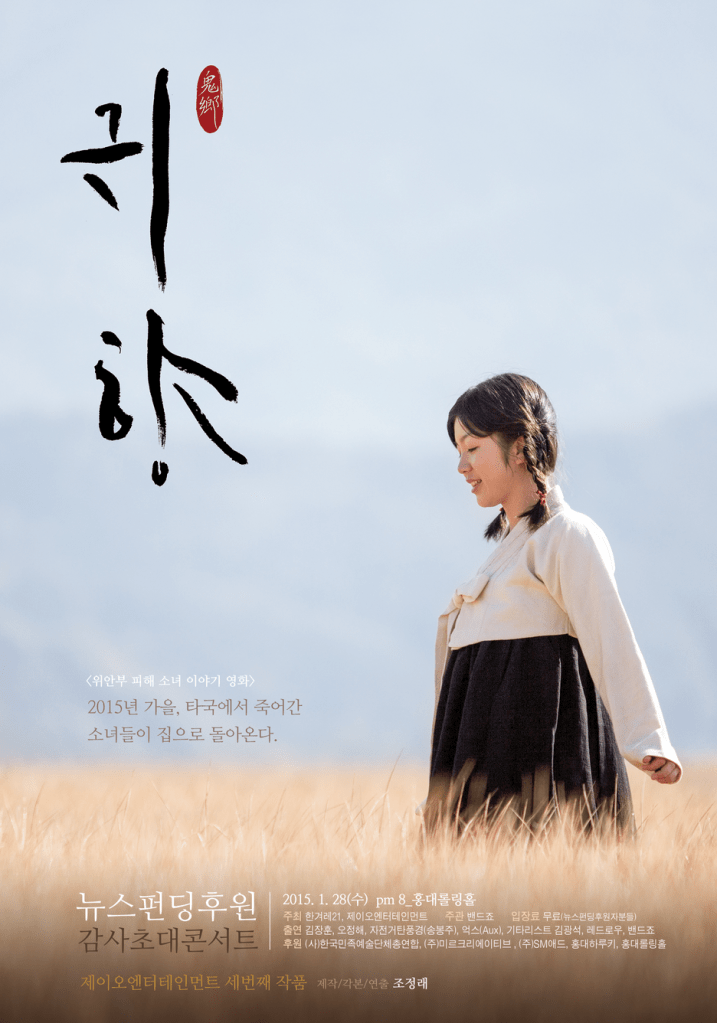 Of all the awful things that happened in the middle part of the 20th century, the trafficking, incarceration, enslavement and forced prostitution of women and girls from across Asia (including at least 65 Dutch women in what is now known as Indonesia) who were abducted for use as “comfort women” by the Japanese military remains one of the least discussed and most controversial. The issue (arguably) runs most deeply in Korea which had been experiencing a prolonged and often brutal era of colonial rule even prior to the intensification of hostilities in the early 1940s. The torment these women faced did not end with the ceasefire as entrenched social attitudes left them not only with a lifetime of physical and psychological trauma but also internalised shame which made it difficult for them to talk about their experiences even to those closest to them. Now more than ever, it is important that this story be told and the long suffering of these women, many of whom are no longer with us, is finally acknowledged.
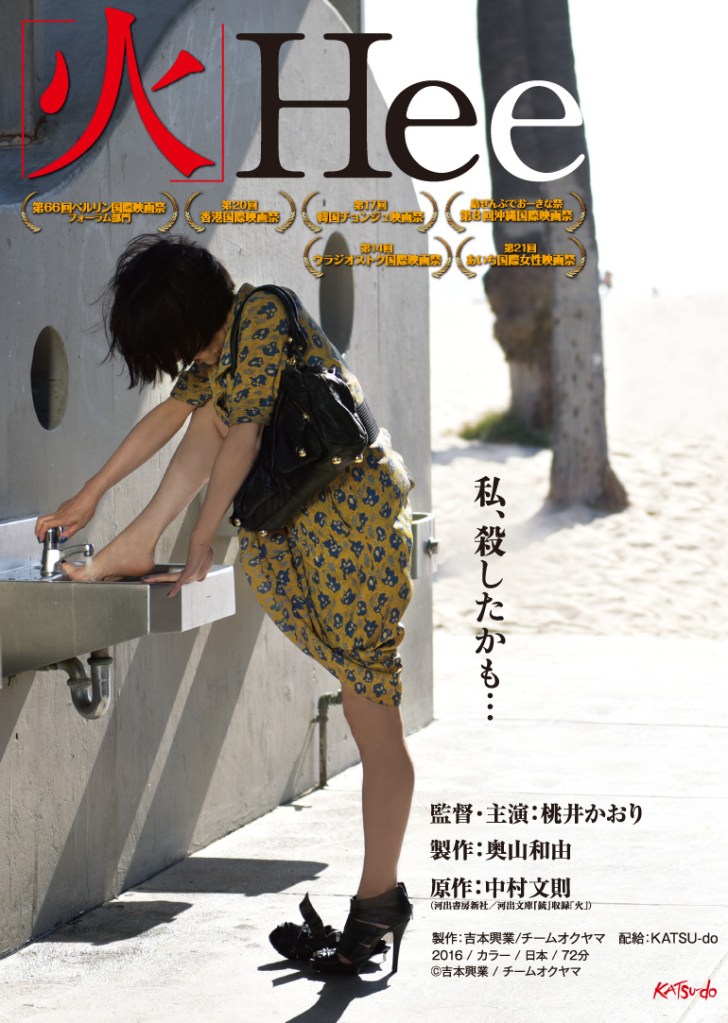 One of Japan’s best known actresses with a career spanning over forty years, Kaori Momoi is perhaps just as well known for her outspoken and refreshingly direct approach to interviews as she is for her work with such esteemed directors as Akira Kurosawa, Kon Ichikawa, Yoji Yamada, and Shohei Imamura. One of the few Japanese actors to have made a successful international career starring in Hollywood movies such as Rob Marshall’s Memoirs of a Geisha and international art house fare in Alexander Sukurov’s The Sun, Momoi currently lives in LA and is even reportedly preparing to play Scarlett Johansson’s mother in the upcoming US live action adaptation of Ghost in the Shell. It’s perhaps less surprising then that in choosing to adapt a short story by one of Japan’s best young writers, Fuminori Nakamura, Momoi has chosen to shift the story to LA whilst maintaining its Japanese characters.
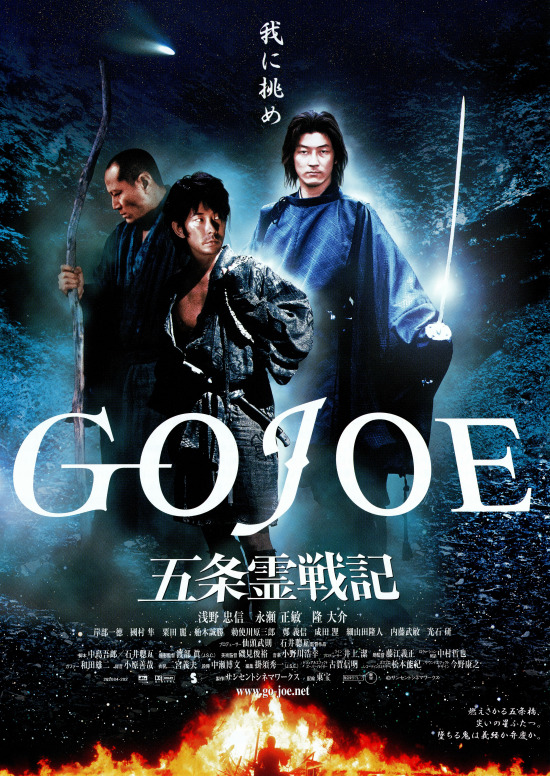 Not your mama’s jidaigeki – the punk messiah who brought us such landmarks of energetic, surreal filmmaking as Crazy Family and Burst City casts himself back to the Middle Ages for an experimental take on the samurai genre. In Gojoe (五条霊戦記, Gojo reisenki), Sogo Ishii remains a radical even within this often most conservative of genres through reinterpreting one of the best loved Japanese historical legends – the battle at Kyoto’s Gojoe Bridge . Far from the firm friends of the legends, this Benkei and this Shanao (Yoshitsune in waiting) are mortal enemies, bound to each other by cosmic fate but locked in combat.
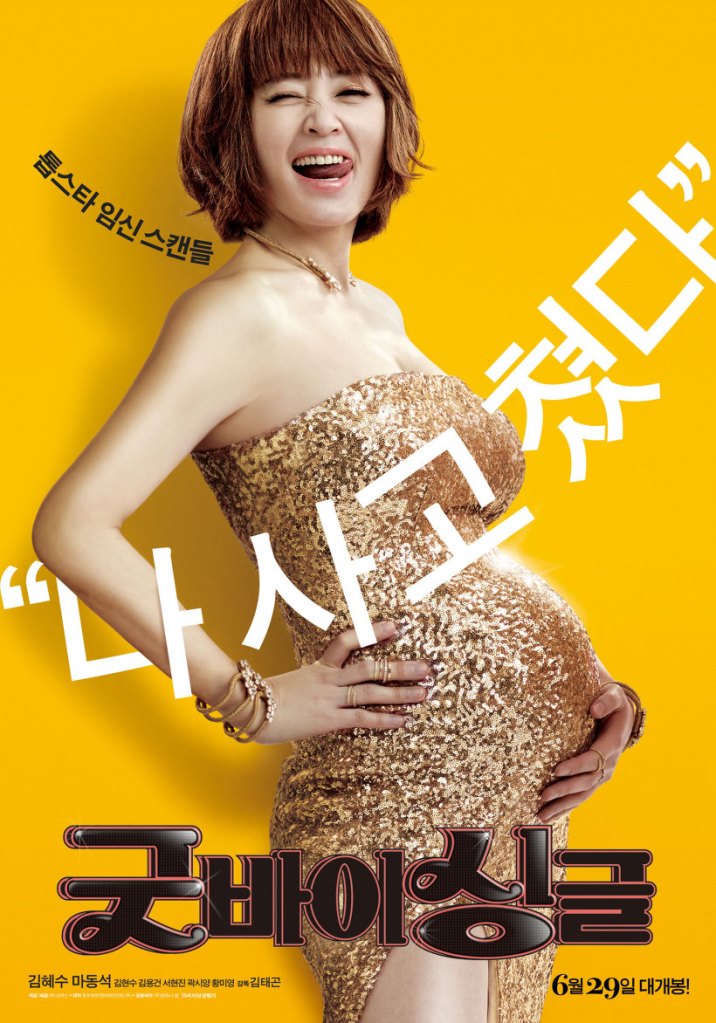 There are three kinds of actors – those who wait for roles, those who choose roles, and those who make roles for themselves. Ageing actress Go Ju-yeon (Kim Hye-soo) claims to be the third type, but at any rate she’s currently between gigs and facing professional scandals and personal crises from each and every direction. An unusual family drama, Familyhood (굿바이 싱글, Gotbai Singkeul, AKA Goodbye Single) is the coming of age story of a middle aged woman finally forced into adulthood through an unlikely friendship with a pregnant teenage girl.
 Kim Jong-kwan’s award winning unexpected indie box office hit has been given the rather odd English title of Worst Woman (최악의 하루, Choeakui Haru) in contrast with the original Korean which simply means “The Worst Day”. In fact, the film is about two people – an aspiring Korean actress with problems in her personal life, and a Japanese writer visiting for the launch of the Korean translation of his novel, each of whom is indeed having an exceptionally unlucky day. Part walking and talking, part split focus romantic comedy, Worst Woman is a polished piece of indie filmmaking anchored by quality performances and an interesting approach to its material.
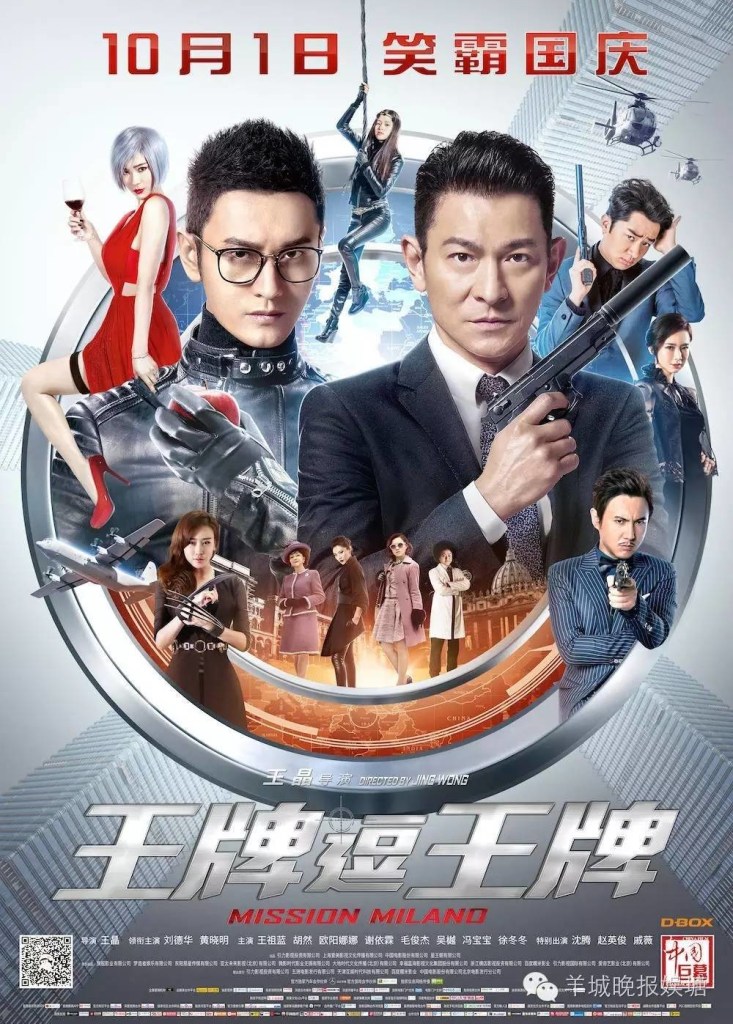 Despite its title, Mission Milano (王牌逗王牌, Wángpái Dòu Wángpái) spends relatively little time in the Northern Italian city and otherwise bounces back and forth over several worldwide locations as bumbling Interpol agent Sampan Hung (Andy Lau) chases down a gang of international crooks trying to harness a new, potentially world changing technology. Inspired by the classic spy parodies of old, Wong Jing’s latest effort proves another tiresome attempt at the comedy caper as its nonsensical plot and overplayed broad humour resolutely fail to capture attention.
 Windows on Worlds