 Naruse’s final silent movie coincided with his last film made at Shochiku where his down to earth artistry failed to earn him the kind of acclaim that the big hitters like Ozu found with studio head Shiro Kido. Street Without End (限りなき舗道, Kagirinaki Hodo) was a project no one wanted. Adapted from a popular newspaper serial about the life of a modern tea girl in contemporary Tokyo, it smacked a little of low rent melodrama but after being given the firm promise that after churning out this populist piece he could have free reign on his next project, Naruse accepted the compromise. Unfortunately, the agreement was not honoured and Naruse hightailed it to Photo Chemical Laboratories (later Toho) where he spent the next thirty years.
Although Street Without End is a conventional melodrama in many senses, it’s also quite a complex one playing with multilayered dualities and symbolic devices. After beginning with some brief pillow shots of the real city streets, we meet the stars of the show, Sugiko and Kesako, who are both waitresses in a local tea room. Whilst walking together, Sugiko is presented with an offer from a movie studio currently looking for new talent but isn’t really convinced, though the money would come in handy for her younger brother’s college tuition. A little while later she gets another offer from her boyfriend, Harada, who wants to get married as his parents are trying to pressure him into an arranged marriage at home. Sugiko agrees but is knocked over by a car on her way to meet him with the result that Harada thinks she’s changed her mind and goes home alone. Slowly she grows closer to the man who knocked her over, Yamanouchi, and eventually marries him instead but quickly finds herself out of place in his upperclass world.
Kesako, by contrast, ends up picking up on Sugiko’s job offer and joining the studio herself. She takes her unsuccessful artist boyfriend with her though their relationship suffers as she falls in with the studio crowd. Both women get what they thought they wanted, only to discover it to be not what they wanted at all.
Sugiko’s story is the main thrust of the narrative as she marries up through misfortune after Yamanouchi carelessly runs her over. He himself plays the part of the sensitive nobleman who’s bullied by his more conservative mother and sister who’ve picked out a girl exactly like them for him to marry. In a gesture that’s probably born out of rebellion rather than love, Yamanouchi brings Sugiko home as his wife but then leaves her to the mercy of the people he most feared himself. An ordinary working class woman, Sugiko quickly angers her mother in law by treating the servants like actual people and not having the poise expected of a Yamanouchi wife. Yamanouchi is too soft to defend himself, let alone his choice of wife, and so Sugiko’s life eventually becomes untenable sending Yamanouchi off the rails with it. Naruse includes a less than subtle intertitle here which states “EVEN TODAY, FEUDAL NOTIONS OF FAMILY CRUSH THE PURE LOVE OF YOUNG PEOPLE IN JAPAN”, which makes his position plain but seems a little strong for the anti-romantic nature of the relationship between the rebound Sugiko and the “getting back at mother” Yamanouchi.
Both Yamanouchi and Harada were interested in Sugiko as shield against an unwanted arranged marriage. Sugiko was unconvinced by both offers but her decision to marry Yamanouchi is one which ultimately went against her unconventional nature (as borne out by her unconventional decision to leave it). Sugiko and Kesako appear as mirrors of each other as Kesako nabs Sugiko’s job offer and starts to climb the studio ladder. Just as Sugiko finds the life of an upperclass housewife is not all she thought it would be, so Kesako begins to find the acting profession, which she’d previously dreamed of, equally unfulfilling. By the time we loop round the end, we arrive at the beginning again with both ladies in pretty much the same space they were in before though perhaps a little clearer about what it is they want from life. The final scene is one more of acceptance and self realisation than it is about moving forward, but then there’s a curious reappearance of a familiar face on a passing bus. It remains to be seen if this is hope leaving town or merely circling.
Street Without End is the fifth and final film included in Criterion’s Eclipse Series 26: Silent Naruse box set.
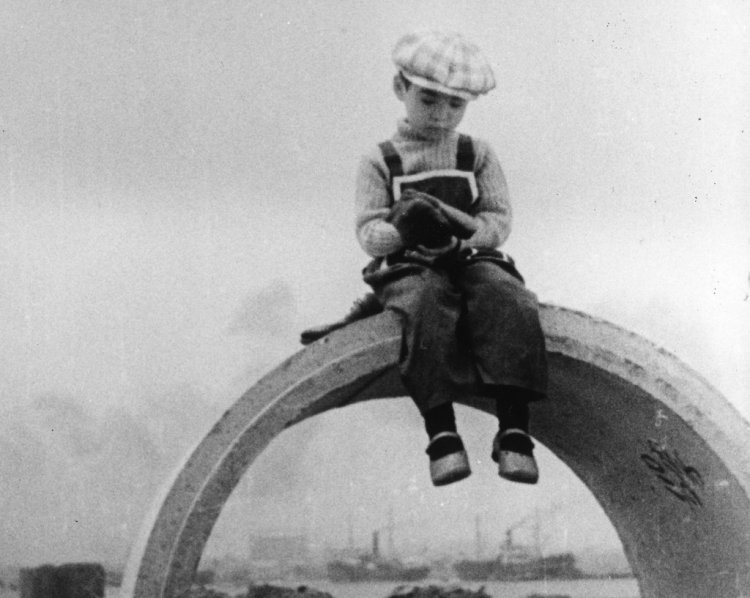 Following on from
 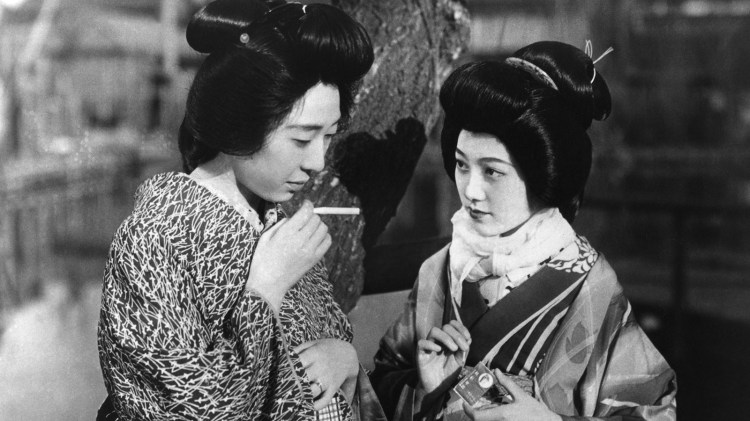 Naruse’s critical breakthrough came in 1933 with the intriguingly titled Apart From You (君と別れて, Kimi to Wakarete) which made it into the top ten list of the prestigious film magazine Kinema Junpo at the end of the year. The themes are undoubtedly familiar and would come dominate much of Naruse’s later output as he sets out to detail the lives of two ordinary geisha and their struggles with their often unpleasant line of work, society at large, and with their own families.
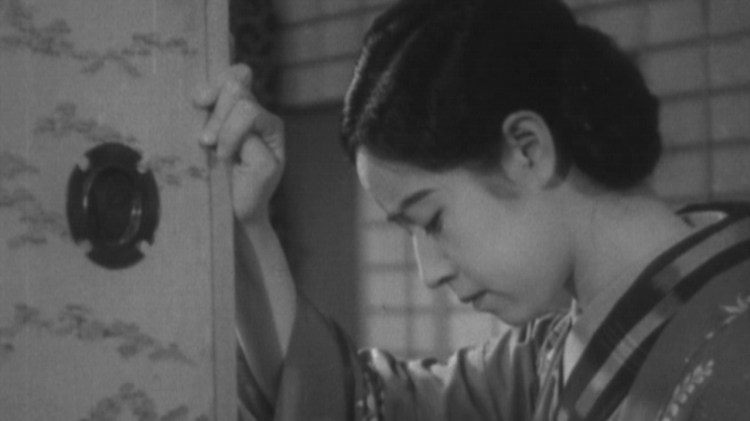 Naruse apparently directed six other films in-between
 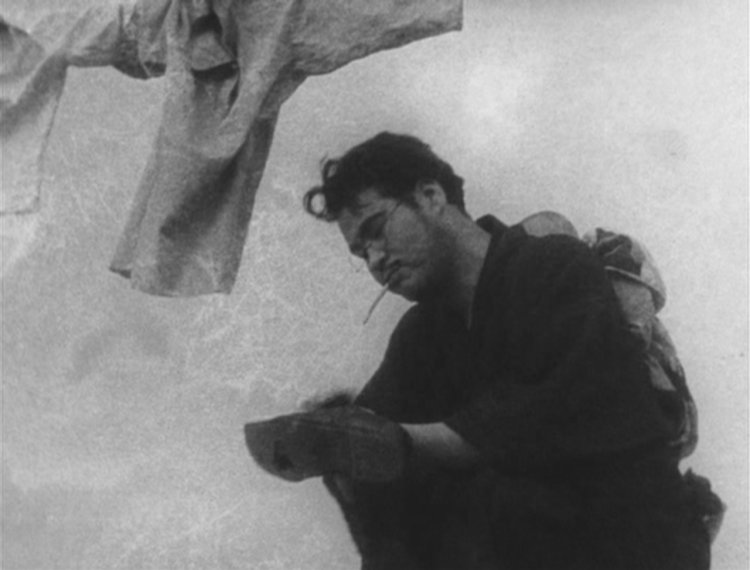 Mikio Naruse is often remembered for his female focussed stories of ordinary women trying to do they best they can in often difficult circumstances, but the earliest extant example of his work (actually his ninth film), Flunky, Work Hard (腰弁頑張れ, Koshiben Ganbare), is the sometimes comic but ultimately poignant tale of a lowly insurance salesman struggling to get ahead in depression era Japan.
 Hiroshi Shimizu made over 160 films during his relatively short career but though many of them are hugely influential critically acclaimed movies, his name has never quite reached the levels of international renown acheived by his contemporaries Ozu, Naruse, or Mizoguchi. Early silent effort Japanese Girls at the Harbor (港の日本娘, Minato no Nihon Musume) displays his trademark interest in the lives of everyday people but also demonstrates a directing style and international interest that were each way ahead of their time.

 Windows on Worlds