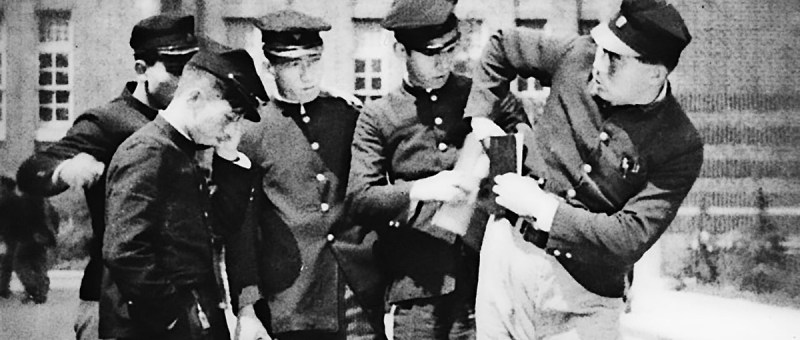
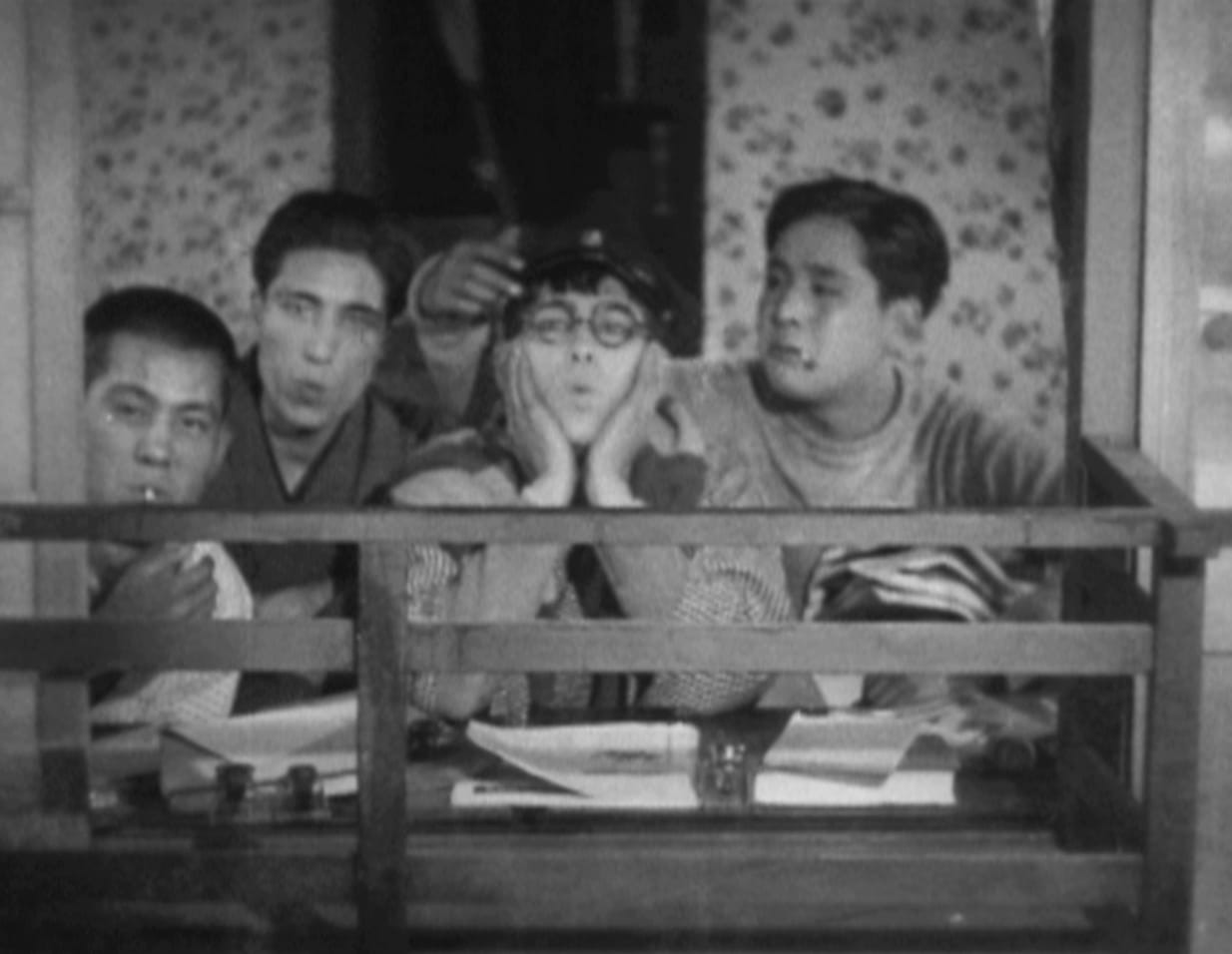
I Flunked, But… (落第はしたけれど, Yasujiro Ozu, 1930)

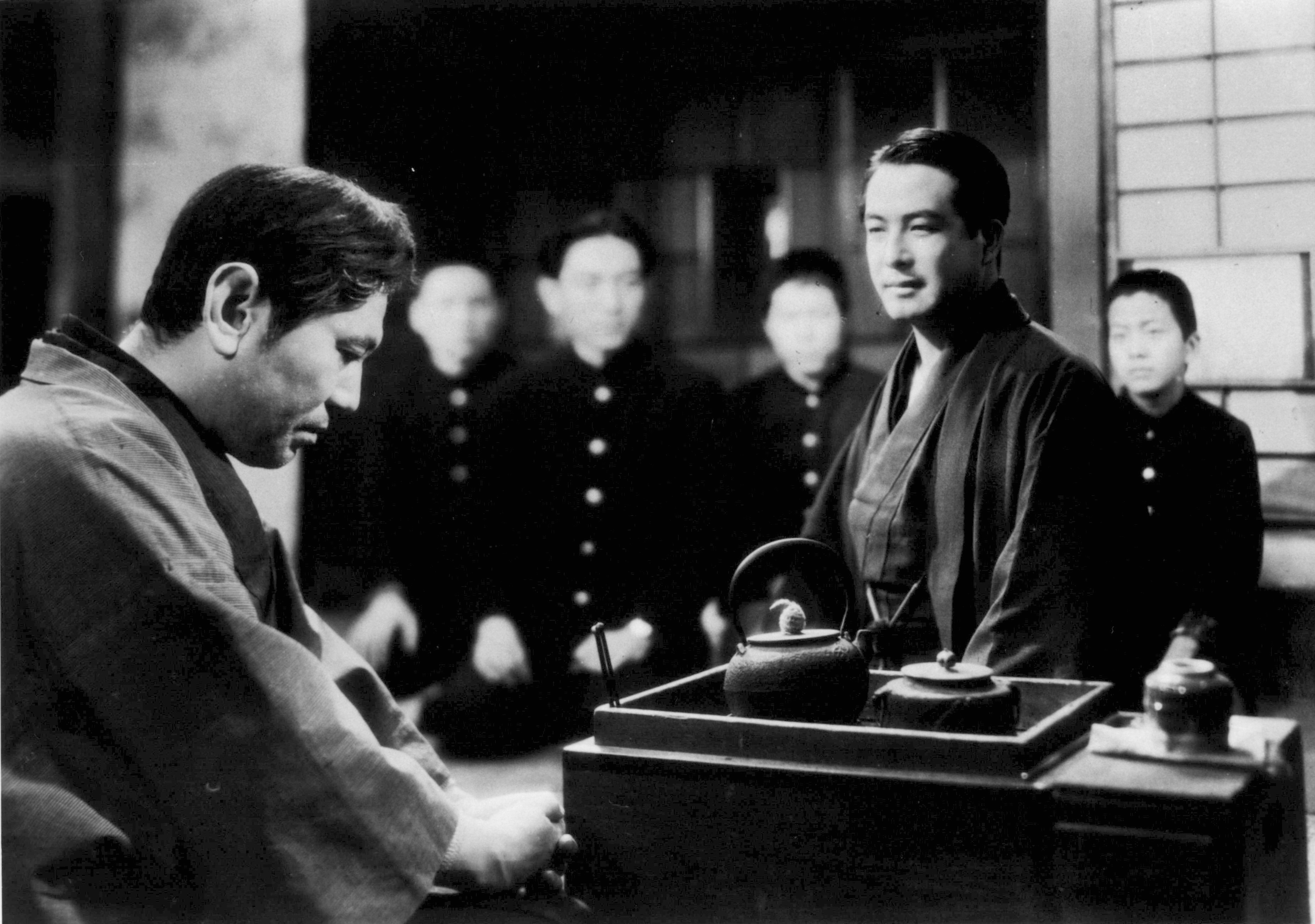
Yasujiro Ozu never went to college. By all accounts a poor student and rebellious young man, he took an early teaching position in a remote rural area precisely because it required no degree. Unsurprisingly, he didn’t last long in the job and eventually returned to Tokyo,  joining Shochiku as an assistant cameraman. Nevertheless, in his early career at the studio he found himself contributing to their popular brand of college comedies of which I Flunked But… (落第はしたけれど, Rakudai wa shitakeredo) is his third, directed when he was 26 years of age. 

Drawing inspiration from Hollywood campus movies and in particular Harold Lloyd’s The Freshman as we can see from the various US state college pennants seen hanging throughout the film, I Flunked But… follows a group of young men preparing for their final exams. They are all excited about the idea of graduating into the adult world as symbolised by the neat business suits they have each bought in preparation for their new lives and few seem burdened by anxiety about a potentially precarious future as members of a generation stepping into a world of reduced economic potential and growing political instability. 

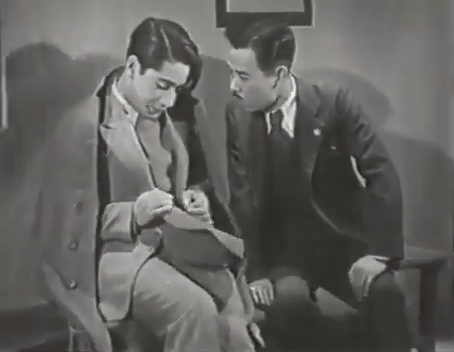
In fact they live the last days of their student lives to the full, greeting each other with silly dances, playing turntable roulette to decide who pays for dinner, and spending more time figuring out how to cheat on the exam than studying to pass it. There may be truth in the idea that passing exams is all about the knack, but our boys are overly invested in kicking back against the system rather than playing by its rules to get ahead. As the film opens, two students are arguing because one supposedly betrayed the other in promising to help him cheat and then not following through. Takahashi (Tatsuo Saito) is supposed to help his friends by wearing a shirt which has a cheat sheet scrawled on the back, but he oversleeps and the landlady swipes it for the laundryman. The others manage to scrape through on their own while Takahashi alone fails. 

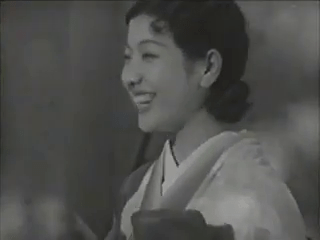
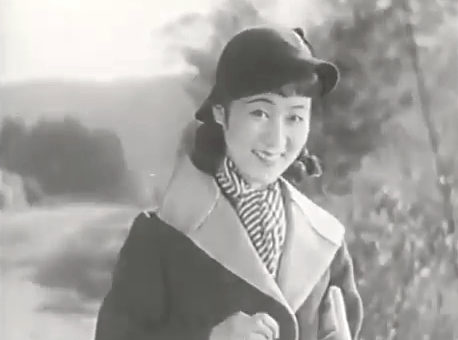
The remainder of the film becomes a more melancholy mediation on the changing fortunes of Takahashi and his friends. Overcome with shame and disappointment, Takahashi is left out of the others’ cheerful graduation celebrations, left with the choice to drop out or repeat the year (amusingly, one of his perpetual failure friends appears to be much older, even middle-aged, and one wonders if he is a serial repeater). The suit he had bought is now a grim reminder of his defeated hopes, as is the tie his girlfriend (Kinuyo Tanaka) who works in the bakery next-door was making for him as a graduation present. He now feels unworthy of wearing it, a fraudulent human trapped in adolescence by embarrassing failure. The girlfriend, however, already knows all about it and reassures him that even if he has not graduated, he still has the right to wear his graduation suit. 

As time moves on, however, Takahashi realises that he might actually be the more fortunate. Still wearing his student uniform, he lives a carefree student life and is still receiving money for his upkeep which makes him the rich man among his dorm mates who are still living in the same rooms with him and have all had to pawn their graduation suits because there are no jobs for them to go to. “I heard it’s hard to get a job these days”, the girlfriend laments, and it’s clear the depression continues to bite. The college world was safe and easy. Takahashi carries on goofing off, silly dances and cheerleading the order of the day. In this sense at least, a perpetual childhood might not be so bad a thing. The graduates wistfully play with a student’s cap, wishing they could return to their carefree college days rather than stuck in their old dorm receiving nothing but rejection letters and hand outs from a slightly smug Takahashi. “If I’d known it would be like this I wouldn’t have graduated so hastefully” they lament. Maybe flunking is actually the smart choice, riding out economic instability until something better comes along. You might as well enjoy yourself while you can, Ozu seems to say, you’ll never have it so good again.
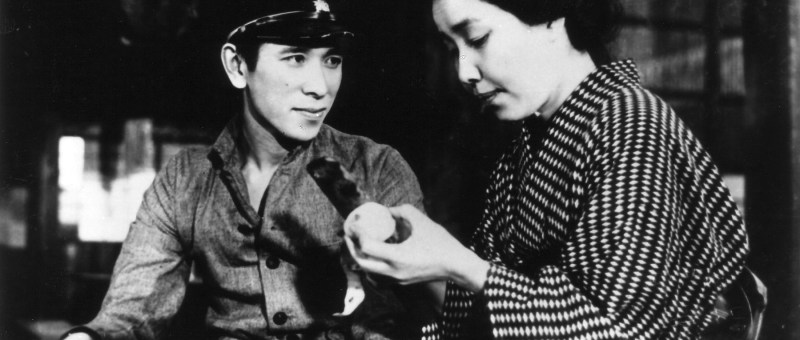
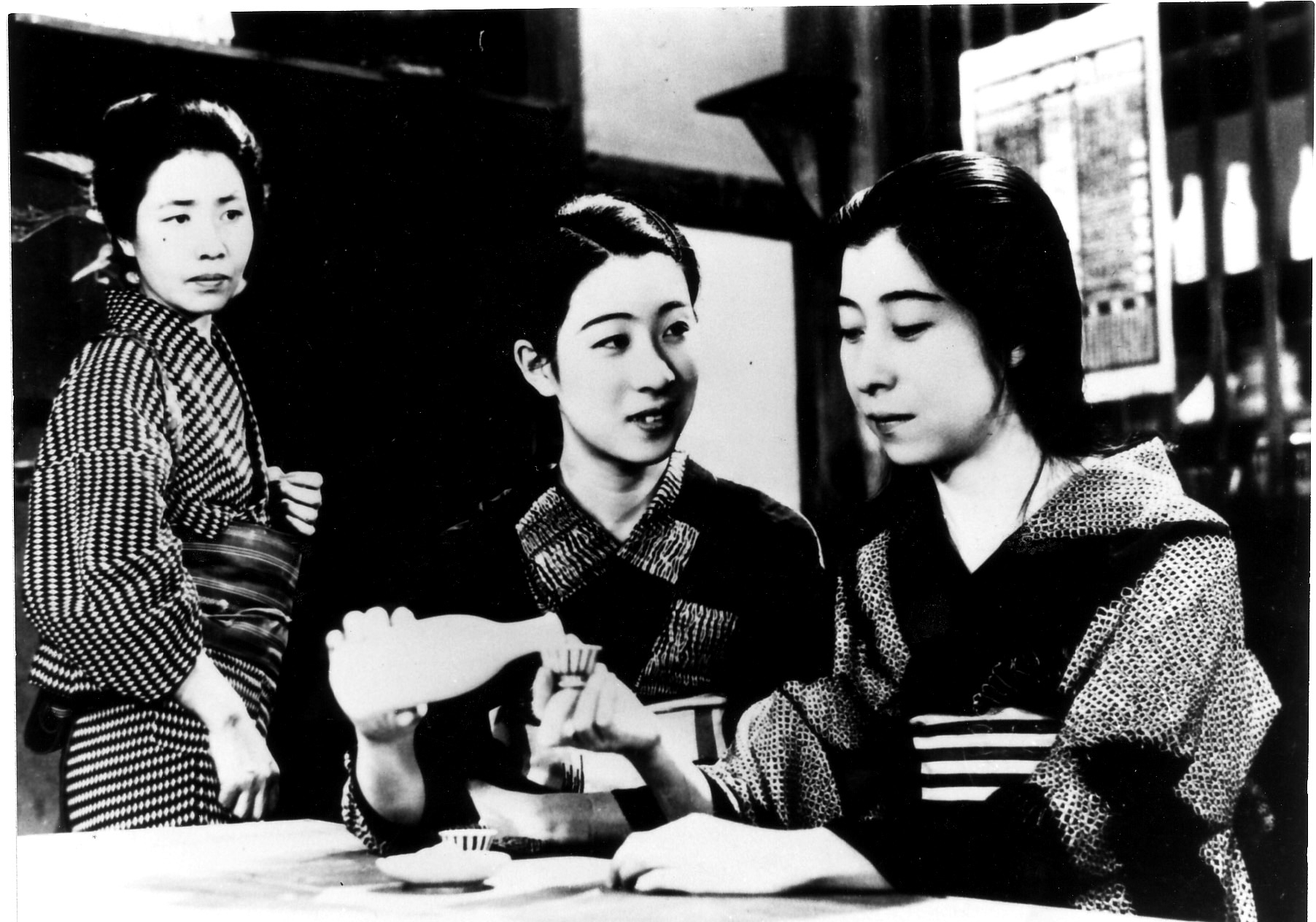
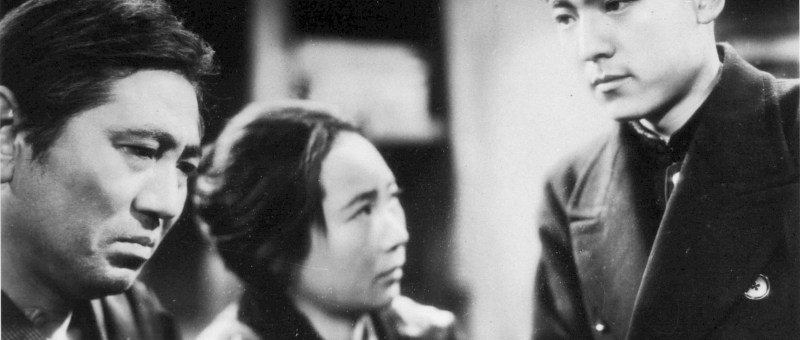
A Story of Floating Weeds (浮草物語, Yasujiro Ozu, 1934)

Japanese cinema is filled with tales of maternal self-sacrifice which is more often than not rejected by ungrateful children unable to understand the depths of a mother’s love. More contrarian than most would have it, Yasujiro Ozu’s abiding interest is with fathers and particularly with those who are flawed but loving. 1934’s A Story of Floating Weeds (浮草物語, Ukigusa Monogatari) which he later remade in colour 25 years later, is a tale of one such father and another of his “Kihachi” movies, but situates itself in a liminal space defined by Kihachi’s precarious position as a member of a virtual underclass of travelling players. 

Kichachi’s (Takeshi Sakamoto) troupe is returning to a small town after four years where they hope to stay a year. Unbeknownst to the other members, Kihachi has an ulterior motive in that the town is home to his former lover Otsune (Choko Iida) and his illegitimate son, Shinkichi (Koji Mitsui) who thinks that Kichachi is just a family friend and that his father was a civil servant who has now passed away. As is usual in travelling player stories, the troupe is in crisis and on the verge of disbanding, so Kihachi’s frequent absences do not go unnoticed, particularly by his current mistress Otaka (Rieko Yagumo) who has a petty and vindictive streak. When one of the veteran actors spills the beans, she marches straight over to Otsune’s to make trouble but Kihachi, sick of her possessive behaviour, breaks up with her. To take revenge, she bribes another actress, Otoki (Yoshiko Tsubouchi), to seduce Shinkichi. 

The central issue is one of Kihachi’s frustrated paternity. It’s clear that he couldn’t be physically present for his family but has always done his best to support them financially while Otsune runs a small restaurant. They are not married and their present relationship seems to be more one of companionship than romance but whatever label they might put on it they get along well and both deeply care for their son. While in town, Kihachi busies himself with fatherly activities, playing board games with Shinkichi or fishing in the local stream. It pains him that his visit may be short and that Shinkichi, who seems to like him a great deal, has no idea he is his son. 

That is largely because Kihachi’s only hope in life is that he spare Shinkichi from the depressing life of a travelling player. He has been paying for his education and Shinkichi is now almost a man, apparently a post-graduate student at an agricultural school. When he expresses an interest in coming to see the show, Kihachi seems panicked and tells him the kinds of shows he does are not for people like him and that he should stay home and study. Shinkichi laughs at the fatherly advice but little knows that it comes from a place of shame. Travelling players are regarded as an underclass. They are often barred from inns and not considered polite company.

“My son belongs to a world better than yours,” he shouts to Otaka during a heated, rain-drenched argument during which she threatens to expose him. Otoki, the other actress, was originally reluctant to enact Otaka’s plan, but later found herself falling for Shinkichi. Perhaps a young man bedding a travelling actress isn’t a grand shame or much of a problem for him, at least not so much as to provoke Kichahi’s despair in exclaiming he has caused his son’s ruin, but destroys his father’s hopes of keeping him out of that untouchable world for which he had sacrificed so much including his paternal love. 

Yet like the ungrateful child of a hahamono, on learning the truth Shinkichi rejects his sacrifice and feels only his abandonment, refusing to believe that any father could be so “selfish”. The rejection comes at a low point, immediately after Kihachi loses the acting troupe and considers returning to Otsune for a settled, ordinary life as a husband and father. Otsune scolds her son, reminding him that all he wanted was to give Shinkichi the settled, ordinary life that he could never live as a travelling player. It seems this life will always elude him, he is barred from his own home and must forever wander. Being a good father means he must keep far away from his son, a floating weed with no place to call home.


The Whole Family Works (はたらく一家, Mikio Naruse, 1939)

A young man becomes fed up with the constraints placed on his life and asks for the opportunity to improve his circumstances, but knows that to do so will leave his family at a disadvantage, at least in the short term. Is his request selfish, or are his parents selfish for exploiting the labour of their children and thereby impeding their progress in the world? As in many of Naruse’s films, the great enemy is poverty, but as the wise teacher Mr Washio says, the solution would be easy if Ishimura had a drinking problem or Kiichi were lazy but the situation is too complicated for such a simple adjudication.

Ishimura (Musei Tokugawa) has a job, but his wages are low and he has nine children to support along with elderly parents who are also still working. Fourth son Eisaku (Takeshi Hirata) tells his mother (Noriko Honma) that he doesn’t want to go to the factory and would like to carry on to middle school with his friends, but she tells him he’s being selfish and childish and that all his brothers began working after primary school. Perhaps because the burden disproportionally falls on her, it’s the mother who is most acutely obsessed with money and the most controlling of her children. Ishimura is more of a soft touch and genuinely sorry that he can’t really agree to oldest son Kiichi’s (Akira Ubukata) request to take five years off to study because the family can’t survive without his wages.

But Kiichi’s problem is that he’s trapped in a dead-end job. There’s no possibility of advancement and his wages won’t ever change. He could work there 50 years and never be able to support a family of his own. His idea is that he wants to become an electrician which he believes will be a steady occupation that will pay enough to allow him to take care of his parents when they’re old and also get married. He thinks if he doesn’t do something now, he’ll be trapped in this life forever and never escape his parents’ yoke. Nevertheless, he worries about whether his desire is “filial” or not and feels a tremendous amount of guilt and frustration that sends him to drink.

Ishimura also knows that if he agrees to Kiichi’s request, he’ll have to say yes to the others too. All the boys have dreams of their own with young Noboru (Seikichi Minami) even hoping to become a lawyer, while Genji (Kaoru Ito) and his younger brother Kokichi (Seiichiro Bando) are intent on joining the armed forces which is perhaps a nod to the rising militarism of the age. Scenes of imagined warfare leave a less aspirational vision of the military, though there hints of it throughout the boys’ lives through magazines and children’s literature such as the book Mr Washio gives to Eisaku. The household becomes a kind of microcosm of a totalitarian regime that controls the boys’ lives and futures, causing them to form a conspiratorial faction talking over their mutual dissatisfaction in the coffeehouse opposite run by Genji’s old school friend Mitsuko (Sumie Tsubaki) who has a crush on Kiichi. Eisaku has been patiently saving his allowance, but his mother finds out and so he blows the whole lot taking his brothers out for dinner rather than allow her to “borrow” any more of his money to which she feels herself entitled.

It’s the entitlement that’s the point. The parents expect the children to work without giving them any choice and thereby deny them the opportunity of working towards their own futures. Kiichi sees the big picture and wants to improve his circumstances, but does so because he wants to work for his family. He doesn’t intend to abandon them and chase his own success, he just wants to be able to provide for himself and at least have enough to eat. Mr Washio says he won’t tell him what to do, but also that there’s no rush, which seems like an intrusion from the censor’s board to reinforce the importance of filial piety over individualistic desire but also doesn’t deny that Kiichi has a point and as a grown man a right to freedom and independence. Nevertheless, there’s a subversive tension in the confrontation scene as the family sits in silence as the clock ticks away on the wall and the rain beats down outside. The brothers roll around in exuberance upstairs, while their defeated parents can only look up in resignation to their broken authority as the children’s revolution begins to take hold.


The Whole Family Works screened at Metrograph as part of Mikio Naruse: The World Betrays Us – Part II.

Morning’s Tree-Lined Street (朝の並木路, Mikio Naruse, 1936)

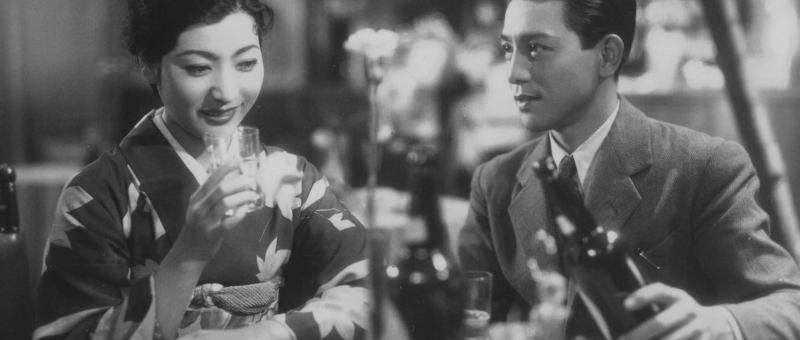
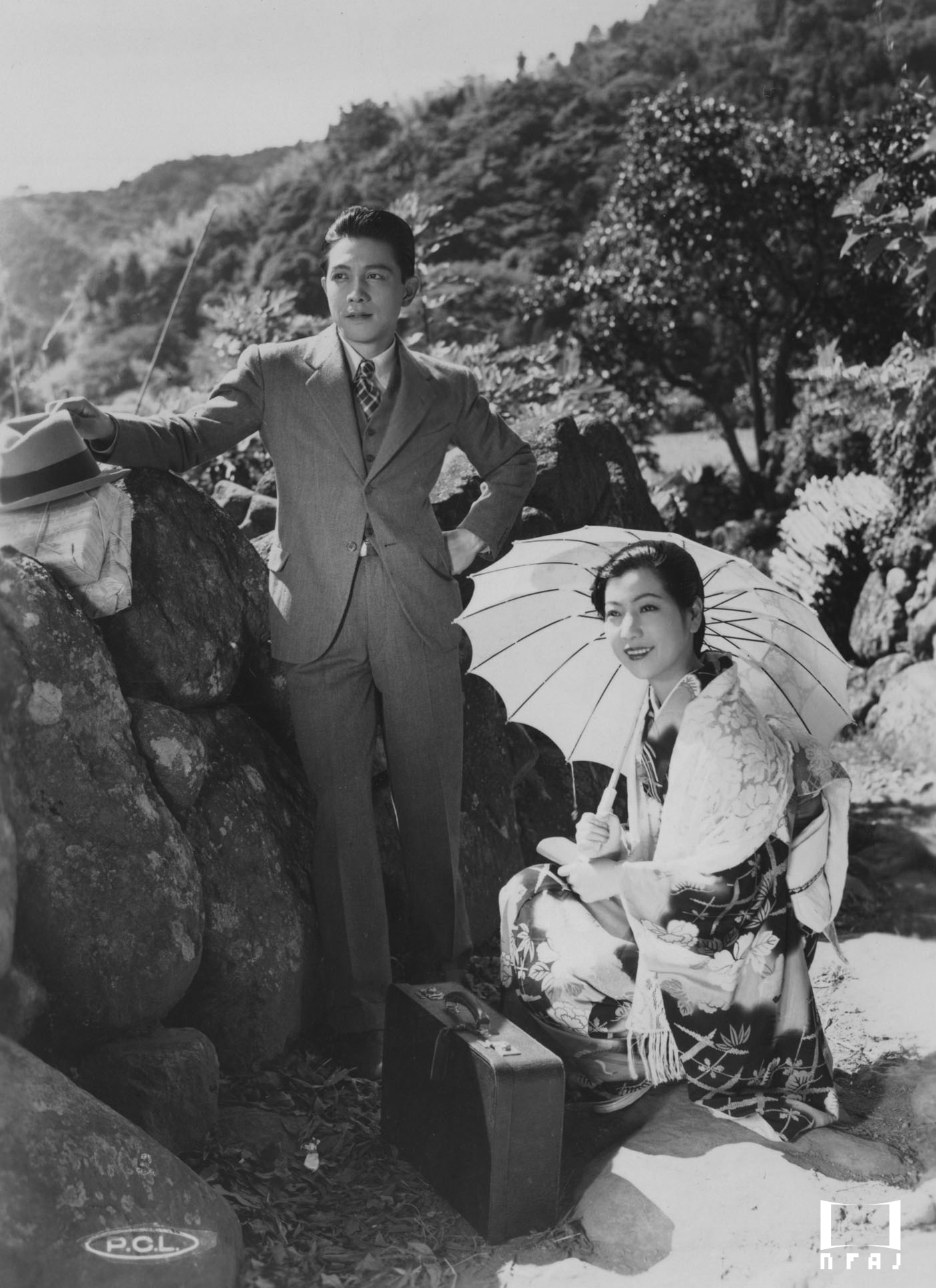
A country girl comes to the city in search of a more glamorous life but largely finds only disillusionment and disappointment in Naruse’s 1936 drama Morning’s Tree-lined Street (朝の並木路, Ashita no Namikimichi). Naruse depicts Chiyo’s (Sachiko Chiba) spiritual journey literally as she takes the bus from her rural hometown all wide-eyed wonder and then arrives in the city to be bothered by a homeless man and then walk into a less salubrious area of the city with only her friend’s address to go on. 

In her hometown, everyone thinks Hisako (Ranko Akagi) works in a big office in Marunouchi, but in reality she’s now working in a hostess bar under the name “Shigeko.” Nevertheless, despite a degree of shame in her circumstances, Hisako doesn’t reject Chiyo and isn’t angry that she’s come and found out her secret. She talks her landlady, Okada, into letting her stay but discourages her from working in the bar. The current economic depression is evident in the fact that the bar isn’t doing so well and never has many customers, yet the “help wanted’ sign keeps going up and down outside. There’s even a running gag that the cook makes a permanent version so they won’t waste so much paper, only he spells “hostess” wrong, so they have to take it down anyway. 

The help wanted sign is a harbinger of doom for Chiyo who, it seems, is being drawn towards this kind of life. As Hisako had told her, it’s impossible for a country girl to find a job when there are already so many “desperate” people in Tokyo, and at the grand old age of 22 Chiyo is worried that she’s simply too old to find employment. By the standards of the time, she may be considered on the older side not to be married, and indeed Hisako tells her she’d be better off to go home and find a husband, but Chiyo wants both more and to find a grand romance. She romanticises an idea of poverty believing that she could be happy with a man she truly loved even if they had no money. Hisako doesn’t disillusion her, but may be inwardly rolling her eyes at her naivety. She has a boyfriend already, but he’s no good. He keeps turning up and pestering her for money which might be one reason Hisako can’t escape the life of a bar girl.

It is indeed money that gets in the way everyone’s relationships. Hisako reads in the paper about a salaryman who embezzled money to spend at a hostess bar and then died in a double suicide with one of the women who worked there. The dark fantasy the bar represents echoes the wider despair in the society coloured by economic depression and broken dreams in which the fantasy version of Ogawa admits that his life was without hope or joy. Chiyo gets close to a nice young man who comes into the bar who tries but fails to find her a legit job in an office in attempt to save her from becoming a bar girl. In the end, she gives in and becomes one. Ogawa says he thinks no less of her, but begins coming to the bar more often and appears to be spending beyond his means even while Chiyo warns him not to waste his money. 

What happens next turns out to be a cinematic fantasy informed by Chiyo’s naive desires in which Ogawa agrees to marry her but has already ruined himself by embezzling public funds and later asks her to die with him while she pleads that as long as they have love poverty is nothing to fear. In many ways, the dream shatters her illusions and confronts her with the stark reality of her life in playing out a best/worst scenario in which Ogawa is so deeply in love with her that willingly walks to his destruction, which is at least preferable to the truth, which is as Hisako says that a man may seem honest and sincere but will turn out to be a coward or else he’ll cheat on you.

Unable to find employment nor rely on men, the women have only each other and the solidarity of those like Mrs Okada her running a small bar in this rundown corner of the city where dreams go to die. Chiyo takes to her new life a little more than to her liking. She turns to Hisako and asks if she looks like a bad girl, fearful that it’s already changed her and it’s no longer possible to go back to being the innocent country girl who wanted a bigger life in the city. Her conviction might be brought home to her by the fact that Ogawa is promoted and sent out of Tokyo but doesn’t ask her to come with him, only leave his address in case she ever feels like writing. But at the same time it spurs her into a flurry of false positivity, committing herself to the job search despite knowing that it’s almost certainly futile. Throwing his note into the river and letting it flow away, she both sees through the naivety of her dream of escape through romance and also resigns herself to the life of a bar girl, like Hisako with nowhere else to go and no possibility of return only the vague and far off hope of salvation through employment.


Morning’s Tree-Lined Street screens 21st June at New York’s Metrograph as part of Mikio Naruse: The World Betrays Us – Part II.

Images: Collection of National Film Archive of Japan.

Sincerity (まごころ, Mikio Naruse, 1939)

When the daughter of a poor family leapfrogs that of a rich one to be named top of the class, it exposes a series of hypocrisies and contradictions within the militarist order in Mikio Naruse’s 1939 drama, Sincerity (まごころ, Magokoro). The film opens, however, with a parade led by the Patriotic Women’s Association seeing young men off war. The group is led by Mrs Asada (Sachiko Murase), the mother of the rich girl, Nobuko (Etchan), who is busy giving orders to the other women regarding the air defence watch and sweet potato market which seems very forward thinking for the time period.

But in other ways it’s Mrs Asada who comes in for the greatest criticism as her bossiness and involvement with patriotic activity is depicted as a kind of displacement activity to mitigate her sense of uselessness and unhappiness in her marriage to arch militarist Kei (Minoru Takada) whom she fears is still hung up on his old girlfriend, Tsuta (Takako Irie), who is also the mother of Tomiko (Teruko Kato), the poor girl and apparent model student who has just displaced Nobuko as the cleverest girl in the class. Through Mrs Asada is rightly concerned that Nobuko has dropped a whole 10 places, Kei is not bothered by it at all because she is physically robust and healthy, which are the two most important qualities from a militarist perspective, leaving aside the fact that many wouldn’t regard a woman’s academic success as particularly important. Indeed, Kei is dismissive of his wife. Mrs Asada suggests that he finds her “stupid” and that their daughter is “stupid” by extension while Tsuta’s is clever and earnest because Tsuta is the same. He tells her that a child’s education is the mother’s responsibility and it’s probably her fault for busying herself outside of the home with her wartime activities with the implication that she’s been neglecting her child and that’s why her grades have fallen.

This point seems contradictory seeing that even at this stage, the nation expects women to serve their country in ways other than dedicating themselves to their families which is a responsibility secondary to that they owe to the emperor. Nevertheless, the implication remains that she’s doing it for the wrong reasons because what she enjoys is the status it gives her and the power of being in charge. Unlike Tsuta who has no husband, Mrs Asada’s family is wealthy with servants to take care of the domestic work so has nothing to do all day, while it’s also clear that the marriage is more or less dead and Kei does not particularly care for her, which he later admits, though partly because he has already rededicated himself to the nation in eagerly anticipating his call-up letter. When he’s first introduced, Kei is admiring a sword he’s having made ready for when he gets his papers to enlist as an officer. 

It’s a remark about Kei’s call-up that first sets alarm bells off in Tomiko in noticing the sadness it provokes in her mother, itself a little transgressive from a propaganda perspective. The grades situation doesn’t affect the girls’ friendship in the slightest, though this sudden reckoning with the past does begin to place a wedge between them not only in a growing awareness of their class differences but an awkwardness about the complicated situation between their parents which they are not well equipped to fully understand. Tsuta first tries to tell Nobuko the truth, but it upsets her so much that she lies instead and says that it’s true she knew Kei in the past but only as an acquaintance not a romantic partner. Nevertheless, the fact that she called him “Kei” rather than “Keikichi” or whatever his surname was before he married into Mrs Asada’s family suggests a great degree of intimacy which is something Tomiko seems to pick up on. 

There’s a persistent implication that Kei may be the father of both girls, which further reinforces the idea that their contrasting characters are a product of the way their mothers have raised them. Nobuko is described as self-involved and lazy, characteristics which reflect her privileged upbringing and sense of entitlement. Mrs Asada tries to talk to her new teacher, Mr Iwata, but his opinion is that Nobuko was most likely coasting and is struggling now because the work is more difficult and she hasn’t learned how to study or developed a consciousness that results are born of what you put into them. She, and her mother, simply expect to come top because it’s what a girl of her status deserves. Her displacement is a discomforting inversion of the social order. In this, the film both undercuts and reinforces militarist ideology in stressing the importance of hard work for all while doing so at the expense of a reverence for feudalistic ideas of class hierarchy. 

It’s this class divide that is transgressed when Kei sends the present of an expensive French doll to Tomiko after she and her mother come to Nobuko’s rescue when she cuts her foot on some sharp rocks while the girls’ are playing together at the river. The gift seems rather extravagant for the relatively minor act of kindness Tomiko and her mother performed which accidentally reunited Tsuta and Kei though neither of them say very much and while Tsuta seems to look at him longingly, Kei appears indifferent. Nevertheless, the grandmother suggests the doll reflects Kei’s sincere heart with the implication that it reflects his continuing attachment to Tsuta. Tsuta wants to refuse it, but realises she can’t because Mrs Asada likely doesn’t know and her finding out would just cause more trouble, though it’s a painful reminder of her romantic disappointment. 

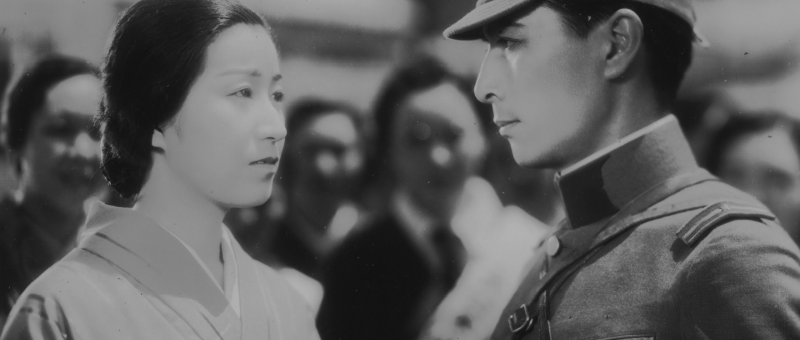
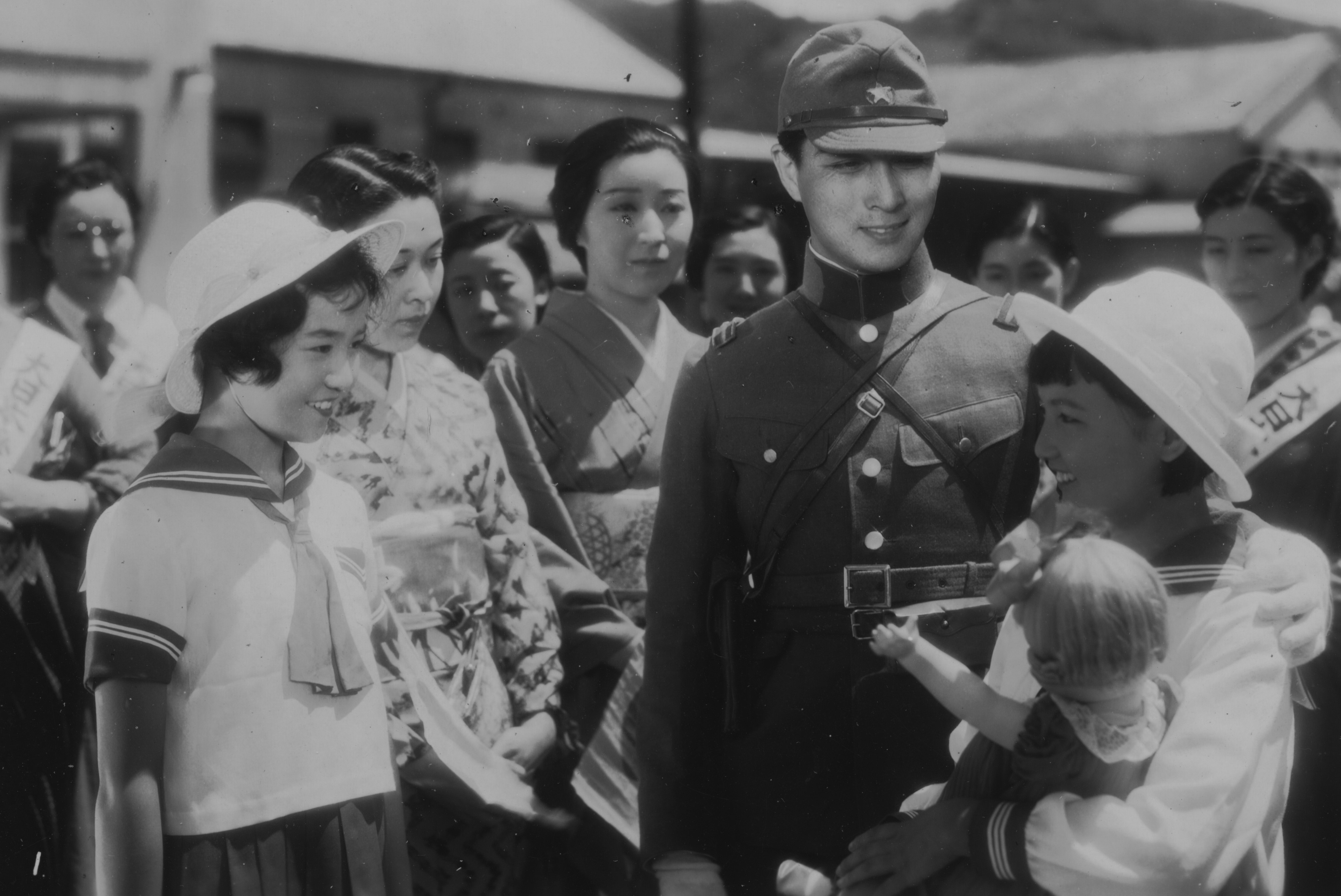
Tomiko ends up sending it back herself with a note for Nobuko explaining everything. Nobuko then limps off with her injured foot to return the doll to Tomiko and tell her none of that matters, she wants her to have the doll anyway. The doll then becomes a symbol of the sisterhood between the girls and the erasure of the class boundary between them. Tomiko can be seen holding the doll when they join the parade to send Kei off to war, while Tsuta and Mrs Asada also smooth out the misunderstandings between them to celebrate Kei’s mobilisation together. The message here is more that old differences must now be put aside so that everyone can serve the nation together rather than selfishly fixating on personal drama such as wounded pride or romantic heartbreak. Even so, Naruse slightly undercuts the patriotic conclusion with the hint of sadness on Tsuta’s face before she recomposes herself to smile at Mrs Asada and reinforce the sense of solidarity between them, while what we’re left with is the memories of the idyllic countryside setting and sense of pastoral serenity along with the sincerity of the relationship of the two girls which is rooted not in patriotism but genuine friendship that cares nothing for the divisions of social class or the rigidities of the adult world.


Sincerity screens at Japan Society New York May 10 as part of Mikio Naruse: The World Betrays Us – Part I.

Images: Collection of National Film Archive of Japan

A Brother and His Younger Sister (兄とその妹, Yasujiro Shimazu, 1939)

A young man’s love of go ends up getting him into hot water at work in Yasujiro Shimazu’s surprisingly progressive shomingeki, A Brother and his Younger Sister (兄とその妹, Ani to Sono Imoto). It seems office politics might not have changed all that much in the last 80 years even if many other things have, but conversely the film seems to have more to say about the changing nature of gender roles and attitudes towards women in a time in which it was becoming possible for a woman to live a fully independent life. 

This window wouldn’t last very long and the situation largely reversed itself even amid the supposed equality enshrined in the post-war constitution, but Fumiko (Michiko Kuwano) at least has a well paying job as a secretary at a large company and consequently little desire to marry even at the comparatively late age of 24. Her earning capacity is later put forward as a reason that there “aren’t many opportunities” for marriage as men apparently feel threatened and embarrassed especially if their salary is lower than hers. It’s not exactly that she’s against marriage, but as she can support herself and is otherwise happy living with her brother Keisuke (Shin Saburi) and his wife Akiko (Kuniko Miyake). She doesn’t see the need to rush into such an important decision. Though she might change her mind if the right person came along, for the moment she just isn’t interested. Then again, Akiko’s sucking of her finger when she’s ironically cut by a thorn on a bouquet of roses from an unwanted admirer might suggest another reason marriage is not on her radar.

Her suitor, Michio (Ken Uehara), despite his handsomeness is a little creepy in his courtship and cannot seem to take a hint that Fumiko isn’t interested in him. A friend of her boss, he has a habit of dropping into the office for no real reason and attempts to ask her out when the boss isn’t there. She lies and tells him she’s married already (to a penniless painter!) but after the boss reveals the truth it doesn’t seem to occur to Michio that if she made up a story like that it’s because she doesn’t want to go out with him. We’re told that Michio studied at Oxford and is attracted to Fumiko because he’s impressed by her language skills, but he’s also some kind of stockbroker which quickly paints him as no good seeing as the film seems to have a minor message about how dabbling in stocks and shares is little better than gambling and definitely dangerous.

One of Keisuke’s colleagues has been given a warning because there’s a rumour that he’s into shares while another has apparently been demoted because it came to light that he had a fondness for horse racing. More than a moral judgement, it seems the reason is that these sorts of hobbies may eventually lead someone towards embezzling from the company to cover their debts. Keisuke’s supervisor is also worried that his 18-year-old son is refusing to go to university and apparently wants to join some kind of “investment society” which admittedly does not sound like a good idea so he wants Keisuke to talk him out of it. The big boss, meanwhile, who is also Michio’s uncle, turns out to be into shares himself which makes him a very compromised authority figure. 

Keisuke is not into shares, but he is very into the game of go which causes him to stay out until late at night playing with his bosses. He does this because he genuinely likes playing, but Fumiko worries that his colleagues will come to resent him assuming that he does so to curry favour. Apparently, something similar happened at his previous job which is why he ended up quitting abruptly. As he was quite lucky to get this one despite how impressed everyone seems by his capabilities, it would be better if that didn’t happen again. Nevertheless, the perspicacious Fumiko turns out to be right as as his co-worker Yukito (Reikichi Kawamura) becomes increasingly jealous of his success fearing that he will leapfrog him to take the shortly to open up supervisor position which he believes to be his simply because he’s been there longer (which is generally how things work at Japanese companies). Consequently, starts a series of rumours that Keisuke is a snitch who got the horse racing guy demoted and is only in his position thanks to schmoozing with the bosses.

This obviously leaves him with a huge dilemma when his boss asks him to put in a good word for Michio with Fumiko whom he is pretty sure won’t be interested. To his credit, Keisuke maintains that it’s up to her and his career is nowhere near as important as her happiness though he is also aware it’s going to be embarrassing for him when she says no. Fumiko knows this too, and it’s clear that she also feels incredibly awkward when he puts it to her but only asks for a few minutes to think before offering her primary justification for refusing which would be that she fears Keisuke’s colleagues will resent him even more if they come to the conclusion that he sold his own sister in the hope of career advancement. This does in fact turn out to be the case as Yukito has already started a rumour about a dynastic marriage that turns the rest of Keisuke’s colleagues against him especially as he’s given the promotion immediately before he was going to tell the boss Fumiko isn’t interested. 

Confronted by the horse racing guy, Keisuke ends up quitting again after getting into a physical confrontation with a seemingly remorseful Yukito who probably didn’t mean for it to go that far. Keisuke quits because he won’t have people think he was gossiping behind their backs and is offended by this attack on his integrity, but his decision is also a rebuke against this infinitely corrupt employment regime in which hypocritical bosses hand out jobs to their favourites and maybe do expect that Keisuke will persuade his sister to sacrifice herself for his career. She meanwhile is portrayed as an independent woman, but ironically rejects the marriage to save her brother’s reputation though perhaps equally she feared her “no” would not be enough on its own. Then again, she had apparently turned down several suitors already and no one really expected her to say yes this time unless she’d suddenly begun to feel anxious about her age and declining prospects. 

Nevertheless, it’s refreshing that the film does not force Fumiko into accepting marriage as so many others would and in fact legitimises her opposition to it and right to live as an independent woman for as long as she chooses. Keisuke is also in some ways rewarded for quitting his job at the corrupt company in immediately getting another one from a former co-worker who’s since started his own business and wants to expand to Manchuria. But this final scene almost seems tacked on for the censor’s benefit. It is perhaps a little unusual for 1939 that the film has so far made no mention of Japan’s imperial ambitions nor made any kind of patriotic appeal. It’s even been quite pro-internationalist in the talk of people speaking English and engaging in European trade (even if the currency trading Michio’s doing is definitely framed as bad). Fumiko spots a little patch of grass clinging onto the plane as they take off for Manchuria with Keisuke remarking that he hopes this little piece of Japan will take root on the continent. On one level, it suggests that contemporary Japan was too corrupt for an “honest” man like Keisuke to prosper while Manchuria will offer greater freedom for himself and the independent modern girl Fumiko (who declares she won’t marry until Keisuke’s successful), but it’s also of course an unpalatable advocation for the ongoing imperialist expansion which seems so out of keeping with everything that’s gone before. Even so, the message is clear that it’s Keisuke and Fumiko who are in the right and should be allowed to live just as they are in a society free of judgement and hypocrisy.


Passing Fancy (出来ごころ, Yasujiro Ozu, 1933)

“We have to help one another” a sympathetic soul insists towards the conclusion of Yasujiro Ozu’s Passing Fancy (出来ごころ, Dekigoroko). Ozu’s depression-era silents are not as devoid of hope as it might at first seem, but it is a much more positive statement and perhaps surprisingly the central messages lie more in the necessity or otherwise of repaying kindness and the kinds of forms that action may finally take. It is also, however, the first in a loose trilogy of films revolving around a single father named “Kihachi” and the only one in which he is not (at least potentially) exiled from the family he has been trying to protect. 

This Kihachi (Takeshi Sakamoto) has one young son, Tomio (Tokkan Kozo, AKA Tomio Aoki), and casual job working in a brewery though he is hardly a model employee and is often late due to oversleeping after a night of heavy drinking. A roguish womaniser, he is also a kinder soul than he seems which is why he stops to talk to a pretty young woman, Harue (Nobuko Fushimi), wandering around in distress late in the evening. His first approach is slightly crass, responding to her question about lodging for the night by explaining that he has a kid and no wife but then he takes her to a local cafe he frequents and persuades the owner, Otome (Choko Iida), to take her in. Otome takes a liking to her, and decides to offer her a job as a waitress. 

Kihachi develops a hopeless crush, comically dolling himself up in his fanciest kimono and getting an advance from work to buy a pretty comb, an unmistakably romantic gift, to present himself to Harue. Of course, she’s grateful but sees him as a nice older gentleman rather than a potential husband. In fact and somewhat surprisingly she develops a crush of her own on the brooding Jiro (Den Obinata) despite the fact he is constantly rude to her and more or less implies she’s an untrustworthy woman out to take advantage of “vulnerable” men like himself. There is something quite touching and unusual in the brotherly friendship between the two men that occasionally comes off as something more in Jiro’s deep antipathy to Harue, which is to say she isn’t going to come between them but the situation is indeed complicated. 

Harue is, in that sense, a distraction that takes Kihachi’s eyes off his proper role as responsible father. He and Tomio have a close, interdependent relationship and it’s clear that it’s often little Tomio, older than his years, who finds himself managing Dad. Kihachi is immensely proud of his son, fond of saying he’d be top of his class if only he had better manners. Like any father what he most wants for him is that he escape their life of poverty which is why he’s so glad that the boy does well at school. But little Tomio finds himself bullied precisely because of Kihachi’s lack of standing. The other boys mock his illiteracy, unable to believe a man could reach adulthood without being able to read. When his son is taken ill, Kihachi laments circumstances even more. “It’s horrible not having an education”, he tells Jiro, “I got my son sick and I can’t even pay the doctor’s bill”.

The depression may be less visible than in Ozu’s other ‘30s films, but its evidence is everywhere. Harue ends up on the streets after losing her job at a silk mill and having no family to fall back on. At the naniwabushi performance which opens the show, a series of spectators hopefully open a lost wallet but find it empty. Kihachi notices the discarded purse is slightly bigger than his own and makes a swap as a hopeful investment for the future. Just before the performance ends, several of the guests seem to be plagued by fleas. Kihachi is forever asking for advances for frivolous reasons but assumes he’ll be able to manage hand to mouth only to enter a moment of crisis when hit by the unexpected expenses of his son’s illness for which he feels responsible in attributing it to an excess of luxury after giving a him a pocket money bonus which he unwisely blew in one go on sweets (like father, like son after all). 

Yet what shines through is compassion and camaraderie. A friendly barber loans Jiro the money for a doctor, which is one reason he intends to leave for Hokkaido even after realising his feelings for Harue. As with the other Kihachis, this Kihachi rediscovers a sense of fatherly duty in feeling as if this debt must be his, that he should be the one to go to Hokkaido to repay it even if that means leaving his son behind. The barber tells him not to bother, the sentiment is enough for him and he doesn’t mind missing the money knowing it saved a boy’s life. “We have to help one another”, kindness doesn’t necessarily have to be repaid directly but can be paid forward in becoming a way of life. The Kihachis of A Story of Floating Weeds and An Inn in Tokyo are exiled from their families and serve their sons only by abandoning them, but this Kihachi turns back, his sense of “responsibility” perhaps a “passing fancy” but one that’s taught him the true meaning of fatherhood and what it is to live in a society.


An Inn in Tokyo (東京の宿, Yasujiro Ozu, 1935)

Yasujiro Ozu was perhaps most at home in the genial world of the shomingeki in which everyone is comfortable enough and the problems, such as they are, are emotional rather than practical. He was also, however, an exacting chronicler of his times and unafraid, even in the tightening world of 1935, to explore life on the margins of a society on the brink of crisis. A proto-neorealist take on depression-era fatherhood, An Inn in Tokyo (東京の宿, Tokyo no Yado) finds that there are good people everywhere, but also that people can be good and make bad decisions even in their goodness. 

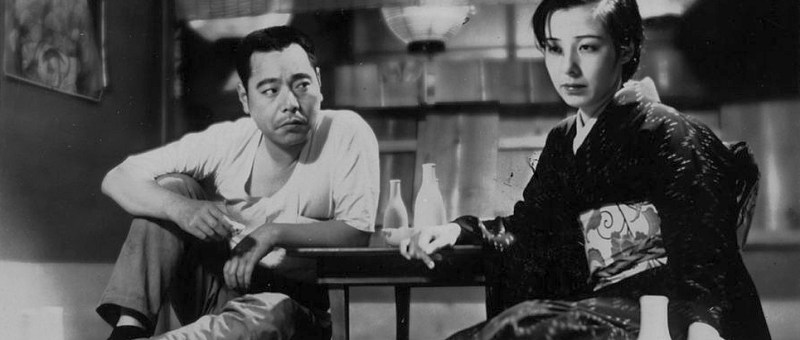
Kihachi (Takeshi Sakamoto), a widowed father of two boys, is unemployed and looking for work. He tells the guard at a factory that he is a skilled lathe operator, but the man doesn’t even look up from his paper as he unsympathetically tells him to be on his way. Remaining polite, Kihachi thanks him for his time and returns to his sons who are obviously disappointed and mildly irritated by the “mean” guard. The boys look on sadly as other children go off to school and tell their dad they aren’t hungry because they know he has no money for food and do not want to depress him further after being turned down for yet another job. 

We don’t know exactly what landed Kihachi in the circumstances he’s currently in, what happened to his wife, or why he lost his last job but we can probably guess the economic depression is to blame for most of it. The guard at the factory ignores him because he has no work to give and perhaps Kihachi isn’t the first to ask. The small family has been lodging at the titular “inn”, sleeping in a communal room while their resources dwindle. After losing all their possessions, they face the choice of whether to go for dinner and sleep in a field or go hungry and return to the inn. They opt for food, only for the heavens to open, but on this occasion rain is perhaps their salvation because it enables them to run into an old friend, Tsune (Choko Iida), who is able to put them up for a while and help Kihachi find work. 

Meanwhile, on the road the family bumps into a widow and her daughter who are in much the same situation only, as must be obvious, hers is much more serious because if Kihachi cannot find honest work then it may be near impossible for a woman with a child. Mrs. Otaka (Yoshiko Okada) and her daughter Kimiko are staying in the same inn and the children quickly become friends. “Childhood is the best time of life” Kihachi wistfully laments as they watch the kids play, “Children are lovely”. Mrs. Otaka agrees that it’s difficult with a little girl, but that she also keeps her going. The boys too are resilient and positive, the oldest Zenko cheerfully insisting that everything will be alright tomorrow while his father’s attempt to comfort Mrs. Otaka with the claim that things work out in the end cannot help but ring hollow. 

Zenko is quite literally burdened by his father’s failure in that it is he who is expected to carry the small parcel which contains all of their worldly possessions. Later he tries to delegate the responsibility to his younger brother, an act which backfires causing the bundle to be lost. They try to help out by catching stray dogs they can turn in to the police for 40 yen as part of an anti-rabies drive, but they are also children and want what other children have which is why Zenko makes an irresponsible decision to spend the money from catching a dog on a fancy cap he took a liking to after seeing another boy at the inn wearing one. Kihachi is obviously displeased, catching a dog means they can eat and they don’t have money for frivolous things like caps but we hear from his old friend Tsune that he has his irresponsible sides too as evidenced by his longing for sake while the boys long only for wholesome meals rather than sweet treats.

Nevertheless Kichachi is a good man, as Mrs. Otaka later says. He takes a liking to the widow which might be somewhat insensitive to Tsune who has by this point taken him in and started to help him put his life back on track while taking care of the kids, but his desire to help her also has an unpleasantly conservative streak. On learning she’s taken a job at a bar he rants at her in disappointment, exclaiming that he didn’t think she was that sort of woman and wondering why she suffered so long only to finally give in to sex work. Her tearful justifications that her daughter is ill fail to move him. He tells her to quit the bar and get money some other way, which seems unrealistic and even more so in the absence of a good friend like Tsune, who seems to have made a decent life for herself as an independent woman, to miraculously sort everything out. He tries asking Tsune for money, but she worries he’s up to no good and doesn’t want to enable him messing up his life just as he’s getting himself sorted, and so he makes a terrible and frankly irresponsible decision which places his own children in jeopardy solely to “save” Mrs. Otaka from becoming a fallen woman. Leaving the women behind to pick up the pieces and take care of the children, he trudges off alone, a fugitive father exiled from his family and at the mercy of an increasingly indifferent society. 


Radio Queen (ラヂオの女王, Shigeo Yagura, 1935)

The conflict between warring neighbours of differing dispositions deepens when their children want to get married in Shigeo Yagura’s modernising comedy, Radio Queen (ラヂオの女王, Radio no Oujo). Against a backdrop of rising militarism, the film explores a generational shift in a new world increasingly dominated by mass media that quite literally speaks to the young not only through the newly established ubiquity of wireless radio but the talkie too leaving the old somewhat left behind confused by the rapid motion of progress.

In fact, the film opens with Kawamura, owner of a factory that makes aeroplanes that can’t fly, being woken up by his neighbours performing radio taiso callisthenics exercises. Kawamura dislikes radio on a conceptual level, though his dislike of it may also have a slightly subversive quality given the underlying element of coercive conformity that sees the nation performatively warm up for another day of national unity and hard work towards the growth of the empire. Then again, Kawamura is the film’s most ridiculous character finally giving a speech that he would be proud to sacrifice his son’s life for the nation by getting him to fly one of their biplanes to China as a kind of publicity stunt.

Publicity stunts are, however, a particular talent for Kingo who has very modern ideas about how to make not only his business but that of his father’s neighbour and frenemy Misome a success. Soon to finish university, Kingo plans to marry Misome’s daughter, Kimiko (Sachiko Chiba), who is currently working as a primary school teacher though both father fiercely object to the union. Kingo puts the kibosh on the idea of eloping mainly for practical reasons that they will be unable to support themselves financially on a running start but also for reasons of filial piety which probably do correspond with the censorship demands of the time. One of his ideas for winning over Misobe is to help him make his business of selling cough sweets for stage performers more successful through modern advertising and publicity techniques. Though originally rejecting his ideas, Misobe often takes his advice but pretends it was all his own idea further souring their relationship.

In any case, he wants to Kimiko to marry his chosen suitor, Kyuichi, who is training to become a pharmacist but also struggles with maths and has secretly been embezzling money in contrast to Kingo who is much more organised than his own father and has real business talent. Misome describes Kimiko’s job as a “hobby” and regards it as something she’s doing to keep busy until she gets married, a notion perhaps encouraged by social expectation given that it involves taking care of children which places her in a quasi-maternal position. She could presumably support herself, but the option is never given to her as even she tries to chivvy Kingo along by warning him that if he fails to win her father over she’ll end up married to the pharmacist as if she had no say in it at all. 

In any case, in a rather strange turn of events her singing in the school is heard by a film crew who’ve just had their lead actress pinched by a rival studio. They cast her in the part of a Christian nun who is also a schoolmistress but in contradictory fashion is involved in a romance which scandalises Kimiko and leads her to walk off set refusing to be exploited by the unscrupulous directors insisting that no such thing had been mentioned to her when she agreed to take the job. But it’s this that finally propels her to become the “Radio Queen,” taking a much more wholesome role singing nursery rhymes and reading fairytales for children across the nation through the new medium of the wireless. Kingo does not object to her fame and sees it as a positive sign that may cause his father’s opinion of her to change for the better despite his dislike of the device, though he does later become put out that the demands of her career leave her less time to spend with him.

In that sense, it’s also “modernity” that disrupts their relationship along with changing gender and social roles while there is also a necessarily problematic element of then largely unregulated mass media. An unscrupulous consumerism seems to have taken hold with the foolish Kawamura also addicted to collecting “antiques” many of which are akin to religious relics of an age of modernity. We see a man drop a piece of wood on the floor outside which is later picked up by dealers and sold as a piece of the propeller of the first of ever plane which Misome jokingly offers to buy for Kawamura in the hope his aircraft might actually fly one day. On entering an antiques fair, they’re confronted by an object claimed to be the clasp from Rockerfeller’s wallet echoing some of Misome’s frequent allusions to his success as a self-made man while Kawamura conversely frequently alludes to Mussolini as if making plain his own slightly priggish attachment to militarism. 

Misome concedes that Kingo is a bright and promising young man and objects to him only on the grounds that he is Kawamura’s son and he prefers the pharmacist because he thinks it more advantageous to himself before realising what sort of a man Kyuichi is really is. In the end, they’re both bamboozled by mass media when Kimiko rushes to the airfield where Kingo is about to take off having petulantly agreed to the test flight after arguing with her. As she petitions the already in motion plane, he manages to pull her up into the passenger seat while the radio announcer announces their engagement live on air granting it a new legitimacy neither of the fathers can really argue with. The film ends with them flying off into a blue sky which suggests a victory for youth and freedom even if it seems a little too simple leaving the older generation behind on the ground with only the wireless for comfort.


My Elder Brother (私の兄さん, Yasujiro Shimazu, 1934)

A wastrel son and runaway daughter get a few lessons in filiality in Yasujiro Shimazu’s genial ‘30s comedy, My Elder Brother (私の兄さん, Watashi no Niisan). Reflecting the changing the times, the film is in many ways about navigating the sometimes fraught relationships among a blended family though like many hahamono, it’s the stepson who is most devoted to his mother while the birth son is consumed by a sense of guilt and inadequacy in his accidentally awkward positioning within the family hierarchy.

The filial piety of eldest son Shige (Reikichi Kawamura) is established early on by the fact he’s not at work because his mother is ill and he’s off visiting her. He does in fact return late at night, though there’s a question mark over his qualities as a boss as the drivers at the taxi firm he runs remark that he’s been ignoring their attempts to negotiate with him for better conditions not least the provision of assistants which has been given additional weight by one driver’s experience with a disturbed fare who attempted to strange him with his belt.

The strange and violent opening sequence in which a cabbie is attacked by a crazed passenger is never referenced again and out of keeping with the otherwise lighthearted tone of the film though does add to a sense of danger later echoed in the appearance of two guys who first seem like yakuza but are actually just two grumpy old men trying to retrieve a young woman who’s run away in defiance of an arranged marriage. In any case, tearaway brother Fumio (Kazuo Hasegawa), who arrives drunk in the back of a cab, has indeed fallen into bad company with yakuza whom he describes as his friends though Shige warns him they’re probably just after his money.

Fumio has returned because he’s learned his mother is ill, though he’s reluctant to see her given his present condition. When he does actually meet her, she says that she hates him and calls him a good-for-nothing, worthless man. It seems her animosity is partly motivated by a sense of guilt and embarrassment that her biological son has brought shame to the family she married into and especially to Shige. For his part, Shige acknowledges that he also felt resentful when Fumio and his mother moved in but explains that he was still a child clinging to the memory of his late birth mother. Fumio explains to the young woman he picks up, Sumako (Kinuyo Tanaka), who is on the run from her uncle and the man her stepmother wants her to marry, that he left home because of his precarious status and sense of inadequacy but liked the sense of freedom his independence gave him even if he is ashamed of the kind of life he’s lived on the fringes of the underworld. 

Sumako is experiencing a similar dilemma as she feels herself unable to bond with her stepmother to the extent that she has not been able to articulate that she objects to the arranged marriage her relatives have set up for her. She laments that if it were her birthmother she should be able to tell her everything, but Fumio counters that Shige had been jealous of him because he could exchange harsh words with his mother because of their closeness in a way he never could because he is not her biological son. Reinforcing a sense of obligation between parents and children might have been an important message in the mid-1930s, but the film is perhaps unexpectedly progressive in its openness and desire to embrace these then considered less usual family arrangements born of second marriages in emphasising the brotherly bond between the two men and Sumako’s successful escape from an unwanted marriage simply by speaking her true feelings to her mother not to mention the suggestion of a cross class romance between rich girl Sumako and the middle-class Fumio.

Meanwhile, the film also has an international bent in the prominent signs for Chevrolet and Hollywood-esque aesthetics, drawing inspiration from American and European crime films for the violent opening sequence and underworld setting. Shimazu hints at the shadiness of Fumio’s backstreets life, but equally of Sumako’s uncle and his moustachioed friend lending an undertone of darkness to the mid-30s society but otherwise keeps things light in the innocent courtship between Fumio and Sumako who can mediate their attraction only by remarking on the beauty of a sunset.