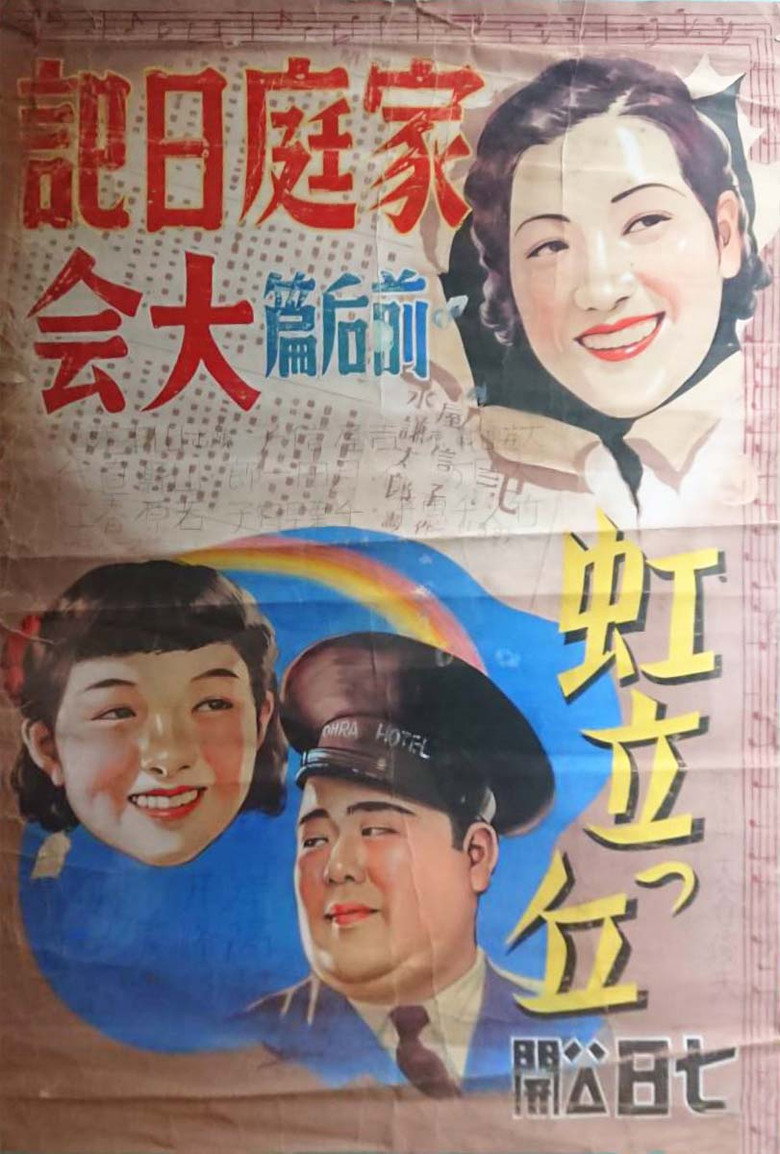
Rainbow Hill (虹立つ丘, Toshio Otani, 1938)

The cheerful life of a brother and sister in Hakone is disrupted by an unexpected revelation in Toshio Otani’s heartwarming drama, Rainbow Hill (虹立つ丘, Niji Tatsu Oka). In some ways, displaying an affluent quality of life perhaps unrealistic for the Japan of the late 30s, the theme is really family is and the importance of blood relations as one family is broken so another can be restored in a moment of healing and reconciliation with the traumatic past.

Shot predominantly on location at the luxury Gora Hotel in Hakone, the film revolves around a young girl, Yuri (Hideko Takamine), who works in the hotel’s shop while her bother Yatahachi (Akira Kishii) is also works at the hotel as a porter. The pair are incredibly close and would do anything for each other, though Yatahachi is also forced to conduct a romance somewhat clandestinely. He generally waits for Yuri to go to sleep before meeting his girlfriend, Fuji (Chizuko Kanda), who works in a local amusement centre. Yuri, however, is getting older and doesn’t always want to go to sleep early, which is the first note of discordance in their relationship in implying that Yatahachi’s childcare responsibilities stand in the way of marriage. Fuji, however, is also very fond of Yuri and sometimes looks after her when Yatahachi is not able to. 

The second note of discordance is when Yatahachi is dismissed from the hotel for having deserted his post after hearing that Yuri has fallen off a cliff and running off to save her. Though this is quite a valid reason for abruptly leaving work without permission, Yatahachi does not explain to his boss but only accepts his fate stocially while accepting that it was wrong of him to leave and that his actions caused the hotel reputational harm. Important guests were due from Manchuria and were apparently forced to carry their own bags. 

Another hotel guest who has become friendly with Yuri, Mrs Hayakawa (Sachiko Murase), who is staying at the hotel to recover from an illness, complains to the manager and gets Yatahachi reinstated with a promotion. Frequent guests the Hayakawas have some clout at the hotel, as perhaps do their friends the Mizutanis whose bag Yatahachi ends up tearing when asked to open it after the little boy loses his key. The film doesn’t really draw much of a contrast between the worlds of the people who stay in this luxury hotel and those who work in it, save that Yuri is full of tales of Mrs Hayakawa’s Western-style Tokyo home where she apparently has two dogs the size of Yatahachi. The pair, by contrast, live in quite a nice, if humble, traditional home and appear to have a good standard of life. 

Yuri is, however, somewhat drawn to Mrs Hayakawa who seems to fulfil the missing maternal role in her life by giving her gifts and taking her on outings. It’s not until Mrs Hayakawa visits her home and sees a familiar doll that she begins to suspect she could be the daughter from whom she was separated during the Great Kanto earthquake of 1923. The question then becomes whether it is right to disclose Yuri’s true identity and take her away from the brother with whom she has been so close. In another sign of his goodness, Yatahachi presumably found Yuri amid the chaos. Lacking any means of identifying her and believing that her parents were likely dead, he raised her himself as his sister. Though sensitive to the situation, the Hayakawas want her back. With them Yuri would have more opportunities and a better quality of life as a wealthy young woman in the capital, but it would also break Yuri and Yatahachi’s hearts. That Yuri agrees to go with them while Yatahachi accepts he must let her go to her biological parents hints at the importance of bloodlines and the necessity of familial restoration that acts as a means of laying the traumatic event of the earthquake to rest. Mrs Hayakawa’s malady is cured on having found her missing daughter, though she still vows to return to the hotel in the spring so Yuri and Yatahachi can be reunited. This also paves the way for a marriage between Fuji and Yatahachi as the pair look forward to welcoming Yuri’s return together.

An early leading role for Takamine, the film also features cameos from a series of other Toho stars as the hikers who rescue Yuri after she falls off the cliff, while Akira Kishii performs a few songs including a Japanese version of Home on the Range enhancing the film’s international feeling. It is perhaps unexpectedly breezy for the time period and basks in the lives of the super rich at a time when others are struggling to get by, but nevertheless offers a bittersweet and heartwarming tale of familial reconciliation and renewed hope for the future.
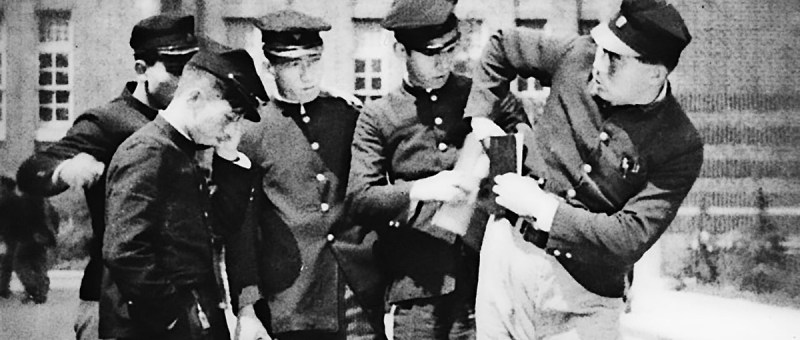
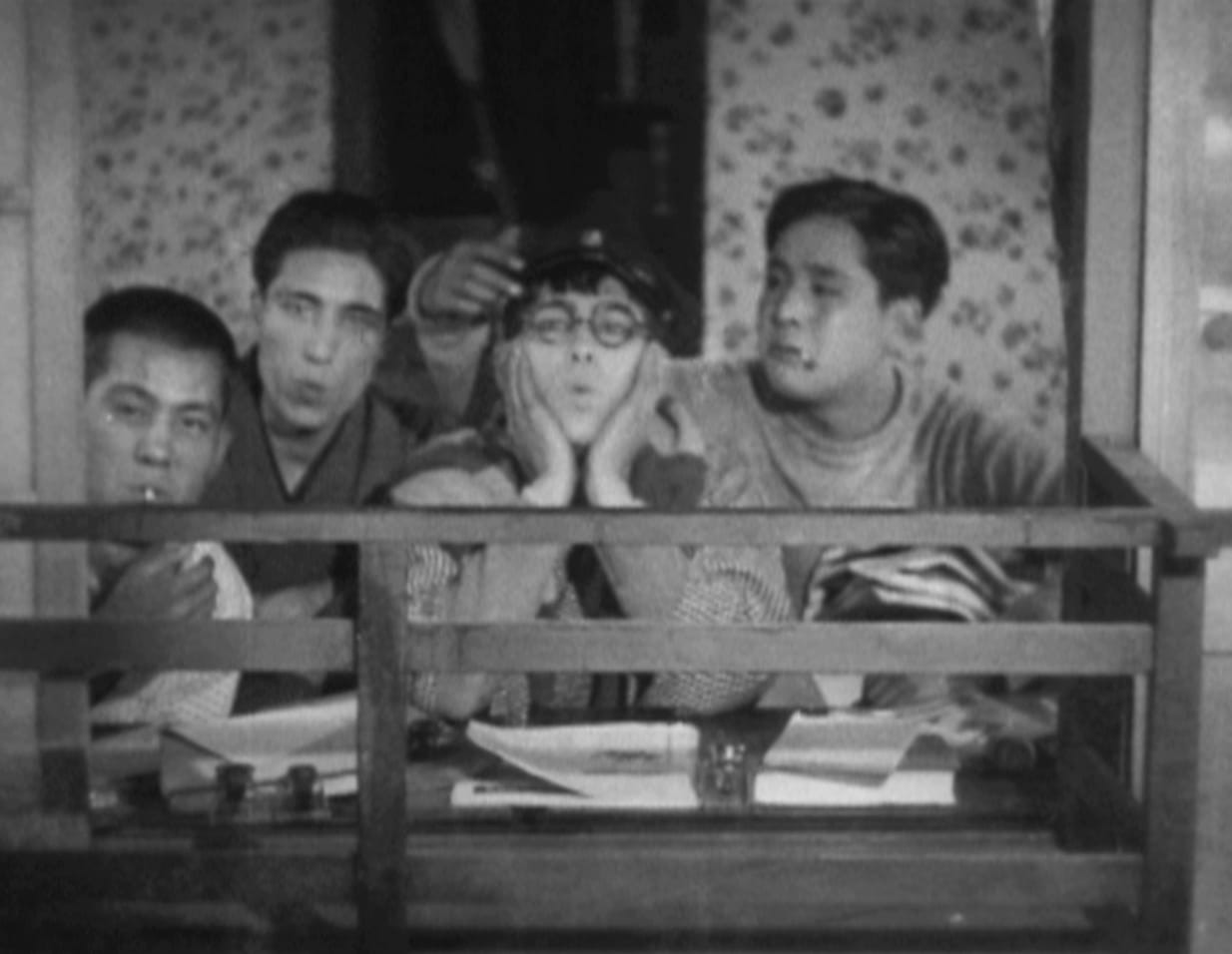
I Flunked, But… (落第はしたけれど, Yasujiro Ozu, 1930)

Yasujiro Ozu never went to college. By all accounts a poor student and rebellious young man, he took an early teaching position in a remote rural area precisely because it required no degree. Unsurprisingly, he didn’t last long in the job and eventually returned to Tokyo,  joining Shochiku as an assistant cameraman. Nevertheless, in his early career at the studio he found himself contributing to their popular brand of college comedies of which I Flunked But… (落第はしたけれど, Rakudai wa shitakeredo) is his third, directed when he was 26 years of age. 

Drawing inspiration from Hollywood campus movies and in particular Harold Lloyd’s The Freshman as we can see from the various US state college pennants seen hanging throughout the film, I Flunked But… follows a group of young men preparing for their final exams. They are all excited about the idea of graduating into the adult world as symbolised by the neat business suits they have each bought in preparation for their new lives and few seem burdened by anxiety about a potentially precarious future as members of a generation stepping into a world of reduced economic potential and growing political instability. 

In fact they live the last days of their student lives to the full, greeting each other with silly dances, playing turntable roulette to decide who pays for dinner, and spending more time figuring out how to cheat on the exam than studying to pass it. There may be truth in the idea that passing exams is all about the knack, but our boys are overly invested in kicking back against the system rather than playing by its rules to get ahead. As the film opens, two students are arguing because one supposedly betrayed the other in promising to help him cheat and then not following through. Takahashi (Tatsuo Saito) is supposed to help his friends by wearing a shirt which has a cheat sheet scrawled on the back, but he oversleeps and the landlady swipes it for the laundryman. The others manage to scrape through on their own while Takahashi alone fails. 

The remainder of the film becomes a more melancholy mediation on the changing fortunes of Takahashi and his friends. Overcome with shame and disappointment, Takahashi is left out of the others’ cheerful graduation celebrations, left with the choice to drop out or repeat the year (amusingly, one of his perpetual failure friends appears to be much older, even middle-aged, and one wonders if he is a serial repeater). The suit he had bought is now a grim reminder of his defeated hopes, as is the tie his girlfriend (Kinuyo Tanaka) who works in the bakery next-door was making for him as a graduation present. He now feels unworthy of wearing it, a fraudulent human trapped in adolescence by embarrassing failure. The girlfriend, however, already knows all about it and reassures him that even if he has not graduated, he still has the right to wear his graduation suit. 

As time moves on, however, Takahashi realises that he might actually be the more fortunate. Still wearing his student uniform, he lives a carefree student life and is still receiving money for his upkeep which makes him the rich man among his dorm mates who are still living in the same rooms with him and have all had to pawn their graduation suits because there are no jobs for them to go to. “I heard it’s hard to get a job these days”, the girlfriend laments, and it’s clear the depression continues to bite. The college world was safe and easy. Takahashi carries on goofing off, silly dances and cheerleading the order of the day. In this sense at least, a perpetual childhood might not be so bad a thing. The graduates wistfully play with a student’s cap, wishing they could return to their carefree college days rather than stuck in their old dorm receiving nothing but rejection letters and hand outs from a slightly smug Takahashi. “If I’d known it would be like this I wouldn’t have graduated so hastefully” they lament. Maybe flunking is actually the smart choice, riding out economic instability until something better comes along. You might as well enjoy yourself while you can, Ozu seems to say, you’ll never have it so good again.


The Lady and the Beard (淑女と髭, Yasujiro Ozu, 1931)

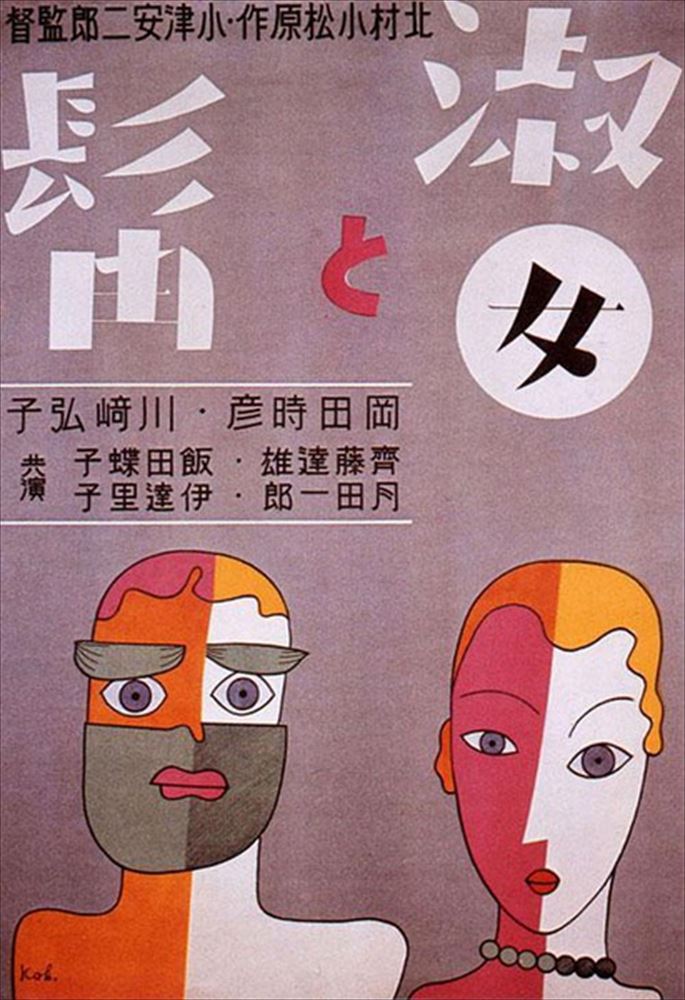
Yasujiro Ozu has sometimes been dismissed as middle of the road, particularly by the young radicals of the post-war generation who saw his, by then, rather conservative films as a symbol of everything they sought to reject in their national cinema. They may in some senses have had a point and, in 1931’s The Lady and the Beard (淑女と髭, Shukujo to hige), Ozu does indeed show us that the middle of the road might be the best place to be as his basically good yet rigidly traditionalist hero is cajoled towards modernity but ultimately rejects its extremes in pulling a “modern girl” back towards the path of righteousness. 

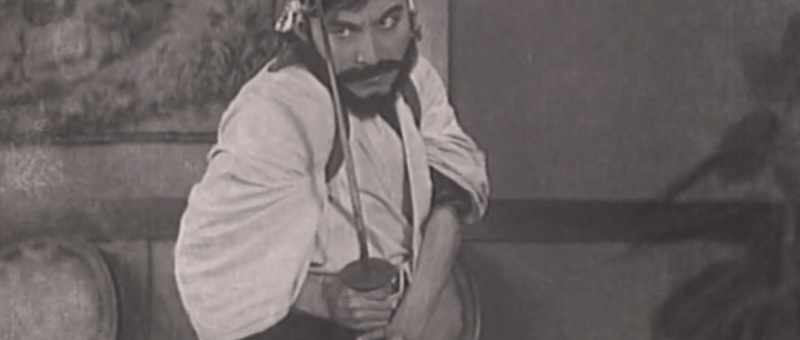
Recent graduate Okajima (Tokihiko Okada) is a kendo enthusiast with a rather unsettling beard which he has long refused to shave. Other than his strangely close friendship with nobleman Teruo (Ichiro Tsukida), he appears to have been rejected by mainstream society because of his odd appearance and socially awkward behaviour. Teruo invites him to his sister’s birthday party without bothering to ask her and consequently scandalises all of her friends who vow to humiliate Okajima as soon as he arrives. Okajima, however, has no idea he is being made fun of. He declines the invitation to dance with the young women in the modern fashion but volunteers to do a dance on his own, prancing about with a fan and waving his sword around in an unexpected display of traditional performance. When Teruo and his sister return after having a private argument, the party is ruined. All the girls have left, for reasons which Okajima seems not to understand. 

He is at least, however, chivalrous. Spotting a young woman in kimono being mugged in the street by a modern girl, he wades in to help, earning her eternal admiration while fending off the other members of the modern girl’s gang with his kendo skills. His heroism further pays off when he discovers that the woman he saved, Hiroko (Hiroko Kawasaki), is a typist at an office where he is interviewing for a job. Hiroko is able to explain to him that the reason he was turned down, despite the fact that the boss also had a big bushy beard, was his facial hair so he should try shaving it off. 

The beard is a symbol not only of Okajima’s traditional mindset but of a certain kind of masculinity which might not be welcome in the modern world. Teruo tries to defend it to his sister by showing her portraits of various great men from the past who all had facial hair while Okajima claims that his is inspired by Abraham Lincoln and is intended to put women off so that he doesn’t get distracted from becoming a great man himself. Okajima’s robust masculinity, avoidance of women, and intense friendship with Teruo, anxious should he get the wrong idea about women in his apartment, might hint at another possibility, but that soon goes out the window when he sheds the beard and instantly becomes irresistible to women. Not only is he developing a romantic relationship with the homely, traditional Hiroko but also becomes attractive to Teruo’s sister Ikuko (Toshiko Iizuka) and the modern girl Satoko (Satoko Date). 

Both Hiroko and Ikuko are attracted to Okajima because of his traditional masculinity in his capacity to protect them. Ikuko, rejecting a suitor who eventually exposes a problematic side to male dominance, tells him that she won’t consider anyone who’s not skilled in kendo because she is looking for a protector. He reminds her that’s what the police and the law are for, so she tells him fair enough, she’ll marry a policeman. Modernity codes “protection” into the system, depersonalised and in other ways perhaps problematic, where traditionalism relies on access to male strength. Ikuko disliked Okajima when he had a beard, but secretly desires those very qualities the beard was set to represent. 

Satoko, meanwhile, the modern girl, rejected Okajima because of his bizarre appearance while he rejects her for the same reason in a mirroring of the various ways we are the image we present. Kimono’d Hiroko is good, modern girl Satoko is bad. Even after shaving his beard, Okajima remains an undercover traditionalist, wearing his kendo clothes under his suit and chivalrous to the end. Not recognising him and possibly in the pay of Teruo trying to put his sister off marriage, Satoko seduces the clean shaven Okajima while he rejects her advances but tries to “save” her from an excess of modernity by getting her away from the gang. She fancies herself in love with him, but what he does is free her from the false image of the modern society to give her back the true freedom of her own agency. In the end he chooses the classically nice, middle of the road option in remaining with Hiroko who loved him with beard and without rather than modern girl Satoko or snooty aristocrat Ikuko. You trim it but it just keeps growing back, the final title card adds, but the message seems to be that too much of one thing be it nationalistic conservatism or hedonistic modernity is no good. The middle way it is, slow and steady and as wholesome as could be.


Currently streaming in the UK via BFI Player as part of Japan 2020. Also available to stream in the US via Criterion Channel.

Poppy (虞美人草, Kenji Mizoguchi, 1935)

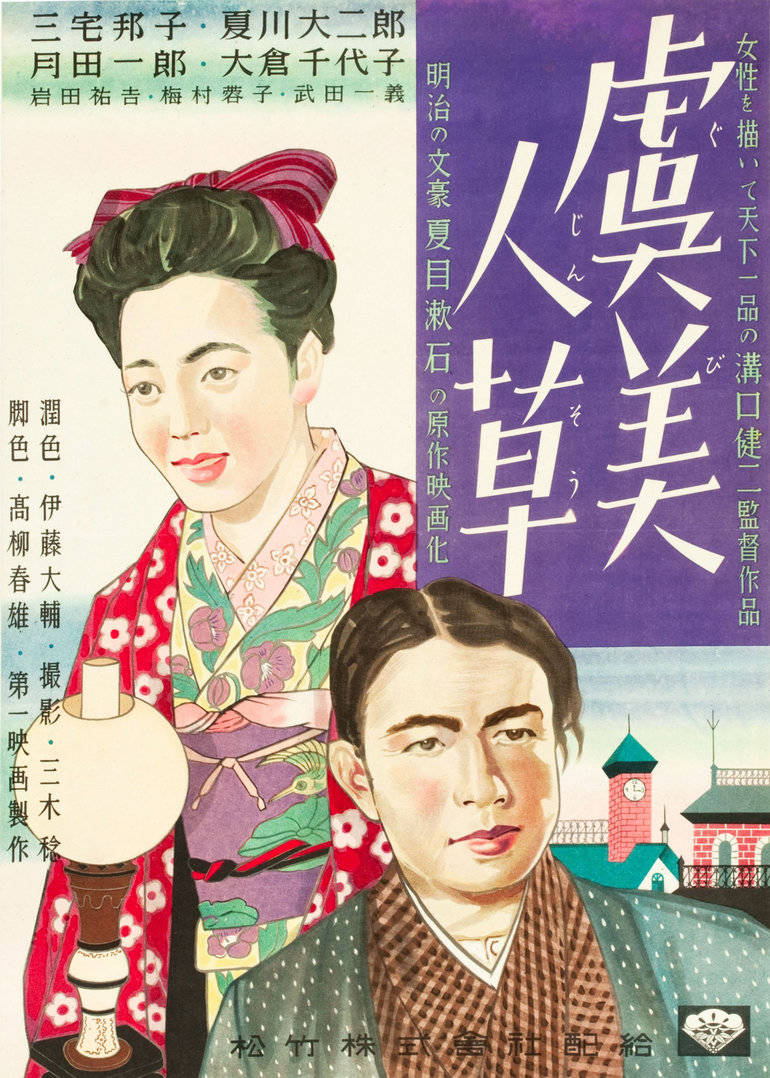
Most closely associated with tales of female suffering in a patriarchal society, Kenji Mizoguchi’s signature themes are already apparent in the films which survive from the pre-war era. Even so, 1935’s Poppy (虞美人草, Gubijinso), adapted from a novel by Natsume Soseki, largely sidesteps the parallel powerlessness of its twin heroines in placing the central dilemma firmly on the shoulders of its conflicted hero, a young man who owes everything to a benevolent patron whose daughter he is expected to marry but is captivated by a young and capricious heiress and consequently torn between duty and passion.

In late Meiji, an old man, Inoue (Yukichi Iwata), washes graffiti off his front wall apparently scrawled by a man desperate to marry his daughter Sayoko (Chiyoko Okura) whose beauty he claims puts other to shame (Inoue looks on approvingly at the last part, and decides to leave it). Inoue intends his daughter to marry Ono (Ichiro Tsukida), a young man he took in as a starving orphan and raised to adulthood. Ono is currently in Tokyo preparing to complete his doctoral thesis and the pair are very much looking forward to moving there to live with him. While Ono has not forgotten them, he has embarked on a life of his own as a Tokyo student, falling in love with the flighty Fujio (Kuniko Miyake) while working as a part-time English tutor. She too is keen to marry him, despite the fact she is technically still engaged to someone else, Hajime (Daijiro Natsukawa), in a match which was orchestrated by her father many years ago. Fujio’s mother is acutely concerned with her marriage for a number of reasons, the first being that Kingo (Kazuyoshi Takeda), her step-son and the family’s heir, refuses to marry and rejects his inheritance but if Fujio remains single then the fortune reverts to him. Secondly, she dislikes the idea of Hajime as a son-in-law because he has repeatedly failed to secure a position in the diplomatic corps and is currently unemployed.

The problem rests with Ono, whose conflicting desires are characterised not so much in terms of love versus obligation but as ambition versus constancy. Instead of explaining in person to Mr. Inoue that he is grateful to him and has no intention of rejecting their family but thinks of Sayoko as a sister and therefore would like to politely decline the idea of marriage, he sends a friend, Asai (Toichiro Negishi), to explain that he’s too busy to think about weddings and wants to defer the conversation until after his thesis is completed. Of course, Mr. Inoue sees through this thin excuse right away and is offended on his daughter’s behalf. The friend warns him that Ono is “worthless”. “He’s interested in what’s fashionable. He’s stupid” Asai goes on, implying that he is not exactly choosing to marry the woman he loves rather than honour a vague suggestion from the past, but is opportunistically seizing the chance to marry up into the high society of late Meiji Japan (a feat near impossible for a man who was once a starving orphan).

Love is not so much a part of the equation as one would expect and neither are the feelings of either woman held in very high regard. Nevertheless, Kingo eventually tries to warn Hajime away from his sister, explaining that “women who seek pleasure are dangerous”. “When I fall in love, I won’t just sit quietly waiting for my lover. I’ll make passionate love to him” Fujio flirtatiously tells Ono, dangling a precious watch from her father which serves as an indication of betrothal and membership of the family. Fujio and her mother are actively using the only means at their disposal to control their own futures by making a match they believe more beneficial which will ensure they keep themselves within the family succession, suggesting that Fujio, like Ono, is acting less out of “love” than self-interest, something which is later reinforced by her offering of the watch to Hajime who casts it to the waves in insistence that he was never interested in what it represents. 

While Asai recounts his meeting with Inoue, he tells Ono that he’s making the right decision and that his best option from all angles is to marry Fujio, but Hajime overhears him and chimes in with contrary advice that he should think carefully and be true to himself. In essence, all Hajime is telling him is to own his decision and make sure he is willing to live with it or else be consumed by self loathing and misery. By this point, we perhaps expect that modernity will win, that all will accept that it is unreasonable to expect anyone to sublimate their own desires to honour an old obligation and most particularly that the women be expected to submit themselves to dynastic marriages arranged by their fathers, but the resolution is quite the reverse. The modernist Fujio is twice rejected, while Sayoko and her father leave the modern capital for the ancient Kyoto. Ono is forced into a reconsideration of his spiritual debt to the Inoues who he would be betraying in marrying Fujio for social gain which is to say that feudalistic, patriarchal values are subtly reinforced while Western individualism is disparaged with only Hajime standing up for emotional integrity which neither philosophy particularly respects. In the end, nobody is happy but everyone is resigned to their particular misery as their burden to carry in knowledge that they have acted properly which is perhaps as close to a condemnation of a still oppressive society as you could get in 1935.