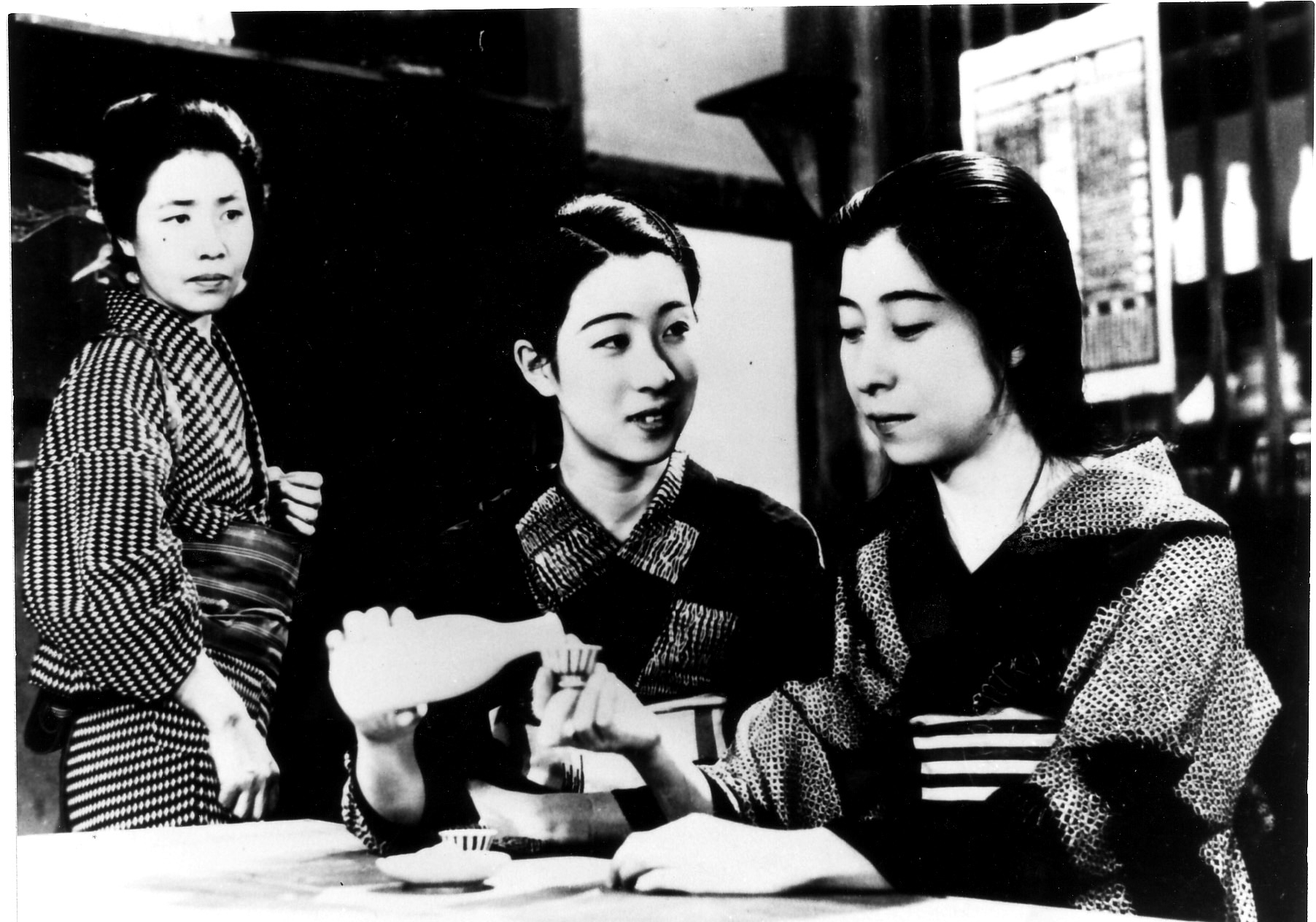
A Story of Floating Weeds (浮草物語, Yasujiro Ozu, 1934)

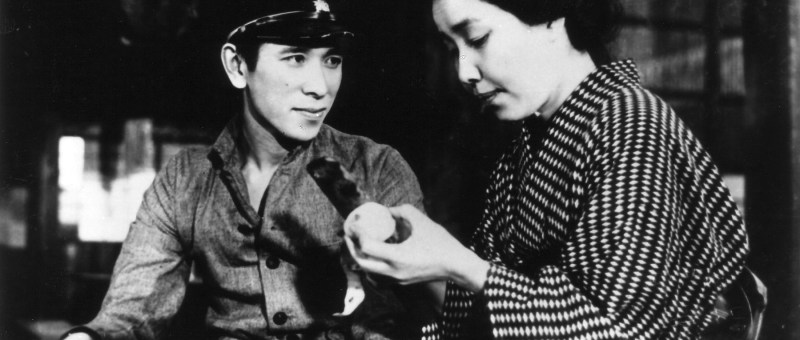
Japanese cinema is filled with tales of maternal self-sacrifice which is more often than not rejected by ungrateful children unable to understand the depths of a mother’s love. More contrarian than most would have it, Yasujiro Ozu’s abiding interest is with fathers and particularly with those who are flawed but loving. 1934’s A Story of Floating Weeds (浮草物語, Ukigusa Monogatari) which he later remade in colour 25 years later, is a tale of one such father and another of his “Kihachi” movies, but situates itself in a liminal space defined by Kihachi’s precarious position as a member of a virtual underclass of travelling players. 

Kichachi’s (Takeshi Sakamoto) troupe is returning to a small town after four years where they hope to stay a year. Unbeknownst to the other members, Kihachi has an ulterior motive in that the town is home to his former lover Otsune (Choko Iida) and his illegitimate son, Shinkichi (Koji Mitsui) who thinks that Kichachi is just a family friend and that his father was a civil servant who has now passed away. As is usual in travelling player stories, the troupe is in crisis and on the verge of disbanding, so Kihachi’s frequent absences do not go unnoticed, particularly by his current mistress Otaka (Rieko Yagumo) who has a petty and vindictive streak. When one of the veteran actors spills the beans, she marches straight over to Otsune’s to make trouble but Kihachi, sick of her possessive behaviour, breaks up with her. To take revenge, she bribes another actress, Otoki (Yoshiko Tsubouchi), to seduce Shinkichi. 

The central issue is one of Kihachi’s frustrated paternity. It’s clear that he couldn’t be physically present for his family but has always done his best to support them financially while Otsune runs a small restaurant. They are not married and their present relationship seems to be more one of companionship than romance but whatever label they might put on it they get along well and both deeply care for their son. While in town, Kihachi busies himself with fatherly activities, playing board games with Shinkichi or fishing in the local stream. It pains him that his visit may be short and that Shinkichi, who seems to like him a great deal, has no idea he is his son. 

That is largely because Kihachi’s only hope in life is that he spare Shinkichi from the depressing life of a travelling player. He has been paying for his education and Shinkichi is now almost a man, apparently a post-graduate student at an agricultural school. When he expresses an interest in coming to see the show, Kihachi seems panicked and tells him the kinds of shows he does are not for people like him and that he should stay home and study. Shinkichi laughs at the fatherly advice but little knows that it comes from a place of shame. Travelling players are regarded as an underclass. They are often barred from inns and not considered polite company.

“My son belongs to a world better than yours,” he shouts to Otaka during a heated, rain-drenched argument during which she threatens to expose him. Otoki, the other actress, was originally reluctant to enact Otaka’s plan, but later found herself falling for Shinkichi. Perhaps a young man bedding a travelling actress isn’t a grand shame or much of a problem for him, at least not so much as to provoke Kichahi’s despair in exclaiming he has caused his son’s ruin, but destroys his father’s hopes of keeping him out of that untouchable world for which he had sacrificed so much including his paternal love. 

Yet like the ungrateful child of a hahamono, on learning the truth Shinkichi rejects his sacrifice and feels only his abandonment, refusing to believe that any father could be so “selfish”. The rejection comes at a low point, immediately after Kihachi loses the acting troupe and considers returning to Otsune for a settled, ordinary life as a husband and father. Otsune scolds her son, reminding him that all he wanted was to give Shinkichi the settled, ordinary life that he could never live as a travelling player. It seems this life will always elude him, he is barred from his own home and must forever wander. Being a good father means he must keep far away from his son, a floating weed with no place to call home.
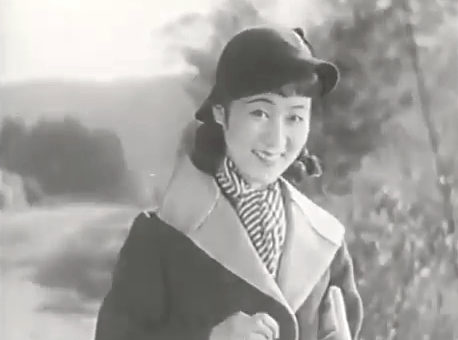
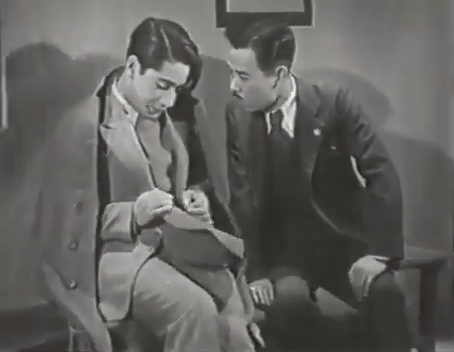
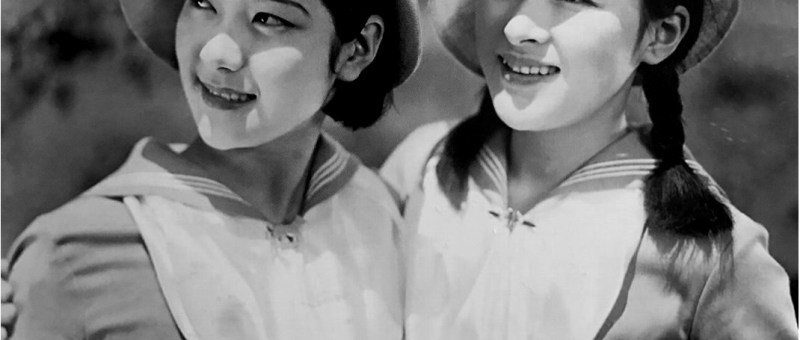
My Elder Brother (私の兄さん, Yasujiro Shimazu, 1934)

A wastrel son and runaway daughter get a few lessons in filiality in Yasujiro Shimazu’s genial ‘30s comedy, My Elder Brother (私の兄さん, Watashi no Niisan). Reflecting the changing the times, the film is in many ways about navigating the sometimes fraught relationships among a blended family though like many hahamono, it’s the stepson who is most devoted to his mother while the birth son is consumed by a sense of guilt and inadequacy in his accidentally awkward positioning within the family hierarchy.

The filial piety of eldest son Shige (Reikichi Kawamura) is established early on by the fact he’s not at work because his mother is ill and he’s off visiting her. He does in fact return late at night, though there’s a question mark over his qualities as a boss as the drivers at the taxi firm he runs remark that he’s been ignoring their attempts to negotiate with him for better conditions not least the provision of assistants which has been given additional weight by one driver’s experience with a disturbed fare who attempted to strange him with his belt.

The strange and violent opening sequence in which a cabbie is attacked by a crazed passenger is never referenced again and out of keeping with the otherwise lighthearted tone of the film though does add to a sense of danger later echoed in the appearance of two guys who first seem like yakuza but are actually just two grumpy old men trying to retrieve a young woman who’s run away in defiance of an arranged marriage. In any case, tearaway brother Fumio (Kazuo Hasegawa), who arrives drunk in the back of a cab, has indeed fallen into bad company with yakuza whom he describes as his friends though Shige warns him they’re probably just after his money.

Fumio has returned because he’s learned his mother is ill, though he’s reluctant to see her given his present condition. When he does actually meet her, she says that she hates him and calls him a good-for-nothing, worthless man. It seems her animosity is partly motivated by a sense of guilt and embarrassment that her biological son has brought shame to the family she married into and especially to Shige. For his part, Shige acknowledges that he also felt resentful when Fumio and his mother moved in but explains that he was still a child clinging to the memory of his late birth mother. Fumio explains to the young woman he picks up, Sumako (Kinuyo Tanaka), who is on the run from her uncle and the man her stepmother wants her to marry, that he left home because of his precarious status and sense of inadequacy but liked the sense of freedom his independence gave him even if he is ashamed of the kind of life he’s lived on the fringes of the underworld. 

Sumako is experiencing a similar dilemma as she feels herself unable to bond with her stepmother to the extent that she has not been able to articulate that she objects to the arranged marriage her relatives have set up for her. She laments that if it were her birthmother she should be able to tell her everything, but Fumio counters that Shige had been jealous of him because he could exchange harsh words with his mother because of their closeness in a way he never could because he is not her biological son. Reinforcing a sense of obligation between parents and children might have been an important message in the mid-1930s, but the film is perhaps unexpectedly progressive in its openness and desire to embrace these then considered less usual family arrangements born of second marriages in emphasising the brotherly bond between the two men and Sumako’s successful escape from an unwanted marriage simply by speaking her true feelings to her mother not to mention the suggestion of a cross class romance between rich girl Sumako and the middle-class Fumio.

Meanwhile, the film also has an international bent in the prominent signs for Chevrolet and Hollywood-esque aesthetics, drawing inspiration from American and European crime films for the violent opening sequence and underworld setting. Shimazu hints at the shadiness of Fumio’s backstreets life, but equally of Sumako’s uncle and his moustachioed friend lending an undertone of darkness to the mid-30s society but otherwise keeps things light in the innocent courtship between Fumio and Sumako who can mediate their attraction only by remarking on the beauty of a sunset. 


Our Neighbor, Miss Yae (隣の八重ちゃん, Yasujiro Shimazu, 1934)

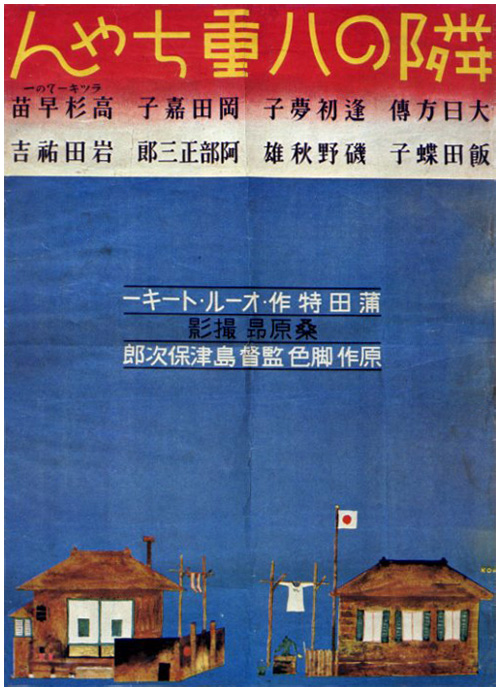
Our Neighbour Miss Yae poster

Retrospectively, Japan in the 1930s looks like a time of misery and darkness, permanently overshadowed by oppressive government and coming tragedy. However, life went on much as it had before with all its customary joys and sorrows. The films of Yasujiro Shimazu are indeed among the least politicised of the era (which might make them, in an odd way, among the most politicised) and Our Neighbour, Miss Yae (隣の八重ちゃん, Tonari no Yae-chan) is no exception in its presentation of the everyday easiness between two very close families and the burgeoning romance between the younger daughter and older son of each.

Notably, the film opens with a scene of intense suburbia as the brothers, middle-schooler Seiji (Akio Isono) and university student Keitaro (Den Obinata), play catch in the yard training for Seiji’s big game at which he has a shot at playing at the legendary Koshien stadium. As young men are want to do, they break next-door’s window but luckily Mrs. Hattori (Choko Iida) across the way is a nice woman who hardly minds, especially as this is such a regular occurrence that the families almost have an account with the local glazers.

The Hattoris and the Arais are so close that it’s no problem at all for Keitaro to jump the fence and hang out with Mrs. Hattori, who even offers to feed him, when he arrives home early to find himself locked out while his mother (Ayako Katsuragi) has gone shopping. Despite his ease in the Hattoris’ home, he is flustered when the girl next-door, Yae (Yumeko Aizome), gets back from a school with a friend in tow. Even more so when he overhears the two girls’ typically teenage conversation in which they briefly touch on Yae’s possible feelings for him while somewhat provocatively discussing breast size – something Keitaro awkwardly chastises Yae for when she returns to the living room in more comfortable clothing.

Shimazu dramatises Keitaro’s embarrassment through his ongoing clumsiness – first of all spilling tea on his floor cushion and attempting to hide it by folding the cushion in half and placing it oddly between thighs and calves, and then by tipping pickles everywhere while awkwardly trying to share them with Yae (much to the amusement of her perspicacious friend who has missed absolutely nothing in this series of awkward exchanges). Yae eventually tries to take the cushion back as it’s a good one only meant for “guests” (which she evidently does not regard Keitaro to be) only to discover his mishap with the tea which is something they can all have a good laugh over. Through all of this Keitaro and Yae seem almost like a young couple already, gently bickering but with real affection. It’s all very innocent but also flirtatious to the extent that the offer to darn a pair of socks almost seems like an elaborate metaphor but then really what could say true love better than a willingness to deal with someone’s stinky footwear?

Seiji is forced to recall his brother’s cute and innocent piece of flirtatious banter when commiserating with Yae’s melancholy older sister, Kyoko (Yoshiko Okada), who returns home unexpectedly after having apparently walked out on an unhappy marriage. An act unthinkable to her mother, Kyoko resolves to have a divorce on account of her husband’s improper relations with the maid and generally frivolous character. Keitaro jokingly said that if he had a wife he’d make her put his socks on for him everyday and she’d have to do it. Keitaro might have been joking, but there’s something in what he said and in Kyoko’s insistence that she doesn’t want to be so “submissive”, preferring to be alone rather than spend another second with a man for whom she has no respect.

Kyoko is, after a fashion, the film’s antagonist in that she begins to come between Yae and Keitaro, destabilising the easy relationship between the families by introducing unexpected tension into the otherwise happy Hattori home. Longing to return to a more innocent girlhood but mindful that she can no longer be as “pure” as Yae, Kyoko is torn between two different kinds of being. She takes on the male role, using her status and position in an attempt at seduction. Becoming a third wheel on Yae’s attempt to ask Keitaro out to the pictures, Kyoko buys the whole gang dinner at an expensive restaurant at which she gets roaringly drunk and falls asleep on Keitaro’s shoulder in the cab on the way home. Noticing Keitaro’s discomfort and irritated on a personal level, Yae asks her to move only for Kyoko to state, ironically, that as she’s paid for the evening she’s sure he can put up with it.

In any case, Kyoko becomes an unanswered question. She remains trapped, wanting her independence but unable to access it. She refuses to return to her husband, but finds scant support from her family who remain preoccupied with potential scandal and the difficult future prospects for a divorced woman. Despite Mrs. Arai’s reassurance that perhaps those things no longer matter so much to younger people, which both women seem to view as a positive development, Mrs. Hattori fails to see the effect her disapproval is having on her daughter’s mental state until it is too late. 

Shimazu doesn’t seem to have much of answer for what to do about women like Kyoko save to leave the question dangling. He does not send her back to her (possibly abusive) husband or find a way for her to move past her difficult circumstances but allows her to become another lost woman whose sense of possibility has been gradually eroded by an oppressive society. Nevertheless, counter to her melancholy we have the girlish innocence of Yae who seems to be on a path of natural, easy connection with the straightforward Keitaro. Even so, her brief idyll is then ruptured by political interventions which might take her far away from her putative love. This potential disaster is eventually partially reversed, mimicking the familiar pattern that one family must be broken in order for another to be formed though in a somewhat perverse fashion that sees Yae become a temporary member of the Arai household but as something more like a sister.

This final intervention of the political is the only hint of external darkness. Shimazu’s vision of ordinary contemporary life is a cosmopolitan one filled with Hollywood glamour which references Fredric March and takes the gang to watch a fairly disturbing Betty Boop cartoon on the big screen while the boys dream of baseball glory and the parents look on mystified but happy. Yet despite the generalised happiness of the serene suburban world they inhabit, there is a mild note of disquiet presented by a deliberate lack of resolution which sends Yae, no longer a neighbour, skipping off happily into the future full of childish innocence while others make their way in a much less certain world.


Eclipse (金環蝕, Hiroshi Shimizu, 1934)

Shimizu Eclipse 1

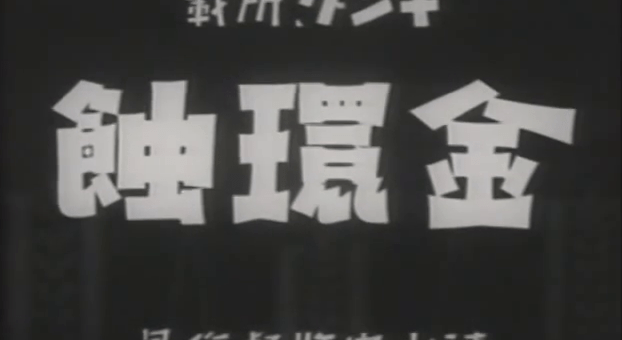
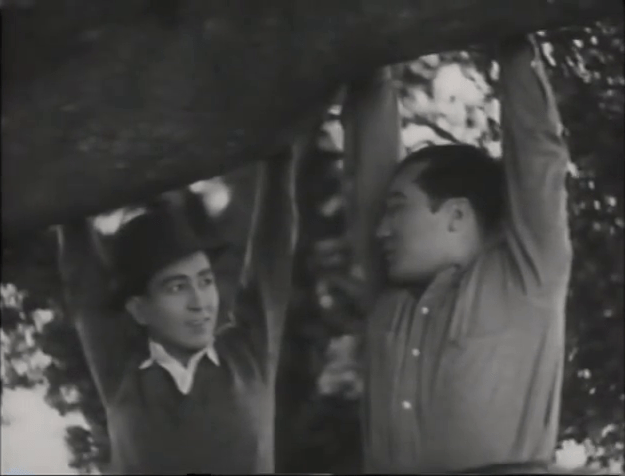
Though most often remembered for his contribution to the cinema of children, Hiroshi Shimizu was also a practiced chronicler of his difficult times. 1934’s Eclipse (金環蝕, Kinkanshoku), unlike much of his other work from the period, avoids direct reference to Japan’s increasingly global or imperialist ambitions but paints its rapid shift towards “modernity” as dangerous and potentially tragic for the unlucky few who for one reason or another are unable to secure their passage towards a harmonious and prosperous future. Adopting the form of a classic romantic melodrama, Eclipse is a bittersweet exploration of corrupted social virtues which ends on an ironic note of defeated victory.

Shimizu begins in a traditional rural village which is all abuzz because prodigal son Seiji Kanda (Shiro Kanemitsu) – now a big shot lawyer in the city, is set to return and, rumour has it, is on the look out for a good country wife. Regarding a marriage to a promising young man like Seiji as the highest of prizes, the village women gossip about whom he might choose and correctly conclude Kinue Nishimura (Hiroko Kawasaki) is likely to be the front runner given her comparatively high education level, beauty, poise, and kindness. Kinue, however, has long been in love with her diffident cousin, Shukichi Osaki (Mitsugu Fujii), who now finds himself in a difficult position as Seiji’s best friend and the go-between charged with communicating his intention to marry. Called to a secret meeting by an old watermill, Kinue is shocked and offended when Shukichi proposes on behalf of someone else, strongly refusing the proposal and reminding him of all the times they had spent together during which she believed an attachment had been formed. Shukichi, whose family is impoverished, does not reject her affections but claims not to want to stand in the way of his friend’s romantic dreams.

Kinue, perhaps unwittingly setting up the ongoing drama, asks if she is to sacrifice her heart and marry a man she does not love and believes would ultimately be unhappy with a woman who yearns for someone else, in order that Shuikichi may continue to feel noble. In the end, Shukichi tries to make her decision for her by running away to the city in the hope of making a life for himself in the same way that Seiji has done. Kinue, brokenhearted, rejects the idea of marrying Seiji and runs off after him only to end up working as a bar girl under the bright lights of Tokyo. Meanwhile, Shukichi discovers that the bonds of obligation which carry so much weight the village are all but worthless in the city when his various contacts refuse to see him and he finds it impossible to gain promising employment. His big break comes when he is knocked over by the chauffeur of the man who just offered to pay his train fare back to the country and thereafter is taken into the family home as a tutor for the youngest son on the insistence of the forthright “modern girl” daughter, Tomone (Michiko Kuwano). Needless to say, the romantic drama isn’t over as Tomone also has a “cousin” who is in love with her and is also sought by Seiji who was her tutor while he was in college and she in school.

The values of the old world and the new are in constant conflict with each other though ultimately it is the failure to act decisively on one’s emotions which causes the greatest harm. Shukichi, knowing his family is poor and a marriage to Seiji the “better” social and financial option for Kinue, insists on nobly sacrificing himself in what he sees as her interest but in doing so rejects her own agency or right to choose her future, assuming she will simply passively pass into the arms of Seiji with no resistance. Kinue, however, resists by following him to Tokyo but, unable to find him, is forced into the sex trade to support herself. Meanwhile, Shukichi continues to break hearts in the city – firstly that of Tomone who has apparently fallen in love with him despite their class difference, but also that of Kayo (Yoshiko Tsubouchi) – the sister of the chauffeur who knocked him over. Still in love with Kinue he diffidently (but not categorically) rejects the affections of the two women but also refuses to act on his feelings for Kinue until he tries a last ditch attempt to “rescue” her from a fall into a life of prostitution through a worrying act of frustrated physical violence (something which ultimately fails).   

The final resolution is brought about by Seiji who, unlike Shukichi, has been able to reconcile his essential nobility with the forward moving nature of the times. Seiji, figuring out that he’d come between a loose arrangement between Kinue and her cousin, is full of remorse and steps back without a second thought, desiring only happiness for all rather than victory or conquest. Again, at the end, becoming the second choice match for Tomone, he returns to fix what he half feels he has broken by “rescuing” Kinue himself through an act of gentleman’s diplomacy and then giving his friend a good talking to. The problem becomes less of one of East and West, town and country, past and future, but personal integrity. Tomone laments that her “selfishness” has caused pain to others – something for which she is trying to make amends in becoming a “good wife” to Seiji, but this is a lesson Shukichi has been slow to learn. His failure to integrate his conflicting desires coupled with a feeling of social inferiority due to his family’s reduced circumstances and standing in the village has effectively created this web of broken hearts and ruined futures, all of which might have been avoided if he had been braver and chosen to stay at home with the woman he loved at his side, living a life of simplicity but with emotional integrity.

These twin destinies are reinforced by the final scenes which find Seiji and Tomone boarding a boat to the West to immense fanfare and celebration, while Kinue and Shukichi are perched aboard a baggage train, he standing and she sitting dejectedly, silent and apart as the rails speed away behind them. The city recedes and the chance of future happiness for our reunited lovers seems slim despite the conventionally romantic nature of their togetherness as they return home drenched in defeat. Seduced and betrayed by the bright lights of Tokyo, Kinue and Shukichi seem bound for the life they should have lived if they’d only been brave enough to fight for happiness at home rather than succumbing to the false promises of modernity but it remains to be seen if their time in the city can be “eclipsed” by a new hope for a traditional future or will continue to overshadow their simple and honest lives in the days to come.


Street Without End (限りなき舗道, Mikio Naruse, 1934)

Street Witout EndNaruse’s final silent movie coincided with his last film made at Shochiku where his down to earth artistry failed to earn him the kind of acclaim that the big hitters like Ozu found with studio head Shiro Kido. Street Without End (限りなき舗道, Kagirinaki Hodo) was a project no one wanted. Adapted from a popular newspaper serial about the life of a modern tea girl in contemporary Tokyo, it smacked a little of low rent melodrama but after being given the firm promise that after churning out this populist piece he could have free reign on his next project, Naruse accepted the compromise. Unfortunately, the agreement was not honoured and Naruse hightailed it to Photo Chemical Laboratories (later Toho) where he spent the next thirty years.

Although Street Without End is a conventional melodrama in many senses, it’s also quite a complex one playing with multilayered dualities and symbolic devices. After beginning with some brief pillow shots of the real city streets, we meet the stars of the show, Sugiko and Kesako, who are both waitresses in a local tea room. Whilst walking together, Sugiko is presented with an offer from a movie studio currently looking for new talent but isn’t really convinced, though the money would come in handy for her younger brother’s college tuition. A little while later she gets another offer from her boyfriend, Harada, who wants to get married as his parents are trying to pressure him into an arranged marriage at home. Sugiko agrees but is knocked over by a car on her way to meet him with the result that Harada thinks she’s changed her mind and goes home alone. Slowly she grows closer to the man who knocked her over, Yamanouchi, and eventually marries him instead but quickly finds herself out of place in his upperclass world.

Kesako, by contrast, ends up picking up on Sugiko’s job offer and joining the studio herself. She takes her unsuccessful artist boyfriend with her though their relationship suffers as she falls in with the studio crowd. Both women get what they thought they wanted, only to discover it to be not what they wanted at all.

Sugiko’s story is the main thrust of the narrative as she marries up through misfortune after Yamanouchi carelessly runs her over. He himself plays the part of the sensitive nobleman who’s bullied by his more conservative mother and sister who’ve picked out a girl exactly like them for him to marry. In a gesture that’s probably born out of rebellion rather than love, Yamanouchi brings Sugiko home as his wife but then leaves her to the mercy of the people he most feared himself. An ordinary working class woman, Sugiko quickly angers her mother in law by treating the servants like actual people and not having the poise expected of a Yamanouchi wife. Yamanouchi is too soft to defend himself, let alone his choice of wife, and so Sugiko’s life eventually becomes untenable sending Yamanouchi off the rails with it. Naruse includes a less than subtle intertitle here which states “EVEN TODAY, FEUDAL NOTIONS OF FAMILY CRUSH THE PURE LOVE OF YOUNG PEOPLE IN JAPAN”, which makes his position plain but seems a little strong for the anti-romantic nature of the relationship between the rebound Sugiko and the “getting back at mother” Yamanouchi.

Both Yamanouchi and Harada were interested in Sugiko as shield against an unwanted arranged marriage. Sugiko was unconvinced by both offers but her decision to marry Yamanouchi is one which ultimately went against her unconventional nature (as borne out by her unconventional decision to leave it). Sugiko and Kesako appear as mirrors of each other as Kesako nabs Sugiko’s job offer and starts to climb the studio ladder. Just as Sugiko finds the life of an upperclass housewife is not all she thought it would be, so Kesako begins to find the acting profession, which she’d previously dreamed of, equally unfulfilling. By the time we loop round the end, we arrive at the beginning again with both ladies in pretty much the same space they were in before though perhaps a little clearer about what it is they want from life. The final scene is one more of acceptance and self realisation than it is about moving forward, but then there’s a curious reappearance of a familiar face on a passing bus. It remains to be seen if this is hope leaving town or merely circling.


Street Without End is the fifth and final film included in Criterion’s Eclipse Series 26: Silent Naruse box set.

Crossroads of Youth – Barbican centre 2nd August 2012

London was treated to something very special today as Korea’s oldest surviving silent film was screened at the barbican exactly the way its original 1934 audience would have seen it.

Young-bok has been adopted into Bong-Sun’s family as her intended husband. For seven long years he’s done everything that’s been asked of him, no matter how tedious or demanding, without complaint. Now 21, Bong-sun’s father is beginning to think the time for Young-bok’s marriage is near seeing as Bong-sun is now sixteen. However, tragedy strikes as Bong-sun is seduced by another man from the village. Heartbroken, Young-bok takes off for the city to make something of himself there, leaving his mother and sister behind in his home village.

Although Yong-bok is a good and kind young man, his heartbreak leads him to waste his life in drink. When working at the station one day he catches sight of the man who crushed all his young hopes in the village – little does he know of the havoc he is still to wreak on Young-bok’s city life.

Unbeknownst to Young-bok, his younger sister has come to the city to look for him following the death of their mother. Unable to find him she takes a job as hostess in a bar where she falls prey to the same man that ruined Bong-sun and an even worse friend of his. Young-bok also begins a tentative romance with a girl, Ge-soon, who pumps petrol but she has her own problems as her father’s ill health and rising debts have decreed she is to become the third wife of a money lender to satisfy them. Can these three young people find each other and happiness despite the poverty and hardship to which they’ve been subjected?

In contrast to the way silent films were usually seen in the west, in Korea rather than the intertitles we use to give crucial information of the story a live narrator (byeonsa) would interpret the action and/or act some of it out. As I understand it director Ahn’s original script is lost (though fortunately a brief synopsis had survived) and a new version had to be put together by closely watching the film and filling in the gaps.  Kim Tae-yong director of Late Autumn and Family Ties effectively re-directed the piece for for the stage along with Cho Hee-bong who fills the role of the narrator. The new script is obviously not afraid to embrace the melodrama of the film’s storyline in a self aware way, even throwing in a few knowing jokes at its own expense.

The performance began with a song by two young actors portraying Ge-soon and Young-bok, both of whom had absolutely wonderful voices and interpretation. Even though there were no subtitles for this first part it didn’t matter as the heartfelt intention of the song came across perfectly. Once this finished the film started playing with English subtitles for what the narrator was saying. Occasionally the subtitles didn’t cover the length of the narrator’s speech or perhaps missed some of the nuances of his humour but there was never a problem knowing what was going on. There was then another song about half way through covering a particularly intense scene between Ge-soon and Young-bok with the narrator adding occasional dialogue in the middle and a final song song functioning as an epilogue. The film was accompanied throughout by a band of four musicians playing an energetic and lively score which worked extremely well with the film and atmosphere.

All in all it was a fascinating and extremely enjoyable experience which deserves to be seen as widely as possible.