Samurai Hustle (超高速!参勤交代, Katsuhide Motoki, 2014)

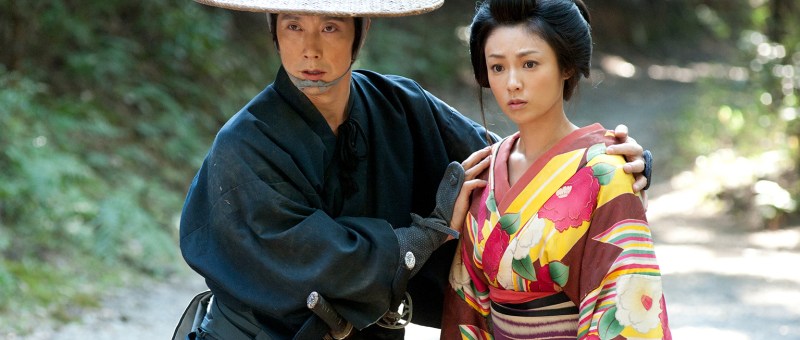
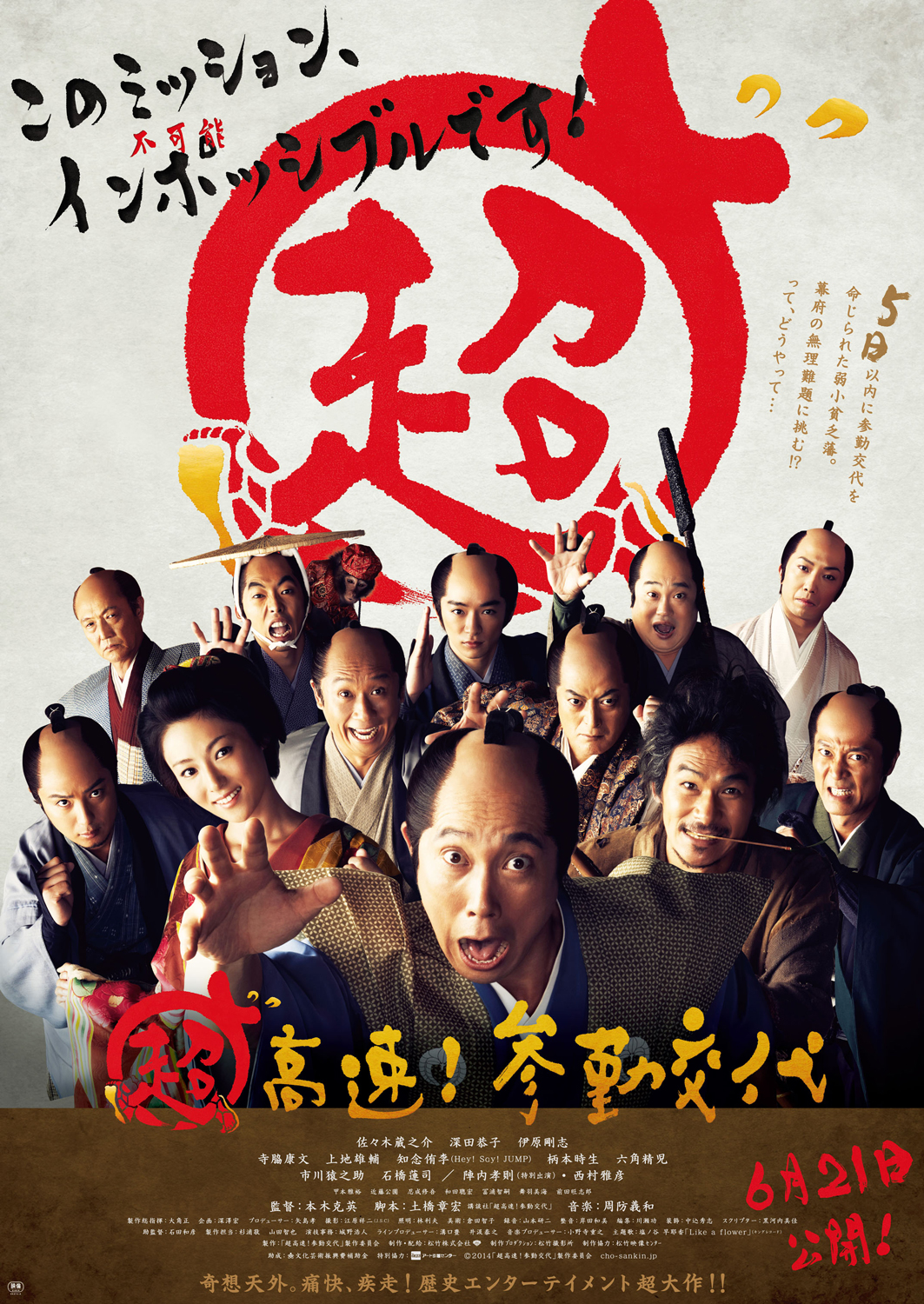
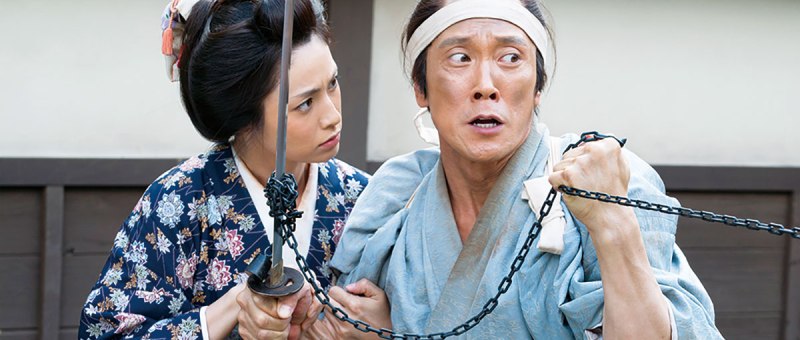
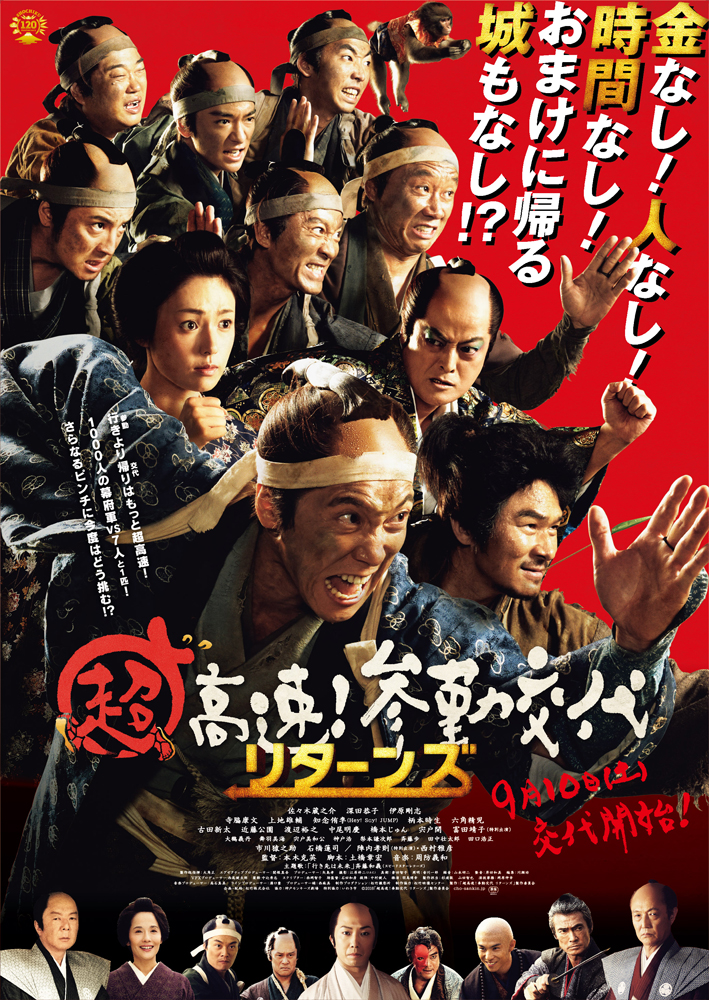
A kindhearted lord finds himself in deep trouble when he’s suddenly called back to Edo despite having just returned from his biennial service in Katsuhide Motoki’s jidaigeki comedy Samurai Hustle (超高速!参勤交代, Chokosoku! Sankin Kotai). Set in 1735, the film is in some senses unusual in pointing the various class biases even with the hierarchal samurai society as the tiny rural clan at the film’s centre are swept into intrigue by the machinations of an ambitious courtier who thinks they lied about their goldmine being extinct and plans to get his hands on it by dobbing them in to the Shogun.

The problem is that they really weren’t lying. The Yunagaya clan is dirt poor, especially after having spent a small fortune travelling to Edo and back. In this era, even distant lords were called to Edo every two years to serve at court. They were expected to parade to the capital in style, showing off their wealth and status as they go which is of course inordinately expensive. The expense was the point. Practices like these along with forcing clans to move domains on a whim were designed to weaken their resources so they’d have no recourse to rebellion even if they were even more annoyed about being forced to travel back and fore for no real reason. 

It took Lord Naito (Kuranosuke Sasaki) and his retinue 10 days to walk home, which is why it’s even more of a shock to get a letter telling them to high-tail it back in five or risk being dissolved by the shogun. Evil retainer Nobutoki (Takanori Jinnai) knows it’s impossible for them to arrive on time which is how he plans to get his hands on the gold. What he didn’t count on, however, is the unexpected scrappiness of a “backwoods samurai” who’s used to having to find ingenious solutions to difficult problems because he doesn’t have the money to solve them. Nobutoki is essentially a snob who looks down on country folk and thinks Naito does not befit the rank of a samurai anyway, sneering at his humble gift for the Shogun of some locally sourced daikon pickles. 

The homeliness of the daikon signals Naito’s down to earth nature as a fairly egalitarian samurai who doesn’t really care about hierarchy and status even if he knows he has to play the game. What he cares about is the safety and happiness of his people, which is one reason he’s going to bust his arse to get back to Edo and clear his name. Aside from his humanitarian principles, also giving away some of their rice stocks to neighbouring clans suffering during a time of famine, Naito is also thought of as an eccentric because of his severe claustrophobia which makes it impossible for him to close the door when using the bathroom, let alone travel in a palanquin, though he’s found an ingenious solution for that one too. 

In an odd kind of paradox, he becomes a defender to proper samurai values in his opposition to Nobutoki who plays fast and dirty, sending out ninja assassins on the road to try to ensure he won’t make it to Edo before the deadline. Meanwhile, he bonds with a feisty sex worker who, like him, is dealing with childhood trauma and is sick of entitled noblemen who look down on the poor despite being a fellow human who as she puts it poops and screws just like everyone else. In a way she frees him from the confines of his hierarchal existence by helping him overcome his claustrophobia, at least while she’s at his side, while he saves her from her oppression by transgressing class boundaries and bringing her into the samurai world if only as a concubine.

Nevertheless, as he warns her, being poor is hard even when you’re a samurai, and ironically his circumstances aren’t much better than hers even if he has a superficial level of comfort and security tempered by his genuine ability to appreciate the simple charms of daikon over fancy Edo cuisine. After all, sometimes samurai become peasants or peasants become samurai and for an impoverished lord like Naito the distinction is fairly thin, though he evidently does his best to protect those around him from both sides of the class divide while remaining unafraid to tell the Shogun exactly what he thinks of him. After all, you’ve got to roll with the times, especially if you’re a backwoods samurai at the mercy of a harsh and arbitrary system but also far enough away from the mechanisms of power to begin to ignore them. 


Trailer (no subtitles)
Three Adventures of Brooke (星溪的三次奇遇, Yuan Qing, 2018)

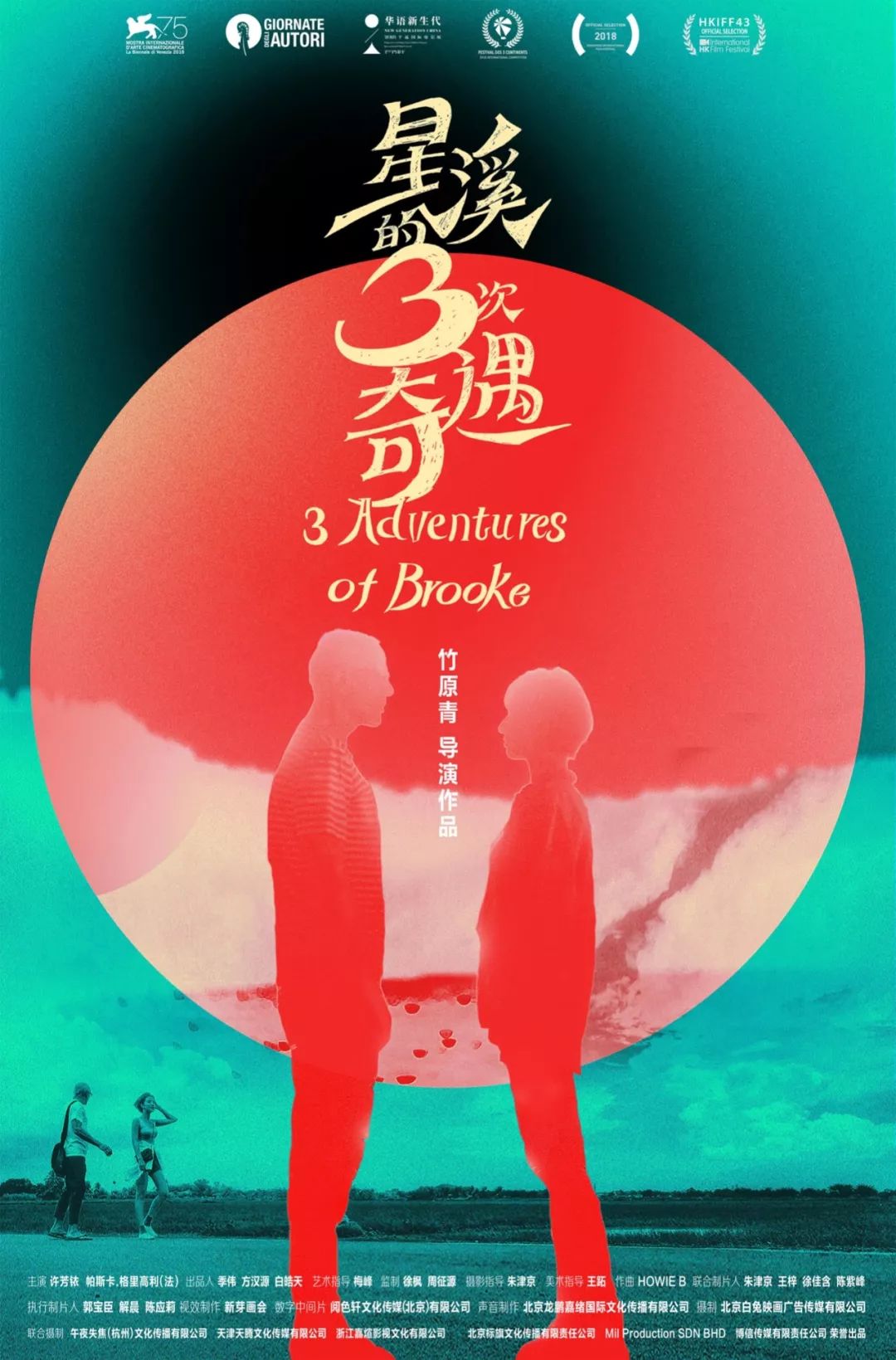
“The people you meet are only reflections of your own state of mind” according to a sympathetic tarot reader in Yuan Qing’s Three Adventures of Brooke (星溪的三次奇遇, xīng xī de sāncì qíyù). Perhaps that’s why she herself is slightly different each time we meet her, experiencing three sets of parallel encounters as she searches for meaning in a foreign land. Echoing Rohmer’s The Green Ray, Brooke’s three encounters allow her to examine more of herself until she learns to open her heart, no longer suspicious or afraid but ready to see the world’s beauty even in its sadness. 

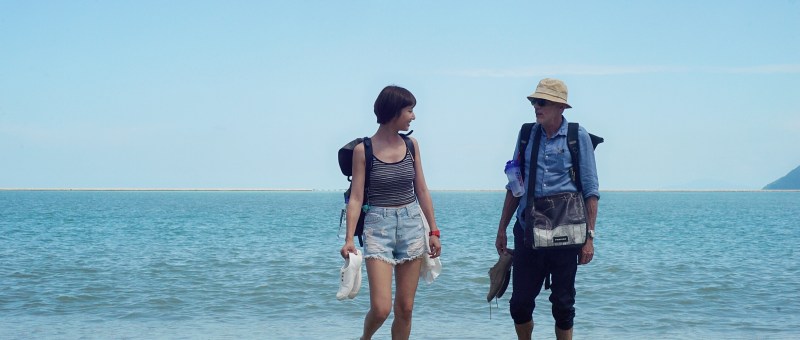
20-something Brooke (Xu Fangyi) has come to Alor Setar in Malaysia from Beijing. This appears to be a concrete fact, though many other things about her will change, at least in our perception of her. On June 30, her bicycle gets a puncture and she’s stuck, alone, in the middle of a country road without knowing who to ask for help. A series of strangers come to her rescue beginning with Ailing (Ribbon Ooi), a local girl who can speak Mandarin as well as Malaysian and Hokkien, who happens by Brooke looking distressed and takes her home where she shares some handy bicycle repair tips while explaining that her tyres were too pumped up for the head local climate and likely to explode. 

Brooke tells Ailing that she came to Alor Setar to visit her researcher father, but that he preferred to hang out with his colleagues, all geeky middle-aged men, playing mahjong and singing karaoke, so she got bored and decided to go travelling. The central crisis occurs when Brooke ventures into a shop selling crystals and is convinced to buy an extremely expensive one which is apparently something of a unique item. Brooke shows the crystal off to Ailing, but she’s quietly outraged, sure that Brooke has been taken advantage of by the unscrupulous salesman. Ailing takes it upon herself to try and get some of the money back, while Brooke assumes that Ailing has tricked her and made off with her “extremely valuable” piece of rock which the salesman assured her would help her find all the things she desires. In a strange way it does. Making her first enquiry with the tarot reader, she’s told that her own suspicious nature is to blame, the stone isn’t missing only in the wrong place and will be found again. She realises that she was wrong to suspect Ailing who has become a genuine friend, while regaining the stone for a much lower price only makes her question its value. 

It’s value and fear that concern her in second adventure which is taken with three chatty part-time council workers apparently working on a regeneration project designed to “accentuate” historical culture to make it more desirable to the young, though their intentions ma perhaps destroy the peculiar tranquillity of Alor Setar, turning it into just another anonymous town of glass and steel. This time around, Brooke tells them that she’s an anthropologist interested in the relationship between people and cities, but spends the day desperately trying to get away from the three guys who are both boring and perhaps mildly threatening in their determination to railroad her into doing as they please. 

The second encounter proving hugely satisfactory, on the third iteration of June 30, Brooke finds herself desperately pushing her bike towards somewhere that might be able to help her, eventually arriving at a garage where she meets melancholy blocked writer, Pierre (Pascal Greggory). This Brooke is a wounded widow, though unlike her previous two incarnations she already knows the secret of “Alor Setar” and has come because of it. Asked what “Alor Setar” meant, Ailing could only reply that it was just a place name and otherwise unimportant, while the guys had made a point of having a plaque made in English explaining that it means “starry brook” which happens to be the same as Brooke’s Chinese name. She’s come hoping to see this titular waterway, but is repeatedly told that it doesn’t exist before being guided towards it by a rather snarky “god”, only to be disappointed on its discovery. Pierre, meanwhile, is on a search for Blue Tears, on which she decides to accompany him, unburdening herself on her recent trauma to quiet, ironically fatherly older man on his own quest for meaning. “It’s a sad and beautiful world” he murmurs, accidentally or otherwise quoting Jarmusch’s Down By Law. The Blue Tears burn out bright, lighting the way as they go. Age has taught Pierre that it’s enough to live peacefully surrounded by the people you love, while Brooke is learning something similar in opening her heart to small moments of beauty and the fleeting joy of serendipitous meetings.


Trailer (English subtitles)

Red Flowers and Green Leaves (红花绿叶, Liu Miaomiao & Hu Weijie, 2018)

“They do things their way. We do ours our way” according to the rapidly maturing young husband at the centre of Liu Miaomiao & Hu Weijie’s touching marital romance, Red Flowers and Green Leaves (红花绿叶, hónghuā lǜyè). Shining a light on the under-explored culture of the Hui Muslim minority in China’s northwest, Liu and Hu’s heartfelt drama has some questions to ask about the potentially destructive effects of traditional culture, but ultimately allows its young couple to discover their own kind of happiness as they learn to understand each other while embracing their own senses of natural goodness.

The hero, Gubo, was diagnosed with a mysterious illness, apparently similar to epilepsy, some time in childhood, and has been written off by those around him ever since. Because of a deep sense of shame and inadequacy stemming from his condition which threatens but does not often interfere with the quality of his everyday life, he has long convinced himself that he will never marry or be very much of anything at all because he has “nothing to offer”. His well-meaning mother keeps trying to marry him off, but Gubo is convinced she does it to assuage her feelings of guilt in blaming herself for his illness (he does not blame her, but does harbour resentment towards the village’s irritating doctor, Li Feng). In a surprise development, Gubo’s aunt appears to have found the ideal match in an improbably beautiful young woman, Asheeyen, but his mother remains uncertain that Gubo can be talked into it. A conversation between the two older women makes plain that the reason the beautiful Asheeyen has not yet married has something to do with an incident in her past which has made her unsuitable in the eyes of some for marriage. Though the older generation are aware, they decide that it’s better the youngsters do not know of the other’s “issues” and that they rush the marriage through as soon as possible to prevent it potentially breaking down. 

Despite himself, Gubo is smitten and allows himself to be swept into marriage but their early relationship is indeed as awkward as one might expect. Gubo, a kind and sensitive person, is keen to stress that he means to put no pressure on the nervous Asheeyen who spends most of their wedding night crying, but the distance between the pair even as Asheeyen blends seamlessly into the household, arouses the suspicions of the nosy aunt whose gentle prodding (secretly removing the second duvet to force them to share) begins to have the desired effect. But the central problem remains that each remains ignorant of the other’s “secret” and worried what will happen when it is eventually revealed. For Gubo that occurs when he’s turned down for social support after being unfairly usurped by Doctor Li who swipes it for his own disabled wife by wielding his social status against the mild-mannered Gubo who’d rather not have to deal with him anyway. 

Doctor Li does indeed seem to do more harm than good, even if Gubo’s father later dismisses everything he says as “bullshit” not to be taken seriously. Li feels Gubo blames him for his condition because of some treatment he gave him as a child, while Gubo appears to resent him for constantly harping on about the limitations of his illness which seem to be far exaggerated. Doctor Li doesn’t quite think people like Gubo should marry at all, let alone have children. Even Gubo’s haughty brother Shuerbu, preparing to enter the military academy, writes him off a useless idiot while intensely jealous of his beautiful wife. When the couple eventually conceive a child, Doctor Li goes so far as to suggest that it shouldn’t be born because Gubo’s condition may be hereditary and he finds it distasteful for him to have a child, while Shuerbu thinks it’s unfair because Gubo will not be able to look after it and the burden will fall disproportionately on Asheeyen. 

Asheeyen, by contrast, is mildly ambivalent to her circumstances in view of the mysterious past but is also struck by Gubo’s goodness. Her sister-in-law, while openly criticising her brother as a husband, agrees that Gubo is a “decent” man, the criteria being a mix of the ability to provide material comfort with a genuine intention to care. Realising that they both have secrets the other was not aware of reawakens Gubo’s sense of inferiority, reminding him that they’ve been paired off together because they were each viewed as somehow “damaged”. Discovering Asheeyen’s past sends him into a petulant, depressive funk that threatens to ruin everything in a mistaken bout of destructive male pride, but eventually love wins out. Asheeyen and Gubo may have been railroaded into a traditionally arranged marriage not quite against their wills, but that doesn’t mean that they have to go on doing everything traditionally, taking their elders’ advice at face value and always falling victim to the unpleasant Doctor Li who reacts to Gubo’s grudging agreement to buy his scooter even though Doctor Li is always telling him he’s too disabled to ride one because Asheeyen could use it with a surprised “I suppose we even have women driving trains these days”. Coming together, the couple are resolved to do things in their own way and make their decisions together, no matter what the future might bring.


Trailer (English subtitles)

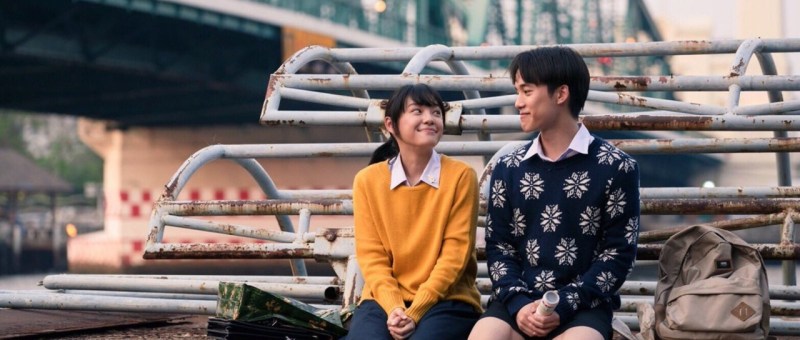
Homestay (ฮมสเตย์, Parkpoom Wongpoom, 2018)

“You got a prize!” the hero of Parkpoom Wongpoom’s spiritually-tinged existential drama Homestay (ฮมสเตย์) is told, though he won’t really realise the kind of gift he’s been given or that in reality he had it all along until the end of the picture. Based on a Japanese novel, the film is part mystery, part psychodrama as the hero is charged with finding out who caused the young man whose body he’s taken over to take his own life and why. If he manages to figure out the answer within the 100-day time limit, he can extend this “homestay” indefinitely and win the chance at a new life. If he fails, he’ll die and won’t even be reborn.

Taken another way, this Min (Teeradon Supapunpinyo) trying to understand why he did what he did having apparently lost his memories after his traumatic experience of being clinically dead for an entire day. In any case, he’s helped and hindered by a collection of “guardians” who appear to taunt him and issue reminders about his time running out. Though no one suspects Min is not Min, they all remark that seems like a different person from his new ability to eat durian fruit to his outward cheerfulness. As for why he hasn’t been attending school and even missed a set of important exams, they’ve been told he had “the flu” and seem to believe it. But even as this fresh soul seems to ease into Min’s life and originally finds it not bad enough to want to die to escape, he soon begins to discover fracture points in Min’s reality.

The biggest of those would be friction with unsympathetic brother Menn (Natthasit Kotimanuswanich) along with animosity towards his father who apparently gave up a steady job as a teacher to join a multi-level marketing scam peddling vitamins. The other Min was apparently embarrassed by him, as is new Min when he turns up at school and tries to recruit his classmates while giving him a bag of samples for one of the teacher’s which turns out to be a trick to get him to see a child psychologist. Old Min also resented him for the way he treated his mother who works at a factory in another city while he reduces the family to financial ruin even going so far as to sell her wedding ring. 

But as much as he wants to know about Old Min, New Min is also determined to start again. He gets a fancy haircut and starts dressing in a snappier fashion in part in hope of getting together with Pi (Cherprang Areekul), his crush before and after, while less than kind to old friend Li (Saruda Kiatwarawut) who also seems to have a crush on him. The more he finds out about how Old Min lived, the more his world darkens. He begins to understand why he might have wanted to end his own life and feels as if it’s everyone else’s fault or the essential corruption of the world. But what he gradually comes to understand is that it was a choice he made himself. Having turned too far inward, old Min lost the ability to see that others around him were also suffering. He couldn’t see how unhappy his mother was in her marriage, nor his father’s humiliation, or how hard and lonely it must also have been for his brother who dreamed of studying abroad solely to escape. “Stop thinking that no one loves you,” Menn eventually tells him in admonishment of his tendency to take it all on himself.

To that extent, life itself is the prize and that was something Min already had though his vision had been clouded by his intense pain and sense of futility. Guided by his post-death experiences, Min awakens to the suffering all around him and in an odd way feels both less alone and a greater responsibility not to cure it but simply to be present and more compassionate towards others. Parkpoom Wongpoom reflects his dilemma in the ever present tonal incongruity. New Min’s school life is shot like a typical rom-com complete with jaunty score only for him to suddenly find himself confronted by one of his Guardians and reminded his time is running out, as it is for us all. Strangely uplifting even in its touches of existential horror, the film has a genuine empathy for its embattled hero in his moments of selfishness and self-obsession as he begins to find his way back towards a less bleak existence through discovering the power of mutual compassion and forgiveness.


International trailer (English subtitles)

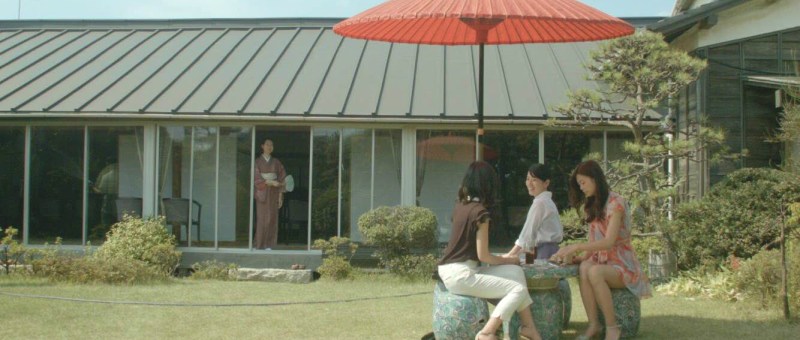
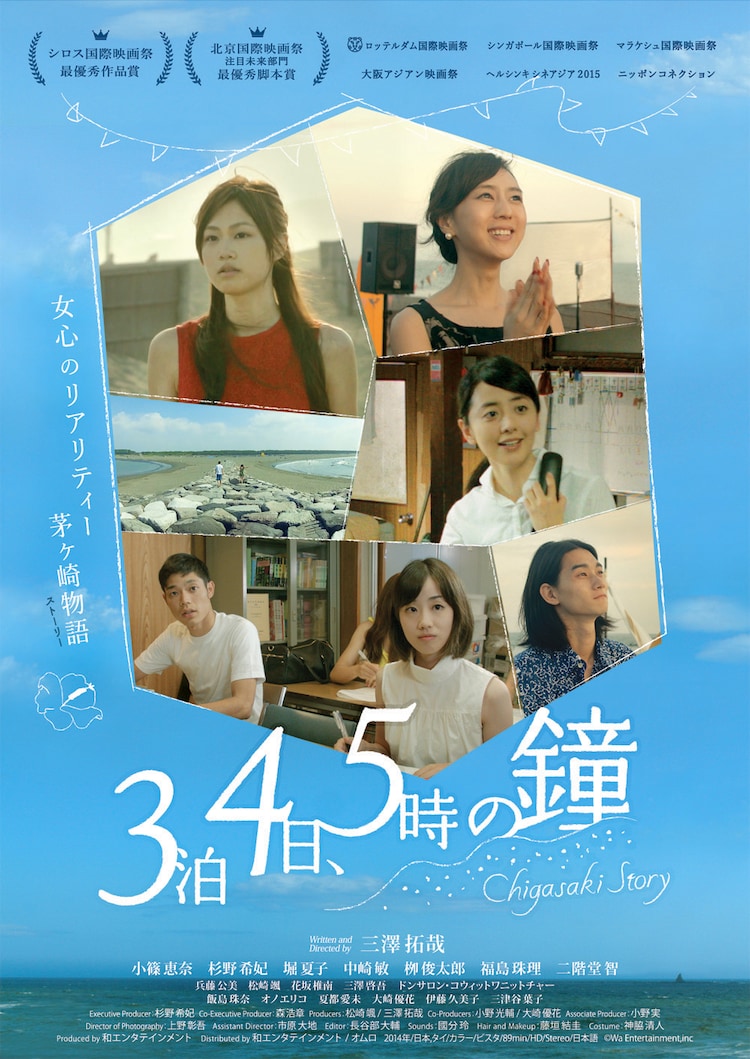
Chigasaki Story (3泊4日、5時の鐘, Takuya Misawa, 2014)

Desire and desperation bubble to the surface at a small hotel making preparations for a wedding in Takuya Misawa’s Chigasaki Story (3泊4日、5時の鐘, 3-paku 4-ka, 5-ji no kane). Though the English-language title may recall Ozu who wrote several of his most highly regarded films while staying at the inn, Misawa pays him only cheerful homage with a series of pillow shots apparently added only as an afterthought while his true inspiration seems to lie in the breezy Rohmerism that has come to dominate a certain strain of Japanese indie cinema over the last decade or so. 

Accordingly the tale is set in the small seaside town of Chigasaki and most particularly at the 115-year-old Chigasaki Inn to which former airline ground crew Risa has recently returned following her marriage to a filmmaker named George whom she met in the course of her work. The couple have already held the ceremony and enjoyed a honeymoon in Hawaii but are now holding a celebratory party for their friends and family in Japan. Meanwhile the inn is also host to a contingent of university students from the same department in which local boy and part-time worker Tomoharu is studying archeology. 

Somewhat meek and mild-mannered, Tomoharu takes his job incredibly seriously and is generally found running around on errands for guests or else cleaning up but his presence becomes a disruptive factor caught between the two groups of visitors instantly captivated as he is on the arrival of Karin, a young and pretty former co-worker of Risa’s who has arrived with the comparatively uptight Miki who has missed nothing in this exchange and is already frustrated by her friend’s wanton behaviour. Miki undeniably has a point when she criticises Karin for putting Tomoharu in an awkward position by inappropriately flirting with him at his job especially as he seems shy and easily embarrassed, but in turn is perhaps also jealous on a personal level intensely irritated when she blows off a plan to visit an aquarium to hang out on the beach with Tomoharu at stupid o’clock in the morning. 

The row only highlights the differences between the mismatched friends though the tables are turned when Miki realises that the students are from her old university and in fact led by her former professor with whom she begins to grow close much to Karin’s consternation. Reverting to her student persona, “workaholic” Miki becomes carefree and uninhibited at once doling out pieces of sisterly advice to the younger women and imposing her company on the students by joining in on their field trip. Her behaviour may in a sense reflect her dissatisfaction with her life as she contends with overbearing bosses having taken over Risa’s role while complaining about Karin’s fecklessness at work and otherwise seemingly jealous of their ill-defined friendship. Risa meanwhile may also be harbouring a degree of doubt in her decision to quit her job, get married, and return to run the family inn especially as her new husband is off working until the day of the party and like everyone else there isn’t really anyone with whom she can share those feelings honestly leading to an unwise if possibility long-term act of rebellion against a potentially stultifying existence that places her at further odds with the already on edge Miki. 

Caught between the women Tomoharu also has a more age-appropriate suitor in an earnest young woman from his class, Ayako, who likes him because of his tendency to care for others while getting on quietly with his work. Attempts to communicate culminate in a lengthy game of ping pong as the angry little balls of truth are batted back and fore across the table until a third player enters the scene and disrupts the flow. Tomoharu had said that his work of piecing ancient bowls back together was different from a jigsaw puzzle because you don’t know what shape it’s supposed to be until it’s finished, which might in a way explain these intersecting relationships as they run through and across each other but ultimately ending up in the place that they’re supposed to be culminating in a wedding party which is either the calm after the storm, an intense act of hypocrisy, or something between the two. 


Trailer (no subtitles)

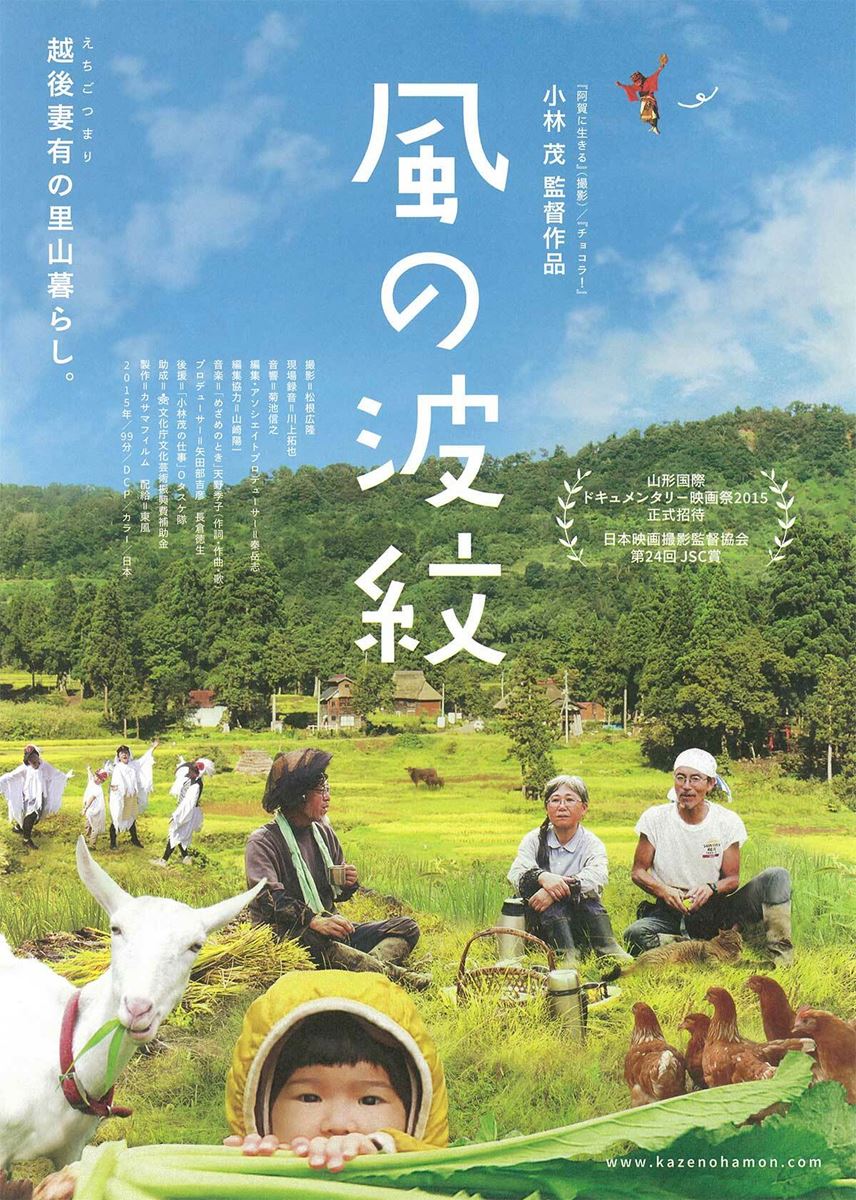
Dryads in a Snow Valley (風の波紋, Shigeru Kobayashi, 2015)

“You can’t live here alone” a older woman admits having long left the village and returning only to visit her parents’ graves to be shocked by its ongoing decline. Shigeru Kobayashi’s mostly observational documentary loosely follows the life of a middle-aged man who left Tokyo for a life in the mountains only to be frustrated by the March 2011 earthquake. Undeterred, he ignores the advice of a local builder that his 117-year-old home is damaged beyond repair and forges on together with the support of the surrounding villagers to rebuild and restore.

It could in a way be a metaphor for the nation’s determination to do the same in the way of the 2011 earthquake and tsunami, but it’s also for Kogure a personal mission to fulfil his dreams of country living. Indeed, he gleefully tends to his rice paddies which he says he’s kept chemical free rather than allow them to be polluted by the modern society. Then again, perhaps this is easy for Kogure to say given that he describes his farming to a fellow farmer as a “hobby” and it’s otherwise clear that he’s not using it as a means to support himself. For these reasons he takes pleasure in the simple though arduous acts of planting and harvesting, pushing a wooden plow through the field and revealing that he discovered the traces of those before him in the remnants of an old irrigation tunnel now buried by mud. For him, this sense of continuity seems to be central as if he’s preserving something of an older Japan and a simpler, more fulfilling way of life. 

Kogure had said he wanted to save the house because it was like the pillars cried out to him. A local dye artist says something similar in that he almost feels the wood he harvests is alive though if it were he wouldn’t be able to cut it. There is a sense of the forest as an almost sentient entity with which the villagers live in harmony, but also a less wholesome vision of nature red in tooth and claw as Kogure offers up one of his goats to have its buds removed with hot iron by a local goat expert. The poor thing cries in pain but is ignored, the expert simply stating that it’s only natural and what is always done though it seems if it really is necessary there must be a less cruel way to do it. Kobayashi later wisely cuts away as we realise a goat is about to be slaughtered, cutting straight to the “meat carnival” it provides for the villagers. 

Most of those interviewed are themselves transplants like Kogure who moved to the mountains 20 or 25 years previously usually from the cities and have largely adapted to a simpler way of life, though it’s also true that there are few young people besides a young woman and her daughter who cheerfully exclaims that rice is her favourite food. The woman is grateful for the unconditional support and acceptance she’s received from the villagers whom she says smile in the face of hardship, keen to help each other and make sure that no one is excluded. Yet this way of life is often hard and it’s true enough that no one can survive here alone amid the heavy winter snows. One old man decides that it isn’t worth trying to repair his home after the earthquake and it’s better to demolish it instead while his wife reflects on her life explaining that she was more or less forced to marry him by her family who lured her back from Tokyo on a ruse that her mother was seriously ill. 

Nevertheless, Kobayashi demonstrates the closeness of the remaining villagers as they bond together through shared feasts, laserdisc karaoke, and a general sense of community. “Breaks are a big part of shovelling snow” one man jokes, focussing not so much on the unending labour as the pleasure taken in rest and friendship. Another later suggests the snow will become “a memory of a trial I survived” echoing the harshness of this village life in winter, even as the camera cuts to a glorious spring filled with bright sunshine and verdant green. Kogure continues to plant his rice while a goat runs about in the field behind him in a timeless vision of pastoral life despite itself persisting. 


Trailer (no subtitles)
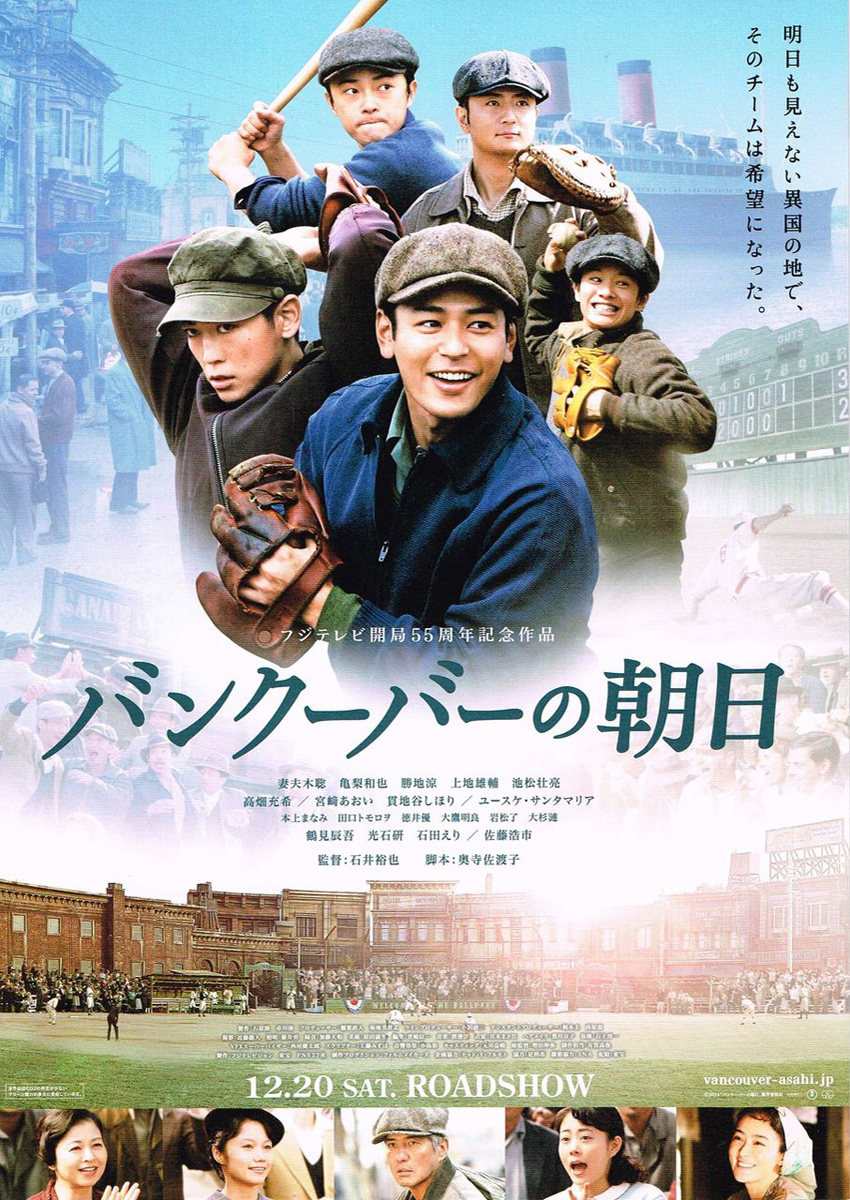
The Vancouver Asahi (バンクーバーの朝日, Yuya Ishii, 2014)

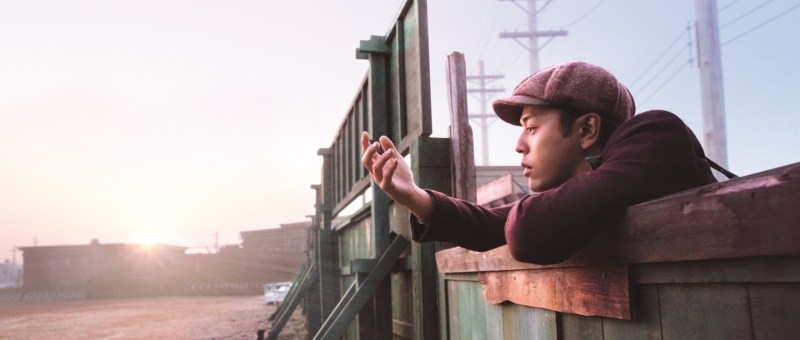
Second generation Japanese-Canadians stake their hopes on baseball in Yuya Ishii’s historical drama The Vancouver Asahi (バンクーバーの朝日, Vancouver no Asahi), inspired by the story of the Vancouver Asahi baseball team which was belatedly granted a place in the Canadian Baseball Hall of Fame in 2003. In many ways a conventional sporting movie in which the underdogs eventually triumph, Ishii does not shy away from the dark shadows of the 1930s even while framing the Asahi’s path to glory as a symbolic punch back against discrimination and oppression. 

As the hero, Reggie (Satoshi Tsumabuki), relates, many like his parents came to Canada at the beginning of the 20th century planning to work for three years and then return to a more comfortable life in Japan only to find themselves trapped in low-paid and exploitative work. Reggie’s main concern is that his drunken and dejected father Seiji (Koichi Sato) still sends the majority of his pay back relatives in Japan meaning their family live like paupers while as he never meant to stay he hasn’t bothered to learn the language or attempt to integrate into the local community. In fact, Reggie is their major breadwinner with his job at the sawmill but the only thing that makes his life worth living is playing baseball with the Vancouver Asahi baseball team even though they are regarded as something of a joke, always at the bottom of the league tables and never actually winning a game. 

The plight of Asahi is closely aligned with that of the immigrant community, divided as it is in its approach to integration with some feeling they should abandon their Japaneseness in order to better get along with Canadians and others fiercely determined to hang on to their traditions. When Reggie admits that they can’t win against the power of the Canadians it feels as if he’s talking about more than just baseball though his solutions are perhaps apt for both in realising that to beat strength you need to be smart. What he comes up with is essentially a bunt and run strategy that plays to their advantages of speed and lightness but also at times feels to him like a trick or a gimmick, an admission that they can’t compete in the normal way. “Why are you always apologising?” Reggie is repeatedly asked, his shyness and mumbling speech always seeking to keep the peace while his desire to offer justification is less as one Japanese old lady puts it “a bad habit of their culture” but a defence mechanism in an environment of potentially violent oppression. 

As Japanese migrants the family faces constant xenophobic micro aggressions, a woman at the hotel refusing to let Reggie’s bellboy friend Frank (Sosuke Ikematsu) carry her bags while they are also suspected as thieves or harassed by the local Canadians. Reggie’s hothead friend Kei (Ryo Katsuji) finds it increasingly difficult to keep his cool, not least as it turns out because his father was killed fighting for the Canadians in the last war and yet he is still treated as a dangerous outsider. Meanwhile, they are paid only half the wages of the Canadian workers, expected to work unreasonable hours, and can be fired without warning. Now an ageing man, Seiji is still a casual labourer fighting for a place on a truck to work at a quarry or construction site often in other towns away from his family in order to get more money. The team is constantly losing players because men lose their jobs and focus on finding new ones or moving away. As one old man laments, there’s no job security and even if you go to a Canadian university it won’t make any difference to your job prospects. Reggie’s sister Emi (Mitsuki Takahata) was on track for a scholarship only to have it pulled at the last minute when parents of the other kids complained it wasn’t right it was going to a Japanese girl. 

After the hotel fires all of its Japanese staff, Frank decides to go “back” to Japan where relatives will help him find work but pointing out to Reggie that he’ll still be seen as an outsider even there and there’s no guarantee anything will be any better in Japan. Poignantly the guys later catch sight of him in a newsreel as a soldier having been sent to the Machurian front. Once war breaks out they are discriminated against again, forced out of their homes and interned leaving all their property behind and destroying their small community, the Asahi included. The team’s unexpected success had forged a bridge between the Japanese and Canadian communities but it was not strong enough to survive the war. Stepping away from the sports movie, Ishii concentrates more on the ways they were betrayed, the team’s success later buried and forgotten while they find the advances they’d made washed away on the shore as if to suggest their strike back against an oppressive society could never be more than superficial while their position remains so precarious. 


Trailer (no subtitles)

Leaving on the 15th Spring (旅立ちの島唄~十五の春~, Yasuhiro Yoshida, 2013)

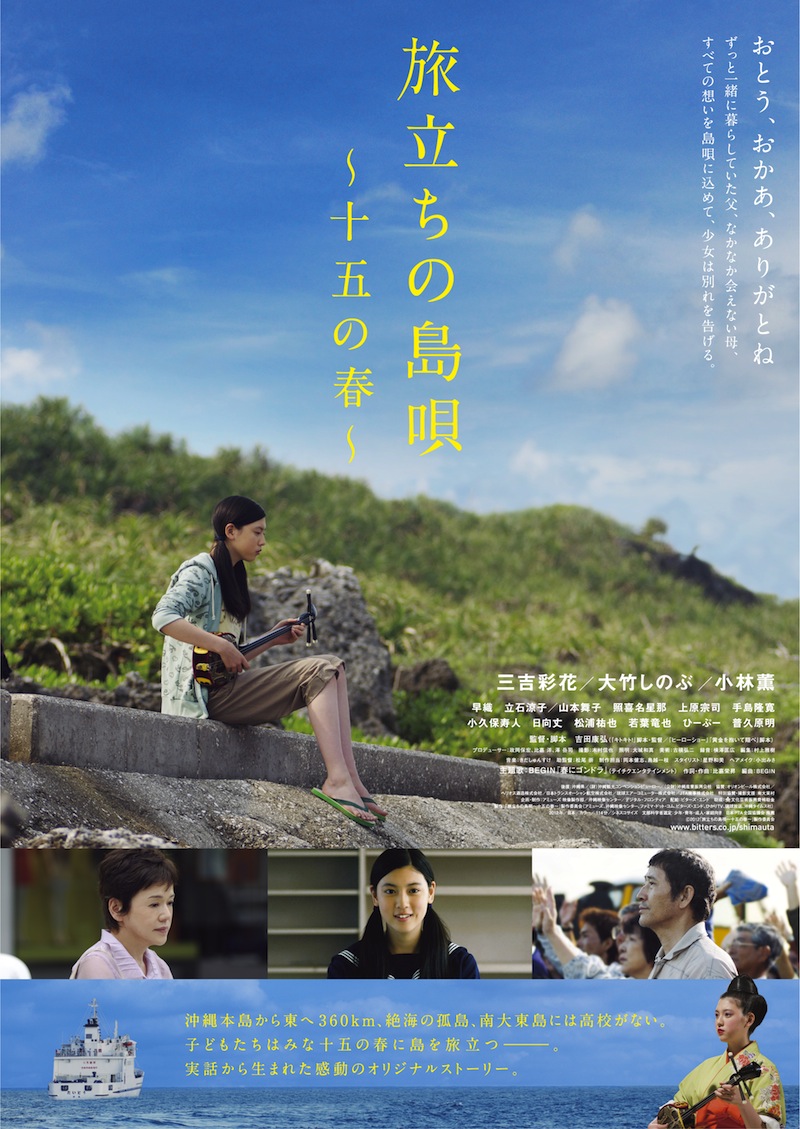
“How many of them will come back?” a man on the shore ominously asks as he watches the young people of his island ship out to pursue their education in the comparatively better equipped capital. Rural depopulation has become a minor theme in recent Japanese cinema, but the situation is arguably all the worse in the outlying islands of Okinawa. As the title of Yasuhiro Yoshida’s Leaving on the 15th Spring (旅立ちの島唄~十五の春~, Tabidachi no Shima Uta: Jugo no Haru) suggests, teens from the small island of Minami Daito (South Daito) must leave at 15 if they want to attend high school because there isn’t one on the island.

That said, there are more kids than you’d expect in young Yuna’s (Ayaka Miyoshi) middle school and it’s more than just a handful who leave the island each spring, many of them choosing to make lives for themselves in the wider world rather than return to their childhood home. On Minami Daito, the main industry is sugarcane but the prospect of Japan joining the TPP trade agreement has many worried that it will soon no longer be viable and with even fewer economic opportunities available many will have no choice other than to abandon the island for good. 

We’re often reminded just how far the island is from the Okinawan capital Naha and how difficult it is to get to. To leave, the kids are placed in a kind of cage and lifted onto a larger boat moored by a small jetty. Even to get to the next island Kita Daito (North Daito) it’s some time on a ferry which might not run if the weather is bad. Distance becomes a persistent theme, not just in Yuna’s impending exit but the scattering of her family. When kids leave for high school, a parent often goes with them as Yuna’s mother Akemi (Shinobu Otake) did when it was time for her sister Mina (Saori) to depart. But Mina is now a grown woman married with a child of her own and Akemi has not been back to the island for two years. This forcible separation continues to disrupt familial bonds as couples necessarily grow apart and children begin to choose their own paths in life which often take them away from their parents. 

It’s this sense of distance which plays on Yuna’s mind, a kind of countdown starting inside her as she witnesses another girl sing the Okinawa folk song “Abayoi” which means “goodbye” in the local dialect and recounts a young person’s sorrow as they must leave their family and childhood home behind on coming of age. Reminded that she’s next in only a year’s time, Yuna meditates on her past and future while reconsidering her relationships. Abandonment often occurs through a simple lapse in contact. Akemi now rarely phones home while Yuna’s nascent first love with a boy from Kita Daito falters when he abruptly stops calling or returning her letters. Eventually she finds out that despite their pledge to attend the same high school on Naha, he has decided to stay and take over his father’s fishing boat because of his dad’s ill health. 

Kenta has realised that his place is Kita Daito and he will remain there the rest of his life while harbouring a degree of resentment that he couldn’t go to high school or pursue his romance with Yuna. He feels their relationship is doomed simply from the fact that they’re from different islands. He won’t leave his, and she likely would not settle on Kita Daito preferring, either a life in the cities or her childhood home. It’s the same for her parents, Akemi deciding that she prefers life in the city and the degree of independence she has there while her father Toshiharu (Kaoru Kobayashi) would not survive off the island. Both of her siblings have already left, Mina returning with her infant daughter apparently on the verge of separating with her husband partly it seems because of the insecurity the separation of her family has left her with, while Yuna’s brother seems to be a harried workaholic with no family life to speak of. 

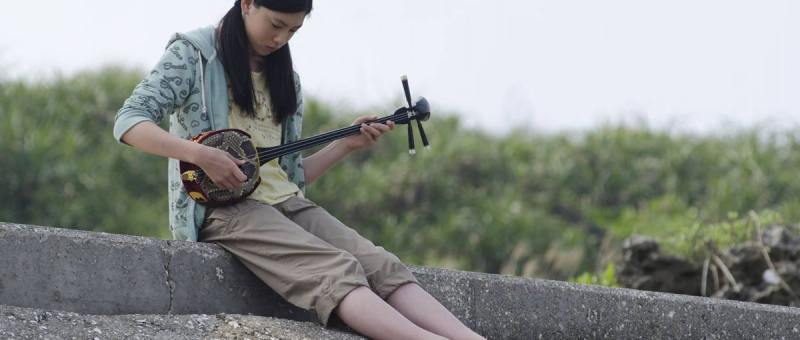
Rather childishly she thinks she can reunite her family and dreams of buying a big house on Naha for them all to live together, adult siblings included, without fully accepting that the relationship between her parents has been gradually worn away leaving them strangers to each other and each desiring different kinds of futures. What she comes to is perhaps an acceptance of the distance in her life, the longing for her island home where she says everyone is one big family, as she finds herself choosing independence. A picturesque vision of Minami Daito and its idyllic landscape along with the traditions of the island including its rich musical culture and Okinawan Sanshin, Yoshida’s gentle drama discovers that “abayoi” is a part of life that can’t be avoided but can be sweet as well as bitter once you’ve learned to accept it.


Trailer (English subtitles)

Young Black Jack (ヤング ブラック・ジャック, Kentaro Otani, 2011)

The Black Jack of Osamu Tezuka’s classic manga is a morally ambiguous figure who cultivates an image of callousness through asking for exorbitant sums to cure often desperate people, but in reality will usually treat seriously ill patients if touched by their plight or is content to collect the money from another source ensuring a kind of social justice is done. A spin-off manga written by Yoshiaki Tabata and illustrated by Yugo Okuma, Young Black Jack (ヤング ブラック・ジャック), was published from 2011 to 2019 and was set in the 1960s when Black Jack was gifted young medical student living through a politically turbulent era. 

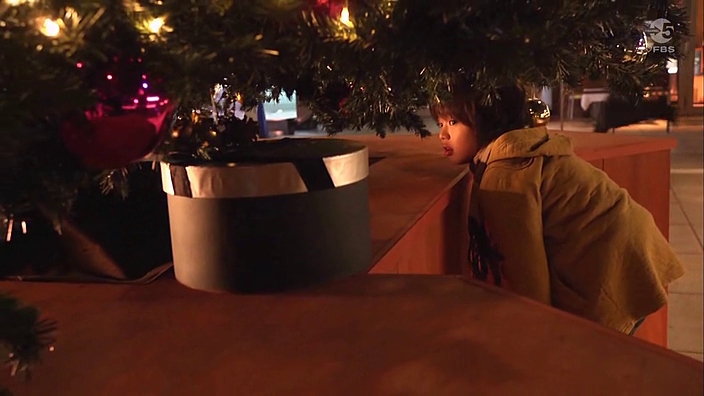
Broadcast in 2011, this television special meanwhile updates the action to the present day while acting as a kind of double origin story if one set in a more realistic world. As a nine-year-old boy, Black Jack asks his mother to meet him by the Christmas display in a local shopping mall. Not having had enough money to buy his mother a red rose, he patiently sits and draws one under the tree while otherwise oblivious to the news being broadcast on a large screen explaining that there has been a series of bombings in the city and the next target is this very mall. Black Jack’s mother has become mute after a traumatic incident but tries to call out to him only for the pair to be caught in the blast. Touched by their story, the genius doctor Honma (Masachika Ichimura) manages to save Black Jack by transplanting his organs and giving him a skin graft while his mother remains in a coma.

The story then jumps to the present day with Black Jack (Masaki Okada) a medical student with an underground lair where he keeps his comatose mother (who hasn’t aged at all in 15 years) and operates as a backstreet doctor treating undocumented migrants and yakuza. Aside from emphasising his contradictory nature as someone who both treats anyone who requires treatment no matter of their social status yet simultaneously demands incredible sums of money for doing so, associating with these kinds of people also places Black Jack among the lower ranks of society which is something that niggles at snooty doctor Naoki (Yukiyoshi Ozawa). Naoki is sort of betrothed to Yuna (Riisa Naka), the daughter of the chief doctor at a prestigious university hospital who is herself in the middle of taking her final exams to become a doctor. 

Familiar to fans of the manga, Naoki is Black Jack’s opposite number. As he tells Yuna, there are two kinds of doctors. Those who save lives and those who kill. In the manga, Naoki was a doctor traumatised by his wartime experiences who often wants to euthanise the patients that Black Jack is trying to save believing that there is no way to save them. Having encountered Black Jack cooly saving a patient who collapsed in the street, Yuna asks Naoki what he thinks makes a good doctor and he tells her it’s the belief that medical science has no limits and the doctor is omnipotent. Yet he later says just the opposite, telling Yuna that she is being childish and of course there are limits to what medical science can achieve so in effect he’s giving up. Black Jack meanwhile does believe in his own omnipotence, even if that’s not always such a good thing, and is confident he can save any patient even if in the end he cannot save the one most close to him (perhaps because she wanted him to stop trying). 

The film does not however go into very much detail and only gives brief snippets of backstory such as Black Jack’s mother going mute after a shadowy man enters and leaves their home while hinting at potential future stories in his opposition to Naoki who objects to him partly out of snobbishness, and a potential romance with Yuna who has now shifted away from the elitism that coloured her family towards a more altruistic kind of medicine represented by Black Jack even in his aloofness. Nevertheless, the film makes no real attempt to transcend its origins as a television movie, not that it has to, and is hampered by an uninspired script and low production values which contribute to its relatively more naturalistic setting yet sit awkwardly with the more outlandish parts of the narrative such as Black Jack’s keeping his mother in cryogenic status for 15 years or being able to transplant all of someone’s organs at once and in under 10 minutes. Still, as a minor outing for the iconic character it’s entertaining enough for fans of the franchise. 


Mechanical Telepathy (メカニカル・テレパシー, Akiko Igarashi, 2018)

Many, though not all, people have an interior monologue but what if you could converse directly with an image of yourself, a mental avatar who could talk and move around and might have opinions you would not expect to hear yourself say out loud? The scientists at the centre of Akiko Igarashi’s Mechanical Telepathy (メカニカル・テレパシー), a re-edited version of her 2017 feature Visualized Hearts, are working on a machine that can create a physical simulacrum of a mental image. No concrete reason is given for their research save that of one assistant who suggests its capacity to help those who can no longer communicate physically have a voice, but what quickly becomes apparent is that a self-created image may not be entirely reliable while the images of it held in other minds may differ in interesting ways. 

Each of these philosophical questions begin to occur to scientist Mazaki (Ryuichi Yoshida) when he’s seconded to a research project as a kind of corporate spy on behalf of the business-minded boss who wants to put the product on the market as soon as possible despite the reservations of lead researcher Dr. Midori Mishima (Nanami Shirakawa) whose husband Soichi was injured in a previous experiment and is currently in a coma. Midori’s interest in the machine is then in its capacity to save her husband either by retrieving his bodily consciousness or preserving the image of him captured inside, improving and enhancing it until the point of communication. 

But then as Mazaki comes to realise, perhaps the image of Soichi (Yoshio Shin) in the machine isn’t coming from his mind at all but from Midori’s in which case he doesn’t know anything she doesn’t know already and is in a sense inaccurate, composed only of her memories of him and necessarily limited in possessing the information she does not have even of this man whom she obviously knew intimately. Meanwhile, Mazaki also begins seeing an avatar of Midori, but is unsure if it originates from her mind, that of the comatose Soichi, or indeed his own as a means of confronting him with the desire he may feel for her. His image of himself meanwhile is scathing and self-loathing, challenging him over his various acts of moral cowardice in his essential inability to communicate his true feelings. Only assistant Asumi (Ibuki Aoi), harbouring a decidedly obvious crush on him, is brave enough to take him to task looking her own avatar in the eye and explaining that she has nothing to fear from herself. “If you don’t say it out loud no one will hear you” she explains though it’s a lesson that Mazaki in particular finds difficult to learn. 

As for the avatars themselves, are they representations of particular people or indeed something new and different subject to influence and interference? The mind is supposedly free of time and space but that may not be an entirely good thing. What the machine posits is the separation between mind and body as if a soul could be sheared while it becomes difficult to say if the loss of corporality is liberation or imprisonment while Mazaki wonders if it’s right for a mind to exist without a body. If we can’t trust these images we have of others can we really trust those we have of ourselves which may be largely created through the way that others see us and we them? Complaining he can no longer distinguish whose mind he’s looking at, Mazaki finds himself caught in a moment of existential confusion amid several differing realities his own mind can no longer order. 

This sense of dissociation is perhaps replicated in Igarashi’s detached camerawork set amid the clinical glass and steal environments of the Kobe research institute where the experiments take place, the muted colour palette reflecting a sense of emptiness in the hearts and minds of the scientists who ironically remain incapable of direct communication. The near future production design similarly lends an air of sleek modernity to the otherwise vacant space while perhaps creating a sense of the supernatural in the lightning crackle inside the machine, its tangling wires a digital recreation of an analogue nerve system. A philosophical examination of the representation of the self, its projections literal and metaphorical, and the impossibility of knowing oneself or others Igarashi’s sci-fi drama eventually suggests that perhaps we are all in an empty room talking to ourselves incapable of understanding let alone expressing our true feelings.