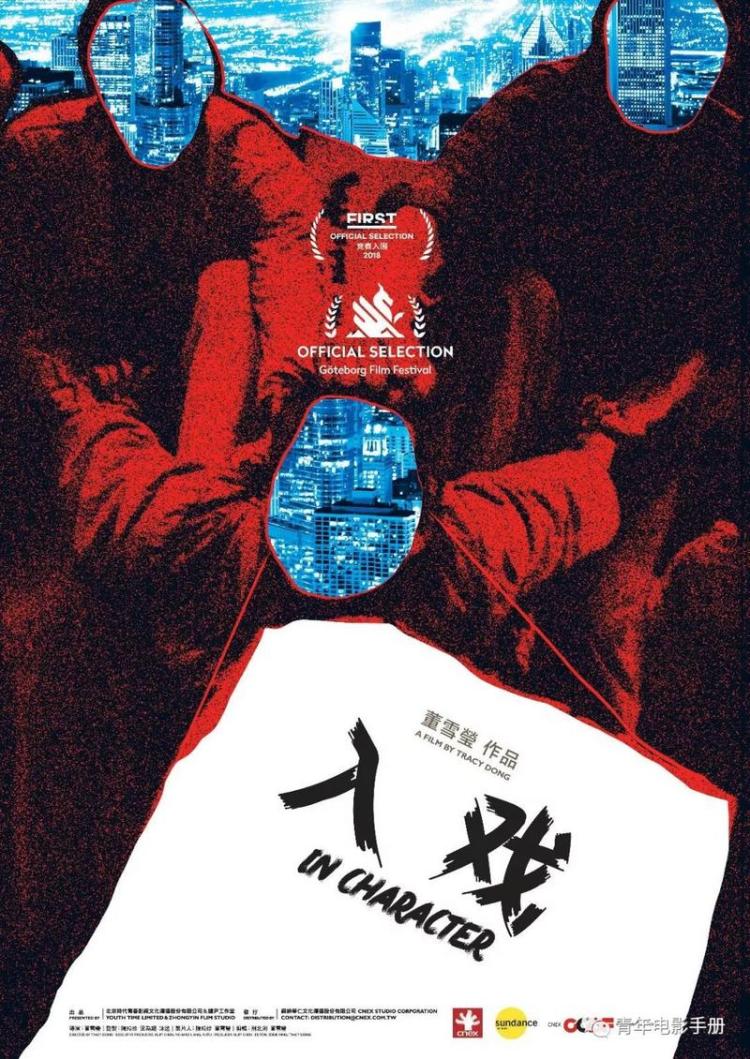
In Character (入戏, Dong Xueying, 2018)

In Character posterThere has of late been an unfortunate trend of historical revisionism in recent Chinese cinema which has sought to look back at the Cultural Revolution with a kind of fond remembrance for a more “innocent” time. Mostly coming from directors in their 50s and 60s who were themselves young during the last years of Maoism, films such as Feng Xiaogang’s Youth have attempted to draw a sharp contrast with the collectivist past and consumerist present as if to lament the passing of a kinder era, but have also largely located themselves within the cosseted group of youngsters working for the regime and therefore shielded from the intense cruelty of the age.

Songs of the Youth 1969, the debut (and to this date only) narrative feature film from director Ye Jing, is much the same in this regard in that it deliberately recreates his own longed for adolescence as young man fighting, he thought at the time, for a better China. Lamenting that the young people of today have no idealism, he describes the Cultural Revolution as a “rock ‘n’ roll movement” in which intellectual youth chased love and freedom through venerating Mao. Looking at footage of himself on screen, he urges the youngsters not to pity the kids in the square even though they were being “brainwashed” but to admire them because they were fighting passionately for something they believed in.

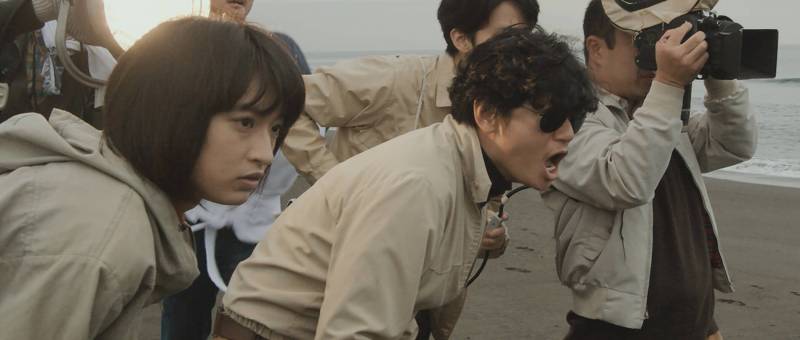
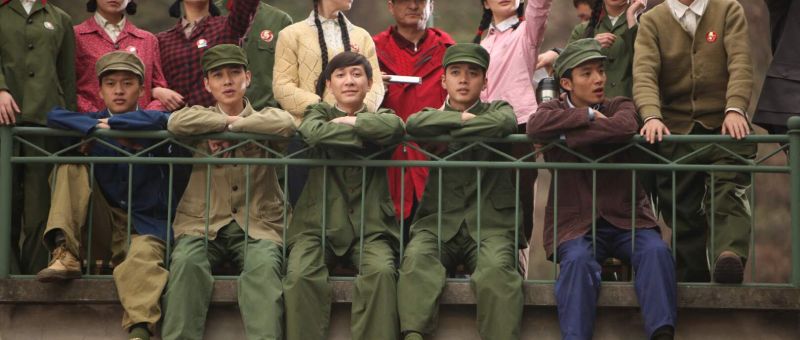
Dong Xueying, the director of In Character (入戏, Rù), came on board with the intention of exploring the living conditions of Chinese actors but quickly found herself sucked into an alternate reality in documenting the behind the scenes production of Songs of the Youth 1969 as Ye sends his cadre of youngsters off to an abandoned munitions factory in Sichuan for “the Cultural Revolution Experience”. During this time, they must prepare by living under contemporary conditions – wearing Red Army uniforms, surrendering their phones and other modern communication devices, and learning the various revolutionary songs which operated as a key part of the movement.

Although the young men and women are merely actors born long after the Cultural Revolution had ended, the “experience” quickly turns into a kind of social experiment along the lines of Stanford Prison as the intense mob mentality of the era begins to take hold. An early visit from Ye finds them furiously role playing, greeting him as if they were ghosts of his past waiting more than 40 years for his return. Playfully singing bawdy and suggestive songs, they embrace the sense of fun loving youth the director seems to be looking for but a fatal mistake by one young actor abruptly turns the tables, recalling the fear and danger that many must surely have felt in an era of intense suspicion puritanical scrutiny.

Many had openly laughed during rehearsals as they spouted the outdated Maoist quotations and learned the choreography for revolutionary ballet, but the fervour eventually takes hold and it’s not long before they begin turning on each other. First it’s a minor complaint blown out of all proportion about inattention and fiddling with fingernails instead of concentrating on collective concerns, and then an outright attack on one of their number who has made an obvious if understandable mistake – he asked for a few days off on hearing a relative was dangerously ill, and not only that, he misspelled Chairman Mao’s name in his apology letter. Jiang Siyuan’s request seriously upset Ye who is now convinced that the modern youth is selfish and irresponsible and that the youngsters still haven’t absorbed the spirit of the Cultural Revolution. Upset that Jiang may have ruined all their hard work, the actors subject him to a Struggle Session in which he must self criticise while they each berate him for damaging the integrity of their common project.

Ironically enough, the “film” has taken the place of the revolutionary ideal, while Ye has become a kind of Mao figure as a faraway authority whom they must worship and placate to make their dream come true. Despite their modern upbringings, the actors quickly succumb to the worst tendencies of the age as they consent to oppress each other, going along with the austerity of the ideology which instructs them to rid themselves of their “selfish” instincts in order to serve the collective while simultaneously emphasising their individual will to ensure their place in the film which necessarily means that Jiang must surrender his human feeling and accept he may never see his grandfather again.

Ye promises them the time of their lives in an experience he hopes will be life changing in the same way, presumably, he feels his own youthful brush with the revolution to have been, but their memories of the munitions factory are likely to be less positive as they ruminate on the immediacy with which they were able to betray each other in service of an empty ideal. Dong’s camera captures not only the misguided romanticisation of the Cultural Revolution by those like Ye disillusioned with the path of modern China, but its frightening legacy in the ease with which such inhumanity takes hold.


In Character was screened as part of the 2019 Chinese Visual Festival.

Original trailer (English subtitles)
The Rib (肋骨, Zhang Wei, 2018)

“You choose to live together because you love each other, and to enter holy matrimony with our blessing” a rigid priest ominously intones at the outset of Zhang Wei’s The Rib (肋骨, Lèi). This conflict between personal choice and a need for approval from authority figures to legitimise it is at the heart of Zhang’s empathetic exploration of transgender lives in contemporary China. Given the censors’ constant preoccupation with LGBT issues (40 minutes of footage were apparently removed to gain approval though at the request of the Catholic Church rather than the state authorities), his decision to focus on a transwoman’s struggle to get through to her religious father may be a surprising one but follows a wider trend in Chinese language cinema which is beginning to embrace such formerly untouchable subjects with increasing positivity.

The Rib is, however, as much a critique of oppressive Confucianist social codes and rigid religiosity as it is a plea for greater empathy and understanding in accepting others for who they are rather than forcing them to abide by outdated ideas of conservative conformity. Huanyu (Yuan Weijie) was assigned male at birth but identifies as female and wants to undergo gender reassignment surgery. Unfortunately, however, despite the fact that Huanyu is 32 years old she still needs her father’s signature on a consent form to get the operation and not only that, her father has to be filmed signing it in person in case there are any repercussions further down the line.

The major problem is, Huanyu’s father Jianguo (Huang Jingyi) is a devout Christian who even serves as a sign language interpreter during church services. Huanyu’s mother passed away when she was small and so Jianguo raised her alone. Given his strict religiosity he is unlikely ever to agree to the surgery and Huanyu has never felt able to discuss her gender dysphoria or sexuality with her father for fear that he wouldn’t understand. Those fears are borne out when Huanyu is forced to talk to him in order to move towards surgery. Jianguo thinks it’s a joke, and then some kind of mental illness which could be cured with the right treatment. He hosts an intervention with the priest and other attendees of the church in order to talk Huanyu out of her conviction that she is a woman and even goes so far as to set her up with a selection of pretty sex workers in the belief that Huanyu will change her mind after feeling “like a man” through experiencing “proper” sex with a woman.

Of course, all this really does is drive a further wedge between father and son. Jianguo lashes out. He goes to visit a friend of Huanyu’s, Liu Mann (Gao Deng), who has recently returned from undergoing reassignment surgery in Thailand (where it’s cheaper and there aren’t so many barriers), but rather asking pertinent questions he viciously berates her. Liu Mann, Huanyu’s closest confidante, is not herself certain that Huanyu should have surgery. Returning to work after her operation she found herself fired for not being the same person who left and though she’s suing them for unfair dismissal has discovered that one kind of unhappiness has merely replaced another. Jeered at in the street, enduring the sniggers from insensitive shop staff, and labeled a pervert for just trying to use the bathroom in a public place, Liu Mann has begun to fall into despair no longer believing that a happier future where she could live as herself in freedom is a real possibility.

Jianguo insists he knows his son best and blames Huanyu’s friends for corrupting her. Huanyu is 32, but Jianguo still exercises his paternal authority in loudly declaiming that he will not “allow” this situation to continue any further. Believing that the problem may be that Huanyu had no maternal input, he even starts romancing a woman from church who has no idea she is merely a tool in Jianguo’s mission to “save” his son, while furiously praying that Huanyu will soon marry and have children. The Church itself becomes, perhaps ironically, another vessel for rigid Confucianism as Jianguo ponders the end of his family line along with his dwindling authority and the effects of his son’s “sin” on his own good standing in the eyes of the community.

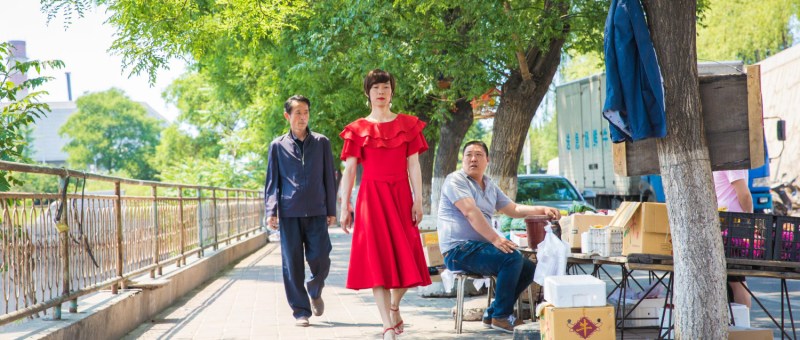
Yet through witnessing the increasingly destructive results of his actions Jianguo begins to reconsider. He listens to medical advice, attends seminars, and asks himself the true meaning of his faith. After all, if God is in heaven listening to prayers from his children below, then shouldn’t a father on Earth listen to his son’s wishes? Jianguo stops worrying about sin and asks more practical questions – is it safe, is it painful, will it end Huanyu’s life sooner, and weighs the degree of his child’s suffering against his ideology. Shooting in crisp black and white with only the startling red of Huanyu’s favourite dress, Zhang captures the dullness of Huanyu’s existence as she feels herself only half alive before ending on a note of vivid colour as the faces of transgender people fill the frame. A tender, empathetic exploration of a sensitive issue, The Rib is an important step forward for trans representation in Mainland China and a powerful plea for human decency and universal understanding.


The Rib was screened at the 2019 Udine Far East Film Festival and the 2019 Chinese Visual Festival.

Original trailer (English subtitles)

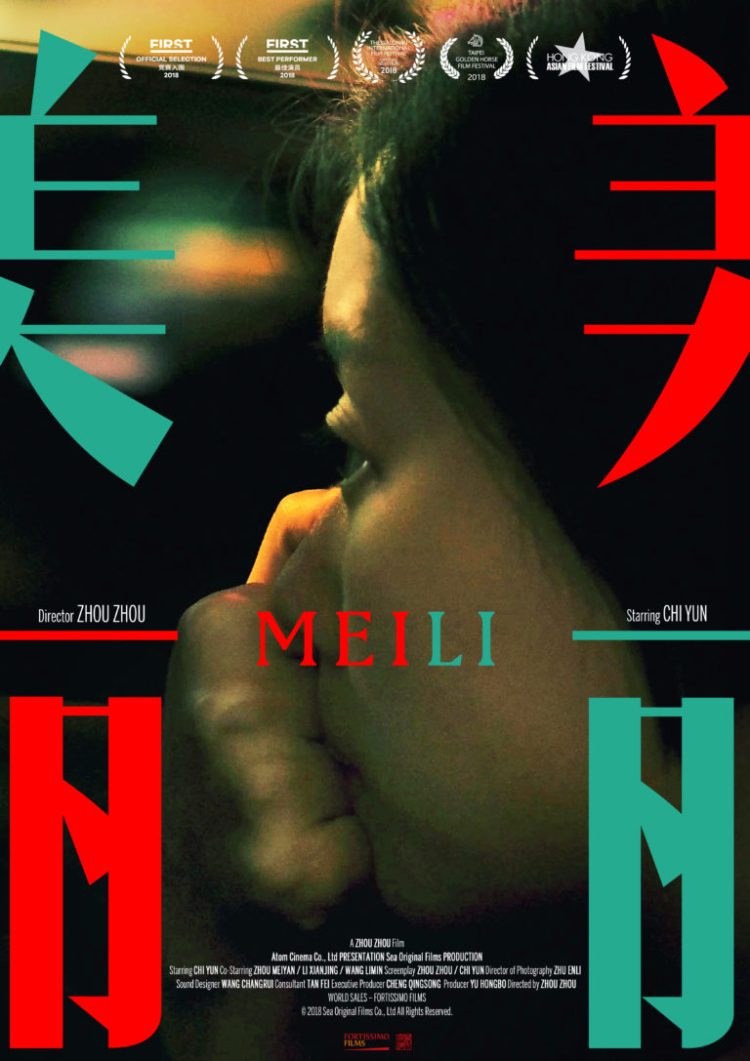
Meili (美麗, Zhou Zhou, 2018)

Meili poser 2Though Mainland cinema has a famous aversion to the representation of LGBT lives on-screen, there does seem to have been a notable shift towards the positive in recent years with even big budget blockbuster comedies and family films offering subversive, if subtle, messages of tacit support. Nevertheless, lesbian life continues to be underserved with Fish and Elephant, often regarded as the “first” explicitly lesbian film from Mainland China, released only in 2001. Zhou Zhou’s Meili (美麗) is not an issue film nor does it make much of its protagonist’s sexuality but it does attempt to address the many difficulties she experiences in her life as a gay woman from a humble background.

Meili (Chi Yun) has a casual job in a laundry and lives with her high flying career woman girlfriend Li Wen (Zhou Meiyan) who is often forced to stay out late drinking to excess with colleagues in an attempt to climb the ladder. Li Wen receives the opportunity of an extended business trip to Shanghai and asks Meili to go with her only to change her mind abruptly at the last minute, fearing her colleagues will find out that she’s in a relationship with another woman and it will damage her prospects or perhaps even cost her her job. Though Meili was ambivalent about going anyway, the sudden reversal proves a huge shock, especially as she’s also been let go from her laundry job for having the temerity to ask about the annual leave policy.

Meanwhile, Meili is constantly pestered for money by her hard-pressed older sister (Li Shuangyu) who is married to a man (Wang Limin) so vile Meili can hardly bear to look at him. The reasons for her disdain will become apparent, but adding to the confusing family situation is a little girl being brought up by the couple which is apparently Meili’s. Meili is a lesbian with no interest in men which may hint at the reasons she intensely hates the child and resents the entire situation. Despite all that, however, Meili does not seem to be able to cut her sister off and finds herself going out of her way to help her even though she is herself in extreme difficulty.

Toughness and tenderness do seem to go together as we witness Meili set up an IV for her hung-over girlfriend, berating her for drinking too much yet again but caring for her anyway. Meili blows up at her brother-in-law’s, overturning their dinner table when he insults her in front of his friends, but shuts down when wounded by Li Wen, seemingly unwilling to engage in a probably destructive argument but dragged into one anyway. The relationship between the two women appears settled and positive despite the disparity of their socioeconomic statuses, but there are cracks and when Meili begins to suspect that Li Wen may be seeing a male colleague behind her back, perhaps as a cover or to improve her career prospects, she begins to wonder what they really are to each other.

For Meili who could not rely on her family, and had no future plans or real place to belong, Li Wen had become everything. “Shanghai” is a dream to the youngsters of Changchun who assume the gleaming city must be full of opportunity and excitement but it may well be one beyond their reach even if they manage to escape industrial town casual labour hell. Meili bears her difficult circumstances with fortitude. Obliged to live quietly and under the radar, she works hard and saves her money but is betrayed at every turn – by unscrupulous employers, by her toxic family, by her ambitious girlfriend, and even by her supportive and well meaning friends who reluctantly decide that they will have to leave her behind alone in order to chase their own dreams in the city. Having lost everything and all hope for the future, violent revenge seems an unavoidable consequence of her almost total oppression.

A popular name for baby girls, “Meili” means beautiful but there’s precious little beauty in Meili’s increasingly grey and hopeless world. Human selfishness, capitalistic avarice, and conservative patriarchal values conspire to rob her of all possibility for life or forward motion. There is no path out of poverty and little possibility of happiness in being able to live openly and equally with a woman by whom she is fully loved. Painting a bleak picture of life in post-reform provincial China, Zhou’s debut presents a refreshingly normalised depiction of a same sex relationship while making plain each of the various ways its heroine is backed into a corner by the oppressive and increasingly unequal society in which she lives.


Meili was screened as part of the 2019 Chinese Visual Festival.

International trailer (English subtitles)

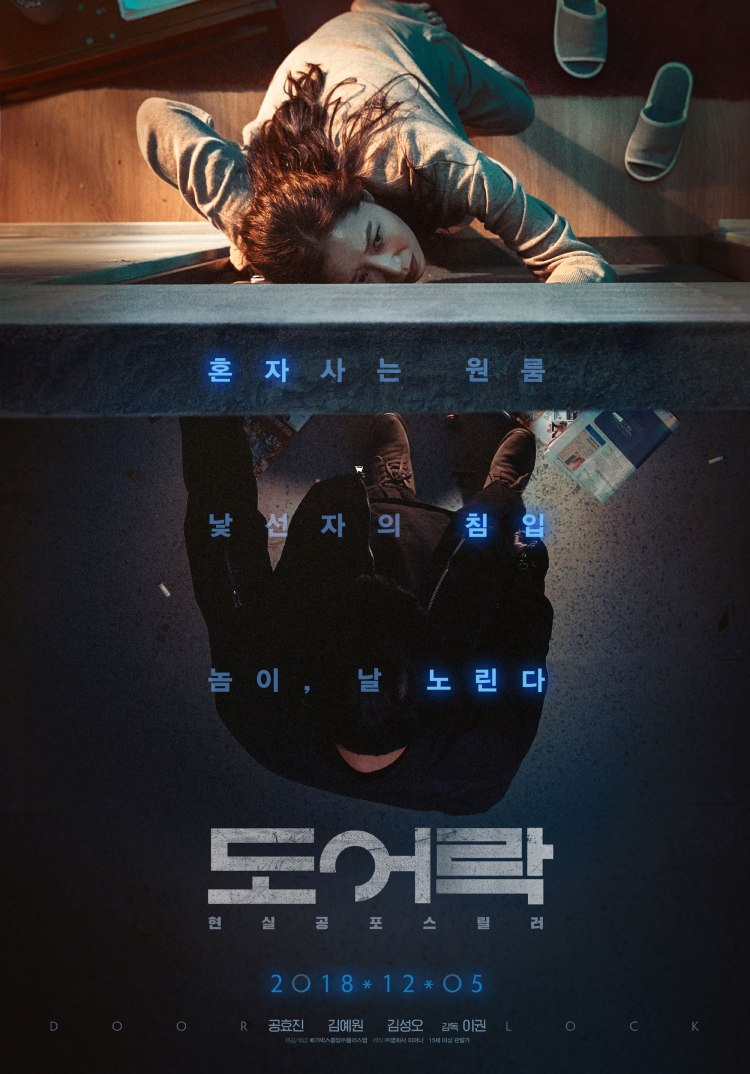
Door Lock (도어락, Lee Kwon, 2018)

Door lock poster 1Behind your own front door, you’re supposed to feel safe but the modern city conspires to ensure no space, not even the most private, can feel completely free from danger. A Korean spin on the Spanish film Sleep Tight, Lee Kwon’s Door Lock (도어락) shifts the focus from perpetrator to victim as it explores each of the many and various ways women are made to feel vulnerable in the still male dominated Korean society.

Kyung-min (Gong Hyo-jin) has more than one reason to feel anxious. A bank clerk on a temporary contract, she’s forever worrying that she’ll soon be out of a job though there is a rumour of permanent employment on the horizon if only she can keep up her efficiency at work. That might be difficult, however, because Kyung-min has not been feeling well. She wakes up groggy and goes through much of the day feeling a little out of things, though perhaps that’s just the city air. Another cause for concern is that she keeps having the eerie feeling that someone’s been in her apartment when she wasn’t there. Fully aware of all the dangers (and perhaps having had problems before), Kyung-min is concerned enough by signs of someone fiddling with her door lock to change the code every few days, and is panicked by someone furiously rattling the door late at night trying to get in.

Like any sensible person, Kyung-min calls the police but they remain unsympathetic to her fears. Knowing she’s called several times before, they write her off as nervous and hysterical or perhaps an attention seeking lonely single woman. Kyung-min, unfortunately for her, has a habit of attracting the attentions of unpleasant men like a customer at the bank, Ki-jung (Jo Bok-rae), who refuses to take no for an answer after inappropriately asking her out during a consultation about his bank account. In an angry rant, Ki-jung accuses her of leading him on, that she flirted with him on purpose to encourage him to take out additional accounting services. Kyung-min feels herself shrinking in wondering if there’s some truth in what he said, instantly blaming herself, as she recalls that the appraisals are in the offing and she wasn’t making enough sales. Her colleague told her to smile more, so maybe she did and this is what comes of it. The situation is only diffused when Kyung-min’s smartly dressed boss steps forward to place a hand on her shoulder and call security on her behalf.

The boss, nice and well mannered as he is, is perhaps another sort of problem as he too has additional interest in Kyung-min that could end up becoming an awkward workplace issue. As it turns out he becomes another sort of crisis entirely which gets Kyung-min mixed up with the police who now assume she herself is the creepy stalker with only the evidence of her previous calls to back up her claim of persistent harassment. The police remain unsympathetic, intent on pinning something on Kyung-min to close the case quickly while dismissing her fears as either lies, psychosis, or hysterical paranoia. Eventually Kyung-min and her best friend Hyo-joo (Kim Ye-won) decide they’re on their own and they’ll have to proactively protect themselves because, it seems, no one else is going to.

The men who routinely approach Kyung-min do so with frustrated entitlement. They disregard her right to refuse for no particular reason and assume it to be a slight, insisting that Kyung-min is a snob who has only rejected them for their working class occupations and relative lack of financial status. Wounded male pride is once again the most dangerous force of them all. In a precarious economic situation of her own, Kyung-min is left feeling as if nowhere is safe in an intensely chauvinistic, rabidly capitalist, and conservative society which encourages her to find fault with herself rather than the world in which she lives that forces her to feel that way. Inequalities, both economic and sexual, are driving violent crime but when it comes down to it the powers that be are relatively uninterested in the fears of single women or in doing more to create a fairer, safer society. They would rather hang fake security cameras that make you feel safe than deal with illicit spy-cams or listen seriously to women’s concerns when they say they feel afraid. A tense and harrowing thriller, Door Lock is also a frighteningly relatable exploration of the fears of modern urban living.


Door Lock was screened as part of the 2019 Udine Far East Film Festival.

International trailer (English subtitles)

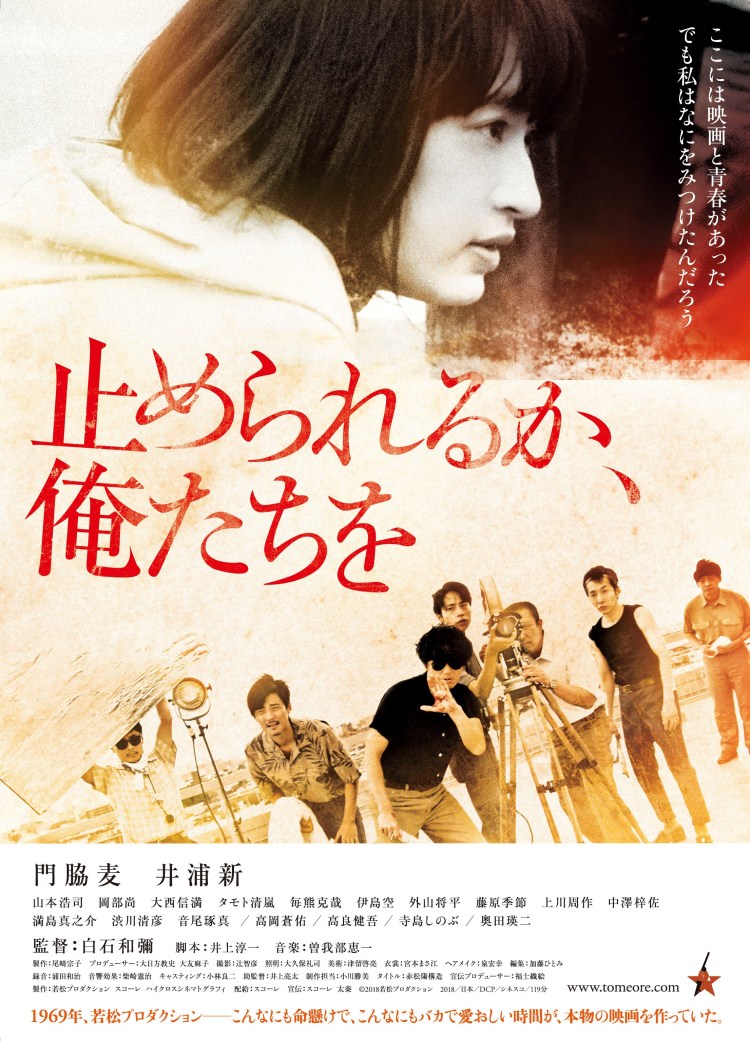
Dare to Stop Us (止められるか、俺たちを, Kazuya Shiraishi, 2018)

Dare to stop us posterUntil his untimely death in a road traffic accident in 2012, Koji Wakamatsu had been the enfant terrible of Japanese cinema. An irascible but somehow much loved figure, Wakamatsu is most closely associated with a series of provocative sex films which mixed politically radical avant-garde aesthetics with pink film exploitation. Kazuya Shiraishi, himself a former Wakamatsu apprentice, takes a look back at the heady years of Japanese indie cinema in the aptly titled Dare to Stop Us (止められるか、俺たちを, Tomerareruka, Oretachi wo) which explores the backstage environment at Wakamatsu Production from 1969 to 1972 (or, right before everything changed with the death of the student movement in Japan following the Asama-sanso incident).

Rather than follow Wakamatsu (Arata Iura) directly, Shiraishi frames his tale around aspiring director Megumi Yoshizumi (Mugi Kadowaki) – the only female presence (besides the actresses) at the otherwise extremely masculine studio which focusses mainly on artistic soft-core pornography. A Shinjuku hippie and self-confessed fan of Wakamatsu, Megumi finds herself joining the team after being recruited to scout potential starlets who could pass for high schoolers. On arrival at the studio, Megumi is quickly mistaken for an actress or mistress but finally manages to win the guys round and is taken on as an assistant director with the possibility of stepping up to the director’s chair if she lasts three years working under Wakamatsu.

As the gruff director warns her, most don’t even last the month. Megumi is however determined, despite Wakamatsu’s continued show of forgetting her name and harsh on-set demeanour. Commiserating with her, another veteran affirms that the big studios wilfully exploit their ADs, at least with Wakamatsu his heart is in the right place even if he’s only a different sort of difficult. He also, however, hands her a bottle of hooch which serves an unfortunate harbinger of things to come as Megumi finds herself playing along with the hard drinking boys club but becoming ever more confused about her role in the organisation and the further direction of her life.

Wakamatsu and his partner Masao Adachi (Hiroshi Yamamoto) vow to make films to shake the world, but are not above commercial concerns which is why they find themselves making pure sex films under pseudonyms to balance the books, much to the chagrin of some of the studio’s more politically engaged members. These are particularly politically engaged times in which the student movement is at its zenith, protesting not only the renewal of the ANPO treaty, but the Vietnam War, and the fiercely contested building of Narita airport. Mostly thanks to Adachi, Wakamatsu Production gradually shifts from indie film company to activist organisation in which political concerns are beginning to take precedence over the business of filmmaking.

The shift leaves those like Megumi who were not so interested in the political dimension floundering along behind and increasingly disillusioned with the world of Wakamatsu Pro. Megumi may admit that she had other problems that probably should have been better addressed, but remains conflicted as to her involvement with the studio. Feeling as if she has nothing in particular to say, she questions her desire to make films at all while clinging fiercely to the surrogate family that has grown up around the strangely fatherly director and continuing to feel insecure in her atypical femininity in a world which more or less requires her to act like a man but doesn’t quite accept her for doing so.

Wakamatsu said he wanted to hold the masses at knifepoint and create a film to blow up the world, but Megumi increasingly feels as if it’s she who will eventually face Wakamatsu with only one of them surviving. Megumi is, in a sense, a victim and encapsulation of her age in which she wanted a little more than it had to give her and found herself increasingly disillusioned with its various betrayals and disappointments. Given the chance to direct a 30-minute short for love hotels, Megumi spins a tale of Urashima Taro which is, as Adachi puts it, all about how she can’t go back to being a hippie after getting mixed up with Wakamatsu and has lost sight of her true self in her quest for acceptance. Both nostalgic look back to a heady era and a tragic tale of that era’s costs, Dare to Stop Us is a fitting tribute to the Wakamatsu legacy which portrays the irascible director as neither saint nor demon but painfully human and infinitely flawed.


Dare to Stop Us was screened as part of the 2019 Udine Far East Film Festival.

Original trailer (no subtitles)

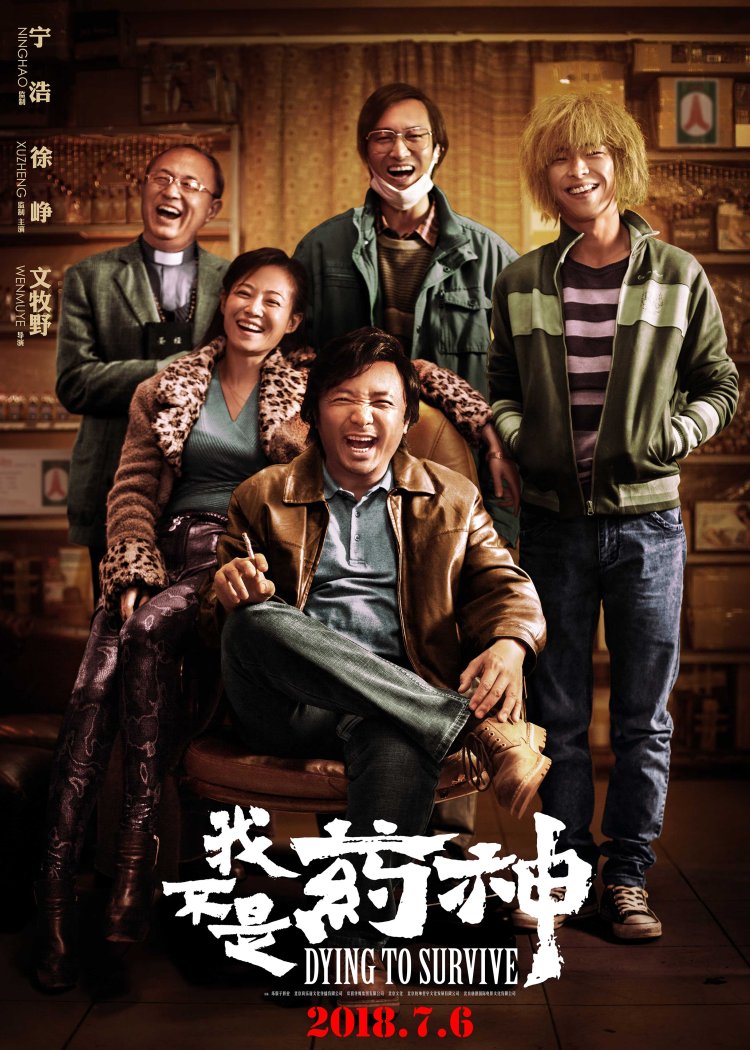
Dying to Survive (我不是药神, Wen Muye, 2018)

dying to survive poster 1Big box office Chinese comedy continues to run rings round the censors in Wen Muye’s Dying to Survive (我不是药神, Wǒ Bú Shì Yào Shén). Not only does the film display on screen protest movements and tacitly imply that sometimes it’s OK to break the law when you think the law is wrong, but it also dares to criticise the state both for its slowness to introduce socialised healthcare provisions and for its failure to moderate increasing wealth inequality in the rapidly expanding modern economy.

In Shanghai in 2003, our hero Cheng Yong (Xu Zheng) is the proprietor of a shop selling “Indian God Oil”. A divorced father, he is involved in a volatile custody dispute with his ex-wife who has remarried and wants to take their son abroad. Meanwhile, he’s behind on his rent and the god oil business is not exactly booming. That is, until he receives an unusual business proposition. Lv (Wang Chuanjun), a young man suffering from chronic myelogenous leukemia, asks him to begin importing a knock off Indian cancer drug which is a clone copy of the big brand variety at a fraction of the cost. The Indian drug is banned in China, but, Lv argues, not because it’s unsafe – only because Big Pharma is determined to protect its profits at the cost of people’s lives. Yong is not convinced. He knows there are heavy penalties for trafficking “fake” medications, but he needs money for his father’s medical care and to fight for custody of his son and so he decides to give it a go, if for mercenary rather than humanitarian reasons.

Yong’s transformation from schlubby snake oil peddler to (medical) drug dealer extraordinaire is a swift one and perhaps a satirical example of amoral capitalistic excess in his series of moral justifications which allow him to think he’s better than Big Pharma because the price he’s charging is lower even while knowing there are many people who still can’t afford it. Nevertheless, he quickly discovers he has competition. The even more dubious Professor Zhang (Wang Yanhui) claims to have a wonder drug that does the same thing, only it’s really paracetamol cut with flour. Zhang’s duplicity annoys Yong, not just from a competitive angle, but from a humanitarian one as he finds himself sympathising with the poor men and women who are unable to afford the extortionate fees imposed by the mainstream drug companies.

Afraid of the consequences, Yong gives up the drug trade and goes legit, becoming a successful textile merchant rich beyond his wildest dreams. Conveniently, it’s at this point his humanitarianism begins to reawaken as he’s brought back into contact with a sickly Lv who tells him that the smuggling ring has since dissolved. Zhang, irritated by Yong’s moralising, tells him that no real good will come of the “fake” drug trade because the “disease of poverty” can never be cured. Zhang does indeed have a point. These people are dying because they’re poor and have been deemed expendable. Yong’s change of heart may be all for the good, but it’s also fuelled largely by the fact he can now afford not to care very much about money which means he is free to care about other people’s welfare.

Then again, the police chief remonstrates with a conflicted underling that the law trumps sympathy. By this point, they have realised that the drug smuggling ring is close to a public service and people will die if they arrest the ringleaders, but their hands are also tied by the need to preserve order through enforcing the law. The law, however, is also corrupt as we see by the direct presence of Big Pharma sitting right in the incident room and asking the police to act on its behalf. Big Pharma would argue that it invested heavily in the research which led to the medical breakthrough and is entitled to reclaim its costs while those selling knockoffs are nothing more than pirates guilty of intellectual property theft, but the police has a duty to protect its people and a significant conflict when the “victim” is wilfully misusing its economic and political power to coerce it to do their dirty work.

This being a Mainland film, crime cannot pay but Yong manages to emerge from his straitened circumstances in heroic style as he stands both remorseful for having broken the law and angry that he even had to. A series of closing intertitles is quick to remind us that following the real life events which inspired Dying to Survive, the Chinese state began to reconsider its health polices, relaxed the law on “fake” drug trafficking, and took measures to make care more affordable to all. A subversive treat, Dying to Survive is the rare Chinese film which seems to suggest that civil disobedience is an effective weapon against an unfair society, making a hero of its lawbreaking humanitarian as he, ironically, learns to put the collective interest before the individual.


Dying to Survive was screened as part of the 2019 Udine Far East Film Festival.

International trailer (English subtitles)

Every Day a Good Day (日日是好日, Tatsushi Omori, 2018)

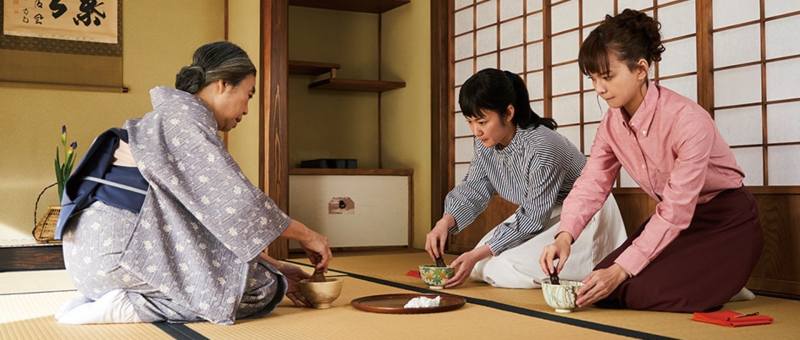
Everyday a good day posterTatsushi Omori burst onto the scene in 2005 with the extremely hard-hitting and infinitely controversial The Whispering of the Gods before going on to build a career on chronicling the unpalatable facets of human nature. He does have his lighter sides as the delightfully whimsical Seto and Utsumi proves, but even so he might be thought an odd fit for directing an adaptation of a series of autobiographical essays detailing one woman’s personal growth over a 20 year period spent perfecting the art of the Japanese tea ceremony. Every Day a Good Day (日日是好日, Nichinichi Kore Kojitsu) is, however, like much of his previous work, a story of youthful ennui and existential despair only one in which it turns out that the world is basically good once you agree to embrace it for what it is.

The film opens in 1993 with the heroine, Noriko (Haru Kuroki), a confused college student unsure of the forward direction of her life. Often ridiculed by her family for being clumsy and neurotic, Noriko compares herself unfavourably with her glamorous cousin Michiko (Mikako Tabe) who has come to the city from the country to study and appears to have her whole life already mapped out with a confidence Noriko could only dream of. A turning point arrives when she’s talked into accompanying Michiko to learn tea ceremony from a kindly old lady, Mrs. Takeda (Kirin Kiki), who lives nearby. Despite regarding tea ceremony as something fussy and old fashioned that only conservative housewives aspire to learn, Noriko begins to develop a fondness for its formalist rigour and continues dutifully attending classes for the next 24 years.

“Carry light things as if they were heavy, and heavy things as if they were light” Noriko is told as she clumsily tries to carry an urn from one room to another, though like much of Takeda-sensei’s advice it serves as a general lesson on life itself. Mystified by the entire process, Noriko and Michiko make the mistake of trying to ask practical questions about why something must be done in a particular way only for Takeda-sensei to admit she doesn’t know, it simply is and must be so. To look for that kind of literal meaning would be a waste of time.

Of course, she doesn’t quite put it that way. As Noriko later realises, some things are easy to understand and need only be done once. Other things take longer and can only be understood through a weight of experience. Just as she was bored out her mind by La Strada at 10 but moved to tears at 20, the discrete pleasures of the tea ceremony are something only fully comprehended when the right moment arrives. What was once empty formalism becomes a framework for appreciating the world in all its complexity, embracing each of the seasons as they pass and learning to live exactly in the moment in the knowledge that a moment is both eternal and transient.

Noriko continues to feel herself out of place as she witnesses those around her progress in their careers, get married, or go abroad while she remains stuck, unable to find a direction in which to move. Even tea ceremony occasionally betrays her as new pupils arrive, depart, and sometimes wound her newfound sense of confidence by quickly eclipsing her. Nevertheless, the calm and serenity of ritualised motion become a place of refuge from the confusing outside world while also offering a warmth and friendship perhaps unexpected in such an otherwise ordered existence.

Over almost a quarter of a century, Noriko’s life goes through a series of changes from career worries to romantic heartbreak, learning to love again, and bereavement, while tea ceremony remains her only constant. She may not yet have discovered the path to happiness, but perhaps has begun to reach an understanding of it and believe that it might exist in some future moment – as Takeda-sensei says, there are flowers which bloom only in winter. In any case, what she’s learned is that sometimes it’s better not to overthink things and simply experience them to the best of your ability while you’re both still around. Every day really is a good day when you learn to slow down and truly appreciate it, living in the moment while the moment lasts in acknowledgement that it will never come again.


Every Day a Good Day was screened as part of the 2019 Udine Far East Film Festival.

Original trailer (English subtitles)

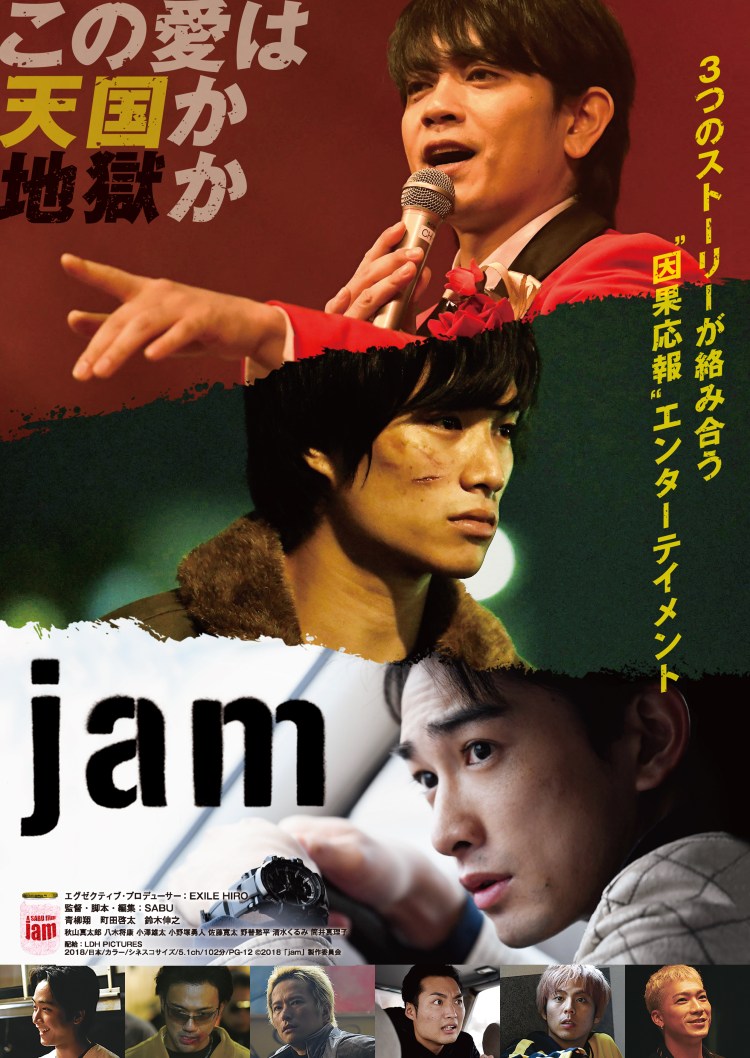
Jam (SABU, 2018)

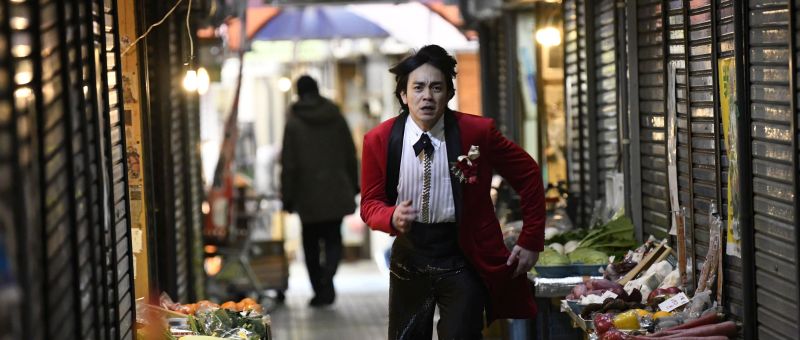
PrintSABU began his directorial career with a reputation for shooting on the run. Time may have caught up with him, in that relaxed contemplation has begun to replace frenetic action in the more recent stages of his career, but it’s to his first feature, Dangan Runner, that he (after a fashion) returns in the similarly structured Jam. Random circumstance conspires once again to send three fugitive guys on a zany collision course, but this time the crash offers each of them something a little more positive (to a point, at least) than a grudging acceptance of life’s impossibilities.

The first of our three heroes, Hiroshi (Sho Aoyagi), is a cheesy enka singer with an army of middle-aged female fans whom he is perfectly aware of exploiting. Despite his “star status” with the ladies who crowd out his meet and greets, Hiroshi’s big concert is at the Civic Centre in Kitakyushu which is not exactly the Budokan, but it’ll do for the minute. Trouble brews when the wealthiest of his fans, Mrs. Sakata, suggests a change to the setlist only for a backbencher to leap to Hiroshi’s defence with slightly embarrassing fervour. Masako’s (Mariko Tsutsui) crazed fan aesthetic is later brought to its zenith when she gets Hiroshi to chug down some home made soup which is laced with some kind of knock out drug.

Meanwhile, all round good guy Takeru (Keita Machida) is driving around in a not quite classic car and looking for people to help because a Buddha appeared to him and told him if he did three good deeds a day his girlfriend would wake up from her coma, and ex-con Tetsuo (Nobuyuki Suzuki) is patiently pushing his grandma round town in a wheelchair and taking revenge on the gangsters who have betrayed him every time her back is turned.

“Pay back is scary as hell” one of the gangsters affirms as he laments potentially mixing up a thoroughly good guy like Takeru in their nasty yakuza business. As the other had earlier outlined, this is a world very much defined by karma – you do good and good comes back to you, but do something bad and you’re in for more of the same. The logic is sound, and yet it doesn’t quite work the way you’d expect it to. Takeru is nothing but good, too good as it turns out, but constantly suffers precisely because of his goodness. Not only is his girlfriend gunned down in front of him during an act of random street violence, but he eventually finds himself tricked into helping the exact same thugs commit further crime only to attempt heroics and see that massively backfire too. Even so, he keeps on trying to be good and perhaps it really will pay off in the end.

Meanwhile, Hiroshi seems to be leading something of a charmed life though perhaps through a prism of self-loathing. He knows he is a cheesy lounge singer and one step up from gigalo in the way he accommodates himself to these older ladies in whom his only interest is their money. This is perhaps why he finds himself desperately playing along when kidnapped by Masako in the hope he will write a song just for her (that’ll show the snooty Mrs. Sakata), but finally betraying her in the final moment as if attempting to reassert his artistic autonomy. Masako eventually makes a sacrifice of her own which sends Hiroshi running for the hills only to finally acknowledge a sense of responsibility for his willing misuse of her loneliness and disappointment in selling her an impossible dream of connection.

As for Tetsuo, pushing granny round the city by night, the yakuza lurk round every corner proving the past really is impossible to escape. As expected, the paths of the three men eventually intersect in strange and various ways though each is bound for a different destination and an individual epiphany. Another boy band odyssey from SABU, this time in collaboration with studio LDH and the members of EXILE, Jam takes a fairly ironic view of the idol business if thinly disguised in Hiroshi’s depressing business plan of self-debasement and fansploitation while simultaneously asking if you really do reap what you sow when it comes to cosmic karma in an increasingly surreal existence.


Jam was screened as part of the 2019 Udine Far East Film Festival.

International trailer (English subtitles)

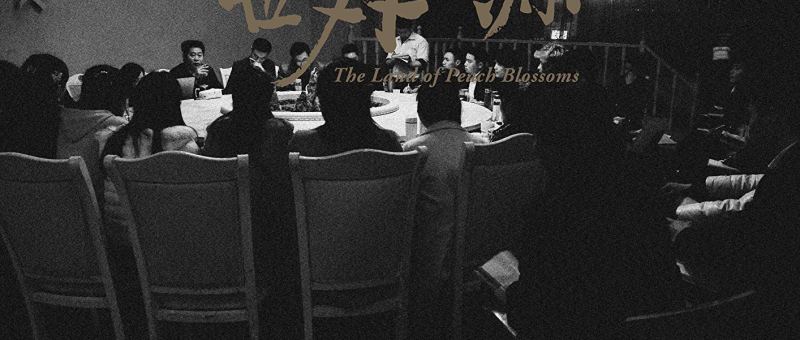
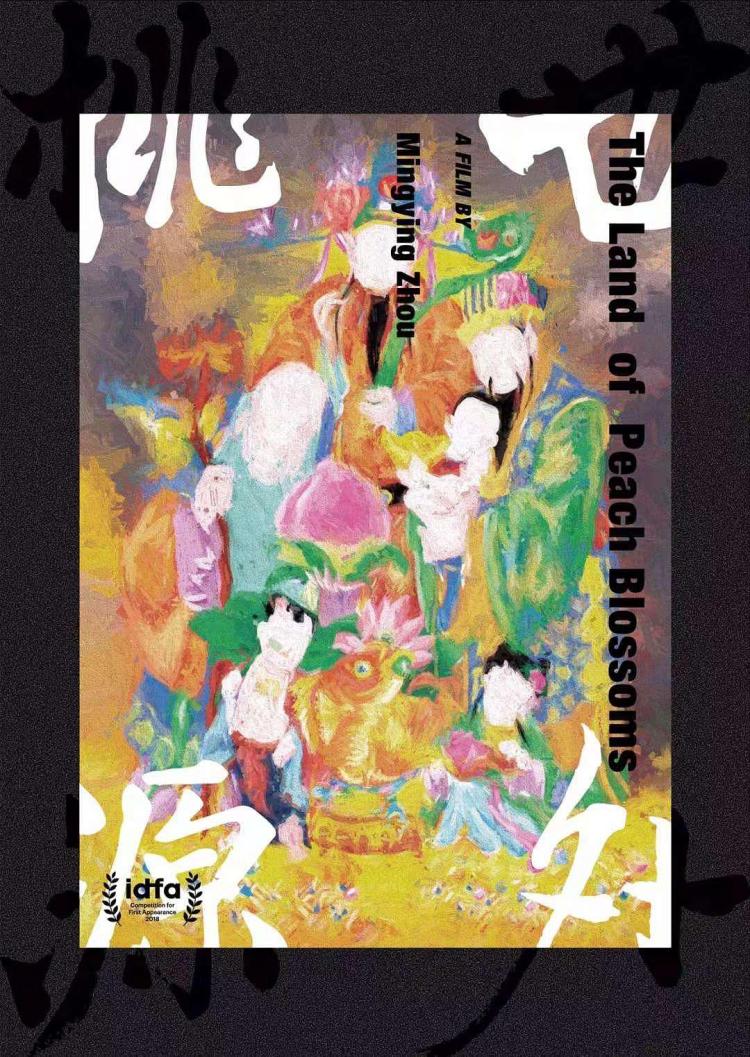
The Land of Peach Blossoms (世外桃源, Zhou Mingying, 2018)

Land of Peach Blossoms posterIn Tao Yuanming’s 5th century fable, The Land of Peach Blossoms (世外桃源, Shìwàitáoyuán) is a mythical utopia where people live in peace and harmony knowing nothing of the outside world. Zhang Derong, the founder of the Feast of Flowers restaurant, saw himself as creating something similar – a place beyond the outside world founded on collectivist principles where they make healthy people healthier through “emotional catering”. If it were not immediately obvious, the founder of Feast of Flowers is not entirely on the level but has promised great things to the young men who work in his restaurant and look up to him as if he were some kind of more ethical, caring Jack Ma.

His most devoted pupil, Tang Guangbin used to work in a nuclear power plant and had a sea view from his company dorm but he likes it here better because he feels “free” in his heart and soul. Like Guangbin, Zeng Qi also feels that as long as they follow The President’s teachings they will make the Feast of Flowers bloom all around the world spreading health and happiness as they go. The Feast of Flowers is indeed a cheerful place filled with dancing and a faux ancient fantasy Chinese village atmosphere. There is also, however, a dark side which will become apparent to the young hopefuls the longer they stay in the garden.

The truth becomes apparent first to the practically minded Wang Peiyuan who turned down more lucrative jobs to work at the Feast of Flowers because he bought into Zhang’s ambitious business plan and assumed there would be more opportunities down the line. Not only is his pay cheque lower than promised because of all the “training” he has to pay for, but it’s so far below market rate that he’s worrying about paying his mortgage and being able to feed his wife and child. Meanwhile, Zhang waxes lyrical about work ethics and insists that “training” his workforce until 5am and then starting again at 8 is all part of his grand plan to turn them into top entrepreneurs.

Guangbin excuses himself to a friend on the phone in case he sounds as if he’s been “brainwashed” as he fiercely sells Zhang’s philosophy as not only a way to become rich and successful but to make the world a better, more caring place – the kind of place he perhaps assumes China was before the ‘80s reforms which opened it up to Capitalism. Of course, Guangbin is too young to remember what it was like back in the ‘70s, but hears people tell him about solidarity and job security and he’s understandably envious. He’s made a big investment in Feast of Flowers and so it takes a long time before he’s prepared to accept that he is being exploited by an unscrupulous charlatan. Once he and some of the other guys figure out there won’t be any expansion of Feast of Flowers, prime jobs, or bonuses, they want to quit but they can’t because they’re in hock for all this “training” and will lose their unpaid salary because, ironically, they don’t have effective work place protections. 

Zhang runs the place as if it were a work cadre and himself the Chairman. He commands absolute loyalty and requires employees to self criticise, running regular hunts to find the most “self centred” of the workers with many keen to jump at the bait and even to accuse others on cue. Those who disagree and want to leave are dismissed as having “too many personal thoughts and opinions” when they should be concentrating on understanding The President’s philosophy. Guangbin once felt free inside the Feast of Flowers, but later came to feel that outside was “a world of freedom” and inside “a prison full of darkness” from which there is “no escape”.

As if to ram his point home, Zhang makes the workers listen to Red Detachment of Women and has a bizarre obsession with “retaking” the Diaoyu Islands (also known Senkaku islands) from the Japanese, even staging a surreal play in which the Feast of Flowers soldiers personally defeat the Japanese army and capture Japanese prime minister Shinzo Abe while Moon Over Ruined Castle plays mournfully in the background. Disillusioned by modern China’s lurch towards soulless consumerism and yearning for a simpler time in which people supported each other in common endeavour (but secretly still wanting to get ahead), the youngsters at Feast of Flowers bought into Zhang’s duplicitous nonsense and allowed themselves to be brainwashed into serving his ideals rather than their own. The parallels are obvious, but Guangbin may sadly be right in believing that there is no escape from the soul crushing exploitation of the modern economy which promises so much and yet delivers so little.


The Land of Peach Blossoms screens as part of the 2019 Chinese Visual Festival at King’s College London on 5th May, 7.15pm.

Original trailer (English subtitles)

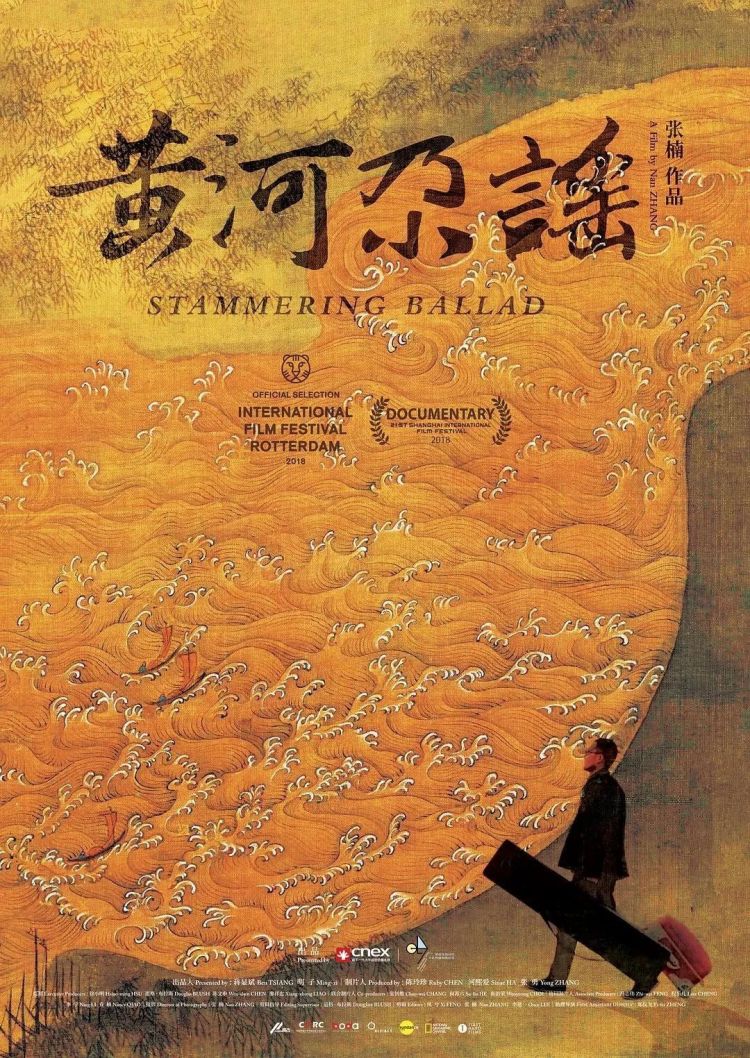
Stammering Ballad (黃河尕謠, Zhang Nan, 2018)

Stammering ballad poster“We all live our lives in silence” according to the subject of Zhang Nan’s Stammering Ballad (黃河尕謠, Huáng  Gǎ Yáo). A love song to a disappearing rural landscape, Zhang’s beautifully composed documentary follows an aspiring folksinger whose dreams of fame have taken him away from the land he loves so much as he tries to ensure the survival of traditional village culture by singing in the cities.

A college dropout, Zhang Gasong embraced his love of folk music while too embarrassed to return home. Honing his craft as he goes, he’s been travelling around the country for the last seven years going wherever someone wants to hear him play – though occasionally they might have to front him the train money to help him get there. Gasong is, it has to be said, an eccentric young man. A former bandmate laments Gasong’s “poor social skills” which led to the band’s breakup, while also remaining exasperated that Gasong just up and left, disappearing for years on end without a word, with little regard for their friendship. Still, he seems to have forgiven him enough to agree to play for Gasong’s big shot on China’s Got Talent.

China’s Got Talent might seem like a left field move for a traditional folk musician, but Gasong has his eyes on the prize. He wants to be the kind of star where everything gets done for him and all he has to do is play, but for the moment he’s busy touring small music venues and festivals singing for his supper and hoping the youth of China who have, like himself, abandoned their village homes for the convenience of city life, will eventually re-embrace the song of the earth.

That aside, Gasong has a conflicted attachment to the pastoral past. He always hated farming and ironically claims to loathe the familiar smell of wheat germ and freshly tilled soil, not to mention the physical toll of of the work. Nevertheless he maintains an attachment to the landscape and views it almost as an inheritance of which he has been robbed by the modern China. The place where he grew up is now largely in ruins after having been relocated to avoid a drought, and though he bitterly misses the familiar black donkey that once lived in the village he has to remember that it’s long been sold. A traveller now himself, Gasong is losing connection with his land and with his family, but desperately clinging to his ancestral legacy through the medium of song.

In the end, China’s Got Talent didn’t really get Gasong, but perhaps that’s for the best. Cameramen expecting disappointment found only relief when they came to interview the band afterwards. Though it’s a shame that the performance will never be aired, and the beautiful rural folksong will not be heard by the millions of Chinese viewers almost certainly tuning in for more energetic fare, Gasong remains undaunted. Wandering off once again he loses touch with his band members and resumes his nomadic travels as an itinerant musician. The grand irony is that these songs, so intrinsically linked with place, are themselves travelling and echoing in new locations looking for new pastures in which to take root as the modern China flattens mountains to build factories and moves families on from their lands while sending its young into the cities all alone.

Gasong, who has stammered since childhood, has found his voice through music though often struggles to make that voice heard in boisterous modern society. Like many of his generation he too has realised he cannot stay in his pastoral paradise, but has also discovered that the city doesn’t suit him. Most at home in the wide open spaces of his native Gansu, Gasong roams the land singing the song of the soil as he goes in the hope that it will one day echo and send the sound of home all around the world.


Stammering Ballad screens as part of the 2019 Chinese Visual Festival at King’s College London on 5th May, 1pm.

Original trailer (English subtitles)