BAKA’s Identity (愚か者の身分, Koto Nagata, 2025)

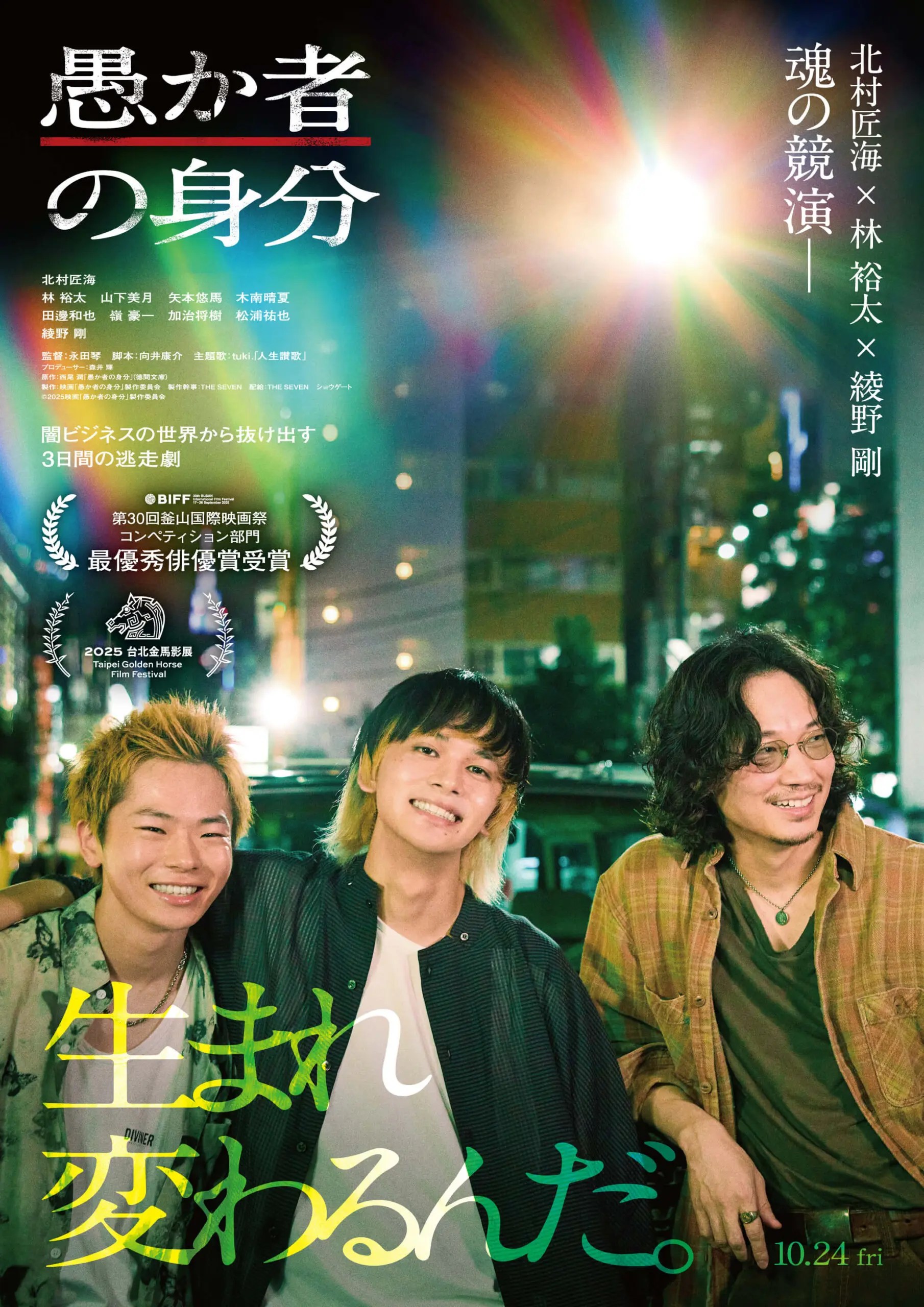
What does a name really mean? Can you really start over just by swapping your current identity for a new one, and what would that actually mean for the rest of your new life? Two young men who’ve been failed by adults and authority figures become involved with yahoo boy-style cyber crime, only in this case the aim of their romance fraud is to trap men they already know are poor and desperate and convince them they can turn their lives around by lending their identities to “someone in trouble”. 

It’ll only be for two years, they say. Just lie low, try not attract attention from the authorities. Though the targets also get a new identity in the form of a driving license with another name, they’re told not to use it for driving because the police will run checks on it if they have an accident. But the truth is that despite the widespread believe that it’s easy to disappear in Japan, it’s actually quite hard to live without a formal proof of identity through the family register system. You can’t rent an apartment or get a regular job, because on paper you don’t exist. The fake ID they’ve been given is only good enough to pass as proof of age. It’s not going to stand up if someone actually does more than glance at it.

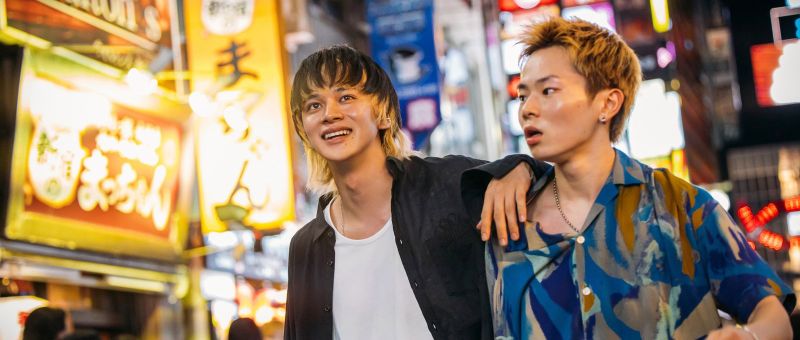
But even if the idea of being able to wipe everything clean and start again might be attractive, the reality it not quite so easy. You can’t just wipe away your existing fears and traumas, and they’ll follow you even into your new life. Takuya (Takumi Kitamura), who’s been doing this sort of thing longer, is conflicted on realising their latest mark, Egawa (Yuma Yamoto), is a broken man who can’t get over the death of his daughter at the hands of his wife. Though Takuya, and the young woman they have assisting them with the scam, don’t want to do something like this to someone who’s already suffered so much, this world is pretty brutal and in reality they no longer have much choice.

Kisara (Mizuki Yamashita) is only involved in the scam because her mother stole her scholarship fund and she needed money for university, but she’s since dropped out and seems to be doing this kind of thing full-time. Takuya too seemingly had no parental support and sold his own identity to pay for medical treatment he hoped would save his brother, but he died anyway. That might be why he feels so protective of Mamoru (Yuta Hayashi), a young man he met in a homeless shelter run by the yakuza for the purpose of getting them to apply for benefits and then stealing them all. Mamoru was also abandoned by his mother and suffered physical abuse in his familial environment. Takuya brings Mamoru in on the scam and his life in the criminal underworld thinking it would help him, only to later feel guilty when events spiral out of control.

Takuya may look to his boss, Sato (Goichi Mine), as a kind of big brother figure, but also knows that he most likely plans to throw him under the bus while plotting to rob gangland kingpin Joji (Kazuya Tanabe) of a windfall gained through gold smuggling. Various people warn Takuya that it’s best to get out now, because if you go too deep you never will, but Takuya knows his bid for escape is likely to fail even when he turns to former mentor Kajitani who convinced him to sell his identity in the first place. The irony is that Takuya sold his name without a second thought and doesn’t really think his identity’s worth anything, which might be why he thought it was worth rolling the dice just to see if he could change his situation. The film’s Japanese title might ask us who we thought was being “fooled,” the men whom Takuya scammed who convinced to give up their identities for what seemed to them at the time a lot of money, or Takuya and Mamoru deluded both by the opportunities of a life of crime and by the allure of escape. In the all end, all any of them really have is each other and the unexpectedly genuine connections that arise between them in opposition to a society that has already discarded them and a hellish underworld in which an identity is just another commodity to be bought, sold, or sacrificed at will.


Trailer (no subtitles)
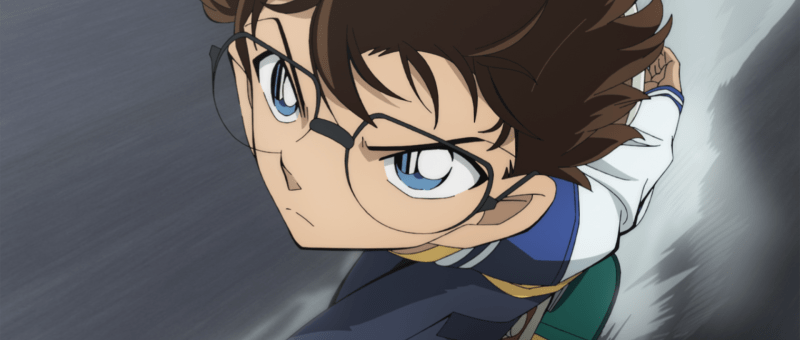
Detective Conan: One-Eyed Flashback (名探偵コナン 隻眼の残像(フラッシュバック), Katsuya Shigehara, 2025)

Detective Conan (Minami Takayama) returns for the 28th instalment in the long-running animated film series, Detective Conan: One-Eyed Flashback, (名探偵コナン 隻眼の残像(フラッシュバック), Meitantei Conan: Sekigan no Flashback) as he finds himself embroiled in another mystery revolving around Inspector Yamato’s (Yuji Takada) near fatal collision with an avalanche, a potential terrorist attack on a radio observatory, and the murder of one of Kogoro Mori’s (Rikiya Koyama) old friends. Meanwhile, justice is under fire as the government are working on reforming the plea deal system which leaves some feeling short-changed by justice and that the criminals are getting off too lightly while victims of crime continue to suffer.

Indeed, there’s a kind of symmetry between Conan’s guardian Kogoro, who took him in after he was shrunk to the size of a child by the evil Black Organisation, and bereaved father Funakubo who blames himself for what happened to his daughter Maki because he sent her back to his gun shop where she got caught up in a robbery. Before she left, she said she had something to tell him, but he never got to hear what it was, just as Kogoro never heard what his former colleague from his police days, Croco, wanted to tell him when he set up a clandestine meeting in a local park but was killed by a mysterious assassin before he could say anything. 

Once again, Conan is on the case, though Kogoro more or less sidelines him and insultingly repeatedly reminds Conan that this is not a game. Nevertheless, Inspector Yamato specifically asks for his help, while Conan begins to suspect something bigger is motion when he’s unsubtly bugged by someone he assumes is probably an undercover Public Security officer. All roads lead back to Amuro (Takeshi Kusao), who handles the situation from the cafe in Tokyo where he works to maintain his cover identity. 

Nevertheless, it all links back to the gun shop robbery and its lingering effects on the victims. Not only was one of the thieves not caught, but the other got off on a plea bargain which has left Mr Funakubo on a constant quest for justice in which he is forever hassling the Nagano Police for updates on his case. Meanwhile, there’s interpersonal drama in play in the relationship between police officers Yamato and Yui (Ami Koshimizu) who are also wrestling with unspoken feelings and the fallout from Yamato’s presumed death in the avalanche in which he lost his memory and wasn’t found until a few months later. The wound to his eye is symbolic of his inability to recall the whole of what happened before he was overcome by the snow. He must have seen the face of the man he was chasing at the time, but he can’t remember it. 

Though the mystery itself may not be as complicated as others in the series, involving few clues or difficult puzzles to be solved and relying instead on Conan’s keen intuition and people skills, it leans heavily into a sense of conspiracy and paints Public Security in an unflattering light as they attempt to bug Conan and then in a post-credits scene, are seen to offer another “plea deal” to a suspect in return for keeping Public Security out of their testimony while blackmailing them that, should they choose to speak out, all their secrets will also be revealed to the public and those close to them will suffer. In any case, Conan gets a few more opportunities to use his all-powerful skateboard amid the film’s increasingly elaborate action sequences as he squares off against the crazed villain hellbent on vengeance and an ironic defence of the law.

Where Public Security come in for scrutiny, the police are depicted as universally good, reminding the suspect that it’s the police’s job the enforce the law without fear or favour while protecting ordinary people both physically and emotionally. As messages go, it might be a little authoritarian, but it’s also true that the police take Conan seriously in ways others may not. While they’re all busy with the crime(s), Conan’s friends are also all in Nagano along with Ran (Wakana Yamazaki) enjoying what’s supposed to be a stargazing holiday before being dragged into the case and providing important backup for Conan. As the tagline says, the truth won’t stay buried forever and Conan does his best to play off Public Security and the police in order to solve the case, avenge Kogoro’s friend, and also protect justice in Japan as the courts debate the plea bargain issue and its effect on criminals and victims alike as they try to rebuild their lives in the wake of crime.


Detective Conan: One-Eyed Flashback is in UK cinemas from 26th September courtesy of CineAsia.

Trailer (Japanese / Traditional Chinese subtitles)

Every Day a Good Day (日日是好日, Tatsushi Omori, 2018)

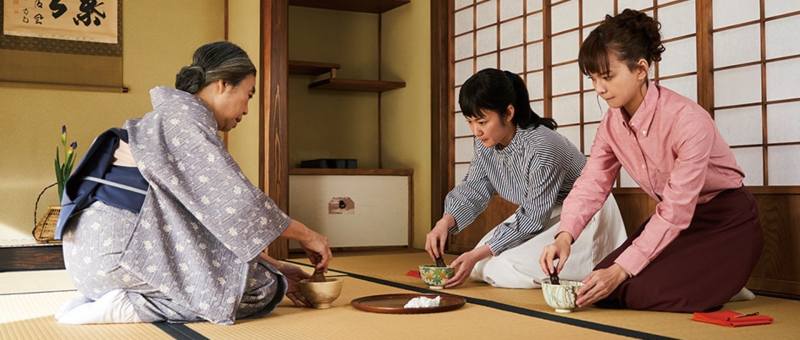
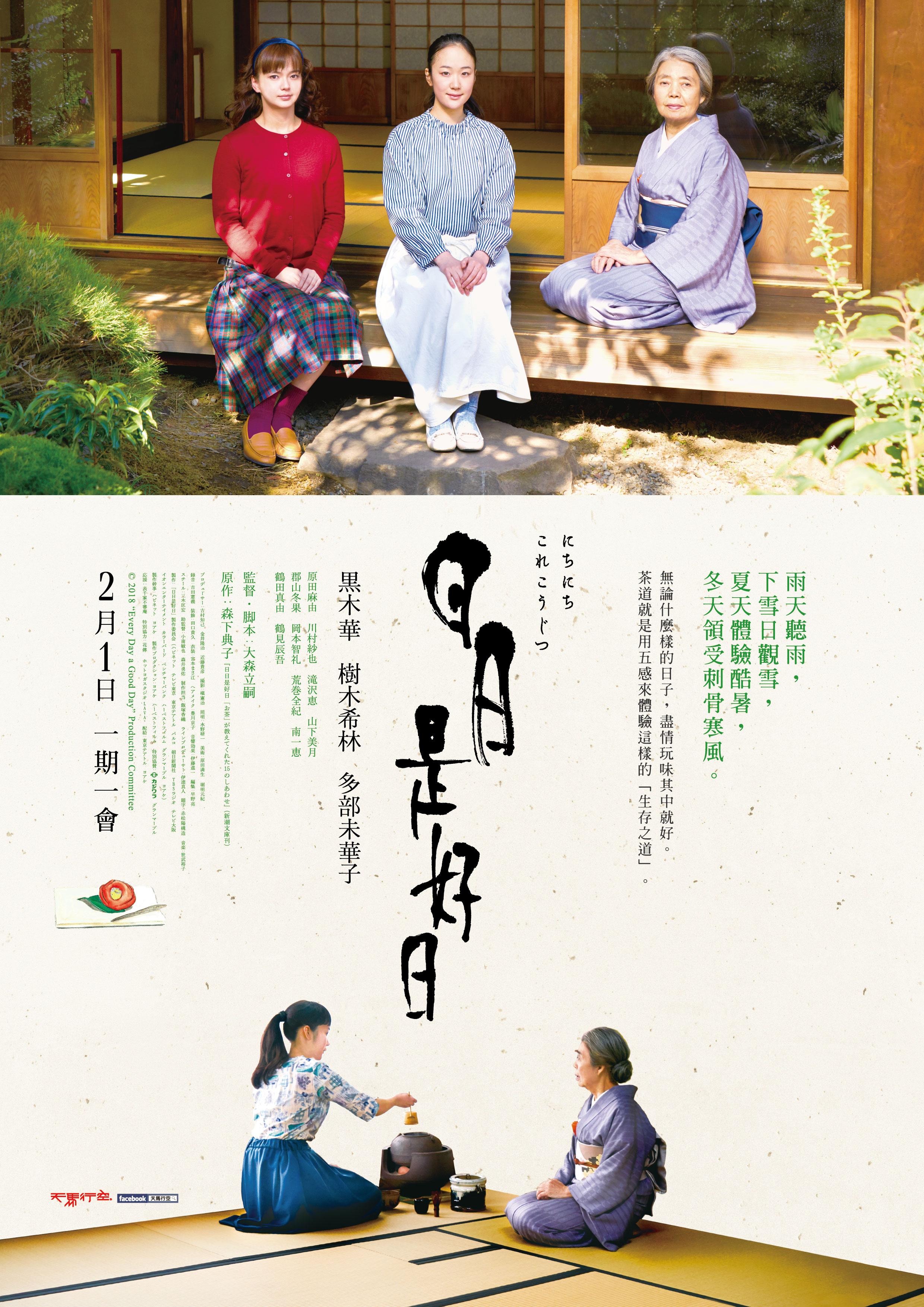
Everyday a good day posterTatsushi Omori burst onto the scene in 2005 with the extremely hard-hitting and infinitely controversial The Whispering of the Gods before going on to build a career on chronicling the unpalatable facets of human nature. He does have his lighter sides as the delightfully whimsical Seto and Utsumi proves, but even so he might be thought an odd fit for directing an adaptation of a series of autobiographical essays detailing one woman’s personal growth over a 20 year period spent perfecting the art of the Japanese tea ceremony. Every Day a Good Day (日日是好日, Nichinichi Kore Kojitsu) is, however, like much of his previous work, a story of youthful ennui and existential despair only one in which it turns out that the world is basically good once you agree to embrace it for what it is.

The film opens in 1993 with the heroine, Noriko (Haru Kuroki), a confused college student unsure of the forward direction of her life. Often ridiculed by her family for being clumsy and neurotic, Noriko compares herself unfavourably with her glamorous cousin Michiko (Mikako Tabe) who has come to the city from the country to study and appears to have her whole life already mapped out with a confidence Noriko could only dream of. A turning point arrives when she’s talked into accompanying Michiko to learn tea ceremony from a kindly old lady, Mrs. Takeda (Kirin Kiki), who lives nearby. Despite regarding tea ceremony as something fussy and old fashioned that only conservative housewives aspire to learn, Noriko begins to develop a fondness for its formalist rigour and continues dutifully attending classes for the next 24 years.

“Carry light things as if they were heavy, and heavy things as if they were light” Noriko is told as she clumsily tries to carry an urn from one room to another, though like much of Takeda-sensei’s advice it serves as a general lesson on life itself. Mystified by the entire process, Noriko and Michiko make the mistake of trying to ask practical questions about why something must be done in a particular way only for Takeda-sensei to admit she doesn’t know, it simply is and must be so. To look for that kind of literal meaning would be a waste of time.

Of course, she doesn’t quite put it that way. As Noriko later realises, some things are easy to understand and need only be done once. Other things take longer and can only be understood through a weight of experience. Just as she was bored out her mind by La Strada at 10 but moved to tears at 20, the discrete pleasures of the tea ceremony are something only fully comprehended when the right moment arrives. What was once empty formalism becomes a framework for appreciating the world in all its complexity, embracing each of the seasons as they pass and learning to live exactly in the moment in the knowledge that a moment is both eternal and transient.

Noriko continues to feel herself out of place as she witnesses those around her progress in their careers, get married, or go abroad while she remains stuck, unable to find a direction in which to move. Even tea ceremony occasionally betrays her as new pupils arrive, depart, and sometimes wound her newfound sense of confidence by quickly eclipsing her. Nevertheless, the calm and serenity of ritualised motion become a place of refuge from the confusing outside world while also offering a warmth and friendship perhaps unexpected in such an otherwise ordered existence.

Over almost a quarter of a century, Noriko’s life goes through a series of changes from career worries to romantic heartbreak, learning to love again, and bereavement, while tea ceremony remains her only constant. She may not yet have discovered the path to happiness, but perhaps has begun to reach an understanding of it and believe that it might exist in some future moment – as Takeda-sensei says, there are flowers which bloom only in winter. In any case, what she’s learned is that sometimes it’s better not to overthink things and simply experience them to the best of your ability while you’re both still around. Every day really is a good day when you learn to slow down and truly appreciate it, living in the moment while the moment lasts in acknowledgement that it will never come again.


Every Day a Good Day was screened as part of the 2019 Udine Far East Film Festival.

Original trailer (English subtitles)