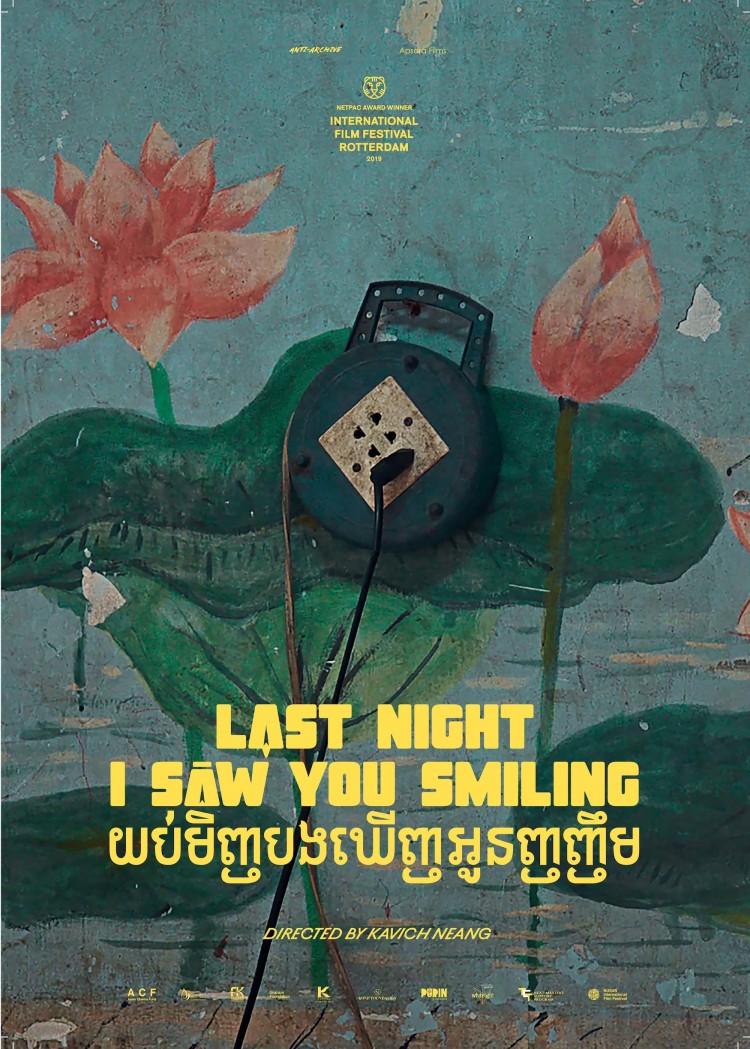
Last Night I Saw You Smiling (យប់មិញបងឃើញអូនញញឹម, Kavich Neang, 2019)

LastNightISawYouSmiling“We’re used to seeing a house for its roof, windows, and walls. But in the end, as we move out of here, it breaks my heart.” Words ironically offered by a sculptor, one who might above all have learned to fall in love with the shape of things, as he prepares to leave a place in which he has made his life. Filmmaker Kavich Neang grew up in the iconic “White Building” of Phnom Penh, Cambodia. Built in 1963, the building was a bold statement from a new nation as it threw off the colonial yoke to claim a new identity, literally extending the territory as it situated itself on reclaimed land – a well appointed complex of bright white stone amid the serenity of spacious parkland.

Intended to house those of moderate income, the White Building first fell into disrepair during the brutalising reign of the Khmer Rouge whose evacuation of the city left it empty for four years. In 1979 after the regime fell, the people began to return and the building once again became a beacon of culture in a modernising city, a vertical village home to artists and civil servants. Progress, however, began to work it against it, and by the time it was condemned in 2015 the building was regarded by many as a slum associated with drugs, crime, and sex work. Nevertheless, it was still home to 493 families, Neang’s among them, many of whom had lived there since the ‘80s and vividly recall the last time they were told they would need to vacate.

The anxieties are, of course, different, but they are there all the same. No one is marching them out by gunpoint, and they have a choice in where they go (in theory, at least), but the truth remains that people are being forced out of their homes against their will. While it is true that the building may have become unsafe and has been deemed unsalvageable despite attempts to preserve its architectural history, many worry that the promised compensation will never arrive or that, for those who lived in the smaller flats, they have been priced out of the modern Phnom Penh and will not be able to find equivalent accommodation using only the money they have been offered but have not yet received. This turns out to be more or less the case with many of the elderly residents returning to live with extended family, in some cases leaving the city entirely, while others retreat to the suburban margins. 

In this sense, Neang documents his neighbours and family “burying” the building as they slowly dismantle the history of their lives within it. At an early meeting with officials, some are keen to confirm that they will be allowed to take doors and windows with them, and so we gradually see doorframes pulled away from walls and fretwork removed from the outside to be incongruously pulled back in. Yet others struggle to bundle their personal belongings, unsure of where they’re going or what they will need in the knowledge they will never, can never return because this place will eventually cease to exist.

Indeed, taking its name from a nostalgic pop song, Last Night I Saw You Smiling (យប់មិញបងឃើញអូនញញឹម) is a funeral elegy for the spirit of a place now departing. Neang opens with a silent corridor and then fills it with life – children playing, women singing, doors open in neighbourly communion. He ends in the same place as the building breathes its last, either liberated or devoured, transitioning to bright white light as if its soul really had departed to a better place. Retro pop songs fill the air singing of lost love, not only of its immediate pain but of the incurable longing of unfulfilled desire for a world that no longer exists and lives only in the halls of memory. You can never go home again, because “home” is a moment, a feeling which is always passing and forever elusive. People give a place soul, only to for that connection to be painfully severed when they must inevitably leave it leaving a piece of themselves behind. The White Building is gone, the community scattered, but the ghost of it lives on, invisible yet ever present.


Screened as part of the 2019 Open City Documentary Festival in partnership with Day For Night who will be distributing the film in the UK.

Festival trailer (English subtitles)
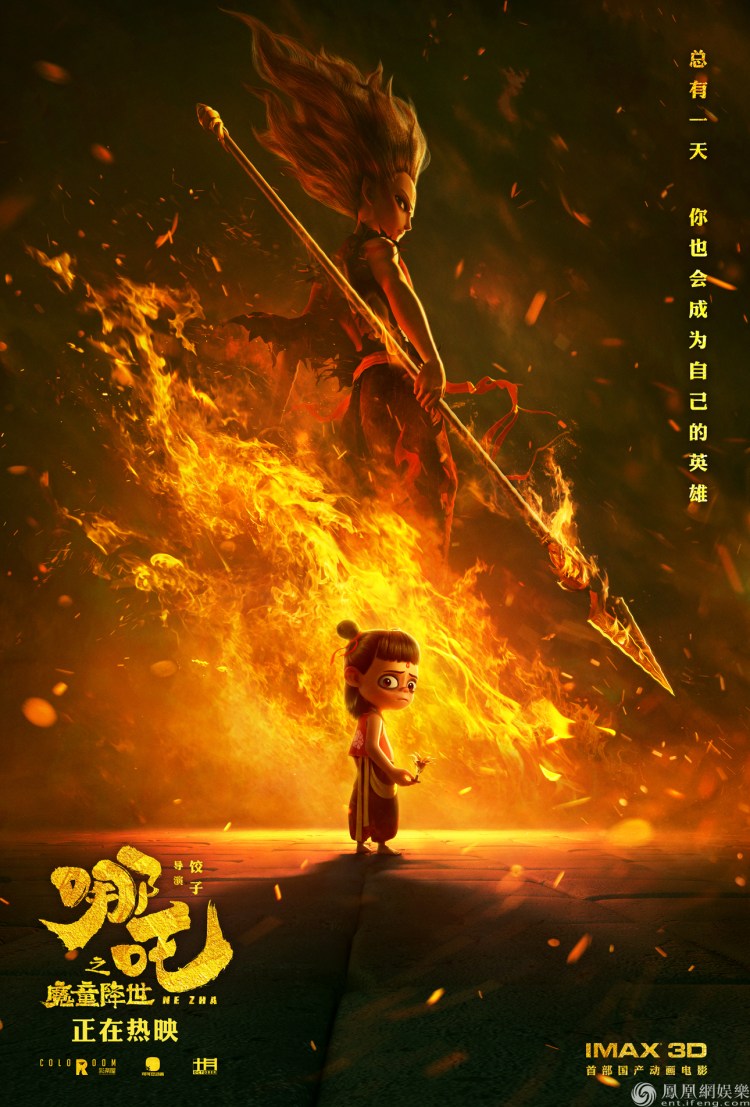
Ne Zha (哪吒之魔童降世, Jiaozi, 2019)

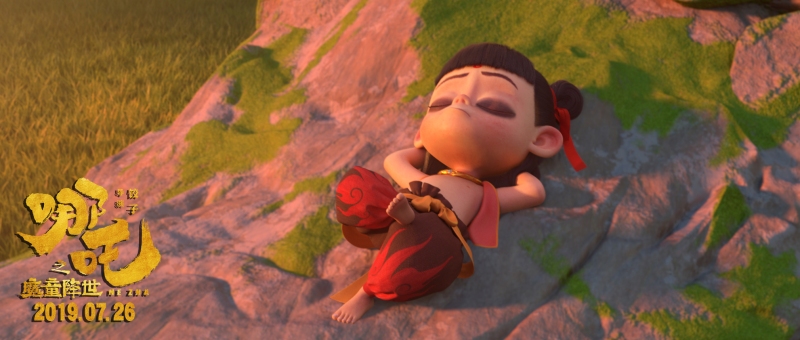
2755835c-570e-44bc-b2f2-515f706369bd_64fa474eb6b5a53c36be9bcd9311f283ce949be6_w1290_h1905Can you choose who you are, or is your identity constructed by accidents of birth and the society all around you? It’s a complicated question and even more so if you happen to have been born part demon thanks to a cosmological mixup. An origin movie of sorts for the titular hero familiar to most from classical Chinese folklore, Ne Zha (哪吒之魔童降世, Nézhā zhī Mótóng Jiàngshì) asks just that through the story of an extremely naughty, all powerful little boy who might be evil or just misunderstood and resentfully lonely because of the prejudice held against him by those fearful of his differences.

The trouble begins with the Chaos Pill which can pull power from sun and moon equally, threatening the integrity of the universe itself. Thankfully, the Heavenly King manages to split it into the Demon Pill and the Spirit Pill, enclosing both inside a lotus flower. He intends to send the Spirit Pill into the third son of general Li Jing (Chen Hao) and has put a curse on the Demon Pill so that it will be destroyed by lightening in three years’ time. Predictably nothing goes to plan because drunken deity Taiyi Zhenren (Zhang Jiaming) fails to stop the evil Shen Gongbao (Yang Wei) sending his minions in to steal the Spirit Pill and use it for his own ends. The Demon Pill ends up in the son of Li Jing, Ne Zha (Lü Yanting), who emerges from his mother’s womb as a bouncing ball of flesh before transforming himself into a small boy and proceeding to wreak havoc all over town.

Doting parents Li Jing and Madam Yin (Lü Qi) refuse to believe their son is all “bad” but recognise that they have a duty to the townspeople who are quickly fed up with Ne Zha’s antics and traumatised by years of being terrorised by “demons”. They would rather do away with the irascible little rascal, but could it be that he’s just bored and lonely? Given the increased demon threat, Madam Yin is often away slaying things and regrets she doesn’t have more time for her son while the other kids are afraid of him, both for quite rational reasons and also because his main way of making friends is quite mean. Increasingly resentful at being shunned as a “demon”, Ne Zha strikes back at the villagers in ways which are really just naughty rather than actually “evil” but obviously aren’t going to win him any friends.

Having failed to get help from the Heavenly Father who has predictably waltzed off for a bit as gods seem to do anytime there’s an actual problem in the mortal realm that they probably caused through inefficient planning, Li Jing decides to lie to his son that he’s really the Spirit Pill and has a duty to slay demons and help mankind. The deception begins to work. Imprisoned in a painting where Zhenren tries to teach him useful magic, Ne Zha takes his new responsibilities seriously, eventually escaping and trying to rescue a little girl who has been kidnapped by a water troll. Sadly, he goes about it all wrong and the townspeople embrace their prejudice to jump to the conclusion that he kidnapped the kid himself and has become even more dangerous.

Meanwhile, evil Shen Gongbao faces a similar problem as a deity shunned because he’s jaguar spirit who took human form. Allying with the villainous Dragons who have been given an ironic punishment to run a prison from which they can’t escape either, he gives the Spirit Pill to their bright hope Ao Bing (Han Mo) who, mirroring Ne Zha, struggles to accept his “evil” parentage and continues to do good and noble things behind his parents’ backs. Meeting by chance, the pair became friends but inevitably have to do battle before realising that they are two halves of one whole and thus represent a kind of salvation in linking hands rather than raising them.

Ao Bing, despite himself, is the more filial in that he thinks he has to accept the “destiny” his parents have given him as a liberator even if he doesn’t quite agree with their methods or reasoning. Ne Zha, by contrast, concludes that his fate is to resist his fate. He might not win, but he’ll fight it all the way and decide for himself who he is rather than allowing others to tell him. Genuinely funny, filled with amusing gags, and packed full of heart, Ne Zha is a gorgeously animated family fantasy and an impassioned advocation for living by your own principles while refusing to be bound by the unsolicited opinions of others.


Currently on limited cinema release courtesy of Cine Asia in the UK, and Well Go in the US.

Original trailer (English subtitles)

The Wonderland (バースデー・ワンダーランド, Keiichi Hara, 2019) [Fantasia 2019]

birthday wonderland poster 1The demands of adulthood are apt to overshadow any young teen’s life, but you can’t shake them off just by lying in bed and refusing to age. So the heroine of Keiichi Hara’s The Wonderland (バースデー・ワンダーランド, Birthday Wonderland) discovers as she determines to hideout from emotional complexity, waiting for the storm to pass and cowardly failing to defend a friend in the process. The last thing she wants is the responsibility of being “the chosen one”, but the thing about that is that you don’t get to choose and if the universe has plans for you it would be very irresponsible to refuse.

After (not) getting involved in a minor spat amongst friends about coloured hair clips, Akane (Mayu Matsuoka) decides the best solution is to feign illness, turn off her phone, and avoid going to school. Her kindly mother (Kumiko Aso), seemingly aware she’s not really ill, decides to let her stay home anyway but all she ends up doing is mistreating the cat in frustration and moping about, so her mum despatches her to her aunt Chii’s (Anne Watanabe) place to pick up her birthday gift which she presumably can’t open until the big day tomorrow. Truth be told, Akane doesn’t much like her aunt Chii, she’s far too free spirited and unpredictable for the neurotic teen, but she could stand to learn something from her irrepressible lust for life.

Akane gets the perfect opportunity to do just that when she sticks her hand onto a palm print in her aunt’s shop and is promptly greeted by a dapper-looking man with a fabulous moustache and his tiny minion (Nao Toyama) who crawl up through the hidden basement to explain that she is the “Goddess of the Green Wind” they’ve been searching for and must come with them right away because their nation is in peril! As expected, Akane doesn’t want to go, but is chivvied along by her overexcited aunt and a strange amulet the man, an alchemist named Hippocrates (Masachika Ichimura), places around her neck.

The amulet, he tells her, helps you move forward even if you want to go back. That is, in a sense, Akane’s entire dilemma as she finds herself on the cusp of adulthood, afraid to step forward and accept the responsibilities of maturity while longing to return to carefree childhood days when there was nothing much to worry about and always someone around to look after her. Like any good fairytale, she finds her mirror in the other world in a melancholy prince who remains so reluctant to take part in an essential ritual that he is almost willing to burn the world to avoid having to acknowledge his royal responsibilities.

Meanwhile, Akane is slow to adjust to the charms of her new Wonderland, refusing to engage and loudly stating her desire to go home while her aunt tries to encourage her to embrace a sense of adventure. Chii, the film’s best asset who proclaims “no alcohol no life” while thoroughly enjoying sparring with the uptight Hippocrates (who perhaps is also enjoying the challenge though might not want to admit it), might in some senses be a barrier to Akane’s self-actualisation but is also an important source of safety for her in an unsafe world and just irresponsible enough to push her niece towards taking the right kind of risks in order to do the right thing and save the kingdom.

The reasons the kingdom is in peril in the first place are hugely symbolic – an ongoing water crisis caused by governmental negligence is draining the world of colour while literally drying it out. Getting used to her new surroundings, Akane begins to see their charm. This world, near identical to her own in many ways, diverged around the industrial revolution. Where “our” world rocketed into a frenetic lust for convenience, the rhythms of this one stayed the same, a perpetual village society in which cheerful people live laidback lives surrounded by the beauty of nature – something Akane later comes to worry her own world is losing. Gradually letting go of her fear and getting a better idea of the kind of life she might want, Akane gains the courage to embrace responsibility through directly supporting someone else as they learn to do the same.

A whimsical coming of age tale, The Wonderland excels in world building but somehow never quite achieves the level of emotional engagement it seems to be looking for even as its sullen, detached heroine perhaps begins to realise she did a great disservice to her friend when she failed to defend her during the silly hair ornament argument largely because she personally didn’t want to rock the boat and put herself in the firing line. Her horizons suitably expanded, Akane finds she no longer needs an amulet to keep moving forward even when longing to look back and resolves to step into adulthood with an easy, laidback confidence learned from her palls on the other side.


The Wonderland was screened as part of the 2019 Fantasia International Film Festival.

Original trailer (English subtitles)

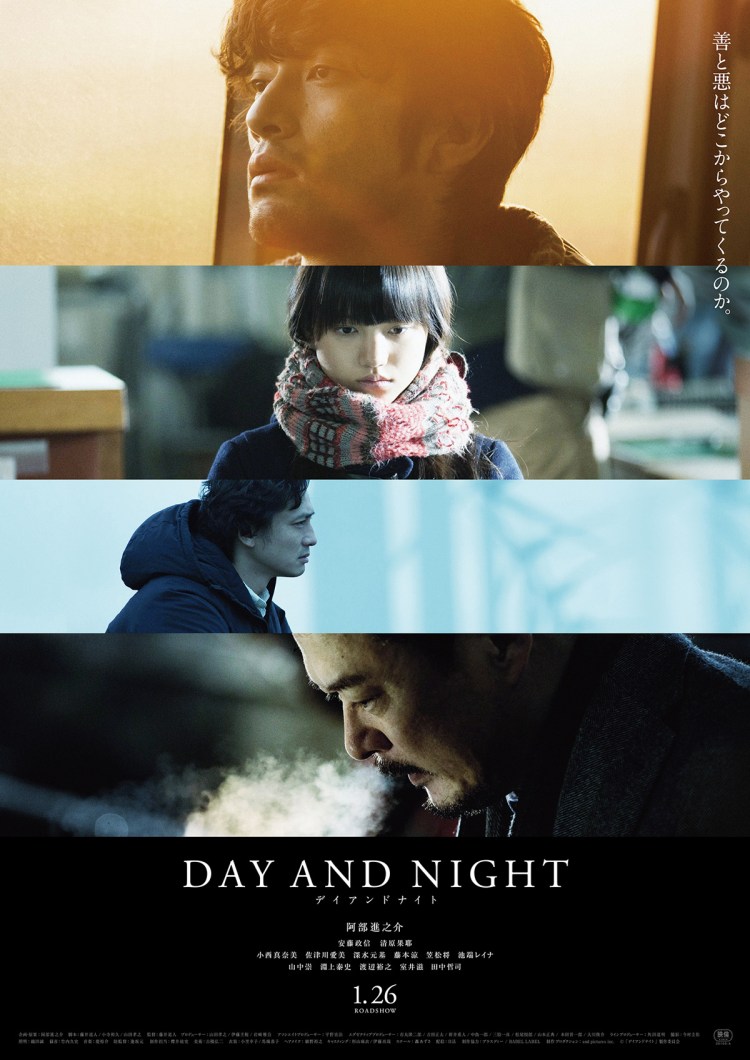
Day and Night (デイアンドナイト, Michihito Fujii, 2019) [Fantasia 2019]

day and night poster 1Can two wrongs ever really make a right? Michihito Fujii’s Day and Night (デイアンドナイト) wants to ask if the difference between good and evil is really as stark as that between dawn and dusk, or if life is really more like twilight in which morality is a relative concept and acts cannot by judged individually but only as a part of the whole. What the hero discovers, however, is that the world is an inherently unfair place and it may not be possible to “win” against the forces of self-interest solely through being pure of heart.

The drama begins with a stunned Koji (Shinnosuke Abe) returning to his small-town home to graffiti scrawled across his fences and his father lying in repose inside after having apparently taken his own life. No one will quite explain to Koji what exactly has happened, but it seems there has been some unpleasantness surrounding his father’s auto business. Though most of the other townspeople including his old friends are civil, they are also frosty and obviously unwilling to address the subject of Mr. Akashi save to press Koji for money they might still be owed as employees.

Meanwhile, poking around the garage in search of answers, he runs into the mysterious figure of Kitamura (Masanobu Ando) who claims to have known his father well though Koji’s mother claims never to have heard of him. Seeing as Kitamura is the only person willing to speak to him, Koji ends up taking a job at the orphanage where he works which turns out to be a little different than he thought seeing as Kitamura is actually the head of a local crime ring which exists with the sole purpose of keeping the orphanage running.

Though Koij, like his father, is an upstanding, law-abiding young man, he is quickly pulled into Kitamura’s world of moral justifications when presented with his personal philosophy in which the greater good remains paramount. Kitamura steals cars by night, stripping the unsellable ones for parts, which is where Mr. Akashi came in having succumbed to a life of “crime” in order to support himself while his business was suffering. He also does some possibly less justifiable work in the red light district while making a point of beating up drug dealers because 80% of the kids in his care have a parent in jail for crimes related to substance abuse. In Kitamura’s view at least, these are all “justifiable”, morally defensible “crimes” given that they are necessary to ensure the protection of the orphans. Though the money is good and Koji does need it, they are not in this for personal gain but to protect something they feel is important.

As Kitamura puts it, Mr. Akashi put his faith in laws that are meant to protect people but in the end it killed him. Having discovered a serious flaw in the auto parts he received from a local company he did the “right thing” and blew the whistle but Nakamichi Autos is the major player in the local economy and many people did not take kindly to having their reputation called into question. Nakamichi rallied its supporters and had Akashi hounded into submission. As one of the former employees tells Koji, the truth “hardly matters anymore”. Nakamichi doesn’t care there is a minor flaw in their products because they feel the chance of a fatal accident is slim enough not to need to worry about and happy to let the risk continue as long as they maximise their profits.

Miyake (Tetsushi Tanaka), Nakamichi’s CEO, also has his justifications, insisting that there’s no such thing as right and wrong only the cold logic of numbers and that the death of one man will not change anything. Increasingly pulled into Kitamura’s world of crime, Koji opts for underhanded methods to expose the truth about Nakamichi and clear his father’s name but finds in the end that no one is interested in facts. Listening in to some of his father’s old employees enjoying their belated severance pay he is dismayed to hear them too justifying their actions as they each insist that they did what they thought was “best” for everyone, for a peaceful life, for their families.

In truth, Koji claims he hated his father. That he resented him for always working all the time. Now however he begins to see that Akashi was only trying to protect his family by providing for it. His father was a “good” man, and he did the “right” thing, but he also became involved with Kitamura’s morally questionable crime syndicate. Kitamura wants to protect the orphans and takes care of them well, but can he really justify his actions solely on the grounds that there is no honest way to care for children who are often victims of an unfair society the pressures of which have pushed their parents from the “moral” path? What Koji’s left with, broadly, is that “good” people do “bad” things for “good” reasons, but bad people do bad things because they’re selfish and so they hardly care about the consequences of their actions. He starts to believe that the only way to resist is to fight fire with fire, but discovers that the little guy is always at a disadvantage when there is too much vested interest in not “making trouble”. It turns out everyone is OK with the status quo, so long as it’s not their car that might suddenly lose its wheels. As Miyake says, “that’s just how society works”.

A bleak meditation on the wider nature of justice and moral greyness of the world, Fujii’s noirish drama suggests good and bad are less like day and night than a shady evening in which the only shining light is the greater good. The world, however, continues on in self interest and the “good” will always lose to the “bad” as long it compromises itself trying to play by the other guy’s rules. Koji finds himself torn between a desire to avenge his father and a new sense of fatherhood fostered by bonding with a teenage girl at the orphanage as he contemplates the existence of a line between good and evil and his own place along it, but his old fashioned “nobility” finds no answer in the infinitely corrupt moral dubiousness of the modern society.


Day and Night was screened as part of the 2019 Fantasia International Film Festival.

Original trailer (no subtitles)

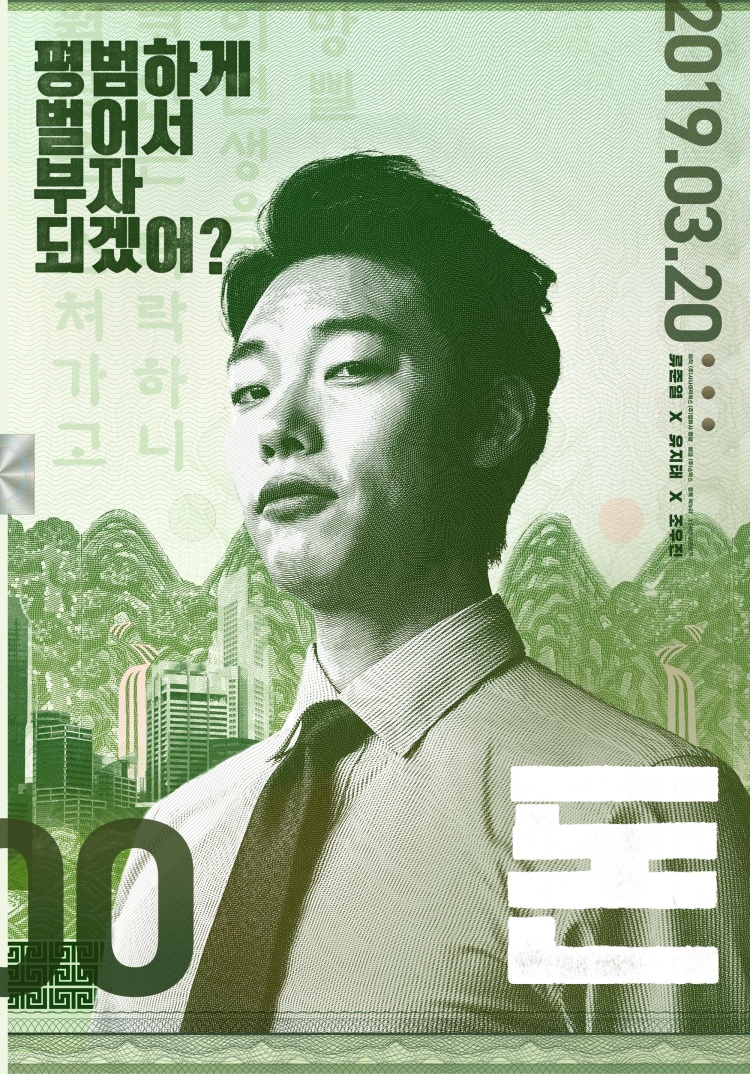
Money (돈, Park Noo-ri, 2019) [Fantasia 2019]

money poster 1“Could you ask him something for me,” the beleaguered yet victorious protagonist of Park Noo-ri’s Money (돈, Don) eventually asks, “what was he going to use the money for?”. Wealth is, quite literally it seems, a numbers game for the villainous Ticket (Yoo Ji-tae) whose favourite hobby is destabilising the global stock market just for kicks. As for Cho Il-hyun (Ryu Jun-yeol), well, he just wanted to get rich, but where does getting rich get you in the end? There’s only so much money you can spend and being rich can make you lonely in ways you might not expect.

Unlike most of his fellow brokers, Cho Il-hyun is an ordinary lad from the country. His parents own a small raspberry farm and he didn’t graduate from an elite university or benefit from good connections, yet somehow he’s here and determined to make a success of himself. In fact, his only selling point is that he’s committed the registration numbers of all the firms on the company books to memory, and his ongoing nervousness and inferiority complex is making it hard for him to pick up the job. A semi-serious rookie mistake lands the team in a hole and costs everyone their bonuses, which is when veteran broker Yoon (Kim Min-Jae) steps in to offer Il-hyun a way out through connecting him with a shady middle-man named “The Ticket” who can set him up with some killer deals to get him back on the board.

Il-hyun isn’t stupid and he knows this isn’t quite on the level, but he’s desperate to get into the elite financial world and willing to cheat to make it happen. As might be expected his new found “success” quickly goes to his head as he “invests” in swanky apartments and luxury accessories, while his sweet and humble teacher girlfriend eventually dumps him after he starts showering her with expensive gifts and acting like an entitled elitist. It’s not until some of his fellow brokers who also seem to have ties to Ticket start dying in mysterious circumstances that Il-hyun begins to wonder if he might be in over his head.

Unlike other similarly themed financial thrillers, it’s not the effects of stock market manipulation on ordinary people which eventually wake Il-hyun up from his ultra capitalist dream (those are are never even referenced save a brief reflective shot at the end), but cold hard self-interest as he finally realises he is just a patsy Ticket can easily stub out when he’s done with him. Yoon only hooked him up in the first place because he knew he’d be desperate to take the bait in order to avoid repeated workplace humiliation and probably being let go at the end of his probationary period. What he’s chasing isn’t just “money” but esteem and access to the elite high life that a poor boy from a raspberry farm might have assumed entirely out of his reach.

It’s difficult to escape the note of class-based resentment in Il-hyun’s sneering instruction to his mother that she should “stop living in poverty” when she has the audacity to try and offer him some homemade chicken soup from ancient Tupperware, and it’s largely a sense of inferiority which drives him when he eventually decides to take his revenge on the omnipotent Ticket. Yet there’s a strangely co-dependent bond between the two men which becomes increasingly difficult pin down as they wilfully dance around each other.

The world of high finance is, unfortunately, a very male and homosocial one in which business is often conducted in night-clubs and massage parlours surrounded by pretty women. There is only one female broker on Il-hyun’s team. The guys refer to her as “Barbie” and gossip about how exactly she might have got to her position while she also becomes a kind of trophy conquest for Il-hyun as he climbs the corporate ladder. Meanwhile, there is also an inescapably homoerotic component to Il-hyun’s business dealings which sees him flirt and then enjoy a holiday (b)romance with a Korean-American hedge fund manager (Daniel Henney) he meets at a bar in the Bahamas, and wilfully strip off in front of Ticket ostensibly to prove he isn’t wearing a wire while dogged financial crimes investigator Ji-cheol (Jo Woo-jin) stalks him with the fury of a jilted lover.

Obsessed with “winning” in one sense or another, Il-hyun does not so much redeem himself as simply emerge victorious (though possibly at great cost). Even his late in the game make up with Chaebol best friend Woo-sung (Kim Jae-young), who actually turns out to be thoroughly decent and principled (perhaps because unlike Il-hyun he was born with wealth, status, and a good name and so does not need to care about acquiring them), is mostly self-interest rather than born of genuine feeling. In answer to some of Il-hyun’s early qualms, Ticket tells him that in finance the border between legal and illegal is murky at best and it may in fact be “immoral” not to exploit it. What Il-hyun wanted wasn’t so much “money” but what it represents – freedom, the freedom from “labour” and from from the anxiety of poverty. Life is long and there are plenty of things to enjoy, he exclaims at the height of his superficial success, but the party can only last so long. What was the money for? Who knows. Really, it’s beside the point.


Money was screened as part of the 2019 Fantasia International Film Festival.

International trailer (English subtitles)
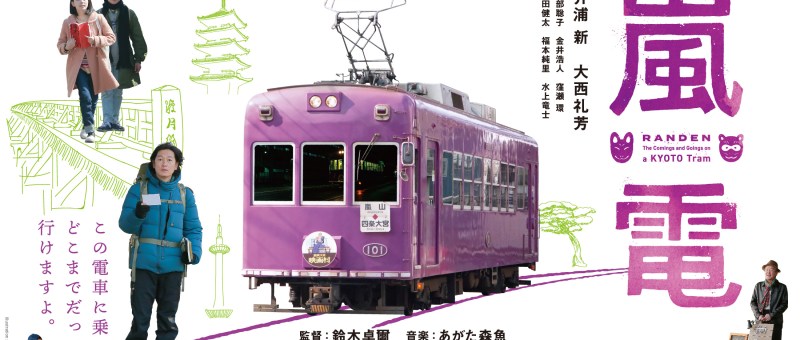
Randen: The Comings and Goings on a Kyoto Tram (嵐電, Takuji Suzuki, 2019)

Randen posterStill running over a century later, the Randen tram line is the only one in Kyoto and connects a series of Japan’s most popular tourist destinations in the famously “historical” city. It is also, of course, a key method of public transportation much loved by locals. Randen: The Comings and Goings on a Kyoto Tram (嵐電, Randen) fits neatly into that subgenere of Japanese films which might as well have been funded by the tourist board, but even so has real affection for its anachronistic street cars as they traffic a series of romantically troubled souls towards the places they need to be with a little help from the supernatural.

Chief among them, Eisuke (Arata Iura) is a blocked writer specialising in real life strange tales. He’s come to Kyoto, rich with culture and history, in search of local mystery but finds himself preoccupied with thoughts of home and the Kyoto-born wife from whom he fears he may have grown apart. Meanwhile, Kako (Ayaka Onishi), a painfully shy woman working in a bento shop finds herself unexpectedly sucked into the world of showbiz when she is persuaded to help a Tokyo actor, Fu (Hiroto Kanai), run lines in a Kyoto accent. Back on the platform, high school girl Nanten (Tamaki Kobuse), on a school trip from Aomori, falls for aloof high school boy Shigosen (much to the consternation of her friends) but unfortunately for her trains are “everything” for him.

Mimicking the linearity of the tramline, Randen takes us through three ages of love with three variously troubled lovers each trying to find the right stop. Teenagers Nanten and Shigosen struggle with their feelings in the normal way. She is certain, he (more romantic than he seems) is not – denying his feelings in the anxiety that requited love evaporates where the suffering of unreciprocated attraction does not. Kako, meanwhile, is struggling with quite different issues in that she lacks self confidence and has decided she’s no good with people. She rebuffs Fu’s straightforward attempts at romance out of shyness and confusion, unable to parse his non-committal replies and wondering if he finds her line of questioning irritating, in which case why is hanging around with her. Eisuke, meanwhile, does something much the same as he recalls a “failed” trip he took with his wife to Kyoto sometime ago and ponders the various ways each of them will change in the time they are apart.

Through it all, the rail station cafe owner (Ryushi Mizugami) is there to dispense his wisdom and knowledge of the city. Picturesque as it is, the tramline is also pregnant with local superstition – the teenagers believe catching sight of the “Yuko” train and its distinctive retro livery means a couple will stay together, while accidentally catching sight of a train staffed by kitsune and tanuki will lead a couple to part. Superstition is as superstition does, but there may indeed be some truth in it if only as a self-fulfilling prophecy. The presence of the contrary trains does, however, prompt true emotions to the surface if only to avoid a negative outcome born of getting on the wrong train at the wrong time and ending up in an unwelcome romantic destination.

Sometimes the train takes you where you want to go, and other times you need to get off and rethink. Shigesen bought his camera to film the things he likes, but worries now it’s more that he likes the stuff he films. There might be room in his heart for something other than trains, but he’ll have to put the camera down for a minute to find out. Nanten’s friends busy themselves the touristy stuff – the Jidaigeki movie theme park and putative trips to feed monkeys, but for her Kyoto is the city of love and she doesn’t want to leave it without fulfilling her romantic destiny. A loving tribute to the iconic, appropriately historical, method of mass transit and to the charmingly, picturesque town itself, Randen: The Comings and Goings on a Kyoto Tram exists at the intersection of past and present as its conflicted lovers make ghosts of themselves riding the tram into eternity and fading into the city as just another part of local history, running the lines forevermore.


Randen: The Comings and Goings on a Kyoto Tram was screened as part of Japan Cuts 2019.

Original trailer (English subtitles)

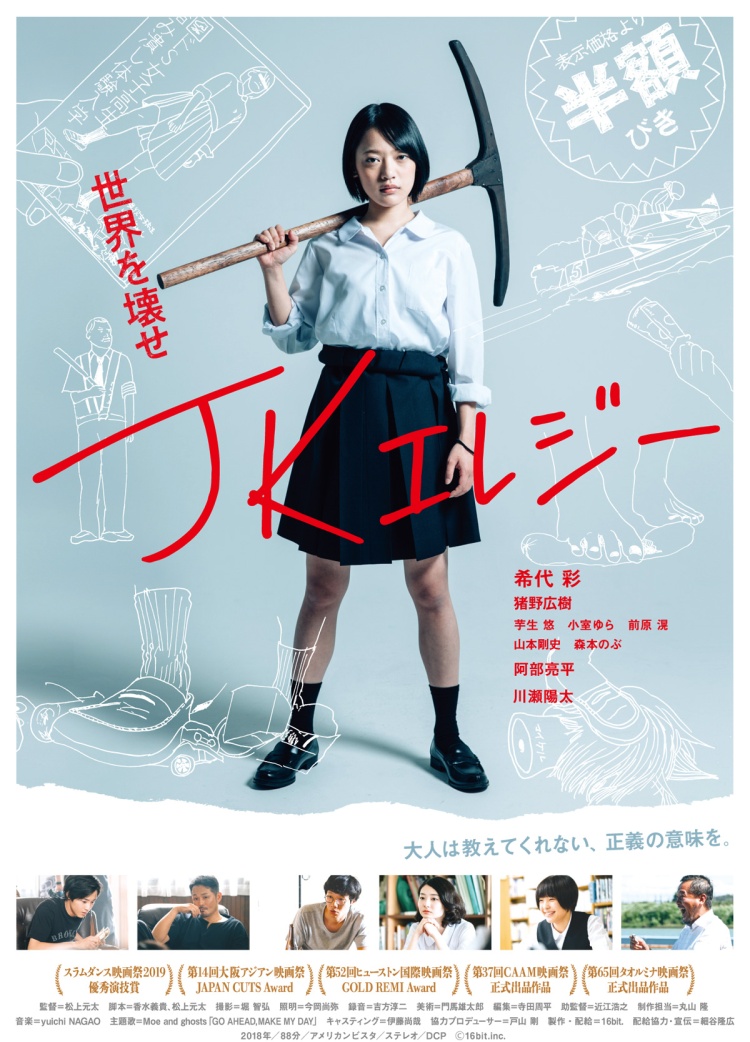
Demolition Girl (JKエレジー , Genta Matsugami, 2019)

Demolition Girl poster 1High school is tough for everyone, but some have it harder than most. Cocoa (Aya Kitai), the heroine of Genta Matsugami’s Demolition Girl (JKエレジー, JK Elegy), struggles to envisage a way out of her dead end existence in small town, rural Japan but begins to find a new sense of purpose when presented with unexpected opportunity. Circumstances, however, continue to conspire against her as she fights bravely for her right to define her own destiny while those around her all too often try to drag her down.

17 and in the last year of high school, Cocoa isn’t planning on going to uni like her friends because her family is poor. Cocoa’s mother died several years ago and her father (Yota Kawase) has been a feckless mess ever since. A gambling addict, he spends his days at the races frittering away the meagre stipend he gets through fraudulently claiming disability benefit. Meanwhile, Cocoa’s equally feckless 26-year-old brother Tokio (Ko Maehara) has come home from Tokyo after failing to make it as a comedian and spends his days lounging around at home. Cocoa is the only one working, providing for the entire family with her part-time job at a sausage stand at the amusement park. Just recently she’s started supplementing her income through starring in some “videos” her brother’s friend and former comedy double act partner Kazuo (Hiroki Ino) has been making with the hope of flogging them to the select group of people who might find footage of a girl in high school uniform stomping on things “satisfying”.

Symptomatic of the perils of small-town life, Kazuo offers the videos to an old friend who owns the local rental store, not quite realising that his old buddy Naoki (Ryohei Abe) is now what passes for a gang leader in these parts. Still, Kazuo is not a bad guy, just a naive one who realises he’s hit his wall and this small-town existence is all there is waiting for him. Knowing he’s in way over his head, he eventually tries to do the right thing and genuinely wants to see Cocoa succeed even when he knows that means his cash cow will be leaving town.

Cocoa, meanwhile, has become re-energised after a well-meaning teacher tells her she is probably bright enough to get into a national university (rather than just a private one) where the fees are much more manageable. Still unconvinced, she becomes determined when her aunt tells her that her late mother had been putting money away for her especially for university. Sadly, it turns out her wastrel father may have already burned through that, but her resolve is undampened. She’s seen a way out, and she’s going to take it no matter what it takes. As her aunt tells her, she needs to get out of that apartment otherwise she’ll be stuck there forever “caring” for her feckless family members while they sit idly by frittering her money away on easy pleasures.

Still, it won’t easy. Circumstances conspire against her from a stern school board suspicious about her extracurricular activities to the ominous presence of the petty thugs who’ve become quite interested in the potential of the videos. Cocoa’s 18th birthday (which her family didn’t even seem to really remember) turns out to be one of the saddest ever as she parties with her two friends in a karaoke box and is then forced into the realisation that they’re each standing a crossroads and likely taking different paths. Supportive as they are, her friends can’t seem to understand why she got involved with the videos in the first place. From much more comfortable backgrounds, they struggle to comprehend her desire for ready cash as a means of escape or her yearning for independence and to be free from her burdensome family who over rely on her for support but offer very little in return.

A subtle condemnation of systemic inequality and the innate unfairness of a world in which circumstances of birth determine almost everything, Demolition Girl revels in its heroine’s resilience as she decides not to be beaten down by those who tell her she cannot make it out. A beautifully lensed evocation of small-town life, Matsugami’s debut is a wonderfully observed coming of age tale in which its determined heroine learns that she can choose to do things “her own way” without compromising her sense of integrity or having to leave her friends behind.


Demolition Girl was screened as part of Japan Cuts 2019.

International trailer (English subtitles)
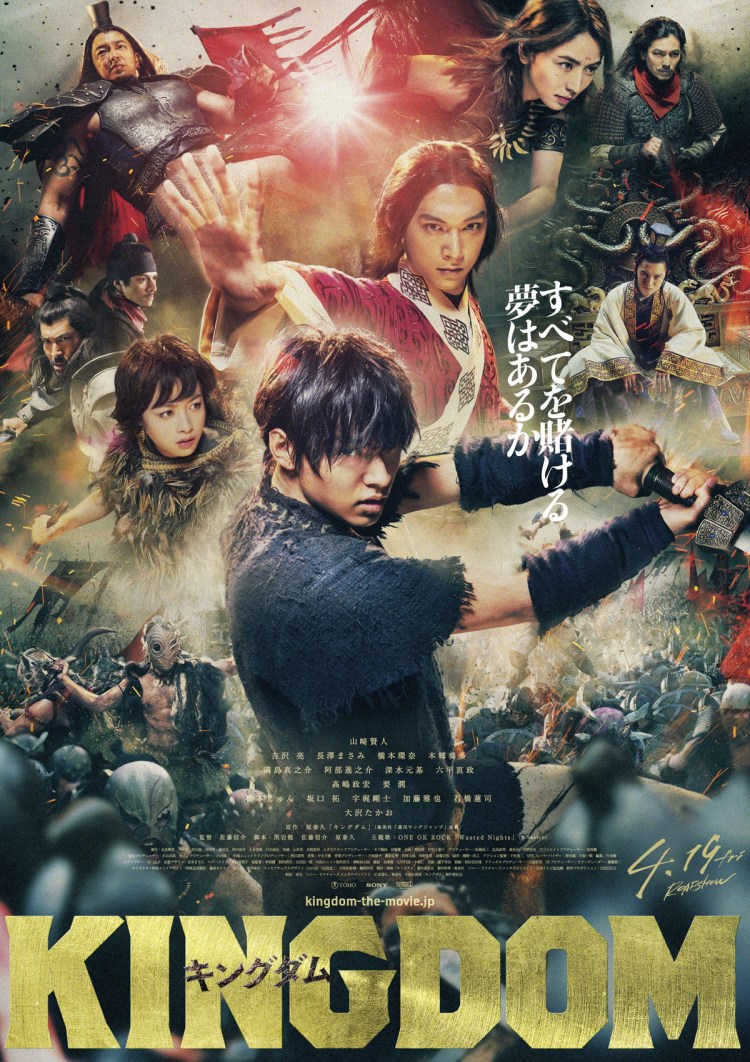
Kingdom (キングダム, Shinsuke Sato, 2019) [Fantasia 2019]

Kingdom poster 1The class war arrives in feudal China via modern Japan in Shinsuke Sato’s big budget adaptation of the wuxia-inspired manga by Yasuhisa Hara, Kingdom (キングダム). Set in China’s Warring States period, Kingdom offers a surprisingly progressive message, if mildly tempered by a failure to tackle the system in its entirety, in which the oppressed (which in this case includes the king) rise up against sneering aristocracy fuelled mostly by righteousness and fierce defence of the right to dream.

The tale begins with a fateful meeting between enslaved war orphans Piao (Ryo Yoshizawa) and Xin (Kento Yamazaki) on a small farm somewhere in rural China. The boys, realising there is no way out of their enslavement save the sword, commit themselves to perfecting their martial arts with the ultimate goal of becoming the world’s greatest generals. Their intense bond is broken when a mysterious man, Lord Chang . Wen Jun (Masahiro Takashima), appears and offers Piao a job at the palace. Though he agonises over leaving his brother behind, Piao seizes his destiny little knowing he has been hired not quite so much for his sword skills as for his resemblance to weakened king Ying Zheng (also played by Ryo Yoshizawa). Sometime later, Piao returns close to death, entrusting Xin with an important mission – go to Ying Zheng and seek his own destiny by restoring rightful rule.

The two boys are about as oppressed as it’s possible to be – orphaned slaves with no prospect of improving their condition save the one they’ve already decided on, fighting in a war. This doesn’t quite explain how they can release themselves from the farm, but Xin’s eventual flight, in which his master does not attempt to stop him, might suggest the first hurdle is not as big as it seems. In any case, Xin finds an unlikely ally in Ying Zheng who has been deposed from the throne by his younger brother for not being royal enough because his birth was illegitimate and his mother was a dancer.

Of course, Ying Zheng’s intention to regain his “rightful” throne is in defence of a necessarily unequal social order, but it’s also a blow against the kind of elitism which mark’s his brother Cheng Jiao’s (Kanata Hongo) philosophy. Cheng Jiao believes that he is the most rightful king because his blood is the most royal. He looks down on Ying Zheng as low born, and has no respect for his subjects or the lower orders. “A peasant in fine clothes is still a peasant” one of his minions intones to intimidate an opponent, but someone with a sword is still someone with a sword no matter their circumstances of birth and provided you have access to acquire one, perhaps swordsmanship is a truly egalitarian art given that it largely depends on how well you wield a blade. Eventually, Ying Zheng makes an ally of another oppressed people – the mountain dwellers subjugated, and previously betrayed, by the powers that be who lend their strength to toppling a corrupt power structure in order to restore something like peace and balance to the land.

Indeed, asked to give a brief manifesto speech, Ying Zheng cooly declares that he aims to create a unified China by eliminating borders and therefore the need for war. Insisting that when a king picks up a sword it ought to be in service of his people, he makes the case for a borderless world, little caring that, as his general points out, history may brand him a tyrant. Nevertheless, he remains a “puppet king” whose status is dependent on the loyalty of key general Wang Yi (Takao Ohsawa) with whom true power lies. Wang Yi, as we later find out seems to be a “good” person who used his troops to protect the innocent and ensure no civilians were harmed during the chaos of the insurrection but he does indeed wield dangerously vast power for just one man. Meanwhile, Ying Zheng may reject the primacy of blood, but does dare to claim his birthright as an oldest son and is of course acting in service of an inherently oppressive system even if he means to make minor improvements towards the kind of meritocracy that allows men like Xin to embrace the power of their dreams.

The power of dreams is indeed the key. Though Cheng Jiao’s hardline mercenary may sneer that “dreams are bullshit” and deny a slave like Xin’s right to have one at all, to men like Xin dreams are all they have. As he says, they get you back on your feet when everything else seems hopeless. Learning that Piao achieved his dream even if it was only for a few moments gives him the strength to pursue his own in service not just of himself but his brother, friends, and kingdom.

Appropriating the aesthetics of wuxia may prove problematic for some, but like many Japanese manga with international settings, Kingdom’s mechanics are essentially home grown which is perhaps why Sato heavily leans on Kurosawa’s legacy, possibly overusing the distinctive side wipe and giving his heroine a look echoing that from Hidden Fortress while other influences seem to feed back from Star Wars in the strangely cute masked mountain elders and gleaming golden armour of bad ass warrior queen Yang Duan He (Masami Nagasawa). A surprisingly positive, perhaps ironically bold plea for a borderless world and if not actual equality at least a friendly kind of egalitarian nobility, Kingdom hands victory to those who fight hardest for their right to dream while subtly advocating for their right to rebel against an inherently unjust social order in order to claim it. 


Kingdom was screened as part of the 2019 Fantasia International Film Festival. It will also be screened in US cinemas from Aug. 16 courtesy of Funimation.

International trailer (English subtitles)
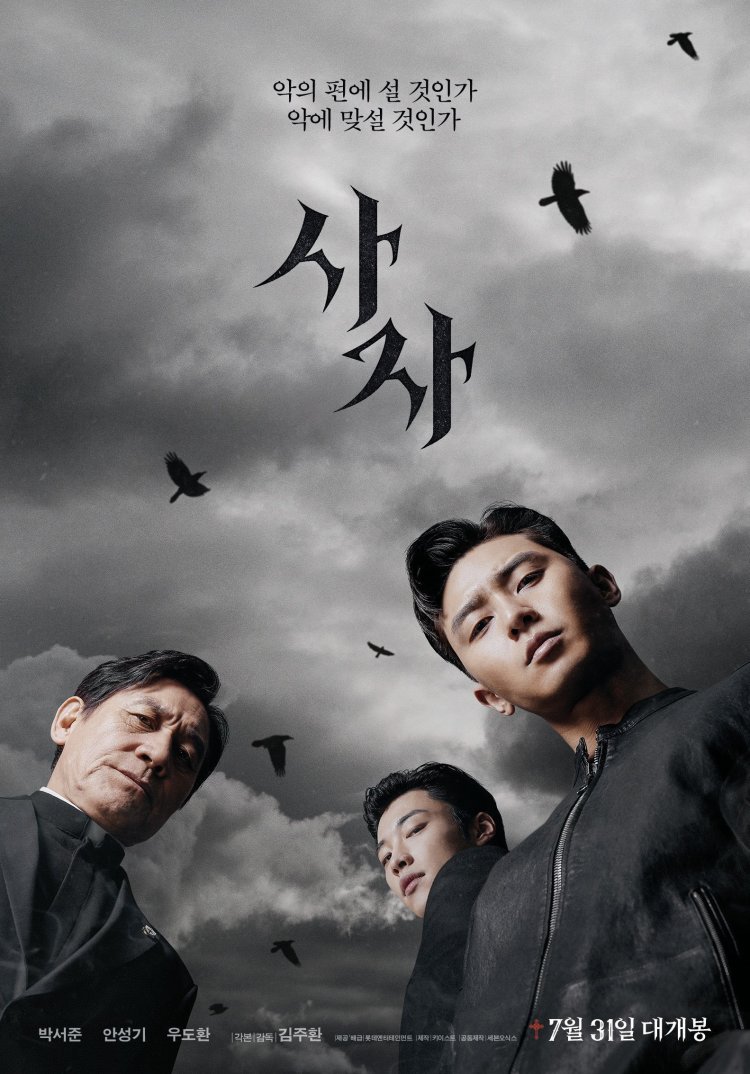
The Divine Fury (사자, Kim Joo-hwan, 2019) [Fantasia 2019]

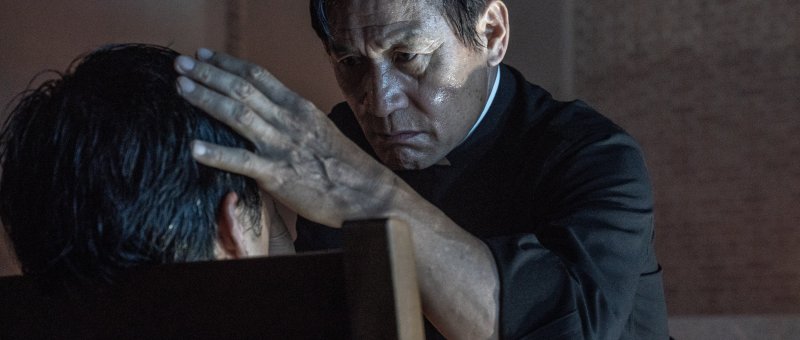
Divine fury poster 1“If you have faith you have nothing to fear” the veteran priest explains to his protege in Kim Joo-hwan’s The Divine Fury (사자 Saja). The hero is not quite so sure. A tale of grief and resentment, The Divine Fury revels in supernatural dread, but makes plain that the origins of evil lie in the human heart and that it’s a failure to forgive that invites the darkness in.

A brief prologue introduces us to the young Yong-hu whose mother passed away shortly after he was born. His doting dad leaves him at home alone at nights while he works as a regular beat cop. Unfortunately Yong-hu’s earnest father is killed one evening by a rogue driver, leaving the boy orphaned and alone. Though his dad had been careful to take him to church and explain to him about the power of prayer, Yong-hu feels distraught and betrayed by a god who refused to listen and took his dad anyway even though he prayed as hard as he could. Vowing never to set foot in a church again, Yong-hu refuses to believe in anything at all.

20 years later, he’s a world famous MMA star with vengeance on his mind. Plagued by voices telling him to go back and take revenge on the priest who told him everything would be OK, Yong-hu (Park Seo-joon) buries himself in violence and superficial pleasures. Everything changes on the flight back from an international bout when Yong-hu has a dream of his father in which he grabs a cross and wakes up with stigmata on his right hand. When doctors can’t explain his strange injury which refuses to heal, he turns to a shaman who tells him that he is rife with demonic energy and is only protected by the shining goodness of his father’s wedding ring which he still wears on a cord around his neck. Perhaps surprisingly, the shaman advises him to follow the cross and go to a church at a certain time where a man will help him. The man turns out to be father Ahn (Ahn Sung-ki) – a Vatican-based exorcist currently in the middle of a case so difficult it’s sent his assistant running for the hills in terror.

Anyone who knows anything about exorcism in the movies knows you need an old priest and a young priest. Ahn is more or less resigned to working alone, exorcism is no longer cool with the youngsters it seems, but nevertheless remains keen to court the enigmatic Yong-hu and his all powerful demon banishing hand. Yong-hu, however, remains reluctant. He doesn’t believe in God and resents the old priest as a symbol of all that’s betrayed him. Gradually he begins to warm to Ahn, seeing in him a kind of goodness as he selflessly battles the forces of evil and releases the tormented from their supernatural oppressors even if it might take longer to help them escape their darkness. Meanwhile he continues to hunt the “Dark Bishop” who feeds on fear and negativity in order to secure his own immortality.

Ahn is fond of saying that there’s a reason for every torment and that it’s all part of God’s grand plan. As far as the film goes, he may very well be correct at least in providing the mechanism for Yong-hu’s eventual path towards re-embracing his faith. Still missing his father and nurturing intense hurt and resentment, Yong-hu invited the darkness in, beginning to hate where he should have learned to forgive. As Ahn tells him, you can’t hate something you never loved which might explain why the darkness has never been able to fully consume him. Still battling his father’s absence, Yong-hu remains doubly conflicted, falling into an easy paternal rhythm with the older man yet also resenting him both as a potential father figure primed to betray and as a symbol of the Church in whom no he longer trusts.

Kim shifts away from the comedic banter which made Midnight Runners such an unexpected treat for something more melancholy as his heroes ponder the wages of grief and the demands of responsibility. Cynical, Yong-hu forgot his father’s ghostly instructions to him to grow up to be a good person who helps others and stands up to those who harm the weak (like demons) but eventually comes to reconnect with his dad’s essential goodness when realising that he’s been guided onto a unique path as an MMA star with a magic demon vanquishing fist. Having conquered the evil inside him and accepted his father’s legacy, Yong-hu is ready to take on the forces of darkness with a divine fury of his own while saving the souls of those in peril from threats both earthly and supernatural.


The Divine Fury was screened as part of the 2019 Fantasia International Film Festival. It will also be released in cinemas across the US and Canada courtesy of Well Go USA from Aug. 16.

International trailer (English subtitles)
A Step Forward (牧師といのちの崖, Atsushi Kasezawa, 2019)

bokushi_B5_01“It is very difficult to say what is right and what is not right” a conflicted pastor laments, reflecting on perceived past failings and the sad death of a man who eventually took his own life despite the best efforts of all to help him find a way to go on living. Atsushi Kasezawa’s documentary A Step Forward (牧師といのちの崖, Bokushi to Inochi no Gake) follows a small-town pastor who is on constant call near a series of rocky cliffs which attract both cheerful tourists and those looking for a way out of life’s suffering.

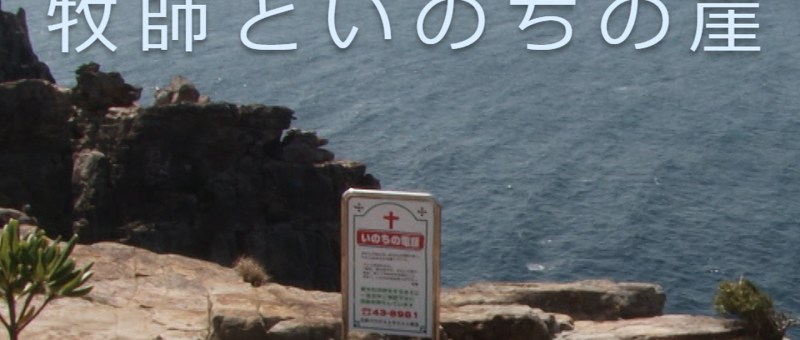
Pastor Yoichi Fujiyabu works with a local suicide prevention charity to try and rescue vulnerable people who might be thinking of taking their own lives. So common is suicide at the clifftop, that the society has erected a sign urging those in distress to reconsider with a number they can call for help. Of course, sometimes other people call too which seems to be the case with the first incident we see in which Fujiyabu spends two hours patiently trying to coax a middle-aged woman away from the cliff edge, eventually taking her back to the rectory and offering her a place to stay.

Suicide prevention does not just end at the clifftop. Fujiyabu also runs a rehabilitation centre which, as his wife later suggests, becomes a kind of “home” for those who feel they no longer have anywhere else to go. Though there may not be any one reason someone decides they have no option other than to end their life, it remains true that many of the people Fujiyabu saves have either lost or become estranged from their families and feel themselves to be alone in the world. The Fujiyabus aim to provide them with the safety net of a place they know they can always return to so that they can begin to rebuild their lives and ultimately return to mainstream society.

Then again, as Mrs. Fujiyabu also points out, they are not “suicide experts” or trained psychologists, just compassionate people trying to do their best to help those in need. Thus they are quite honest about the fact that their work is often emotionally difficult or frustrating, and that though they do their best to love and support everyone there will inevitably be people in life that you cannot like or get along with. Nevertheless, they do what they can with what they know in the hope that the people in their care will eventually be able to leave and become independent. To help in practical as well as emotional ways, they also run a small not for profit bento shop where they employ some of the people Fujiyabu has saved from the cliffs. Working brings many benefits aside from the ability to earn a wage, giving the rescued men and women a new sense of being useful while allowing them to learn new skills surrounded by people in a similar situation so they can perhaps begin to feel less lonely and alone.

It’s just that sense of existential loneliness that Mori, a young man to whom Kasezawa devotes special attention, is seeking to escape. Though he was surrounded by people and in regular contact with his family, Mori always felt at a painful distance from those around him – something which seems to have decreased thanks to the communal lifestyle of the rehabilitation station. When he tries to move on, however, he quickly encounters the same old difficulties as he feels himself disliked by his colleagues, unable to fit in to the point that his therapist eventually advises him to quit for the sake of his mental health. Meanwhile, Fujiyabu, to whom he returns, gently tries to explain to him that he’s living well beyond his means – something that he seems to understand on one level but is entirely unable to rectify.

Fujiyabu, well-meaning as he is, quickly becomes irritated by Mori’s inability, or he wonders lack of will, to change. This is perhaps a little unfair in that he fails to consider the various ways that Mori maybe be unable to conform to the standards he expects for a grown man in his society, thereby failing to find effective methods to help him with the areas of life he seems to have the most trouble with – appropriate social interactions, and executive functioning. Being berated for being selfish and irresponsible when he simply does not understand only adds to his sense of despair and conviction that he is unwanted by the world around him. Though many of the people arriving at the church have more obvious motives to end their lives – debt problems, marital breakdown, career ruin etc, there are also those like Mori who struggle to find acceptance in a fiercely conformist society which perhaps hasn’t yet woken up to the needs of those who “cannot read the air”.

As Fujiyabu says it’s difficult to know what to do for the best. That first lady we saw him save eventually decided to leave the centre and Fujiyabu, after all, has no real right to stop her only to make sure she knows what’s she’s doing. He has to wonder if suicide is a valid choice for those whose suffering is incurable and if, after all, it’s all a part of God’s plan. Nevertheless, he resolves to carry on doing what he can to help those in pain find the will to live again. Director Atsushi Kasezawa approaches the most sensitive of subjects with a compassionate, yet unflinching eye, hinting at the entrenched social problems which cause mass despair as well as the toll taken on those who are determined to help.


A Step Forward was screened as part of Japan Cuts 2019.

Original trailer (English subtitles)