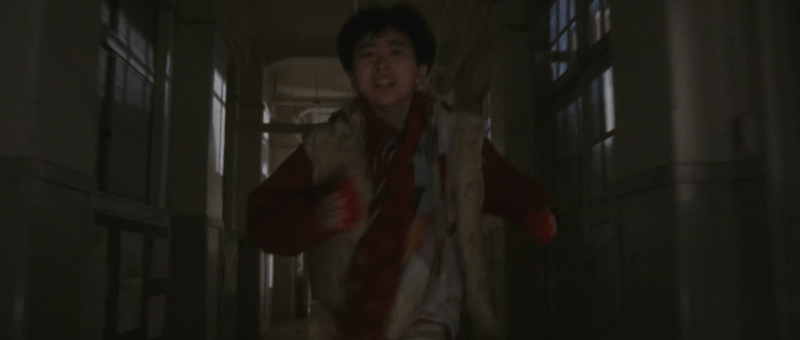
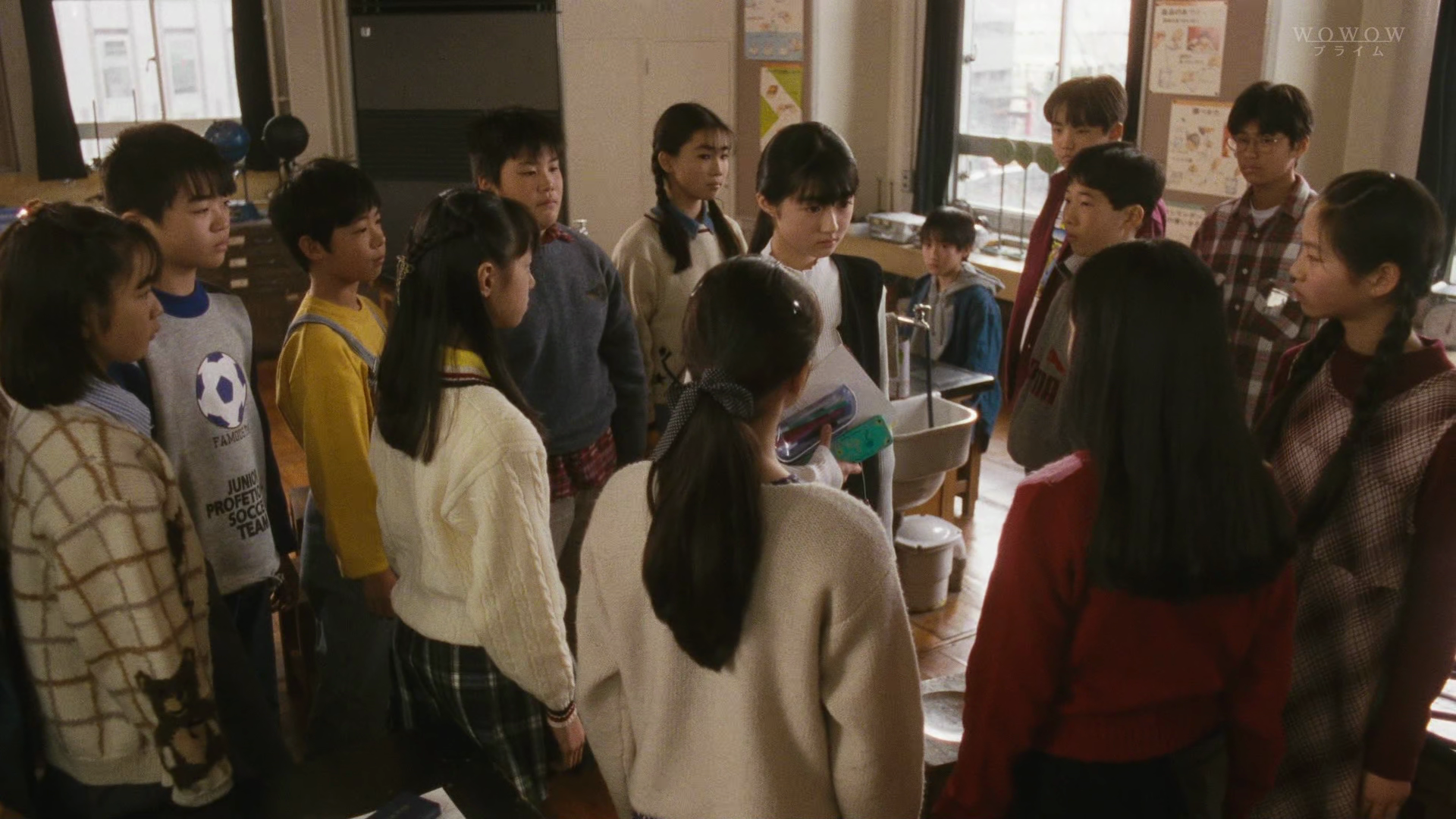
A transfer student quickly becomes the magnet for the anxieties of her classmates amid an ongoing spate of serial murders of primary school children in Joji Matsuoka’s kids adventure movie Phantom in the Toilet (トイレの花子さん, Toiret no Hanako-san). Loosely inspired by the classic urban legend about the ghost of a little girl who haunts school toilets, the film is less a horror movie than a tale of bullying, mass hysteria, and the ways in which childish emotions can spiral out of control.
Natsumi’s (Ai Maeda) no stranger to that herself. A tomboy, she’s largely excluded from the group of popular girls at her school and exists in a rather liminal space. Her older brother Takuya (Takayuki Inoue) is in the year above, but predictably doesn’t like being bothered by his little sister at school and is for some reason embarrassed by the fact his widowed father is a milkman. Nevertheless, he’s incredibly earnest and righteous and volunteers for various things at the school like the student council. Natsumi’s problems begin when the popular girls insist on doing a Ouija board to find out the identity of a serial killer who’s already killed two children their age from different schools. Natsumi doesn’t realise that it’s a trick the other girls are playing on her, but the Ouija board says the killer is Hanako, the toilet ghost, and Natsumi is the next victim.
Meanwhile, a new girl joins their school in Takuya’s class and is immediately resented by the popular girls because she’s pretty and clever, so obviously they turn against her. Chief among the complaints against Saeko (Yuka Kono) is that she used the cubicle at the end of the girls’ toilets which supposedly belongs to Hanako, because obviously she doesn’t yet know this bit of school lore. After a series of odd things happen, including the murder of the school’s pet goat, everyone comes to the conclusion that Saeko must be possessed by Hanako and is planning to murder them all. Even Natsumi has her doubts, but eventually decides to defend Saeko while Takuya, who seems to have a crush on her, eventually gives in to peer pressure despite his promises to protect her and vision of himself as someone who does the right thing.
To that extent, it isn’t really Hanako that haunts the children so much as the idea of her is misused as a means of social control. A silly rumour soon gives way to mass hysteria as the popular girls bring more of the children over to their side to gang up on Saeko while the teachers are largely absent or oblivious. While in another film the kids might band together to look for the killer of the other children and thereby protect themselves and each other, instead they become ever more paranoid and the outsider figure of Saeko becomes the focus of all their negative emotions from the jealousy of the other girls to the uncertainness of Takuya who doesn’t know what to do with his confusing feelings for Saeko. In a touching moment, he replies via writing on the blackboard rather than speaking when Saeko uses it to communicate with him after losing her voice, but later ends up shouting at her to go away and leave him alone. “Silence means you agree,” one his classmates points out when Takuya attempts to abstain from an otherwise unanimous vote to subject Saeko to a kind of test akin to a ducking stool to prove whether or not she really is Hanako. Only Natsumi remains on her side.
Meanwhile, the real child killer hovers in the background like an abstract threat before finally invading the school like a refugee from a slasher movie. Swinging his scythe around, his crazed moaning may prove too prove frightening for younger audiences while not even Natsumi’s father and their teacher can stop him from murderous wandering. In the end, the “real” Hanako surfaces but as a more benevolent figure who calls the kids back to the school and creates a more positive sense of mob mentality as they all shine their torches on the killer as if confronting him with what he is and what he’s done. The curse itself is lifted as the other kids rally round to save Saeko and finally accept her as one of them. A charming exploration of a 90s childhood from Grandpa playing Nintendo shogi to the looming anxieties of stranger danger, the ultimate message is one of solidarity and friendship as Hanako helps the kids let go of their petty disagreements to confront the real monster and save each other.
Trailer (no subtitles)
 Windows on Worlds