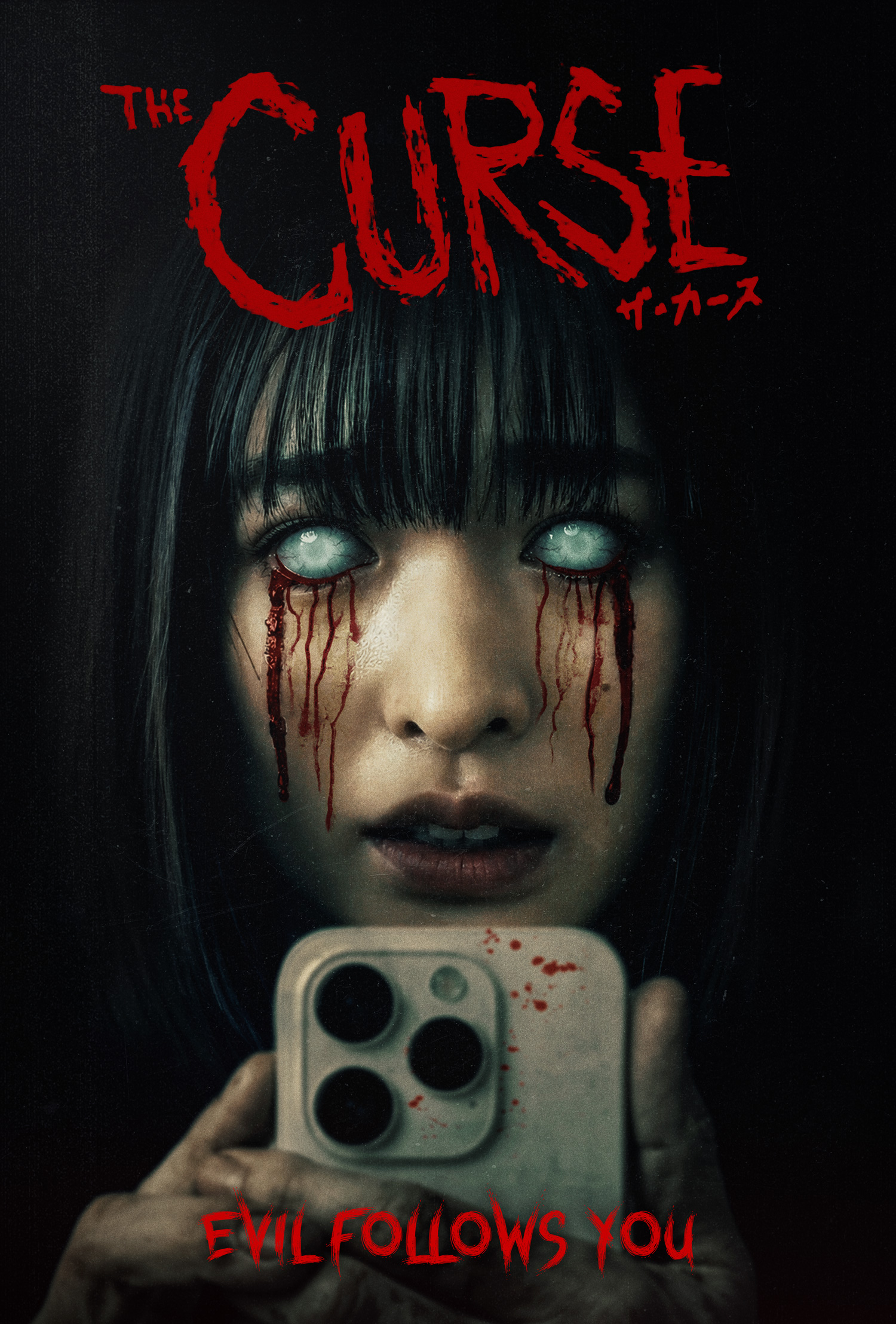
The Curse (ザ・カース, Kenichi Ugana, 2025)

Could it be fair to say that sometimes we curse ourselves, or perhaps more accurately that the only true curse is morbid curiosity? Those at the centre of Kenichi Ugana’s J-horror inspired The Curse (ザ・カース) have the option to simply stay off social media, but they find themselves unable to do so. Be careful what you post about yourself online, the film seems to say, as if an Instagram profile were basically opening a portal to your soul through which any evil entity pass.

But at the same time, a priest cautions that one may do harm to others without even realising it and it transpires that even the most innocuous of posts can be enough to push someone over the edge. The versions of their lives that people post online are obviously idealised or perhaps aspirational, but they can still provoke a sense of jealousy or envy to the extent that saying “I am having a lovely day” can upset someone who is not and perhaps has not for a long time but continues to hate follow these kinds of accounts. This in itself is a kind of curse, the film argues, as a deepening sense of self-loathing is projected outward towards those apparently living better lives the unhappy obsessive feels they may not deserve.

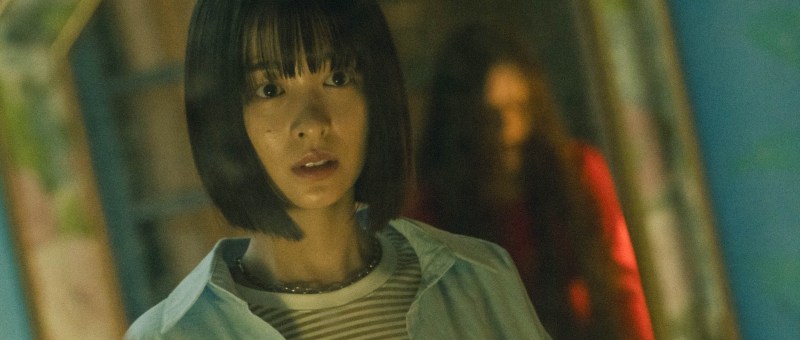
Still, there is an extent to which the curse is also “real”. When Riko (Yukino Kaizu) spots a creepy photo posted by a friend, Shufen, which is accompanied by the caption “Drop dead already, all of you” and seems to contain the image of a malevolent entity, she is of course immediately concerned. Her anxiety is compounded by the fact that her friend is Taiwanese and posts in Mandarin, so she uses the auto translate feature but has no way of knowing if the translation is accurate. When Shufen fails to reply to messages, Riko decides to get over her sense of awkwardness and contact her ex in Taiwan, a mutual friend. Confused, Jiahao (Yan Yu Teng) tells her Shufen died six months previously in circumstances so strange and disturbing her family preferred to keep it quiet. “Curses are very real, in Taiwan at least,” he tells her. People die from them. 

Riko then faces another barrier in trying to navigate her away around the ritual beliefs of another culture. When her friend Airi began exhibiting strange symptoms after watching a video online, she took her to a doctor who was unable to help. After her Taiwanese friends recommend an exorcism, she begins to feel guilty. Perhaps if she’d contacted a priest instead of a doctor, she could have been more help to Airi. The Japanese-speaking priest in Taiwan isn’t necessarily that much help either, though. He demands payment up front, which reduces his credibility and opens the door to the suggestion that the rituals he provides are more placebo effect than anything else. Nevertheless, it seems he really does have the power to intervene with spirits, only this one is a little beyond his capabilities.  

There’s an essential irony in the fact that Riko is only able to detect the ghostly presence through its reflection in images while otherwise unable to see it lurking in the shadows or under her bed. This embodiment of resentment seems to affect her offline life too as the manager of the upscale hair salon where she works begins to act strangely towards her and a homeless man he warns her about arrives to advise she deal with her ghost problem before it gets out of hand. Ugana frequently cuts back to the ranks of disembodied mannequin heads that line the salon as a kind of foreshadowing lending the place an ominous quality and perhaps playing into the anxieties of the antagonist with its elitist vibes and unwelcoming atmosphere. Perhaps the real villains are unfair female beauty standards, ageism, and lookism, or equally perhaps we’re back at the figure of a witch who doesn’t want to grow old and is cursed with vanity, resentful of those who possess a beauty she believes herself to have lost. Turning unexpectedly bloody in final moments, the film suggests that this particular curse will never be lifted in part because it has become its own reward as this this particular malevolent entity dances cheerfully in her garden, secure in the knowledge that no one is watching.


The Curse is on UK, Ireland, Australia and New Zealand digital platforms 13 July

Trailer (English subtitles)
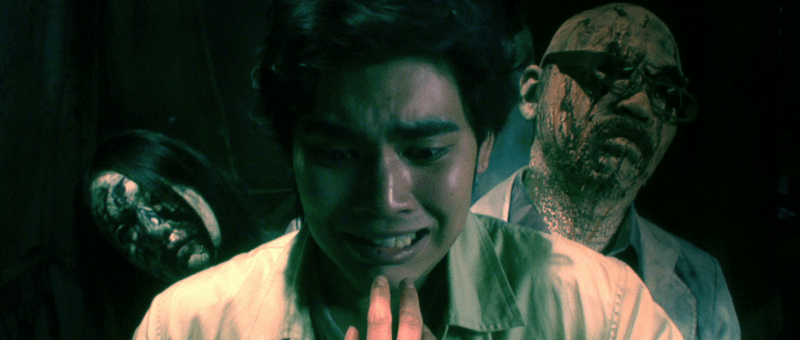
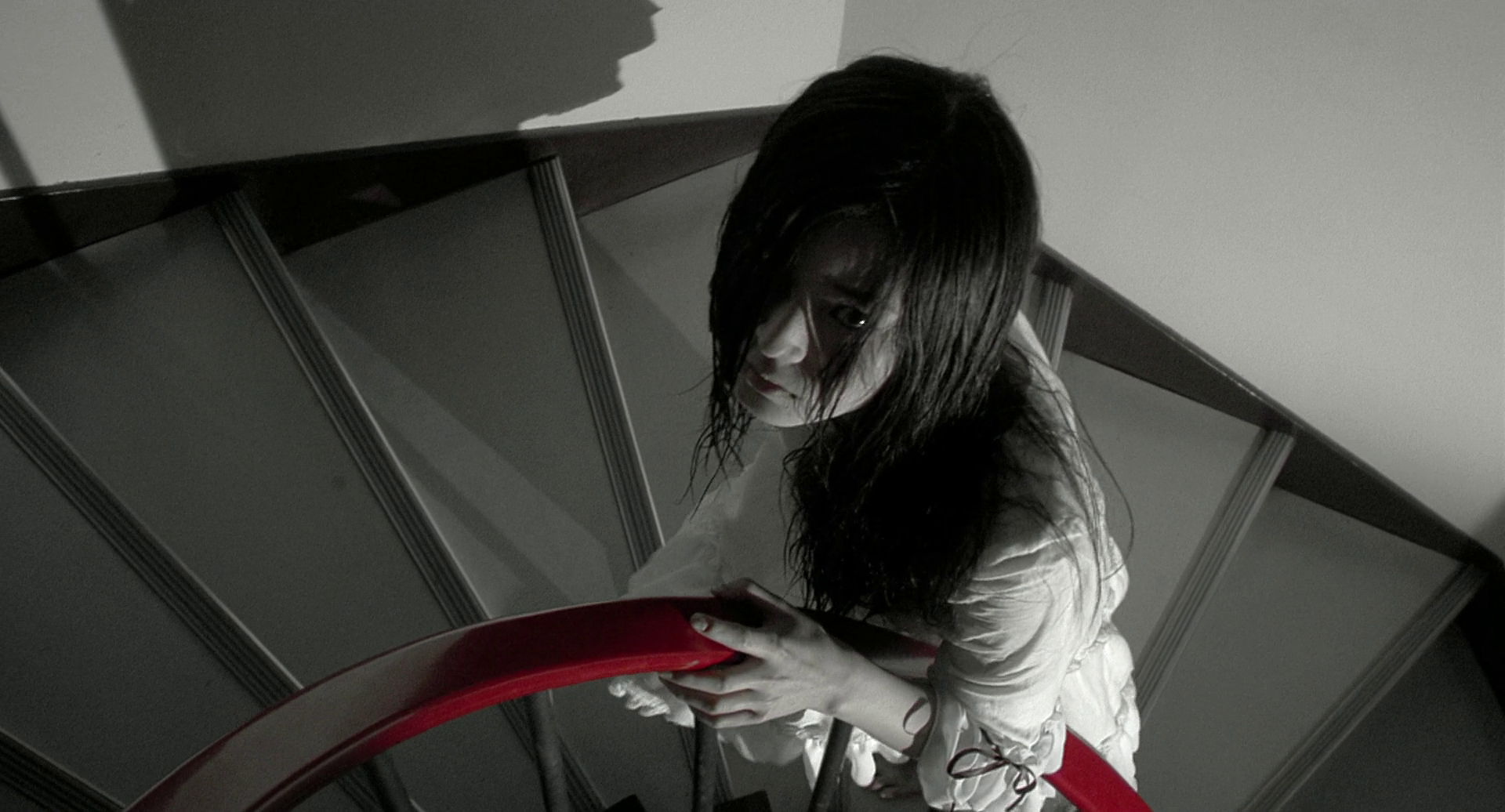
The Shock Labyrinth (戦慄迷宮3D, Takashi Shimizu, 2009)

Is it a good idea to advertise your haunted a house attraction by making a movie in which people get trapped inside haunted house? Whether or not Shock Labyrinth (戦慄迷宮3D, Senritsu Meikyu 3D) had the desired effect of luring more guests to Fuji-Q Highland’s Labyrinth of Horrors is probably lost to time, though Takashi Shimizu’s 2009 ghostly drama is also a strange curio produced during the short-lived resurgence of 3D in the late 2000s though this, of course, also means that it was shot with the flattened aesthetics of early digital technology.

In essence, the film casts traumatic memory as a haunted space of the brain in which the protagonist is plagued by the disappearance of a friend inside the fairground attraction he and his friends snuck into as children. Yuki (Misako Renbutsu) makes a sudden reappearance when Ken returns to his hometown. She claims to have been trapped for a very long time, but has grown along with the others and her clothes have somehow grown with her so that she has the appearance of a ghostly adult woman who behaves like a child. When the gang try to take her to a hospital, they unwittingly end up back at the fake one from the fairground attraction and are forced to face their unresolved guilt and trauma.

Indeed, it seems most of them had completely forgotten about Yuki and got on with their lives. Gradually recovering his memories, Ken (Yuya Yagira) blames himself for Yuki’s death while Motoki, who denies all responsibility, becomes convinced that Yuki’s vengeful ghost brought them back here deliberately to get her revenge for them leaving her there. It’s true enough that the others all ran off after becoming frightened without thinking about Yuki and made no attempt to rescue her, and that they went into the haunted house while knowing they weren’t supposed to, but, on the other hand, they were all children and acted in ways children do. Then again, there were already ructions and petty jealousies dividing the group as it appears Ken was the more popular member liked by both Rin and Yuki, provoking a series of jealousies and resentment from Motoki who declares that he’s not going to bother save Rin because she didn’t love him anyway. Ironically, she’s just told Ken that Motoki was the only one who really cared about her when Ken only helped her out of a sense of pity because she is blind. Miyu, Yuki’s younger sister, had also been jealous of her for being so “perfect and nice” when she was always the “bad” one who got into trouble. 

This shock labyrinth is really the space of repressed memories that Ken talks about. What it seems Yuki wants, like many similar ghosts, is company and to trap her friends with her within this space, or at least as much as she’s a manifestation of Ken’s buried guilt, to prevent him from ever really forgetting her and going on with his life. Ken and the others desperately search for an exit, but are ultimately unable to overcome their traumatic memories. Yuki comes for them as soon as they remember what they did to her, as if they were really being stalked by their own repressed guilt and shame. Still never having dealt with the death of his mother, Ken dreams of her telling him not to go into the haunted hospital or Yuki will him as if she wanted to protect him from this harmful memory though repressing it is evidently as damaging as confronting the truth of the past.

The detectives meanwhile adopt the more rational view that Ken is responsible for everything having taken revenge on his friends for abandoning Yuki when they were children. Perhaps this is all really going on in the shock corridors of Ken’s mind as his traumatic memories have begun to leak out and distort his sense of reality. Then again, perhaps Yuki has found a way to come back for deadly game of hide and seek to keep her occupied in the between space of the fake haunted hospital with its creepy, decomposing mannequins and the unexpectedly gruesome plush rabbit backpack the young Yuki was forever carrying around and refused to let others touch. Either way, it seems Yuki will not let them go but will always be there in the dark corners of their minds to remind them what they’ve done.


Trailer (English subtitles)

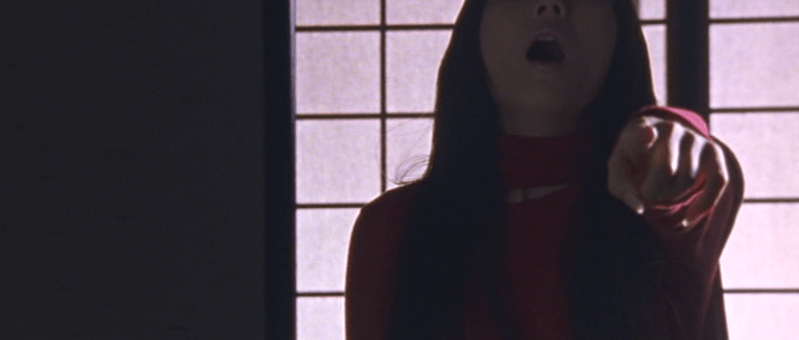
Kakashi (案山子, Norio Tsuruta, 2001)

There’s a village in Japan that’s mostly inhabited by scarecrows. One of the last remaining residents began creating them to replace something that had been lost, fashioning effigies of those who had passed away and immortalising them as if clinging to a distant past long before the shadows of rural depopulation were cast over the village. In a way, it’s an expression of grief or at least a lament for a loss of community and a sense of increasing loneliness and isolation. 

Adapted from Junji Ito’s manga, Norio Tsuruta’s Kakashi is also in its way about grief and the way in which it can consume those left behind so that they too have no more desire to live. Dr Miyamori (Kenzo Kawarasaki) later explains that in the village they co-exist with death and he returned to his home town in the hope that he could save his daughter, Izumi (Ko Shibasaki), through its peculiar magic of resurrecting the deceased as human scarecrows. As he freely admits, he could not accept his daughter’s death and so has chosen to stay here in the village though alive himself rather than attempt to remake his life without her.

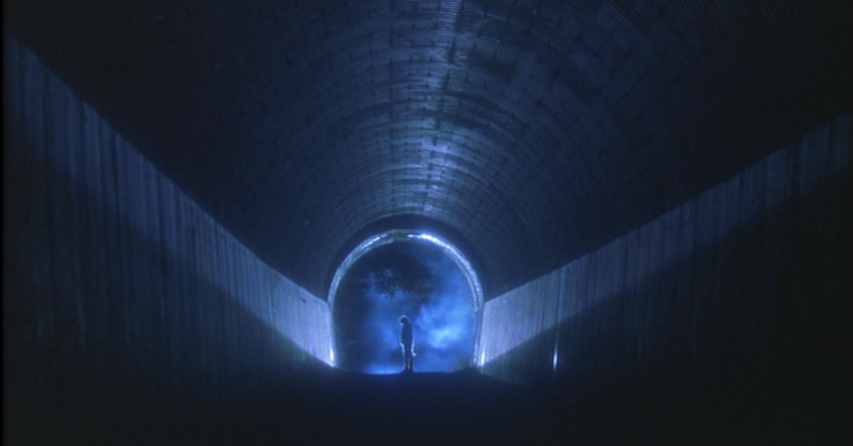
The village itself appears to exist slightly outside of the mortal realm as Kaoru (Maho Nonami) discovers on encountering the long tunnel that leads to its entrance. Her car breaks down half-way through signalling her liminal status as one who does not yet belong on either side. It’s not quite grief that’s brought her here but still a nagging sense of foreboding in that she’s come in search of her missing brother, Tsuyoshi, after discovering a letter from an old school friend, Izumi, next to his telephone. Kaoru appears confused as to why the letter should be there and travels to the village hoping for answers, assuming that Tsuyoshi (Shunsuke Matsuoka) may have travelled there in search of Izumi.

As the landlady lets her into his empty flat, Kaoru explains that she is his only family and there’s a suggestion that her attachment to him is unnatural, bordering on the incestuous. A policeman taking a look at the photo Kaoru hands him remarks that they look like a couple, which they do, leading her to stuff the photo back in her pocket as if she were embarrassed. To that extent, she’s come to reclaim Tsuyoshi, not just from death, loneliness, grief, and depression, but from Izumi or at least the spectre of her. In life, she feared that Izumi would take him away from her and at least in Izumi’s mind frustrated their romance out of romantic jealously. Dr Miyamori implies it was this sense of despair that contributed to her death and it’s clear that Izumi’s mother also blames Kaoru while Izumi accuses Kaoru of being forever in her way.

But then again, she did not bring Kaoru to the village and is not targeting her personally out of vengeance. Rather, she has moved beyond that as she finally’s about to become “herself” thanks to the village’s dark magic and the following day’s scarecrow festival, and therefore no longer needs to care about the resentments of her mortal life even if her father says that her evil spirit has empowered the town. There is definitely something quite creepy in this weird village with its shades of the Wicker Man in its strange ritual and humanoid effigies where improbable numbers of children softly blow pinwheels under a large windmill that seems to be moving time itself. Tsuruta even borrows a particularly eerie shot from Don’t Look Now and emphasises the liminal qualities of the village in Dr Miyamori’s advice that Kaoru leave as soon as her car is fixed otherwise she may no longer wish to.

The village is apparently full of those like him who are trapped but wilfully so because they no longer desire to leave. Kaoru attempts to help one of them, a young living woman from Hong Kong unable to let go of the memory of her late father whose scarecrow eventually tells her to go. It’s a place for those who have no other place to go to because they cannot let go of their grief and despair. Thus Kaoru is pulled towards the edge of the tunnel, not so much to free her brother as, in a way, herself by allowing her grief to consume her and consenting to live this empty life alongside death rather than allow herself to accept her loss.


Trailer (no subtitles)