Who’s the Woman, Who’s the Man? (金枝玉葉 2, Peter Chan, 1996)

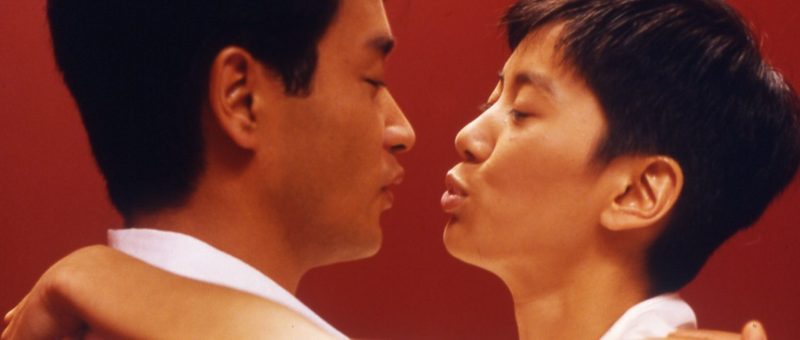
“I don’t care if you’re a man or a woman, all I know is that I love you,” the hero had finally accepted after the heroine’s madcap dash across town in the closing scenes of Peter Chan’s 1994 rom-com, He’s a Woman, She’s a Man. But as it turns out, it isn’t quite that simple. Inverting the structure of the first film, sequel Who’s the Man, Who’s the Woman? finds the heroine romantically confused as her “masculine” persona increasingly interferes in her relationship with the still conflicted Sam (Leslie Cheung).

It certainly hasn’t been plain sailing for anyone as Wing (Anita Yuen) agrees to move in to Sam’s luxury flat but refuses to live downstairs as Rose (Carina Lau) had done, instead insisting on sharing his life and his bed in their entirety. For his part, Sam’s reluctance to share his space is reflective of his fears of intimacy while he resents Wing’s immediate attempts to install herself by remodelling the apartment to her own taste. Meanwhile, the old problem has resurfaced in that now he’s got Wing he’s not all that interested in her and hasn’t written any songs in months. In an attempt to manage her interference in his life, Sam suggests resurrecting Wing’s pop career as a male idol but proves a victim of his own success as she quickly begins earning much more money than him and gains the upper hand in the relationship. 

Wing’s increasing masculinity leaves Sam feeling somewhat emasculated while forced into the “feminine” role previously occupied by Rose. Suddenly successful, Wing is offering to pay large sums of money to help Sam fulfil his dreams which only deepens his sense of shame in his inability to earn money for himself. Wing had insisted on living together in the main apartment, but now that she’s so busy suggests moving into Rose’s old flat downstairs so that they can, after all, have their own space. Sam had wanted it that way before, but now that it’s Wing who suggests it, he’s romantically anxious while simultaneously conflicted because he cannot acknowledge their relationship publicly as he is still uncomfortable with people assuming he is “gay”.

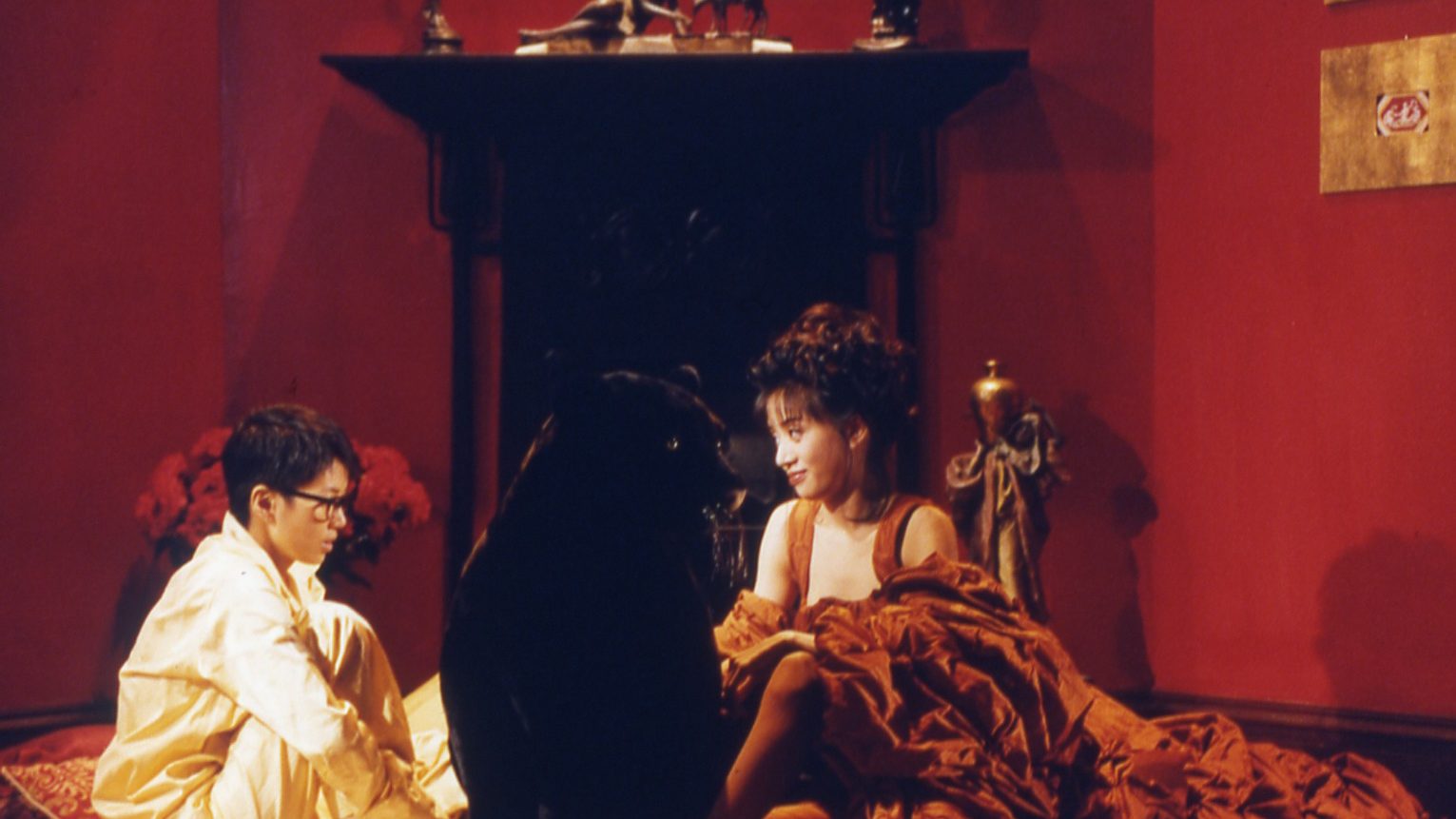
All of which is doubly confusing for Wing who is under increasing strain trying to straddle a gender binary. Not only is she trying to deal with Sam’s contradictory behaviour and resentment of his emasculation, but in growing into her masculine role finds herself questioning her sexuality in experiencing unexpected attraction towards other women and in particular the captivating Fan Fan (Anita Mui), a mysterious former pop star who has moved into the downstairs flat after spending many years abroad. Just as Sam had in the previous film, Wing struggles to accept her desires unable to reconcile falling in love with Fan Fan with her love for Sam while Fan Fan in turn falls for her mainly in her femininity in claiming that she has been looking for something kind and innocent that she no longer believed existed in the world. 

“Love can’t be explained,” Sam admits when talking to his decorators, a gay couple who ironically tell him how much it means to them to see a same-sex couple in the public eye, though Sam still refuses to acknowledge the relationship because he doesn’t want to be seen as “gay” and Wing is in any case a woman. Mirroring Sam’s relationship with the openly gay Auntie (Eric Tsang), Fan Fan’s assistant O (Theresa Lee) is a lesbian who is relentlessly courted by Fish (Jordan Chan) despite her constant rejections of him. He tries to present himself as female by shaving his legs and later crossdressing in order to win her heart, only to end up reaffirming O’s avowed homosexuality. For Wing, however, she has only a dilemma in being faced with a choice between her love for Fan Fan and that for Sam which seems as if it may have run its course just Sam’s love for Rose once did. 

Sam only really begins to understand his himself after a more mature discussion with Rose regarding the realities of their relationship, while Fan Fan effectively plays a similar role in sacrificing her own desire believing that Wing belongs with Sam but taking the new hope their love has given her back out into the world. Neatly inverting the first film’s conclusion, it’s Sam who has to make an active choice about what it is he wants though the ironic ending may suggest he doesn’t have much control over his destination either even if discovering he already has what he was looking for.

He’s a Woman, She’s a Man (金枝玉葉, Peter Chan, 1994)

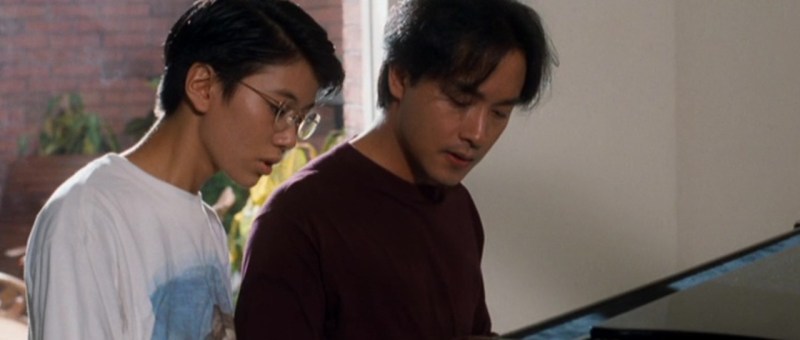
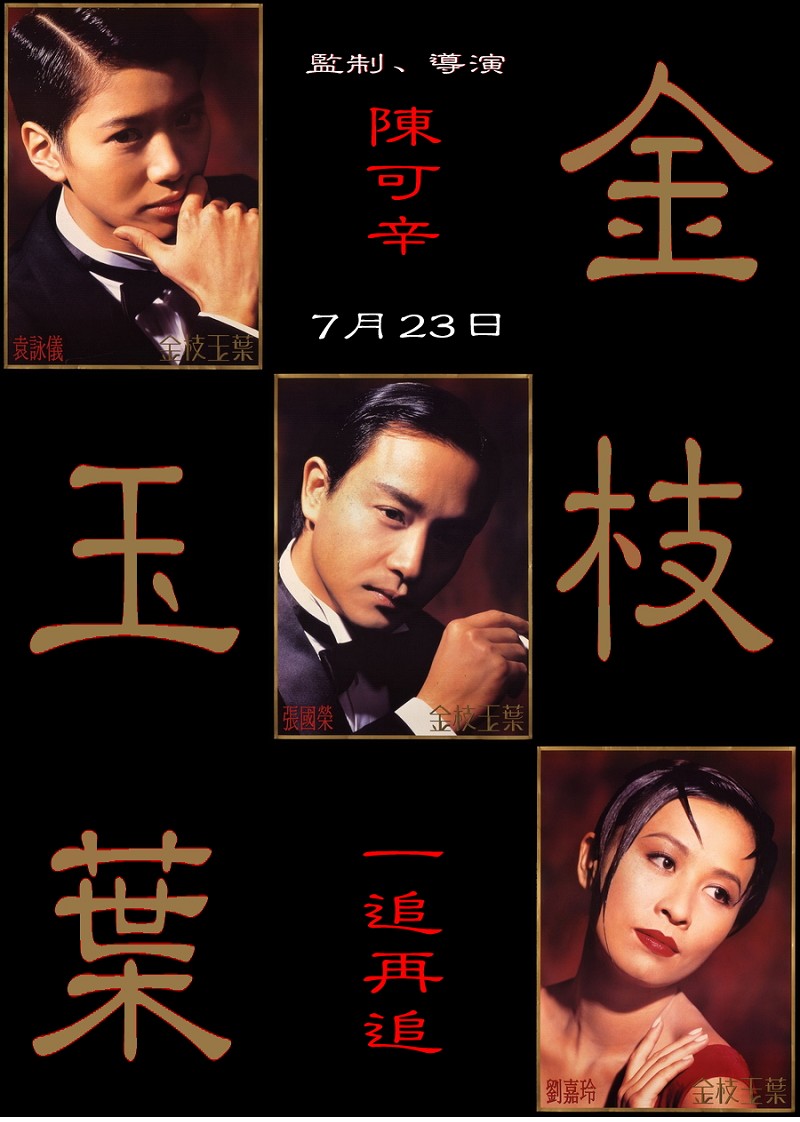
A frustrated composer in a moribund relationship with his former muse experiences a moment of existential confusion on feeling an unexpected attraction to his latest prospect whom he assumes to be male in Peter Chan’s hilarious meta comedy, He’s a Woman She’s a Man (金枝玉葉). Broadly progressive in its views of gender and sexuality, the film also takes aim at a growing obsession with celebrity in an increasingly consumerist culture. 

The heroine, Wing (Anita Yuen), is a case in point. She’s completely obsessed with the singer May Rose (Carina Lau) to the point that she almost lives her life vicariously through her. Rose’s successes are her successes, while she earns a few extra pennies peddling celebrity tat like Aaron Kwok’s used tissues. Rose meanwhile is riding high professionally by winning yet another reward, but her relationship with songwriter/manager Sam (Leslie Cheung) has clearly run its course. He’s become bored with the “celebrity” lifestyle and hasn’t written anything new in some time while unwilling to admit that he’s fallen out of love with Rose, refusing to take on new proteges because of his habit of falling in love with them.

That’s one reason he finally agrees to take on a male star, assuming there will be no danger of romantic conflict and intending to kick back against celebrity culture if ironically by creating an “everyman” sensation. But unbeknownst to him, Wing has had a male makeover and decided to enter the auditions in the hope of meeting her idols. Unexpectedly picked up for a recording contract during a spat between Rose and Sam, Wing finds herself having to keep up the act but is conflicted on fearing her presence is only deepening the rift between the “perfect couple” whose wedding it is her life goal to witness. 

Even before her makeover, Wing makes repeated references to her atypical gender presentation in lamenting her flat chest, especially in contrast with a rival celebrity hunter she nicknames “big boobs”. She takes lessons in performative masculinity from her roommate and best friend since primary school Yuri (Jordan Chan), who appears to have no romantic interest in her, and stuffs glow sticks down her trousers to make herself feel more “complete”. Yet despite all that, she is always forced to deny her seeming femininity with several people directly asking her if she is “gay” which is a more complicated question than it seems given that she’s a straight woman but currently living as a man. To find out for sure, Rose tries to seduce her in an attempt which is admittedly predatory and ends in a chase around the bed with Wing desperately trying to avoid being accidentally “outed” in an amorous moment. 

Nevertheless, there is a degree of romantic attraction in Wing’s obsession with Rose which is also a reflection of her internalised sense of shame in her atypical femininity as seen in her wide-eyed observation of Rose’s shadow dance as she slips into something more comfortable along with her admission that she always wanted to know what it felt like to touch a breast (because she feels she has none of her own). Even so, she begins to fall for Sam who is slowly being driven out of his mind with romantic confusion in being unable to reconcile his attraction to Wing with his heterosexuality. One of Wing’s closest associates whom he refers to as “Auntie” (Eric Tsang) is an openly gay man who asks him the all important question of whether of what’s really bothering him isn’t Wing’s ambiguous sexuality but his own. The question takes on a meta dimension in the knowledge that Cheung was himself bisexual but at that point not openly. Much as Sam explains, he might personally not have a problem with it but some people in the industry are very “sensitive about this kind of thing”.

Sam doesn’t know that Wing is “really” a woman, which might neatly explain his inexplicable attraction to her, but cannot begin to reconcile himself until he accepts that it “doesn’t matter what you are” because the fact remains that he loves her. Wing might make her final dash in more stereotypically female attire, but she does so in a voluminous white dress which, aside from its matrimonial connotations, further emphasises her lack of conventional femininity in her literal inability to manage it as she attempts to run while trying not to trip over herself. “Too much reality can really get up your nose,” Rose had complained in trying to keep her fantasy of a fairytale romance alive while internally accepting she can no longer be the “ordinary” girl Sam is looking for in a world of celebrity miasma and consumerist aspiration, finally reaching her own moment of self-acceptance just as Wing decides to shoot her shot right into Sam’s tender heart.

Trailer