The Grand Grandmaster (乜代宗師, Dayo Wong, 2020)

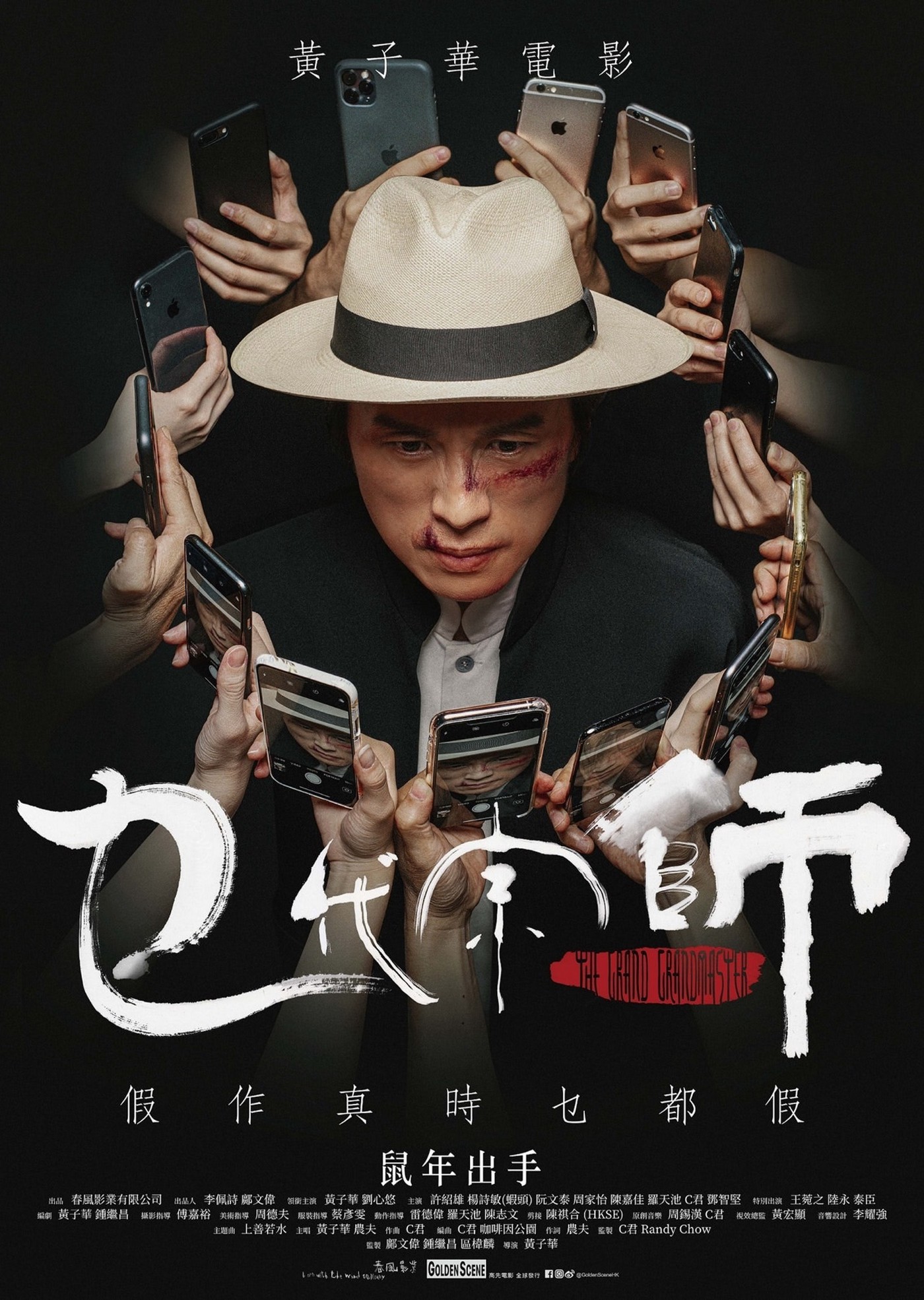
Are you actually “the grandmaster” or just a bit “grand”, the hero of The Grand Grandmaster (乜代宗師) is eventually forced to ask himself after being confronted with the various levels of his self-delusion. Legend has it that comedian Dayo Wong sold an apartment to finance his second directorial feature in order to produce a purely local film without having to submit himself to the strictures of the Mainland censors’ board or accept funding from the greater PRC, a move which endeared him to the young protestors then still out in the streets campaigning for democracy. The Grand Grandmaster was one of the few New Year films to make into cinemas before they shut down because of the pandemic but aside from Wong’s grand gesture is perhaps light on political content, save for a mild satire on the commercialisation of kung fu. 

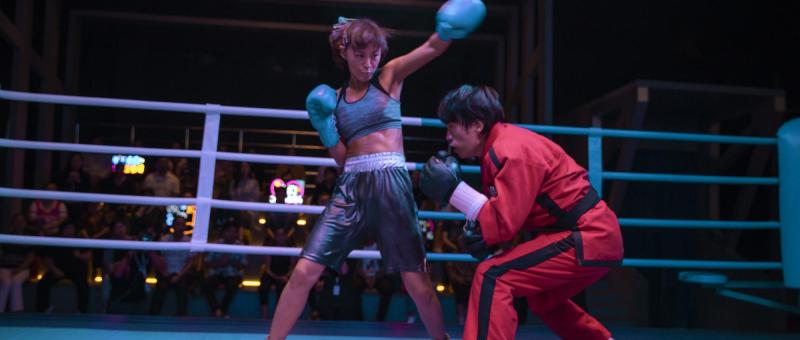
The Grand Grandmaster, Ma Fe-lung (Dayo Wong Chi-Wah), is the latest guardian of the Ma Ka Thunder Style martial art apparently carried by one of his ancestors to Hong Kong from the Mainland during the Song dynasty. Ma Ka Thunder has since become something of a brand with its own dedicated merchandising line and video ads playing on giant billboards featuring Fei-lung himself as the face of the organisation. His hopes for US expansion along with his general business plan are disrupted when he gets into a public altercation with an old man who tries to steal his taxi and then makes a scene claiming that Fei-lung hit him leading Chan Tsang (Annie Liu Xin-You), the “boxing goddess”, to emerge from the shadows and give Fei-lung a public beating. Filmed by everyone in the surrounding area, the event becomes a viral phenomenon that leaves Fei-lung humiliated but while his minions urge him towards a public rematch to regain his reputation, Fei-lung is consumed with despair on realising there is no way he could ever hope to defeat the feisty young woman. 

Wong has fun satirising the lore of kung fu as Fei-lung outlines the strange tenets of the Ma Ka Thunder Style which turns out to make more sense that it first seems only generations of practitioners have it seems forgotten something quite fundamental. Fei-lung and his associates have to ask themselves if the art of Ma Ka is really just “fake fighting”, something suggested to Fei-lung by his loyal assistant who makes a point of overdoing his defeat and admits he only stays with the school because living outside is hard and here he gets room and board. Urged to show his full strength, he effortlessly defeats his master but only by abandoning Thunder Style for a selection of moves from other martial arts. 

The remainder of the film sees Fei-lung trying to “dodge” Tsang, firstly by trying to bribe her to throw the fight for him and then by convincing her to get more “comfortable” with the idea of losing. Events take a rather strange turn when Tsang’s dad gets involved and starts training Fei-lung for real in an effort to get back at his daughter for quitting boxing after a single defeat apparently humiliating him in another nod to the film’s strangely sexist worldview. Tsang bizarrely falls for Fei-lung after witnessing the depths of his self-delusion in his complex relationship with his ex-wife, building to a crisis which accidentally makes a case for domestic violence in insisting that Tsang will only believe that Fei-lung really loves her if he defeats her in the ring. 

Nevertheless, the conclusion is an oddly egalitarian one in which there is no win, no lose, no draw. Fei-lung realises the various ways in which he’s been deluding himself and presumably emerges with a little more clarity, awakened to the true meaning of the “virtue like water” motto of Ma Ka Thunder Style which apparently lies in generosity of spirit, giving without expecting in return and like water trickling down. Which is to say, Fei-lung learns to stop dodging life’s blows, to give up on tricks and fakery, and to be a little more authentic, which is perhaps how he wins Tsang’s heart and respect. A committed performance from Liu helps to mitigate some otherwise flat comedy though the saga of the kung fu con man rediscovering his sense of social responsibility through a true appreciation of martial arts never quite hits home, while a strange mid-credits diversion perhaps proves one move too far.


Trailer (Traditional Chinese / English subtitles)

A Witness Out of the Blue (犯罪現場, Fung Chih-chiang, 2019)

“The world is not supposed to be like this” a failed revenger exclaims as he breathes his last in Fung Chih-chiang’s absurdist noir crime thriller A Witness Out of the Blue (犯罪現場) in which the career criminal on the run turns out to be the only noble soul. In a world like this, an eccentric policeman later suggests, good people can commit crimes while those who prosecute or are victimised by them are often no better than that which they claim to hate, eagerly taking advantage of a bad situation to take what they feel at least they are entitled to. 

It all links back to an unsolved murder, one of the many “crime scenes” referenced in the Chinese title. The dead man, Tsui (Deep Ng Ho-Hong), is believed to be part of a gang led by notorious underworld figure Sean Wong (Louis Koo Tin-lok) who was responsible for a botched jewellery store robbery which went south when the police stooge blew his cover trying to stop one of the gang members getting violent with a hostage. Wong shot the undercover policeman and opened fire on the police, eventually escaping our second scene of crime with the loot, while an old lady was so frightened she had a heart attack, and the store assistant who tried to raise the alarm was left paralysed. Police inspector Yip (Philip Keung Ho-man) who ran the undercover operation against Wong’s gang is convinced that Wong killed his associate during a dispute over dividing the loot and is fixated on bringing him in. Eccentric cop Larry Lam (Louis Cheung), however, is not convinced in part because he’s patiently listened to the only eye witness, a parrot, who says Wong didn’t do it. 

Nicknamed “garbage” and apparently a model cop until some kind of accident a few years previously, Lam is certainly an unusual law enforcement officer. For one thing, he’s in deep debt to loan sharks after borrowing money to start a cat sanctuary because he felt sorry for the abandoned felines left to cower in the rain in the face of the world’s indifference. Lam is convinced that he can get the parrot to talk, if only he can figure out how to communicate with it seeing as the only words it knows are “help me”, “genius”, and “idiot”. Based on the parrot’s testimony and his own gut feeling, Lam doesn’t think Wong is guilty so he has three other suspects: the son of the woman who died who works as a butcher at the market, the paralysed store assistant who has since got religion, and her security guard boyfriend (Andy On) who was rendered powerless in the attack, unable to protect her and apparently still carrying an immense amount of anger and resentment towards the criminals. Lam also comes, however, to doubt his superior wondering if his war against Wong is less in the pursuit of justice than revenge for the death of his officer. 

Yip and Wong are in some ways mirror images of each other, the morally questionable cop and the noble criminal. On the run, Wong takes up lodging with a cheerful woman named Joy (Jessica Hsuan) who is visually impaired but seems to think Wong is a good person even though she can’t “see” him. All of Joy’s other residents are extremely elderly, one of them sadly lamenting that the man who previously inhabited Wong’s room died peacefully in his sleep though he was “only 95”. “Money is no use after you die”, they tell him in an effort to persuade him to join in some 100th birthday celebrations, “life is all about contribution”. Quizzed on what he’d do with the money, all Wong wanted was to be able to sleep and as we see he seems to be suffering with some kind of psychosis, experiencing visual and auditory hallucinations of teeming ants and the ghostly voices of his former gang members. Yet he’s not “bad” in the way Yip characterised him to be, he never kills anyone he didn’t have to, is indignant about being accused of betraying his own, and is just as resentful towards Yip as Yip is towards him for the unfairness of his petty vendetta. 

But like all the best crime stories, all there is in the end is futility. The world shouldn’t be like this, but it is the way it is. Maybe Joy and her pensioners have it right, quietly living their lives of peaceful happiness being good to each other while evil developers breathe down their necks trying to destroy even their small idyll of goodness. Wong is drawn to them, but perhaps knows he’ll never belong in their world of infinite generosity though perhaps oddly he’s the only one who doesn’t really seem to care so much about the loot. Still, as Lam has it “Life is full of wonders” like crime-fighting parrots and eccentric policemen who stand in line buying limited edition trainers on behalf loansharks to finance their animal sanctuaries. Good people also break the law. “In memory of lost souls” reads the sign above the final scene of crime, and it’s not without its sense of irony. 


A Witness Out of the Blue streams in the US via the Smart Cinema app until Sept. 12 as part of this year’s New York Asian Film Festival.

Original trailer (English subtitles)

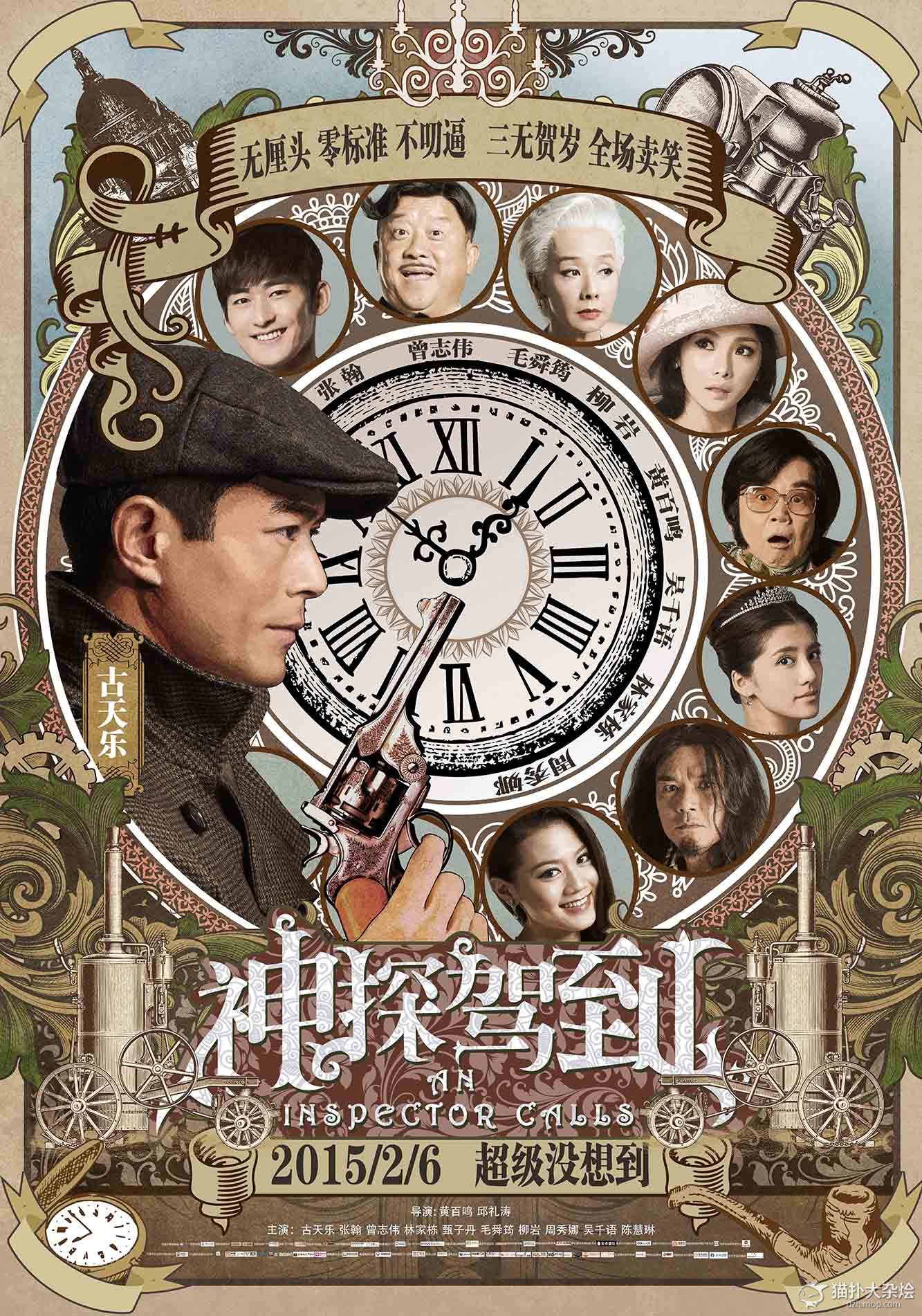
An Inspector Calls (浮華宴, Raymond Wong & Herman Yau, 2015)

Inspector Calls poster 1J.B. Priestley’s An Inspector Calls found itself out of favour until a phenomenally successful stage production brought it back into the national consciousness in the early ‘90s, but even if some decry its inherent melodrama as a relic of another era the play’s comments on the entrenched classism of British society sadly still ring true. An Inspector Calls is many things, but one thing it defiantly is not is funny – a series of concentric tales of betrayals and oppressions, Priestley’s drama lays bare the callousness with which the privileged bolster their position through the story of one faceless factory girl standing in for an entire social class whose lives are often at the mercy of those “above” them.

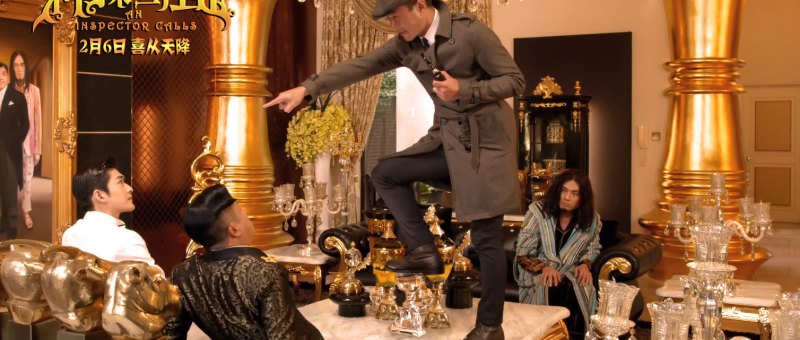
In adapting Priestley’s play as a Chinese New Year movie (a strange concept in itself), Herman Yau and Raymond Wong relocate to contemporary Hong Kong, re-conceiving it as a broad comedy of the kind one might expect for the festive period. The setup is however still the same. The Kau family will be receiving a visitation – this time from Inspector Karl (Louis Koo Tin-lok) who has some difficult news for each of them. Three hours previously, a young woman committed suicide in her apartment by drinking bleach, taking the child she was carrying with her. Inspector Karl views this as a double murder and, based on the diary they found at the crime scene, has brought the reckoning over to the Kaus’.

The Kaus, at the present time, are preparing an engagement party for daughter Sherry (Karena Ng) who will be marrying the handsome younger brother of a factory owner, Johnnie (Hans Zhang Han). What no one can know is that the family business is going under, the Kaus are broke, mum and dad don’t get on, and all of this finery is merely rented affectation. The only member of the family who still seems to have something like a social conscience – Tim (Gordon Lam Ka-tung), the 27-year-old younger son, is viewed by all as a feckless and naive hippy, hiding out in his childhood bedroom, still all fluffy cushions and toy soldiers.

As the Inspector explains, he holds Mr Kau (Eric Tsang Chi-wai) responsible because the woman once worked in his factory and he fired her for participating in a strike for better pay and conditions. Sherry got her fired too when she worked in an upscale fashion store. Johnnie knew her during an unfortunate period as a bar hostess, and Tim as a masseuse. Mrs Kau (Teresa Mo Shun-kwan), who heads up a woman’s charity and publicly espouses tolerance while privately judgmental, once turned her down for familial support seeing as the father of her child was still living. She advises holding him to account and if he won’t pay, forcing his family to take responsibility on his behalf. The irony being that the father is likely her own son and that if this poor woman had rocked up at the Kaus’ with a sad story and an infant in her arms, she would have been met with nothing more than contempt save perhaps some hush money to send her on her way.

The Kaus are merely a series of examples of the various ways the wealthy mistreat the poor, wielding their sense of entitlement like a weapon. Yau and Wong adopt an oddly Brechtian approach in their expressionist production design with the faceless masses identified only through titles – the word “labour” on the workers’ caps, “manager” in the fashion store, “secretary” at the foundation. None of these people are really worthy of names because they will always be “less” while the Kaus are “more” in more ways than one. Actions, however, have consequences. The family console themselves that this is all far too coincidental, that they couldn’t all have known the “same” woman in different guises, but that in many ways is the point – she isn’t one woman but all women, used, abused, and discarded not only by heartless men but by jealous and judgemental members of her own sex too. Better than her than me, they might say, but that’s no way to run a healthy society as the sensitive, slightly damaged Tim seems to see.

Like the Birlings, the Kaus attempt to brush the Inspector’s warning off, thinking it’s all been some elaborate prank that can they laugh about and then forget, but there will be a reckoning even if they attempt to gloss over the various revelations regarding their moral failings. Wong and Yau’s vague gesturing towards the outlandish greed of the hypocritical super wealthy is undercut by the ridiculous New Year slapstick of it all despite the Metropolis-like production design and expressionist trappings, giving in to an excess of its own in an extremely unexpected musical cameo from a martial arts star and the decision to end on a social realist photo of an innocent, pigtailed proletarian woman dressed in red. Nevertheless, strange as it all is the bizarre adaptation of Priestley’s play has its own peculiar charm even if it’s outrageousness rather than moral outrage which takes centre stage.


Currently available to stream online via Netflix in the UK and possibly other territories.

Original trailer (English / Traditional Chinese subtitles)