Ciao UFO (再見UFO, Patrick Leung Pak-Kin, 2019/2026)

“Where will I go in this future?” a young man tearfully asks, unexpectedly cast adrift and handed a future he never expected to have with no one to help him navigate this new reality. Speaking from the perspective of the Handover, his confusion hints at a sense of despair falling over Hong Kong, but also echoes through the contemporary society in a place where, as he later says, nothing stays the same, though that might not necessarily be such a bad thing.

Long delayed for a wider release, Patrick Leung Pak-Kin’s Obayashi-esque drama has a potent sense of nostalgia for a lost Hong Kong of the 80s and 90s, but also a hope that, even if the past cannot be reclaimed and we cannot become who we once were, it is never too late to start again or to choose a new path that leads back to who we were really supposed to be. As children, Heem, Kin, Hoyi, and her unnamed little brother were firm friends living on the Wah Fu estate. The fact that they are no longer in touch reflects a sense of displacement amid the rapid economic growth of that later 20th century in which these kinds of apartment complexes fell out of use leaving communities scattered as the housing market escalated to the extremes of today thanks to rampant property speculation. 

The children see the UFO at moment of extreme emotional despair and it gives them only a temporary respite from the terrors of a more adult world. In the mid-1990s, they have all lost their way. Kin (Chui Tien-you) once said he wanted to be an explorer like his father, but is now working several low-paying jobs such as manning a paper stand, selling vacuum cleaners, and acting as an agent of encroaching modernity by setting up home computers for first-time users. He no longer believes in aliens or the UFO, and though he reconnects with an equally melancholy former schoolmate, keeps her at arms’ length and lacks the courage to fight for what he really wants. Heem (Wong You-nam), whose childhood leukaemia has gone into remission, is working as an extra without much of a plan for the rest of his life, because he never expected to have one. He still believes in the UFO and tries to reconnect with his childhood friends amid the X-Files inspired alien obsessions of the ‘90s.

Hoyi (Charlene Choi), meanwhile, who wanted to be a joker making people laugh has been pushed onto a more conventional path as a professional accountant that appears to be making her unhappy, though she’s unable to escape it. While Kin falls victim to stock market mania and Heem Tamagotchi profiteering before joining his brother’s burgeoning real estate business, Hoyi’s straight and steady path would seem to be the winner, though perhaps there’s not so much need for accountants when everyone’s going bankrupt in the Asian financial crisis just as no has the money to buy apartments, which is something Heem’s brother didn’t seem to consider in thinking himself superior to those who got hooked on the stock market.

Several times the three’s path cross, though they do not meet each other and remain locked on their own melancholy paths. Hoyi’s free spirited “hippie” uncle teaches her a classical song written by an ancient poet that he says is about learning to find beauty in loneliness, perhaps sensing her sense of isolation as she wilfully suppresses herself to be the person that she thinks she’s supposed to be including a potential marriage to a man who’s the polar opposite of her authentic self. Austin (Joey Leung) pulls her back to earth when she’s lost in space, which is another way of saying that he crushes her dreams and desire for happiness by telling her to forget about UFOs and concentrate on being a wife and mother after their wedding.

The UFO then comes to represent a kind of nostalgia and the longing for a lost a past, but within that also finds a sense of hope that what once was can be again. It might not be the same, but it’s still there and it’s not too late to turn around and rediscover that sense of wonder in life. The childhood friends eventually reunite and find new solidarity in their shared experience that makes this new reality a little more bearable, even amid its painfulness and irony. The film ends with Hoyi’s brother (Ng Siu-hin) wearing a mask and telling us that it is April 1, 2003, which is the day that Leslie Cheung died, along with perhaps a certain vision of another Hong Kong, but also hints at the SARS crisis that would strike that year along with the more recent pandemic. Perhaps everything is a cycle, but as they say, the end of one thing is the start of another. They haven’t seen any UFOs for a long time and perhaps won’t ever see one again, but the hope remains, and with it the courage to live in this new future whatever it may hold.


Ciao UFO is in UK cinemas from 15th May courtesy of Central City Media.

Trailer (English subtitles)

One Second Champion (一秒拳王, Chiu Sin-Hang, 2020)

“All things in their being are good for something” little Yan is told by a sympathetic TV presenter slightly unconvinced by his short-lived celebrity as the “One Second Wonder”. It may not sound like the most complimentary nickname, but in this case it’s intended in the kindest sense referring to the kid’s uncanny ability to see into the future if only for one second. As a child he’d told the TV audience that he wanted to grow up and find a way to use his superpower to contribute to society, but now a dejected middle-aged man the hero of Chiu Sin-Hang’s One Second Champion (一秒拳王) is something of a loser, imbued with a sense of defeat and not quite so much trading on past glory as using his “superpower” as a party trick to earn extra cash. 

As he tells us, Yan (Endy Chow Kwok-yin) was born during a storm, a power cut threatening his new life and leaving him apparently dead for one second to which he attributes the cause of his strange ability. All things considered, however, being able to see one second ahead is almost useless. What good is it to predict the winning lottery numbers or the winner of a horse race if you’ve no time to buy a ticket or place a bet? A nerdy sort of child unfairly thrust into the spotlight as the “One Second Wonder”, Yan has become a defeated middle-aged man working in the bar of an old friend while trying to pay off gambling debts accrued trying to raise the money for an operation for his son, Chi-leung (Hung Cheuk Lok), who is deaf. His total lack of self-esteem is rammed home when Chi-leung points out a classmate who’s been bullying him, often ripping out and damaging his hearing aid. Though Yan vows to talk to the school and the boy’s parents to sort it out, he quickly backs own even trying to force Chi-leung to apologise to the bully in front of his equally intimidating mum. 

The one arena where seeing one second ahead may in fact be valuable is in the middle of a fight which is what brings him to the attention of aspiring boxer Shun (Chiu Sin-hang). Faced with esteem issues of his own, Shun struggles in the ring partly due to his asthma and partly ongoing anxiety as a result of trauma having seen his dad behaving strangely after a fight. Aside from personal success, his desire is to resurrect his dad’s old gym, eventually teaming up with Yan after hearing of his strange ability and hoping his success might help attract more members. In this positive environment, Yan starts to regain a sense of confidence, getting a smart new haircut and paying more attention to personal grooming, while impressing his young son with his unexpected success not to mention reflecting that his “useless” ability might not be so useless after all. 

But then, after a traumatic incident he fears his special powers may be gone and is faced with another choice in whether to continue boxing as a “real” boxer or go back to the defeated life he used to live. Boxing shouldn’t be about gimmicks, according to a young pretty boy star (Chanon Santinatornkul) with an ironic, if sometimes cruel, devotion to the craft marketed like an idol by his ambitious manager, but Yan has to wonder if there’s more to him than the “One Second Wonder”. The conclusion that he comes to is that, as the TV presenter had said, everything’s good for something, one second can make a huge difference, and every choice you make counts. Win or lose, what matters is making the most of your time so why wait when you could start right away. A soulful tale of self-acceptance, the power of mutual solidarity, and the restorative qualities of physical discipline, Chiu Sin-Hang’s warmhearted drama is an ode to forging your own destiny, one second at a time, while remaining true to yourself. “Our superpower is never giving up” Yan tells his young son, no longer so afraid of the sound of his own heart beating, as they walk off into the sunset One Second Champions win or lose. 


One Second Champion streams worldwide (excl. China/Spain/Canada) until 2nd July as part of this year’s hybrid edition Udine Far East Film Festival.

Original trailer (English / Traditional Chinese subtitles)

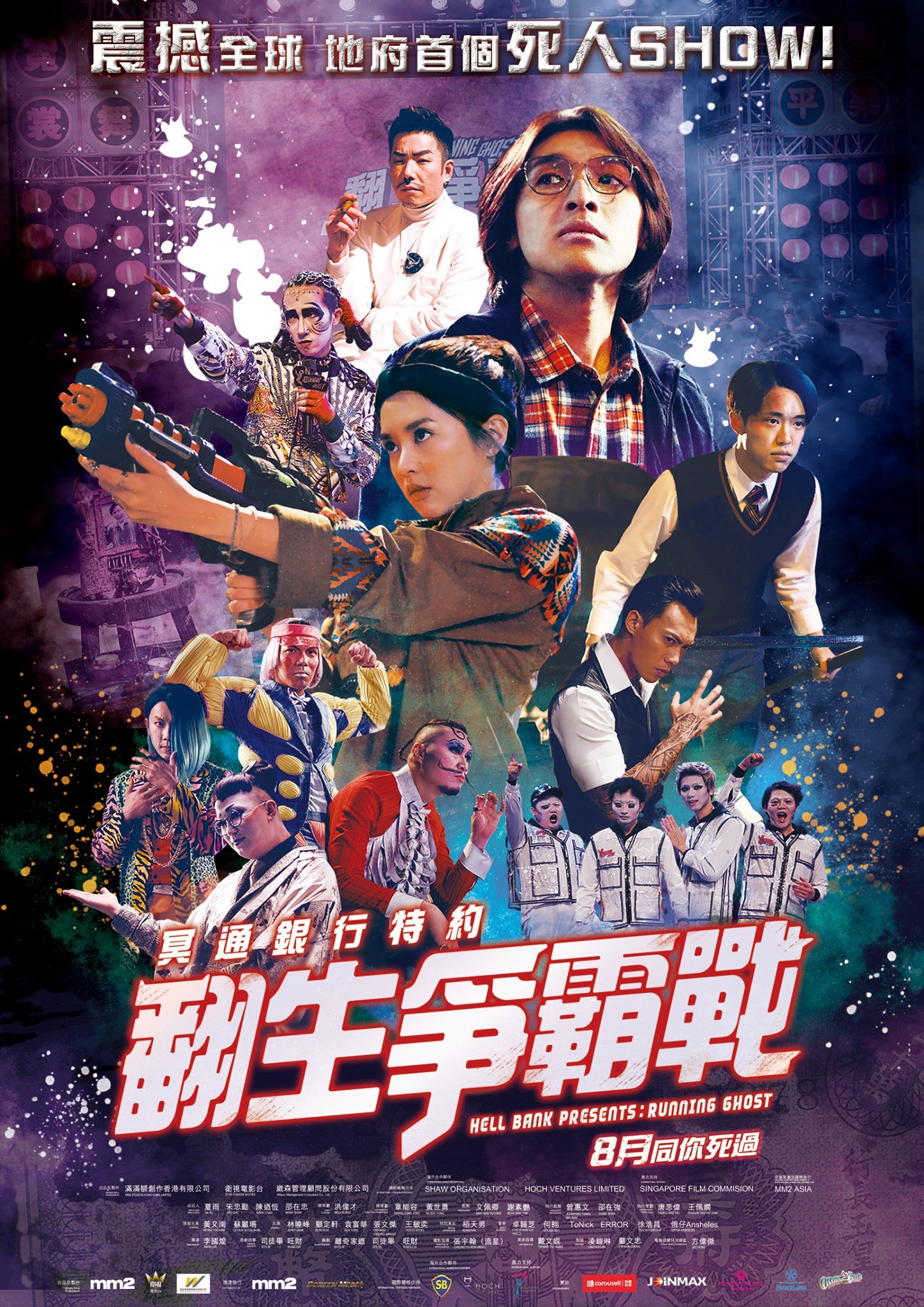
Hell Bank Presents: Running Ghost (冥通銀行特約:翻生爭霸戰, Mark Lee, 2020)

“The most important thing in life is to know how we die” according to the very efficient lady manning the desk in the Labour Department of Hell where, it seems, everyone has to do their bit. No rest for the wicked, even in death. A glorious satire on the business of modern living, Mark Lee’s Hell Bank Presents: Running Ghost (冥通銀行特約:翻生爭霸戰) sends its recently deceased hero on a quest to find meaning in his life from the other side as he becomes an unwilling contestant in an undead variety show. 

Wong Hui Kwai (Wong You-nam) has been dead for 22 days. Unusually, he can’t remember how he died, and as he tells the lady at Labour Department of Hell when asked what he achieved while alive was known chiefly for his ability to install internet cables with maximum efficiency (unfortunately Hell is already fully covered for wi-fi). Sadly, Hui Kwai didn’t do anything of note in his life and now it’s over he’d really rather just take it easy, which is why when he’s offered a nice job he tries to back out towards fiery torture. Nevertheless he finds himself a sudden replacement for a contestant who ascended at an extremely inconvenient moment right before he was supposed to take to the stage on Hell’s hottest variety show Hell Bank Presents: Running Ghost in which the prize is instant resurrection. Hui Kwai needs to succeed in three rounds of ghostly pranks, making the living faint, possessing a living person, and then scaring someone to death. 

Asked again on the stage where the MC reframes his abilities as a cable guy to paint him as a concealment expert, a very useful skill for a ghost trying to scare people, Hui Kwai is again forced to confront the fact that his life was extremely disappointing, his only “talent” was going to work, sleeping, and then going to work again. You might even say he was already a ghost before he died, though the resurrection prize does sound good because it would allow him to take care of some “unfinished business” with his childhood sweetheart Bo Yee (Venus Wong) whom, he fears, is being taken advantage of by an unscrupulous estate agent. As General Bull tells him, his problem is he needs to believe in himself more, pointing out that his nerdy appearance is just like that of a super hero before they discover their hidden powers. He never accomplished anything because he never really tried, if he wants his life back he’ll have to actually fight for it. 

Unfortunately, having been dead only 22 days he’s not exactly powerful which is why he’s abruptly sucked into the dream catcher set up by eccentric ghost enthusiast Ling Kay (Cecilia So Lai Shan) who has some “unfinished business” of her own, trying to trap a spirit in the hope that they’ll be able to make contact with her late father. Lee has a lot of fun with the gadgetry of the supernatural which runs from Ling Kay’s old school dream catcher and Ouija boards to water pistols filled with ghost-busting pee and children’s flashlights “blessed” with the ability to burn up spirits. Are you a ghost needing to find an unlucky person to scare? There’s an app for that, and it works with your “Fat-bit” wristwatch. Meanwhile, even in Hell there are variety shows sponsored by Starbucks Coffins which have breaks featuring ads for services you can use to offload your unwanted funerary offerings. Paper money is no longer any good, in the after life they use “Helipay”, but General Bull who can presumably beam himself anywhere still travels in a gothic rickshaw pulled by an unfortunate underling forced to re-enact his suicide every night as part of his eternal torment. 

Running Ghost excels in its madcap world building in which the after life is somehow much more technologically advanced than the mortal realm, all slick touch screens and augmented reality, but perhaps still subject to the same old vices in which the undead vacuously watch reality shows and get their kicks pranking the living. Still, only after he’s died can Hui Kwai make the zero to hero journey, realising his unfinished business is really learning to unlock his latent potential which he does by protecting someone else, just not the someone he originally came back to protect. A much needed shot in the arm for HK supernatural comedy, Hell Bank Presents: Running Ghost is a spooky delight. 


Hell Bank Presents: Running Ghost streamed as part of this year’s New York Asian Film Festival.

Original trailer (Cantonese with English & Traditional Chinese subtitles)

An Inspector Calls (浮華宴, Raymond Wong & Herman Yau, 2015)

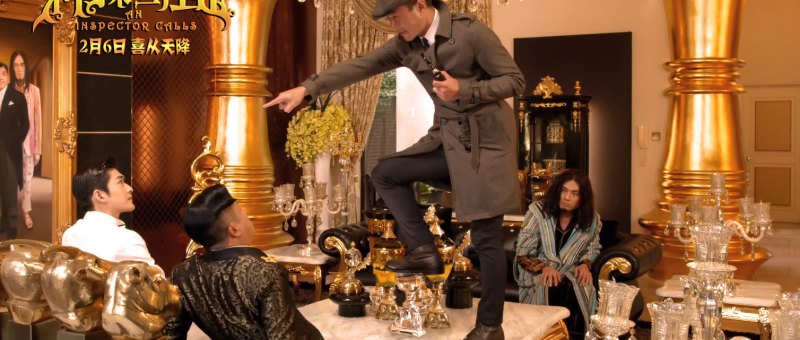
Inspector Calls poster 1J.B. Priestley’s An Inspector Calls found itself out of favour until a phenomenally successful stage production brought it back into the national consciousness in the early ‘90s, but even if some decry its inherent melodrama as a relic of another era the play’s comments on the entrenched classism of British society sadly still ring true. An Inspector Calls is many things, but one thing it defiantly is not is funny – a series of concentric tales of betrayals and oppressions, Priestley’s drama lays bare the callousness with which the privileged bolster their position through the story of one faceless factory girl standing in for an entire social class whose lives are often at the mercy of those “above” them.

In adapting Priestley’s play as a Chinese New Year movie (a strange concept in itself), Herman Yau and Raymond Wong relocate to contemporary Hong Kong, re-conceiving it as a broad comedy of the kind one might expect for the festive period. The setup is however still the same. The Kau family will be receiving a visitation – this time from Inspector Karl (Louis Koo Tin-lok) who has some difficult news for each of them. Three hours previously, a young woman committed suicide in her apartment by drinking bleach, taking the child she was carrying with her. Inspector Karl views this as a double murder and, based on the diary they found at the crime scene, has brought the reckoning over to the Kaus’.

The Kaus, at the present time, are preparing an engagement party for daughter Sherry (Karena Ng) who will be marrying the handsome younger brother of a factory owner, Johnnie (Hans Zhang Han). What no one can know is that the family business is going under, the Kaus are broke, mum and dad don’t get on, and all of this finery is merely rented affectation. The only member of the family who still seems to have something like a social conscience – Tim (Gordon Lam Ka-tung), the 27-year-old younger son, is viewed by all as a feckless and naive hippy, hiding out in his childhood bedroom, still all fluffy cushions and toy soldiers.

As the Inspector explains, he holds Mr Kau (Eric Tsang Chi-wai) responsible because the woman once worked in his factory and he fired her for participating in a strike for better pay and conditions. Sherry got her fired too when she worked in an upscale fashion store. Johnnie knew her during an unfortunate period as a bar hostess, and Tim as a masseuse. Mrs Kau (Teresa Mo Shun-kwan), who heads up a woman’s charity and publicly espouses tolerance while privately judgmental, once turned her down for familial support seeing as the father of her child was still living. She advises holding him to account and if he won’t pay, forcing his family to take responsibility on his behalf. The irony being that the father is likely her own son and that if this poor woman had rocked up at the Kaus’ with a sad story and an infant in her arms, she would have been met with nothing more than contempt save perhaps some hush money to send her on her way.

The Kaus are merely a series of examples of the various ways the wealthy mistreat the poor, wielding their sense of entitlement like a weapon. Yau and Wong adopt an oddly Brechtian approach in their expressionist production design with the faceless masses identified only through titles – the word “labour” on the workers’ caps, “manager” in the fashion store, “secretary” at the foundation. None of these people are really worthy of names because they will always be “less” while the Kaus are “more” in more ways than one. Actions, however, have consequences. The family console themselves that this is all far too coincidental, that they couldn’t all have known the “same” woman in different guises, but that in many ways is the point – she isn’t one woman but all women, used, abused, and discarded not only by heartless men but by jealous and judgemental members of her own sex too. Better than her than me, they might say, but that’s no way to run a healthy society as the sensitive, slightly damaged Tim seems to see.

Like the Birlings, the Kaus attempt to brush the Inspector’s warning off, thinking it’s all been some elaborate prank that can they laugh about and then forget, but there will be a reckoning even if they attempt to gloss over the various revelations regarding their moral failings. Wong and Yau’s vague gesturing towards the outlandish greed of the hypocritical super wealthy is undercut by the ridiculous New Year slapstick of it all despite the Metropolis-like production design and expressionist trappings, giving in to an excess of its own in an extremely unexpected musical cameo from a martial arts star and the decision to end on a social realist photo of an innocent, pigtailed proletarian woman dressed in red. Nevertheless, strange as it all is the bizarre adaptation of Priestley’s play has its own peculiar charm even if it’s outrageousness rather than moral outrage which takes centre stage.


Currently available to stream online via Netflix in the UK and possibly other territories.

Original trailer (English / Traditional Chinese subtitles)

Gallants (打擂台, Derek Kwok & Clement Cheng, 2010)

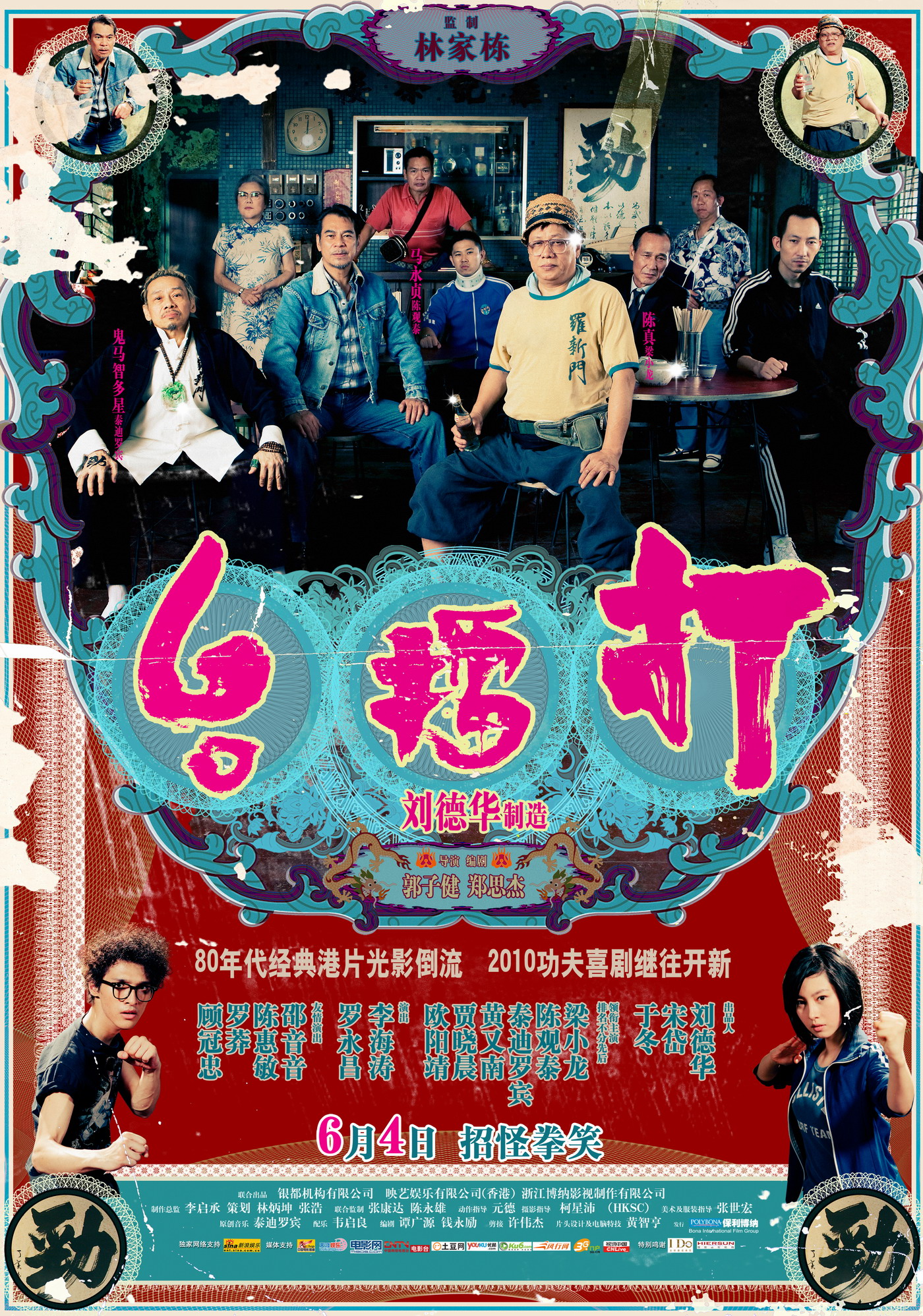
Gallants PosterLike the master at the centre of Derek Kwok and Clement Cheng’s Gallants (打擂台), old school martial arts movies have been in a deep sleep since their Shaw Brothers heyday. Drawing inspiration from the kung fu films of old, Gallants is a tale of buried heroism suddenly reawakening and the risks of writing off veteran challengers just because of their age. It’s also a tribute to those perhaps more innocent times and, in contrast to a prevailing trend, a true Hong Kong film filled with typically Cantonese (sometimes untranslatable humour) and meta references to the area’s long cinematic history.

For a brief moment in his childhood, Cheung (Wong You-nam) was the unbeatable superhero who never lost a fight. These days, he’s a nerdy loser who sometimes hides under his desk to escape his angry boss. Despatched by the shady real estate company he works for, Cheung is sent back to his rural hometown entrusted with the mission of convincing the local population to surrender their homes so the developers can build a large scale complex. Whilst there he gets attacked by local punks only to be saved by an old guy who has immense kung fu skills.

The old guy turns out to be one of two living in a ramshackle tea house that used to be a martial arts studio. Tiger (Leung Siu-lung) and Dragon (Chen Kuan-tai) turned the Gate of Law into a teahouse to make ends meet while their legendary sifu, Master Law (Teddy Robin), has been in a coma for the last 30 years. When a fight breaks out and the old guys get to strut their stuff against a local kingpin, Cheung decides to petition them to take him on as a pupil. In a classic case of bad timing, Cheung is around when the teahouse is raided again and someone attacks Master Law causing him to wake up and act as if the last 30 years never happened. He thinks Cheung is both of his young pupils, Tiger and Dragon, in one and that the real 30 years older versions of Tiger and Dragon are some random old guys Cheung has agreed to train out of pity.

If you don’t fight, you won’t lose quips Law, but if you fight you have to win. Like any good martial movie, Gallants is more about the journey than the destination. Rather than focussing solely on Cheung who experiences several conflicts of the heart when he realises that his adversary is the childhood friend he used to bully and that he was technically on the wrong side to begin with, Kwok and Cheng broaden the canvas to allow Tiger, Dragon, and Law to take centre stage. Still skilled martial artists, the guys give it their all in the knowledge that they’ll have to work far harder now that they aren’t as agile as they once were. Still, they have the true spirit of kung fu and resolve to keep getting back up each time they’re knocked down.

This oddly defeatist attitude which presupposes humiliation but insists on perseverance gives the film much of its warmhearted, ironic tone as the hapless martial arts heroes repeatedly fail yet refuse to back down. The other source of comedy lies in the hilarious performance of the tiny Teddy Robin as the supposedly all powerful Law. Law, as it turns out, is a wisecracking lecher who sets about flirting with just about every young girl he lays eyes on before decamping to a hostess bar and asking for the ladies from 30 years ago. Former starlet Susan Shaw makes an amusing cameo as the long suffering, lovelorn doctor apparently in love with Law since their youth who has continued to care for him throughout his illness but is entirely forgotten when Law wakes up in full on sleaze mode.

Bizarre gags including one about a missing preserved duck, jostle with impressive action sequences performed by two veterans proving they’ve still got what it takes all these years later. The aesthetic is pure ‘70s Shaw Brothers complete with speedy zooms and whip pans accompanied by an overly dramatic score, lovingly echoing the classic kung fu era rather than trying to attack it through parody. As funny as it all is, and it is, Gallants is also surprisingly warmhearted as it finds space to value the skills of its elderly protagonists as well as the enduring bonds of friendship which connect them.


Screened at Creative Visions: Hong Kong Cinema 1997 – 2017

Original trailer (English subtitles)