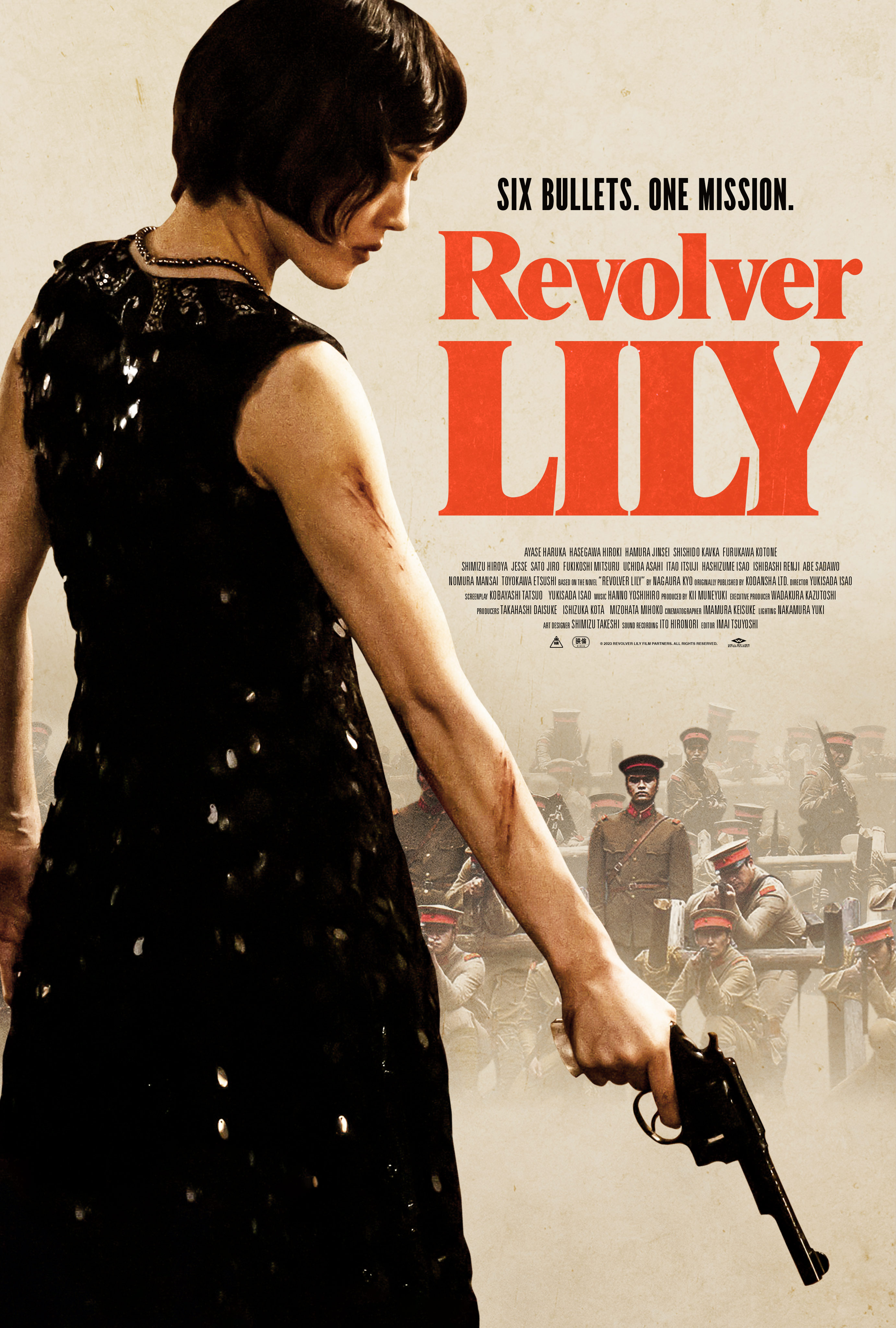
Revolver LILY (リボルバー・リリー, Isao Yukisada, 2023)

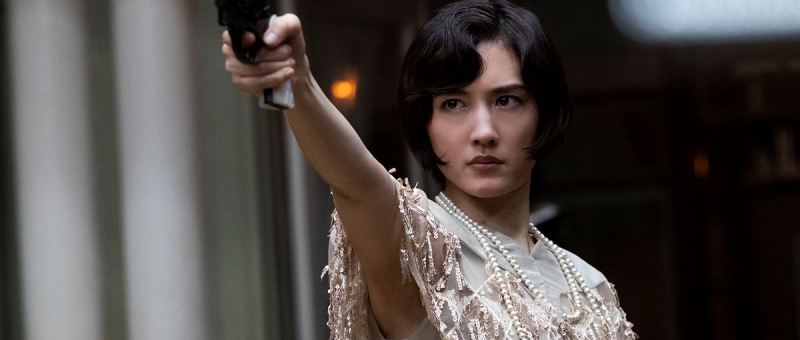
A former assassin is drawn back into the light when an old colleague is framed for the murder of a small family in Isao Yukisada’s adaptation of Kyo Nagaura’s pulp novel, Revolver Lily (リボルバー・リリー). Set in the Taisho era, the film finds Japan at a crossroads amid an atmosphere of rising militarism in what is still a very poor country trying to change its fortunes through imperialism while those like Yuri (Haruka Ayase) attempt to stave off the oncoming apocalypse of war.

Though Yuri (whose name means “lily” in Japanese) had been part of a spy ring in Taiwan and trained to further Japan’s interest through political assassinations, she evidently came to see the error of her ways when the group was betrayed and an attack on their hideout led to personal tragedy. Since then, she’s lived as a well-to-do owner of a geisha house apparently under her own name which somewhat conflicts with the idea that she is simultaneously on an international most wanted list. In any case, she’s swept back into action when one of her former comrades, Kunimatsu, is accused of murdering the family of a man named Hosomi who is apparently on the run while militarists also seem to be intent on finding his teenage son Shinta (Jinsei Hamura).

Shinta, who was born with a lame leg which would presumably rule him out for military service, later becomes a kind of symbol of Japan as a more enlightened nation that no longer sees the need to use violence in order to advance its own interests. His father, Hosomi, had apparently done a series of dodgy deals with the military and then run off with all the money which is why they want to find him. It later turns out that he took the money not so much out of greed as that he was trying to turn the tide by growing the country economically in the hope that there would no longer be the need for imperialistic conquest.

Yet the money becomes a means of setting the army and the navy against each other in an increasingly straitened Japan in which neither feels they have the proper finding to pursue their ambitions. Constant references are made to the devastating economic impact of the 1923 earthquake, yet the authorities spend increasing amounts of money on waging war and there seem to be increasing numbers of soldiers on the streets. The army, in general, are depicted as loutish thugs with little on their side except brute force, while the navy in their pristine white uniforms are backroom plotters and always one step ahead.

But there is obviously a giant irony at the heart of the film in that as Yuri declares at the end, “fighting protest nothing,” having just taken out most of the Tokyo garrison in an effort to protect Shinta so that he can be preserved as a symbol of a new pacifist Japan. Though she tries to avoid mortally wounding anyone, Yuri is still prepared to use violence in order to combat it while the fact that merely fight on the side of capitalism suggests that there is, in fact, already a war going on between competing visions of the nation’s future which are both destined to come to pass. Capitalism, too, however, has its rough edges as symbolised by the grinning yakuza boss (Jiro Sato) who boasts of being “a man you can trust” but is only really ever on the side of greed and power.

Yuri, meanwhile, seems to be reawakened by her latest mission. She tells her assailant who accuses her of living in a state of nihilistic limbo, that she has made a choice a live which also symbolically aligns her with the new future opposed to the death cult that is militarism. Nevertheless, history tells us that whatever promises are made the militarists will win and the people will suffer. Yuri, however, continues fighting for peace with the film making full use of Haruka Ayase’s growing stature as an action star following on from franchises such as Caution, Hazardous Wife as Yuri effortlessly takes out huge numbers of army goons assisted by her female comrades. The closing scenes hint at further adventures for Yuri amid the vibrant Taisho-era setting taking on the forces of militarism with impeccable style and elegance.


Revolver LILY is available digitally in US from 27th January courtesy of Well Go USA.
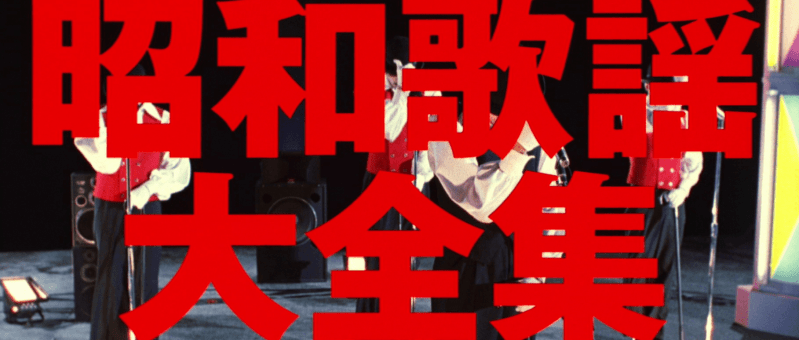
Karaoke Terror (昭和歌謡大全集, Tetsuo Shinohara, 2003)

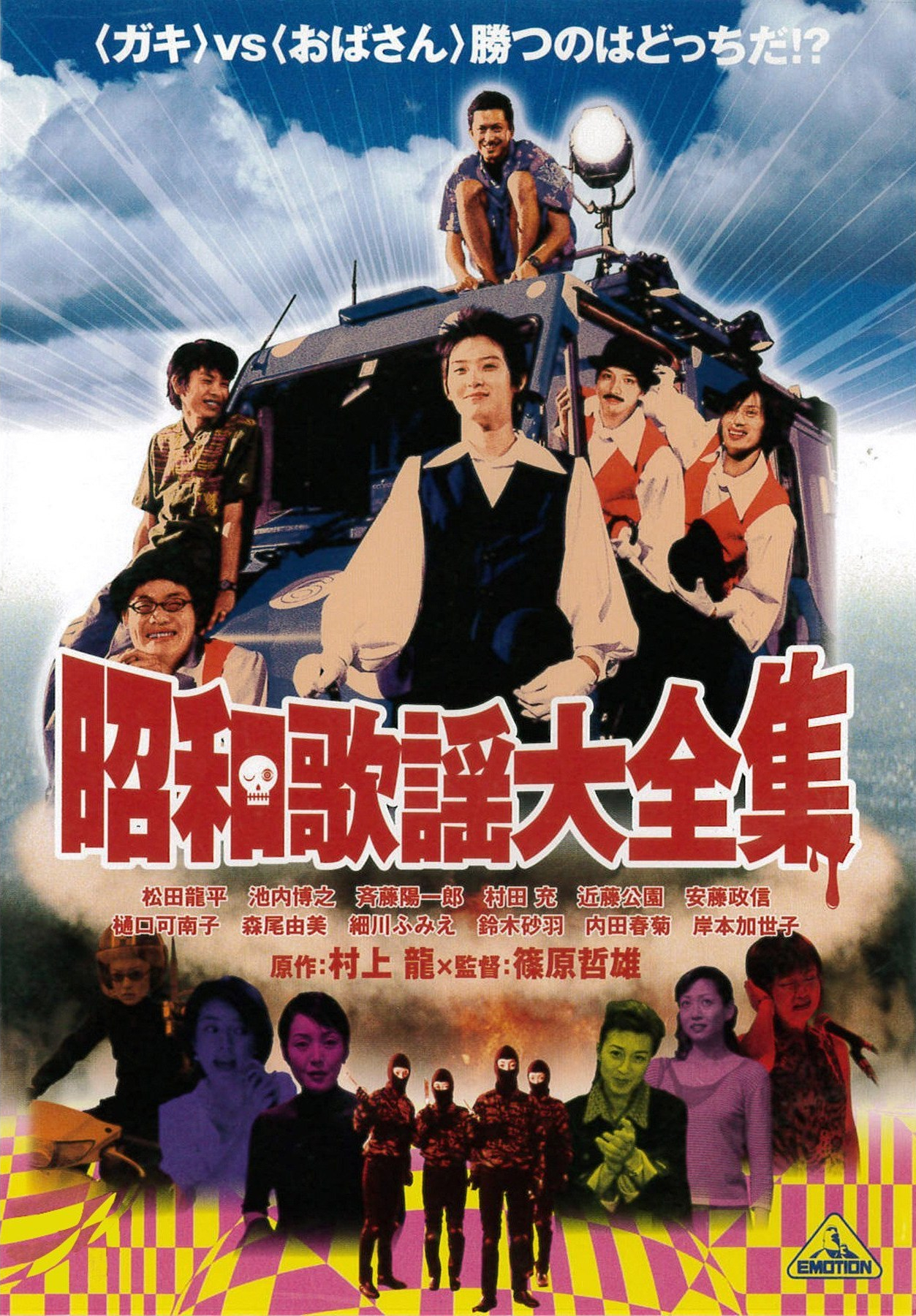
karaoke terror poster.jpgEver since its invention karaoke has provided the means for many a weary soul to ease their burdens, but there may be a case for wondering if escapism is a valid goal in a society which seems to be content in stagnation. The awkwardly titled Karaoke Terror (昭和歌謡大全集, Showa Kayo Daizenshu), adapted from the book Popular Hits of the Showa Era by Audition’s Ryu Murakami, pits two very different groups of karaoke enthusiasts against each other – aimless adolescent males, and jaded middle-aged women. Despite the differences in their ages and experiences, both enjoy singing the wistful bubblegum pop of an earlier generation as if drunk on national nostalgia and longing for the lost innocence of Japan’s hopeful post-war endeavour to rebuild itself better than it had been before.

We open with the slackers and a voice over from the presumed “hero” of the film, Ishihara (Ryuhei Matsuda), who informs us that he can’t really remember how he met most of the guys he hangs out with but that he always knew the one of them, Sugioka (Masanobu Ando), was a bit cracked in the head. In a motif that will be repeated, Sugioka catches sight of a middle-aged woman just on the way back from a shopping trip and decides he must have her but his attempts to pick her up fail spectacularly at which point he whips out his knife and slashes her throat.

Meanwhile, across town, a middle-aged woman, Hemmi (Kayoko Kishimoto), offers to let a co-worker share her umbrella but the co-worker misinterprets this small gesture of courtesy as romantic interest and crudely asks her “how about a fuck?” to which Hemmi is quite rightly outraged. Rather than apologise, the co-worker shrugs and says his “direct” approach works six times out of eight and some women even appreciate it. Once she manages to get away from her odious aggressor, Hemmi ends up stumbling over the body of the woman murdered by Sugioka and realises she knows her. The murdered woman was one of six all named Midori who were brought together for a newspaper article about the lives of middle-aged divorced women and have stayed “friends”. Outraged about this assault not just on their friend and their sex but directly against “women of a certain age” who continue to be the butt of a societal joke, the Midoris decide they want revenge and hatch a plan off Sugioka, but once they have, the slackers hit back by offing a Midori and so it continues with ever-increasing levels of violence.

Which ever way you slice it, you can’t deny the Midoris have a point and Hemmi’s continuing outrage is fully justified. When the boys rock up at a mysterious general goods store out in the country looking for a gun, the proprietor (Yoshio Harada) is only too happy to give it to them when they explain they need it for revenge and that their targets are middle-aged women. The proprietor has a lot to say about ladies of a certain age. In fact he hates them and thinks that bossy, embittered, unproductive women “too old” to fulfil their only reason for existence will be the only ones to survive a nuclear apocalypse that even the cockroaches cannot overcome. The boys appear timid and inexperienced but ironically enough can’t take their eyes off the middle-aged woman from across the way and her sexy dance routines. They feel entitled to female deference and cannot accept a woman’s right to decline. The Midoris are sick of being “humiliated”. They’ve fallen from Japan’s conformist path for female success in getting divorced or attempting to pursue careers. They’ve lost their children and endured constant ridicule as “sad” or “desperate”, made to feel as if their presence in the workplace past a certain age was “inappropriate” and the prices they have paid for their meagre successes were not worth the reward. They strike back not just at these psychotic boys but at a society which has persistently enacted other kinds of violence upon them.

Meanwhile, the boys remain boys, refusing adulthood and responsibility by wasting their time on idle pursuits. Truth be told, karaoke performances involving dance routines and elaborate costumes is not a particularly “cool” hobby by the standards of the time but it appears that none of these men have much else in their lives to invest themselves in. With the economy stagnating and the salaryman dream all but dead, you can’t blame them for their apathy or for the rejection of the values of their parents’ generation, but you can blame them for their persistent refusal to grow up and tendency to allow their insecurities to bubble over into violence.

As it turns out, adolescent males and middle-aged women have more in common than might be thought in their peripheral existences, exiled from the mainstream success which belongs exclusively to middle-aged and older men who’ve been careful to (superficially at least) adhere to all the rules of a conformist society. Neither group of friends is especially friendly, only latterly realising that “real” connections are forged through direct communication. Their mutual apathy is pierced only by violence which, ironically, allows their souls to sing and finally shows them just what all those cheerful songs were really about. Darkly comic and often surreal, Karaoke Terror is a sideways look at two diametrically opposed groups finding unexpected common ground in the catharsis of vengeance only for their internecine warfare to graduate into world ending pettiness.


Original trailer (English subtitles)

The greatest hits of the Showa era:

Koi no Kisetsu – Pinky & Killers

Hoshi no Nagare ni – Akiko Kikuchi

Chanchiki Okesa – Haruo Minami

Shiroi Cho no Samba – Kayoko Moriyama

Linda Linda – The Blue Hearts

Sweet Memories – Seiko Matsuda

Kaze Tachinu – Seiko Matsuda

Minato ga Mieru Oka – Aiko Hirano

Sabita Knife – Yujiro Ishihara

Hone Made Aishite – Jo Takuya

Kimi to Itsumademo – Yuzo Kayama

Mata Au Hi Made – Kiyohiko Ozaki