Robinson on the Beach (砂の上のロビンソン, Junichi Suzuki, 1989)

Robinson on the Beach

“Family Drama” is often said to be the mainstay of Japanese film. From Ozu to Koreeda, drama in the basic social unit has often been exploited to create a wider dialogue about society at large. However, In the wake of Yoshimitsu Morita’s condemnation of modern family values in The Family Game the nature of the conversation shifted. As Japan eased into its bubble era, concerns began to grow about what exactly the rise of consumerism meant for traditional values. Robinson on the Beach (砂の上のロビンソン, Suna no Ue no Robinson, AKA A Sandcastle Model Family Home) takes things one step further than The Family Game in that it repackages the entire idea of “the ideal family” as something that can itself be bought and sold and therefore manipulated as the perfect marketing tool.

At the beginning of the film, the Kidos are a fairly ordinary lower middle class family of five all living a modest apartment. They’re a little cramped – in fact so much so that mum and dad have to sneak into the wardrobe to get some alone time together just watching movies on a tiny TV set and sharing a set of earphones between them. The kids are always at each other’s throats but broadly they’re happy. However, when both husband Shouhei and wife Ryoko spot an advert for a new scheme which promises a “free” house to a “model family” they decide that this is their best chance at a new life. The deal does have a few drawbacks – they all have to play the part of a perfect family for a whole year and let the public into their lives to prove it.

Things were a little more innocent back in 1989. Reality TV hadn’t yet kicked in and the Kido’s don’t quite understand what it is they’re letting themselves in for when they agree to this too good to be true offer. The house they’ve been given is a veritable mansion – a huge, sprawling Western style home with a bedroom each for the children, a dedicated study for Shouhei and as many walk-in closets as anyone could wish for. However, the cars in the garage are only for show and even if the house is in the same general area as their old flat, Shouei still has to cram himself inside the sardine tin of the morning commuter train every day just like before.

He does at least have the luxury of being allowed to leave the house, unlike Ryoko who becomes a bizarre “first lady” to this new show home empire expected to play a role somewhere between real estate agent and princess as she welcomes prospective buyers and allows them to poke and prod all over her nice new home spreading thinly veiled judgement wherever they go. Suddenly she has people going through her fridge and oggling her washing left hanging up to dry . The liaison lady from the company even has the gaul to criticise Ryoko’s nightwear as “frumpy” and orders her to buy something a little more glamorous which will match the “upmarket” appeal of the house.

After she gives in and does this she just has to listen as two visitors describe the new nightwear as “slutty” and wonder how a “respectable” wife could wear such a thing (it’s just a regular pink negligee nightdress, nothing unusual about it at all save for being a little more career woman than mumsy in appeal). In fact, the family’s new found circumstances only cause resentment in those around them and Ryoko in particular is plagued by nuisance callers who repeatedly accuse her of having prostituted herself to win the house.

In the economic reality of Tokyo at the time, there was just no feasible way a family like the Kidos would ever be able to afford to own their own house. They probably wouldn’t even be able to rent one or get anything bigger than the apartment they occupied at the beginning of the film. Shohei provokes the ire of his boss after moving into the show home because it’s already better than anything his boss could afford and he already owns a small home far out in the suburban commuter belt. Now everyone has it in for Shohei and he does get a kind of demotion as the company send him to demonstrate their “super slicer” kitchen gadget in a local department store. This is doubly worrying as Shohei is a very shy and nervous man who is not well suited to public speaking leaving the company’s excuse of making use of his new found celebrity as an ironic way of taking revenge on his jumping up the social order through unorthodox means.

All of these stresses gradually build up as even the children are subject to attacks from outside (and some of them very cruel and disturbing in nature). Before long this once happy family begins to buckle under the strain of pretending to be what they once really were. One particularly perverse episode sees them sitting down to a pre-scripted dinner while an audience of onlookers silently judge them as if they were engaged in some kind of performance art – which, of course, they are albeit almost unconsciously. Having gained everything they’d ever wanted, they discover that the costs far outweigh the benefits with Shohei hit hardest after he succumbs to a streak of selfish individualism that has dire consequences for everyone.

Eventually the value of the traditional family is reinforced as everyone starts to realise that the fancy house was never as important as the simple happiness they felt being crammed together in their tiny apartment. Though there is a hopeful resolution at the end, whether or not the damage can be repaired may be a matter for debate though the overriding message of caution about the corrupting influences of rampant consumerism including classism, petty jealousy and a growing tendency towards the voyeuristic is one which finds its way into many of the films from this period and is sadly still worth restating even today.


Scene from near the beginning of the film (with English subtitles):
The Assassination of Ryoma (竜馬暗殺, Kazuo Kuroki, 1974)

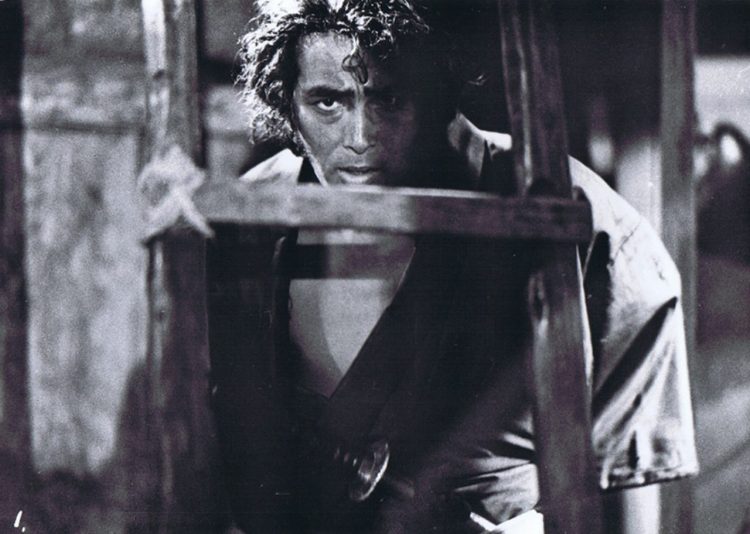
Ryoma AnsatsuSakamoto Ryoma is a legendary revolutionary of Japan’s Bakumatsu period which encompasses the chaos that ensued after Japan was forced open after centuries of self imposed isolation. Ryoma was a low level samurai from a small town who resented the unjust treated of the arrogant true samurai above him and skipped out on his clan without the proper permission to go study sword fighting in the city. After the arrival of the Americans and witnessing their far superior technologies, Ryoma was one of several men who became convinced that Japan needed to modernise quickly or become a slave to more advanced cultures. However, this was a turbulent era and there was general infighting among all factions and all sides and Ryoma was mysteriously assassinated in 1867 along with his friend and ally Nakaoka Shintaro.
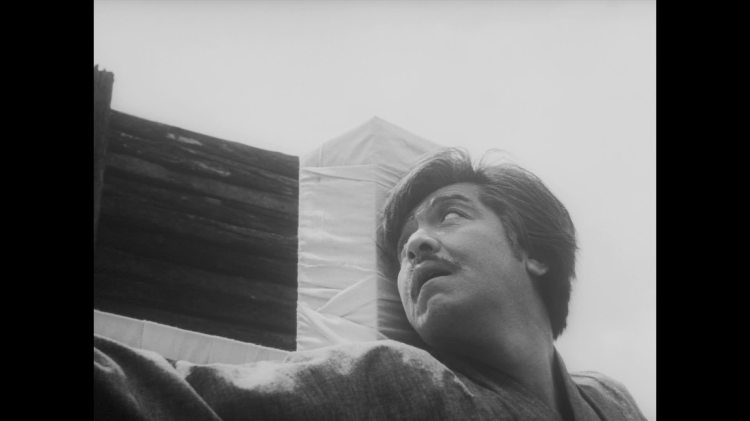
In thinking about the legacy of Sakamoto Ryoma, it’s important to try and separate the man from the legend. His legacy has become somewhat romanticised as his visionary ideas of a modernised Japan free of outside influence but also of outdated, feudalistic ideals have developed into an easily cop-opted set of talismans. Kuroki Kazuo’s 1974 film The Assassination of Ryoma (竜馬暗殺, Ryoma Ansatsu) attempts to place Ryoma firmly back within the mortal realm as it explores the events of his last days in late 1867 when he was brokering the new world from the shadows.

Played by Japan’s original ‘70s wild beast Harada Yoshio, this Ryoma is a slightly bumbling though thoughtful young man who likes to have a good time when he isn’t busy trying to overthrow the shogunate. An early scene sees him fiddling with a revolver which he claims is a better weapon to be in hiding with because it’s a little more portable and discreet than a traditional sword. However, he doesn’t quite know how to use it and can’t figure out how to make it fire in order to give his friend a demonstration. Later, having moved on slightly from his ideas of a peaceful revolution, his plan to buy a number of rifles backfires when he is sent a camera instead.

Ryoma is joined by two “allies” who both originally came in order to kill him but have apparently switched sides. The first is one of his oldest friends, Shintaro, who remained a member of a hard right revolutionary group in Ryoma’s home town which ran under the slogan “Revere the Emperor, Expel the Foreigners”. Understandably they haven’t taken too well to Ryoma’s change of heart regarding the modernisation of Japan and are committed to taking him out – hence dispatching Shintaro, though he proves reluctant to assassinate his friend. The other is a mysterious and largely silent assassin, Uta (played by Matsuda Yusaku), who also ends up forming an unlikely friendship with Ryoma which prevents him from carrying out his mission.

Kuroki shoots in black and white within a 4:3 frame and in gritty 16mm but also goes in handheld almost like newsreel footage shot by a frontline war correspondent. As well as using some silent cinema inspired compositional techniques, Kuroki also adds in a few intertitles either with historical information or to provide some additional commentary on the action such as when he tells us that violence from left wing samurai is a daily occurrence. Drawing a neat parallel between he chaos of the Bakumatsu era and its tussling between new and old, Kuroki leaves us with a sense of historical continuity by equating the left wing samurai rebellion of the 1860s with the left wing student moment of a whole century later.

However, Ryoma is just one man. In an enlightening metaphor about a cat who got stuck up a tree, Ryoma calls to it and tried to climb up to get the cat down but it just kept climbing higher and wouldn’t even take the mochi he tried to offer it on a stick. Eventually Ryoma wanted to cut the whole tree down in order to save the cat but everyone laughed at him – cut down a 10ft wide tree to save one skinny cat? At that time Ryoma laughed too but later it made him angry. He thought the idea of cutting down the tree should be allowed to be considered, that every option ought to be explored. The important thing is to see things from all angles and allow yourself the freedom to change your mind, reject all previous knowledge in the light of a new way of thinking. This kind of freedom is necessarily frightening and may lead others onto a path which you yourself do not wish to follow but all the same it is the very idea which gives birth to Ryoma’s entire philosophy.

Kuroki’s vision of this visionary hero is an unconventional one and one which was not universally accepted by the audience of the time. Just as radical as the man himself, Kuroki’s film portrays Ryoma as a modern revolutionary who lived a hundred years ago, yet wanted many of the same things that the youth of the day were still fighting for – personal freedom, equality for all, and a modern society which allowed his nation to stand independent, on an equal footing with its European counterparts. The assassination itself is brutal, bloody and efficient. It’s an uncinematic ending for a cinematic hero in which he’s violently cut down in a frenetic yet naturalistic fashion leaving a trail of polluting black blood spreading across the high contrast bright white background. His ideas were too radical for his era, and his tragic end a sadly predictable one but what does this say about the world of today and the would be revolutionaries whose voices appear to have been silenced?


(I’ve gone for surname first order here because that’s the most usual way of referring to historical figures – I accept that it’s confusing but it is at least consistant).

The life story of Sakamoto Ryoma has been dramatised many times, most recently as a Taiga drama, Ryomaden, directed by Rurouni Kenshin’s Ohtomo Keishi and starring Fukuyama Masaharu, which has apparently boosted Ryoma’s profile even more and created a raft of new tourist spots in various areas of Japan. (It’s obviously very long as it’s Taiga drama but is well worth the investment in time and effort.)

Unsubbed trailer:

http://www.youtube.com/watch?v=_9OiFk0E70I

Coup d’Etat (AKA Martial Law, 戒厳令 Kaigenrei, Kiju Yoshida 1973)

Snapshot-2015-11-18 at 01_34_49 PM-1660087891Having taken avant-garde story telling to its zenith in Heroic Purgatory, Yoshida returns to the realm of politics with a far more accessible effort in Coup d’Etat (AKA Martial Law, 戒厳令 Kaigenrei). Inbetween the two films, Yoshida had made another more mainstream offering, Confessions Among Actresses, which had been moderately successful with both audiences and critics but with Coup d’Etat he came back to the artistic fare he’d been pursuing since leaving Shochiku. Unlike the other two films in Arrow’s Love + Anarchy boxset, Coup ‘Etat deals with a right wing rebellion rather than the communists and anarchists which are more familiar to the post-war world.
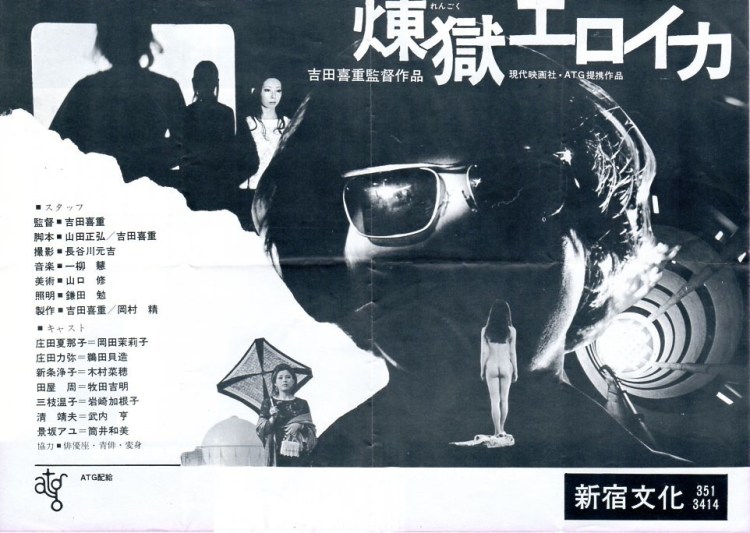
The film begins with a nervous young man brutally stabbing an elderly businessman in the street before taking his own life. On claiming his remains, the man’s sister finds a letter addressed to Ikki Kita – a well known right wing intellectual in favour of the institution of martial law. Kita, or more particularly his work, becomes a figurehead for a putative revolution organised by young army officers who have become disillusioned with the elected government, its plans for increasing Westernisation and treatment of the poor. They seek to overthrow parliament and put the Emperor back in charge for a kind of paternalistic socialist state. Kita remains on the fringes of this movement, coming into contact with a young soldier who wants to join the revolution and advising him but repeatedly making it clear that he is not involved with the coup itself. Nevertheless, even if not directly involved, Kita will still pay the price for his radical ideas.

Less an examination of the historical events of the time or the coup itself, Coup d’Etat is a psychological portrait of Kita’s last days. Marking the only time Yoshida was not involved in the screenplay (this time leaving things entirely to playwright Minoru Betsuyaku) the film follows a much more linear structure rather than playing with time in the same way as Eros + Massacre or Heroic Purgatory. Kita had written a hugely influential book which advocated moving to a system of martial law under the paternalistic care of the emperor alongside nationalisation of industries, minimisation of private property and a better welfare state. However, Kita is a public intellectual not an activist. He takes no personal part in the armed struggle (though he is aware of each of the actions and close to the people who facilitated them), yet still he pays the price. Whether this is an indictment of his lack of physical commitment to the ideals that he spoke of, or an indictment of a system which seeks to shoot the messenger is up for debate but in any case Kita is “betrayed” by the very same emperor that he worshipped as a god.

Having said that, it’s Emperor Meiji who hangs on Kita’s wall. What Kita and the officer class wanted was a “Showa Restoration” in line with the “Meiji Restoration” but almost the reverse as they returned to a form of paternalistic government where personal freedoms were restricted but everyone was well cared for. We actually don’t learn a lot about Kita during the film (a strange thing to say about a “biopic” which is often how the film is described) but it seems that he had a strict childhood in which he was prohibited from feeling fear – each time a boy was a afraid, he was supposed to cut himself as a punishment. Yet Kita is afraid and this tension between intellectual thought and irrepressible emotion is one that restricts his physical actions to the point that he remains a solitary figure entrapped by his own ideology. That he is then betrayed by the very figures that he sought to exult is the very highest form of tragedy and it’s difficult not to believe that the real coup d’etat is being perpetrated against Kita himself.

Perhaps because of its relative narrative simplicity, Coup d’Etat is a visual masterpiece taking Yoshida’s especial gifts for composition to new heights of beauty. Once again shot in black and white 4:3 Academy ratio, the film is an unsettling maze of shadows and light coupled with uncomfortable angles and a musical score that’s almost like a science fiction film. Yoshida’s prognosis is indeed bleak – the young soldier for example who’s unable to carry out his part of the mission and eventually falsely confesses to having been a spy simply because he felt insignificant and wanted to be a part of something is symptomatic of the self-centred ineffectuality of the younger generation. Once again, youth has been evaluated and found wanting though age doesn’t fare much better in the end. The filming of Coup d’Etat was delayed for sometime as Yoshida underwent an operation to remove a tumour from his stomach. His ultimate satisfaction with the film and the feeling of having come to the end of a cycle coupled with the need to recuperate more fully kept Yoshida away from the director’s chair until 1986 though he’d never return to it with the same intensity as in his political trilogy.


Available now on blu-ray in the UK as part of Arrow Films’ Kiju Yoshida: Love + Anarchism box set.

Scene from near the end of the film:

http://www.youtube.com/watch?v=L4A0rZwpOqc

Reviews of the other movies in the set:

Heroic Purgatory (煉獄エロイカ, Kiju Yoshida, 1970)

Heroic Purgatory PosterThe second film contained within Arrow’s Kiju Yoshida boxset is perhaps his least accessible. Ostensibly, Heroic Purgatory (煉獄エロイカ, Rengoku Eroika) is an examination of leftist politics in the years surrounding the renewal of the hugely controversial mutual security pact between Japan and America. However, it quickly disregards any kind of narrative sense as time periods blur so finely as to leave us with no objective “now” to belong to and characters switch identities with no warning or discernible reason. Yoshida is not really after objective truth here – there is no truth in cinema, film lies repeatedly until it finally exposes the truth.
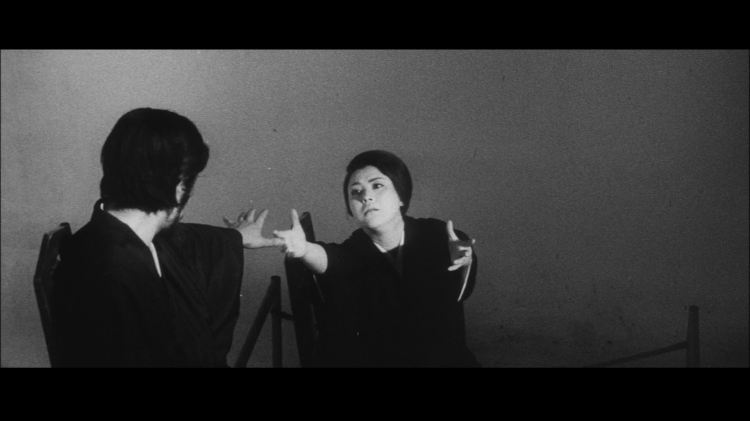
What there is of a plot begins with the scientist Rikiya Shoda who, it seems, may have been a part of a left wing activist group in the ‘50s who were intent on assassinating an ambassador but may or may not have had a mole in their midst. Now, in the contemporary ‘60s era his quiet life is disturbed when his wife, Nanako returns home with a distressed teenage girl who begins insisting Rikiya and Nanako are her parents. Sometime later another man arrives claiming to be Ayu’s father – he’s even installed a spy cam on her because this is apparently something she does quite often. The “father” eventually leaves without Ayu but then we jump back to the ‘50s where Rikiya and the “father” seem to be part of the same left wing cell but for some reason did not recognise each other in the modern part of the film. There are repeated interrogations regarding a spy, confessions, reversals, executions and betrayals but where does it get us in the end?

There’s no making sense of Heroic Purgatory, that’s not really what it’s about. It’s the very essence of avant-garde, gently eschewing literal narrative in favour of a deeper meaning. At the end what we’re left with is a scientist who professes love to be the highest calling and a wife who answers the question “what do you do when your husband’s working?” with “Think about my husband”. This isn’t some kind of anti-feminist statement in so much as a defence of a thirty year marriage which has, apparently, survived all this chaos. What has clearly perished is the left wing student movement which has ultimately failed to instigate any real kind of social change. The film wraps itself around the dates at which Japan’s defence treaty with America was or would be renewed – something to which the leftwing movement was completely opposed to and failed to prevent. Not only did they not succeed in breaking the American security pact in the ‘50s but interest in the protests themselves slowly dwindled. The film ends with a sign reading “Dead End” which you can only read as being in reference to the eventual demise of armed leftwing rebellion in Japan.

Though Heroic Purgatory is in no way Yoshida’s most easily digestible effort, it may be one of the most beautiful. Shot in 4:3 academy ratio and in glorious black and white with Yoshida’s preference for over exposure, every scene of Heroic Purgatory drips with elegance in its exquisite framing. Yoshida pushes focus to the bottom of the frame, rarely having anything other than empty space above the halfway line. Further adding to the sense of pressured claustrophobia and confusion, Yoshida’s gift for strange compositions is the perfect match for his dreamlike, incoherent, floating tale. Pushed to the edges of the frame, the actors are literally left with nowhere to run in Yoshida’s largely industrial wasteland of a stage set.

The film begins with what looks like a suicide, but turns out not to be. Accompanied by violent, stinging music, we’re trained to expect something terrible to have happened though once again Yoshida has fooled us with clever camera trickery. The music throughout is more like something from a horror film, low level thrumming strings and brief breaks of choral singing set us on edge and make us even more uncomfortable than we already were.

Heroic Purgatory is a poem of beautiful incomprehensibility. Strange and elliptical, the film is visual experience which demands emotional over intellectual engagement. Beautiful, fascinating and ultimately inscrutable Heroic Purgatory is a film that haunts with its refusal to explain itself and is likely to reverberate in the mind long after the final credits have rolled.


Available on blu-ray and DVD as part of Arrow Films’ Kiju Yoshida: Love + Anarchism box set.

Original unsubbed Japanese trailer (slightly NSFW – contains nudity)

http://www.youtube.com/watch?v=544O9Nj4-ks

Reviews of the other movies in the set:

Eros + Massacre (エロス+虐殺, Kiju Yoshida, 1969)

Snapshot-2015-11-17 at 11_12_15 PM-1889818228One of the foremost avant-garde filmmakers of the New Wave era (though he detested this term which, in fairness, is a retrospective and often arbitrary label), Kiju (Yoshishige) Yoshida has remained largely unseen in the West. Some of this is his own fault – fiercely independent, Yoshida nevertheless found himself working with ATG after leaving Shochiku but the relationship was an unusual one and often far from easy. All but the latest film in Arrow’s Kiju Yoshida boxset, Coup d’Etat, were completed more or less independently and only distributed though ATG and as such not truly “ATG” films. Though it bears many of the hallmarks of a late ‘60s ATG movie, Eros + Massacre (エロス+虐殺, Erosu Purasu Gyakusatsu) is one such effort and the one which helped to make Yoshida’s name even if it was only seen in an abridged version.
Structurally complex, Eros + Massacre mixes the world of the Taisho anarchists, Osugi Sakae and Ito Noe, with the contemporary Tokyo of the sixties through the prism of two modern students who are running a research project into the events surrounding their ultimate assassination during the panic after the great Kanto Earthquake of 1923. Eiko is a sexually liberated modern woman who engages in casual prostitution and her boyfriend, Wada, is a sexually impotent young man with a traumatic past and habit of playing with fire. The vision we see of the Taisho era is filtered through the perceptions of Eiko and Wada and, in fact, we start to see them as living with us in a real sense as Ito wanders around modern Tokyo, observing the fruits of her struggle and in one notable episode being interviewed by Eiko.

The film exists in two distinct versions – this is less to do with any kind of censorship, either commercial or political, than a legal or possibly moral issue. The fact is, the other of Osugi’s mistresses, Kamichika Ichiko, was still alive at the time the film was completed and had also become a serving politician. Unhappy with her portrayal in the film and unwilling to have a potentially embarrassing event from her previous life dragged back into the spotlight, she threatened to sue and Yoshida voluntarily decided to recut the film to remove many of her scenes as well as renaming the character to distance her from her real life counterpart. The shorter version of the film is the one which helped make Yoshida’s reputation and though nothing in the shorter version is not in the longer one, this version feels a little less “avant-garde” in tone than the intended full cut of the film.

Yoshida often gives way to surreal incidents such as the clash between the Taisho era followers of Osugi and a group of young rugby players tussling over the white wrapped remains of Osugi, the expressionist scene in which the mistress, Itsuko, clutches at a knife hovering in mid air causing the screen to fill with blood raining down from above or the repeated stabbings of Osugi each re-imagined in differing scenarios. His framing is always beautifully idiosyncratic as he makes use of the edges of the frames, disembodying his actors or dividing them with walls and windows. There is no sense of conventional narrative as timelines blur into each other becoming evermore indistinct and the dialogue is often elliptical or poetic rather than offering naturalistic content. Nevertheless, the shorter version retains fewer of these flourishes than are present in the original cut of the film.

Eiko is interested in Osugi because of his free love philosophy rather than any other political aim. Other than their interest in sexual politics, Eiko and Wada do not appear to be particularly politically active in any other way. Osugi’s ideas of total freedom do not even go down very well with his comrades who don’t approve of the way he treats his various women and his disingenuous denial that there is any discord between his band of concubines seems wilfully naive. Osugi’s treatment of the three women in his life – his wife, Yasuko, mistress Itsuko (who is financially supporting both Osugi and his wife despite Osugi’s advocacy of free love insisting on financial independence of all parties), and now his latest lover Noe, is extremely self-centred and unfair. As the first to live in this unorthodox fashion, it’s unsurprising that the arrangement comes in for criticism from all quarters. Yoshida posits that it was Osugi’s free love lifestyle that eventually lead to his shock execution during the chaos following the Great Kanto earthquake as his modern ideals threatened the very idea of the traditional family and ultimately the state itself.

By contrast, Eiko’s modern sexuality appears merely an attempt to ward of her sense of ennui. Where for Osugi sex was a political action (or so he would have it), for Eiko it’s a means of trying and failing to add some kind of meaning to her life. Eiko and Wada are not committed to any kind of rebellious action – they’re simply bored. They literally play with fire without understanding its consequences. Yoshida’s other central tenet is that youth is not beautiful – it is destructive. By implication, Eiko and Wada’s selfish pursuit of personal freedom and the modern commodification of desire is nothing more than willful self destruction.

Yoshida has stated that his primary idea for the film is how to bring about a revolution and to ask the question of what it is that needs to change. Osugi is shown up as a hypocrite whose ideals are imperfect and self centred, though his eventual murder is dictated by his refusal to conform. The fact that he envisioned a different future, wished to live in a different way, was sufficient enough to necessitate his death. The modern couple misuse their own freedom and are willing to watch the world burn just to feel the heat. They are incapable of effecting real social change because their focus is always inwards rather than a dedication to the betterment of all mankind. Confounding, intriguing and beautifully shot Eros + Massacre is far from easy to digest but is an essential entry in the history of Japanese avant-garde cinema.


Available now in the UK as part of Arrow Films’ Kiju Yoshida: Love + Anarchism box set.

Reviews of the other movies in the set:

Did You See the Barefoot God? (君は裸足の神を見たか Kim Soo-gil, 1986)

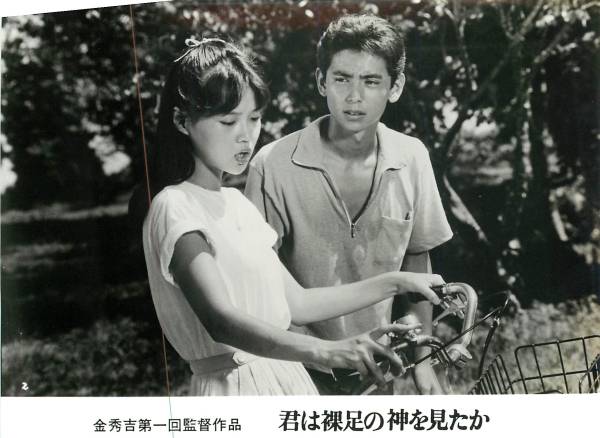
cinemawakuwaku-img600x438-1408793455juxypw5028A very late entry into Art Theatre Guild’s catalogue of Japanese art movies, Did you See the Barefoot God? (君は裸足の神を見たか, Kimi wa Hadashi no Kami wo Mitaka) marked the feature length debut of Korean-Japanese director Kim Soo-gil who, though he remains active in many fields up to the present day, sadly did not go on to build up an extensive filmography after the film’s release. Like many ATG films, Did You See the Barefoot God? is a “seishun eiga” or youth film with a contemporary setting which looks at the internal difficulties of adolescence running the gamut from romantic problems to familial responsibilities and the decision of whether to give up the dreams of youth in favour of the calm and ordered adulthood that the wider world demands.

Shinji and Shigeru are two best friends currently approaching the end of high school in a small rural backwater. Both boys currently have a crush on, thankfully, different girls but each is too shy to do anything. Shigeru is a painter and has restricted himself to painting the object of his affection as a special project that he intends to enter in a national competition. Shinji is also an artist, a poet in fact, but is much quieter about it. He’s got a crush on a girl who goes to the local girls’ Christian school and goes to great lengths to stalk her though he hasn’t spoken to her since they both attended the same middle school. As it turns out, Shigeru remembers Shinji’s girl, Hitomi, quite well as they shared a (strange) bonding experience during their middle school years. Shigeru then decides to contact Hitomi and convince her to date Shinji to help his sensitive friend out. Little does he know this will set in motion a tragic series of events which will change all of their lives forever.

Anybody can see where this story is going – it’s the oldest story in history. Boys A and B are friends, boy B likes girl C who prefers boy A, A & C eventually get together behind B’s back but feel so bad about it that the hot acid venom of their betrayal burns straight through everything in sight. Yes, this film is no different though its somewhat overwrought and melodramatic subject matter manages to feel oddly realistic. Intense painter Shigeru takes the leading role with his “complicated” personality and tortured artist dreams, whereas the gentle and sensitive poet Shinji ends up just as much on the sidelines as he would be in real life. The girl who comes between them, Hitomi, is in truth a little under developed and is largely defined by her religiosity (which is never fully explored).

Shigeru wants to be an artist but his father wants him to take over the family construction business – even his school advisor recommends he consider architecture. Shinji lives alone with his mother who runs a small bicycle store that she doesn’t particularly want to pass on to him but eventually Shinji, in a surprisingly mature fashion, decides that a quiet life as the proprietor of a bicycle store who writes poetry on the side might suit him (and perhaps a wife?) better than that of a starving urban poet. Headstrong Shigeru doesn’t waver under the constant pressure to conform to a “normal” life though fear and resentment conspire to fuel his already fraught nerves to near breaking point. Shinji looks at the sort of life he might have and makes his decision accordingly. Hitomi, alas, has far less personal agency to decide her own fate and seems destined for a life as a missionary nurse in some far off land in need of relief. Each is caught in the difficult liminal space of adolescence where they’re still trying to decide which parts of their childhood selves they’re going to keep, and which discard.

That’s without the added romantic complications which, again, leave Hitomi stranded in the middle like some kind of damaged prize. Both boys look down on a poor, Saraghina-like figure who dances madly in the graveyard and makes untoward advances to young boys – even the more understanding Shinji is reluctant to sympathise because she’s “prostituted” herself. Hitomi, as the nice kind of religious person, pities the woman and explains that it’s only because she’s been betrayed by so many men over the years that she’s ended up like this – if Shinji won’t sympathise he’d better take his place on the guilty side with the rest of the menfolk. Ultimately, Hitomi fears ending up this way herself, betrayed by faithless men and slighted by her own faith as a “fallen woman”. The boys can mourn their pride, throw a few punches and forget about it but for Hitomi, it’s not so easy.

Well, this being a seishun eiga it doesn’t end particularly well for the boys either. Everything’s ruined, dreams are shattered, hearts are broken and lives are ruptured beyond repair. In the end, it may be Hitomi who’s best placed to pick up and move on as a running subplot regarding the changing economic environment offers her another opportunity, but for Shigeru he’s left with nothing but the pain of realising how many lives he’s ruined with his self centred lack of consideration. Typical seishun eiga stuff, but well done. Director Kim Soo-gil handles the epic scope of the material with assurance and a good deal of directorial flair, it’s a shame he didn’t continue directing feature films to a greater extent. Not without its flaws, Did You See the Barefoot God? is nevertheless another interesting effort from the later ATG catalogue.


Original trailer (no subtitles)