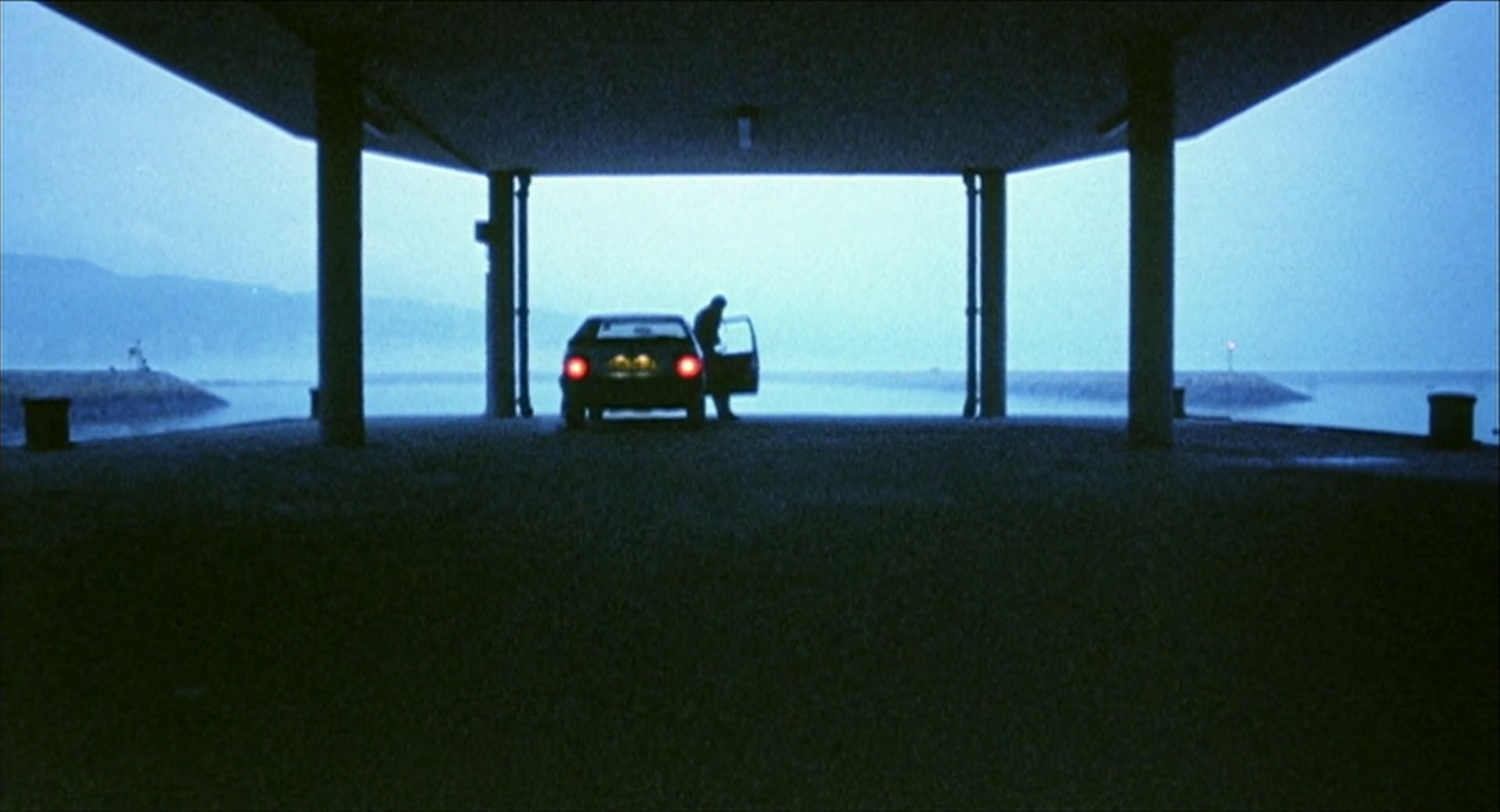
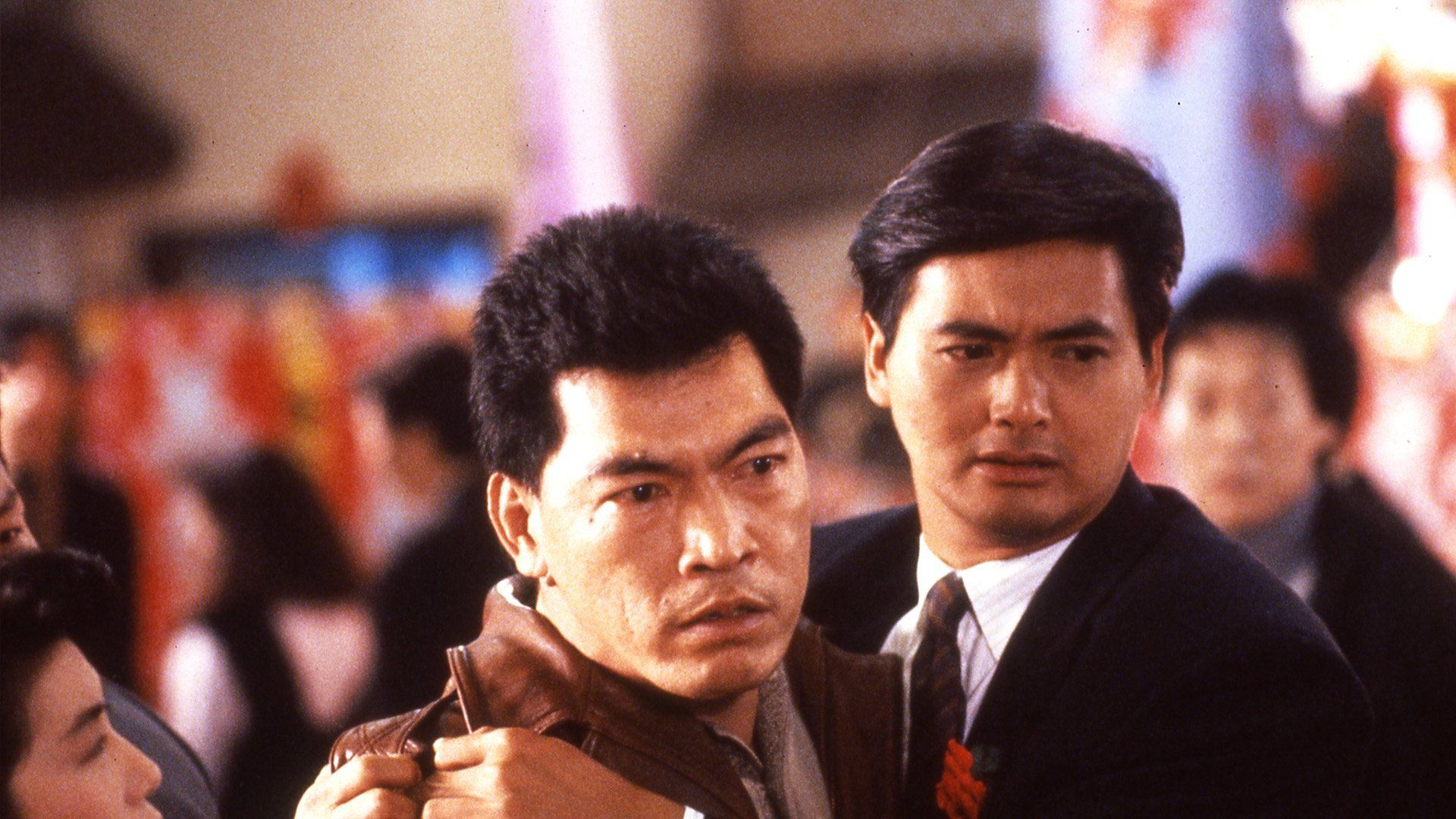
Triads: The Inside Story (我在黑社會的日子, Taylor Wong Tai-Loi, 1989)

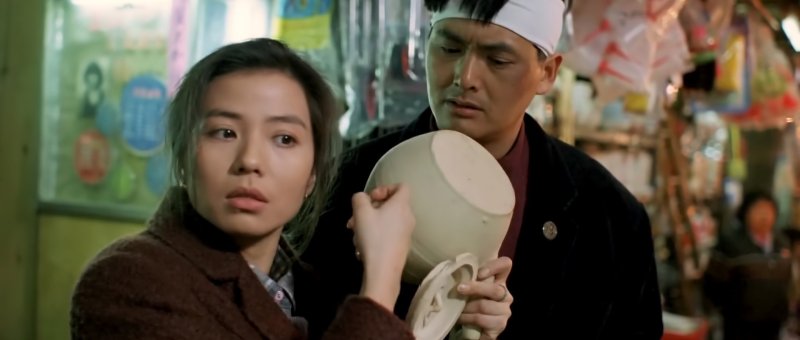
“Brother Ho, you’re a kind leader, but not a good triad member,” a underling remarks of his rival, the biological son exiled from the world of crime now returned but struggling to accept his triad inheritance. Though Taylor Wong Tai-Loi’s Triads: The Inside Story (我在黑社會的日子) is said to have been intended to depict the life inside the triads in a more realistic way, the Chinese title, which translates as something more like “my time in organised crime,” more closely implies that this is a personal story of one man’s attempt to reconcile the two sides of himself.

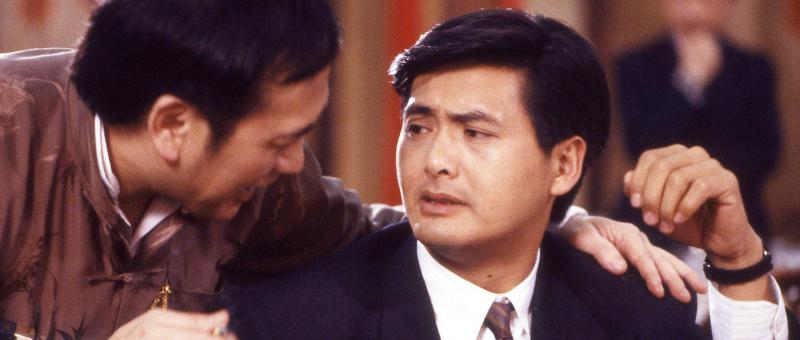
Aging boss Uncle Kwan (Tien Feng) is challenged by a young upstart and killed during an ambush. With his dying breath, he instructs his right-hand men Shing (Michael Chan Wai-man) and Keung (Shing Fui-On) to tell his son, Ho (Chow Yun-fat), not to join their gang or seek revenge but to continue living his life in America. Kwan evidently sent Ho there with the intention of keeping him out of the world of organised crime, making sure he got an education and can live a nice, middle-class life. Ho indeed seems to have done quite well in the US. He has a large suburban house he lives in with his wife and young son, and has recently got into the real estate business. Nevertheless, he has a close relationship with his father even if he never approved of his triad activities.

Despite Kwan’s request, when Ho and his family return to hold the funeral, Shing and Keung press him to take over as head of the gang. Ho is understandably reluctant and insists he’ll be returning to America when all the formalities have been completed. Nevertheless, he ends up becoming somewhat involved in the gang’s business, using his corporate knowledge from America to suggest they simply sublet some of their territory to other gangs to stave off conflict and turf war, little realising that will lead to just that. Not knowing how the triad world works, he makes some catastrophic mistakes that lead to some of his father’s men being killed or injured.

In many ways Kong (Roy Cheung Yiu-Yeung), one of Kwan’s protégés, is his mirror image. Taken in by Uncle Ping (Lam Kau) and raised in triad society, he is in some ways Kwan’s natural heir but resents both still being treated as a petty foot soldier and that Ho has had all the opportunities not afforded to someone like him. Ho tells him that he’s still young, and could get a “proper job,” but Kong is illiterate and has been in triad society for most of his life. There are no other jobs he could go to, while Ho was sent abroad to study. Ho does not really belong in this society, but is respected as the biological son, while Kong, who cannot live anywhere else, is shunned and ignored.

Ho takes him to task for recruiting other young men to act as foot soldiers and scapegoats, but as Kong points out, this is how his father recruited him and triad society does at least provide a family for those who have no other. In going to America, Ho has lost touch with his culture and become somewhat exiled from his family, but also feels responsible for the empire his father built and the men who followed him. In some ways, his internal conflict may reflect a sense of anxiety that those who go abroad with the Handover looming will lose both their cultural identity and any possibility of influencing the future of the place they’ve left behind.

Yet, on the other hand, there is perhaps the idea that Ho survives abroad, while Kong sacrifices himself to save him in recognition of the fact that Ho has tried to do the same. In torching the Taoist altar along with his father’s photo, Ho sets fire to triad society itself along with the world his father left behind, asking for his father’s forgiveness while leaving to return to his new life in America without looking back. One of the first films to be awarded a Cat III certificate for its depiction of triad ritual which upset the colonial authorities, the film plays out more like a yakuza drama of fragmented paternal legacy and compromised brotherhood while exposing the inherent corruption of a gangster society before reaching a sense of catharsis as Ho prepares to burn it all down.


Trailer (Traditional Chinese / English subtitles)
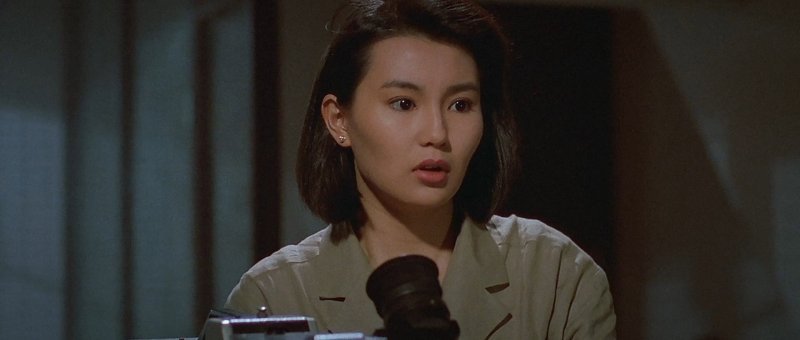
In Between Loves (求愛夜驚魂, Allan Fung Yi-Ching, 1989)

Zany rom-com meets serial killer thriller in Allan Fung Yi-Ching’s decidedly odd horror comedy, In Between Loves (求愛夜驚魂). Though the title may hint at romantic melodrama, the film is filled with unexpectedly edgy humour and references to the real life “Jars Killer” case that also inspired the film Dr. Lamb in which a taxi driver murdered several of his female passengers and kept their body parts in Tupperware boxes at his home where he lived with his apparently oblivious family members.

Lung (Alfred Cheung Kin-Ting) is the head of a small band of late night taxi drivers who entertain each other with various party tricks over the radio, Lung’s being the ability to tell Christmas cracker-style jokes. They seem to have a long-standing vendetta against another gang of taxi drivers who challenge them to drinking contests and other tests of strength. Lung, meanwhile, has a fixation with beautiful TV reporter Jenny (Maggie Cheung Man-yuk) who once said something nice to him getting out of his cab, and makes a point of watching the news whenever she’s on. His taxi driver friends mostly seem to support his crush and are keen to help him in his romantic quest which is why they all agree to pass on tips about newsworthy goings on that Lung can send to Jenny in the hope of making himself useful to her.

Jenny, meanwhile, is sort of grateful for the tips because she feels undervalued at the station where she works. She clearly wants to be a crusading reporter exposing things like political corruption and injustice, but as her boss tells her, the people of Hong Kong prefer soap operas to news and in any case, they don’t have the budget for serious investigative reporting. There is a mild criticism here of the mass media landscape which is increasingly compromised by its commercial concerns in world in which the line between factual reporting and entertainment is beginning to blur. The press are desperate for salacious content to keep viewers hooked, feeding on human misery and almost willing it into being.

Thus it’s not a stretch when it first appears that Lung has gone off the deep end after being insulted by Jenny’s terrible elitist boyfriend John (Lawrence Ng Kai-Wah) and actually become a serial killer just so that Jenny can have something exciting to report on followed by a scoop on his confession. It turns out that Lung is not the real killer and only wanted to give Jenny a real confession wrapped up in a false one, but this still bears out the depths of his problematic, one-sided romantic obsession with a public figure. In some ways, Lung is presented as an underdog whose pure-hearted love just hasn’t been properly noticed, yet. He picks up another man with flowers for Jenny who is more obviously deranged, but is irritated rather than noticing that he is really no different. He is also irritated to see John pick Jenny up, but, at the same time, perhaps thinks it’s fair enough if she has a boyfriend already.

The problem is that John might actually be the worst person in a film about a cannibalistic serial killer without needing to actually kill anyone. He is possessive of Jenny and has an unpleasant, elitist world view in which he is violent towards Lung and point-blank tells him that a lowly taxi driver who didn’t even finish high school has no business dating an educated, upper-middle-class woman like Jenny. Though this originally presented as an unpleasant point of view and a symbol of the kind of classist oppression faced by men like Lung, the film eventually embraces it with Lung coming to the conclusion that John is right, he’s not good enough for Jenny and ought to date someone from his own social class such as fellow taxi driver Ti (Sandra Ng Kwan-yue). As such, it adopts a rather conservative attitude that supports class divisions and negates the idea of social mobility in insisting that love across the class divide not only will not work but is in some way improper.

Lung may realise both that his infatuation is not “love” but “worship” and that his behaviour has been dangerously obsessive bordering on madness, but this is not the reason that he finally decides to give Jenny up so much as a sense of inferiority in returning to his own working-class world. Meanwhile, the film treats Ti as something of a joke, firstly mocking her for being a tomboyish woman in a man’s occupation, then half-hinting that she maybe transgender. Despite its offbeat humour, the film goes to a fairly grisly place in its final stretches, transitioning into slasher territory as Lung and Jenny are stalked by the real killer upset by Lung’s attempts to claim responsibility for their crimes. Order may have been restored, but this Hong Kong remains a fairly bleak place overshadowed by violence and anxiety in which romantic fantasy may be the only means of escape.


Trailer (no subtitles)

Wild Search (伴我闖天涯, Ringo Lam Ling-Tun, 1989)

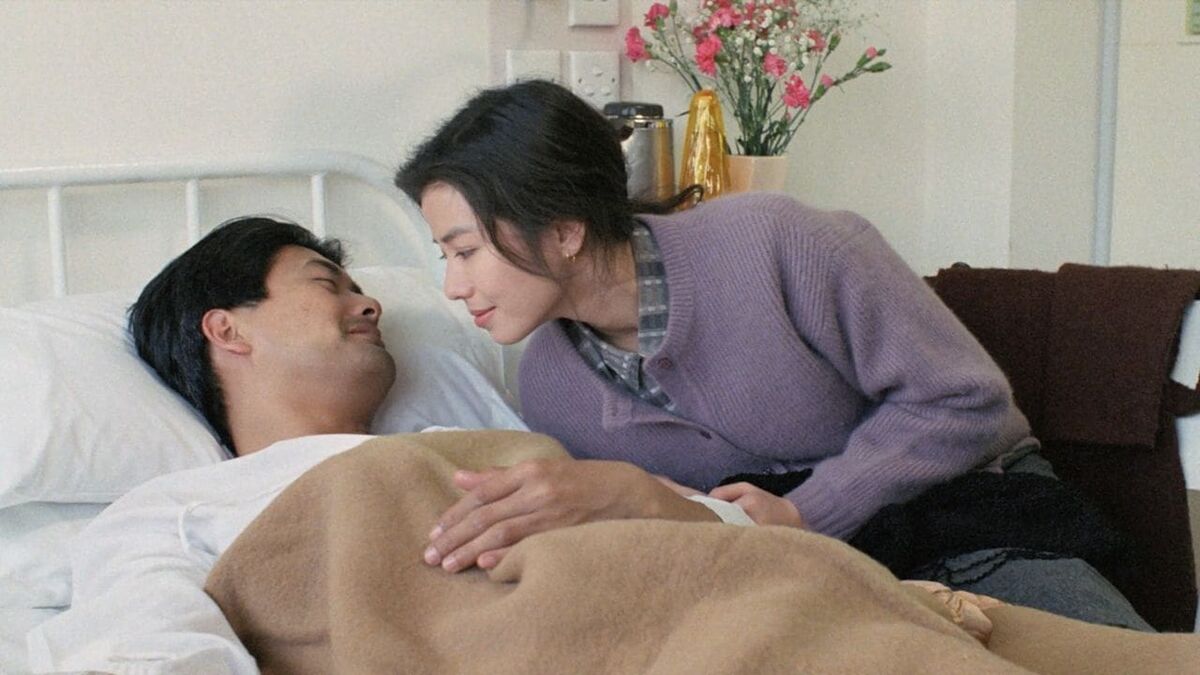
Loosely inspired by Peter Weir’s Witness, Ringo Lam’s Wild Search (伴我闖天涯) sees Chow Yun-fat’s melancholy cop falling for Cherie Chung’s isolated village girl while chasing down arms dealers in a changing Hong Kong. Just as Mew-Mew enters the more traditional world of the inland Chinese community, Hong Kong also seems to be facing incursions from the outside while becoming richer and more sophisticated as a burgeoning financial centre.

This clash of cultures can perhaps be seen in the relationship between Elaine (Elaine Jin), an antiques dealer from the inland Chinese village, and Hung (Paul Chun), a Chinese-Vietnamese gangster with friends in high places. Suckered into using her antique shop as a front to smuggle guns in from Vietnam and sell them on to Japanese yakuza, when is Elaine killed by one of her own men during a police raid Hung denies all knowledge of her and refuses to accept paternity of her now orphaned daughter Ka-Ka. He says that he has plenty of mistresses and suggests to Mew-Mew that he is essentially untouchable thanks to his connections. 

Hung appears to be the source of corruption both the inland Chinese community and Hong Kong as a whole. Elaine’s father has disowned her because of her relationship with Hung and having a child out of wedlock. Despite her orphanhood, the grandfather (Ku Feng) rejects Ka-Ka, refusing to speak to her or waving a knife in her face and screaming that he’ll sell her if she doesn’t stop crying. Mew-Mew first bonds with her because she’s the only witness in his arms dealing case, but also adopts a quasi-paternal position over her largely because no one else is willing to do so. He also draws closer to Elaine’s sister Cher (Cherie Chung Chor-hung) who is caring for Ka-ka, even if the implication is that she is the pure-hearted innocent uncorrupted by contemporary capitalism unlike her sister who went to the city.

But there are incursions and corruptions even within the Inland Chinese community as Cher is pressured by her ex-husband who spent a long time in China where he had another woman and a family he kept secret from Cher. Now he’s insistent on moving back into the family home despite being officially divorced, and becomes increasingly paranoid about Cher’s relationship with Mew-Mew. There might then be a minor irony in the fact that Leung had a wife and son in China, while Mew-Mew is also a widower who lost his wife and son and was originally wary of embarking on another romance. 

Nevertheless, there is a kind of healing that takes place through these interconnected relationships that eventually squeezes the Vietnamese gangsters out. Though he resented Ka-ka as a symbol of all the ways his daughter had wronged him, the grandfather eventually comes to love and accept his grandaughter. Leung, meanwhile, ends up going completely crazy when he begins to realise that Cher has chosen Mew-Mew but eventually concedes defeat on witnessing Mew-Mew’s selflessness when he rescues him from the marauding gangsters even though he’d just been trying to kill him with a meat cleaver a few moments ago. Hung, by contrast, is laid low when his men start turning against him in the hope of better treatment.

Somehow, this world that had seemed broken beyond repair in the opening scenes in which the Christmas lights and neon signs are juxtaposed with scenes of women escaping violent men and bloodied corpses in the street, has been made whole again and not least through the repeated refrains of Teresa Teng’s The Moon Represents My Heart along with shots of the moon above Hong Kong that echo the innocence of the romance that arises between Mew-Mew and Cher. To that extent, the action scenes may play second fiddle to the drama but are also themselves visceral and kinetic from the high-speed car chases to the final showdown in which the gangsters make it all the way to the village as Mew-Mew’s romantic and professional lives collide in a bloody fight to the death with the twin forces of their corruption. While the gangsters might be willing to unleash terror in public places little caring for the lives of ordinary people, Mew-Mew and friends will seemingly counter that with compassion and solidarity while protecting all that they hold dear.


Trailer (Traditional Chinese / English subtitles)
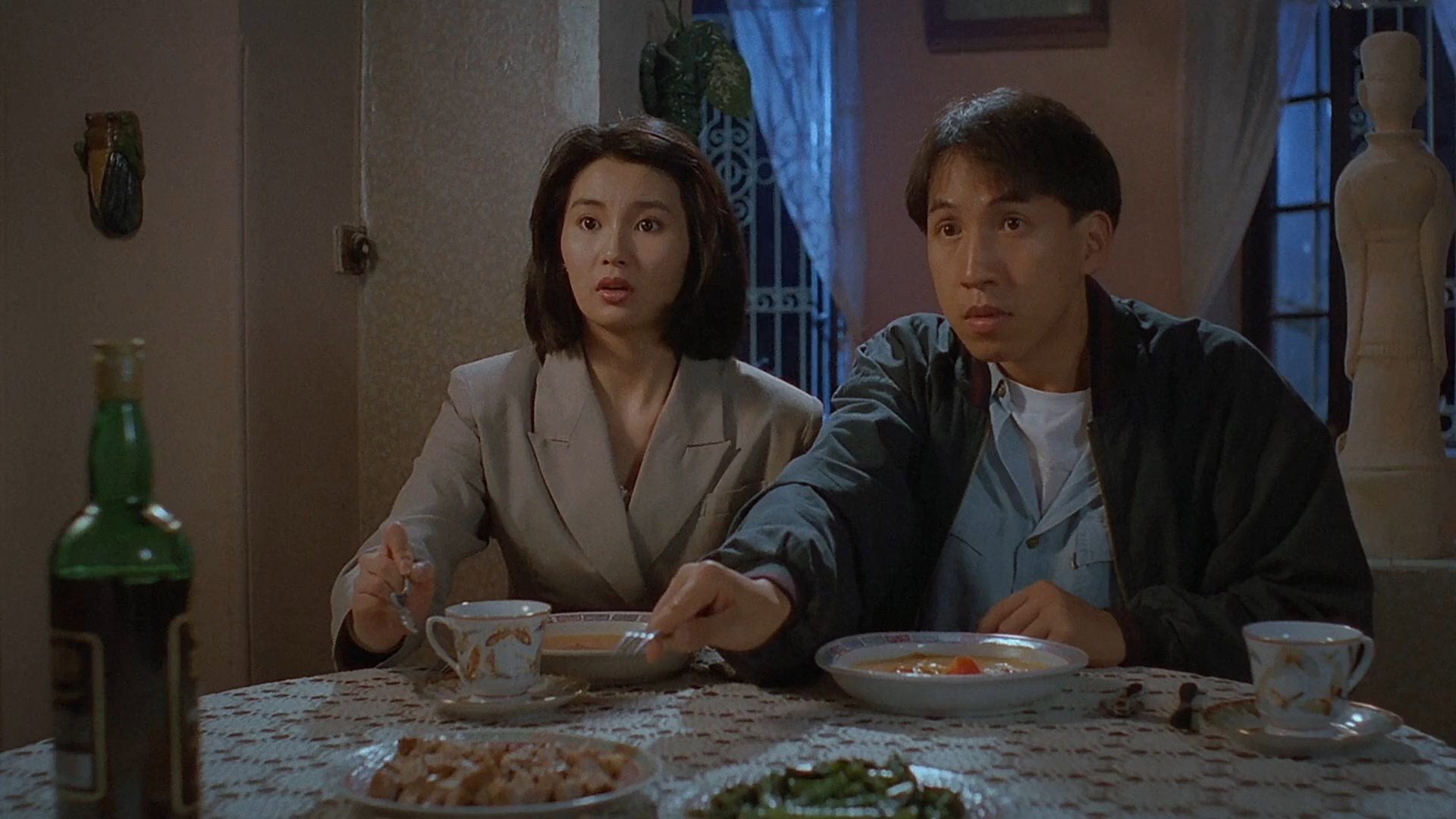
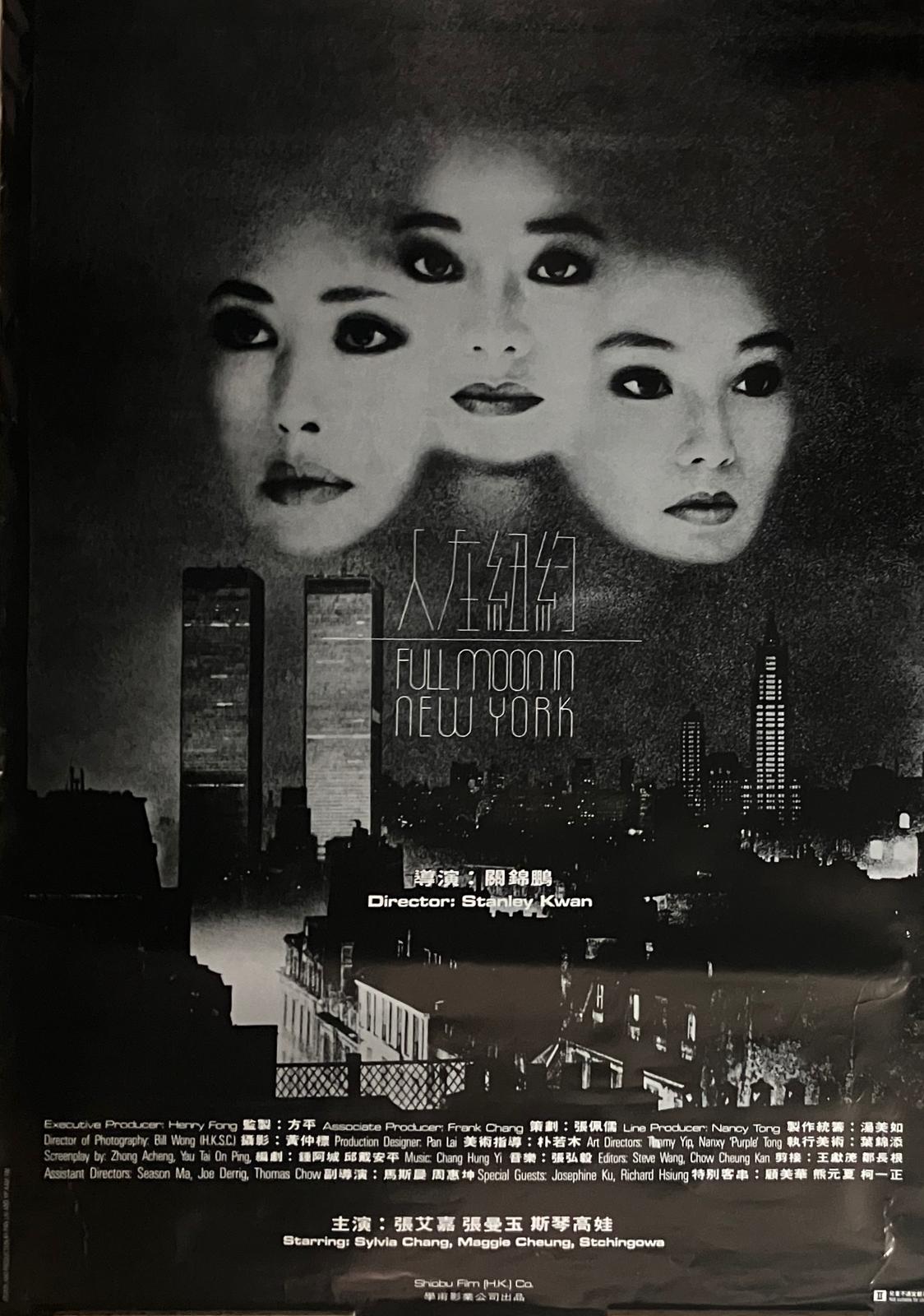
Full Moon in New York (人在紐約, Stanley Kwan Kam-Pang, 1989)

“We’re all Chinese, why argue?” asks one exasperated woman in Stanley Kwan’s tale of displacement and reunification, Full Moon in New York (人在紐約). While the three heroines hailing from Hong Kong, Taiwan, and Mainland China respectively may stand in for a pan-Chinese identity along with an attempt to preserve cultural identity in a third place, they also discover a sense of solidarity in being young women cast adrift in a sometimes hostile city and changing times.

As if to ram home the themes of reunion, the film opens with a wedding but one filled with awkwardness and contradictions. Chinese-American businessman Thomas makes a few off-colour jokes about his new bride, a woman he met while travelling to Shanghai, to the effect that it’s very funny he’s married a woman from the Mainland while praising the pastry chef who made their wedding cake for bothering to make the bride and groom like Chinese people. Zhao Hong (Siqin Gaowa) is confused and doesn’t get his jokes while struggling with the foreignness of an American-style wedding, uncertain as to how to cut the cake while Taiwanese guest Hsiung-Ping (Sylvia Chang) quips that she will teach her how to cut up men.

Hsiung-ping is an actress in the middle of a breakup with an obnoxious American boyfriend who has defaulted on the rent for their apartment which is owned by no-nonsense Hong Konger Jiau (Maggie Cheung). Jiau has fallen headlong into the capitalistic abyss of the 1980s in which she chases business success at all costs and is determined to make serious money. “I like taking risks,” she tells the boring the businessman she’s set up with while, despite having been in relationships only with women, apparently falling for his business savvy friend. She’s intermittently stalked by Stella, seemingly an ex that she struggles to move on from.

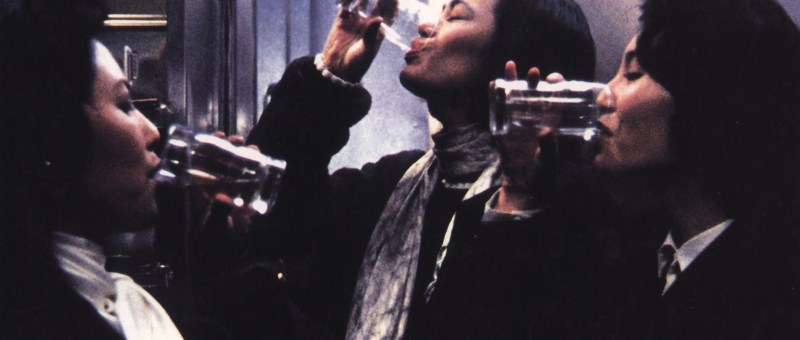
Though originally at odds with each other, the three women develop a sense of friendship and solidarity not least by being outsiders finding solace in their culture. After getting drunk at Jiau’s father’s Chinese restaurant, Hsiung-ping abruptly breaks into a rendition of a Taiwanese song, while Zhao Hong joins her with a folksong from northern China. Jiau looks on with confusion. She cannot think of what to sing as a woman from Hong Kong, signalling her difficulty in expressing her national identity, before settling on a Sally Yeh Cantopop track. She seems to be one of many choosing to seek their futures overseas with the Handover looming and the shadow of Tiananmen Square in the background. 

Hsiung-Ping, meanwhile, represents a second wave of migration as her father was a nationalist solider who went to Taiwan after the Chinese civil war. With the White Terror now over, men like him aren’t so welcome anymore, though as Hsiung-Ping points out who exactly has he been representing for all these years in America? “Once can save one’s country from abroad,” he answers as if singing the song of an exile and echoing each of the women’s attempts to preserve their culture, though what she comes to discover about him through his relationship with a Mainland Chinese woman who suffered in the Cultural Revolution disturbs her sense of righteousness and legacy.

The legacy of the Cultural Revolution is also what Zhao Hong is trying to escape, but finds herself frustrated by life in America while Thomas constantly brushes off her desire to bring her mother to live with them in New York. Thomas’ family are almost entirely Westernised while he seems to almost fetishise Zhao Hong’s Chineseness with quips about his Mainland wife. She tries to ask him about her mother and he changes the subject by remarking that what drew her to him was her black hair. When they visit his family for dinner, Thomas’ mother cooks a pot roast while his father asks him to dispose of an ancestral tablet that he can’t bring himself to throw away. To Thomas it’s just an antique that he jokes is probably worth something to the right kind of collector and would look “cool” in their apartment. Thomas’ Cantonese-speaking father asks if it’s true that ancestral tablets were forbidden during the Cultural Revolution and smashed, making this one yet another example of culture surviving in another place, but seems to be uninterested in the answer when Zhao Hong sadly recalls her mother carving her late father’s name into the back of a chair in defiance of the regulations.

Zhao Hong’s fatherlessness is also a reflection of her sense of dislocation. As she points out, both Jiau and Hsiung-ping have their fathers with them in New York while she has no one other than Thomas. She looks on in consternation as he chats with a white male employee about arranging visits to Chinatown as a collection of mainly elderly Chinese women get on with the actual work of sorting fabric behind them. He finally tells her she should learn to be more American and likens missing her mother to a mental illness, explaining that American people don’t want to live with their parents all their lives, entirely missing the point that the issue is not cultural notions of filial piety that he has now, to some extent, abandoned, but that the close bond between Zhao Hong and her mother forged during the Cultural Revolution has been disrupted by this migration and must now be resolved through reunion. 

Nevertheless, Jiau swears that one can only prosper here by embracing the qi of New York, on the one hand opening all her windows at night as advised by her feng shui practitioner, while, on the other hand, her Hong Konger father runs a Hunnan-style restaurant that serves Peking Duck to cater to American tastes and expectations with the staff and treasured guests eating the heads in the back. Hsiung-Ping is rudely asked by a white male theatre director why a Chinese woman thinks she can play Lady Macbeth, and Jiau loses her temper when a man deliberately bumps into her in the street chasing after him and then hitting him with her shoe. In various ways, this new environment can be hostile towards them, asking them to discard the culture they have come to save or otherwise to bastardise it, but nevertheless the three women discover a sense of community and solidarity even amid their own conflicts and contradictions.


Screened as part of Hong Kong Golden Age 1985-1997 at the Garden Cinema.

Eight Taels of Gold (八兩金, Mabel Cheung, 1989)

A man is not a man without eight taels of gold, according to returning taxi driver slim arriving home after long years of absence only to discover that no one is there. They’ve all been moved on too, ironically pushed further back into the past by China’s rapid demand for progress. A continually displaced person, he begins to find love, but this too like all things is destined to flow away from him.

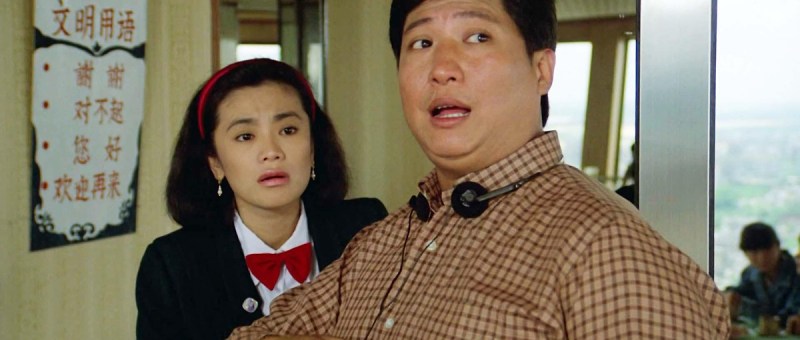
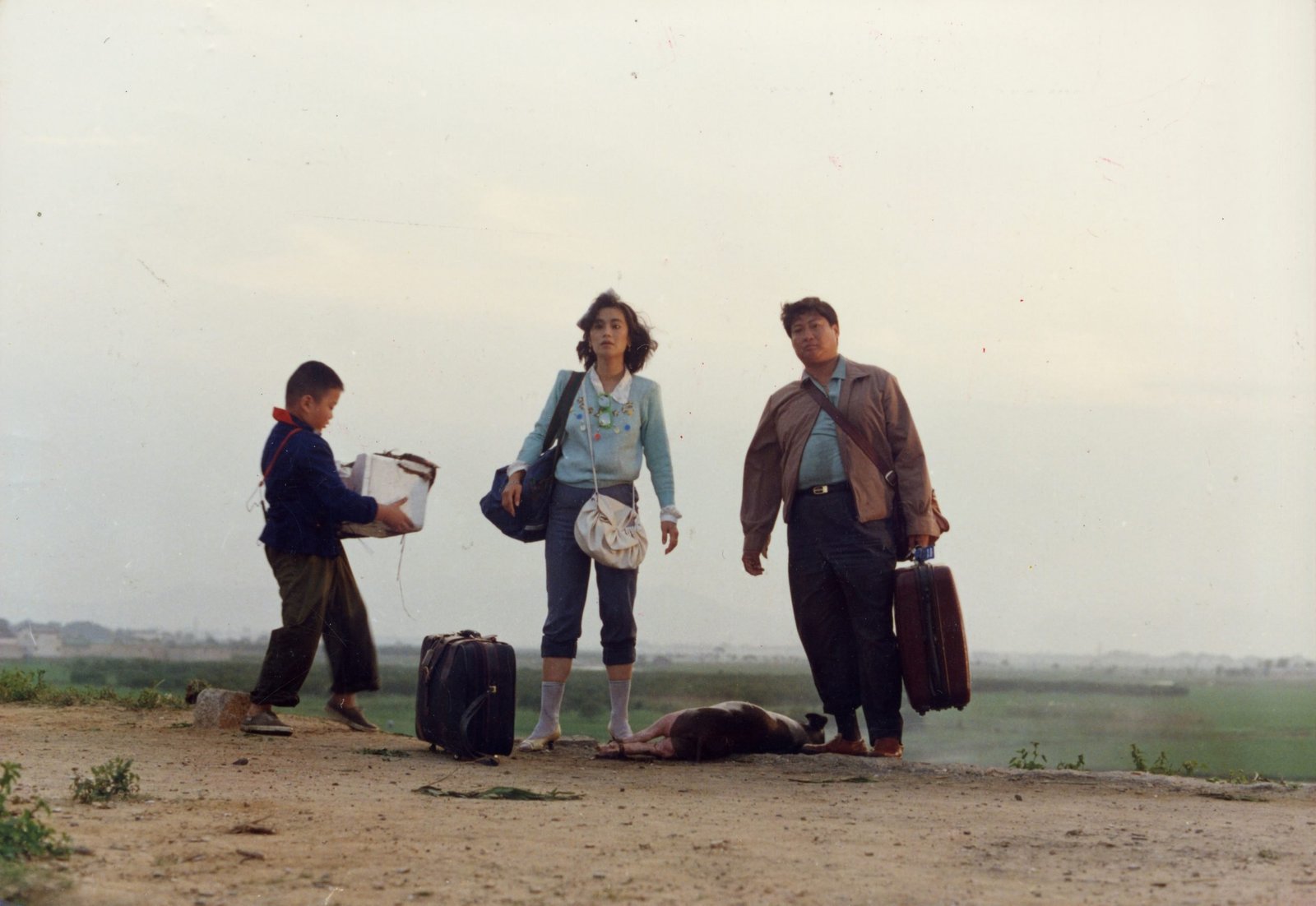
Slim (Sammo Hung Kam-Bo) fled the Cultural Revolution as a teenager without a word to his family vowing never to return. He has sent them only one letter since, he tells childhood friend “Odds-and-Ends” (Sylvia Chang Ai-Chia) because he didn’t want to lie and the truth would only have upset them. While in the village, he straddles an awkward line presenting these two visions of his life in New York, the one aspirational as symbolised by the “eight taels of gold” that mark him out as a successful man, and the other the painful reality that his life has been hard and lonely and that he has far less to show for it than he would like. 

Yet paradoxically, it’s this “reality” that begins to share with Odds-and-Ends who initial excitement about a new life abroad is tempered by her growing attraction to Slim and fear of marriage to a man she barely knows in a place where she knows no one. To her America represents modernity, sophistication, and consumerist comfort. But Slim has been there already and he knows that her life will most likely be confined to Chinatown where she will wash dishes in her husband’s restaurant and live in a poky flat for the rest of her life. The gifts Slim takes back with him as evidence of his wealth are largely emblems of American capitalism like Nike trainers along with trinkets such as Statue of Liberty cigarette lighters (that ironically have “made in China” stamped on the bottom) and oversize paper replicas of American dollars. Due to various incidents along the way he seems to shed his supply as he goes as if moving closer to the old China by dropping the trappings of his new life in the land of consumerism. Nevertheless, even his gold and the watch he gives to his father were borrowed to bolster an illusionary sense of success.

Meanwhile, the village itself has changed and he finds himself displaced once again. His parents have taken his heavily pregnant sister Siu Mei back to their own home village in an attempt to circumvent the One Child Policy. She has one child already, but it’s a girl and Slim’s father thinks she ought to have a boy, exposing the ways in which these new policies interfere with traditionally held cultural beliefs that nevertheless refuse to die. Slim’s father’s desire for a grandson coupled with the One Child Policy quite literally endanger his daughter’s life. It turns out the baby is breech, but they’re reluctant to take her to a proper hospital in case the authorities find out they’ve cheated the regulations to have an unauthorised second child. Instead they have to make do with a bossy midwife who refuses to wash her hands and crassly asks if they want to save the baby or mother without making any effort at all to try saving both.

It’s Odds-and-Ends who finally saves the day by pitching in to help, acting as if she knows what she’s doing but in reality battling a fear of blood and total inexperience with childbirth and pregnancy. This in some ways signals her readiness to deal with the unknown, but also the misogyny inherent in the society in which Siu Mei’s life is a secondary consideration, essentially disposable in the quest to produce a male heir. Odds-and-Ends is to some extent a sacrificial victim too. Though she begins to dread the return of her fiancé, she is powerless to resist marriage despite her growing affection for Slim. When they go to a dance together, Odds-and Ends dances in this strange style, like a country girl aspiring to an unseen urbanity, but is shouted at by the guard who tells her to keep her hands below her head. We don’t have your American freedoms here, she tells Slim, little knowing that they don’t necessarily have them in America, either. 

To that extent, Odds-and-Ends comes to represent a fleeting, elusive vision of China that eventually slips through Slim’s fingers in part because he is too diffident to claim it. Despite herself, she becomes “Jenny” bound away to a foreign land while Slim can only watch as she disappears over the horizon. He seems to travel back further into the past, discovering one of the legendary dragon boats that bears out the legend that once this place was all under water. In the end, he has given away all his eight taels the last of them to Odds-and-Ends who is left with worthless riches in place of love. In the end, Slim is left all alone caught between one place and another and perhaps realising that he no longer has a homeland to return to.


Screened as part of Hong Kong Golden Age 1985-1997 at the Garden Cinema.

Trailer (no subtitles)

Crime Hunter: Bullets of Rage (クライムハンター 怒りの銃弾, Toshimichi Ohkawa, 1989)

Home video may still have been in a nascent and chaotic stage of development when Toei video executive Tatsu Yoshida began conducting customer research in video rental stores, but what he discovered shocked him. Customers were maxing out their five video allowance and watching them all the same evening. How did they have time for that, he wondered. The answer was that they were watching them all on fast forward to cut out the boring bits, like the story and exposition. It was this that gave him the idea to create “movies that will not be fast forwarded,” chiefly because they had already been excised of anything “inessential”.

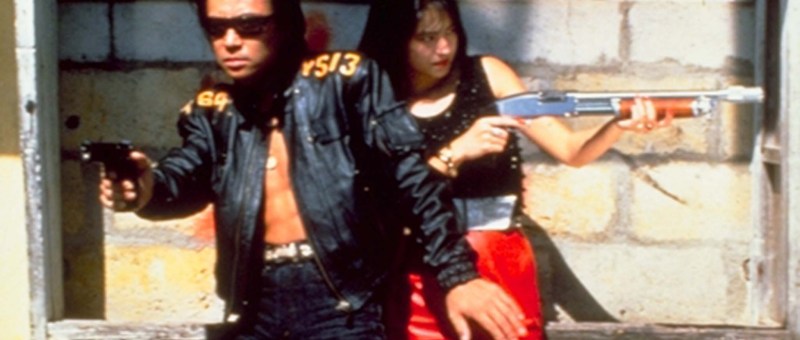
Only an hour in length, 1989’s Crime Hunter: Bullets of Rage (クライムハンター 怒りの銃弾, Crime Hunter: Ikari no Judan) was the first in Toei’s new V-Cinema range and was indeed made to conform to these aims. Consequently, it focuses mainly on action with minimal narrative and relies on genre archetypes to help the plot move along. In that, it owes something to Nikkatsu’s borderless action films in taking place in Little Tokyo (largely filmed in Okinawa) though otherwise in a world that’s recognisably Japanese despite the English-language police radio and Japanese-American names like that of fugitive criminal Bruce Sawamura (Seiji Matano) and Joe “Joker” Kawamura (Masanori Sera), the cop who’s trying to track him down but only as a means to an end in his quest to avenge the death of his partner, Ahiru (Riki Takeuchi). We can tell that Ahiru’s not going to last long in this film because we’re told quite quickly that he’s been invited to the chief’s daughter’s birthday party and is seen as a potential suitor, while after apprehending Bruce he complains that his mother bought him the shirt that’s now been stained. 

Joker’s attachment to Ahiru goes a little beyond that of a mere partner as he hands back his badge to pursue revenge while picking up the empty packet of pop-corn Ahiru had been eating and placing it over his heart. The film seems to owe a lot to contemporary Hong Kong action films and Heroic Bloodshed such as A Better Tomorrow, and it’s apparent that this almost homoerotic relationship between the men has taken the place of heteronormative romance. The female star, Lily (Minako Tanaka), is (nominally at least) at nun which makes her romantically unavailable to Joker or indeed to Bruce while in some senses she represents opposition because her cause is at odds with Joker’s. While they temporarily align in wanting to find Bruce, Joker wants information that will lead him to the identity of his partner’s killer, while for Lily he’s the endgame because she wants to get back the money he stole from the donation box at her church. 

This whole narrative strand doesn’t make a lot of sense in that Lily says she accidentally told Bruce about the donations after having too much to drink at a party with her non-nun girlfriends, which is strange behaviour for a bride of Christ. Now she feels like retrieving the money is her responsibility, though Joker isn’t really interested in that. What he discovers is further kinship with the fugitive Bruce on realising that they’ve both become victims of a corrupt police force. The opening police radio broadcast implies that Little Tokyo has become an oppressive police state in which the threat of drugs and gangs is being used to control people while cops like Joker have been given blanket permission to aim at the head of suspected criminals as they do while arresting Bruce. Joker had thought that the guys who attacked them were Bruce’s men breaking him out or otherwise trying to steal the money off him, only to later realise they were actually corrupt police. 

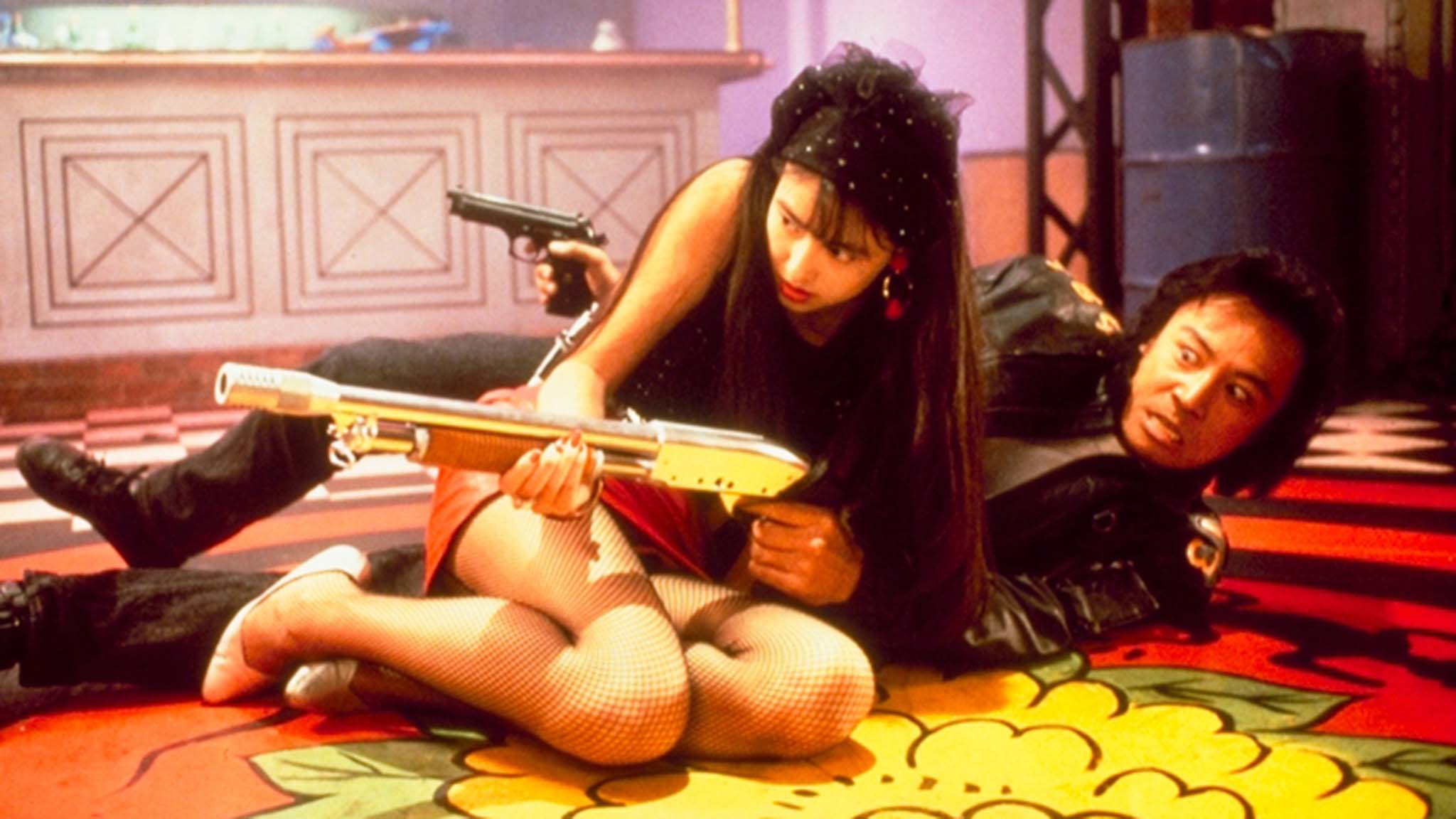
But really not much of that matters in comparison to the increasing outlandishness as Lily transitions from wimple-wearing bad ass sister to a nightclub dancer femme fatale in fishnets infiltrating the Cathay Tiger gang with expertly crafted dance routines. Former mercenary Bruce similarly boasts and improbably impressive arsenal of grenade launchers and machine guns before arriving at the depressing environment of a disused industrial complex for the nihilistic showdown in which Joker realises there is no way to right this world of corruption and that he and Bruce weren’t so different in each being controlled and defined by an oppressive society in which there are no happy endings even for heroes.


The Killer (喋血雙雄, John Woo, 1989)

“We’re outmoded characters,” a dying man laments, having previously advanced that “nostalgia is one of our saving graces.” The heroes of The Killer (喋血雙雄) are indeed remnants of an earlier time, out of place amid the modern city and adhering to a code that has long since fallen by the wayside. “Our world is changing so fast,” hitman Jeff (Chow Yun-fat) exclaims of a Hong Kong hurtling not only towards the Handover but an increasingly amoral capitalism in which friendship and brotherhood no longer have any currency.

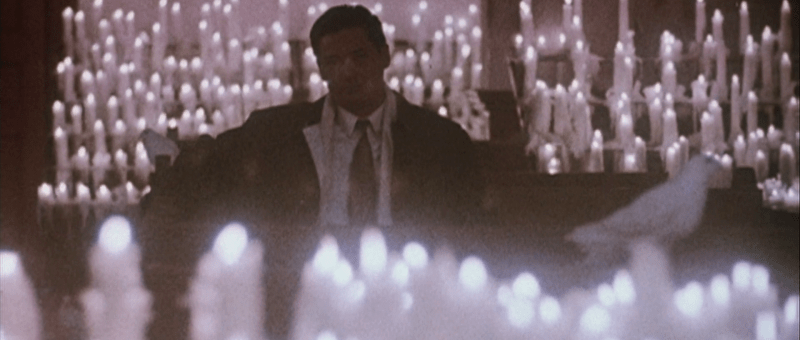
We can tell this straightaway from the fact that the man who ordered the hit on the drug lord Jeff took out at the dragon boat races was his own nephew, Weng (Shing Fui-on). To tie up loose ends, Weng also sends his own hitmen to take out Jeff, who can’t be sure if his handler and best friend Sidney (Chu Kong) is involved in the plot to knock him off. Later in the film, Inspector Li (Danny Lee) asks what Jeff will do if Sidney betrays him, but he merely says that he will still treat him as a friend because he has been good to him in the past. Jeff says this in an abandoned church, echoing not only the codes of jianghu brotherhood now largely absent in the contemporary society but Christianising notions of forgiveness and acceptance. 

Jeff claims that he isn’t a religious man but appreciates the tranquillity of the disused chapel. Inspector Li meanwhile is often pictured next a statue of the Buddhist god of war and dressed in black in opposition to Jeff’s white, but what emerges is that the two men are effectively the same and somewhat interchangeable. Jennie (Sally Yeh), the nightclub singer Jeff accidentally blinded during a a chaotic hit and subsequently falls in love with, first mistakes Li for Jeff while Woo also pictures him sitting in Jeff’s chair and pulling a gun on his partner in much the same way Jeff cooly dispatched an assassin sent by Weng. Chang had told Li that he looked exactly like what he was, an undercover policeman, which is obviously a problem, but Jeff remarks that he is a “very unusual cop,”while Li agrees he’s a very unusual killer. 

In some senses, Li will also become the killer of the film’s title in the closing moments, a man who believes in justice but is not himself believed and knows that there will be no real justice for a man like Weng. Both men share a code which is essentially the same, a more primal kind of morality largely incompatible with the modern society and in many ways rightly so. Li even says that Jeff does not look like a killer, that there’s something “heroic” about him, and that his eyes are full of passion as if he had a dream. His words have a kind of irony to them, but Jeff does indeed have a dream in the desire to gain redemption for himself by restoring Jennie’s eyesight, which is the reason for his last big job having now been reformed by her no longer believing that the people he killed deserved to die but that everyone has a right to live.

Despite the triangular relationship with Jennie, there is an undeniably homoerotic tension in the connection between Li and Jeff even if they are also two sides of the same coin. They train their guns on each other and lock eyes, but unexpectedly find a kindred spirit in a man who should be an enemy. “The only person who really knows me turns out to be a cop,” Jeff chuckles but has an equally deep relationship with handler Sidney just as Li has with parter Chang (Kenneth Tsang) while the homosociality that defines their world is subverted by Weng who simply shoots his own underling when he becomes inconvenient to him. 

Both Li and Jeff are effectively men left with “no way out” and “nowhere to go” because their code of brotherhood is no longer understood by the contemporary society. Jennie’s progressive loss of sight also echoes their dwindling futures as if the light were going out of their world long before Woo shatters the statue of the Virgin Mary and unleashes the doves of futility inside the no longer quite so tranquil church that becomes the final resting place of manly honour and brotherly love. “Perhaps we are too nostalgic,” Jeff sighs but nostalgia is indeed his saving grace in a world in which honour and friendship exist only in a mythologised past or may never have really existed at all.


Trailer (no subtitles)

Raffles Hotel (ラッフルズホテル, Ryu Murakami, 1989)

An actress gradually dissolves into her own image while wandering around Singapore in search of lost love in Ryu Murakami’s adaptation of his own novel, Raffles Hotel (ラッフルズホテル). Ryu Murakami may generally be more associated with the extreme revolving around transgressive sex and violence, yet like its namesake the film is a more elegant affair indulging in its own sense of mystery tinged with a melancholy eeriness in its heroine’s apparent instability. 

Moeko (Miwako Fujitani) later admits that she is no longer an actress, and therefore no longer quite herself uncertain who it is she’s meant to be. In one sense perhaps that’s why she’s come to Singapore though in another it’s someone else she’s looking for though to begin with we may think she’s there to escape him, and it could be that too. “Maybe I’d feel better if he were,” she muses when her tour guide, Yuki (Masahiro Motoki), explains that there are no Japanese people near the gravestones she’s just been looking at trying to assure her that the man she’s seeking is not dead. She thinks she sees him everywhere, dropped into typical Singaporean scenes appearing as a durian seller or a man restoring a church while more literally haunted by the spectre of a friend who apparently died in Vietnam while covering the war. Kariya (Jinpachi Nezu) later tells her that he can’t forget the jungle while she asks to be taken there with him and travels to a mountain lodge where they hunt wild game with a crossbow. 

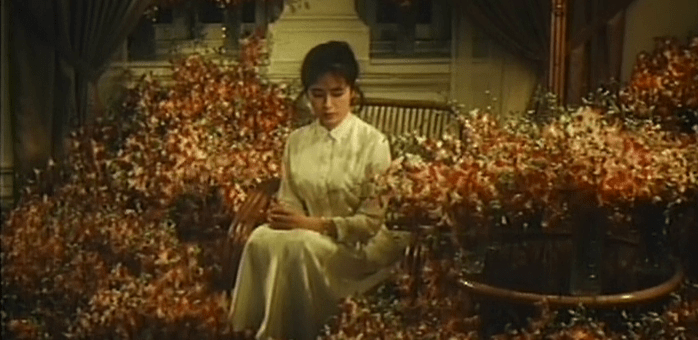
Yuki first becomes worried about her when her hotel room is filled with orchids she claims are from Kariya only to discover she ordered them herself when the orchid house contacts the hotel to complain that the bill has not been paid. Even so, she continues to believe they are from the man she’s looking for, even going so far as to thank him for them as if unable to process the gap between her realities. We often see her looking at photos from her photo shoots, while she later complains to Kariya that she wants to laugh when she wants to laugh and cry when she wants to cry as if making plain her disconnection with her self and desire to reassert her own identity over those she is forced to assume as an actress. 

This abstraction may also explain her words to Kariya that the sky is full of stars but that they are distant from each other and therefore the sky is only make-believe as if the image of Moeko that we see is only an illusion we’ve patched together from the various components available to us. It speaks of her alienation and loneliness, two qualities only deepened by her presence in an unfamiliar culture where she cannot speak the language. Acting as her guide, Yuki describes her as a polar opposite to his Singaporean girlfriend (Fawn Wong), the daughter of a wealthy family who is bold and confident, unafraid to chase her desires be they dancing or “Japanese hoods” as her father describes them. 

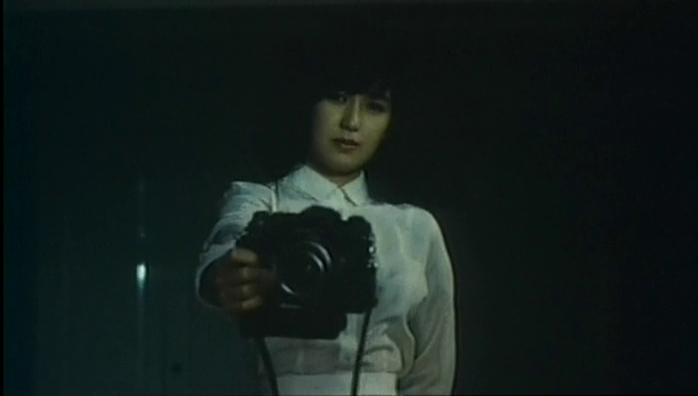
Murakami semi-exoticises Singapore if at times ironically in homing in on the portraits of famous authors in the bar and a man who always seems to be banging away on a typewriter. He sends Moeko all around the island and follows her as she takes in tourist sights, tries durian, and watches Chinese opera but lends an eerie quality to her place within the hotel implying finally that her room has in a way swallowed her as her name is added to the list of famous people who have stayed there even as she remarks that she feels as if the ceiling fan has become sentient in its movement. In any case, the camera is something that she both fears and craves as it both gives and takes her identity. She tries to pick it up herself but points it without looking, finally asking Kariya to take her picture only to find herself becoming one with her image just as Kariya is reduced to shadow as if her very essence had dissipated into the atmosphere as symbolised in a swimming pool full of orchids. “Lost in a fantasy” she may be, but so are we, led astray by a vision of a woman we can never really see. 


Circus Boys (二十世紀少年読本, Kaizo Hayashi, 1989)

“There’s bad cheating and good cheating,” according to a little boy who will later become “a magician of words and juggler of lies,” in Kaizo Hayashi’s ethereal fable, Circus Boys (二十世紀少年読本, Nijisseiki shonen Dokuhon). Set in early showa, though the early showa of memory in which many other times intertwine, the film positions the transient site of a circus tent as a roving home for all who need it or are seeking escape from the increasingly heightened atmosphere of the early 1930s. Yet where one of the titular boys chooses to stay and earnestly protect this embattled utopia, his brother chooses to leave and seek his fortune in the outside world.

In fact, it’s Jinta (Hiroshi Mikami) who first becomes preoccupied with their precarious position realising that they’ve been hired to look cute riding the elephant, Hanako, but will soon age out of their allotted role and if they can’t master some other kind of circus trick there may no be a place for them in the big tent. For this reason he’s been training in secret with the idea that he can pass off the skills he’s perfected as innate “talent” so the circus will want to keep him on. Wataru (Jian Xiu), his brother, doesn’t quite approve of his plan. After all, aren’t they essentially tricking the people at the circus into thinking they’re something they’re not? But Jinta assures him it’s like “magic,” the kind that will allow them to stay in their circus home which later comes to seem a place of mysticism or perhaps make-believe on its own.

Thus Wataru walks a fine line. His name means “to cross over,” but he never does. He tries to walk the tightrope before he’s ready and is unbalanced by a storm. Jinta breaks his fall, but also in the process his own ankle. Along with it go his dreams. His foot never heals, and he’ll never fly the trapeze with Wataru like he planned though he keeps his injury a secret from his brother. While Wataru flies with new girl Maria (Michiru Akiyoshi), Jinta becomes a clown, a position he’d previously looked down on and later leaves the circus altogether using his talent for magic and performance to become a snake oil salesman tricking what appear largely to be poor farming communities into buying things like miracle soap and coal that burns for a whole month. This is clearly bad cheating, though he tries to convince himself it’s not while essentially remaking the world around him through his lies. 

But he retains his integrity in other ways. After being press-ganged into a yakuza-like guild of street pedlars, he gently excuses himself when invited to dine with a boss and confronted by an odd situation in which his wife has purchased another young woman to be his “plaything.” In a comment on contemporary patriarchal norms, the young woman is referred to as “Omocha,” which literally means “toy,” but also sounds a like a woman’s name because it begins with the character “O” which was used as a polite prefix for female names until the practice faded out after the war. The boss of course treats her like a doll, and even the wife refers to her as an “erotic instrument” she got as a way of managing her husband’s sexual appetites fearing he’d otherwise be seeing sex workers and bring a sexually transmitted disease into their home (and also possibly because she simply doesn’t want to sleep with herself any more than she has to). Referred to only as Omocha the woman has almost no agency and finds a kindred spirit in Jinta (whose name contains the character for “humanity”) because like him she also escapes the hardships of the world through lies and fantasy. “Can two lies make one big truth?” Jinta muses, breaking the codes of Guild as he prepares to rescue another man’s plaything, only it may be more like she rescues him. 

Meanwhile, Wataru tries to save the circus even after their ringmaster dies with visions of Jinta on his mind. They plan a wall of death to bring back the crowds, but Wataru’s plan backfires with tragic consequences and it becomes clear he can’t protect their circus family even if it brings back veteran trapeze artists Koji (Yukio Yamato) and Yoshiko (Maki Ishikawa) who agree there’s no other place for them out in the big wide world. The sense of the circus as a safe space was echoed on Maria’s arrival when Jinta had cruelly said she looked a little foreign with the ringmaster assuring her that in here they’re all artists and do not classify people in terms of their race, appearance or nationality. Its unreality, however, is reinforced by the constant backing of Wataru’s shadowplay which sometimes shows things the way people wish they were rather than the way they are. Omocha is later seen holding one of these puppets just as she and Jinta decide to die to free themselves of this hellish existence before Jinta’s surrogate brother figure Hiroshi (Shiro Sano) is forced to kill them for breaking the rules of the guild.

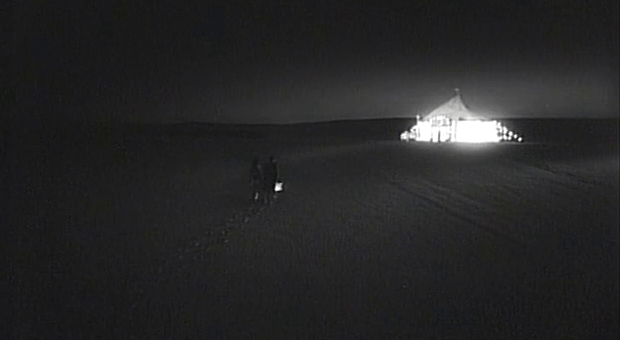
In the ambiguities of the final sequence, we might ask ourselves if they are actually dead and the glowing circus tent they see on the horizon is a path to the afterlife or a kind of heaven represented by the utopia to be found inside it. Then again, perhaps Jinta is merely rediscovering the way home, a prodigal son who now understands he already had a place to belong and there is a place to which he can return. The Great Crescent Circus is now the Sun & Crescent Circus, reflecting the way the two boys inhabit the world like and dark, idealism and cynicism, but comprise two parts of one complete whole. Hayashi waxes self-referential, playfully including a reference to his first film in that the movie playing at the cinema Jinta passes is The Eternal Mystery with Black Mask on his way to rescue Bellflower while indulging in an intense nostalgia for a lost world of travelling shows and hidden magic. Shooting in a beautifully balanced monochrome, he lights on scenes of heart-stopping beauty that are somehow poignant and filled with melancholy but ends with a moment of resolution in which, one way or another, Jinta reaches the promised land as he said with magic.


Circus Boys screens 12th October at Japan Society New York.

No Life King (ノーライフキング, Jun Ichikawa, 1989)

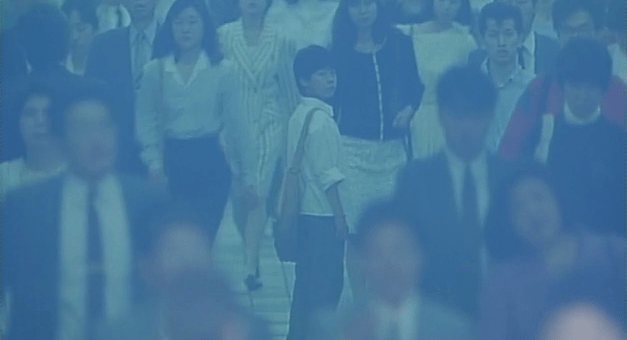
Taking place at the tail end of the Bubble era and on the eve of a technological revolution, Jun Ichikawa’s No Life King (ノーライフキング) in many ways anticipates the world we have today in which much of our communication has already become digitised. The cult-like speech of the next-gen guru who pops up towards the film’s conclusion may have eerie ring to it, but he has a kind of point in his talk of “new children” who will become “new adults” in a new digital world that was then only just becoming a reality. 

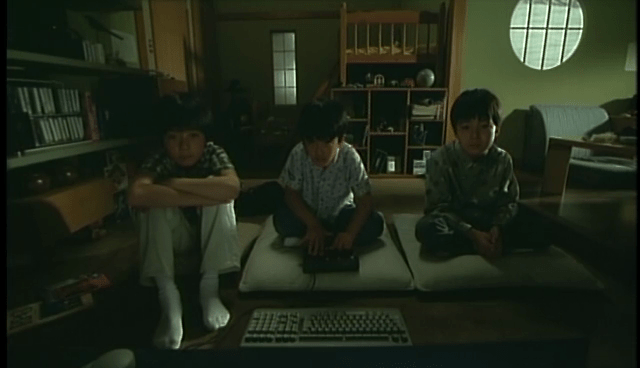
As someone later says, “the problem is not video games” though many seem to assume it is. The hero, Makoto (Ryo Takayama), whose name means “truth”, is one of a group of five boys obsessed with Nintendo console gaming. A game series known as Life King has become so popular that hundreds of youngsters camped out all night waiting for the release of the fourth instalment. The only problem is that the game seems to be unbeatable, and Makoto’s young friends begin to hear rumours that some of the cartridges are “cursed” with an alternate “No Life King” version that means death for players who cannot finish the game. 

The “curse” reflects a confusion that is beginning to emerge over what is “real” and what is “virtual” in an era of rapid technological development. The kids begin to worry that if you die in the game you die for real, while otherwise becoming obsessed with all kinds of urban legends relating to mysterious deaths and conspiracy theories such as that of the actor who plays tokusatsu hero Pris secretly being dead and that all the collectible Pris pencil erasers you can get from gachapon machines are cursed with the resentment he felt as he died. Some would be keen to dismiss this kind of thing as silly things kids say, but then Makoto’s mother also suggests that cakes from the bakery the family of his classmate Noriko owns are “cursed” as customers have been coming down with food poisoning after eating them. According to the guru’s assistant Mizuta (Neko Saito), the rumours are having a serious economic impact and have led to delays in product launches and construction projects in addition to provoking a politician’s resignation. 

Then again, the film seems to wonder if it’s the Bubble-era economy which is the enemy. While Makoto plays video games on his own but chats to his friends doing the same thing via telephone headset, his mother often works late into the night staring at a computer screen in their home. Makoto attends a summer cram school where all of the work is done via computers linked via a primitive version of the internet. The teacher is present but cannot actually see any of the children and they can’t see him. Questions are asked and answered via the interface rather than directly, though the computer network of cram school students does eventually allow Makoto to get in touch with other “new children” who are just as worried about the cursed game as he and his friends are while the adults respond by taking their consoles away which of course denies them the ability to lift the curse by beating the game. 

The “curse” itself may symbolise mortality, though obviously the children will still someday die regardless of whether they beat Life King IV because life itself is an unwinnable game. “The problem is…” the opening text crawl explains, “the battle has begun. It is unlikely to end until you die.” The same words are uttered by Makoto’s principle only he substitutes “video games” for the second part of the sentence before dramatically falling backwards just like the stricken king of the game while Makoto and the other kids are lined up almost identically to the ranks of soldiers amassed in front of him. This moment of symmetry links back to a line from the guru Akiyuki Mori who hints at a new world in which life and death exist simultaneously. It is this new world that “new children” must learn to adapt to as they grow with technology.

“It’s scary, but we’ll die if we can’t lift the curse” Makoto tells one of his online buddies and eventually becomes an accidental folk hero with the other kids looking to him to free them by beating the game. Graffiti tags go up all over the city reading, “hang in there, Makoto”, while he becomes preoccupied by the nature of the “real” as related to him by Mori and his assistant Mizuta who begin to view him as something like a prophet or at least the first of the “new children” to enter the “new real” in which the distinction between the “real” and “virtual” has disappeared. Fearing for his mortality, Makoto saves himself in the digital space by writing a bio and saving it to floppy disc much as a hero who died in the game was immortalised in stone so that no one would ever forget that he existed. 

By the film’s conclusion, “real life” has become a kind of game as evidenced by the advice of Makoto’s cram school tutor that he try and raise his score by 20 points to increase his chances of getting into a higher level institution. The mysterious boy somewhere on another computer tells him to go and look around outside at which point he wanders through the contemporary city and sees it with new eyes. “It is all real” he concedes, catching sight of Mori and his assistants in the crowd just as we start to wonder if this really is “reality’ after all. Then again, perhaps the best lesson the boys learn is from one of their grandfathers who simply “kept living until he died”. Ichikawa captures a sense of technological anxiety in the uncanny eeriness of the “real” world around the boys but is perhaps less pessimistic about the new age that awaits them in the solidarity that exists between the “new children” despite the seeming indifference of the adults incapable of understanding the anxiety that engulfs them.