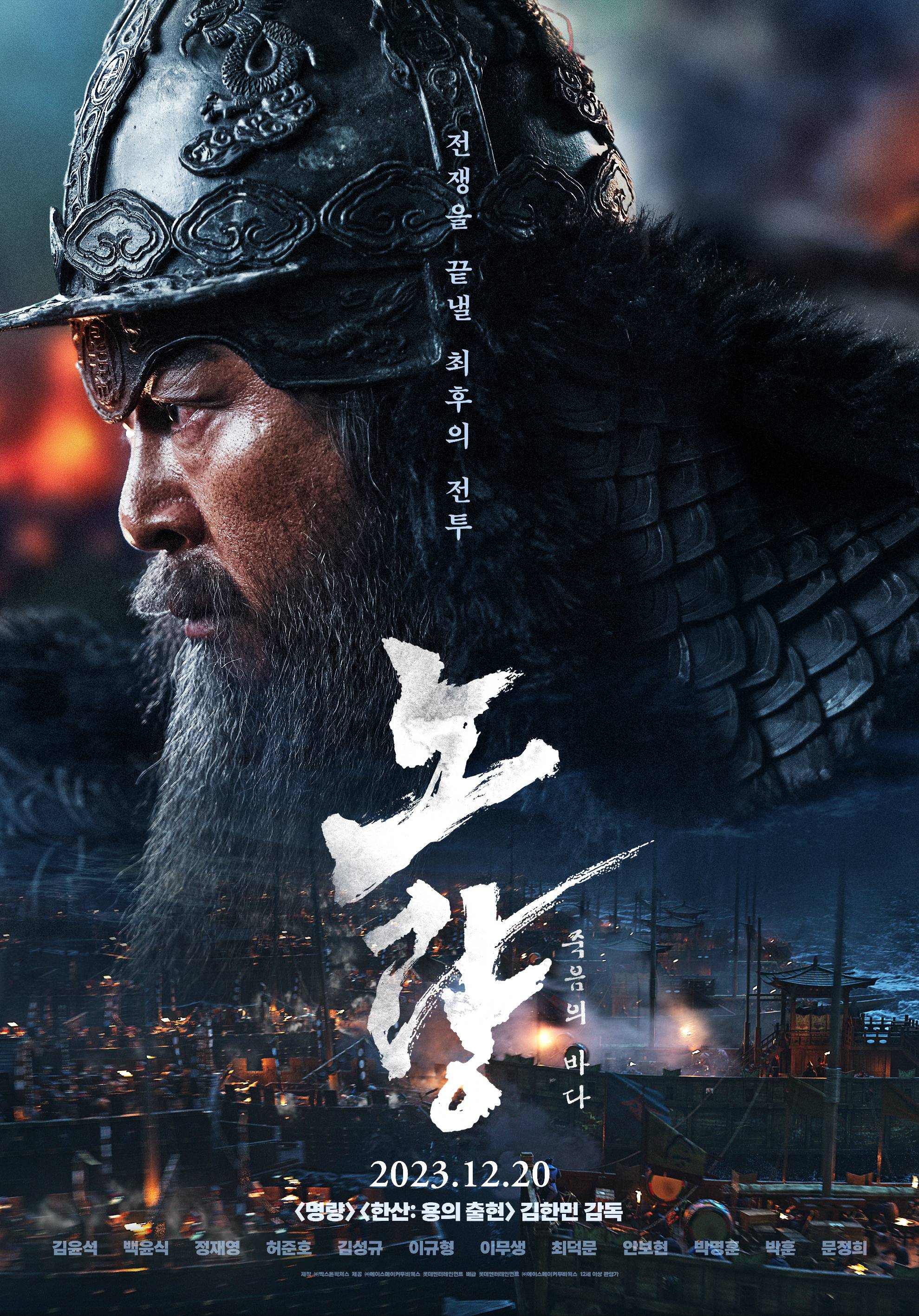
Noryang: Deadly Sea (노량: 죽음의 바다, Kim Han-min, 2023)

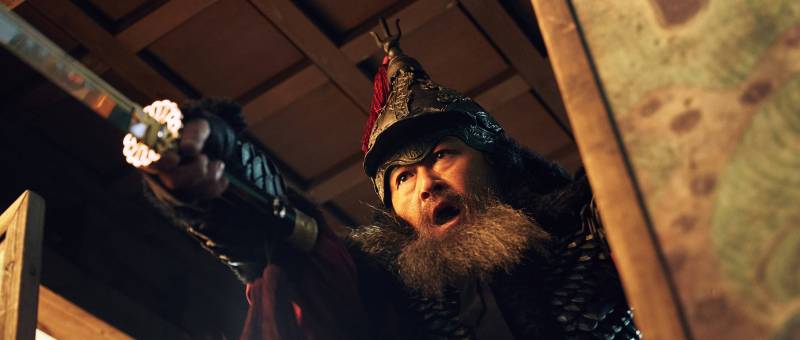
The strange thing about Noryang: The Deadly Sea (노량: 죽음의 바다, Noryang: Jugeumui Bada), the third and final instalment in Kim Han-min’s trilogy about 16th century admiral Yi Sun-sin is that everyone wants to end the war but they all want to end it definitively and so are unable to simply let it run its course. Then again, there is a little more complexity involved in the depiction of Yi in asking whether his desire to repel the Japanese once and for all is really about the national good or personal vengeance for the death of one of his sons at the hands of Japanese raiders.

The opening scenes taking place in 1598 witness the death of Toyotomi Hideyoshi who had launched two invasions of Korea in the previous decade which were in themselves precursors to an invasion of Ming China in an attempt to disrupt the Chinese Tributary System that prevented Japan from trading with China without agreeing to pay them taxes and recognise their political superiority. In the film at least, his deathbed order is to withdraw troops from Korea where they had been unsuccessfully fighting for the previous year. The leader of the Japanese forces, Konishi Yukinaga (Lee Kyu-hyung), is however prevented from leaving by a naval blockade placed by Admiral Yi around their fort on Suncheon Island. With Hideyoshi dead, Yukinaga is keen to return to Japan as quickly as possible in order to defend Hideyoshi’s young son, Hideyori, from Tokugawa Ieyasu who makes a very sinister appearance at Hideyoshi’s deathbed.

One might wonder why Yi does not allow Yukinaga to simply leave and return to Japan now that the war is technically over yet he insists that without a full surrender nothing is guaranteed and the Japanese may simply regroup and return as they had done before. Then again, he’s haunted by nightmares of his son’s death in which he witnesses him cut down by Japanese pirates while unable to intervene dragged back by shadowy figures rising from the water. Yi also later makes clear that his motivation is coloured by a desire for revenge to the extent that he is willing to sacrifice his life for it, which is one thing but it also necessarily means he’s willing to risk the lives of his men over what is partly a personal vendetta. 

Yukinaga, meanwhile, and the Japanese in general are depicted as cruel, ruthless, and cowardly. Shimazu (Baek Yoon-sik), the admiral leading the reinforcements sent to help spring Yukinaga, wilfully fires on his own men in order to cut his way through to the enemy and then threatens to execute sailors who tried to desert. In the end Yukinaga breaks his promise and declines to come to the assistance of Shimazu’s fleet as arranged, turning away and sailing back to Japan (he is subsequently beheaded after being on the losing side of the battle of Sekigahara as he was unable to commit ritual suicide because he was a Christian). They had originally been let down by a Chinese general they’d bribed to assist them but had decided not to turn up given the war was already over, making a secondary agreement with Admiral Chen (Jung Jae-young) who also desires a peaceful end to the disruption but vacillates between each side while not really wanting to get involved before making a fairly disastrous intervention in the final battle. 

There is something a little a uncomfortable in the film’s framing and most particularly in its post-credits scene which reinforces Yi’s conviction that the war isn’t really over without a complete surrender from Japan. In any case, Yi becomes a literal beating heart of the battle banging the drums of war to encourage weary fighters that it isn’t over yet and to keep going to the last man buoyed by the spirits who appear to him of his son and allies who lost their lives fighting similar battles in the previous films. That aside, Deadly Sea is mostly standalone though some knowledge of Japanese and Korean history in the late 16th century is undoubtedly helpful. Kim devotes the second half of the film to a lengthy series of naval battles as Yi tries to lure Shimazu to a vulnerable position, eventually shooting a harrowing long take from the perspective of an ordinary sailor trying to cut his way through after boarding a series of enemy boats. The senseless futility of the violence is the point, but it’s one that’s continually lost on Yi who continues to insist that this war will never really be over until they chase the invaders all the way back to their own islands and into total capitulation even as his quarry sails away towards his own unhappy destiny in an equally turbulent Japan.


International trailer (English subtitles)
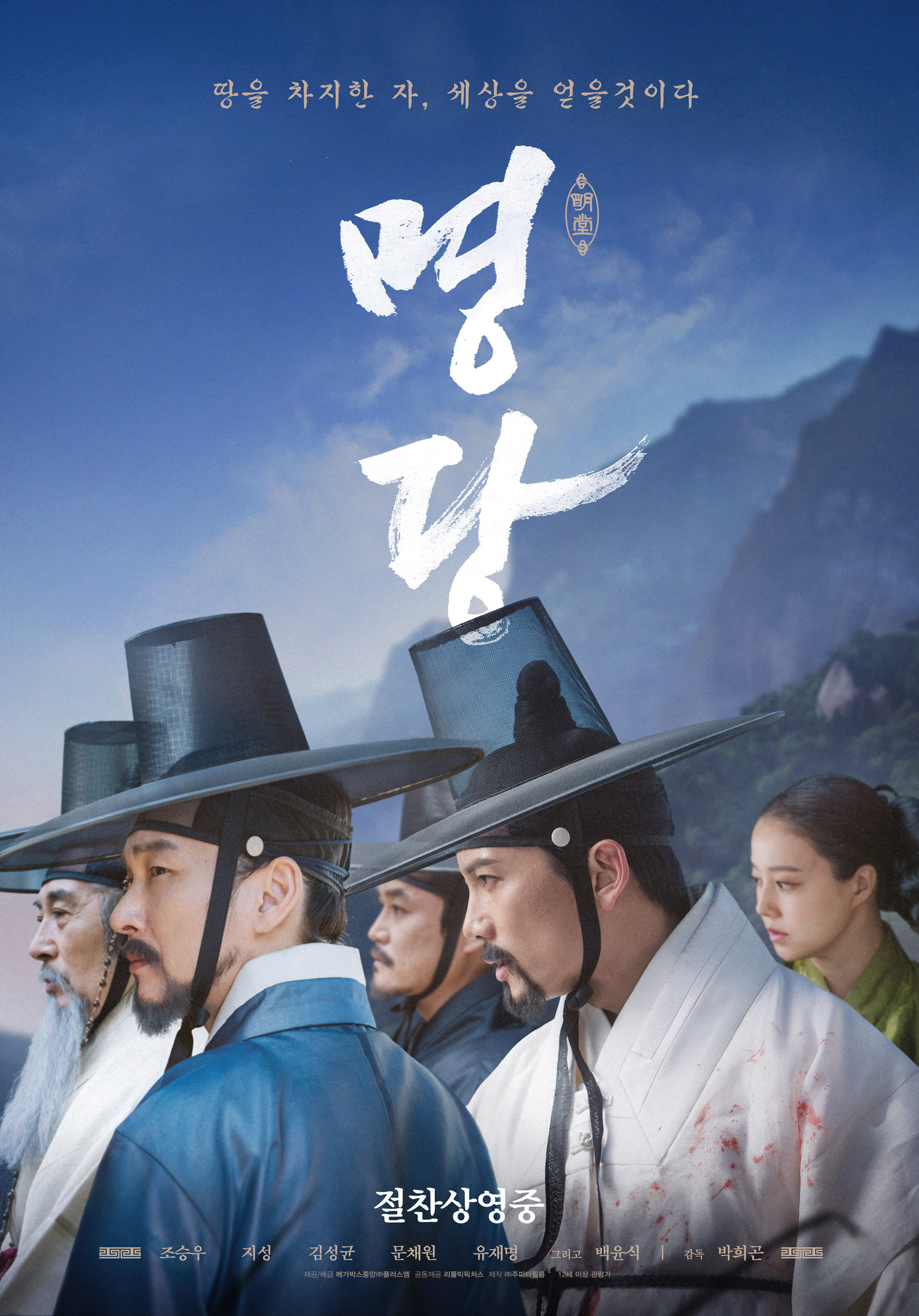
Fengshui (명당, Park Hee-gon, 2018)

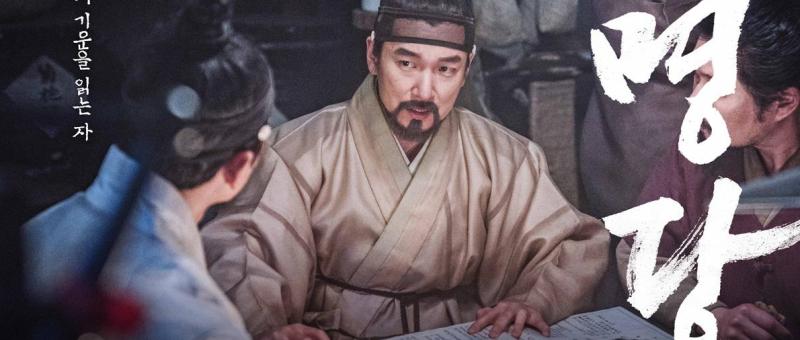
FengShui poster 1A would-be-dynast gets overly involved with a weird spiritualist and almost (?) ruins the nation. Does that sound a little familiar? As metaphors go, it might be a stretch but then so much of Park Hee-gon’s Fengshui (명당, Myeong-dang) is just that. Set in the late 19th century, Park’s film is the third in a loose trilogy themed around Korean fortune telling traditions (following The Face Reader, and The Princess and the Matchmaker), but rather than questioning the efficacy of its art asks a series of questions about its application and the internecine lengths those who lust for power or otherwise feel themselves unfairly oppressed will go to to reclaim their rightful position.

Our hero, unwisely honest fengshui master Jae-sang (Cho Seung-woo), is the only one brave enough to point out that the site chosen for the burial of the late king is cursed, but inevitably he is ignored. He is of course right, which means he must be eliminated which is why a troop of soldiers working for the nefarious Kim clan show up and burn his house down, executing his wife and child by the sword when they manage to escape. 13 years later, he finds his expertise called on again when the weak and inexperienced king begins to suspect the Kim clan is plotting against him and that their shenanigans over his father’s grave may have something to do with it.

Like any typical Korean period drama, Fengshui is chiefly concerned with palace intrigue, only this intrigue is stranger than most in its bizarre obsession with the possibilities of manipulating spiritual power through acquiring “auspicious” land for whichever purpose one might wish from conceiving an heir to making sure your line holds power. The Kims are convinced they can win the throne (if by proxy) through digging up their ancestors and replanting them in more advantageous places only to discover that the grass is (literally) always greener. Still, they will stop at nothing from outright murder to psychological game playing in order to manipulate the teenage king into acting as their puppet.

One might ask themselves what the point is, what’s so great about being king anyway? The actual king might say not much, as he discovers himself a humiliated, hollow figure who wields no real power seeing as his soldiers seem set to side with Kim. Heungseon (Ji Sung), however, his “cheerful” uncle might feel differently after experiencing a lifetime of just the same. Forced to prance about doing party tricks for the Kims, barking and eating scraps from the floor like a mangy dog, he might say that being king is the only way to reclaim your self-respect and ensure you will never be at the mercy of ruthless men ever again.

The real key, however, is presented at the end when Jae-sang and his money loving friend Yong-shik (Yoo Jae-myung) are visited some years later by two men in suits who want to know the best place to start a military school to train Independence fighters. Jae-sang, having vowed to stop looking for places to bury people so he can find one to save them, is only too happy to oblige and even comes up with the name “Shinheung Military Academy” (a real school which is also, quite bizarrely, the subject of a smash hit musical). The point is further brought home with Kim’s descendent standing next to a family grave and lamenting that it can’t have been auspicious enough because they’ve lost all their power since the Japanese arrived. The subtext seems to be that feudal corruption and a subversion of traditional values such as ancestor worship and filial piety contributed to the gradual weakening of the Korean state which was plagued by insecure kings and political finagling until finally “sold” to foreign powers in the early 20th century.

Indeed, the ambitious usurpers eventually burn the soul of Korea in order to ensure their own, or rather their children’s, futures even at the expense of their nation’s. Literally fighting over a grave, the elites waste their time on pointless, internecine dynastic squabbling while ordinary people continue to suffer. Jae-sang, having given up on his own petty quest for revenge, comes to the conclusion that all this looking back is a waste of time when what they should be thinking about is the future – not burying things, but planting them. It is a good lesson, but, Park seems to suggest, perhaps one that has not yet been fully learned.


Screened as the latest teaser for the upcoming London Korean Film Festival. The next teaser screening, Zhang Lu’s Ode to the Goose, takes place on 19th August at Picturehouse Central.

International trailer (English subtitles)
The Chase (반드시 잡는다, Kim Hong-sun, 2017)

The Chase posterKorea may not quite be facing such an ageing population crisis as neighbouring nations, but old age has become a persistent cinematic preoccupation. We’ve seen old women still engaging in acts of prostitution to support themselves in the absence of family (and indeed the state), serial killers becoming dangerously confused, and ageing grandmother’s attempt to see the beauty in a world that seems to be descending into chaos. What The Chase (반드시 잡는다 Bandeusi Jabneunda) shows us is that the elderly do at least have time on their hands that could well be used for fighting crime and protecting the vulnerable.

If you were appointing elderly street guardians, you probably wouldn’t pick Deok-soo (Baek Yoon-sik). A curmudgeonly landlord with a conviction that everyone is out to diddle him on their rent, Deok-soo complains loudly when a body is found in a nearby area because it’s going to damage property prices. People who are supposed to die should just die, he exclaims, that’s patriotism! You can bet your bottom dollar Deok-soo voted for Park Geun-hye, but despite his grumpy exterior he has a soft heart as one of his young charges reveals when she reminds him that he’s never thrown anyone out just because they didn’t pay up. Deok-soo has taken quite a (paternal) liking to Ji-eun (Kim Hye-in), a young woman living alone away from family in one of his horrible little apartments. Aside from her rent arrears and tendency to let her mixed up friend stay over so often that she virtually lives there, Ji-eun is one of Deok-soo’s favourite tenants.

Which is perhaps why he gets himself so involved when she suddenly goes missing after a shock discovery is made in her flat. Other than the first body which got Deok-soo so worked up, a few other elderly people have been passing away in lonely deaths which, sadly, isn’t particularly suspicious save that the pattern matches that from an unsolved serial murder case from 30 years ago which began with the killing of old people and then progressed to sexually aggravated murder of young women with long dark hair – just like Ji-eun.

Aside from the ongoing serial killer plot, director Kim Hong-sun makes space for depicting the various problems faced by the elderly in contemporary Korea. The first problems are loneliness and dislocation caused by separation from family members – many of the older people Deok-soo is familiar with have children overseas whom they have all but lost touch with. The second problem is economic – Deok-soo’s flats are dirt cheap for a reason and mostly inhabited by the very young and the very old, i.e. people without a lot of “disposable” income. Being elderly, they often can’t find jobs and don’t have access to a proper pension leading many to take to the streets protesting for rights for the aged including that to work or to be given state support. Deok-soo is lucky with income from renting the apartments, but he also works as a locksmith which brings in a few extra pennies. Being Deok-soo he isn’t particularly worried about other people less lucky than himself, so he rolls his eyes at the protests but is worried enough by the lonely deaths to ask one of his tenants to look in on him every now and then to avoid becoming one.

Meanwhile, Deok-soo has become “friends” with a retired police detective who’s convinced the serial killer he failed to catch 30 years ago is back. Worried that Ji-eun may end up among his victims, Deok-soo begins investigating, unwittingly getting himself mixed up in a dark and confusing world of old school hardboiled only Pyeong-dal (Sung Dong-il) is not quite as worthy a guide as he seemed. Walking around like a maverick cop from a violent ‘70s action movie, Pyeong-dal is convinced he knows who the killer is but he is old and unsteady and his mind is not perhaps reliable.

Then again a persistent subplot seems to argue that the young have no respect for age, are selfish and corrupt, thinking only of short term pleasures and forgetting that they too will one day be old with no one around to look after them. No one takes Deok-soo and Pyeong-dal seriously, they are after all just grumpy old men that everyone wants to get rid of as quickly as possible. They do, however, (paradoxically) have time to indulge in “silly” ideas that the young do not have and are, therefore, perfectly positioned to take down a serial killer who preys on the weak and vulnerable including old men like them and pretty young girls like Ji-eun. Old guys have still got it, at least according to The Chase, though they might have got there faster if only they’d cut the young whippersnappers some slack.


Screened at the 20th Udine Far East Film Festival.

Also available to stream on Netflix.

International trailer (English subtitles)
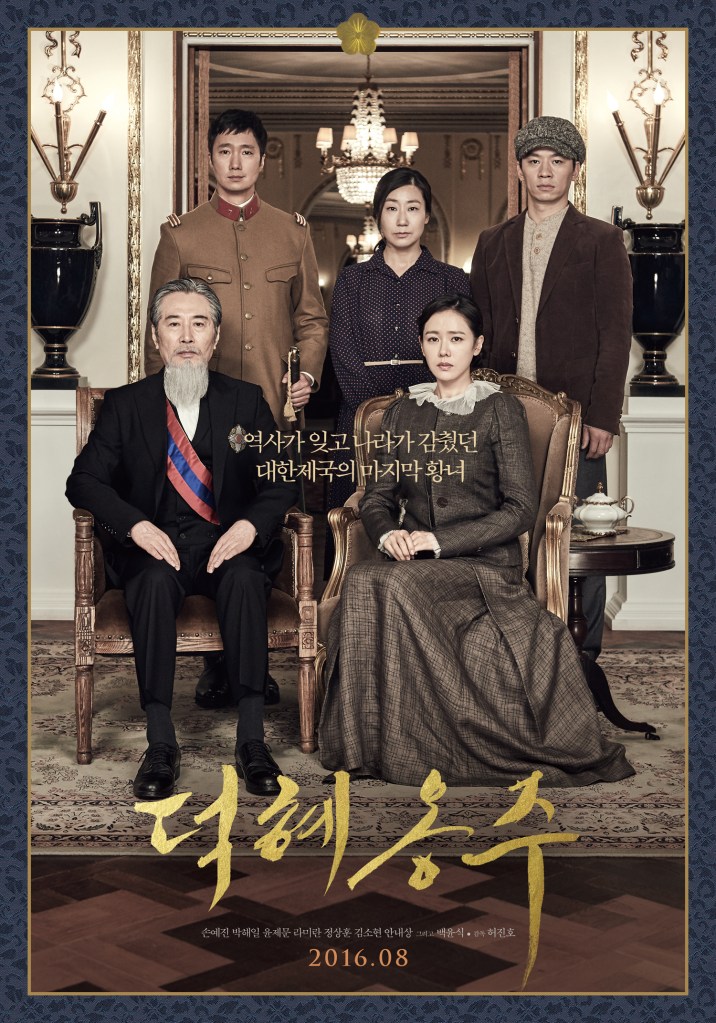
The Last Princess (덕혜옹주, Hur Jin-ho, 2016)

last-princessReview of Hur Jin-ho’s The Last Princess first published by UK Anime Network.


Filmic biopics of real life historical figures are not generally known for their fierce adherence to fact, but The Last Princess (덕혜옹주, Deokhyeongjoo) is unusually honest in its approach in the sense that it includes a brief opening statement to the effect that the film pays very little attention to historical veracity. Hur Jin-ho adapts the story of Korea’s last princess, Yi Deok-hye (Son Ye-jin), as recounted in a novel by Kwon Bi-young, whilst indulging the genre he’s best known for – romantic melodrama. Another of the recent spate of films to address Korea’s colonial past, The Last Princess is the story of a woman who was fiercely loyal to her homeland, even in the face of harsh opposition and final rejection by the very people she’d been striving so hard to protect.

Told in a non-linear fashion, The Last Princess spans the majority of Deok-hye’s life from her opulent childhood in the royal palace to her eventual repatriation to Korea in the mid 1960s. In 1919, nine years after Korea had been annexed by the Japanese, Deok-hye lives in the palace with her loving father, the former Emperor (Baek Yoon-sik), and her mother, the concubine Lady Yang (Park Joo-mi). Her carefree days soon end when she witnesses her father’s death by poison and comes to understand her precarious position as puppet royalty of a subjugated regime.

Her life, and those of her remaining family members, is largely in the hands of a traitorous civil servant, Han (Yoon Je-moon), whose fierce loyalty to the Japanese emperor knows no bounds. Deok-hye is unwilling to assist him in his desire to use her as a tool to promote the “Japanisation” of the country and so is packed off to the mainland to study with the promise that she can return to live with her mother in Korea after her studies have ended. Needless to say she does not return.

In a touch of cinematic romanticism, the film elides two characters into one in the otherwise fictional character of Kim Jang-han (Park Hae-il). The son of a resistance fighter loyal to the emperor, Jang-han was betrothed to Deok-hye when they were both children and later returns to her as an adult in Japan where he is active in the Resistance, before coming back to find her years after the war. Jang-han hatches a plan to help Deok-hye and the other royal family members escape for exile in Shanghai but the the pair are eventually separated.

Recalling other recent Korean Resistance movies Age of Shadows and Assassination, The Last Princess has its share of action as Deok-hye and Jang-han attempt to escape the Japanese occupation and foster the revolution from abroad. The villain of the piece this time around is not so much the Japanese but the Koreans who willingly helped them as as exemplified here by the odious Han. Han is the most typically melodramatic character and only lacks a moustache to twirl to complete the effect. Hellbent on ingratiating himself with the Japanese, Han is determined to harness his princess’ appeal to sell the virtues of the Japanese state. When Deok-hye resolutely refuses to play along, he threatens her family members and friends in an attempt to force her compliance but finds her love for her country too strong to be bent by his egocentric cruelty.

Sent away and kept a virtual prisoner far from home, there is little Deok-hye is able to do in service of her nation. Introduced to the Resistance operating in Japan, she begins to see a way to help and eventually finds herself taking a stand when blackmailed into reading out a propaganda speech in front of a collection of forced labourers. Beginning the speech in Japanese as ordered, Deok-hye finds she cannot continue and eventually makes her real feelings known in Korean as she instructs the people in front of her not to give up, she will be right along side them fighting to regain their homeland. In a touch of Casablanca inspired drama, a chorus of Arirang suddenly springs up among the crowd, much to the consternation of the Japanese officers expecting a show of contrition, as the Princess herself is whisked off to pay a heavy price for her “betrayal”.

The Last Princess forces its heroine through constant loss – of her home, of her position, of her family, of a future, of love, of a child, of happiness, of her mind, and most importantly of her nationality. Deok-hye never wanted to be Japanese, did not travel to Japan of her own volition, and did her best to resist even at great personal cost. Nevertheless she finds eventually finds herself barred from her homeland due to opposing political concerns when the fledgling Republic fears the misuse of a powerful symbol like a royal family to frustrate the democratic future. Played with wonderful sensitivity by leading actress Son Ye-jin, Deok-hye suffers as her nation suffers, longing for independence both personal and national but finding only new cages everywhere she goes. Despite the unconvincing ageing makeup of the latter part of the film and an overly intrusive score, The Last Princess is an impressively produced prestige picture which plays its melodrama credentials to the max but is also undoubtedly moving in recounting the tragic story of its heroine whose constant misuse and lack of agency mirror much of the history of the nation she holds so dear.


Reviewed at the 2016 London Korean Film Festival.

International trailer (English subtitles)